Fromilid uno
Poland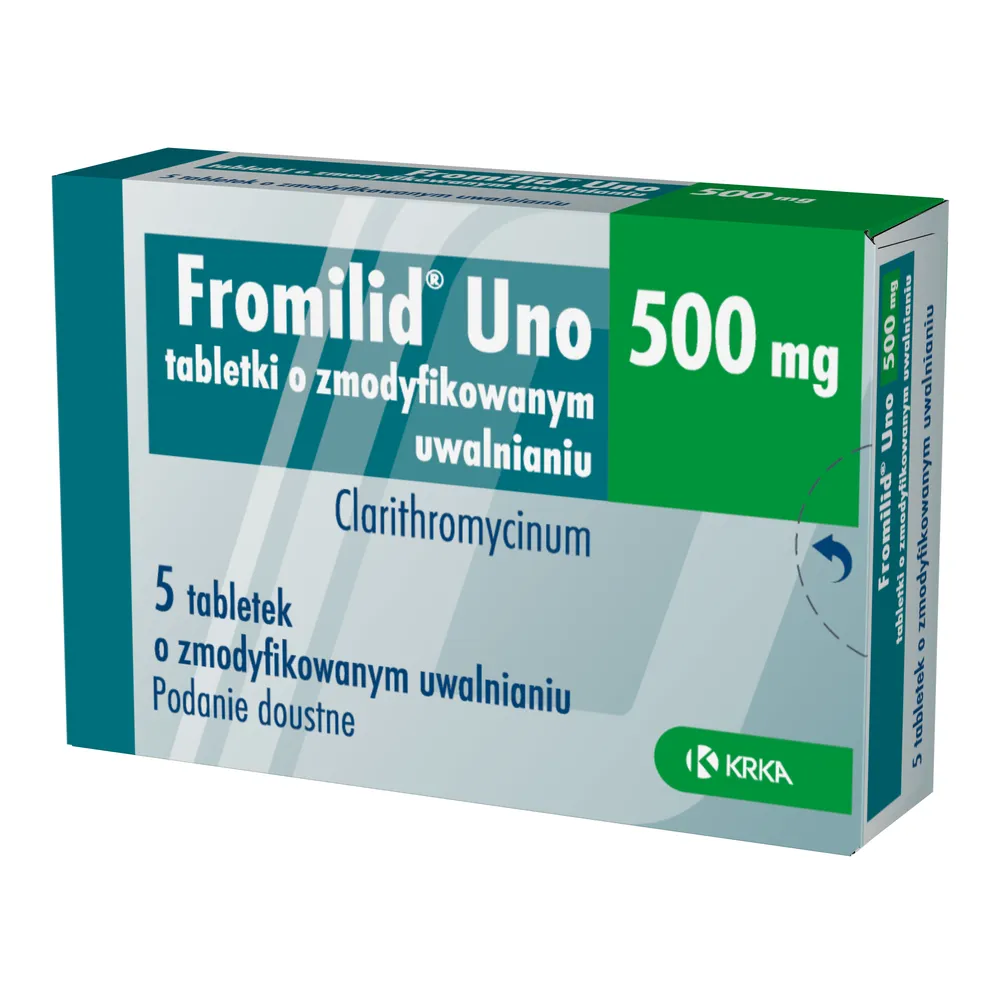
Table of Contents
Patient Information Leaflet
Fromilid Uno, 500 mg, modified-release tablets
Clarithromycinum
Please read all of this leaflet carefully before taking this medicine, because it contains
important information for you.
- Keep this leaflet, as you may need to read it again.
- If you have any questions, please consult your doctor or pharmacist.
- This medicine has been prescribed for a specific individual. Do not pass it on to others. It may harm someone else, even if their symptoms are the same.
- If you experience any adverse reactions, including those not listed in this leaflet, inform your doctor or pharmacist immediately. See section 4.
Table of Contents
- What Fromilid Uno is and what it is used for
- Important information before taking Fromilid Uno
- How to take Fromilid Uno
- Possible side effects
- How to store Fromilid Uno
- Contents of the pack and other information
1. What Fromilid Uno is and what it is used for
Fromilid Uno contains clarithromycin as the active substance, an antibiotic belonging to the macrolide group, which exerts antibacterial activity by inhibiting protein synthesis. Fromilid Uno is active against many aerobic and anaerobic bacterial species, both Gram-positive and Gram-negative.
Clarithromycin in the form of modified-release tablets is indicated for the treatment of the following infections caused by microorganisms sensitive to clarithromycin:
- upper respiratory tract infections (e.g. pharyngitis, sinusitis),
- otitis media,
- lower respiratory tract infections (e.g. bronchitis and pneumonia),
- skin and soft tissue infections (e.g. folliculitis, cellulitis, and erysipelas).
2. Important information before taking Fromilid Uno
When not to take Fromilid Uno
- if the patient is allergic to clarithromycin or other macrolide antibiotics (such as azithromycin, erythromycin), or to any of the other ingredients of this medicine (listed in section 6);
- if the patient has severe renal impairment (creatinine clearance less than 30 ml/min), because dose reduction is not possible (the tablet cannot be divided). In these patients, use of Fromilid in a formulation with unmodified release of the active substance is recommended;
- if the patient is taking any of the following medicines:
- medicines that may cause severe cardiac arrhythmias, including:
- astemizole or terfenadine (medicines used in allergies)
- cisapride (a medicine used for gastrointestinal motility disorders)
- pimozide (a medicine used in psychiatric disorders)
- ticagrelor (an antiplatelet agent);
- ivabradine or ranolazine (medicines used in the treatment of angina pectoris);
- ergot alkaloids such as ergotamine or dihydroergotamine (medicines used, among others, in migraine);
- lovastatin, simvastatin (statins, medicines used to reduce blood cholesterol levels);
- if the patient is taking a medicine containing lomitapide;
- midazolam administered orally (a medicine used in anxiety states and insomnia);
- colchicine (a medicine used in the treatment of gout);
- if the patient has low blood potassium or magnesium levels (hypokalaemia or hypomagnesaemia);
- if the patient has, or there is a family history of, cardiac arrhythmias (ventricular arrhythmias, including torsade de pointes) or electrocardiogram (ECG) abnormalities known as "long QT syndrome";
- if the patient has severe hepatic impairment with concomitant renal impairment.
Warnings and precautions
Before starting treatment with Fromilid Uno, consult a doctor if the patient:
- is pregnant or suspects she may be pregnant,
- has impaired kidney or liver function,
- has coronary artery disease, severe heart failure, or bradycardia (slow heart rate),
- is taking any of the medicines listed in the section "Fromilid Uno and other medicines".
If any of the following occur during treatment with Fromilid Uno, the patient should inform the doctor:
- severe hypersensitivity reactions such as maculopapular rash, urticaria, petechiae, laryngeal oedema, or bronchospasm – medical help should be sought immediately and appropriate treatment initiated;
- diarrhoea, especially if acute or prolonged; the doctor should be informed as soon as possible. If necessary, the doctor will recommend appropriate treatment; antidiarrhoeal medicines should not be used;
- symptoms suggesting liver dysfunction, such as loss of appetite, jaundice, dark urine, itching, or abdominal pain; treatment should be discontinued and the patient should consult a doctor;
- new infection (superinfection) with bacteria resistant to clarithromycin or with fungi, particularly during prolonged antibiotic use – the doctor will recommend appropriate treatment.
Additionally, during treatment with Fromilid Uno the following may occur:
- bacterial cross-resistance (bacteria resistant to clarithromycin may also show resistance to other macrolide antibiotics, as well as to lincomycin and clindamycin).
Fromilid Uno and other medicines
Inform the doctor about all medicines currently or recently taken, as well as any medicines the patient plans to take.
It is essential to inform the doctor if the patient is taking any of the following medicines, as concomitant use with Fromilid Uno is contraindicated:
- astemizole or terfenadine (medicines used in allergies);
- cisapride or domperidone (medicines used for gastrointestinal motility disorders);
- pimozide (a medicine used in psychiatric disorders);
- ticagrelor, ivabradine, ranolazine (medicines used in the treatment of angina pectoris or to reduce the risk of myocardial infarction or stroke);
- ergot alkaloids such as ergotamine or dihydroergotamine (medicines used, among others, in migraine);
- statins – lovastatin, simvastatin (medicines that lower blood cholesterol levels);
- midazolam administered orally (a medicine used in anxiety and insomnia);
- colchicine (a medicine used in gout).
Inform the doctor if the patient is taking any of the following medicines, as special caution is required when using them together with Fromilid Uno:
- rifampicin, rifapentine, rifabutin (antibiotics used in the treatment of tuberculosis);
- fluconazole, itraconazole (antifungal medicines);
- atazanavir, efavirenz, etravirine, nevirapine, ritonavir, saquinavir, zidovudine (used in the treatment of HIV infection);
- digoxin, quinidine, disopyramide, verapamil, amlodipine, diltiazem (used in the treatment of cardiac arrhythmias or hypertension);
- alprazolam, triazolam, midazolam administered intravenously or orally mucosally (medicines used in anxiety or insomnia);
- warfarin or any other anticoagulant, e.g. dabigatran, rivaroxaban, apixaban, edoxaban (medicines used to thin the blood);
- quetiapine or other atypical antipsychotics;
- carbamazepine, valproate, phenytoin (antiepileptic medicines);
- atorvastatin, rosuvastatin (statins – medicines that lower blood cholesterol levels);
- methylprednisolone (an anti-inflammatory medicine);
- omeprazole (a medicine that reduces gastric acid secretion);
- cilostazol (a medicine used in intermittent claudication, characterised by pain in the lower limb muscles during exercise, subsiding after brief rest);
- cyclosporine, tacrolimus, sirolimus (medicines used, among others, after organ transplantation);
- sildenafil, tadalafil, vardenafil (medicines used in erectile dysfunction);
- ibrutinib or vinblastine (medicines used in cancer chemotherapy);
- theophylline (a medicine used in bronchial asthma);
- tolterodine (a medicine used in urinary incontinence);
- phenobarbital (an anticonvulsant medicine);
- St John's wort ([Hypericum perforatum] – a herbal medicine used in mild depression);
- sulfonylureas, nateglinide, repaglinide, insulin (medicines used in diabetes);
- ototoxic medicines (damaging hearing), particularly aminoglycoside antibiotics used in bacterial infections.
This is also important when using medicines with the following names:
- hydroxychloroquine or chloroquine (used in the treatment of, among others, rheumatoid arthritis, and in the treatment or prevention of malaria). Taking these medicines together with clarithromycin may increase the risk of cardiac arrhythmias and other serious adverse effects on the heart.
- corticosteroids administered orally, by injection, or by inhalation (used to suppress the immune system, which is useful in the treatment of many different conditions).
Taking Fromilid Uno with food and drink
The tablet should be swallowed whole with liquid. Do not chew or divide the tablet. Fromilid Uno should be taken with food.
Pregnancy and breastfeeding
If the patient is pregnant or breastfeeding, suspects she may be pregnant, or is planning to have a child, she should consult a doctor or pharmacist before using this medicine.
The safety of clarithromycin use during pregnancy and breastfeeding has not been established. Fromilid Uno may be used in pregnant women only if, in the opinion of the doctor, the benefit to the mother outweighs the potential risk to the foetus.
Since clarithromycin passes into human milk, women who are breastfeeding should exercise particular caution when taking Fromilid Uno.
Driving and operating machinery
Fromilid Uno may cause dizziness, confusion, and disorientation, which may affect the ability to drive or operate machinery. The patient should not drive or operate machinery if these symptoms occur.
Fromilid Uno contains monohydrate lactose and sodium
If the patient has previously been diagnosed with intolerance to certain sugars, they should consult a doctor before taking this medicine.
Each tablet contains 12.85 mg of sodium. The medicine contains less than 1 mmol (23 mg) of sodium per tablet, meaning the medicine is considered "sodium-free".
The medicine contains 25.7 mg of sodium (main component of table salt) in the maximum daily dose. This corresponds to 1.28% of the maximum recommended daily sodium intake in the diet of adults. This should be taken into account in patients controlling dietary sodium intake.
3. How to take Fromilid Uno
This medicine should always be taken as directed by the physician. In case of doubts, consult a
physician or pharmacist.
The tablet should be swallowed whole with at least half a glass of liquid. Do not chew or break the
tablet. Fromilid Uno should be taken during a meal.
The dosage and duration of treatment depend on the type and site of infection, patient's age, and
response to treatment.
Recommended dose
Adults and adolescents over 12 years of age
The recommended dose is one 500 mg tablet once daily. In severe infections, the physician may
increase the dose to 1 g once daily (two 500 mg tablets).
Treatment usually lasts from 5 to 14 days. Only in pneumonia and sinusitis should the treatment last
6 to 14 days.
Patients with renal impairment
In patients with renal impairment, the dose of clarithromycin should be reduced by half, i.e. to 250 mg
once daily, or, in the treatment of more severe infections, to 250 mg twice daily. In these patients,
treatment should not exceed 14 days. Clarithromycin in the form of modified-release tablets should
not be used in this patient population due to the inability to split the tablet and reduce the daily dose
of 500 mg.
Children under 12 years of age
It is recommended to administer clarithromycin in the form of granules for oral suspension.
Taking more than the recommended dose of Fromilid Uno
If more tablets have been taken than recommended, contact a physician or pharmacist immediately.
Overdose may cause gastrointestinal disturbances (nausea, vomiting, abdominal pain). In case of
overdose, the physician will provide appropriate symptomatic treatment.
As with other macrolide antibiotics, hemodialysis or peritoneal dialysis do not reduce serum
concentrations of clarithromycin.
Missed dose of Fromilid Uno
If a dose has been missed at the scheduled time, take it as soon as possible.
However, if it is almost time for the next dose, skip the missed dose and continue according to the
regular schedule.
Do not take a double dose to make up for a missed dose.
Stopping treatment with Fromilid Uno
Do not discontinue treatment without consulting a physician. Stopping treatment too early may cause
the illness to recur.
For any further questions regarding the use of this medicine, consult a physician or pharmacist.
4. Possible adverse reactions
Like all medicines, this medicine can cause adverse reactions, although not everyone will experience them.
If any of the following adverse reactions occur in a patient, at any stage of treatment,
stop taking Fromilid Uno and consult a doctor immediately:
- Anaphylactic shock – an acute, life-threatening allergic reaction, manifested, among others, by confusion, skin pallor, drop in blood pressure, sweating, reduced urine output, rapid breathing, weakness, and fainting
- Allergic reactions: rash (common), itching, urticaria (uncommon), angioedema of the face, tongue, lips, eyes, and throat, difficulty breathing
- Severe skin reactions:
- Acute generalized exanthematous pustulosis – red, peeling rash with subcutaneous nodules and blisters
- Erythema multiforme bullosum (Stevens-Johnson syndrome), characterized by sudden onset of fever and blisters, which resolve rapidly after discontinuation of the drug; a severe disease characterized by blisters and erosions on the skin, in the oral cavity, eyes, and genital organs, accompanied by fever and joint pain
- Toxic epidermal necrolysis (Lyell's syndrome) – a severe, rapidly progressing disease characterized by rupturing giant subepidermal blisters, extensive skin erosions, shedding of large epidermal sheets, and fever
- DRESS syndrome – a severe (life-threatening) drug-induced reaction characterized by increased number of eosinophils and internal organ involvement
- Severe or prolonged diarrhoea, possibly with blood or mucus in the stool (pseudomembranous colitis). Diarrhoea may occur even up to two months after completion of clarithromycin treatment. In such a case, contact a doctor immediately.
- Yellowing of the skin (jaundice), skin irritation, pale-coloured stools, dark-coloured urine, abdominal tenderness, or loss of appetite. These may be symptoms of liver failure.
- Muscle swelling, cramps, and muscle pain, which may be symptoms of rhabdomyolysis (a syndrome caused by breakdown of muscle tissue). In some cases of rhabdomyolysis, clarithromycin was administered concomitantly with other drugs known to cause rhabdomyolysis, such as lipid-lowering agents (e.g. statins, fibrates) or drugs used in the treatment of gout (e.g. colchicine or allopurinol). These adverse reactions occur with unknown frequency unless otherwise stated.
Other adverse reactions:
The following common adverse reactions (may occur in 1 to 10 out of 100 patients) have been reported in clinical trials and after marketing of clarithromycin:
- Insomnia;
- Taste disturbances, headache;
- Diarrhoea, vomiting, dyspepsia, nausea, abdominal pain;
- Abnormal liver function test results;
- Excessive sweating.
Uncommon adverse reactions (may occur in 1 to 10 out of 1,000 patients):
- Candidiasis (fungal infection), gastritis and enteritis, vaginal infection;
- Decreased white blood cell count;
- Hypersensitivity;
- Anorexia, decreased appetite;
- Restlessness;
- Dizziness, somnolence, tremor;
- Balance disorders, hearing loss, tinnitus;
- Palpitations, ECG changes (prolongation of QT interval);
- Nosebleeds;
- Gastroesophageal reflux disease, gastritis and enteritis, anal pain, stomatitis, glossitis, constipation, dry mouth, belching, bloating with gas release;
- Increased liver enzyme activity;
- Muscle pain;
- Asthenia (weakness, lack of energy).
The following adverse reactions have been reported after marketing of clarithromycin in tablet and suspension forms and are of unknown frequency (frequency cannot be estimated from available data):
- Roseola;
- Agranulocytosis (reduction in the number of granulocytes in the blood), thrombocytopenia (reduction in the number of platelets);
- Acne;
- Psychotic disorders, confusion, depersonalization, depression, disorientation, hallucinations, unusual dreams, mania;
- Seizures, loss of taste, parosmia, anosmia, paresthesia (numbness, tingling);
- Deafness;
- Cardiac arrhythmias, ventricular tachycardia, ventricular fibrillation;
- Haemorrhage;
- Acute pancreatitis, tongue discoloration, tooth discoloration;
- Myopathy (muscle disease with muscle weakness), muscle pain;
- Renal failure, interstitial nephritis;
- Changes in diagnostic test results (increased international normalized ratio (INR), prolonged prothrombin time, abnormal urine colour).
Patients with impaired immunity
In addition to symptoms related to the underlying disease, the following adverse reactions have been observed in adult patients with impaired immunity:
- Nausea, vomiting, taste disturbances, constipation, abdominal pain, diarrhoea, bloating with gas release, dry mouth;
- Headache, hearing disturbances;
- Rash;
- Dyspnoea, insomnia;
- Abnormal laboratory test results: increased aspartate aminotransferase (AspAT) and alanine aminotransferase (AlAT) activity, increased blood urea nitrogen, decreased platelet and white blood cell counts.
Reporting of adverse reactions
If any adverse reactions occur, including those not listed in this leaflet, inform your doctor or pharmacist. Adverse reactions can be reported directly to the Department of Monitoring Adverse Drug Reactions of the Office for Registration of Medicinal Products, Medical Devices and Biocidal Products
Al. Jerozolimskie 181C, 02-222 Warsaw
Tel.: +48 22 49 21 301
Fax: +48 22 49 21 309
Website: https://smz.ezdrowie.gov.pl
Adverse reactions can also be reported to the responsible entity.
Reporting adverse reactions helps to provide more information on the safety of the medicine.
5. How to store Fromilid Uno
Keep this medicine out of sight and reach of children.
Store below 30°C in the original packaging.
Do not use this medicine after the expiry date stated on the packaging after: EXP.
The expiry date refers to the last day of the specified month.
Medicines must not be disposed of via wastewater or household waste. Ask your pharmacist how to dispose of medicines no longer required. Such measures will help protect the environment.
6. Contents of the pack and other information
What Fromilid Uno contains
- The active substance is clarithromycin. Each modified-release tablet contains 500 mg of clarithromycin.
- The other ingredients are: core: sodium alginate, sodium-calcium alginate, monohydrate lactose, povidone, polysorbate 80, colloidal anhydrous silica, magnesium stearate, talc; coating: hypromellose, talc, iron oxide, yellow (E 172), titanium dioxide (E 171), propylene glycol. See section 2 "Fromilid Uno contains monohydrate lactose and sodium".
What Fromilid Uno looks like and contents of the pack
Modified-release tablets 500 mg are oval, biconvex, brownish-yellow in colour, with the letter U marked on one side.
The pack contains modified-release tablets in blisters made of PVC/PVDC/Aluminium, packed in a cardboard box.
Pack sizes: 5 modified-release tablets (1 blister with 5 tablets), 7 modified-release tablets (1 blister with 7 tablets), 10 modified-release tablets (2 blisters with 5 tablets each), and 14 modified-release tablets (2 blisters with 7 tablets each).
Marketing Authorisation Holder
KRKA, d.d., Novo mesto
Šmarješka cesta 6
8501 Novo mesto
Slovenia
Manufacturer
Krka, d.d., Novo mesto
Šmarješka cesta 6
8501 Novo mesto
Slovenia
For more detailed information about this medicinal product, please contact the local representative of the Marketing Authorisation Holder:
Krka - Polska Sp. z o.o.
ul. Równoległa 5
02-235 Warszawa
Poland
telephone: +48 22 573 75 00