Formoterol easyhaler
Poland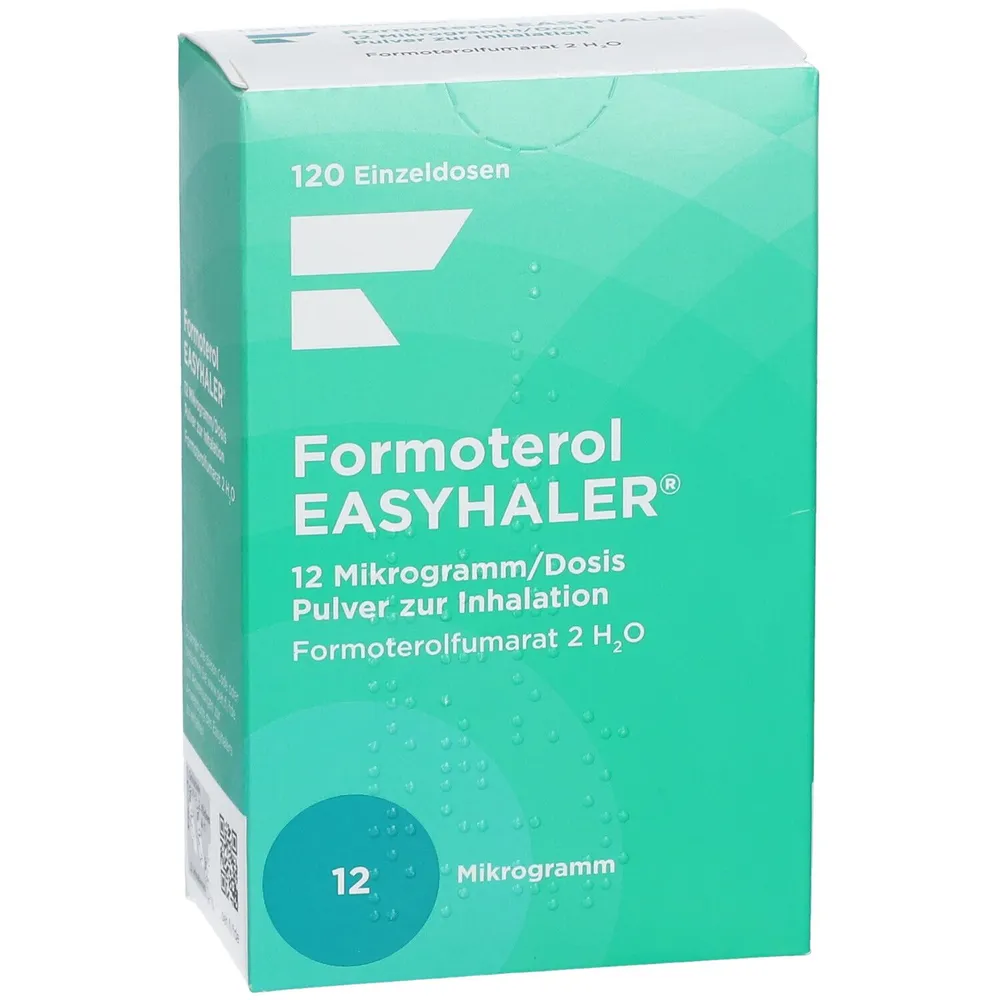
Table of Contents
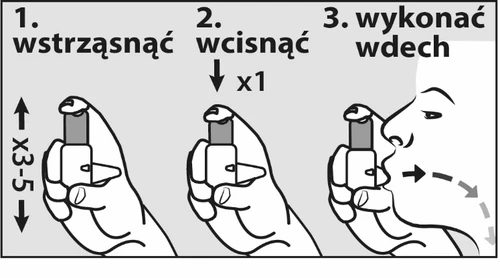
QR code for the website: www.oeh.fi/fpl
For instructions on how to use the Easyhaler inhaler, please read the instructions
at the end of this leaflet or scan this QR code. The same information is also available
on the website: www.oeh.fi/fpl
Package leaflet: information for the user
Formoterol Easyhaler, 12 micrograms per dose, powder for inhalation
Formoteroli fumaras dihydricus
Please read the entire leaflet carefully before using this medicine, as it contains
important information for the patient.
- Keep this leaflet for future reference.
- If you have any questions, consult your doctor, pharmacist, or nurse.
- This medicine has been prescribed for a specific individual. Do not pass it on to others. This medicine may harm someone else, even if their symptoms are similar.
- If you experience any adverse effects, including any not listed in this leaflet, inform your doctor, pharmacist, or nurse. See section 4.
Leaflet contents
- What Formoterol Easyhaler is and what it is used for
- What you need to know before using Formoterol Easyhaler
- How to use Formoterol Easyhaler
- Possible side effects
- How to store Formoterol Easyhaler
- Contents of the pack and other information
1. What Formoterol Easyhaler is and what it is used for
What is Formoterol Easyhaler?
Formoterol Easyhaler is a medicine used in the treatment of asthma. It relaxes the airways, thereby preventing and treating symptoms such as wheezing, shortness of breath, and coughing.
The active substance is formoterol. Formoterol in powder form is contained in an inhaler called Easyhaler. The powder is inhaled into the lungs through the inhaler's mouthpiece.
What is Formoterol Easyhaler used for?
It is used:
- together with inhaled corticosteroids for the treatment and prevention of asthma symptoms,
- for the treatment and prevention of symptoms of chronic obstructive pulmonary disease (COPD).
The effect of formoterol begins within 1–3 minutes and lasts for approximately 12 hours.
2. Important information before using Formoterol Easyhaler
Do not use Formoterol Easyhaler if the patient is allergic to:
formoterol,
any of the other ingredients of this medicine (listed in section 6), which is monohydrate lactose (which
contains a small amount of milk proteins).
Do not administer to children under 6 years of age.
Warnings and precautions
Before starting treatment with Formoterol Easyhaler, discuss this with the doctor, pharmacist,
or nurse if the patient has:
heart disorders,
high blood pressure,
diabetes (additional blood glucose measurements may be necessary at the beginning of
treatment with Formoterol Easyhaler),
low potassium levels in the blood,
hyperthyroidism,
pheochromocytoma.
Formoterol Easyhaler and other medicines
Tell the doctor or pharmacist about all medicines the patient is currently taking or has taken
recently, as well as any medicines the patient plans to take.
Inform the doctor, especially if taking medicines such as:
- monoamine oxidase inhibitors (MAO inhibitors), e.g. moclobemide used in the treatment of depression. Do not use Formoterol Easyhaler in patients treated with monoamine oxidase inhibitors within the last 14 days.
- tricyclic antidepressants, such as amitriptyline or imipramine.
- medicines used in the treatment of Parkinson's disease, e.g. selegiline and levodopa.
- medicines used in the treatment of heart diseases, including cardiac arrhythmias or angina pectoris.
- medicines used in the treatment of hypertension.
- beta-adrenergic blocking agents (in tablet form and eye drops).
- diuretics (water tablets).
- erythromycin (used in the treatment of infections).
- corticosteroids in tablet form (e.g. prednisolone).
- medicines used in respiratory disorders, e.g. theophylline or aminophylline.
- medicines used in allergies, such as antihistamines.
- medicines used in psychiatric disorders or severe nausea and vomiting, such as phenothiazines.
- medicines used in thyroid disorders, e.g. levothyroxine.
If the patient is to undergo anesthesia, the patient should inform the doctor or dentist
about taking Formoterol Easyhaler.
Formoterol Easyhaler with food, drink and alcohol
If the patient drinks alcohol while taking Formoterol Easyhaler, an increased heart rate may occur.
Pregnancy, breastfeeding and fertility
Do not use Formoterol Easyhaler during pregnancy or if the woman is suspected of being
pregnant or planning pregnancy, unless otherwise advised by the doctor. Do not use Formoterol
Easyhaler during breastfeeding.
Driving and operating machinery
Formoterol should not affect the ability to drive or operate machinery.
However, if the patient experiences adverse effects such as dizziness, the ability to drive and
operate machinery may be impaired.
Formoterol Easyhaler contains monohydrate lactose
Monohydrate lactose contains a small amount of milk proteins, which may cause an allergic
reaction.
If the patient has previously been diagnosed with intolerance to certain sugars, the patient should
consult the doctor before taking this medicine. The amount of monohydrate lactose in Formoterol Easyhaler (approximately 8 mg per dose) usually does not cause problems in individuals with lactose intolerance.
3. How to use Formoterol Easyhaler
This medicine should always be used exactly as directed by your doctor or pharmacist. If in doubt,
please consult your doctor or pharmacist.
Acute asthma attacks
If an acute asthma attack occurs between doses of Formoterol Easyhaler, use a short-acting inhaled
medicine immediately.
You should contact your doctor as soon as possible if:
- wheezing, breathlessness or coughing worsens,
- symptoms return more quickly than usual,
- you need to use your short-acting reliever medicine more often than usual.
Use in adults (including elderly) and adolescents (aged over 12 years):
Asthma:
Usually 1 dose (12 micrograms) taken regularly twice daily. The dose may be increased up to a maximum of 2 doses (2 x 12 micrograms) per day.
Chronic obstructive pulmonary disease (COPD):
Usually 1 dose (12 micrograms) regularly twice daily. The maximum daily dose is 2 doses per day.
Use in children aged 6 to 12 years:
Asthma:
Usually 1 dose (12 micrograms) regularly twice daily. The maximum daily dose is 2 inhalations per day.
Taking more Formoterol Easyhaler than recommended
If you take more Formoterol Easyhaler than you should, consult your doctor or nurse immediately. Symptoms of overdose may include: nausea, vomiting, headache, tremor, and fast heartbeat.
If you forget to take Formoterol Easyhaler
Do not take a double dose to make up for a forgotten dose. If you forget to take a dose, take it as soon as possible. If it is almost time for your next dose, do not take the missed dose; instead, return to your regular dosing schedule.
Stopping Formoterol Easyhaler
Do not stop or reduce the dose of Formoterol Easyhaler, inhaled corticosteroids, or other medicines used for respiratory disorders without consulting your doctor. It is important to take this medicine regularly, even if you feel better. This medicine is usually taken in the morning and evening.
If you have any further questions about the use of this medicine, consult your doctor, pharmacist, or nurse.
Instructions for using the inhaler are provided at the end of this leaflet.
4. Possible adverse reactions
Like all medicines, this medicine can cause adverse reactions, although not everyone will experience them.
These adverse reactions are often mild and may subside during continued treatment. If adverse
reactions are severe, persist for more than a few days, or if the patient is concerned about any of them,
this should be reported to the doctor.
The use of Formoterol Easyhaler must be discontinued and medical advice should be sought immediately
if the patient experiences any of the following symptoms:
- itching, rash, redness of the skin,
- swelling of the eyelids, lips, face or throat,
- low blood pressure or collapse,
- worsening of wheezing and breathlessness immediately after taking a dose of the medicine.
Other adverse reactions:
Common ( may affect up to 1 in 10 people ):
- tremor,
- palpitations,
- headache.
Uncommon ( may affect up to 1 in 100 people ):
- muscle cramps, muscle pain,
- fast heartbeat,
- insomnia,
- nervousness, anxiety.
Rare ( may affect up to 1 in 1,000 people ):
- irregular or uneven heartbeat, extrasystoles,
- decreased blood potassium levels,
- irritation of the mouth or throat,
- wheezing, breathlessness,
- allergic reactions,
- nausea.
Very rare ( may affect up to 1 in 10,000 people ):
- taste disturbances,
- increased blood glucose levels,
- chest pain or tightness,
- heart disorders (QT interval prolongation),
- changes in blood pressure,
- dizziness.
Reporting of adverse reactions
If any adverse reactions occur, including any not listed in this leaflet, the patient should inform their doctor,
pharmacist or nurse. Adverse reactions can be reported directly to the Department for Monitoring Adverse
Drug Reactions of the Office for Registration of Medicinal Products, Medical Devices and Biocidal Products,
Al. Jerozolimskie 181 C, 02-222 Warsaw, Tel.: +48 22 49 21 301,
Fax: +48 22 49 21 309, Website: https://smz.ezdrowie.gov.pl
Adverse reactions can also be reported to the marketing authorization holder.
Reporting adverse reactions allows more information to be gathered about the safety of the medicine.
5. How to store Formoterol Easyhaler
- Keep the medicine out of the reach and sight of children.
- Before first use, store in the sealed foil pouch.
- After opening the foil pouch: do not store at temperatures above 30°C; protect from moisture. It is recommended to keep the Easyhaler inhaler in its protective packaging.
- If the Formoterol Easyhaler becomes wet, it must be replaced with a new one.
- The Formoterol Easyhaler must be replaced with a new one no later than 4 months after opening the foil pouch. To help remember the date of opening, write it down.
Do not use Formoterol Easyhaler after the expiry date stated on the label and carton.
The expiry date refers to the last day of the stated month.
Medicines must not be disposed of via wastewater or household waste. Ask your pharmacist how to dispose of medicines no longer required. Such measures will help protect
the environment.
6. Contents of the pack and other information
What Formoterol Easyhaler contains
- The active substance is formoterol fumarate dihydrate.
- Other ingredients of the medicine are monohydrate lactose (which contains a small amount of milk proteins).
What Formoterol Easyhaler looks like and contents of the pack
White to off-white powder in a plastic multidose inhaler. Each inhaler contains 120 doses and has a white body with a green top. The inhaler is sealed in a foil pouch and is packaged with or without a protective case in a cardboard box. Formoterol Easyhaler 12 micrograms/dose, powder for inhalation may be available in packs containing 1 or 2 inhalers.
- one inhaler (120 doses) + protective case for inhaler
- one inhaler (120 doses)
- two inhalers (2 x 120 doses)
Not all pack sizes may be marketed.
Marketing Authorisation Holder
Orion Corporation
Orionintie 1
FI-02200 Espoo
Finland
For further information about this medicinal product, contact the local representative of the Marketing Authorisation Holder:
Orion Pharma Poland Sp. z o.o.
[email protected]
This medicinal product is authorised for marketing in the European Economic Area countries under the following names:
Czech Republic, Finland, Slovakia, Poland, Hungary, United Kingdom Formoterol Easyhaler
Denmark Formo Easyhaler
Estonia, Lithuania, Latvia Fomeda Easyhaler
Detailed and up-to-date information on the use of this medicine is available by scanning with a smartphone the QR code (located both on the outer packaging and on the inhaler label). The same information is available on the website: www.oeh.fi/fpl
QR code for the website: www.oeh.fi/fpl
How to use the Easyhaler inhaler
Information about the Easyhaler inhaler
The Formoterol Easyhaler inhaler may differ from inhalers previously used by the patient. Therefore, it is very important to use it correctly, as incorrect use may result in the patient not receiving the proper dose of medicine. This could lead to worsening of the patient's condition or inadequate treatment of asthma or COPD.
The doctor, nurse, or pharmacist will show the patient how to use the inhaler correctly.
The patient should ensure that they understand the correct way to use the inhaler. If in doubt, contact the doctor, nurse, or pharmacist. As with all inhalers, caregivers should ensure that children prescribed Formoterol Easyhaler use the correct inhalation technique as described below. Instructional videos are also available at: www.oeh.fi/fpl
First-time use of the Easyhaler inhaler
| The Easyhaler inhaler is supplied in a foil pouch. Do not open the pouch until ready to use, as it helps keep the dry powder in the inhaler dry. When the patient is ready to start treatment, open the packaging and record the date of opening, for example in a calendar. The Formoterol Easyhaler inhaler can be used for 4 months after removal from the foil pouch. | 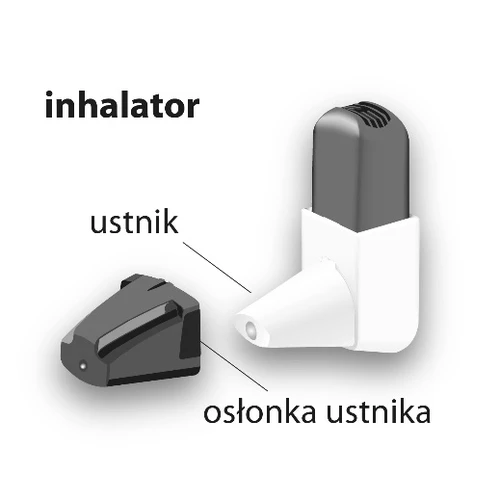 |
HOW TO USE THE INHALER CORRECTLY
Step 1: SHAKE
| SHAKE 3 TO 5 TIMES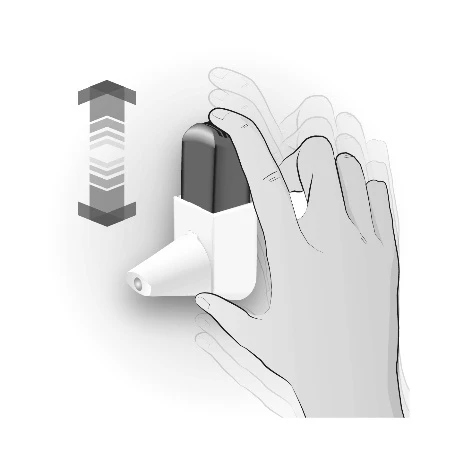 | Important information to remember
|
Step 2: ACTUATION
| ACTIVATE ONCE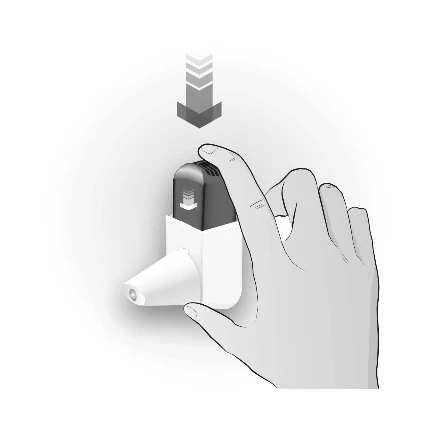 | Important information to remember
|
Step 3: INHALATION
| INHALATION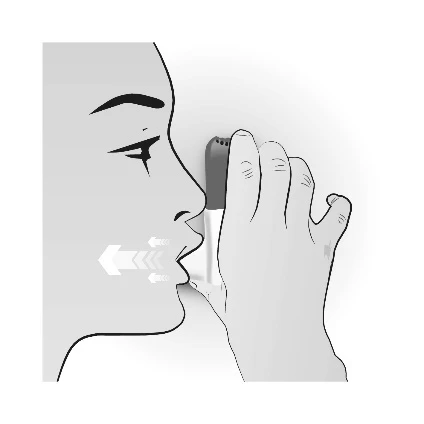 | Important information to remember
|
If an additional inhalation is necessary, repeat the steps described
in points 1–3 "Shaking, Clicking, Inhaling".
After using the inhaler:
- Replace the cap on the mouthpiece to prevent accidental activation of the inhaler.
| How to remove powder from the mouthpiece If the inhaler is accidentally actuated or actuated multiple times, or if you have exhaled into the inhaler, remove the powder from the mouthpiece:
| 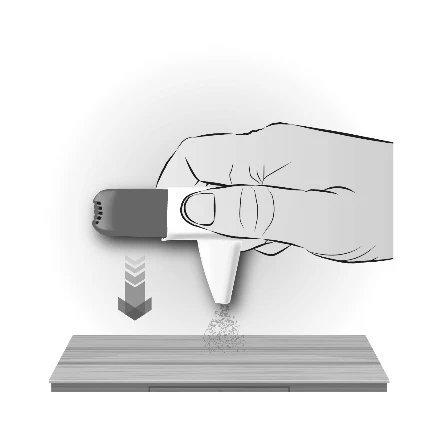 |
Cleaning the Easyhaler inhaler
The inhaler should be kept dry and clean. If necessary, the mouthpiece of the inhaler can be cleaned
with a dry cloth or wipe. Do not use water. The powder in the Easyhaler inhaler is sensitive to moisture.
| Using the Easyhaler inhaler in the protective case The inhaler can be used within the protective case, which helps extend the product's shelf life. Before placing the inhaler into the protective case, ensure that the mouthpiece cover is closed to prevent accidental actuation of the inhaler. The inhaler can be used without removing it from the protective case. Use according to the instructions above, | |
| 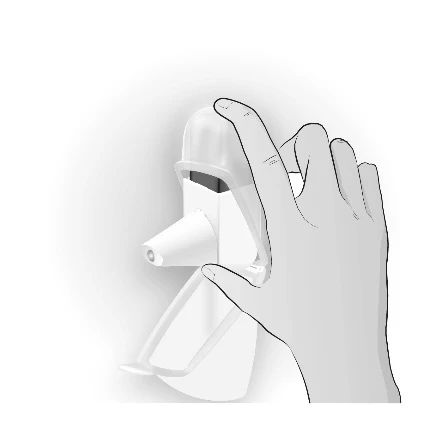 |
| Switching to a new Easyhaler inhaler The inhaler is equipped with a dose counter indicating the number of doses remaining. The counter rotates every five actuations. When the dose counter turns red, this indicates that 20 doses remain. If the patient does not yet have a new Easyhaler inhaler, they should contact their doctor to obtain a new prescription. When the counter shows 0, the Easyhaler inhaler must be replaced. If the patient uses a protective case, it should be kept and used to store the new inhaler. | 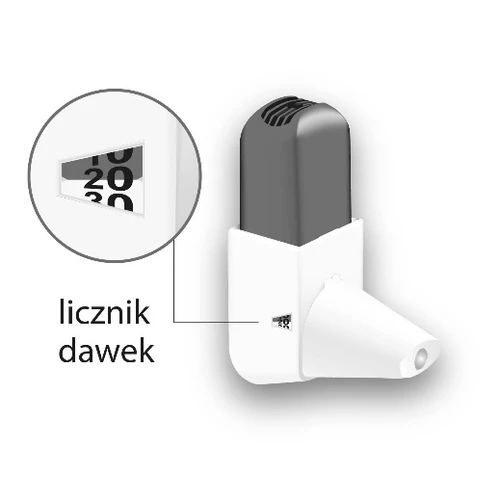 |
To remember
- 1. Shaking, 2. Clicking, 3. Inhaling.
- Do not allow the inhaler to get wet; protect it from moisture.
If you have any further questions regarding the use of this medicine, consult your
doctor or pharmacist.