Forastmin
Poland
Table of Contents
Package leaflet: Information for the patient
Forastmin, 12 micrograms inhalation powder in hard capsule
Formoteroli fumaras dihydricus
Please read all of this leaflet carefully before taking this medicine, because it contains
important information for the patient.
- Keep this leaflet, as you may need to read it again.
- If you have any questions, please consult your doctor or pharmacist.
- This medicine has been prescribed for a specific individual. Do not pass it on to others. This medicine may harm other people, even if their symptoms are the same.
- If you experience any adverse reactions, including any adverse reactions not listed in this leaflet, tell your doctor or pharmacist. See section 4.
Contents of the leaflet
- What Forastmin is and what it is used for
- Important information before taking Forastmin
- How to use Forastmin
- Possible side effects
- How to store Forastmin
- Contents of the pack and other information
1. What Forastmin is and what it is used for
Forastmin contains formoterol, a substance that dilates the bronchi and facilitates breathing (a selective
β-adrenergic receptor agonist).
Forastmin 12 micrograms in the form of inhalation powder is a medicine used for the long-term
treatment of moderate to severe chronic asthma in patients requiring regular treatment with a bronchodilator in combination with long-term anti-inflammatory therapy. Regular administration of glucocorticosteroids should be continued.
Forastmin is also indicated for the relief of symptoms of bronchospasm (shortness of breath caused by narrowing of the airways) in patients with chronic obstructive pulmonary disease.
Initiation of treatment with this medicine should be performed by a pulmonology specialist.
Forastmin capsules are for inhalation use only.
2. Important information before using Forastmin
When not to use Forastmin:
- if the patient is allergic to formoterol fumarate or any of the other ingredients of this medicine (listed in section 6).
This medicine must not be used in children under 18 years of age.
Warnings and precautions
Before starting treatment with Forastmin, discuss this with your doctor or pharmacist.
- This medicine is not identical to other inhaled medicines containing formoterol. Do not switch from another formoterol-containing inhaler to Forastmin without consulting your doctor.
- This medicine should only be used when long-term, regular treatment with a bronchodilator is required. This medicine must not be used instead of short-acting β-adrenergic receptor agonists during an acute asthma attack. In such an attack, a short-acting β-adrenergic receptor agonist, i.e. another medicine, should be used.
- The need for regular use of this medicine to prevent exercise-induced bronchospasm may indicate inadequate asthma control. The underlying asthma treatment should be reassessed by the doctor.
Anti-inflammatory treatment
If the patient has asthma and requires regular use of this medicine, they should also be receiving appropriate doses of corticosteroids regularly. The patient must not reduce the dose of corticosteroids on their own, even if symptoms improve after starting Forastmin. If symptoms do not improve or if the dose of Forastmin needs to be increased to relieve symptoms, the doctor should be informed.
The patient should inform the doctor if they have or have had:
- heart problems,
- hyperthyroidism,
- high blood pressure,
- diabetes (additional blood glucose monitoring may be necessary before using the medicine),
- adrenal gland tumour (pheochromocytoma),
- low potassium levels in the blood.
Forastmin with other medicines
Tell your doctor or pharmacist about all medicines the patient is currently taking or has recently taken, as well as any medicines they plan to take.
In particular:
- medicines used for depression, such as monoamine oxidase inhibitors (MAOIs) and tricyclic antidepressants,
- medicines used for heart conditions, including heart rhythm disorders (quinidine, disopyramide, procainamide) or heart failure (medicines containing cardiac glycosides),
- medicines used for high blood pressure,
- beta-adrenergic receptor blocking medicines (in tablets or eye drops),
- diuretics,
- medicines used for asthma, such as theophylline or steroids,
- medicines used for allergies (terfenadine, astemizole, mizolastine) or schizophrenia (phenothiazines),
- medicines used to treat malaria (quinidine),
- other medicines used for heart rhythm disorders or asthma (β-agonists, catecholamines, anticholinergics, and corticosteroids).
If the patient is to undergo anaesthesia, they should inform the doctor or dentist about the use of Forastmin.
Forastmin with food and drink
This medicine may be taken regardless of meals.
Pregnancy, breastfeeding and fertility
If the patient is pregnant or breastfeeding, suspects she may be pregnant, or is planning to have a child, she should consult her doctor or pharmacist before using this medicine.
Do not use this medicine without consulting a doctor if the patient is pregnant.
Do not breastfeed while using this medicine without consulting a doctor.
Driving and using machines
Forastmin is not expected to affect the ability to drive or operate machinery. However, if adverse effects such as dizziness occur, the ability to drive or operate machinery may be impaired.
Laboratory tests
This medicine contains an active substance that may cause positive results in doping tests.
Forastmin contains lactose. If the patient has previously been diagnosed with intolerance to certain sugars, they should contact their doctor before using this medicine. However, the amount of lactose in this product (less than 20 milligrams per delivered dose) usually does not cause problems in individuals with lactose intolerance.
3. How to use Forastmin
This medicine should always be used exactly as directed by your doctor or pharmacist. If in doubt,
consult your doctor or pharmacist.
If you experience breathlessness or wheezing while using Forastmin, continue using Forastmin and
contact your doctor as soon as possible, as additional treatment may be necessary.
If asthma is well controlled, your doctor may consider gradually reducing the dose of Forastmin.
For inhalation use only.
The capsules are intended exclusively for inhalation.
Do not swallow the capsules.
The active substance of this medicine is inhaled into the airways.
The medicine should be used correctly to ensure its effectiveness.
Important: Wash your hands thoroughly and dry them completely before using the medicine. This
medicine must not be exposed to moisture.
Unless otherwise directed by your doctor, the usual dose for adults, including elderly patients, is:
- Asthma
Long-term treatment: one inhalation once or twice daily. In individual cases, two inhalations once
or twice daily may be necessary. - Prevention of exercise-induced bronchospasm
One inhalation before anticipated physical exertion.
The daily dose should not exceed 4 inhalations.
Do not use more than 2 inhalations at one time. - Chronic obstructive pulmonary disease (COPD)
Long-term treatment: one inhalation once or twice daily.
When used regularly, inhalations should not be performed more than twice per day.
If needed, additional inhalations may be used to relieve symptoms, in addition to the regularly
administered doses, up to a maximum daily dose of 4 inhalations (including both regular and
additional doses).
Do not use more than 2 inhalations at one time.
Special patient groups
There is no need to adjust the dose in patients with renal or hepatic impairment.
When Forastmin is to replace another inhaled medicine containing formoterol, dose adjustment
may be necessary.
Using more than 2 doses per day more than twice a week indicates that the current maintenance
treatment is inadequate. In such cases, consider changing the maintenance therapy.
Using higher doses usually provides no additional benefit but may increase the likelihood of
adverse effects, including severe ones.
If you feel that the effect of Forastmin is too strong or too weak, inform your doctor.
Instructions for using the inhaler
Remove the capsule from the packaging immediately before inhalation. The capsule remains stable
inside the inhalator for up to 3 days.
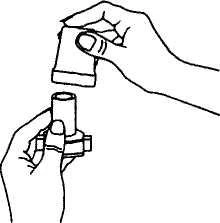
- Remove the protective cap from the inhaler.
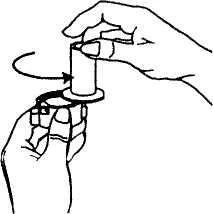
- Holding the inhaler vertically in your hand, rotate the mouthpiece in the direction of the arrow.
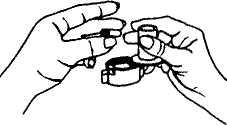
- Place the capsule into the inhalator chamber.
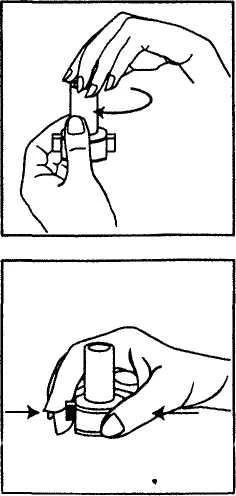
- Rotate the mouthpiece back to its original position. From this point on, keep the inhaler upright.
- Holding the inhaler upright, press the red side buttons firmly only once. Then release the buttons.
Note: The capsule may fragment during piercing! Small fragments of hypromellose from the
capsule shell may enter the mouth and throat during inhalation. Like food, hypromellose is absorbed
by the body and is not harmful. The risk of capsule fragmentation can be reduced by pressing the
piercing buttons only once, following the storage instructions for the capsules, and removing the
capsules from the packaging immediately before inhalation.
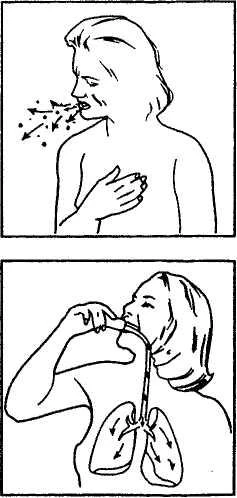
6.a) Breathe out as deeply as possible (not through the inhaler).
6.b) Place the mouthpiece in your mouth and seal your lips tightly around it. Tilt your head slightly
backward and inhale quickly and deeply through the mouthpiece. During inhalation, while the
capsule rotates in the inhalator chamber and the powder disperses, a characteristic sound should
be heard. If this sound is not heard, the capsule may be stuck in the chamber. In such a case,
open the inhaler and remove the capsule. Do not attempt to dislodge the capsule by repeatedly
pressing the piercing buttons.
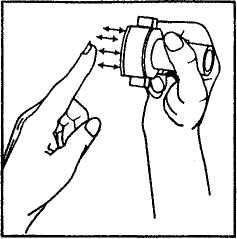
6.c) After hearing the characteristic sound, hold your breath as long as possible. Then remove the
inhaler from your mouth, exhale slowly, and resume normal breathing. After using the inhaler,
check whether the inhalation was effective. To do this, open the inhaler and check whether any
powder remains in the capsule. If powder remains, repeat the steps described in points 6.a to 6.c.
After inhalation
Open the inhaler, remove the empty capsule, rotate the mouthpiece back to its original position,
and replace the protective cap.
Cleaning the inhaler
Clean the inhaler with a dry cloth. Open the chamber where the capsule is placed and remove any
powder residue. Also clean the mouthpiece. Instead of a cloth, a soft brush may also be used for
cleaning.
Note
Forastmin capsules must only be used with the provided inhaler. Under no circumstances should
they be used with any other inhaler.
The inhaler intended for administering Forastmin must not be used for inhaling other medicines.
Use of a higher than recommended dose of Forastmin
Contact your doctor immediately.
Symptoms of overdose are the same as adverse reactions but occur rapidly and may be more severe.
Symptoms of overdose include:
Nausea, vomiting, headache, palpitations, irregular and/or rapid heartbeat, pronounced tremors
(particularly in the hands), dizziness, restlessness, sleep disturbances, and chest pain.
Missed dose of Forastmin
Do not take a double dose to make up for a missed dose.
If you miss a dose, take it as soon as you remember. However, if it is almost time for your next dose
(less than 6 hours away), wait and take only the next scheduled dose.
Stopping treatment with Forastmin
Do not stop using this medicine without consulting your doctor.
If you have any further questions about the use of this medicine, consult your doctor or pharmacist.
4. Possible adverse reactions
Like all medicines, this medicine can cause adverse reactions, although not everyone will experience them.
If any of the following adverse symptoms occur, discontinue taking the medicine immediately
and consult a doctor without delay:
- itching, rash, skin redness,
- eyelid, lip, facial or throat swelling,
- low blood pressure or fainting,
- worsening of wheezing and breathlessness shortly after taking the dose.
For assessing adverse reactions, the following frequency conventions have been adopted:
Very common: may affect more than 1 in 10 people
Common: may affect less than 1 in 10 people
Uncommon: may affect less than 1 in 100 people
Rare: may affect less than 1 in 1,000 people
Very rare: may affect less than 1 in 10,000 people
Frequency not known: frequency cannot be estimated from the available data
The most frequently reported adverse events during treatment with β-adrenergic receptor stimulating medicines, such as tremor and palpitations, are usually mild and diminish after a few days of treatment.
| System, organ | Common | Uncommon | Rare | Very rare |
| Immune system disorders | Allergic reactions (hypersensitivity), such as rash, urticaria, itching, angioedema or peripheral edema | |||
| Metabolism and nutrition disorders | Decreased blood potassium concentration (hypokalemia) | Increased blood glucose concentration (hyperglycemia), increased insulin, free fatty acids, glycerol and ketone bodies concentration in blood | ||
| blood | ||||
| Psychiatric disorders | Agitation, restlessness, nervousness, sleep problems, irritability, psychomotor agitation | |||
| Nervous system disorders | Tremor, headache | Dizziness, taste disturbances | ||
| Cardiac disorders | Palpitations | Increased heart rate (tachycardia) | Heart rhythm disorders: atrial fibrillation, supraventricular tachycardia, extrasystoles | Chest pain or tightness (angina pectoris), QT interval prolongation c |
| Vascular disorders | Changes in blood pressure | |||
| Respiratory, thoracic and mediastinal disorders | Throat irritation | Severe cough or wheezing | Severe paradoxical bronchospasm | |
| Gastrointestinal disorders | Oral cavity irritation | Nausea | ||
| Musculoskeletal and connective tissue disorders | Muscle cramps, muscle pain |
Lactose contains small amounts of milk proteins, which may therefore cause allergic reactions.
Inform your doctor of any adverse reactions that occur. If necessary, the doctor will adjust the dosage of the medication. Do not change the dosage independently without consulting your doctor. In case of severe adverse reactions, discontinue administration of Forastmin immediately and inform your doctor.
Reporting adverse reactions
If any adverse reactions occur, including any adverse reactions not listed in this leaflet, inform your doctor or pharmacist. Adverse reactions can be reported directly to the Department of Monitoring Adverse Drug Reactions of the Office for Registration of Medicinal Products, Medical Devices and Biocidal Products:
Al. Jerozolimskie 181C, 02-222 Warsaw, phone: +48 22 49 21 301, fax: +48 22 49 21 309
Website: https://smz.ezdrowie.gov.pl
Adverse reactions can also be reported to the marketing authorization holder.
By reporting adverse reactions, additional information regarding the safety of the medicine can be collected.
5. How to store Forastmin
Keep the medicine out of the sight and reach of children.
Do not store above 25°C.
Store in the original packaging to protect from moisture.
Do not use this medicine after the expiry date stated on the carton and bottle after: EXP.
The expiry date refers to the last day of the stated month.
Medicines should not be disposed of via wastewater or household waste. Ask your pharmacist
how to dispose of medicines you no longer use. This will help protect the environment.
6. Contents of the pack and other information
What Forastmin contains
- The active substance is formoterol fumarate dihydrate. Each hard capsule contains 12 micrograms of formoterol fumarate dihydrate. One delivered dose contains 9 micrograms of formoterol fumarate dihydrate.
- The other components are:
Contents of the capsule:- lactose,
- monohydrate lactose (containing milk proteins).
Capsule shell: - hypromellose.
What Forastmin looks like and contents of the pack
A bottle made of HDPE closed with a polypropylene screw cap containing a desiccant (colloidal silicon dioxide). The inhaler is made of plastic.
Forastmin is available in packs containing:
60 hard capsules with powder for inhalation and one inhaler;
120 hard capsules with powder for inhalation and two inhalers;
180 hard capsules with powder for inhalation and three inhalers.
Marketing Authorisation Holder
Bausch Health Ireland Limited
3013 Lake Drive
Citywest Business Campus
Dublin 24, D24PPT3
Ireland
Manufacturer
Bausch Health Poland sp. z o.o.
Kosztowska 21
41-409 Mysłowice, Poland
SMB Technology S.A.
39 rue du Parc Industriel
B-6900 Marche-en-Famenne
Belgium
This medicinal product is authorised in the Member States of the European Economic Area under the following names:
Finland Formaxa 12 micrograms powder for inhalation
Germany Formoterol Stada 12 micrograms powder for inhalation
Greece Formaxa 12 micrograms powder for inhalation
Poland Forastmin