Foramed
PolandTable of Contents
Package leaflet: Information for the patient
Foramed
12 µg/inhalation, inhalation powder in hard capsules
Formoterol fumarate dihydrate
Please read all of this leaflet carefully before using this medicine because it contains
important information for you.
- Keep this leaflet. You may need to read it again.
- If you have any further questions, please ask your doctor or pharmacist.
- This medicine has been prescribed for a specific individual. Do not pass it on to others. This medicine may harm other people, even if their symptoms are the same.
- If you experience any adverse reactions, including any that are not listed in this leaflet, tell your doctor or pharmacist. See section 4.
Contents of the leaflet:
- What Foramed is and what it is used for
- Important information before using Foramed
- How to use Foramed
- Possible side effects
- How to store Foramed
- Contents of the pack and other information
1. What Foramed is and what it is used for
The active substance in Foramed is formoterol fumarate dihydrate. It is a bronchodilator. Its action consists of relaxing the smooth muscles of the bronchi, thereby facilitating breathing. This effect begins rapidly (within 1–3 minutes) and lasts for 12 hours after inhalation. Each hard capsule contains 12 micrograms of formoterol fumarate dihydrate and is intended for use with an inhaler device.
Foramed is indicated for:
- Prevention and treatment of bronchial constriction in patients with bronchial asthma, as an add-on to inhaled glucocorticosteroid therapy;
- Prevention of bronchospasm induced by inhaled allergens, cold air, or physical exertion;
- Prevention and treatment of bronchial constriction in patients with reversible and irreversible chronic obstructive pulmonary disease (COPD), including chronic bronchitis and emphysema. Formoterol improves quality of life in patients with COPD. The bronchodilating effect lasts for 12 hours after inhalation of Foramed. Therefore, maintenance treatment with twice-daily administration of Foramed helps, in most cases, to relieve bronchoconstriction associated with chronic conditions, both during the day and at night.
Monitoring during treatment with Foramed
Treatment with Foramed may increase blood glucose levels. For this reason, blood glucose monitoring may be necessary in patients with diabetes.
Treatment with Foramed may cause excessive decrease of potassium in the blood, thereby increasing the patient's susceptibility to cardiac arrhythmias. Therefore, especially in cases of severe asthma, your doctor may recommend monitoring blood potassium levels.
If you have any questions about how Foramed works or why it has been prescribed for you, please consult your doctor.
2. Important information before using Foramed
When not to use Foramed:
- if the patient is allergic to formoterol fumarate dihydrate, lactose (which contains a small amount of milk protein), or any of the other ingredients of the medicine (listed in section 6).
If this applies to the patient, they must not take Foramed and should consult their doctor.
If the patient suspects they may be allergic, they should discuss this with their doctor.
Warnings and precautions
Before starting Foramed, discuss the following with your doctor:
- if the patient has heart disease, including heart rhythm disorders;
- if the patient has high blood pressure;
- if the patient has diabetes;
- if the patient has hyperthyroidism;
- if the patient has an aneurysm (a bulge in an artery wall caused by weakening);
- if the patient has a heart condition related to abnormal electrical impulses, known as "QT prolongation";
- if the patient has a phaeochromocytoma (a tumour of the adrenal gland that may affect blood pressure);
- if the patient has a rapid heartbeat;
- if the patient has severe heart failure.
If any of these conditions apply, inform the doctor before using Foramed.
Important information
Do not swallow the capsules – the contents of the capsules must be inhaled through an inhaler.
If the doctor has prescribed other medicines regularly for respiratory disease, it is important to continue taking them as directed.
DO NOT STOP using the medicine or reduce the dose without consulting the doctor, even if there is a significant improvement in health.
If the patient experiences shortness of breath or wheezing while using Foramed, treatment should be continued and the doctor contacted as soon as possible, as a change in therapy may be necessary.
In patients with diabetes, the doctor may recommend monitoring blood glucose levels.
In patients with asthma, Foramed must not be used as the sole controller medication for asthma. Foramed should always be used in combination with an inhaled corticosteroid.
During treatment with Foramed, do not use other products containing long-acting β-adrenergic receptor agonists, such as salmeterol.
Do not use Foramed if:
- the patient's condition is well controlled with an inhaled corticosteroid alone;
- the patient only needs a short-acting β-adrenergic receptor agonist occasionally.
Severe asthma attacks have been observed in clinical trials with formoterol (see section 4, "Possible side effects").
Do not start using Foramed or increase the dose prescribed by the doctor during an asthma attack.
Do not change or stop using any medicines used to control or treat breathing problems, including inhaled corticosteroids.
In asthma, Foramed must not be used to relieve sudden-onset wheezing. For treatment of acute asthma symptoms, always use a short-acting β-adrenergic receptor agonist (e.g. salbutamol).
Paradoxical bronchospasm
As with other inhaled medicines, paradoxical bronchospasm may occur after using Foramed. In such cases, the medicine must be stopped immediately and the doctor contacted, who may recommend alternative treatment.
Children over 6 years of age and adolescents
Foramed is not recommended for use in children under 6 years of age.
Use in elderly patients (over 65 years of age)
The same dose of Foramed may be used in elderly patients as in adult patients.
Important information regarding a similar product
Foramed belongs to a group of medicines called long-acting β-adrenergic receptor agonists. A large study with another long-acting β-adrenergic receptor agonist showed an increased risk of asthma-related death. Studies have not confirmed whether Foramed has a similar effect. Discuss with the doctor the benefits and risks associated with treating asthma using Foramed.
Foramed and other medicines
Tell the doctor about all medicines the patient is currently taking or has recently taken, as well as any medicines the patient plans to use.
Dosage adjustments or, in some cases, discontinuation of one of the medicines may be necessary. This applies to both prescription and over-the-counter medicines, especially:
- monoamine oxidase inhibitors (MAO inhibitors) or tricyclic antidepressants (medicines used to treat depression and mood disorders);
- sympathomimetic medicines (medicines similar to adrenaline, used to treat asthma or to reduce nasal mucosal swelling);
- antihistamines (antiallergic medicines used to prevent and treat allergic symptoms);
- steroids (medicines often used to treat asthma and other inflammatory diseases);
- diuretics (used to treat oedema due to fluid retention, heart failure, and high blood pressure);
- β-adrenergic receptor blockers (medicines used to treat high blood pressure, heart failure, angina, anxiety, and heart rhythm disorders; some eye drops used to treat glaucoma may contain β-adrenergic receptor blockers);
- quinidine, disopyramide, procainamide (medicines used to treat heart rhythm disorders);
- phenothiazine derivatives (medicines used to treat psychiatric disorders such as schizophrenia, manic excitement, psychotic reactions, anxiety);
- cardiac glycosides (medicines used to treat heart failure and heart rhythm disorders);
- xanthine derivatives (medicines used to treat asthma or other chronic obstructive pulmonary diseases);
- macrolides (e.g. erythromycin), used to treat bacterial infections;
- general anaesthetics used during surgery, such as halogenated hydrocarbons (e.g. halothane). Inform the doctor about using Foramed if the patient is scheduled for surgery under general anaesthesia;
- anticholinergic medicines (e.g. ipratropium bromide), used to treat gastrointestinal disorders, urinary and genital system disorders, etc.
Pregnancy and breastfeeding
If the patient is pregnant or breastfeeding, suspects she may be pregnant, or is planning to have a child, she should consult her doctor before using this medicine.
Pregnancy
Foramed should not be used during pregnancy unless clearly prescribed by a doctor. The doctor will inform the patient about potential risks associated with using Foramed during pregnancy.
Breastfeeding
Do not use the medicine during breastfeeding.
Driving and operating machinery
If dizziness or other adverse effects occur, do not drive or operate machinery.
Foramed contains lactose (milk sugar)
If the patient has been diagnosed with severe intolerance to certain sugars, such as lactose, they should inform their doctor before using Foramed. Lactose contains a small amount of milk proteins, which may cause allergic reactions.
3. How to use Foramed
This medicine should always be used exactly as prescribed by your doctor. If in doubt, consult your doctor or pharmacist.
Do not exceed the recommended dose.
Do not swallow the capsules – the contents of the capsules must be inhaled through an inhaler.
Dosage
Adults
Bronchial asthma
In the treatment of asthma, Foramed should always be prescribed as an add-on therapy used together with an inhaled corticosteroid.
Maintenance treatment: inhale the contents of 1 to 2 capsules for inhalation (12 to 24 micrograms) twice daily.
The maximum recommended maintenance dose is 4 capsules (48 micrograms) per day.
If necessary, your doctor may recommend an additional 1 to 2 capsules per day to reduce symptom severity, provided that the maximum recommended daily dose of 48 micrograms is not exceeded. If additional doses are needed frequently (e.g. more than two days per week), you should inform your doctor as soon as possible, as this may indicate worsening asthma. In the case of an acute asthma attack, use a short-acting bronchodilator (e.g. salbutamol).
Prevention of bronchospasm induced by physical exertion or allergens
Inhale the contents of 1 capsule for inhalation (12 micrograms) at least 15 minutes before physical exertion or exposure to allergens. In patients with severe bronchoconstriction, 2 capsules for inhalation (24 micrograms) may be required.
Inhaled corticosteroids are always used in asthma treatment.
Chronic obstructive pulmonary disease (COPD)
Maintenance treatment: inhale the contents of 1 to 2 capsules for inhalation (12 to 24 micrograms) twice daily.
Children over 6 years of age and adolescents
Bronchial asthma
Maintenance treatment: inhale the contents of 1 capsule for inhalation (12 micrograms) twice daily. The maximum recommended daily dose is 2 capsules (24 micrograms).
In the case of an acute asthma attack, use a short-acting bronchodilator (e.g. salbutamol).
Prevention of bronchospasm induced by physical exertion or allergens
Inhale the contents of 1 capsule for inhalation (12 micrograms) at least 15 minutes before physical exertion or exposure to allergens.
Children over 6 years of age may use Foramed only if they are able to use the inhaler correctly (see "Instructions for use of the inhaler") and only under adult supervision.
Foramed is not recommended for children under 6 years of age.
Before starting treatment, read the "Instructions for use of the inhaler".
Instructions for use of the inhaler
The powder for inhalation in hard capsules is administered using a dry powder inhaler.
The powder in the capsule is intended exclusively for inhalation. Do not swallow the capsules.
The inhaler is designed to deliver the powder from the number of capsules contained in the specific package. Do not use the same inhaler for another medicine package.
Immediately before use, remove the capsule from the foil blister. Ensure your hands are completely dry to avoid wetting the capsule.
- Remove the cap of the inhaler.
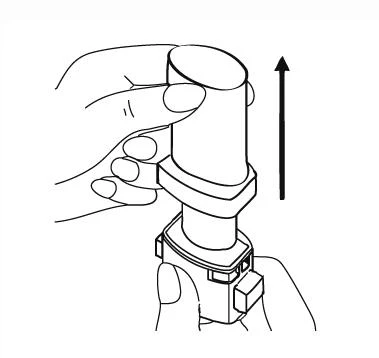
- Hold the base of the inhaler and open it by twisting the mouthpiece in the direction indicated by the arrow.
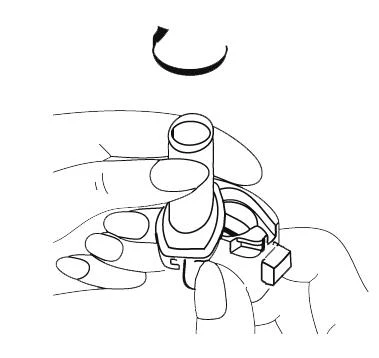
- Place the powder capsule into the chamber of the inhaler base. Remove the capsule from the foil blister immediately before use.
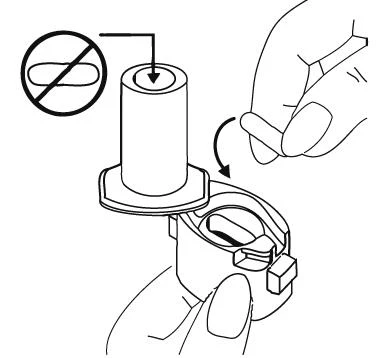
- Close the inhaler by twisting the mouthpiece back in the opposite direction of the arrow until it reaches the closed position.
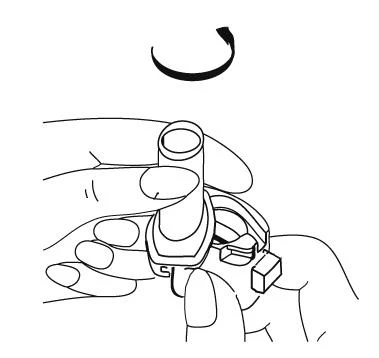
\
- Holding the inhaler vertically, press the inhaler buttons fully down once.
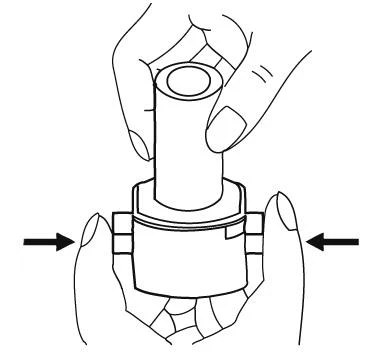
- Release the inhaler buttons. WARNING: At this point, the capsule may break, and small pieces of gelatin may enter the mouth or throat. Since gelatin is edible, ingestion is not harmful. The likelihood of this occurring is minimal if the capsule is punctured only once, storage conditions are maintained, and the capsule is removed from the foil blister immediately before use (see point 3).
- Holding the inhaler with the outlet directed towards the mouth, breathe out slowly and fully.
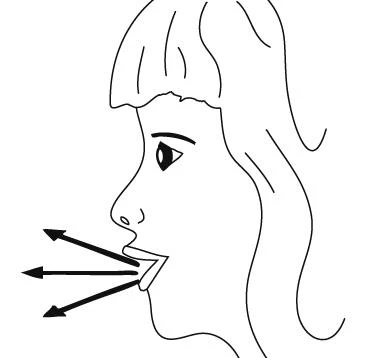
- Tilt your head slightly backward, place the inhaler mouthpiece into your mouth, and seal your lips tightly around it.
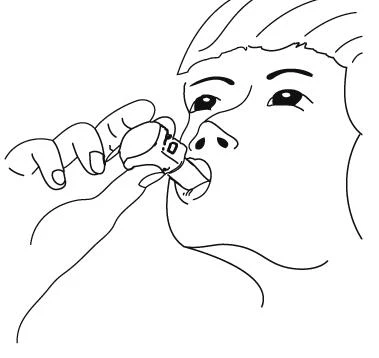
- Take a fast, deep, steady breath in. During inhalation, a characteristic sound should be heard. If this sound is not heard, it may indicate that the capsule is stuck in the chamber of the inhaler base. In this case, open the inhaler and gently dislodge the capsule from the chamber. Do not attempt to dislodge the capsule by repeatedly pressing the buttons. Then repeat the steps described in point 9.
- After hearing the characteristic sound, hold your breath as long as possible without discomfort, then remove the inhaler from your mouth and breathe out through your nose.
- Open the inhaler and check whether any powder remains in the capsule. If powder remains, repeat the procedure from point 7 to point 10.
- After use, open the inhaler, remove the empty capsule, close the mouthpiece, and replace the cap.
Cleaning the inhaler
The dry powder inhaler requires cleaning. To remove residual powder or capsule fragments, wipe the mouthpiece and chamber with a dry cloth or soft brush. Do not use water to clean the inhaler.
Use of a higher than recommended dose of Foramed
It is important to use Foramed exactly as prescribed by your doctor. If a higher than recommended dose of Foramed is accidentally taken, contact your doctor or pharmacist immediately.
Symptoms such as nausea and/or vomiting, muscle tremors, headache, dizziness (possible signs of high blood pressure), rapid or irregular heartbeat, drowsiness, increased blood glucose levels, or decreased blood potassium levels may indicate that the dose of Foramed used is too high. Contact your doctor immediately or go to the nearest hospital emergency department. The patient may require appropriate treatment.
Missed dose of Foramed
If a dose is missed, take the medicine as soon as possible. If it is almost time for the next scheduled dose, do not take a double dose (to make up for the missed dose), but return to your regular dosing schedule.
If you have any further doubts about using this medicine, consult your doctor or pharmacist.
4. Possible adverse reactions
Like all medicines, this medicine can cause adverse reactions, although not everyone experiences them.
Severe asthma attacks (shortness of breath, cough, wheezing and chest tightness) have been observed in clinical trials with formoterol, which may require hospital treatment.
Immediately inform your doctor if any of the following adverse reactions occur:
Severe adverse reactions:
- Bronchospasm with cough, wheezing and difficulty breathing. This reaction occurs uncommonly (from 1 to 10 in 1000 patients),
- Allergic reactions, e.g. rash, urticaria, itching, facial or throat swelling, low blood pressure and bronchospasm. This reaction occurs rarely (from 1 to 10 in 10,000 patients),
- Severe, described as tearing, chest pain (symptoms of angina), changes in ECG. This reaction occurs very rarely (less than 1 in 10,000 patients),
- Muscle-related symptoms such as muscle weakness, muscle cramps and cardiac arrhythmias (these symptoms may be caused by decreased potassium levels in blood),
- If the patient experiences irregular heartbeat (including faster heartbeat).
Adverse reactions occurring frequently (from 1 to 10 in 100 patients):
Headache, muscle tremor, palpitations.
Adverse reactions occurring uncommonly (from 1 to 10 in 1000 patients):
Restlessness, anxiety, nervousness, insomnia, dizziness, increased heart rate, throat mucosa irritation, dryness of the oral mucosa, muscle cramps, muscle pain.
Adverse reactions occurring rarely (from 1 to 10 in 10,000 patients):
Decreased potassium levels in blood, cardiac arrhythmias, extrasystoles, nausea.
Adverse reactions occurring very rarely (less than 1 in 10,000 patients):
Increased blood glucose levels, taste disturbances, swelling of hands, ankles and feet, excessive thirst, frequent urination, fatigue (these symptoms may indicate increased blood glucose levels).
Adverse reactions with unknown frequency:
Cough, rash, headache and dizziness (possible symptoms of high blood pressure).
Use of the medicine may lead to increased insulin levels in blood, free fatty acids, glycerol and ketone bodies.
Reporting of adverse reactions
If any adverse reactions occur, including any not listed in this leaflet, tell your doctor or pharmacist. Adverse reactions can be reported directly to the Department for Monitoring Adverse Drug Reactions, Office for Registration of Medicinal Products, Medical Devices and Biocidal Products
Al. Jerozolimskie 181C
02-222 Warsaw
Phone: +48 22 49 21 301
Fax: +48 22 49 21 309
Email: [email protected].
Adverse reactions can also be reported to the marketing authorization holder.
Reporting adverse reactions helps to provide more information on the safety of the medicine.
5. How to store the medicine Foramed
Keep the medicine out of sight and reach of children.
Store in the original packaging, at a temperature below 25 °C.
Protect from light and moisture.
Do not use this medicine after the expiry date stated on the blister or carton. The expiry date refers to the last day of the stated month.
Medicines must not be disposed of via wastewater or household waste. Ask your pharmacist how to dispose of medicines no longer required. This will help protect the environment.
6. Contents of the package and other information
What Foramed contains
- The active substance is formoterol fumarate dihydrate. One hard capsule contains 12 micrograms of formoterol fumarate dihydrate.
- Other ingredients are: lactose monohydrate and gelatin.
What Foramed looks like and contents of the pack
Foramed is a powder for inhalation contained in hard capsules. The hard capsules are transparent and colourless, containing a white or cream-coloured powder. The powder contained in the capsule is intended for inhalation into the lungs using a suitable inhaler.
Foramed capsules are packed in OPA/Aluminium/PVC-Aluminium blisters. The blisters, together with the inhaler and the patient information leaflet, are placed in a cardboard box.
Foramed is available in packs containing 30, 60, 90 or 120 capsules.
Marketing Authorisation Holder and Manufacturer
LEK-AM Sp. z o.o.
ul. Ostrzykowizna 14 A
05-170 Zakroczym
Poland
Tel.: (22) 785 27 60
Fax: (22) 785 27 60 ext. 106