Folacid
Poland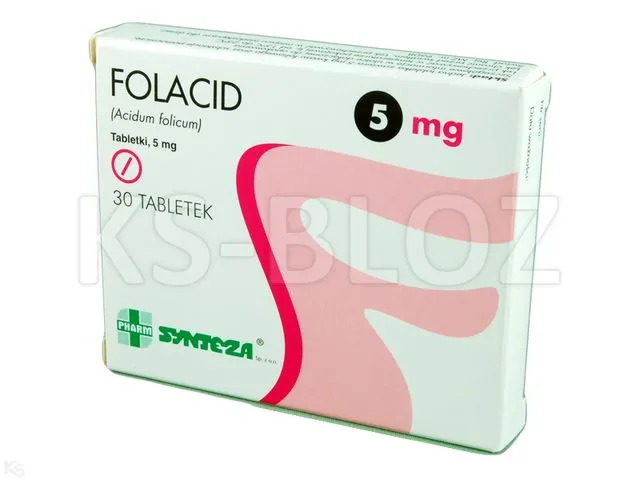
Table of Contents
Package leaflet: Information for the patient
Folacid, 15 mg, tablets
Acidum folicum hydricum
Please read all of this leaflet carefully before taking this medicine, as it contains
important information for the patient.
- Keep this leaflet, as you may need to read it again.
- If you have any further questions, ask your doctor or pharmacist.
- This medicine has been prescribed for a specific individual. Do not pass it on to others. This medicine may harm someone else, even if their symptoms are the same.
- If you experience any adverse reactions, including any not listed in this leaflet, inform your doctor or pharmacist. See section 4.
Leaflet contents:
- What Folacid is and what it is used for
- Important information before taking Folacid
- How to take Folacid
- Possible side effects
- How to store Folacid
- Contents of the pack and other information
1. What Folacid is and what it is used for
Folacid is available in the form of tablets and contains folic acid.
Folic acid (pteroylglutamic acid) is a vitamin of the B group. It is essential for normal
body function and development. In the body, it is reduced to its active form – tetrahydrofolic acid,
which acts as a coenzyme in numerous enzymatic reactions involved in the synthesis of
pyrimidine and purine compounds, deoxyribonucleic acid (DNA), and in amino acid and formate metabolism.
Folic acid plays an important role in tissues with rapid cell division
(haematopoietic system, gastrointestinal tract epithelium, fetal tissues).
Folic acid is essential for the myelination of nerve fibers.
Taking folic acid at a dose of 0.4 mg daily or higher reduces the risk of neural tube defects
in offspring, such as spina bifida and other central nervous system malformations resulting from impaired neural tube formation.
Failure of the so-called neural tube to close during fetal development may lead to conditions such as anencephaly and meningo-myelocele.
Folic acid deficiency manifests as megaloblastic anaemia with leukopenia
and thrombocytopenia.
The daily requirement of an adult for folic acid is approximately 0.4 mg. This requirement doubles in pregnant and breastfeeding women, as well as in individuals who abuse alcohol.
Higher doses of folic acid (5 mg daily) are recommended for use for at least three months prior to a planned pregnancy in women who have previously given birth to a child with a neural tube defect.
Folacid 15 mg tablets are used in the treatment of megaloblastic anaemia.
2. Important information before using Folacid
When not to use Folacid
- if the patient is allergic to hydrated folic acid or to any of the other ingredients of this medicine (listed in section 6).
Warnings and precautions
Before starting treatment with Folacid, please discuss this with your doctor or pharmacist.
Special caution is required when using Folacid:
in the treatment of inadequately diagnosed megaloblastic anaemia due to the possibility of masking the underlying cause of the disease;
in patients with epilepsy;
in patients with brain tissue damage;
in patients with spinal cord damage.
Folacid with other medicines
Inform your doctor or pharmacist about all medicines currently used, recently used, or planned for use.
Antiepileptic drugs (phenytoin, phenobarbital, primidone), antituberculosis drugs, alcohol (ethanol), oral contraceptives, and folic acid antagonists (sulfonamides, methotrexate, trimethoprim, aminopterin, pyrimethamine, sulfasalazine) may lead to folic acid deficiency in the body.
When folic acid is used concomitantly with antiepileptic drugs, monitoring of their plasma concentrations is necessary due to altered metabolism and the possibility of worsening epileptic symptoms.
Antacids containing aluminium or magnesium compounds may reduce the absorption of folic acid. A 2-hour interval should be maintained between administration of these medicines.
Folacid with food and drink
The medicine may be taken before, during, or after a meal.
Pregnancy and breastfeeding
If the patient is pregnant or breastfeeding, suspects she might be pregnant, or is planning to become pregnant, she should consult her doctor or pharmacist before using this medicine.
Pregnancy
This medicine may be used during pregnancy only under medical supervision and with the doctor's approval.
Breastfeeding
This medicine may be used during breastfeeding only under medical supervision and with the doctor's approval.
Folic acid passes into the breast milk of nursing mothers.
Driving and operating machinery
Folacid has no influence on the ability to drive or operate machinery.
The medicine contains lactose monohydrate
Each tablet contains 58.5 mg of lactose monohydrate.
If the patient has previously been diagnosed with intolerance to certain sugars, the patient should consult their doctor before taking this medicine.
The medicine contains sodium
The medicine contains less than 1 mmol (23 mg) of sodium per tablet, meaning the medicine is considered "sodium-free".
3. How to use Folacid
This medicine should always be taken as directed by a physician or pharmacist. If in doubt,
consult a physician or pharmacist.
Recommended dosage:
In megaloblastic anaemia, in malabsorption disorders: 15 mg per day for 4
months.
This medicine should be taken orally with an adequate amount of liquid, e.g. a glass of water.
Use of a higher than recommended dose of Folacid
In case of overdose, adverse reactions may occur (listed in section 4).
Missing a dose of Folacid
Continue taking the medicine as prescribed.
Do not take a double dose to make up for a missed dose.
Stopping treatment with Folacid
If you have any further doubts regarding the use of this medicine, consult your
physician or pharmacist.
4. Possible adverse reactions
Like all medicines, this medicine can cause adverse reactions, although not everyone experiences them.
Folic acid is generally well tolerated. Possible reactions include allergic reactions (skin rash, skin redness, bronchospasm, fever), malaise, gastrointestinal disturbances, nausea, vomiting, sleep disturbances, depression, and agitation.
Frequency unknown: severe allergic reaction (anaphylactic reaction).
If a severe allergic reaction occurs, stop using the medicine immediately and contact a doctor or go to a hospital.
If any other adverse symptoms occur, discontinue use of the medicine and consult a doctor.
In some individuals, other adverse reactions may occur during treatment with Folacid.
Reporting adverse reactions
If any adverse reactions occur, including any adverse reactions not listed in this leaflet, inform your doctor, pharmacist, or nurse. Adverse reactions can be reported directly to the Department of Monitoring Adverse Drug Reactions at the Office for Registration of Medicinal Products, Medical Devices and Biocidal Products
Al. Jerozolimskie 181C,
02-222 Warsaw,
Phone: +48 22 49 21 301,
Fax: +48 22 49 21 309,
Website: https://smz.ezdrowie.gov.pl
Adverse reactions can also be reported to the marketing authorization holder.
Reporting adverse reactions enables continuous monitoring of the medicine's safety and helps provide more information on its safe use.
5. How to store Folacid
Keep this medicine out of sight and reach of children.
Store below 25°C.
Keep in the original packaging to protect from light.
Do not use this medicine after the expiry date stated on the carton after "Expiry date".
The expiry date refers to the last day of the stated month.
Medicines should not be disposed of via wastewater or household waste. Ask your pharmacist how to dispose of medicines no longer required. This will help protect the environment.
6. Contents of the pack and other information
What Folacid contains
- The active substance is folic acid monohydrate (Acidum folicum hydricum). Each tablet contains 15 mg of folic acid monohydrate.
- The other ingredients are: monohydrate lactose, microcrystalline cellulose (E 460 I), sodium carboxymethyl starch (E 466), colloidal anhydrous silica (E 551), magnesium stearate (E 470 b), sodium lauryl sulfate.
What Folacid looks like and contents of the pack
Folacid 15 mg tablets are yellow, round, biconvex tablets.
The tablets are packed in PVC/PVDC/Aluminium blisters in a cardboard box.
30 tablets – 1 blister containing 30 tablets
60 tablets – 2 blisters containing 30 tablets each
Not all pack sizes may be marketed.
Marketing Authorisation Holder and Manufacturer
Pharmaceutical-Chemical Enterprise "SYNTEZA" Sp. z o.o.
ul. Św. Michała 67/71, 61-005 Poznan
tel. +48 61 879 20 81
fax +48 61 876 51 79
e-mail: [email protected]
For further information, please contact the representative of the Marketing Authorisation Holder:
Poland
Pharmaceutical-Chemical Enterprise "Synteza" Sp. z o.o.
ul. Św. Michała 67/71
61-005 Poznan
Tel. 0 61 879-20-81