Fluorouracil medac
Poland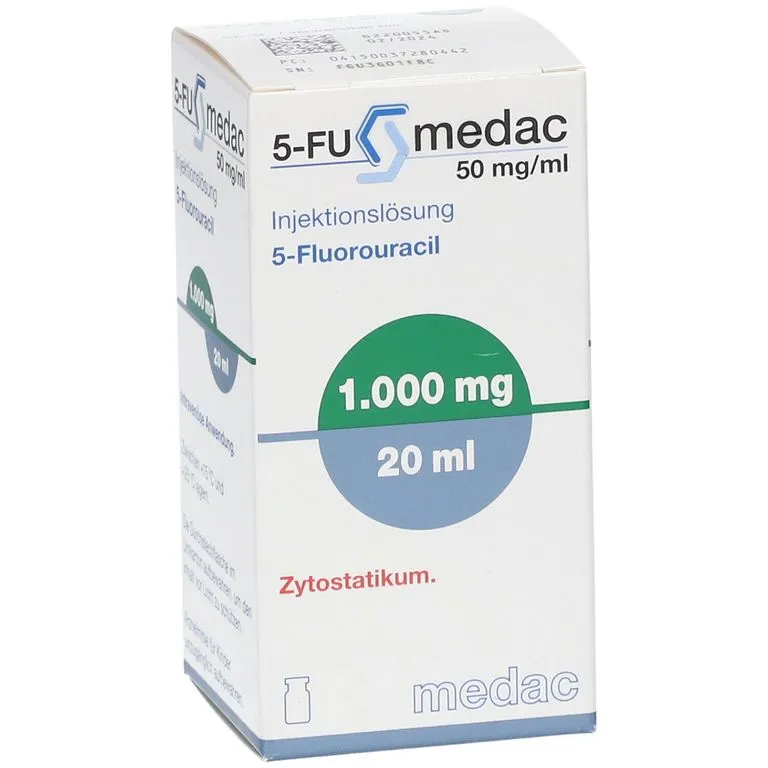
Table of Contents
- Package leaflet: Information for the user
- 1. What Fluorouracil medac is and what it is used for
- 2. Important information before using Fluorouracil medac
- 3. How to use Fluorouracil medac
- 4. Possible adverse reactions
- 5. How to store Fluorouracil medac
- 6. Contents of the pack and other information
- Information intended exclusively for medical professionals:
Package leaflet: Information for the user
Fluorouracil medac, 50 mg/ml, solution for injection
Fluorouracilum
Please read all of this leaflet carefully before using this medicine because it
contains important information for you.
- Keep this leaflet as you may need to read it again.
- If you have any questions, ask your doctor, pharmacist, or nurse.
- This medicine has been prescribed for a specific individual. Do not pass it on to others. It may harm someone else even if their symptoms are the same.
- If you experience any adverse reactions, including any not listed in this leaflet, tell your doctor, pharmacist, or nurse. See section 4.
Contents of the leaflet
- What Fluorouracil medac is and what it is used for
- What you need to know before using Fluorouracil medac
- How to use Fluorouracil medac
- Possible side effects
- How to store Fluorouracil medac
- Contents of the pack and other information
1. What Fluorouracil medac is and what it is used for
Fluorouracil is an antineoplastic agent belonging to the group of antimetabolites.
Fluorouracil medac, solution for injection, is used in adjuvant and palliative treatment of colorectal cancer and breast cancer. It may be used in combination with other antineoplastic agents.
2. Important information before using Fluorouracil medac
When not to use Fluorouracil medac
- if the patient has a known hypersensitivity (allergy) to fluorouracil or any of the excipients listed in section 6;
- if the bone marrow has been damaged by previous treatments (including radiotherapy);
- if the tumour is benign;
- if the patient has severe liver function impairment;
- if the patient has a severe infection (e.g. shingles, chickenpox);
- if the patient is severely weakened due to prolonged treatment or other anticancer therapies (e.g. radiotherapy);
- if the patient is breastfeeding;
- if the patient has no detectable activity of the enzyme dihydropyrimidine dehydrogenase (DPD) (complete DPD deficiency);
- if the patient is currently being treated or has been treated with brivudine within the last 4 weeks for the treatment of shingles or chickenpox.
Warnings and precautions
Before starting treatment with Fluorouracil medac, discuss the following with your doctor or
pharmacist:
- if the patient has a low blood cell count (blood tests will be performed to monitor this);
- if the patient experiences gastrointestinal adverse reactions (such as oral mucositis, diarrhoea, gastrointestinal bleeding) or bleeding from any site;
- if the patient has angina pectoris (worsening heart condition with sudden chest pain);
- if the patient has a history of heart disease;
- if the patient has cardiac disorders. Inform the doctor if chest pain occurs during treatment;
- if the patient has partial deficiency of dihydropyrimidine dehydrogenase (DPD) enzyme activity;
- if a family member of the patient has partial or complete deficiency of dihydropyrimidine dehydrogenase (DPD);
- if the patient is currently being treated with brivudine or has received such treatment within the last 4 weeks;
- if the patient is taking phenytoin to prevent seizures;
- if the patient has kidney disease;
- if the patient has liver disease, including jaundice (yellowing of the skin);
- if the patient has been exposed to sunlight for prolonged periods. Sunlight exposure is not recommended due to the risk of photosensitivity;
- if the patient has undergone pelvic irradiation with high doses;
- if the patient has received vaccines containing live microorganisms;
- if the patient is receiving leucovorin or taking folic acid. Folic acid may increase the risk of fluorouracil-related toxicity, especially in elderly or weakened patients.
Dihydropyrimidine dehydrogenase (DPD) deficiency: DPD deficiency is a
genetic condition that usually causes no health problems until the patient
receives certain medications. If a patient has DPD deficiency and receives Fluorouracil
medac, the risk of severe adverse reactions (listed in section 4 – "Possible side effects") increases.
It is recommended to test the patient for DPD deficiency before starting treatment.
If complete absence of enzyme activity is confirmed, the patient should not be treated with
Fluorouracil medac. If enzyme activity is reduced (partial deficiency), the doctor may prescribe a reduced dose.
Even if the DPD deficiency test is negative, severe and life-threatening adverse reactions may still occur.
Contact your doctor immediately if any of the following symptoms occur:
new-onset confusion, disorientation or other psychiatric disturbances,
impaired balance or coordination, or visual disturbances. These may be signs of
encephalopathy, which can lead to coma and death if untreated.
Treatment should be initiated in a hospital setting. Prior to the first administration, the patient should undergo
blood tests and other necessary examinations to confirm suitability for fluorouracil therapy.
Inform your doctor immediately if chest pain occurs during treatment.
Fluorouracil medac and other medicines
Inform your doctor about all medicines currently or recently taken by the patient, including those
obtained without a prescription, as well as any medicines the patient plans to take. This is particularly important because taking multiple medicines simultaneously may enhance or diminish their effects.
Brivudine (an antiviral medication used to treat shingles or chickenpox) must not be taken at the same time as Fluorouracil medac (including during treatment breaks).
If the patient has taken brivudine, they must wait at least 4 weeks after stopping brivudine before starting Fluorouracil medac. See section “When not to use Fluorouracil medac”.
Known interactions between fluorouracil and the following medicines:
- allopurinol (used to treat gout)
- certain anticancer drugs
- radiotherapy
- leucovorin (also known as folic acid – used in anticancer therapies and treatment of folic acid deficiency)
- phenytoin (used to treat epilepsy)
- cimetidine (used to treat heartburn and gastrointestinal ulcers)
- metronidazole (used to treat infections)
- interferon alfa 2a (used to treat cancers or hepatitis)
- thiazides (e.g. hydrochlorothiazide)
- cyclophosphamide (anticancer drug)
- methotrexate (used to treat cancers or autoimmune diseases)
- warfarin (used to prevent blood clots)
- levamisole (used to treat parasitic infections)
- clozapine (used to treat schizophrenia)
- anthracyclines (anticancer drugs, e.g. epirubicin, doxorubicin, daunorubicin)
- tamoxifen (anticancer drug)
- vinorelbine (anticancer drug)
- avoid vaccines containing live microorganisms
- cisplatin (anticancer drug)
Inform your doctor if the patient is currently or has previously taken any of the above medicines,
so that the doctor can decide whether fluorouracil therapy should be initiated.
Pregnancy, breastfeeding and effects on fertility
Pregnancy
If the patient is pregnant, breastfeeding, suspects she may be pregnant, or plans to become pregnant, she should consult her doctor before using this medicine.
Fluorouracil should only be used during pregnancy if the potential benefit justifies the potential risk to the foetus. Women of childbearing potential must not become pregnant during treatment. Women of childbearing potential must use an effective method of contraception during treatment and for at least 6 months after completion of treatment.
If a patient becomes pregnant during treatment, she must inform her doctor and seek genetic counselling.
Breastfeeding
Since it is not known whether fluorouracil passes into human milk, breastfeeding must be discontinued before starting treatment with Fluorouracil medac.
Fertility
Men should avoid fathering a child during treatment and for 3 months after completion of treatment with Fluorouracil medac. Before starting treatment, patients should seek advice regarding sperm storage due to the risk of irreversible infertility caused by Fluorouracil medac.
Before taking any medicine, consult a doctor or pharmacist.
Driving and operating machinery
Do not drive or operate machinery, as fluorouracil may cause adverse effects such as nausea and vomiting. It may also cause neurological side effects and visual disturbances. If the patient experiences any of these symptoms, driving, operating machinery, or using tools should be avoided, as these symptoms may impair the ability to drive or operate machinery.
Fluorouracil medac contains sodium
10 ml vial
The medicine contains 82.37 mg of sodium (a major component of table salt) in each 10 ml vial.
This corresponds to 4.12% of the maximum recommended daily dietary sodium intake for adults.
20 ml vial
The medicine contains 164.75 mg of sodium (a major component of table salt) in each 20 ml vial.
This corresponds to 8.24% of the maximum recommended daily dietary sodium intake for adults.
100 ml vial
The medicine contains 823.75 mg of sodium (a major component of table salt) in each 100 ml vial.
This corresponds to 41.19% of the maximum recommended daily dietary sodium intake for adults.
The medicine may be diluted. The sodium content from the diluent should be taken into account when calculating the total sodium content of the prepared diluted solution. For accurate information on the sodium content of the solution used to dilute the medicine, refer to the package leaflet of the diluent used.
3. How to use Fluorouracil medac
If fluorouracil is used at home, it is important to strictly follow the instructions of your doctor, nurse, or pharmacist. If the packaging is damaged and fluorouracil has leaked, contact your nurse or pharmacist. If fluorouracil comes into contact with the skin, wash the affected area thoroughly with water and soap, and contact your doctor, nurse, or pharmacist. Do not clean up spilled fluorouracil without first contacting your nurse or pharmacist.
Fluorouracil medac is administered by intravenous injection or infusion (drip or pump). It may also be given as an intra-arterial infusion if the patient is in hospital.
The dosage depends on the type of disease and whether other medicines are being administered. It also depends on blood test results and the patient's condition.
Doses up to 15 mg/kg body weight may be used, but not more than 1 g (1,000 mg) per day.
Initially, treatment may be given at one-day intervals or with weekly breaks. The further course of treatment is decided by the doctor based on the patient's response to therapy.
Use of a higher than recommended dose of Fluorouracil medac
This medicine will be administered to the patient by a doctor or nurse. There is a small risk that the patient may receive too low or too high a dose of the medicine; however, if there are any doubts, inform the doctor or nurse.
Symptoms
If the patient receives too high a dose of fluorouracil, symptoms may include nausea, vomiting, diarrhoea, severe mucositis, and ulceration and bleeding of the stomach and intestines.
Treatment
Blood tests should be performed during and after fluorouracil therapy to monitor blood cell counts. It may be necessary to interrupt treatment if the white blood cell count becomes too low.
If you have any further questions about the use of this medicine, consult your doctor.
Missed dose of Fluorouracil medac
Contact your nurse or pharmacist immediately if a required dose of the medicine has not been administered, or if the patient is receiving the medicine at home and there are problems with the pump.
Discontinuation of Fluorouracil medac
After completion of treatment, fatigue may occur, along with certain adverse effects related to the use of fluorouracil.
4. Possible adverse reactions
Like any medicine, this medicine can cause adverse reactions, although they do not occur in everyone.
The doctor will inform the patient about expected side effects and any potential risks associated with fluorouracil treatment before starting therapy.
Tell the doctor immediately if any of the following occur:
- if blood appears in the stool
- if mouth pain or ulcers occur in the mouth
- if chest pain occurs
- if shortness of breath occurs.
If severe stomatitis (ulcers in the mouth and/or throat), mucositis, diarrhoea, neutropenia (increased risk of infections), or neurotoxicity occur during the first treatment cycle, this may be related to DPD deficiency (see section 2: "Warnings and precautions").
Very common adverse reactions (may occur in more than 1 in 10 patients):
- infections
- blood composition changes (reduction in white blood cells, neutrophils, granulocytes, red blood cells and/or platelets [in laboratory results])
- rapid decrease in circulating white blood cells
- immunosuppression
- increased blood uric acid concentration
- abnormal ECG with ischaemic signs (inadequate blood supply to an organ, usually due to blocked artery)
- breathing difficulties due to airway constriction
- nosebleeds
- gastrointestinal tract inflammation (oesophagitis, pharyngitis, proctitis)
- loss of appetite
- watery diarrhoea
- nausea
- vomiting
- hair loss
- redness of palms and soles (hand-foot syndrome)
- fever
- delayed wound healing
- fatigue
- malaise
- weakness
Diarrhoea and infections occur quite frequently, but the doctor may prescribe medications to reduce these symptoms.
Hair usually regrows after completion of fluorouracil therapy.
Fluorouracil affects blood components; therefore, the patient must undergo blood tests both during and after treatment.
Common adverse reactions (may occur in up to 1 in 10 patients):
- low white blood cell count with fever
- eye inflammation
- increased heart rate (tachycardia)
Inform the doctor or nurse if unsteadiness when standing, rapid pulse, or shortness of breath occurs.
Uncommon adverse reactions (may occur in up to 1 in 100 patients):
- severe infections (septicaemia)
- dehydration
- euphoria
- uncontrolled, rhythmic eye movements
- headaches
- dizziness
- Parkinson-like symptoms (e.g. unsteadiness when standing, abnormal movements)
- neurological symptoms (pyramidal signs)
- drowsiness
- optic neuritis (vision disturbances due to inflammation of the optic nerve)
- excessive tearing
- vision changes (e.g. blurred vision, eye movement disorders, double vision, reduced visual acuity, light sensitivity)
- eyelid inflammation
- outward turning of the lower eyelid
- narrowing or blockage of tear ducts
- irregular heartbeat, myocarditis, myocardial ischaemia (reduced oxygen supply to the heart muscle), heart failure, heart attack, dilated cardiomyopathy, cardiogenic shock
- low blood pressure
- liver cell damage
- skin inflammation, skin redness and rash
- skin changes (e.g. dry skin, erosions and fissures, redness, pruritic papular and macular rash [rash starts on lower limbs, progresses towards arms, then appears on chest])
- skin sensitivity to sunlight
- hyperpigmentation or hypopigmentation of the skin
- irregular discolouration or depigmentation around veins
- nail plate changes (e.g. atypical blue discolouration of the nail plate, discolouration, lack of growth, pain and thickening of the nail matrix, inflammation of tissue surrounding the nail [paronychia], nail plate detachment)
- impaired sperm or egg cell production
Rare adverse reactions (may occur in up to 1 in 1,000 patients):
- generalized allergic reaction
- severe allergic reaction (anaphylactic reaction) or shock
- increased thyroid hormone levels (T3 and T4)
- confusion
- brain disorders and peripheral nerve damage
- vein inflammation (vasculitis)
- circulatory disorders (reduced blood flow to brain, limbs or intestines [cerebral ischaemia, peripheral ischaemia, intestinal ischaemia], Raynaud's syndrome)
- blood clots in blood vessels, which may occur in arteries or veins (thromboembolic disease)
- vein inflammation (thrombophlebitis)
- pain or discolouration along the vein where fluorouracil was administered
Very rare adverse reactions (may occur in up to 1 in 10,000 patients):
- disorientation
- brain disorder symptoms (leukoencephalopathy), e.g. unsteady movements, speech disturbances, confusion, disorientation, muscle weakness, loss of speech ability, seizures (epileptic fits), loss of consciousness
- sudden cardiac arrest (sudden cessation of heart rhythm and function)
- sudden cardiac death (unexpected death due to heart disease)
- liver cell damage (cases leading to death)
- slow progression of small bile duct destruction
- cholecystitis
- kidney failure
Frequency not known (frequency cannot be estimated from available data):
- hyperammonaemic encephalopathy (brain disorders caused by increased ammonia levels)
- inflammation of the fibrous sac surrounding the heart (pericarditis)
- skin inflammation causing red, scaly patches, possibly accompanied by joint pain and fever (cutaneous lupus erythematosus [CLE])
- heart disease presenting with chest pain, shortness of breath, dizziness, fainting, and heart rhythm disturbances (stress cardiomyopathy)
- accumulation of air in the intestinal wall
- serious condition presenting with breathing difficulties, vomiting, and abdominal pain with muscle spasms (lactic acidosis)
- condition characterized by headache, disorientation, seizures, and vision changes (posterior reversible encephalopathy syndrome [PRES])
- serious complication leading to rapid breakdown of tumour cells, causing significant increases in blood levels of uric acid, potassium, and phosphates (tumour lysis syndrome)
- high blood triglyceride levels (a type of fat)
- pain, redness or swelling at the infusion site, occurring during or shortly after injection or infusion (may be due to improper intravenous administration)
- vitamin B1 deficiency and Wernicke's encephalopathy (brain damage due to vitamin B1 deficiency)
- inflammation of the small and large intestine causing pain and diarrhoea, which may lead to intestinal tissue necrosis (colitis, enteritis)
Fluorouracil may cause confusion, but this usually resolves after treatment ends. Inform the doctor if this symptom occurs.
Circulatory disorders may lead, for example, to numbness or pallor (limbs), pain (gastrointestinal tract), paralysis or speech problems (brain).
One or more adverse reactions may occur both during fluorouracil treatment and after therapy has ended. Any adverse reaction should be reported to the doctor.
Reporting of adverse reactions
If any adverse symptoms occur, including any not listed in this leaflet, inform the doctor, pharmacist, or nurse. Adverse reactions can be reported directly to the Department of Monitoring Adverse Drug Reactions of the Office for Registration of Medicinal Products, Medical Devices and Biocidal Products: Al. Jerozolimskie 181C, PL-02-222 Warsaw, tel.: +48 22 49-21-301, fax: +48 22 49-21-309, website: https://smz.ezdrowie.gov.pl
Adverse reactions can also be reported to the marketing authorization holder.
Reporting adverse reactions helps to provide more information on the safety of the medicine.
5. How to store Fluorouracil medac
Keep this medicine out of the sight and reach of children.
Do not store above 25 °C. Do not store in the refrigerator or freeze.
Store in the original packaging inside the cardboard box.
Do not use this medicine after the expiry date stated on the box. The expiry date refers to the last day of the stated month.
6. Contents of the pack and other information
What Fluorouracil medac contains
The active substance is fluorouracil. 1 ml of solution contains 50 mg of fluorouracil.
The other component is sodium hydroxide and water for injections.
What Fluorouracil medac looks like and contents of the pack
Fluorouracil medac, solution for injection, is a clear, colourless or almost colourless solution, stored in a colourless glass vial with a polymer-fluoride-coated rubber stopper (made of chlorobutyl rubber) and an aluminium cap.
Each vial contains 10 ml (20 ml or 100 ml) of solution for injection.
1 or 10 vials in a cardboard box.
Not all pack sizes may be marketed.
Marketing Authorisation Holder and Manufacturer
medac
Gesellschaft für klinische Spezialpräparate mbH
Theaterstr. 6
22880 Wedel
Germany
Information intended exclusively for medical professionals:
Instructions for storage, use, preparation, and disposal
of Fluorouracil medac
Use the product immediately after preparation.
If not used immediately, it may be stored for no longer than 24 hours at a temperature
of 2 to 8 °C.
If a precipitate forms due to exposure to low temperature, redissolve by heating the solution
to 40 °C while vigorously shaking.
Before administration, cool the solution to body temperature.
The infusion solution should be prepared in a designated area, on an easily cleanable surface
or on a disposable, absorbent pad (paper) lined underneath with an impermeable material.
Protective goggles, gloves, mask, and gown must be worn. Syringes and infusion sets should
be handled carefully to prevent any leakage. All materials used for reconstitution and
administration must be destroyed according to applicable procedures.
Any unused solution remaining after use must be discarded. Waste disposal procedures
must take into account the cytotoxic properties of the product.