Fluorouracil accord
Poland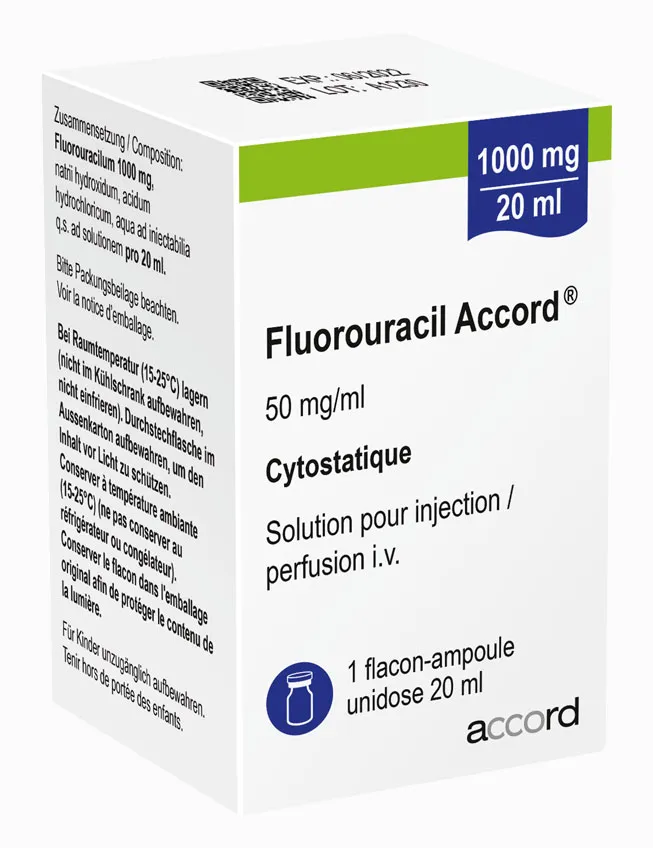
Table of Contents
- Package leaflet: Information for the patient
- 1. What Fluorouracil Accord is and what it is used for
- 2. Important information before using Fluorouracil Accord
- 3. How to use Fluorouracil Accord
- 4. Possible adverse reactions
- 5. How to store Fluorouracil Accord
- 6. Contents of the package and other information
- Information intended exclusively for medical professionals:
Package leaflet: Information for the patient
Fluorouracil Accord, 50 mg/mL, solution for injection or infusion
Fluorouracilum
Please read all of this leaflet carefully before using this medicine, because it contains
important information for you.
- Keep this leaflet, as you may need to read it again.
- If you have any questions, ask your doctor or pharmacist.
- This medicine has been prescribed for a specific individual. Do not pass it on to others. This medicine may harm others, even if their symptoms are the same.
- If you experience any adverse reactions, including any possible adverse reactions not listed in this leaflet, inform your doctor or pharmacist. See section 4.
Table of contents
- What Fluorouracil Accord is and what it is used for
- Important information before using Fluorouracil Accord
- How to use Fluorouracil Accord
- Possible side effects
- How to store Fluorouracil Accord
- Contents of the pack and other information
1. What Fluorouracil Accord is and what it is used for
What Fluorouracil Accord is
The active substance in Fluorouracil Accord is fluorouracil. It is an anticancer medicine.
It is part of chemotherapy treatment.
What Fluorouracil Accord is used for
Fluorouracil Accord is used to treat many types of cancer, particularly colorectal, esophageal, pancreatic, gastric, head and neck cancers, and breast cancer. It may be used in combination with other anticancer medicines and radiotherapy.
If there is no improvement or if you feel worse, contact your doctor.
2. Important information before using Fluorouracil Accord
When not to use Fluorouracil Accord
- if the patient is allergic to fluorouracil or any of the other ingredients of this medicine (listed in section 6),
- in case of significant weakness due to a prolonged illness,
- if the patient has a severe infection (e.g. shingles, chickenpox),
- if the cancer is non-malignant,
- if the bone marrow has been damaged by previous treatment with other types of anticancer therapy (including radiotherapy),
- if the patient is taking brivudine, sorivudine or their chemically related analogues (antiviral drugs). Fluorouracil must not be used within 4 weeks after finishing treatment with brivudine, sorivudine or their chemically related analogues.
- if the patient is breastfeeding,
- if the patient has severe liver disease,
- if the patient is homozygous for dihydropyrimidine dehydrogenase (DPD) enzyme,
- if the patient has reduced activity / deficiency of the dihydropyrimidine dehydrogenase (DPD) enzyme.
If any of the above situations apply to the patient, the doctor should be informed before using this medicine.
Warnings and precautions
Before starting treatment with Fluorouracil Accord, discuss this with your doctor, pharmacist or nurse.
Exercise particular caution:
- if the bone marrow is not producing blood cells properly (your doctor will perform a blood test to check this);
- if the patient has any kidney function disorders;
- if the patient has any liver disorders, including jaundice (yellowing of the skin);
- if the patient has angina (chest pain) or a history of heart disease, as they may be more susceptible to developing angina or heart attack, or cardiac disturbances during ECG monitoring;
- if the patient has undergone pelvic radiotherapy using high doses;
- if cancer cells have spread (metastasized) to the bone marrow;
- in patients with generally poor health and significant weight loss;
- if the patient has had surgery within the last 30 days;
- if the patient experiences gastrointestinal side effects (oral mucositis [inflammation of the mouth], diarrhoea, gastrointestinal bleeding) or bleeding from any site;
- if the patient has been diagnosed with partial deficiency of dihydropyrimidine dehydrogenase (DPD) enzyme;
- if the patient has heart disease. Inform your doctor if chest pain occurs during treatment.
- if a family member of the patient has partial or complete deficiency of dihydropyrimidine dehydrogenase (DPD) enzyme.
Dihydropyrimidine dehydrogenase (DPD) deficiency: DPD deficiency is a genetic condition which usually does not cause health problems until the patient receives certain medications. If the patient has DPD deficiency and is treated with Fluorouracil Accord, the risk of severe adverse reactions (listed in section 4 – "Possible side effects") increases. It is recommended to test the patient for DPD deficiency before starting treatment. If complete absence of enzyme activity is confirmed, the patient should not be treated with Fluorouracil Accord. If enzyme activity is reduced (partial enzyme deficiency), the doctor may prescribe a reduced dose. Even if the DPD deficiency test result is negative, severe and life-threatening adverse reactions may still occur.
Contact your doctor immediately if you are concerned about any side effects or if you notice any additional side effects not listed in this leaflet (see section 4: Possible side effects).
Contact your doctor immediately if any of the following symptoms occur: new-onset confusion, disorientation or other psychiatric disturbances, disturbances in balance or coordination, or visual disturbances. These may be symptoms of encephalopathy, which may lead to coma and death if untreated.
If any of the above situations apply to the patient, the doctor should be informed before using this medicine.
Fluorouracil may cause photosensitivity. This may lead to severe skin reactions. To prevent this, avoid direct exposure to sunlight and do not use sunlamps or tanning beds during treatment.
Avoid exposure to UV radiation (e.g. natural sunlight, solarium).
Fluorouracil treatment may increase the likelihood of radiation-induced tissue or skin necrosis (tissue death) resulting from radiotherapy.
Administration of fluorouracil is associated with hand-foot syndrome, characterized by tingling in the palms and soles, which may progress over several days to pain when holding objects or walking. The palms and soles may become swollen and tender.
Fluorouracil Accord and other medicines
Tell your doctor or pharmacist about all medicines the patient is currently taking or has recently taken, as well as any medicines the patient plans to take.
Exercise particular caution if the patient is taking or using other medicines, as some may interact with Fluorouracil Accord:
- Methotrexate, cyclophosphamide, cisplatin, vinorelbine (anticancer drugs)
- Metronidazole (antibiotic)
- Folinic acid (also known as calcium folinate) – a medicine used to reduce the harmful effects of anticancer drugs
- Allopurinol (a medicine used to treat gout)
- Cimetidine (a medicine used to treat stomach ulcers)
- Warfarin (an anticoagulant)
- Interferon alfa (a medicine used to treat lymphomas and chronic hepatitis)
- Brivudine, sorivudine and other analogues (antiviral drugs)
- Phenytoin (a medicine used to treat epilepsy and/or seizures and irregular heart rhythm)
- Avoid live vaccines, as they may cause severe or fatal infections. Avoid contact with individuals who have recently received the polio vaccine. Vaccines containing inactivated or killed organisms may be administered; however, the immune response may be weakened.
- Radiotherapy
- Levamisole (a medicine used to treat parasitic infections)
- Tamoxifen (a medicine used in certain types of breast cancer)
- Clozapine (a medicine used in certain psychiatric disorders)
Tell your doctor or pharmacist if the patient is taking or has recently taken any of these or other medicines, including those obtained without a prescription.
Pregnancy, breastfeeding and effects on fertility
Pregnancy
If the patient is pregnant or breastfeeding, suspects she may be pregnant, or is planning to have a child, she should consult her doctor before using this medicine.
Fluorouracil should be used during pregnancy only if the potential benefit outweighs the possible risk to the fetus. If the patient becomes pregnant during treatment, she should inform her doctor and seek genetic counselling.
Women must avoid becoming pregnant and use effective contraception during treatment with fluorouracil and for at least 6 months after treatment ends.
Breastfeeding
As it is not known whether fluorouracil passes into human milk, breastfeeding must be discontinued before starting fluorouracil treatment.
Before taking any medicine, consult your doctor.
Fertility
Men undergoing treatment with fluorouracil are advised not to plan fathering a child during treatment and for 3 months after its completion.
Both men and women should seek advice regarding fertility before treatment, such as preservation of oocytes or sperm, due to the possibility of irreversible infertility resulting from treatment.
Driving and using machines
Do not drive motor vehicles, use tools, or operate machinery, as Fluorouracil Accord may cause side effects such as nausea and vomiting. It may also cause neurological side effects and lead to visual disturbances. If the patient experiences any of these symptoms, they should not drive motor vehicles, operate machinery or use tools, as these symptoms may impair the ability to drive or operate machinery.
Fluorouracil Accord contains sodium
Fluorouracil Accord contains 7.78 mmol (178.2 mg) of sodium per maximum daily dose (600 mg/m²). This should be taken into consideration in patients who need to control their sodium intake.
3. How to use Fluorouracil Accord
Recommended dose
Your doctor will determine the appropriate dose of Fluorouracil Accord and how often it should be administered.
The dose used depends on the patient's general health, body weight, recent surgical procedures, and liver and kidney function. During the first treatment cycle, the drug may be given once daily or at weekly intervals. In subsequent treatment cycles, the dose may be adjusted depending on the patient's response to treatment. The patient may also receive treatment combined with radiotherapy.
Fluorouracil is not recommended for use in children due to insufficient data on safety and efficacy.
Before administration, the medicine may be diluted with glucose solution, sodium chloride solution, or water for injections. The medicine should be administered intravenously either as a bolus injection or by infusion (intravenous drip).
Use of a higher than recommended dose of Fluorouracil Accord
Since the medicine is administered by a doctor or nurse, the likelihood of receiving too low or too high a dose is small. However, if there are any concerns, please inform your doctor or nurse.
Blood tests should be performed during and after treatment with Fluorouracil Accord to monitor blood cell counts. It may be necessary to interrupt treatment if the white blood cell count is too low.
Overdose of Fluorouracil Accord may result in nausea, vomiting, diarrhoea, severe mucositis, gastrointestinal ulceration, and bleeding.
If you have any further questions about the use of this medicine, please consult your doctor.
Missed dose of Fluorouracil Accord
Do not administer a double dose to make up for a missed dose.
4. Possible adverse reactions
Like all medicines, this medicine can cause adverse reactions, although not everyone will experience them.
You should tell your doctor immediately if any of the following occur:
- severe allergic reactions – sudden itchy rash (urticaria), swelling of the hands, feet, ankles, face, lips or throat (which may cause difficulty in swallowing or breathing), the patient may feel weak,
- chest pain,
- bloody or tar-like stools,
- pain and ulceration of the lips,
- numbness, tingling and trembling of the hands or feet,
- heart attack or other heart problems such as rapid heartbeat and shortness of breath,
- symptoms of leukoencephalopathy (brain disease) – weakness, coordination problems of hands and feet, difficulties in thinking/speaking, vision/memory disturbances, seizures, headaches,
- shortness of breath.
These adverse reactions are very serious. The patient may require immediate medical attention.
If any of the following symptoms occur, inform your doctor as soon as possible:
Very common adverse reactions (may occur in more than 1 in 10 patients):
- Sore throat
- Signs of myocardial ischaemia on ECG
- Myelosuppression (a disorder in which the bone marrow produces a reduced number of all types of blood cells [pancytopenia])
- Neutropenia and leukopenia (too low number of white blood cells in the blood)
- Thrombocytopenia (reduced number of platelets, which reduces the blood's ability to clot)
- Rapid decrease in granulocyte count in the blood (agranulocytosis)
- Anaemia (reduction in the number of red blood cells)
- Increased risk of infection due to immunosuppression
- Wheezing (bronchospasm)
- Nausea
- Vomiting
- Diarrhoea
- Infections
- Loss of appetite
- Delayed wound healing
- Inflammation of the mucous membranes of the mouth, throat and gastrointestinal tract, including oesophagus, rectum or anus
- Increased blood uric acid concentration
- Nosebleeds
- Hair loss
- Hand-foot syndrome (toxic skin reaction with redness and swelling of the hands and feet)
- Fatigue, tiredness and lack of energy
- General weakness
Common adverse reactions (may occur in up to 1 in 10 patients):
- Blood infection (septicaemia)
- Myocardial infarction, angina pectoris (severe chest pain associated with insufficient blood supply to the heart)
- Low white blood cell count accompanied by fever
- Changes in ECG recording (electrocardiogram – a test checking heart rhythm and electrical activity)
Uncommon adverse reactions (may occur in up to 1 in 100 patients):
- Heart rhythm disorders
- Heart failure
- Myocardial ischaemia (reduced oxygen supply to the heart muscle)
- Myocarditis (inflammatory disease of the heart muscle)
- Congestive cardiomyopathy (a type of heart disease in which the heart muscle is abnormally enlarged, thickened and/or stiffened)
- Cardiogenic shock
- Low blood pressure
- Drowsiness
- Dehydration
- Liver cell damage
- Ulceration and bleeding from the gastrointestinal tract
- Skin desquamation
- Gastrointestinal haemorrhage
- Rhythmic eye movements (nystagmus)
- Headache
- Dizziness
- Feeling of imbalance and unsteadiness
- Parkinsonism symptoms (progressive movement disorder characterized by tremor, stiffness and slow movements)
- Pyramidal signs
- Blood infection (septicaemia)
- Dermatitis
- Skin changes, e.g. dry skin, cracks, erosions, skin redness, itchy maculopapular rash (itchy red rash)
- Skin eruptions accompanying certain infectious diseases
- Appearance of itchy blisters on the skin
- Photosensitivity
- Increased skin pigmentation
- Discoloration or depigmentation around veins
- Nail pigmentation, nail bed disorders
- Paronychia (inflammation of tissue surrounding the nail)
- Nail matrix inflammation with pus formation and nail shedding
- Impaired sperm or egg cell production
- Increased tear secretion
- Blurred vision
- Inflammation or redness of the eyeball and eyelid
- Ocular motility disorders
- Eye redness (conjunctivitis)
- Optic neuritis (vision disturbances caused by inflammation of the optic nerve)
- Double vision
- Decreased visual acuity
- Excessive sensitivity to light and aversion to sunlight or staying in well-lit rooms
- Lacrimal duct stenosis
- Eversion of the lower eyelid
- Euphoria
Rare adverse reactions (may occur in up to 1 in 1,000 patients):
- Cerebral, intestinal and peripheral ischaemia (limbs)
- Poor blood circulation causing numbness and paleness of fingers and toes (Raynaud's syndrome)
- Hypersensitivity
- Swelling (inflammation) of a vein due to blood clot (thrombophlebitis)
- Severe systemic allergic reaction (anaphylaxis)
- Formation of blood clots in blood vessels (in arteries or veins)
- Confusion or disturbances in awareness regarding time, place or identity
- Disorientation
- Kidney failure
- Thyroid function changes – increased T4 and T3 levels (total thyroxine and triiodothyronine)
Very rare adverse reactions (may occur in up to 1 in 10,000 patients):
- Cardiac arrest (sudden cessation of heart rhythm and function)
- Sudden cardiac death (unexpected death due to heart disease)
- Symptoms of leukoencephalopathy (a disease affecting the brain's white matter), including ataxia (loss of muscle coordination)
- Acute cerebellar syndrome
- Difficulty articulating words
- Partial or complete loss of ability to communicate verbally or in writing
- Unusual muscle weakness or fatigue
- Seizures or coma in patients receiving high doses of 5-fluorouracil and in patients with dihydropyrimidine dehydrogenase (DPD) deficiency
- Cholecystitis (inflammation of the gallbladder)
- Liver cell damage (fatal cases reported)
Frequency not known (cannot be estimated from available data):
- Blood poisoning (septic shock)
- Neutropenic sepsis (life-threatening response to infection that may occur in patients with neutropenia – low count of certain white blood cells which act as part of the immune system in fighting blood infection)
- Pneumonia
- Urinary tract infection, bacterial infection of the urinary system
- Bacterial skin infection causing redness, swelling and pain at the infected site
- Decreased granulocyte count (a type of white blood cells)
- Reduced appetite
- Disorientation
- Fever
- Numbness or weakness in hands and feet
- Seizure attacks
- Hyperammonaemic encephalopathy (brain dysfunction caused by increased ammonia concentration)
- Blood clots in heart chambers which may break off and block arteries in the body, potentially causing stroke or lack of blood flow to a limb
- Myocarditis (inflammation of the heart muscle)
- Dermatitis causing red, scaly patches, possibly accompanied by joint pain and fever (cutaneous lupus erythematosus [CLE])
- Heart disease presenting with chest pain, shortness of breath, dizziness, fainting, irregular heartbeat (stress cardiomyopathy)
- Bleeding
- Dark, sticky stool containing partially digested blood
- Chest pain
- Accumulation of air in the intestinal wall
- Severe condition presenting with breathing difficulties, vomiting and abdominal pain with muscle cramps (lactic acidosis)
- Disease characterized by headache, disorientation, seizures and visual disturbances (posterior reversible encephalopathy syndrome [PRES])
- Severe complication with rapid breakdown of tumour cells, causing a significant increase in blood levels of uric acid, potassium and phosphates (tumour lysis syndrome)
- Discoloration at the injection site
- High blood triglyceride levels (a type of fat)
- Pain, redness or swelling at the infusion site during or shortly after injection or infusion (may be due to improper intravenous administration)
- Vitamin B1 deficiency and Wernicke’s encephalopathy (brain damage caused by vitamin B1 deficiency)
- Inflammation of the small and large intestine causing pain and diarrhoea, which may lead to intestinal tissue necrosis (colitis, enteritis)
Reporting of adverse reactions
If any adverse reactions occur, including any not listed in this leaflet, you should inform your doctor or pharmacist. Adverse reactions can be reported directly to the Department of Monitoring Adverse Drug Reactions of the Office for Registration of Medicinal Products, Medical Devices and Biocidal Products
Al. Jerozolimskie 181C, 02-222 Warsaw
Tel.: +48 22 49 21 301
Fax: +48 22 49 21 309
Website: https://smz.ezdrowie.gov.pl
Adverse reactions can also be reported to the responsible entity.
Reporting adverse reactions helps to provide more information on the safety of the medicine.
5. How to store Fluorouracil Accord
Keep this medicine out of the sight and reach of children.
Do not use this medicine after the expiry date stated on the label or outer carton after the words
"Expiry date (EXP)". The expiry date refers to the last day of the stated month.
Store below 25°C. Do not store in the refrigerator and do not freeze.
Keep the vial in the outer packaging to protect it from light.
For single use only. Any unused residue should be discarded.
In-use stability
Chemical and physical in-use stability has been demonstrated for 24 hours at 25°C after dilution
in 5% glucose solution, 0.9% sodium chloride solution for injection, or water for injection,
at a concentration of 0.98 mg/mL of Fluorouracil Accord solution. From a microbiological point
of view, the product should be used immediately. If the solution is not administered immediately,
the person administering the medicine is responsible for the storage conditions and duration prior
to administration. The storage period should not exceed 24 hours at a temperature between 2°C and 8°C,
unless the dilution has been carried out under controlled and validated aseptic conditions.
- Do not use if the solution turns brown or dark yellow.
- Do not use if the container is damaged or if particles and/or crystals are visible.
Medicines should not be disposed of via wastewater or household waste. Ask your pharmacist
how to dispose of medicines no longer required. Such measures help protect the environment.
6. Contents of the package and other information
What Fluorouracil Accord contains
- The active substance is fluorouracil.
- Other components: water for injections, sodium hydroxide, and hydrochloric acid.
What Fluorouracil Accord looks like and contents of the pack
Each 1 mL of solution contains 50 mg of fluorouracil (in the form of sodium salt produced in situ).
Fluorouracil Accord solution for injection or infusion is a clear, colourless to slightly yellow solution, contained in a vial made of colourless type I glass, closed with a chlorobutyl rubber stopper and an aluminium flip-off seal, packed in a cardboard box.
Each 5 mL vial contains 250 mg of fluorouracil.
Each 10 mL vial contains 500 mg of fluorouracil.
Each 20 mL vial contains 1000 mg of fluorouracil.
Each 50 mL vial contains 2500 mg of fluorouracil.
Each 100 mL vial contains 5000 mg of fluorouracil.
Not all pack sizes may be marketed.
Marketing Authorisation Holder
Accord Healthcare Polska Sp. z o.o.
Taśmowa 7 Street
02-677 Warsaw
Tel: +48 22 577 28 00
Manufacturer/Importer
Accord Healthcare Polska Sp. z o.o.
Lutomierska 50
95-200 Pabianice
Poland
Accord Healthcare Single Member S.A.
64th Km National Road Athens-Lamia
32009 Schimatari
Greece
This medicinal product is authorised in the European Economic Area and the United Kingdom (Northern Ireland) under the following names:
| Member State | Medicinal Product Name |
| Austria | Fluorouracil Accord 50 mg/ml, Lösung zur Injektion oder Infusion |
| Belgium | Fluorouracil Accord Healthcare 50 mg/ml solution pour injection ou perfusion/oplossing voor injectie of infusie/ Lösung zur Injektion oder Infusion |
| Bulgaria | Fluorouracil Accord 50 mg/ml Solution for Injection or Infusion |
| Czech Republic | Fluorouracil Accord 50 mg/ml, injekční/ infuzní roztok |
| Cyprus | Fluorouracil 50 mg/ml, Solution for Injection or Infusion |
| Denmark | Fluorouracil Accord injektions og infusionsvæske, opløsning |
| Estonia | Fluorouracil Accord 50 mg/ml, süste- või infusioonilahus |
| Finland | Fluorouracil Accord 50 mg/ml, injektio- tai infuusioneste/ Lösning för injection och infusion |
| Spain | Fluorouracil Accord 50 mg/ml, para inyección o infusión EFG |
| Netherlands | Fluorouracil Accord 50 mg/ml, oplossing voor injectie of infusie |
| Ireland | Fluorouracil 50 mg/ml Solution for Injection or Infusion |
| Iceland | Flúoróúracíl Accord 50 mg / ml stungulyf, lausn eða innrennsli |
| Lithuania | Fluorouracil Accord 50 mg/ml, injekcinis/infuzinis tirpalas |
| Latvia | Fluorouracil Accord 50 mg/ml, šķīdums injekcijām vai infūzijām |
| Malta | Fluorouracil 50 mg/ml, Solution for Injection or Infusion |
| Germany | Fluorouracil Accord 50 mg/ml Injektionslösung bzw. Infusionslösung |
| Norway | Fluorouracil Accord 50 mg/ml konsentrat til infusjonsvæske |
| Poland | Fluorouracil Accord |
| Portugal | Fluorouracilo Accord |
| Romania | Fluorouracil Accord 50 mg/ml solutie injectabila sau perfuzabila |
| Slovakia | Fluorouracil Accord 50 mg/ml, injekčný alebo infúzny roztok |
| Slovenia | Fluorouracil Accord 50 mg/ml raztopino za injiciranje ali infundiranje |
| Sweden | Fluorouracil Accord 50 mg/ml, Lösning för injektion och infusion |
| Hungary | Fluorouracil Accord 50 mg/ml, oldatos injekció vagy infúzió |
| United Kingdom (Northern Ireland) | Fluorouracil 50 mg/ml Solution for Injection or Infusion |
| Italy | Fluorouracile AHCL 50 mg/ml, Soluzione per iniezione o infusione |
Information intended exclusively for medical professionals:
INSTRUCTIONS FOR USE, PREPARATION OF FLUOROURACIL ACCORD MEDICINAL PRODUCT
AND DISPOSAL OF REMAINING DRUG SUBSTANCE
THE REQUIRED PROCEDURES FOR CYTOSTATIC MEDICINAL PRODUCTS MUST BE FOLLOWED
Fluorouracil Accord should be administered only by or under the direct supervision of a physician experienced and qualified in the use of cytotoxic chemotherapy agents for cancer treatment.
Fluorouracil Accord must be prepared by trained personnel who have received instruction in safe handling procedures during preparation.
Preparation must take place exclusively under aseptic conditions or in a designated area.
In case of spillage, personnel handling the product should wear gloves and a face mask, protect their eyes, wear a disposable gown, and clean up the spilled liquid using an absorbent material that should be readily available in the designated area.
The surface should be cleaned thoroughly, and all contaminated materials should be placed in a bag or container designated for cytotoxic waste and incinerated.
Contamination
Fluorouracil is irritating; contact with skin and mucous membranes should be avoided.
In case of contact with skin or eyes, the affected area should be immediately flushed with copious amounts of water or physiological saline solution. For temporary relief of skin irritation, a 1% hydrocortisone cream may be applied. If the solution enters the eyes, respiratory tract, or is ingested, medical advice must be sought immediately.
First aid
Eye contact: Immediately rinse eyes with water and seek medical advice.
Skin contact: Wash thoroughly with soap and water. Remove contaminated clothing.
Inhalation, ingestion: Seek immediate medical advice.
Disposal of remaining drug substance
Syringes, containers, absorbent materials, solutions, and any other contaminated materials must be placed in a thick plastic bag or other impermeable container labeled as cytotoxic waste and incinerated at a temperature not lower than 700°C.
Chemical inactivation can be achieved using a 5% sodium hypochlorite solution over 24 hours.
Instructions for preparation:
a) Cytostatic medicinal products should be prepared only by personnel trained in safe handling procedures.
b) Procedures such as dissolving powder and transferring into syringes must be carried out exclusively in a designated area.
c) Personnel performing these tasks must wear appropriate protective clothing, two pairs of gloves: one pair of latex gloves and an outer pair made of PVC (PVC gloves should be worn over latex gloves) to prevent penetration of cytotoxic agents, and eye protection. Luer Lock syringes and connectors must always be used when preparing and administering cytotoxic medicinal products.
d) Pregnant women should avoid contact with cytostatic agents.
e) Prior to disposal of residual medicinal product, local regulations must be consulted.
Instructions for use
Fluorouracil Accord may be administered by intravenous bolus injection, infusion, or continuous infusion.
Pharmaceutical incompatibilities
Fluorouracil Accord is pharmaceutically incompatible with calcium folinate, carboplatin, cisplatin, cytarabine, diazepam, doxorubicin, droperidol, filgrastim, gallium nitrate, methotrexate, metoclopramide, morphine, ondansetron, parenteral nutrition, vinorelbine, and other anthracyclines.
The prepared solutions are alkaline and should not be mixed with acidic drugs or products.
Due to lack of compatibility studies, Fluorouracil Accord must not be mixed with other medicinal products.
Shelf life and storage
Shelf life of unopened vials:
2 years. For single use only. Any unused residue must be discarded.
Store below 25°C. Do not refrigerate or freeze.
Keep the container in the outer packaging to protect from light.
If a precipitate forms due to exposure to low temperatures, dissolve the precipitate by warming the vial content to 60°C with vigorous shaking. Allow the solution to cool to body temperature before use. Discard the product if the solution turns brown or dark yellow.
Shelf life after dilution:
In-use stability: Chemical and physical stability of Fluorouracil Accord has been demonstrated for 24 hours at 25°C after dilution in 5% glucose solution, 0.9% sodium chloride solution for injection, or water for injection, at a concentration of 0.98 mg/mL.
From a microbiological standpoint, the product should be used immediately. If not used immediately, the person administering the drug is responsible for the storage conditions and duration prior to administration.
Storage should not exceed 24 hours at a temperature between 2°C and 8°C, unless the solution has been diluted under controlled and validated aseptic conditions.