Flucontrol max
Poland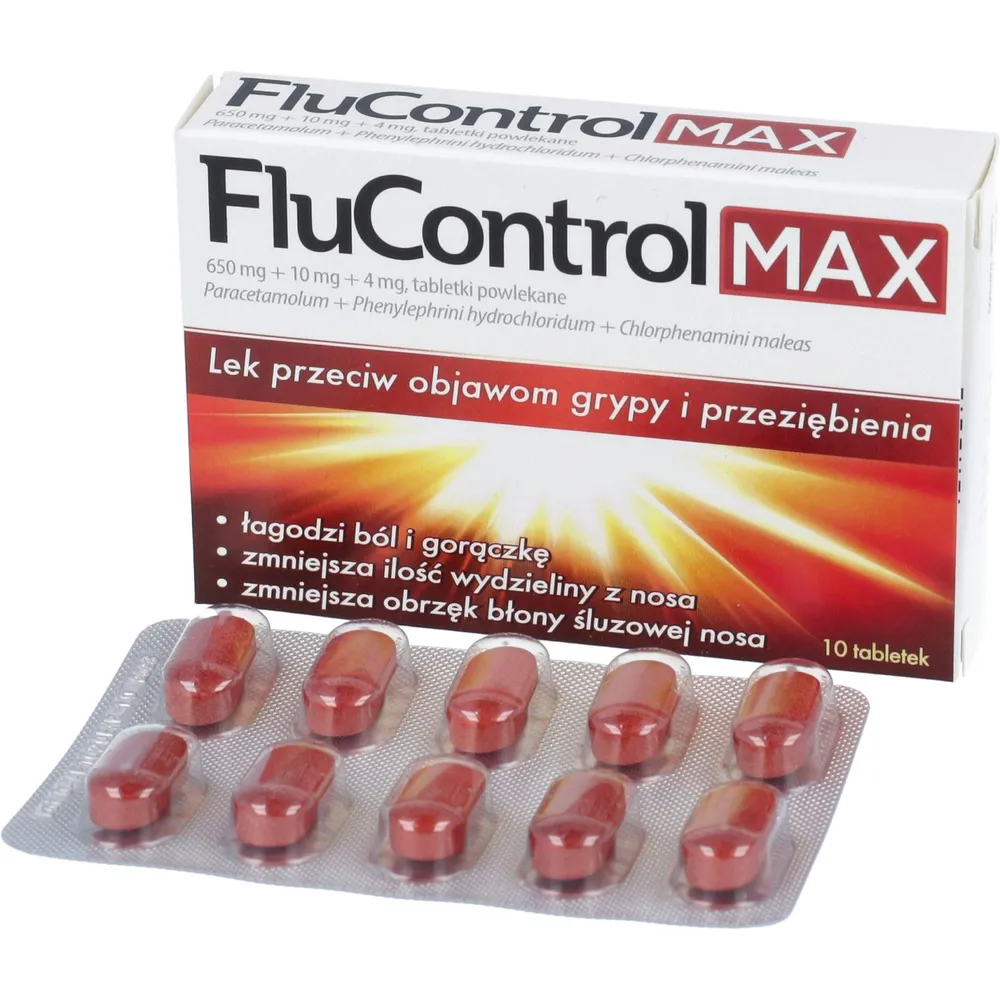
Table of Contents
Package leaflet: Information for the patient
FluControl MAX 650 mg + 10 mg + 4 mg, coated tablets
Paracetamolum + Phenylephrini hydrochloridum + Chlorphenamini maleas
Please read this leaflet carefully before taking this medicine, as it contains
important information for the patient.
This medicine should always be taken exactly as described in this patient leaflet or as directed by
the doctor or pharmacist.
- Keep this leaflet, so that you can read it again if necessary.
- If you need advice or further information, please consult your pharmacist.
- If you experience any adverse reactions, including any not listed in this leaflet, inform your doctor or pharmacist. See section 4.
- If fever persists for more than 3 days during treatment, or if pain or other symptoms last longer than 5 days, consult a doctor.
Table of contents
- What FluControl Max is and what it is used for
- Important information before taking FluControl Max
- How to take FluControl Max
- Possible side effects
- How to store FluControl Max
- Contents of the pack and other information
1. What FluControl Max is and what it is used for
FluControl Max is a combination of paracetamol – an antipyretic and analgesic agent,
chlorphenamine – an antihistamine which reduces nasal secretion, and
phenylephrine, which acts by reducing nasal mucosal swelling.
Indications
Symptomatic treatment of cold and influenza associated with fever, mild to moderate pain, nasal mucosal swelling with nasal discharge.
If fever persists for more than 3 days of treatment, or if there is no improvement after 5 days, or if the patient feels worse, medical advice should be sought.
2. Important information before taking FluControl Max
When not to take FluControl Max
- if the patient is allergic to paracetamol, hydrochloride of phenylephrine, maleate of chlorphenamine, or any of the other ingredients of this medicine (listed in section 6);
- if the patient has severe liver and/or kidney failure;
- if the patient has hypertension;
- if the patient has any severe heart or arterial disease (such as coronary heart disease or angina pectoris);
- if the patient has tachycardia (excessively fast heartbeat);
- if the patient has heart rhythm disorders;
- if the patient has hyperthyroidism;
- if the patient has glaucoma (an eye disease characterized by progressive and irreversible damage to the optic nerve leading to worsening or loss of vision);
- if the patient is being treated with a medicine from the group of monoamine oxidase inhibitors (MAOIs) (such as certain antidepressants or medicines used in the treatment of Parkinson's disease or others), and within 2 weeks after discontinuation of such treatment;
- in children under 12 years of age;
- in pregnant and breastfeeding women.
Warnings and precautions
Before starting to take FluControl Max, consult a doctor or
pharmacist if the patient:
- is allergic to antihistamines, as they may also be allergic to chlorphenamine;
- has heart disease (long-term treatment with paracetamol should be avoided);
- has kidney disease, benign prostatic hyperplasia, diabetes, bronchial asthma, chronic bronchitis, pulmonary emphysema, very slow heartbeat, circulatory disorders (e.g. Raynaud's syndrome), pancreatitis, pyloroduodenal stenosis (narrowing between the stomach and duodenum), thyroid diseases, congenital deficiency of glucose-6-phosphate dehydrogenase (G6PD) (which may lead to methemoglobinemia and hemolytic anemia), or methemoglobin reductase deficiency;
- is being treated with tricyclic antidepressants or other medicines with similar effects and develops gastrointestinal symptoms, as these may indicate a life-threatening intestinal paralysis (ileus) caused by inhibition of intestinal peristalsis;
- is in a group at increased risk of liver damage due to paracetamol use: o is taking long-term carbamazepine, phenobarbital, phenytoin, primidone, rifampicin, St. John's wort or other drugs inducing liver enzymes; o has eating disorders, is infected with HIV, is dehydrated, fasting, or malnourished; o drinks alcohol regularly (three or more alcoholic drinks per day). In alcoholics, do not exceed 2 g of paracetamol per day; o has liver disease (including Gilbert's syndrome);
- is taking antihypertensive drugs;
- is sensitive to sedative drugs or has epilepsy, as interactions may occur with medicines used to treat these conditions. Caution is advised in patients with asthma, hypersensitivity to acetylsalicylic acid and other nonsteroidal anti-inflammatory drugs, as bronchospasm has been observed in less than 5% of patients after administration of paracetamol. Long-term use of paracetamol in combination with acetylsalicylic acid may lead to permanent kidney damage and risk of kidney failure (analgesic nephropathy). In case of overdose, seek immediate medical advice, even if the patient feels well, due to the risk of irreversible liver damage.
During treatment with FluControl Max, immediately inform a doctor if:
- the patient has severe illnesses, including severe kidney dysfunction or sepsis (when bacteria and their toxins circulate in the blood, leading to organ damage), malnutrition, chronic alcoholism, or if the patient is also taking flucloxacillin (an antibiotic). In these situations, patients have developed a serious condition called metabolic acidosis (a blood and body fluid imbalance) when taking paracetamol regularly over a long period or when taking paracetamol together with flucloxacillin. Symptoms of metabolic acidosis may include: severe breathing difficulties, including rapid deep breathing, drowsiness, nausea, and vomiting.
Children
Do not use in children under 12 years of age due to the dose of paracetamol and the presence of other active substances.
Elderly patients
Do not use in elderly patients without consulting a doctor.
Due to the presence of phenylephrine and chlorphenamine, elderly patients may experience adverse effects such as: bradycardia (slow heartbeat) or reduced cardiac minute volume.
Blood pressure should be monitored, especially in patients with heart disease.
In elderly patients, symptoms such as dizziness, sedation, confusion, hypotension (low blood pressure), excitement, dry mouth, and urinary retention are more likely to occur.
FluControl Max and other medicines
Inform your doctor or pharmacist about all medicines currently taken or recently used, as well as any medicines the patient plans to take.
This medicine should not be taken simultaneously with other medicines containing:
- paracetamol (the active ingredient found in many cold and flu medicines), because paracetamol overdose may occur;
- phenylephrine (medicines from the group of so-called sympathomimetics—medicines reducing nasal mucosa congestion, appetite suppressants, or psychostimulants with amphetamine-like action, used in symptomatic treatment of nasal mucosa inflammation, i.e. rhinitis);
- antihistamines;
- monoamine oxidase inhibitors (MAOIs) (medicines used, among others, in the treatment of depression and Parkinson's disease). Administration of FluControl Max should be delayed by at least 15 days after discontinuation of treatment with these medicines;
- tricyclic or tetracyclic antidepressants.
Due to the presence of paracetamol
If the patient is taking any of the following medicines, dose adjustment or discontinuation of treatment may be necessary:
- oral anticoagulants (acenocoumarol, warfarin);
- antiepileptic drugs (lamotrigine, phenytoin and other hydantoins, phenobarbital, methylphenobarbital, primidone, carbamazepine);
- anti-tuberculosis drugs (isoniazid, rifampicin);
- barbiturates (used as general anesthetics, sedatives, and anticonvulsants);
- activated charcoal (adsorbent);
- cholestyramine (used to reduce blood cholesterol levels);
- medicines used in the treatment of gout (probenecid and sulfinpyrazone);
- cardiac glycosides (digitalis glycosides);
- medicines used against nausea and vomiting (metoclopramide and domperidone);
- zidovudine (used in the treatment of HIV infection).
Inform your doctor or pharmacist if the patient is taking:
- flucloxacillin (an antibiotic) due to the serious risk of blood and body fluid disorders (called metabolic acidosis), which must be urgently treated (see section 2).
Due to the presence of phenylephrine
If the patient is taking any of the following medicines, treatment may need to be discontinued or delayed by at least 15 days:
- tricyclic antidepressants;
- inhaled anesthetics;
- antihypertensive drugs (lowering blood pressure);
- drugs causing potassium loss (such as diuretics used to treat hypertension and others);
- drugs affecting cardiac conduction (used in heart diseases), such as cardiac glycosides;
- atropine sulfate (used, among others, in heart and gastrointestinal diseases).
Due to the presence of chlorphenamine
Concomitant use of the following medicines may intensify the occurrence of adverse effects:
- medicines causing central nervous system depression (such as medicines used to treat insomnia or anxiety).
Taking FluControl Max with food, drink, and alcohol
Taking paracetamol in patients who regularly consume alcohol (three or more alcoholic drinks per day) may lead to liver damage. During treatment with FluControl Max, alcohol should not be consumed, as it may cause symptoms of chlorphenamine overdose, such as increased sedative effects.
Pregnancy and breastfeeding
If the patient is pregnant or breastfeeding, suspects she may be pregnant, or is planning to have a child, she should consult a doctor or pharmacist before using this medicine.
Pregnancy
Taking medicines during pregnancy may be harmful to the embryo.
FluControl Max is contraindicated during pregnancy.
Breastfeeding
Paracetamol and chlorphenamine pass into breast milk. The medicine is contraindicated during breastfeeding.
Driving and operating machinery
The medicine may affect the ability to drive and operate machinery. If drowsiness or sedation occurs, do not drive or operate machinery.
The medicine contains carmine red, brown HT, and sodium
Carmine red and brown HT
The medicine may cause allergic reactions.
Sodium
The medicine contains 0.633 mg of sodium per tablet.
The medicine contains less than 1 mmol (23 mg) of sodium per tablet, meaning the medicine is considered "sodium-free."
Effect on laboratory test results
If the patient is undergoing diagnostic tests (blood tests, including glucose and alanine aminotransferase (AlAT) levels, urine tests, skin tests using allergens, etc.), inform the doctor that the patient is currently taking FluControl Max, as this medicine may alter laboratory test results.
3. How to take FluControl Max
This medicine should always be taken exactly as described in this patient information leaflet or as directed by your doctor or pharmacist. If in doubt, consult your doctor or pharmacist.
Method of administration
This is an oral medicine.
Recommended dose
Adults and adolescents over 12 years of age: one tablet. The dose may be repeated if necessary, but no more frequently than every 4–6 hours.
Do not take more than 6 tablets in 24 hours (corresponding to 3900 mg paracetamol, 60 mg phenylephrine, 24 mg chlorphenamine).
Duration of treatment
If pain or fever subsides, discontinue use of FluControl Max.
If fever persists for more than 3 days, or pain or other symptoms last longer than 5 days, or if symptoms worsen or new symptoms appear, consult your doctor for advice.
Patients with kidney or liver disease
Consult a doctor before using this medicine.
Use in children
This medicine must not be used in children under 12 years of age due to the dose of paracetamol and the presence of other active substances.
Taking more FluControl Max than recommended
If an overdose is ingested, seek immediate medical advice, as symptoms may not appear until three days after ingestion, even in cases of severe poisoning.
Symptoms of overdose
Caused by paracetamol:
nausea, vomiting, loss of appetite, pallor, abdominal pain—usually occurring within the first 24 hours.
Significant overdose may cause severe liver toxicity, leading to liver failure, metabolic acidosis, and encephalopathy, which may result in coma and death.
Overdose may also lead to coagulation disorders (blood clotting problems and bleeding).
In case of overdose, seek immediate medical advice, even if no symptoms are present.
Treatment of paracetamol overdose is most effective if started within 4 hours after ingestion.
Patients undergoing treatment with barbiturates or alcoholics may be more susceptible to paracetamol overdose.
Caused by phenylephrine:
excessive stimulation of the nervous system with symptoms such as: restlessness, anxiety, agitation, headache (which may be signs of hypertension), seizures, insomnia, confusion, irritability, tremors, loss of appetite, nausea, vomiting, psychosis with hallucinations (more common in children), hypertension (with cerebral hemorrhage, pulmonary edema), cardiac arrhythmias, palpitations, vasoconstriction with possible reduction in blood flow to vital organs.
Severe symptoms are more likely in patients with reduced blood volume due to bleeding, dehydration, etc., with slow, irregular, or rapid heartbeat, tachycardia, decreased urine output, metabolic acidosis (excessive accumulation of acidic substances in the blood), and paresthesia (tingling and burning sensations in various parts of the body).
Caused by chlorphenamine:
rigidity, instability, pronounced drowsiness, dryness of the mucous membranes of the mouth, nose, or throat, facial flushing, dyspnea (difficulty breathing), cardiac arrhythmias (irregular or rapid heartbeat), hallucinations, seizures, insomnia, hypotension (low blood pressure—fainting), which may occur as a delayed reaction.
In cases of overdose with chlorphenamine and phenylephrine, symptomatic and supportive treatment is applied.
In case of overdose or accidental ingestion, seek immediate medical attention.
Missed dose of FluControl Max
Do not take a double dose to make up for a missed dose.
If you have any further questions about the use of this medicine, consult your doctor or pharmacist.
4. Possible adverse reactions
Like all medicines, this medicine can cause adverse reactions, although not everyone will experience them.
You should immediately contact a doctor or go to the nearest hospital if any of the following occur:
- allergic reactions (cough, difficulty swallowing, rapid heartbeat, itching, swelling of the eyelids or area around the eyes, face, tongue, breathing difficulties) – occur uncommonly or rarely;
- angioedema (severe allergic reaction – sudden swelling of the face, limbs or joints without itching or pain). Swelling in the head and neck area may cause difficulties in swallowing and breathing – occurs rarely;
- Stevens-Johnson syndrome (blisters on the skin and/or mucous membranes which, after rupturing, form painful sores; often accompanied by fever, muscle and joint pain) – frequency unknown;
- bronchospasm – frequency unknown;
- renal failure (reduced urine output, swelling, shortness of breath, loss of appetite, nausea and vomiting, diarrhoea, skin itching, small skin hemorrhages) – frequency unknown;
- hepatic failure (nausea, vomiting, bloating in the upper abdomen, yellowing of the skin and eyes, liver tenderness) – frequency unknown;
- metabolic acidosis (deepened, rapid and labored breathing, nausea, vomiting, loss of appetite) – frequency unknown;
- pulmonary edema (rapidly worsening shortness of breath, sometimes audible bubbling, crackling or wheezing in the lungs, cough, sometimes with expectoration of yellowish sputum tinged with blood) – occurs rarely.
In patients treated with FluControl Max, the following adverse reactions may occur:
Common (occur in 1 to 10 out of 100 people)
- drowsiness, nausea and muscle weakness (which may resolve after 2–3 days of treatment);
- movement disorders in the face, stiffness, tremors, tingling or numbness in the limbs (paresthesia), altered perception of sensations and sounds;
- dryness in the mouth, loss of appetite, changes in taste and smell;
- gastrointestinal disturbances such as nausea, vomiting, diarrhoea, constipation, upper abdominal pain (these may be reduced by taking the medicine with food);
- urinary retention;
- dryness and drying of the nasal and throat mucous membranes;
- excessive sweating;
- blurred or double vision.
Uncommon (occur in 1 to 10 out of 1,000 people) or rare (occur in 1 to 10 out of 10,000 people)
- nervous excitation (manifested as anxiety, insomnia, restlessness, and also convulsions);
- chest tightness, shortness of breath;
- rapid or irregular heartbeat (usually in case of overdose);
- liver function disturbances (which may present, among others, as upper abdominal or abdominal pain and dark urine);
- photosensitivity;
- cross-allergy to drugs similar to chlorphenamine;
- blood morphology changes (such as agranulocytosis, leukopenia, aplastic anemia or thrombocytopenia) with symptoms such as unusual bleeding, sore throat or fatigue;
- low or high blood pressure;
- edema (swelling);
- tinnitus, acute labyrinthitis (part of the ear);
- impotence;
- intermenstrual bleeding.
Rare (occur in 1 to 10 out of 10,000 people)
- allergic dermatitis (skin rashes);
- jaundice (yellowing of the skin);
- hypoglycemia (decreased blood sugar concentration);
- myocardial infarction;
- cardiac arrhythmias (ventricular);
- pulmonary edema;
- intracerebral hemorrhage;
- hypersensitivity reactions (itchy maculopapular rash, urticaria, laryngeal edema, anaphylactoid reactions);
- abdominal pain, dyspepsia, nausea, diarrhoea.
Paracetamol may cause liver damage when taken in high doses or during prolonged treatment.
Frequency unknown (frequency cannot be estimated from available data)
- anxiety, weakness, hypertension (elevated blood pressure), headache, dizziness;
- pain or discomfort in the chest;
- severe bradycardia (very slow heartbeat);
- vasoconstriction, increased cardiac effort (particularly affecting elderly patients or patients with cerebral or coronary circulation disorders). May provoke or exacerbate heart disease, breathing difficulties;
- pallor;
- hair loss;
- decreased potassium concentration in blood;
- cold extremities (feet or hands);
- elevated liver aminotransferases, elevated bilirubin levels;
- serious condition that may cause blood acidification (so-called metabolic acidosis) in patients with severe illness taking paracetamol (see section 2).
When high doses are used, palpitations and psychotic states with hallucinations may occur; with prolonged use, hypovolemia may develop.
Reporting of adverse reactions
If any adverse effects occur, including any not listed in this leaflet, you should inform your doctor or pharmacist.
Adverse reactions can be reported directly to the Department of Monitoring Adverse Drug Reactions at the Office for Registration of Medicinal Products, Medical Devices and Biocidal Products
Al. Jerozolimskie 181C,
02-222 Warsaw,
Phone: +48 22 49 21 301, Fax: +48 22 49 21 309,
Website: https://smz.ezdrowie.gov.pl
Adverse reactions can also be reported to the marketing authorization holder.
Reporting adverse reactions helps to provide more information on the safety of the medicine.
5. How to store FluControl Max
Keep the medicine out of the sight and reach of children.
Store below 25°C.
Do not use this medicine after the expiry date stated on the blister and the carton after
EXP. The expiry date refers to the last day of the stated month.
EXP – means expiry date
Lot – means batch number
Medicines must not be disposed of via wastewater or household waste. Ask your pharmacist
how to dispose of medicines no longer required. This helps protect the environment.
6. Contents of the pack and other information
What FluControl Max contains
- The active substances in this medicine are: paracetamol, phenylephrine hydrochloride, and chlorphenamine maleate. Each tablet contains: 650 mg paracetamol (Paracetamolum), 10 mg phenylephrine hydrochloride (Phenylephrini hydrochloridum), 4 mg chlorphenamine maleate (Chlorphenamini maleas).
- Other ingredients are: tablet core: povidone K 30, sodium croscarmellose, magnesium stearate, Prosolv Easy tab SP: microcrystalline cellulose, colloidal anhydrous silica, sodium stearyl fumarate, sodium carboxymethyl starch A; tablet coating: hypromellose, hydroxypropylcellulose, Brown HT (E155), cochineal red (E124), Capol 1295 (white wax + carnauba wax).
What FluControl Max looks like and contents of the pack
FluControl Max is brick-coloured, biconvex, film-coated tablets, bean-shaped.
The pack contains 6 tablets, 10 tablets, or 20 tablets. The blisters are packed in a cardboard box together with the leaflet.
Marketing Authorisation Holder
Aflofarm Farmacja Polska Sp. z o.o.
ul. Partyzancka 133/151
95-200 Pabianice
Tel: +48 42 22-53-100
Manufacturer
Aflofarm Farmacja Polska Sp. z o.o.
ul. Szkolna 31
95-054 Ksawerów