Fluarix tetra
Poland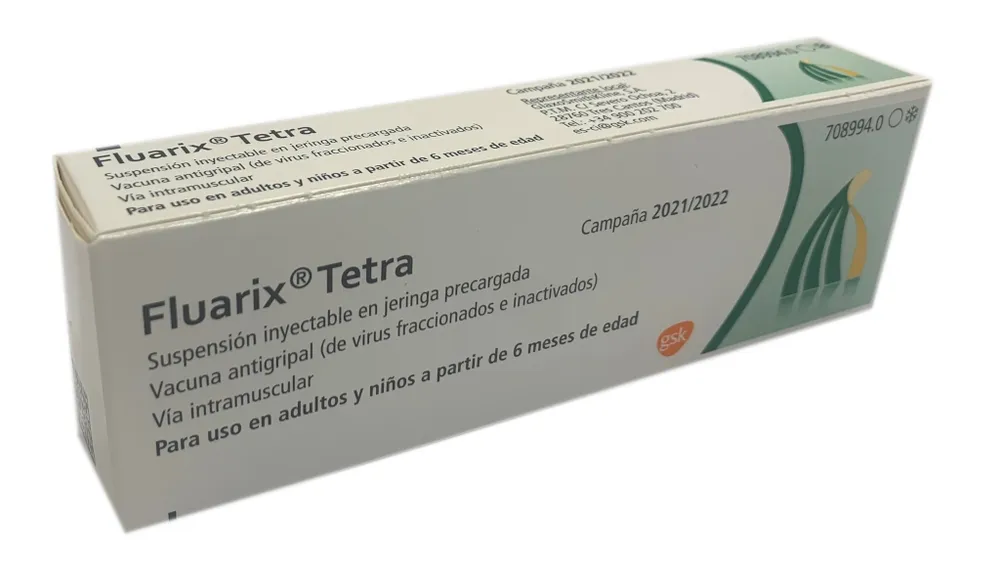
Table of Contents
- Package leaflet: Information for the user
- 1. What Fluarix Tetra vaccine is and what it is used for
- 2. Important information before using Fluarix Tetra vaccine
- 3. How to use Fluarix Tetra vaccine
- 4. Possible adverse reactions
- 5. How to store the Fluarix Tetra vaccine
- 6. Contents of the pack and other information
- Information intended exclusively for healthcare professionals:
Package leaflet: Information for the user
Fluarix Tetra, suspension for injection in pre-filled syringe
Influenza vaccine (split virion, inactivated)
The text of this leaflet has been prepared with the assumption that it will be read by the person receiving
the vaccine. However, since this vaccine may be administered to adults and children, it is possible that
the content of the leaflet will be reviewed by a parent or guardian of a child.
Please read carefully the entire leaflet before using the vaccine, as it contains important information for the patient.
- Keep this leaflet, so that you can read it again if necessary.
- If you have any questions, please consult your doctor or pharmacist.
- This vaccine has been prescribed for a specific individual. Do not give it to others.
- If any adverse reactions occur in the patient, including any adverse reactions not listed in this leaflet, inform your doctor or pharmacist. See section 4.
Table of contents:
- What Fluarix Tetra vaccine is and what it is used for
- Important information before using Fluarix Tetra vaccine
- How to use Fluarix Tetra vaccine
- Possible side effects
- How to store Fluarix Tetra vaccine
- Contents of the pack and other information
1. What Fluarix Tetra vaccine is and what it is used for
Fluarix Tetra is a vaccine. The vaccine helps protect vaccinated individuals from contracting influenza, which is particularly important in people at high risk of influenza-related complications.
The use of Fluarix Tetra vaccine should be based on local recommendations.
After administration of Fluarix Tetra vaccine, the vaccinated person's immune system (the body's natural defence system) will produce its own protection against the disease (antibodies). None of the components of the vaccine cause influenza.
Influenza is an illness that can spread rapidly. It is caused by various strains of virus, which may change each year. Therefore, annual vaccination may be necessary. The highest risk of contracting influenza occurs during the colder months of the year, between October and March. In individuals who have not been vaccinated in the autumn, vaccination should be considered at a later time (up to spring), since the risk of infection persists until then. Your doctor will advise you when vaccination should be given. Fluarix Tetra protects against four virus strains contained in the vaccine.
Protective effect of the vaccine begins approximately 2 to 3 weeks after vaccination.
The incubation period of influenza is several days; therefore, if exposure to the influenza virus occurs shortly before or immediately after vaccination, infection may still occur despite vaccination.
The vaccine does not protect against the common cold, even though some of its symptoms may be similar to those of influenza.
2. Important information before using Fluarix Tetra vaccine
Inform your doctor or pharmacist if any of the following apply to the person who is to receive the Fluarix Tetra vaccine. If further clarification is needed, please consult your doctor or pharmacist.
When not to use Fluarix Tetra:
- If the patient is allergic to the active substances or to any of the other ingredients of this vaccine (listed in section 6) or to any component that may be present in trace amounts, such as egg residues (chicken egg albumin or chicken protein), formaldehyde, gentamicin sulphate, or sodium deoxycholate.
- If the patient has a disease accompanied by high fever or an acute infection, vaccination should be postponed until the patient feels better.
Warnings and precautions:
Consult your doctor before administering the Fluarix Tetra vaccine:
- If the patient has a weakened immune response (due to immunodeficiency or treatment with medicines affecting the immune system),
- If the patient is scheduled for blood tests within a few days after vaccination, as false positive blood test results have been observed in individuals recently vaccinated,
- If the patient has blood clotting disorders or a tendency to bruise easily.
The doctor will decide whether the patient can be vaccinated.
Fainting may occur after or even before any injectable vaccine is given (especially in adolescents). Therefore, inform the doctor or nurse if the patient has ever fainted during or after receiving an injection.
As with any vaccine, Fluarix Tetra may not fully protect all vaccinated individuals.
Interaction of Fluarix Tetra with other medicines
Tell your doctor or pharmacist about all medicines the patient is currently taking, has recently taken, or plans to take.
Fluarix Tetra can be given at the same time as other vaccines; however, each vaccine should be administered in a different limb.
Pregnancy, breastfeeding and fertility
If the patient is pregnant, breastfeeding, suspects she might be pregnant, or is planning to have a child, she should consult her doctor or pharmacist before using this vaccine.
The doctor or pharmacist will decide whether the patient may receive the Fluarix Tetra vaccine. Consult your doctor or pharmacist before using this vaccine.
Driving and operating machinery
The Fluarix Tetra vaccine has no effect or has a negligible effect on the ability to drive and operate machinery.
Fluarix Tetra contains sodium
This medicinal product contains less than 1 mmol of sodium (23 mg) per dose and is therefore considered sodium-free.
Fluarix Tetra contains potassium
This medicinal product contains less than 1 mmol of potassium (39 mg) per dose and is therefore considered potassium-free.
3. How to use Fluarix Tetra vaccine
Dosage
Adults should receive one 0.5 ml dose.
Use in children:
Children from 6 months of age should receive one 0.5 ml dose.
Children under 9 years of age who have not previously been vaccinated against influenza should receive a second dose administered at least 4 weeks after the first dose.
How the vaccine should be given
Your doctor will administer the appropriate dose of the vaccine by intramuscular injection.
If you have any further questions regarding the use of this vaccine, consult your doctor or
pharmacist.
4. Possible adverse reactions
Like all medicines, this vaccine may cause adverse reactions, although not everyone will experience them.
The following adverse reactions have been observed in clinical trials.
Adverse reactions observed in children aged 6 to 36 months
Very common (may occur in more than 1 in 10 doses of vaccine): loss of appetite, irritability,
drowsiness, pain and/or redness at the injection site.
Common (may occur in no more than 1 in 10 doses of vaccine): fever, swelling at the injection site.
Adverse reactions observed in children aged 3 to 6 years
Very common (may occur in more than 1 in 10 doses of vaccine): pain and/or redness
and/or swelling at the injection site, irritability.
Common (may occur in no more than 1 in 10 doses of vaccine): loss of appetite, drowsiness, fever.
Uncommon (may occur in no more than 1 in 100 doses of vaccine): rash, itching at the injection site.
Adverse reactions observed in children aged 6 to 18 years
Very common (may occur in more than 1 in 10 doses of vaccine): muscle pain, pain and/or
redness and/or swelling at the injection site, fatigue.
Common (may occur in no more than 1 in 10 doses of vaccine): nausea, diarrhoea, vomiting,
abdominal pain, headache, joint pain, chills, fever.
Uncommon (may occur in no more than 1 in 100 doses of vaccine): rash, itching at the injection site.
Adverse reactions observed in adults aged 18 years and older
Very common (may occur in more than 1 in 10 doses of vaccine): pain at the injection site,
fatigue, muscle pain (myalgia).
Common (may occur in no more than 1 in 10 doses of vaccine): headache, nausea, diarrhoea,
vomiting, abdominal pain, joint pain (arthralgia), fever, chills, redness and/or swelling at the
injection site.
Uncommon (may occur in no more than 1 in 100 doses of vaccine): bruising, itching at the
injection site, dizziness.
In addition to the above, adverse reactions observed during clinical trials in patients aged 3 years and older who received Fluarix (the trivalent vaccine) included:
Common (may occur in no more than 1 in 10 doses of vaccine): hardening (induration) around
the injection site, sweating.
The above reactions usually resolve within 1–2 days without additional treatment.
In addition to the adverse reactions listed above, the following adverse reactions have been reported following the use of Fluarix and Fluarix Tetra vaccines.
Rare (may occur in no more than 1 in 1,000 doses of vaccine):
- allergic reactions:
- leading to conditions requiring emergency medical treatment due to circulatory failure, resulting in reduced blood flow to various organs (shock),
- swelling, particularly noticeable in the head and neck, affecting the face, lips, tongue, throat or other parts of the body (angioedema);
- skin reactions which may spread throughout the body, such as itching (pruritus, urticaria) and redness (erythema);
- neurological changes, which may result in neck stiffness, confusion, numbness, pain and weakness of limbs, loss of balance, loss of reflexes, paralysis of part or all of the body (encephalomyelitis, neuritis, Guillain-Barré syndrome);
- temporary swelling of cervical, axillary or inguinal lymph nodes (transient lymphadenopathy);
- influenza-like symptoms, general malaise.
Reporting of adverse reactions
If any adverse reactions occur, including any not listed in this leaflet, inform a doctor or pharmacist. Adverse reactions can be reported directly to the Department of Monitoring Adverse Drug Reactions, Office for Registration of Medicinal Products, Medical Devices and Biocidal Products, Al. Jerozolimskie 181C, 02-222 Warsaw, Tel: +48 22 49 21 301, Fax: +48 22 49 21 309, Website: https://smz.ezdrowie.gov.pl
Adverse reactions can also be reported to the marketing authorization holder.
Reporting adverse reactions helps to provide more information on the safety of the medicine.
5. How to store the Fluarix Tetra vaccine
Keep out of the sight and reach of children.
Do not use this medicine after the expiry date stated on the cardboard box following: EXP.
The expiry date refers to the last day of the stated month.
The abbreviation "Lot" indicates the product batch number.
Store in a refrigerator (2°C – 8°C).
Do not freeze.
Keep in the original packaging to protect from light.
Medicines must not be disposed of via wastewater or household waste. Ask your pharmacist how to dispose of medicines no longer required. This will help protect the environment.
6. Contents of the pack and other information
What Fluarix Tetra contains:
Active substance:
Split, inactivated influenza virus derived from the following strains*:
A/Victoria/4897/2022 (H1N1)pdm09-like strain (A/Victoria/4897/2022, IVR-238)
15 micrograms HA**
A/Thailand/8/2022 (H3N2)-like strain (A/Thailand/8/2022, IVR-237)
15 micrograms HA**
B/Austria/1359417/2021-like strain (B/Austria/1359417/2021, BVR-26)
15 micrograms HA**
B/Phuket/3073/2013-like strain (B/Phuket/3073/2013, wild-type strain)
15 micrograms HA**
per 0.5 ml dose
* propagated in embryonated eggs from healthy flocks
** hemagglutinin
This vaccine complies with the World Health Organization (WHO) (for the Northern Hemisphere) and European Union recommendations for the 2024/2025 season.
Other ingredients of the vaccine: sodium chloride, disodium phosphate dodecahydrate, potassium dihydrogen phosphate, potassium chloride, magnesium chloride hexahydrate, α-tocopherol hydrogen succinate, polysorbate 80, octoxynol 10, and water for injections.
What Fluarix Tetra looks like and contents of the pack
Fluarix Tetra is a suspension for injection in a pre-filled syringe.
Fluarix Tetra is available as a single-dose pre-filled syringe, with needles supplied separately in the packaging or without needles, in packs of 1 and 10.
Not all pack sizes may be marketed.
Marketing Authorisation Holder and Manufacturer
Marketing Authorisation Holder:
GlaxoSmithKline Biologicals S.A.
Rue de l’Institut 89
1330 Rixensart
Belgium
Manufacturer:
GlaxoSmithKline Biologicals
Filia SmithKline Beecham Pharma GmbH&Co. KG
Zirkusstrasse 40
01069 Dresden
Germany
This medicinal product is authorised in the European Economic Area member states under the following names:
| Member State | Name |
| Austria, Bulgaria, Croatia, Cyprus, Czech Republic, Denmark, Estonia, Finland, Greece, Hungary, Iceland, Ireland, Italy, Latvia, Lithuania, Malta, Netherlands, Norway, Poland, Portugal, Spain, Slovakia, Slovenia, Sweden | Fluarix Tetra |
| Belgium, Luxembourg | Alpharix-Tetra |
| France | FluarixTetra |
| Germany | Influsplit Tetra |
Other sources of information
Detailed information about this medicinal product is available on the website of the Office for Registration of Medicinal Products, Medical Devices and Biocidal Products.
Information intended exclusively for healthcare professionals:
As with all injectable vaccines, appropriate immediate treatment and adequate medical care must be available
in case of anaphylactic reactions following vaccination.
Vaccination should be administered intramuscularly.
Fluarix Tetra must never be administered intravenously.
Fluarix Tetra may be given at the same time as other vaccines. Vaccinations should be administered in separate limbs.
Before administration, the vaccine should reach room temperature.
The vaccine should be shaken before use. The vaccine should be inspected visually before administration.
Instructions for prefilled syringe
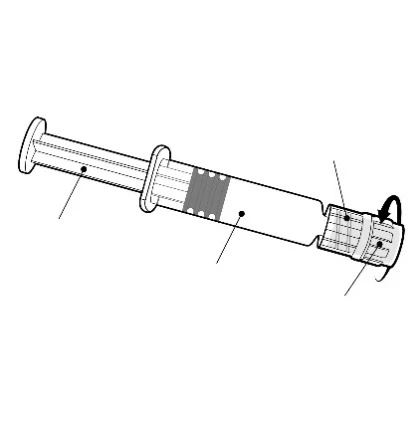
Hold the prefilled syringe by the
Luer Lock adapter body, not by the plunger.
Unscrew the syringe cap by turning it
Plunger counterclockwise.
Cap
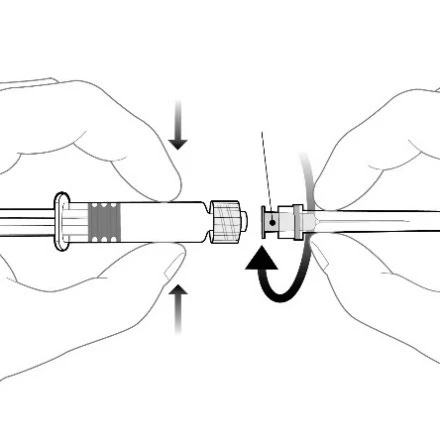
Attach the needle to the
Needle cap prefilled syringe by connecting
the needle cap to the Luer Lock adapter (Luer
Lock Adaptor, LLA) and rotating it a quarter
turn clockwise until a click is felt,
indicating that the needle is locked.
Do not remove the plunger from the
syringe barrel. If this occurs,
do not administer the vaccine.
Disposal
Any unused medicinal product or waste material should be disposed of in accordance with local regulations.