Fluanxol
Poland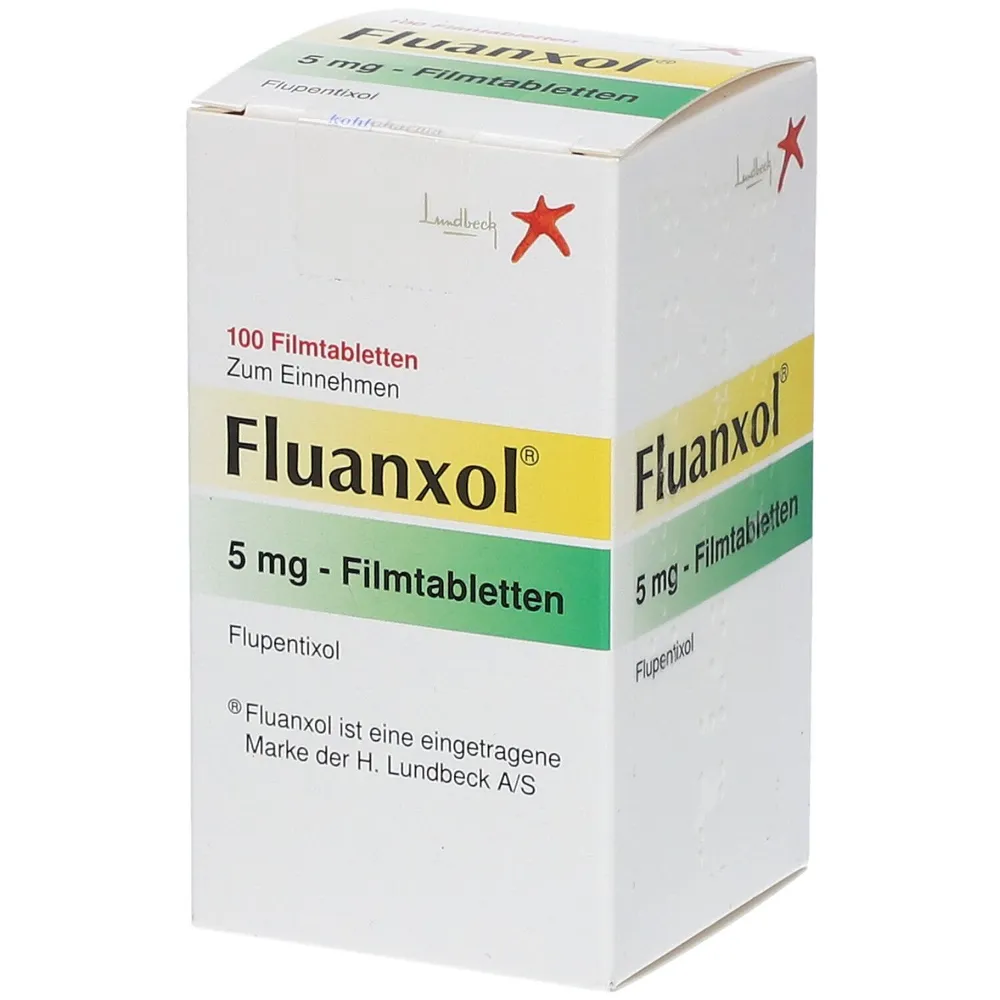
Table of Contents
Package leaflet: Information for the patient
Fluanxol, 3 mg, coated tablets
Flupentixolum
Please read all of this leaflet carefully before taking this medicine, because it contains
important information for the patient.
- Keep this leaflet so that you can read it again if necessary.
- If you have any questions, please consult your doctor or pharmacist.
- This medicine has been prescribed for a specific individual. Do not give it to others. This medicine may harm another person, even if their symptoms are the same.
- If the patient experiences any adverse reactions, including any not listed in this leaflet, inform your doctor or pharmacist. See section 4.
Contents of the leaflet:
- What Fluanxol is and what it is used for
- Important information before taking Fluanxol
- How to take Fluanxol
- Possible side effects
- How to store Fluanxol
- Contents of the pack and other information
1. What Fluanxol is and what it is used for
How Fluanxol works
Fluanxol contains the active substance flupentixol. Fluanxol belongs to a group of medicines called antipsychotics (also known as neuroleptics).
These medicines act on nerve pathways in specific areas of the brain and help correct certain imbalances in brain chemistry that are responsible for the symptoms of illness.
When is Fluanxol used?
Fluanxol is used in the treatment of schizophrenia.
2. Important information before using Fluanxol
When not to use Fluanxol
- if the patient is allergic (hypersensitive) to flupentixol or any of the other ingredients of this medicine (listed in section 6);
- if the patient has reduced level of consciousness regardless of the cause (e.g. alcohol, barbiturates or opioids intoxication), circulatory collapse, coma.
Warnings and precautions
Before starting treatment with Fluanxol, discuss the following with your doctor or pharmacist:
- if the patient has impaired liver function;
- if the patient has a history of seizures;
- if the patient has diabetes (treatment for diabetes may need to be adjusted);
- if the patient has organic brain syndrome (a condition that may develop due to alcohol or organic solvents intoxication);
- if the patient has risk factors predisposing to stroke (e.g. smoking, hypertension);
- if the patient has hypokalaemia or hypomagnesaemia (low levels of potassium or magnesium in blood) or genetic predisposition to such abnormalities;
- if the patient has cardiovascular disorders;
- if the patient is taking other antipsychotic medicines;
- if the patient is more agitated or shows increased activity, as these medicines may worsen such symptoms;
- if the patient or someone in their family has had venous thrombosis, because use of medicines like this may increase the risk of blood clots.
Children and adolescents
Fluanxol is not recommended in this patient group.
Other medicines and Fluanxol
Tell your doctor or pharmacist about all medicines the patient is currently taking or has recently taken, as well as any medicines the patient plans to take.
Inform your treating doctor if the patient is taking any of the following medicines:
- tricyclic antidepressants;
- guanethidine and similar medicines (lowering blood pressure);
- barbiturates (medicines causing drowsiness);
- medicines used in the treatment of epilepsy;
- levodopa and similar medicines (used in the treatment of Parkinson's disease);
- metoclopramide (a medicine used for gastrointestinal disorders);
- piperazine (an anthelmintic used against pinworms and roundworms);
- medicines affecting water and electrolyte balance (causing low potassium or magnesium levels in blood);
- medicines known to increase blood levels of Fluanxol.
The following medicines should not be taken at the same time as Fluanxol:
- medicines affecting heart rhythm (quinidine, amiodarone, sotalol, dofetilide, erythromycin, terfenadine, astemizole, gatifloxacin, moxifloxacin, cisapride, lithium);
- other antipsychotic medicines.
Fluanxol with food, drink and alcohol
Fluanxol may be taken with food or independently of meals.
Fluanxol may enhance the sedative effect of alcohol, causing drowsiness. Drinking alcoholic beverages is not recommended during treatment with Fluanxol.
Pregnancy, breastfeeding and fertility
If the patient is pregnant or breastfeeding, suspects she may be pregnant, or is planning to have a child, she should consult her doctor or pharmacist before using this medicine.
Pregnancy
Women who are pregnant or suspect they may be pregnant should inform their doctor.
Fluanxol should not be used during pregnancy unless clearly necessary.
Newborns of mothers who have taken Fluanxol during the third trimester (last three months of pregnancy) may experience the following symptoms: tremors, muscle stiffness and/or weakness, drowsiness, agitation, breathing difficulties, feeding problems. If such symptoms occur in the newborn, contact a doctor immediately.
Breastfeeding
Women who are breastfeeding should consult their doctor. Fluanxol should not be used by breastfeeding women, as small amounts of the medicine may be excreted in breast milk.
Fertility
Animal studies indicate that Fluanxol affects fertility. The patient should consult a doctor for advice.
Driving and using machines
There is a risk of drowsiness and dizziness after using Fluanxol.
In such cases, the patient should not drive, operate machinery or use tools until these symptoms have resolved.
Fluanxol contains lactose and the colouring agent Orange Yellow (E110).
If the patient has previously been diagnosed with an intolerance to certain sugars, the patient should consult a doctor before taking this medicine.
The tablets contain the colouring agent Orange Yellow (E110), which may cause allergic reactions.
The medicine contains less than 1 mmol (23 mg) of sodium per tablet, i.e. the medicine is considered "sodium-free".
3. How to use Fluanxol
Fluanxol should always be used as directed by the physician. If in doubt, consult your doctor or pharmacist.
The medicine is administered in various doses, depending on the severity of the disease.
Recommended dosage:
Adults
The usual initial dose ranges from 3 mg to 15 mg per day.
This dose may be gradually increased up to 30 mg per day. In certain cases, a significant dose increase may be required.
The maintenance dose usually ranges from 5 mg to 20 mg per day.
Elderly patients (over 65 years of age)
Elderly patients are generally given doses at the lower end of the dosage range.
Special patient groups
Patients with liver disease are usually given doses at the lower end of the dosage range.
Use in children and adolescents
The use of Fluanxol is not recommended in children and adolescents.
If you feel that the effect of Fluanxol is too strong or too weak, consult your doctor.
Administration method
Tablets should be swallowed with water. Do not chew.
During the initial treatment phase, Fluanxol is usually administered in divided doses – 2 or 3 times daily.
For maintenance therapy, Fluanxol may be administered as a single daily dose.
Duration of treatment
As with other antipsychotic medicines, improvement in health status with Fluanxol is usually observed after several weeks.
Treatment should be continued for as long as directed by the physician.
The illness may persist for a long time, and if treatment is stopped too early, symptoms may recur. Do not change the dose without consulting your doctor.
Use of higher than recommended dose of Fluanxol
If you suspect that an excessive number of Fluanxol tablets has been taken, seek immediate medical attention from a doctor or the nearest hospital emergency department, even if there are no symptoms or signs of poisoning. Bring the Fluanxol packaging with you.
The following symptoms of overdose may occur:
- drowsiness;
- loss of consciousness;
- motor disturbances or muscle rigidity;
- seizures;
- decreased blood pressure, weak pulse, rapid heartbeat, pallor, restlessness;
- elevated or decreased body temperature;
- changes in heart rate, including irregular or slowed heartbeat, particularly when Fluanxol is taken in excessively high doses in combination with medicines known to affect the heart.
Missed dose of Fluanxol
Take the next dose at the usual time.
Do not take a double dose to make up for a missed dose.
Stopping Fluanxol treatment
Do not stop taking Fluanxol, even if you feel better, unless your doctor specifically advises you to do so.
If you have any doubts regarding the use of this medicine, consult your doctor or pharmacist.
4. Possible adverse effects
Like any medicine, Fluanxol may cause adverse effects, although not everyone experiences them.
If any of the symptoms described below occur, contact your doctor or
seek immediate hospital care:
Uncommon adverse effects (may occur in fewer than 1 in 100 patients):
- involuntary rhythmic movements of the lips and tongue; this may be a sign of a condition called tardive dyskinesia.
Very rare adverse effects (may occur in fewer than 1 in 10,000 patients):
high fever, unusual muscle stiffness, and disturbances of consciousness, accompanied by sweating
and rapid heartbeat;
these may be symptoms of a rare condition known as neuroleptic malignant syndrome,
which has been reported with the use of various antipsychotic drugs.
- yellowing of the skin and whites of the eyes (jaundice), which may indicate liver damage;
- blood clots in veins, particularly in the legs (symptoms include swelling, pain, and redness of the skin in the legs), which may travel through blood vessels to the lungs, causing chest pain and breathing difficulties.
The adverse effects listed below are most pronounced at the beginning of treatment, and most
of them diminish with continued treatment:
Very common adverse effects (may occur in more than 1 in 10 patients):
- drowsiness, inability to sit or stand still for a prolonged period (akathisia), involuntary movements (hyperkinesia), slowed or impaired movements (hypokinesia);
- dry mouth.
Common adverse effects (may occur in fewer than 1 in 10 patients):
- increased heart rate (tachycardia), sensation of fast, hard, or irregular heartbeat (palpitations);
- tremor, muscle spasms or repetitive movements, or abnormal posture due to sustained muscle contraction (dystonia), dizziness, headache;
- disturbances in visual acuity (accommodation disorders), abnormal vision;
- shallow and rapid breathing (dyspnea);
- increased salivation (sialorrhea), constipation, vomiting, digestive problems or discomfort in the upper abdomen (dyspepsia), diarrhea;
- urinary disturbances, urinary retention;
- excessive sweating, itching (pruritus);
- muscle pain;
- increased appetite, weight gain;
- fatigue, feeling of weakness (asthenia);
- insomnia, depression, nervousness, agitation, reduced sexual drive (decreased libido).
Uncommon adverse effects (may occur in fewer than 1 in 100 patients):
- uncoordinated movements (dyskinesia), parkinsonism, speech disorders, seizures;
- attack of compulsive upward gaze of the eyes;
- abdominal pain, nausea, bloating with flatulence; rash, skin reactions due to light sensitivity (photosensitivity), skin inflammation;
- muscle stiffness;
- decreased appetite;
- low blood pressure (hypotension), hot flushes;
- abnormal liver function test results;
- disturbances in ejaculation, erectile dysfunction;
- confusion.
Rare adverse effects (may occur in fewer than 1 in 1,000 patients):
- low platelet count (thrombocytopenia), low neutrophil granulocyte count (neutropenia), reduced white blood cell count (leukopenia), absence of granulocytes in the blood (agranulocytosis);
- increased blood prolactin levels (hyperprolactinemia);
- increased blood glucose (hyperglycemia), impaired glucose tolerance;
- overreaction (hypersensitivity), acute systemic and severe allergic reaction (anaphylactic reaction);
- development of breast tissue in males (gynecomastia), excessive milk production (galactorrhea);
- absence of menstruation;
- changes in ECG findings (QT interval prolongation); irregular heartbeat (ventricular arrhythmias); in rare cases, irregular heartbeat (arrhythmia) may lead to sudden death.
In elderly patients with dementia treated with antipsychotic drugs,
a slightly higher number of deaths has been observed compared to patients not receiving
antipsychotic drugs.
Reporting of adverse effects
If any adverse effects occur, including those not listed in this
leaflet, inform your doctor or pharmacist. Adverse effects can be reported
directly to:
Department of Monitoring Adverse Drug Reactions, Office for Registration of Medicinal Products, Medical Devices and Biocidal Products
Al. Jerozolimskie 181 C
PL-02 222 Warsaw
Tel.: + 48 22 49 21 301
Faks: + 48 22 49 21 309
Website: https://smz.ezdrowie.gov.pl
Reporting adverse effects helps to gather more information on the safety of the medicine.
5. How to store Fluanxol
Keep the medicine out of the sight and reach of children.
Do not use this medicine after the expiry date stated on the label. The expiry date refers to the last day of the specified month.
No special storage instructions apply.
Medicines must not be disposed of via the sewage system or household waste. Ask your pharmacist what to do with medicines no longer required. This will help protect the environment.
6. Contents of the pack and other information
What Fluanxol contains
The active substance is flupentixol.
Each coated tablet contains 3 mg of flupentixol in the form of flupentixol dihydrochloride.
Other components of the medicine are:
Tablet core: betadex, monohydrate lactose, corn starch, hydroxypropylcellulose, microcrystalline cellulose, sodium croscarmellose, talc, hydrogenated vegetable oil, magnesium stearate.
Coating of the coated tablet: coating film layer: Opadry II 85F32719 Yellow: partially hydrolyzed polyvinyl alcohol, macrogol/PEG 3350, iron oxide yellow (E172), talc, titanium dioxide (E171), iron oxide red (E172), FD&C yellow #6/orange yellow (E110) aluminum lake; protective coating layer: macrogol/PEG 6000.
What Fluanxol looks like and contents of the pack
Fluanxol is available as 3 mg coated tablets.
The 3 mg coated tablets are round, biconvex, dark yellow, with the imprint "FI".
The pack contains 50 or 100 coated tablets in blisters or in a high-density polyethylene (HDPE) container with a cardboard box.
Not all pack sizes may be marketed.
Marketing Authorisation Holder and Manufacturer
H. Lundbeck A/S
Ottiliavej 9,
DK-2500 Valby
Denmark
For further information, please contact the marketing authorisation holder's representative.
Swixx Biopharma Sp. z o.o.
ul. Prosta 51
00-838 Warsaw, Poland
Tel. +48 22 4600 720