Floxal
Poland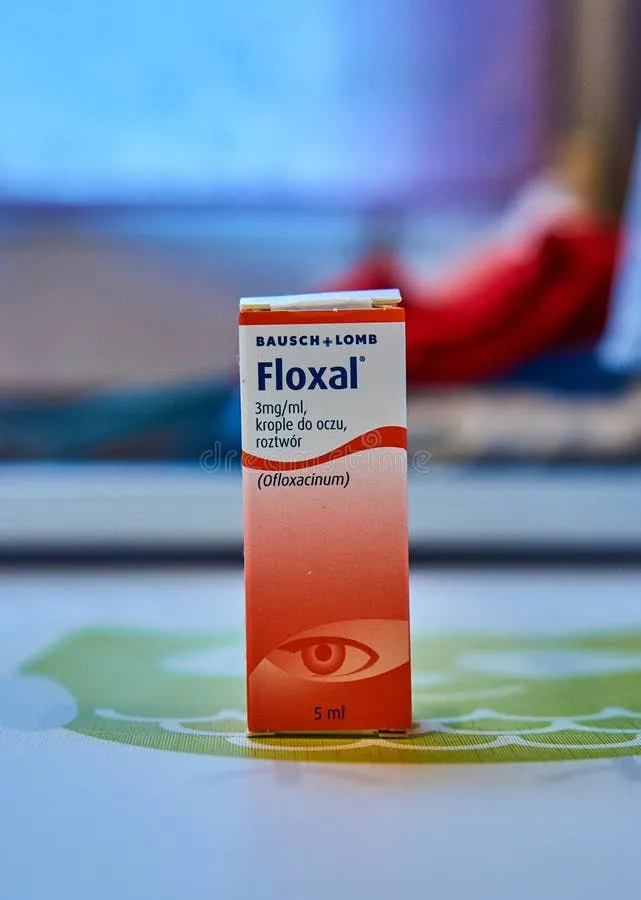
Table of Contents
Patient Information Leaflet
Warning! Keep this leaflet. The information on the immediate packaging is in a foreign language!
Floxal (Trafloxal)
3 mg/ml, eye drops, solution
Ofloxacinum
Floxal and Trafloxal are different brand names for the same medicinal product.
Please read this leaflet carefully before using this medicine, as it contains
important information for the patient.
- Keep this leaflet so that you can read it again if necessary.
- If you have any further questions, please consult your doctor or pharmacist.
- This medicine has been prescribed for a specific individual. Do not pass it on to others. This medicine may harm someone else, even if their symptoms are the same.
- If you experience any adverse reactions, including any not listed in this leaflet, inform your doctor or pharmacist. See section 4.
Table of contents
- What Floxal is and what it is used for
- Important information before using Floxal
- How to use Floxal
- Possible side effects
- How to store Floxal
- Contents of the pack and other information
1. What Floxal is and what it is used for
Floxal contains the active substance ofloxacin, which belongs to a group of antibacterial agents known as fluorochinolones.
The medicine has antibacterial activity against certain aerobic and anaerobic bacteria.
Floxal is used in infections of the anterior segment of the eye caused by microorganisms sensitive to ofloxacin, such as bacterial conjunctivitis, keratitis, blepharitis, dacryocystitis, hordeolum, corneal ulcer.
2. Important information before using Floxal
When not to use Floxal
- if the patient is allergic to ofloxacin or to any of the other ingredients of this medicine (listed in section 6);
- if the patient is allergic to other quinolone antibacterial medicines.
Warnings and precautions
Before starting treatment with Floxal, discuss this with your doctor or pharmacist, especially in the following situations:
- if the patient has damage or ulceration of the eye surface;
- if the patient wears contact lenses. Contact lenses must not be used during treatment with Floxal eye drops.
If a skin rash or any other allergic reaction occurs after using Floxal eye drops, discontinue use and contact your doctor.
If necessary, the treating physician will initiate appropriate therapy.
While using Floxal eye drops, avoid excessive exposure to sunlight or ultraviolet radiation (e.g. UV lamps, sunbeds, etc.) due to the possibility of photosensitivity reactions.
Prolonged use of Floxal may lead to overgrowth of microorganisms resistant to this medicine. If this occurs, the doctor will initiate appropriate treatment.
Tendon swelling and tendon rupture have been reported in patients taking fluorquinolones orally or intravenously, particularly in elderly patients and in patients receiving concomitant corticosteroid therapy. Treatment with Floxal eye drops should be discontinued if tendon pain or swelling (tendinitis) occurs.
Children and adolescents
Floxal is not recommended for use in children under 1 year of age, as its safety and efficacy have not been established in this age group.
Due to insufficient data, the use of Floxal eye drops for the treatment of neonatal conjunctivitis in newborns is not recommended.
Floxal and other medicines
Inform your doctor or pharmacist about any medicines the patient is currently using, has recently used, or plans to use.
If Floxal eye drops are used together with other eye drops or ointments, a 15-minute interval should be maintained between the administration of each product. Eye ointment should always be administered last.
Pregnancy, breastfeeding and fertility
If the patient is pregnant, breastfeeding, suspects she may be pregnant, or is planning to have a baby, she should consult her doctor or pharmacist before using this medicine.
The doctor will decide whether the patient may use Floxal eye drops.
Ofloxacin had no effect on fertility in animal studies.
Driving and operating machinery
Immediately after instillation, a transient, temporary blurring of vision may occur. Until vision clears completely, the patient should not drive or operate machinery.
Floxal eye drops contain benzalkonium chloride
The medicine contains 0.000843 mg of benzalkonium chloride per drop, equivalent to 0.025 mg/1 ml.
Benzalkonium chloride may be absorbed by soft contact lenses and may alter their color. Contact lenses should be removed before instillation and at least 15 minutes should elapse before reinsertion.
Benzalkonium chloride may also cause eye irritation, particularly in patients with dry eye syndrome or corneal disorders (the transparent layer at the front of the eye). If abnormal sensations, stinging, or eye pain occur after using the medicine, contact your doctor.
3. How to use Floxal eye drops
This medicine should always be used according to the instructions given by your doctor or pharmacist. If in doubt,
ask your doctor or pharmacist.
Recommended dose:
On average, 1 drop 4 times daily.
Instill into the conjunctival sac of the affected eye.
Instructions for administering the medicine:
- Wash your hands thoroughly.
- Unscrew the protective cap.
- Hold the bottle with the dropper tip pointing downwards, using your thumb and index finger.
- Tilt your head backwards.
- Gently pull down the lower eyelid with your index finger to create a "pocket" between the eyeball and the eyelid, into which the drops will be instilled.
- Bring the dropper tip close to the eye, without touching the eye, eyelid, surrounding areas of the eye, or any other surfaces.
- Gently squeeze the bottle to release a drop.
- While looking upwards, instill 1 drop of the medicine into the eye. If unsuccessful, repeat the procedure.
- Gently open and close the eye several times to ensure the drop spreads evenly over the entire surface.
- Close the eyelid and press gently with a finger on the inner corner of the eye at the side of the nose. This helps minimize the risk of the medicine entering the systemic circulation.
- If drops are to be administered to both eyes, repeat the above steps for the second eye.
- Immediately after use, replace the cap and tightly screw the bottle closed.
Having another person assist or using a mirror may make administration easier.
Floxal eye drops are a sterile product. To avoid contamination, do not touch the dropper tip with your fingers or allow it to touch the eye surface or any other surface. Using contaminated drops may lead to serious eye damage, including loss of vision.
Duration of treatment
Treatment with Floxal eye drops should not last longer than 2 weeks.
If the infection worsens or there is no improvement after a few days, contact your doctor.
Use of more than the recommended dose of Floxal
If more than the recommended dose has been used, rinse the eye with clean water.
In case of accidental ingestion, contact your doctor immediately.
Missed dose of Floxal
If a dose of Floxal is missed, administer the medicine as soon as possible.
However, if it is almost time for the next dose, skip the missed dose and continue with the prescribed schedule. Do not use a double dose to make up for a missed dose. If several doses have been missed, inform your doctor and follow their advice.
Stopping Floxal treatment
Floxal should be used exactly as prescribed by your doctor.
If you have any further questions about the use of this medicine, consult your doctor or pharmacist.
4. Possible adverse reactions
Like all medicines, this medicine can cause adverse reactions, although not everyone will experience them.
If any of the following adverse reactions occur, stop using the medicine immediately
and contact your doctor without delay:
- allergic reaction with swelling of the face, lips, mouth, tongue, and (or) throat (angioedema). This may cause a sensation of tightness in the throat, difficulty swallowing and breathing – this adverse reaction has been reported very rarely;
- shortness of breath – this adverse reaction has been reported very rarely;
- systemic allergic reactions (anaphylactic reaction, including anaphylactic shock) – this adverse reaction has been reported very rarely;
- allergic reactions affecting the eye, including itching of the eye and eyelids – frequency of occurrence of this adverse reaction is unknown;
- during treatment with Floxal, life-threatening skin rashes have been reported (Stevens-Johnson syndrome, toxic epidermal necrolysis), initially appearing as reddish spots or oval patches on the trunk, often with blisters in the center – frequency of occurrence of this adverse reaction is unknown.
Additionally, the following adverse reactions may occur with this medicine:
Common (may affect up to 1 in 10 people)
- eye irritation;
- sensation of eye discomfort.
Frequency unknown (cannot be estimated from available data)
- corneal inflammation;
- conjunctivitis;
- blurred vision;
- photophobia;
- eye swelling;
- eyelid swelling;
- sensation of foreign body in the eye;
- increased lacrimation;
- dry eye;
- eye pain;
- eye hyperemia;
- corneal deposits (especially in case of previous corneal diseases);
- facial swelling;
- periorbital swelling (including eyelid swelling);
- nausea.
Reporting of adverse reactions
If any adverse reactions occur, including any adverse reactions not listed
in this leaflet, inform your doctor or pharmacist. Adverse reactions can be reported
directly to the Department of Monitoring of Adverse Drug Reactions
of the Office for Registration of Medicinal Products, Medical Devices and Biocidal Products
Al. Jerozolimskie 181 C
02-222 Warsaw
Phone: +48 22 49 21 301
Fax: +48 22 49 21 309
Website: https://smz.ezdrowie.gov.pl .
Reporting adverse reactions helps to provide more information on the safety of the medicine.
5. How to store Floxal
Keep this medicine out of sight and reach of children.
Do not use this medicine after the expiry date stated on the packaging. The expiry date refers to the last day of the stated month.
Do not store above 25°C.
Store in the original packaging to protect from light.
Dispose of any remaining drops one month after first opening the bottle.
Medicines should not be disposed of via wastewater or household waste. Ask your pharmacist how to dispose of medicines no longer required. These measures help protect the environment.
6. Contents of the pack and other information
What Floxal contains
The active substance is ofloxacin. 1 ml of solution contains 3 mg of ofloxacin (Ofloxacinum).
1 drop of solution contains 100 micrograms (0.1 mg) of ofloxacin.
The other ingredients are: benzalkonium chloride, sodium chloride, hydrochloric acid 1N (to adjust pH), sodium hydroxide 1N (to adjust pH), water for injections.
What Floxal looks like and contents of the pack
Floxal is available as eye drops.
The available pack consists of a bottle with a dropper containing 5 ml of drops, placed in a cardboard box.
For more detailed information, please contact the responsible party or the parallel importer.
Responsible party in Belgium, the country of export:
Bausch & Lomb Pharma sa/nv
Boulevard Lambermont 430
1030 Brussels
Belgium
Manufacturer:
Dr. Gerhard Mann Chem.-Pharm. Fabrik GmbH
Brunsbütteler Damm 165-173
D-13581 Berlin
Germany
Parallel importer:
Medezin Sp. z o.o.
ul. Zbąszyńska 3
91-342 Łódź
Poland
Repackaged in:
Medezin Sp. z o.o.
ul. Zbąszyńska 3
91-342 Łódź
Poland
Belgium marketing authorization number (country of export): BE153054
Parallel import authorization number: 135/24