Flixonase nasal drops
Poland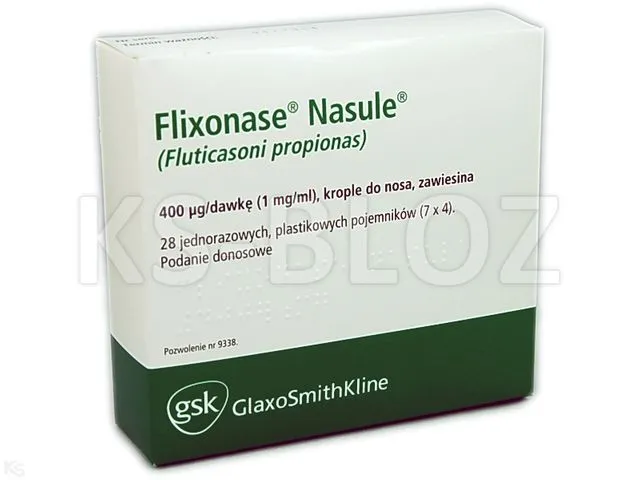
Table of Contents
Patient Information Leaflet
Flixonase Nasule, 400 µg/dose, nasal drops, suspension
Fluticasoni propionas
Please read all of this leaflet carefully before using this medicine, because it contains
important information for you.
- Keep this leaflet. You may need to read it again.
- If you have any further questions, ask your doctor or pharmacist.
- This medicine has been prescribed for you personally. Do not pass it on to others. It may harm them, even if their symptoms are the same as yours.
- If you experience any side effects, including any not listed in this leaflet, tell your doctor or pharmacist. See section 4.
Leaflet Contents:
- What Flixonase Nasule is and what it is used for
- What you need to know before using Flixonase Nasule
- How to use Flixonase Nasule
- Possible side effects
- How to store Flixonase Nasule
- Contents of the pack and other information
1. What Flixonase Nasule is and what it is used for
The active substance in Flixonase Nasule nasal drops is fluticasone propionate.
It belongs to a group of medicines called steroids or corticosteroids.
Steroids work by reducing inflammation:
- reducing swelling and irritation in the nose
- reducing itching, sneezing, blocked or runny nose (rhinitis).
Flixonase Nasule nasal drops, suspension, is used to treat:
- nasal polyps (growths from the mucous membrane inside the nose) and associated symptoms of reduced nasal airflow.
2. Important information before using Flixonase Nasule
When not to use Flixonase Nasule
- if the patient is allergic to fluticasone propionate or any of the other ingredients of this medicine (listed in section 6).
Warnings and precautions
Before starting to use Flixonase Nasule, consult a doctor or pharmacist if the patient:
- has an upper respiratory tract infection,
- has adrenal insufficiency,
- is taking ritonavir (see also section "Other medicines and Flixonase Nasule").
Patients should consult their doctor to determine whether any of the above conditions apply.
In rare cases of unilateral nasal polyposis, diagnosis should be confirmed by a specialist physician due to the possibility of another underlying condition.
Patients with nasal polyps require regular medical monitoring.
Avoid contact of the medicine with the eyes and damaged skin.
With prolonged use of Flixonase Nasule, the active substance – fluticasone propionate – may suppress the natural production of steroid hormones by the adrenal glands.
If adrenal insufficiency occurs, the doctor may consider additional systemic corticosteroid therapy during periods of stress or before planned surgery.
Due to the potential for impaired adrenal function, patients who are being switched from oral corticosteroids to inhaled fluticasone propionate should remain under special medical supervision, and adrenal function should be monitored.
If the patient experiences blurred vision or other visual disturbances, which may be due to cataract or glaucoma, medical advice should be sought.
Cases of growth suppression have been reported in children receiving inhaled corticosteroids.
Therefore, the doctor will reduce the corticosteroid dose to the lowest effective dose controlling symptoms.
Flixonase Nasule and other medicines
Tell the doctor about all medicines the patient is currently taking or has recently taken, including those obtained without a prescription, as well as any medicines the patient plans to take.
It is especially important to inform the doctor if the patient is currently taking or has recently taken any of the following medicines:
- corticosteroids in tablets or injections
- ritonavir or medicines containing cobicistat, used in the treatment of HIV
- ketoconazole or itraconazole, used in the treatment of fungal infections
The doctor will assess whether Flixonase Nasule can be used together with these medicines.
Some medicines may increase the effect of Flixonase Nasule, and the doctor may wish to closely monitor the patient taking such medicines (including certain HIV medicines: ritonavir, cobicistat).
The doctor will decide whether the patient can use Flixonase Nasule together with these medicines.
Pregnancy and breastfeeding
If the patient is pregnant or breastfeeding, suspects she may be pregnant, or is planning to have a baby, she should consult a doctor before using this medicine.
The doctor will weigh the benefits and risks of using Flixonase Nasule during pregnancy for both the mother and the unborn child.
Flixonase Nasule may be used in pregnant women only if, in the doctor’s opinion, the benefit to the mother outweighs the potential risk to the fetus.
It is not known whether the active substance of Flixonase Nasule passes into breast milk. If the patient is breastfeeding, she must consult a doctor before using Flixonase Nasule.
Driving and operating machinery
No effects of the medicine on the ability to drive or operate machinery have been observed.
3. How to use Flixonase Nasule
Flixonase Nasule should always be used exactly as directed by the doctor. Do not exceed the recommended dose. If in doubt, consult your doctor.
Flixonase Nasule is intended for nasal use only in patients aged over 16 years.
Flixonase Nasule should be used daily. Regular use is essential for the medicine to be effective. Several weeks of treatment may be required to achieve full benefit. Therefore, continue using the medicine even if immediate improvement is not felt.
When symptoms begin to improve, the doctor will recommend reducing the dose to the lowest level that maintains effective control of symptoms.
If there is no improvement after 4–6 weeks of treatment, the doctor will consider alternative treatment options.
Dosage in patients over 16 years of age
The contents of one plastic single-dose container should be administered once or twice daily.
Each plastic container holds a single dose for administration into both nostrils (1 dose – 400 µg).
Administer approximately 6 drops (half of the container’s contents) into each nostril.
Instructions for using Flixonase Nasule
- Gently clear the nose.
- Open the aluminium foil sachet. Use all containers from one sachet before opening the next. The medicine in the plastic containers is suitable for use for 28 days after opening the aluminium foil sachet.
- Detach one container.
- Shake the container well before use to ensure the contents are properly mixed.
- Remove the top part of the container by twisting at the area marked “TWIST HERE”. The marking “TWIST HERE” means “twist here”.
- Adopt the position shown in the attached illustrations A, B, or C:
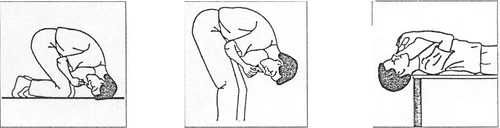
A. B. C.
and administer 6 drops (half the dose) into each nostril. The container contains sufficient medicine for administration into both nostrils.
- Remain in the adopted position for at least 1 minute to allow the medicine to spread.
- Discard the container after use.
Dosage in elderly patients
No dosage adjustment is necessary in elderly patients.
Dosage in patients under 16 years of age
There is insufficient data on the use of Flixonase Nasule in the treatment of nasal polyps in patients under 16 years of age.
Use of more than the recommended dose of Flixonase Nasule
If more Flixonase Nasule has been used than recommended, contact your doctor or pharmacist for advice.
It is important to use the medicine exactly as prescribed by your doctor. Do not use more than the prescribed dose. Using doses lower or higher than recommended may result in worsening of symptoms.
Prolonged use of higher than recommended doses of Flixonase Nasule may lead to adrenal cortex insufficiency.
Missed dose of Flixonase Nasule
It is very important to take the prescribed dose daily to ensure maximum effectiveness of treatment.
If a dose is missed, take the medicine as soon as possible, then continue treatment as directed.
Do not use a double dose to make up for a missed dose.
If you have any further doubts about the use of this medicine, consult your doctor or pharmacist.
4. Possible adverse reactions
Like all medicines, this medicine can cause adverse reactions, although they do not occur in everyone.
Below are the adverse reactions observed in patients using Flixonase Nasule.
Allergic reactions: seek medical help immediately
Allergic reactions to Flixonase Nasule are very rare (may occur in less than 1 in 10,000 patients using the medicine). In a small number of patients, allergic reactions may develop into a serious, even life-threatening condition if not treated. Symptoms include:
- Skin rash (urticaria) or redness,
- Swelling of the face or lips, which may cause difficulty in swallowing or breathing,
- Sudden onset of breathing difficulties or sudden worsening of wheezing (bronchospasm),
- Sudden feeling of weakness or dizziness (which may lead to falling or loss of consciousness).
If any of these symptoms occur, stop using the medicine immediately and contact your doctor without delay, who will advise appropriate treatment.
Very common adverse reactions (may affect more than 1 in 10 people):
- Nosebleeds.
Common adverse reactions (may affect less than 1 in 10 people):
- Dryness and irritation of the nasal and throat mucosa.
Very rare adverse reactions (may affect less than 1 in 10,000 people):
- Allergic reactions,
- Increased intraocular pressure causing vision problems (glaucoma), lens clouding (cataract). Eye-related symptoms occurred in patients using Flixonase Nasule for a prolonged period.
- Nasal septum damage.
Adverse reactions with unknown frequency (frequency cannot be estimated from available data):
- Blurred vision,
- Nasal mucosa ulceration.
If any of these symptoms occur, inform your doctor as soon as possible.
When using Flixonase Nasule, especially at high doses over a long period, systemic symptoms due to suppression of the body's natural production of steroid hormones by the adrenal glands may occur.
Reporting of adverse reactions
If any adverse reactions occur, including any not listed in this leaflet, inform your doctor or pharmacist. Adverse reactions can be reported directly to the Department of Monitoring Adverse Drug Reactions of the Office for Registration of Medicinal Products, Medical Devices and Biocidal Products, Al. Jerozolimskie 181C, 02-222 Warsaw, Tel.: +48 22 49 21 301, Fax: +48 22 49 21 309, e-mail: [email protected]
Adverse reactions can also be reported to the Marketing Authorisation Holder or its representative.
Reporting adverse reactions helps provide more information on the safety of the medicine.
5. How to store Flixonase Nasule
Keep the medicine out of the sight and reach of children.
Store below 30°C, protected from light.
Do not freeze. Store in an upright position.
The medicine in plastic containers is suitable for use within 28 days after opening the aluminium sachet.
Do not use this medicine after the expiry date stated on the packaging after EXP.
The expiry date refers to the last day of the stated month.
The batch number of the medicine is shown on the packaging after: Lot.
Medicines must not be disposed of via the sewage system or household waste. Ask your pharmacist how to dispose of medicines no longer in use. This will help protect the environment.
6. Contents of the pack and other information
What Flixonase Nasule contains
- The active substance is fluticasone propionate. One dose (one plastic container) of Flixonase Nasule contains 400 µg (micrograms) of micronized fluticasone propionate.
- Other ingredients are: polysorbate 20, sorbitan laurate, disodium dihydrogen phosphate dihydrate, sodium monohydrogen phosphate anhydrous, sodium chloride, water for injections.
What Flixonase Nasule looks like and contents of the pack
7 containers – 1 sachet containing 7 containers.
28 containers – 4 sachets, each containing 7 containers.
Single-use LDPE containers are connected together in a strip, packed in aluminum sachets,
and placed in a cardboard box.
Marketing Authorisation Holder: Manufacturer:
GlaxoSmithKline Trading Services Limited GlaxoSmithKline Trading Services Limited
12 Riverwalk 12 Riverwalk,
Citywest Business Campus Citywest Business Campus
Dublin 24 Dublin 24,
D24 YK11 Ireland
Ireland
For further information, please contact the marketing authorisation holder:
GSK Services Sp. z o.o.
ul. Rzymowskiego 53
02-697 Warsaw
tel. (22) 576-90-00
GSK Logo