Flamexin
Poland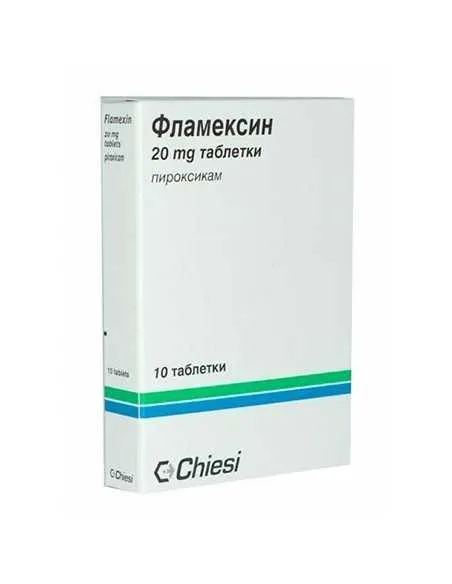
Table of Contents
Package leaflet: Information for the user
Flamexin,
20 mg, tablets
Piroxicam
Please read all of this leaflet carefully before taking this medicine, because it contains
important information for the patient.
- Keep this leaflet, as you may need to read it again.
- If you have any further questions, please ask your doctor, pharmacist, or nurse.
- This medicine has been prescribed for a specific individual. Do not pass it on to others. This medicine may harm other people, even if their symptoms are the same.
- If you experience any adverse effects, including any not listed in this leaflet, please inform your doctor, pharmacist, or nurse. See section 4.
Table of contents:
- What Flamexin is and what it is used for
- Important information before taking Flamexin
- How to take Flamexin
- Possible side effects
- How to store Flamexin
- Contents of the pack and other information
1. What Flamexin is and what it is used for
Flamexin contains piroxicam complexed with beta-cyclodextrin as the active substance. Piroxicam belongs to the group of non-steroidal anti-inflammatory drugs (NSAIDs), which have analgesic, anti-inflammatory, and antipyretic properties. The special complexation of piroxicam with beta-cyclodextrin enables faster absorption of the drug into the body and results in faster pain relief.
Before prescribing Flamexin, your doctor will assess the benefits the medicine may provide you against the risk of adverse effects. Your doctor may recommend periodic check-ups and inform you how often follow-up visits are necessary during treatment with Flamexin.
Flamexin may be recommended by your doctor only when other non-steroidal anti-inflammatory drugs (NSAIDs) have not provided sufficient symptom relief.
Flamexin is used to relieve symptoms such as joint swelling, stiffness, and pain caused by:
- Osteoarthritis;
- Rheumatoid arthritis;
- Ankylosing spondylitis (spinal rheumatism).
This medicine does not cure joint inflammation and works only during the period it is taken.
2. Important information before using Flamexin
When not to use Flamexin
-
In patients who have ever experienced an allergic reaction to piroxicam, acetylsalicylic acid, ibuprofen, or any other non-steroidal anti-inflammatory drug (NSAID), or to any of the other ingredients of this
medicine (listed in section 6). Symptoms of allergic reactions include difficulty breathing,
watery nasal discharge, or severe skin reactions (see section 4). -
In patients with active or previous peptic ulcer disease of the stomach and/or duodenum, gastrointestinal bleeding, or perforation.
-
In patients with a history of gastrointestinal disorders (such as inflammation of the gastric or intestinal mucosa) predisposing to complications such as bleeding, including ulcerative colitis, Crohn’s disease, gastrointestinal tumours, or diverticulitis (inflamed or infected pouches/sacs in the colon).
-
In patients taking other NSAIDs, including selective COX-2 inhibitors, and acetylsalicylic acid (a substance present in many pain-relieving and antipyretic medicines).
-
In patients taking anticoagulant medicines such as acenocoumarol to prevent blood clotting.
-
In patients with a history of severe allergic reaction to piroxicam, other NSAIDs, or other medicines, especially with previous severe skin reactions (regardless of severity), such as exfoliative dermatitis (intense skin redness with flaking or peeling), bullous reactions (Stevens-Johnson syndrome, a condition with skin redness and blister formation, erosions, haemorrhagic crusts or scabs), or toxic epidermal necrolysis (Lyell’s syndrome, a condition with blistering and separation of the outer layer of skin).
-
In patients experiencing asthma, rhinitis, nasal polyps, angioedema, or urticaria after taking acetylsalicylic acid or other NSAIDs.
-
In patients with moderate or severe heart failure.
-
In patients with hypertension.
-
In patients with severe hepatic insufficiency.
-
In patients with severe renal insufficiency.
-
In patients with a tendency to frequent bleeding or coagulation disorders.
-
In breastfeeding women.
-
In women with confirmed pregnancy or suspected pregnancy.
-
In children under 18 years of age.
Patients belonging to any of the above groups must not use piroxicam. You must immediately inform your doctor if any of the above conditions apply.
Warnings and precautions
Before starting treatment with Flamexin, discuss this with your doctor.
Like all non-steroidal anti-inflammatory drugs, Flamexin may cause serious gastric and intestinal reactions such as pain, bleeding, ulceration, and perforation.
If you experience stomach pain or any symptoms of gastrointestinal bleeding, such as black stools, blood in the stool, or vomiting blood, you must immediately stop taking piroxicam and consult your doctor.
If any allergic reaction occurs, such as skin rash, facial swelling, wheezing, or difficulty breathing, you must immediately stop taking piroxicam and inform your doctor.
Patients with any medical conditions or allergies, or those who are unsure whether they can take piroxicam, should consult their doctor before using this medicine.
Potentially life-threatening severe skin reactions have been reported with the use of Flamexin: drug reaction with eosinophilia and systemic symptoms (DRESS syndrome), Stevens-Johnson syndrome, and toxic epidermal necrolysis. These reactions typically begin on the trunk as reddish, target-like spots or circular lesions, often with blisters in the central area.
Additionally, the following symptoms should be noted: oral, pharyngeal, nasal, or genital ulceration, and conjunctivitis (red and swollen eyes).
These potentially life-threatening skin rashes are often accompanied by flu-like symptoms.
The rash may progress to blistering or skin peeling.
The highest risk of severe skin reactions occurs during the first weeks of treatment.
If Stevens-Johnson syndrome or toxic epidermal necrolysis has occurred during treatment with Flamexin, the medicine must never be used again.
If a skin rash or any of the above skin symptoms appear, stop taking Flamexin immediately, contact your doctor as soon as possible, and inform them about the use of this medicine.
If a rash or other skin symptoms occur, discontinue piroxicam immediately, seek urgent medical advice, and inform the doctor about taking this medicine.
For patients over 70 years of age, the doctor may minimize the duration of treatment and recommend more frequent follow-up visits during piroxicam therapy. In patients over 70 years of age or those taking other medicines such as corticosteroids, certain antidepressants known as serotonin reuptake inhibitors (SSRIs), or acetylsalicylic acid for blood clot prevention, the doctor may prescribe a gastroprotective agent alongside Flamexin.
Administration of this medicinal product should be avoided in patients over 80 years of age.
If you have heart problems, a history of stroke, or suspect you may be at risk of these conditions (e.g. high blood pressure, diabetes, elevated cholesterol levels, smoking), discuss your treatment plan with your doctor.
Taking medicines such as Flamexin may be associated with a small increased risk of heart attack (myocardial infarction) or stroke. This risk increases with long-term use of high doses. Do not use higher doses or longer treatment durations than recommended.
Flamexin and other medicines
Inform your doctor or pharmacist about all medicines you are currently taking or have recently taken (within the last week), as well as any medicines you plan to take. Medicines may sometimes interact with each other. Your doctor may restrict the use of piroxicam or other medicines, or may recommend an alternative medicine.
It is particularly important to inform your doctor:
- if you are taking acetylsalicylic acid or other NSAIDs for pain relief;
- if you are taking corticosteroids, which are medicines used, for example, in the treatment of allergies and endocrine/hormonal disorders;
- if you are taking anticoagulants such as warfarin or acenocoumarol to prevent blood clots;
- if you are taking any medicines such as acetylsalicylic acid to prevent platelet aggregation; or if you are taking certain antidepressants known as serotonin reuptake inhibitors (SSRIs);
- if you are taking lithium for depression;
- if you are taking medicines that neutralize gastric acid;
- if you are taking cardiac glycosides (e.g. digoxin and digitoxin);
- if you are taking cimetidine for peptic ulcer disease;
- if you are taking antihypertensive medicines, including diuretics, angiotensin-converting enzyme inhibitors, and angiotensin II receptor antagonists;
- if you are taking cyclosporine (an immunosuppressive medicine used, among others, in transplant patients);
- if you are taking tacrolimus (an immunosuppressive medicine used, among others, in atopic dermatitis);
- if you are taking potassium-containing medicines and potassium-sparing diuretics;
- if you are taking methotrexate (a medicine used, among others, in cancer and rheumatoid arthritis);
- if you are taking quinolone antibiotics such as ciprofloxacin for bacterial infections;
- if you are using contraceptive intrauterine devices.
If any of the above apply to you, inform your doctor immediately.
Flamexin and alcohol
Do not consume alcohol while taking piroxicam. Alcohol increases the risk of adverse effects.
Pregnancy, breastfeeding, and fertility
If you are pregnant or breastfeeding, think you may be pregnant, or are planning to have a child, consult your doctor or pharmacist before using this medicine.
Pregnancy and breastfeeding
Piroxicam must not be used if pregnancy is confirmed or suspected, or during breastfeeding.
Effect on fertility
Piroxicam may adversely affect female fertility and is not recommended in women attempting to conceive.
Driving and operating machinery
If headache, visual disturbances, dizziness, or drowsiness occur after taking Flamexin, do not drive or operate machinery.
Flamexin contains lactose monohydrate
If you have been previously diagnosed with an intolerance to certain sugars, consult your doctor before taking this medicine.
Flamexin contains sodium
This medicine contains less than 1 mmol (23 mg) of sodium per tablet, meaning it is considered "sodium-free".
3. How to use Flamexin
This medicine should always be taken exactly as prescribed by your doctor. If in doubt, consult your
doctor or pharmacist. Your doctor will schedule regular check-ups to ensure that the optimal dose of
piroxicam is being used. Your doctor will adjust the treatment to the lowest effective dose. If you feel
the medicine is not sufficiently effective, always consult your doctor.
Dosage
Adults and elderly patients
The maximum daily dose is 20 milligrams of piroxicam, taken as a single daily dose.
This corresponds to 1 tablet containing 191.2 mg of piroxicam with beta-cyclodextrin.
For patients over 70 years of age, the doctor may recommend a lower daily dose and a shorter duration of treatment.
The doctor may recommend taking half the dose. To divide the tablet into two equal doses (10 mg each),
place the tablet on a flat surface with the score line facing upwards and gently press down with your thumb to break it into two equal parts.

The medicine should be taken orally during a meal.
Your doctor may recommend taking piroxicam together with another medicine that protects the
gastrointestinal mucosa from potential adverse effects.
Under no circumstances should the dose be changed without prior consultation with your doctor.
Do not increase the dose of the medicine.
Use in children and adolescents
Flamexin should not be used in children and adolescents under 18 years of age.
Taking more Flamexin than prescribed
If you have taken more Flamexin than prescribed, contact your doctor or pharmacist immediately.
Remember to bring the medicine packaging and any remaining tablets with you.
If you miss a dose of Flamexin
Take the missed dose as soon as possible. However, if it is almost time for the next dose, do not
take the missed dose; instead, take the next dose at the scheduled time. Do not take a double dose
to make up for a missed dose.
If you have any further questions about the use of this medicine, consult your doctor or pharmacist.
4. Possible adverse reactions
Like all medicines, this medicine can cause adverse reactions, although not everyone will experience them.
Allergic reactions have been reported with the use of piroxicam. You should immediately contact your doctor or the nearest hospital emergency department if any of the following symptoms occur:
- Chest tightness, severe breathing difficulties, or anaphylactic reaction, which may include rapid heartbeat, profuse sweating, fever, and in severe cases, shock and collapse;
- Skin rashes, including itching, urticaria, skin rash, severe reaction causing swelling of the face or throat, severe skin reactions such as exfoliative dermatitis (intense redness of the skin with peeling in scales or sheets), potentially life-threatening skin rashes associated with redness and formation of blisters, erosions, haemorrhagic crusts or scabs (Stevens-Johnson syndrome), toxic epidermal necrolysis, blistering and peeling of the outer layer of skin (Lyell's syndrome);
- Nail detachment from the nail bed, nail splitting, and hair loss;
- Angioedema, which may be associated with fever, rash, and joint pain.
If any of the following serious adverse reactions occur, Flamexin must be discontinued immediately and you should contact your doctor:
- Bloody stools or bloody diarrhoea;
- Vomiting blood;
- Perforation or ulceration of the stomach or small intestine;
- Abdominal pain or stomach ache.
Listed below are all adverse reactions, categorized according to their frequency of occurrence. If any of these occur, inform your doctor or pharmacist.
Common adverse reactions (occurring in more than 1 in 100 but less than 1 in 10 people):
- Decrease in the number of red blood cells, which may cause pallor, weakness, or shortness of breath;
- Decrease in the number of platelets, increasing the risk of bleeding or bruising;
- Marked decrease in the number of white blood cells, which may cause weakness, unusual bruising, or increased risk of infection; an increase in eosinophils (a type of white blood cell) may also occur;
- Loss of appetite, increased blood glucose levels;
- Dizziness, headache, drowsiness, tinnitus;
- Discomfort in the abdominal cavity, abdominal pain, constipation, diarrhoea, pain or discomfort in the epigastrium, bloating, nausea, vomiting, indigestion;
- Rash, itching;
- Swelling of feet and ankles;
- Weight gain, changes in laboratory test results (increased aminotransferase activity).
Uncommon adverse reactions (occurring in more than 1 in 1,000 but less than 1 in 100 people):
- Decreased blood glucose levels, causing tremor, sweating, and rapid heartbeat;
- Blurred vision;
- Palpitations;
- Stomatitis.
Rare adverse reactions (occurring in more than 1 in 10,000 but less than 1 in 1,000 people):
- Interstitial nephritis, renal papillary necrosis, nephrotic syndrome, renal failure.
Very rare adverse reactions (occurring in less than 1 in 10,000 people):
- Severe skin reactions: skin rashes associated with redness and formation of blisters, erosions, haemorrhagic crusts or scabs (Stevens-Johnson syndrome), toxic epidermal necrolysis.
Adverse reactions with unknown frequency (frequency cannot be estimated from available data):
- Aplastic anaemia, haemolytic anaemia;
- Serum sickness, anaphylaxis;
- Fluid retention;
- Depression, sleep disorders, hallucinations, insomnia, disorientation, mood changes, nervousness;
- Aseptic meningitis, paresthesia (tingling, pricking, burning sensations);
- Eye irritation, eyelid swelling;
- Hearing loss;
- Hypertension, vasculitis;
- Bronchospasm, dyspnoea, epistaxis;
- Gastritis, gastrointestinal bleeding, gastrointestinal perforation, melaena, vomiting blood, peptic ulcer disease, pancreatitis, dry mouth;
- Jaundice, hepatitis;
- Alopecia, angioedema, exfoliative dermatitis, erythema multiforme, drug reaction with eosinophilia and systemic symptoms (DRESS syndrome), photosensitivity, nail detachment from the nail bed, urticaria, vesiculobullous changes, thrombocytopenic purpura;
- Persistent drug-induced erythema (may present as round or oval red spots and swelling on the skin), blisters (urticaria), itching;
- Glomerulonephritis;
- Malaise;
- Weight loss, changes in laboratory test results (elevated alkaline phosphatase activity, positive antinuclear antibody titres, decreased haemoglobin concentration, decreased haematocrit value).
In elderly patients or patients with cardiac dysfunction, there is a possibility of developing congestive heart failure.
The use of certain NSAIDs (especially at high doses and during long-term treatment) may be associated with a small increased risk of complications such as myocardial infarction or stroke.
Reporting of adverse reactions
If any adverse symptoms occur, including any not listed in this leaflet, inform your doctor, pharmacist, or nurse.
Adverse reactions can be reported directly to the Department of Monitoring Adverse Drug Reactions of the Office for Registration of Medicinal Products, Medical Devices and Biocidal Products:
Al. Jerozolimskie 181C, 02-222 Warsaw
Tel.: +48 22 49 21 301
Fax: +48 22 49 21 309
Website: https://smz.ezdrowie.gov.pl
Adverse reactions can also be reported to the marketing authorization holder.
Reporting adverse reactions helps provide more information on the safety of the medicine.
5. How to store Flamexin
- Keep this medicine out of the sight and reach of children.
- Do not use this medicine after the expiry date stated on the carton. The expiry date refers to the last day of the stated month.
- No special storage instructions apply.
- Medicines must not be disposed of via wastewater or household waste. Ask your pharmacist how to dispose of medicines no longer required. These measures will help protect the environment.
6. Contents of the pack and other information
What Flamexin contains
The active substance in Flamexin is piroxicam complexed with beta-cyclodextrin.
Each tablet contains: 191.2 mg of piroxicam with beta-cyclodextrin, equivalent to 20 mg of piroxicam.
The other ingredients are: monohydrate lactose, crospovidone, sodium carboxymethyl starch,
colloidal hydrated silica, pregelatinized starch, magnesium stearate.
What Flamexin looks like and contents of the pack
Flamexin is a hexagon-shaped tablet with a score line.
Flamexin is packed in blisters made of plastic and aluminium (PVC/PVDC/Aluminium/PVDC),
placed in a cardboard box.
Flamexin is available in packages containing:
1 blister with 10 tablets
2 blisters with 10 tablets each.
Not all pack sizes may be marketed.
Marketing Authorisation Holder
Chiesi Farmaceutici S.p.A., Via Palermo 26/A, 43122 Parma, Italy
Manufacturer:
Chiesi Farmaceutici S.p.A., Via San Leonardo 96, 43122 Parma, Italy
Fine Foods & Pharmaceuticals N.T.M. S.p.A., Via Grignano 43, 24041 Brembate (BG), Italy
For further information, contact the local representative of the Marketing Authorisation Holder in Poland:
Chiesi Poland Sp. z o.o., Al. Jerozolimskie 134, 02-305 Warsaw, Poland
Tel.: (22) 620 14 21
Fax: (22) 652 37 79
e-mail: [email protected]
[Chiesi Logo]