Fixapost
Poland
Table of Contents
Package leaflet: Information for the patient
Fixapost, 50 micrograms/ml + 5 mg/ml, eye drops, solution
Latanoprostum + Timololum
Please read carefully all the information in this leaflet before using the medicine, as it contains
important information for the patient.
- Keep this leaflet, so that you can read it again if necessary.
- If you have any questions, please consult your doctor or pharmacist.
- This medicine has been prescribed for a specific individual. Do not pass it on to others. The medicine may harm another person, even if their symptoms are the same.
- If you experience any adverse reactions, including any adverse reactions not listed in this leaflet, inform your doctor or pharmacist. See section 4.
Table of contents of the leaflet
- What Fixapost is and what it is used for
- Important information before using Fixapost
- How to use Fixapost
- Possible side effects
- How to store Fixapost
- Contents of the pack and other information
1. What Fixapost is and what it is used for
Fixapost contains two active substances: latanoprost and timolol. Latanoprost belongs to a group of medicines known as prostaglandin analogues. Timolol belongs to a group of medicines known as beta-adrenolytics.
Latanoprost works by increasing the natural outflow of aqueous humour from the eye into the bloodstream. Timolol reduces the production of aqueous humour in the eye.
Fixapost is used to reduce intraocular pressure when the patient has open-angle glaucoma or ocular hypertension. Both of these conditions are associated with increased pressure inside the eyeball and may affect vision. Your doctor prescribes Fixapost if other medicines are not sufficiently effective.
Fixapost is a preservative-free eye drop solution.
2. Important information before using Fixapost
Fixapost may be used by adult men and women, but it is not recommended for individuals under 18 years of age.
When not to use Fixapost:
- if the patient is allergic (hypersensitive) to latanoprost, timolol, beta-blockers, or to any of the other ingredients of this medicine (listed in section 6),
- if the patient currently has or has had in the past respiratory disorders such as bronchial asthma, severe chronic obstructive pulmonary disease (severe lung disease which may cause wheezing, difficulty breathing, and/or prolonged cough),
- if the patient has serious heart problems or cardiac arrhythmias (irregular heartbeat).
Warnings and precautions
Before starting to use Fixapost, discuss with your doctor, pharmacist, or nurse if any of the following conditions currently affect the patient or have affected them in the past:
- ischemic heart disease (symptoms may include chest pain or tightness, shortness of breath, angina),
- heart failure, low blood pressure,
- cardiac arrhythmias, such as slow heartbeat,
- breathing problems, asthma, chronic obstructive pulmonary disease,
- if the patient has a condition associated with poor blood circulation (such as Raynaud's disease or Raynaud's phenomenon),
- diabetes, because timolol may mask subjective and objective symptoms associated with low blood sugar,
- hyperthyroidism, because timolol may mask subjective and objective symptoms of this condition,
- if the patient is scheduled for any eye surgery (including cataract surgery) or has previously undergone such a procedure,
- if the patient suffers from eye disorders (such as eye pain, eye irritation, eye inflammation, or blurred vision),
- if the patient has dry eye syndrome,
- if the patient wears contact lenses. Fixapost may still be used, but follow the instructions for contact lens wearers provided in section 3,
- if the patient suffers from angina (especially a type called Prinzmetal's angina),
- if the patient experiences severe allergic reactions, which usually require hospital treatment,
- if the patient has or has previously had a viral eye infection caused by herpes simplex virus (HSV).
Before surgery, inform the doctor about the use of Fixapost, as timolol may alter the effects of certain drugs used during anesthesia.
Fixapost and other medicines
Tell your doctor or pharmacist about all medicines the patient is currently using, has recently used, or plans to use, including eye drops and over-the-counter medicines.
Some medicines may affect the action of Fixapost, and Fixapost may also affect the action of other medicines, including other eye drops used in the treatment of glaucoma. Inform your doctor about the use or planned use of medicines that lower blood pressure, heart medications, or antidiabetic drugs.
In particular, talk to your doctor or pharmacist if the patient is taking any of the following medicines:
- prostaglandins, analogues or derivatives of prostaglandins,
- beta-blockers,
- epinephrine,
- medicines used to lower blood pressure, such as oral calcium channel blockers, guanethidine, antiarrhythmics, digitalis glycosides, or parasympathomimetics,
- quinidine (a medicine used in the treatment of heart conditions and certain types of malaria),
- antidepressants known as fluoxetine and paroxetine.
Fixapost with food and drink
Eating meals, food, and drink do not affect the timing or method of using Fixapost.
Pregnancy, breastfeeding, and fertility
Do not use Fixapost during pregnancy or while breastfeeding.
Fixapost may pass into breast milk.
Animal studies have shown that latanoprost and timolol do not affect fertility in women or men.
If the patient is pregnant, suspects she may be pregnant, or is planning to have a child, she should consult her doctor before using this medicine.
Driving and using machines
Using Fixapost may cause temporary visual disturbances. In such cases, do not drive, use tools, or operate machinery until the disturbances resolve.
Fixapost contains macrogolglycerol hydroxystearate (derived from castor oil) which may cause skin reactions.
3. How to use Fixapost
This medicine should always be used exactly as advised by your doctor or pharmacist. If in doubt,
consult your doctor or pharmacist.
The recommended dose for adults (including elderly patients) is one drop into the affected eye
(eyes) once daily.
Do not use Fixapost more frequently than once daily, as more frequent use may reduce the
effectiveness of treatment.
Fixapost should be used as directed by the doctor until the doctor decides to discontinue
treatment.
Your doctor may recommend more frequent monitoring of heart and circulatory system function
during treatment with Fixapost.
This medicine is in the form of preservative-free eye drops solution. Do not let the tip of the
bottle (dropper) touch the eye or any surrounding area. This may lead to bacterial contamination,
which could cause eye infection resulting in serious eye damage or even loss of vision.
To avoid possible contamination of the bottle, keep the dropper tip away from contact with
any surface.
Contact lens wearers
Remove contact lenses before instilling Fixapost. Wait 15 minutes after using the medicine before
reinserting the lenses.
Method of administration
This medicine is for ophthalmic use only.
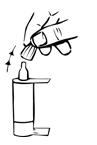
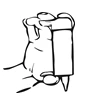
It is important to follow these instructions when administering the medicine:
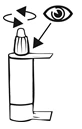 | Before first use of the medicine:
|
 |
|
 |
|
| |
If no drop falls, gently shake the bottle to dislodge any drop remaining at the tip. In this case, repeat step 3.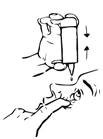 | |
| |
 |
|
Use of Fixapost with other eye drops
Wait at least 5 minutes between the application of Fixapost and other eye drops.
Use of a higher than recommended dose of Fixapost
Using too many drops in the eye may cause mild eye irritation, tearing, and redness. These symptoms should resolve on their own, but if they concern the patient, medical advice should be sought.
Accidental ingestion of Fixapost drops
If Fixapost is accidentally swallowed, contact a doctor for advice. Ingestion of a large amount of Fixapost drops may cause nausea, abdominal pain, feeling of fatigue, facial skin redness, dizziness, and sweating.
Missed dose of Fixapost
Continue using the prescribed dose at the usual time. Do not use a double dose to make up for a missed dose. If you have any further questions about the use of this medicine, consult your doctor or pharmacist.
Discontinuation of Fixapost
If you intend to stop using Fixapost, consult your doctor first. If you have any further questions about the use of this medicine, consult your doctor, pharmacist, or nurse.
4. Possible adverse effects
Like all medicines, this medicine can cause adverse effects, although not everyone will experience them.
Treatment with the drops can usually be continued unless the adverse effects are severe. If in doubt,
consult a doctor or pharmacist. Do not stop using Fixapost without consulting your doctor.
The following are known adverse effects associated with the use of Fixapost. The most important
possible adverse effect is a gradual, permanent change in eye colour. There is also a possibility of
serious changes in heart function. If a patient experiences changes in heart rhythm or heart
function, they should consult a doctor and inform them about using Fixapost.
The following adverse effects have been observed during treatment with Fixapost:
Very common (may affect more than 1 in 10 people):
- Gradual change in eye colour due to increased amount of brown pigment in the coloured part of the eye, the so-called iris. This effect is more frequently observed in patients with mixed-colour irises (blue-brown, grey-brown, yellow-brown or green-brown) than in patients with uniformly coloured eyes (blue, grey, green or brown). The change in eye colour may develop over several years. This change may be permanent and may be more noticeable when Fixapost is administered in only one eye. No associated discomfort has been reported with the change in eye colour. These changes do not progress after discontinuation of Fixapost.
Common (may affect up to 1 in 10 people):
- Eye irritation (burning sensation, grittiness, itching, stinging or foreign body sensation in the eye) and eye pain.
Uncommon (may affect up to 1 in 100 people):
- Headache,
- Eye redness, eye infection (conjunctivitis), blurred vision, watery eyes, eyelid inflammation, eye surface irritation or damage,
- Skin rash or itching,
- Nausea, vomiting.
Other adverse effects
Like other eye medicines, Fixapost (latanoprost and timolol) is absorbed into the bloodstream.
The frequency of adverse effects after using eye drops is lower than with oral or injectable
medicines.
Although the additional adverse effects listed below have not been observed with Fixapost, they
may occur during treatment, as they have been reported with the active substances in Fixapost
(latanoprost and timolol). The listed adverse effects include reactions observed during treatment
of eye diseases with beta-adrenergic blocking agents (e.g. timolol):
- Development of viral eye infection caused by herpes simplex virus (HSV).
- General allergic reactions, including subcutaneous oedema, which may occur in the face and limbs and may compromise airway patency, making swallowing and breathing difficult,
urticaria or itchy rash, localised and generalised rash, pruritus, severe, sudden, life-threatening allergic reaction.
- Low blood glucose levels.
- Dizziness.
- Difficulty sleeping (insomnia), depression, nightmares, memory loss, hallucinations.
- Fainting, stroke, reduced blood flow to the brain, worsening of myasthenia symptoms (muscle disorder), unusual sensations such as tingling and stinging, headache.
- Swelling in the back of the eye (macular oedema), fluid-filled cyst in the coloured part of the eye (iris cyst), light sensitivity (photophobia), sunken appearance of the eyes (deepening of the eyelid sulcus).
- Subjective and objective symptoms of eye irritation (e.g. burning, stinging, itching, tearing, redness), eyelid inflammation, corneal inflammation, blurred vision, and detachment of the layer beneath the retina containing blood vessels, following a filtering procedure, which may cause visual disturbances, reduced corneal sensitivity, dry eyes, corneal erosion (damage to the front layer of the eyeball), drooping of the upper eyelid (causing the eye to be partially closed), double vision.
- Darkening of the skin around the eyes, changes in the appearance of eyelashes and fine hairs around the eye (increased number, length, density and darkening), changes in the direction of eyelash growth, swelling around the eye, swelling of the coloured part of the eye (iritis/uveitis), scarring of the eye surface.
- Ringing or buzzing in the ears (tinnitus).
- Angina, worsening of angina pectoris in patients with heart disease.
- Slow heart rate, chest pain, palpitations (awareness of heartbeat), oedema (fluid accumulation), changes in heart rhythm or rate, congestive heart failure (heart disease with shortness of breath and swelling of feet and legs due to fluid accumulation), type of arrhythmia, myocardial infarction, heart failure.
- Low blood pressure, poor circulation causing numbness and paleness of fingers and toes, cold hands and feet.
- Shallow breathing (dyspnoea), narrowing of the airways in the lungs (mainly in patients with pre-existing lung disease), breathing difficulties, cough, asthma, worsening of asthma.
- Taste disturbances, nausea, indigestion, diarrhoea, dry mouth, abdominal pain, vomiting.
- Hair loss, skin rash with silvery-white appearance (psoriasiform rash or exacerbation of psoriasis), skin rash.
- Joint pain, muscle pain not caused by physical exertion, muscle weakness, fatigue.
- Sexual dysfunction, decreased libido.
Reporting of adverse effects
If any adverse effects occur, including any not listed in this leaflet, inform your doctor or pharmacist.
Adverse effects can be reported directly to the Department of Monitoring Adverse Drug Reactions at the Office for Registration of Medicinal Products, Medical Devices and Biocidal Products: Al. Jerozolimskie 181C, 02-222 Warsaw
tel.: +48 22 49 21 301, fax: +48 22 49 21 309
Website: https://smz.ezdrowie.gov.pl
Adverse effects can also be reported to the marketing authorisation holder.
Reporting adverse effects helps provide more information on the safety of this medicine.
5. How to store Fixapost medicine
Keep this medicine out of the sight and reach of children.
Do not use this medicine after the expiry date stated on the carton and bottle. The expiry date refers to the last day of the stated month.
Before first opening the bottle: no special storage conditions apply.
After first opening the bottle: Fixapost may be used for up to 4 weeks in the 2.5 ml bottle and up to 3 months in the 6 ml bottle, with no special storage requirements.
The date of first opening should be recorded on the carton.
Medicines must not be disposed of via wastewater or household waste. Ask your pharmacist how to dispose of medicines no longer required. These measures will help protect the environment.
6. Contents of the pack and other information
What Fixapost contains
The active substances are latanoprost 50 micrograms/ml and timolol (as timolol maleate) 5 mg/ml.
The other components are: macrogol glyceryl hydroxystearate, sorbitol, macrogol 4000, carbomer,
disodium edetate, sodium hydroxide (for pH adjustment), water.
What Fixapost looks like and contents of the pack
Fixapost is a slightly yellow, opalescent solution without preservatives and practically free of visible solid particles.
Fixapost is available in the following pack sizes:
- 2.5 ml bottle (containing at least 80 preservative-free drops) with a pump, sufficient for 4 weeks of treatment, placed in a dosing aid system (Easygrip), in a cardboard box.
- 6 ml bottle (containing at least 190 preservative-free drops) with a pump, sufficient for 3 months of treatment, placed in a dosing aid system (Easygrip), in a cardboard box.
Marketing Authorisation Holder and Manufacturer
Marketing Authorisation Holder
Laboratoires THEA
12 rue Louis Blériot
63017 Clermont-Ferrand Cedex 2
France
Manufacturer
DELPHARM TOURS
Rue Paul Langevin
37170 Chambray-lès-Tours
France
Laboratoires THEA
12 rue Louis Blériot
63017 Clermont-Ferrand Cedex 2
France
FARMILA-THEA Farmaceutici S.p.A.
Via Enrico Fermi, 50
20019 Settimo Milanese
Italy
This medicinal product is authorised in the European Economic Area under the following names:
Austria, Germany …………………….. Fixapost 50 microgrammes/ml + 5 mg/ml eye drops, solution
Belgium, France ……………………….. Fixaprost 50 microgrammes/ml + 5 mg/ml, eye drops, solution
Bulgaria, Cyprus, Greece, Netherlands, Luxembourg …………………………………………. FIXAPROST
Croatia ……………………………… Fixalpost 50 micrograms/ml + 5 mg/ml eye drops, solution
Czech Republic …………………………………………………………………………………………. Fixapost
Denmark, Finland, Iceland, Norway, Sweden ……………………………………………….. Fixopost
Estonia ……………………………………………………………………………………... FIXOPOST
Spain …………………………... FIXAPROST 50 microgramos/ml + 5 mg/ml, colirio en solución
Lithuania …………………………………………... Fixopost 50 mikrogramų/5 mg/ml akių lašai (tirpalas)
Latvia …………………………………………. Fixopost 50 mikrogrami/5 mg/ml acu pilieni, šķīdums
Poland, Slovakia, Italy …………………………………………………………………. FIXAPOST
Portugal ……………………………………………………………………………… Monoprost Duo
Romania …………………………. Fixanpost 50 micrograme/ml + 5 mg/ml Picături oftalmice, soluție
Slovenia ……………………….. Fixalpost 50 mikrogramov/ml + 5 mg/ml, kapljice za oko, raztopina
Detailed information on this medicine is available on the website www.urpl.gov.pl