Fentanyl wzf
PolandTable of Contents
- Patient Information Leaflet
- 1. What Fentanyl WZF is and what it is used for
- 2. Information before using Fentanyl WZF
- 3. How to use Fentanyl WZF
- 4. Possible adverse reactions
- 5. How to store Fentanyl WZF
- 6. Contents of the pack and other information
- Information intended exclusively for medical professionals
Patient Information Leaflet
FENTANYL WZF, 50 micrograms/ml, solution for injection
Fentanylum
Please read this leaflet carefully before using the medicine, as it contains
important information for the patient.
- Keep this leaflet, so that you can read it again if necessary.
- If you have any questions, please consult your doctor, pharmacist, or nurse.
- This medicine has been prescribed for a specific individual. Do not pass it on to others. The medicine may harm someone else, even if their symptoms are the same.
- If you experience any adverse effects, including any not listed in this leaflet, inform your doctor, pharmacist, or nurse. See section 4.
Contents of the leaflet
- What Fentanyl WZF is and what it is used for
- Important information before using Fentanyl WZF
- How to use Fentanyl WZF
- Possible side effects
- How to store Fentanyl WZF
- Contents of the pack and other information
1. What Fentanyl WZF is and what it is used for
Fentanyl WZF is a synthetic opioid, a very potent analgesic medicine used:
- in small doses to relieve pain during short surgical procedures,
- in large doses as an analgesic and/or respiratory depressant in patients requiring assisted ventilation,
- to induce surgical analgesia (pain relief) during general anaesthesia,
- in combination with neuroleptic agents to perform a type of anaesthesia called neuroleptanalgesia,
- as a single agent or in combination with other medicines (e.g. benzodiazepines) to perform a technique known as analgosedation,
- in the treatment of severe pain, such as trauma-related pain or pain associated with myocardial infarction.
2. Information before using Fentanyl WZF
When not to use Fentanyl WZF:
- if the patient is allergic to fentanyl or any of the other ingredients of this medicine (listed in section 6), or to other opioid analgesics;
- if respiratory depression (inhibition of breathing) is present (except for cases mentioned in section 1.);
- if the patient has pulmonary obstructive diseases;
- if there are clinical conditions which may contraindicate epidural or intrathecal administration.
- Fentanyl WZF must not be used during treatment with monoamine oxidase inhibitors (MAOIs) or within 2 weeks after discontinuation of MAOI therapy.
Warnings and precautions
Before starting treatment with Fentanyl WZF, discuss it with your doctor.
Fentanyl WZF is administered by medical personnel. During administration and after surgery, appropriate care will be provided to the patient, and in case of problems, oxygen therapy and other necessary measures will be applied to maintain vital functions.
Talk to your doctor before using Fentanyl WZF if:
- the patient or any family member has ever abused or been dependent on alcohol, prescription drugs, or illegal substances ("addiction");
- the patient smokes tobacco;
- the patient has ever had mood disorders (depression, anxiety, or personality disorder) or has been treated by a psychiatrist for other mental illnesses;
- the patient has uncontrolled hypothyroidism, lung diseases, muscle weakness (myasthenia gravis), reduced pulmonary reserve, alcohol-related disease, or impaired kidney or liver function;
- the patient has brain function disorders, as lowering of arterial pressure may cause transient reduction in cerebral blood flow; in such cases, the doctor will adjust the method of fentanyl administration;
- the patient is elderly or debilitated – the doctor will reduce fentanyl doses; during initial dosing, the patient's response to the drug will be taken into account, and additional doses will be administered if necessary.
As with all potent opioid analgesics, during surgical procedures fentanyl may cause marked respiratory depression (inhibition of breathing), which may persist or recur in the early postoperative period. Medical staff will exercise caution, especially when administering high doses or continuous infusions of fentanyl, and will ensure adequate monitoring and support of spontaneous respiration before transferring the patient to a hospital ward.
Administration of fentanyl during childbirth may cause respiratory depression in the newborn.
Seizures may also occur in patients during fentanyl administration.
Repeated use of opioid analgesics may lead to reduced effectiveness of the drug (the patient becomes tolerant). It may also lead to dependence and abuse, potentially resulting in life-threatening overdose. If the patient is concerned about becoming addicted to Fentanyl WZF, they should discuss this with their doctor.
If treatment is discontinued, withdrawal symptoms may occur. If the patient suspects this is happening, they should inform their doctor or nurse (see also section 4. Possible side effects).
Like other opioid medicines, including fentanyl, administration of this medicine may lead to increased pressure in the biliary tract and, in isolated cases, spasm of the sphincter of Oddi (symptoms: moderate or severe pain located in the upper abdomen, which may be continuous or recurrent).
When fentanyl is used concomitantly with serotonergic drugs, serotonin syndrome may occur. This syndrome may include mental status changes (e.g., agitation, hallucinations, coma), autonomic dysfunction (e.g., tachycardia, fluctuating blood pressure, hyperthermia – elevated body temperature), neuromuscular abnormalities (e.g., increased reflexes, lack of coordination, muscle rigidity), and/or gastrointestinal symptoms (e.g., nausea, vomiting, diarrhea). If symptoms occur or serotonin syndrome is suspected, the doctor will decide to discontinue fentanyl administration. (See also subsection "Fentanyl WZF and other medicines".)
Fentanyl WZF and other medicines
Tell your doctor about all medicines currently or recently used, as well as any medicines the patient plans to use. In particular, inform your doctor if the patient is taking any of the following medicines:
- Concomitant use of opioid analgesics in premedication, barbiturates, benzodiazepines, neuroleptics, general anesthetics, certain drugs used to treat neuropathic pain (gabapentin and pregabalin), and other centrally acting depressants (e.g., alcohol) may intensify or prolong respiratory depression caused by fentanyl. If the patient is receiving centrally acting depressants, fentanyl doses should be lower than usual.
- Simultaneous use of Fentanyl WZF and sedatives, such as benzodiazepines or related drugs, increases the risk of drowsiness, breathing difficulties (respiratory depression), or coma, which may be life-threatening. Therefore, combination therapy should only be considered when no other treatment options are available. If Fentanyl WZF is used together with sedatives, the doctor should reduce the dose and duration of concomitant use. The patient should inform the doctor about all sedative medicines being taken and strictly adhere to the prescribed dose. Informing a relative or close friend about the possibility of the above-mentioned symptoms may be helpful. If the described symptoms occur, consult a doctor immediately.
- Repeated administration of fentanyl together with antiviral drugs (e.g., ritonavir) may require a reduction in fentanyl dose.
- If the patient is taking antifungal medicines, such as fluconazole or voriconazole, they should inform their doctor, as these may affect fentanyl's action.
- Bradycardia (slow heart rate) and cardiac arrest may occur when fentanyl is used concomitantly with muscle relaxants (those without vagolytic activity).
- When fentanyl is used with serotonergic drugs, serotonin syndrome may occur, which may be potentially life-threatening (see subsection "Warnings and precautions").
- The dose of fentanyl should be reduced when used concomitantly with etomidate and midazolam.
Pregnancy, breastfeeding, and effects on fertility
If the patient is pregnant or breastfeeding, suspects she may be pregnant, or is planning to have a child, she should consult her doctor before using this medicine.
The decision on using this medicine during pregnancy and breastfeeding will be made by the doctor after considering the risk-benefit ratio of breastfeeding following fentanyl administration.
Fentanyl passes into breast milk. Therefore, breastfeeding and use of milk expressed within 24 hours after administration of the drug are not recommended.
Effect on fertility
There are no clinical data on the effect of fentanyl on fertility in men and women.
Animal studies have shown reduced fertility in female rats following administration of toxic doses to mothers.
Driving and operating machinery
After administration of fentanyl, driving vehicles and operating machinery is not recommended for at least 24 hours, even if the patient is discharged from hospital earlier.
Fentanyl WZF contains sodium
This medicine contains less than 1 mmol (23 mg) of sodium per 1 ml, meaning the medicine is considered "sodium-free".
If the medicine is diluted before administration in a solution containing sodium, the sodium content of that solution should be taken into account.
3. How to use Fentanyl WZF
Fentanyl WZF is administered by medical personnel. In case of doubts, consult a
physician.
Fentanyl WZF can be administered intramuscularly, intravenously, subcutaneously, epidurally,
or intrathecally. Fentanyl WZF does not contain preservatives.
The physician will adjust the dose of Fentanyl WZF according to the patient's general condition, age, body weight, concomitant diseases, type of procedure, anesthesia, and medications used. The physician will provide detailed information regarding dosage.
Administration of a higher than recommended dose of Fentanyl WZF
Symptoms of overdose depend on individual patient sensitivity. These include: respiratory disturbances, muscular rigidity, bradycardia, significant decrease in blood pressure, and brain disorders (known as toxic leukoencephalopathy). Appropriate management will be undertaken by medical personnel.
4. Possible adverse reactions
Like all medicines, this medicine can cause adverse reactions, although not everyone will experience them.
If the patient experiences first signs of hypersensitivity (e.g. swelling of the face, lips, tongue,
throat, causing difficulty in breathing or swallowing), inform the doctor immediately. The frequency
of such reactions has not been established. The doctor will then assess the severity of symptoms
and decide on further management.
Very common (more than 1 in 10 people):
- Muscle rigidity (which may also affect intercostal muscles);
- Nausea, vomiting.
Common (less than 1 in 10 people):
- Agitation;
- Dyskinesia (involuntary movements), sedation (excessive calming), dizziness;
- Visual disturbances;
- Slowed heart rate, increased heart rate, cardiac arrhythmia, very low blood pressure, hypertension, vein pain;
- Laryngospasm, bronchospasm, apnoea;
- Allergic dermatitis;
- Postoperative disorientation.
Uncommon (less than 1 in 100 people):
- Euphoric mood;
- Headache;
- Phlebitis, blood pressure fluctuations;
- Increased respiratory rate (hyperventilation), hiccups;
- Chills, hypothermia (reduced body temperature);
- Respiratory complications related to anaesthesia.
Rare (less than 1 in 1,000 people):
- Difficulty in swallowing.
Frequency not known (cannot be estimated from available data):
- Hypersensitivity (such as anaphylactic shock, anaphylactic reactions, urticaria) – see information provided above at the beginning of this section;
- Seizures, loss of consciousness, myoclonus (brief, sudden, and strong contractions of single muscles or muscle groups);
- Cardiac arrest;
- Respiratory depression; may occur up to 24 hours after intrathecal or epidural administration of the medicine;
- Itching;
- Delirium (symptoms may include agitation, anxiety, disorientation, confusion, fear, hallucinations involving sight or hearing non-existent things, sleep disturbances, nightmares);
- Withdrawal symptoms (may include: nausea, vomiting, diarrhoea, anxiety, chills, tremor, and sweating).
When fentanyl was used concomitantly with neuroleptic drugs, the following were observed: chills,
motor restlessness, postoperative hallucinations, and extrapyramidal disorders (symptoms such as:
tremor, postural rigidity, slow movements, shuffling gait).
Reporting of adverse reactions
If any adverse reactions occur, including any not listed in this leaflet, inform your doctor, pharmacist, or nurse. Adverse reactions can be reported directly to the Department of Monitoring Adverse Drug Reactions, Office for Registration of Medicinal Products, Medical Devices and Biocidal Products
Al. Jerozolimskie 181C
02-222 Warsaw
Tel.: + 48 22 49 21 301
Fax: + 48 22 49 21 309
Website: https://smz.ezdrowie.gov.pl
Adverse reactions can also be reported to the marketing authorization holder.
Reporting adverse reactions helps to provide more information on the safety of the medicine.
5. How to store Fentanyl WZF
Keep the medicine out of the sight and reach of children.
Store below 25°C.
Keep in the original packaging to protect from light. Do not freeze.
Do not use this medicine after the expiry date stated on the ampoule and carton.
The expiry date refers to the last day of the stated month.
The marking on the packaging: EXP indicates the expiry date and Lot indicates the batch number.
Medicines must not be disposed of via wastewater or household waste. Ask your pharmacist
how to dispose of medicines no longer required. This will help protect the environment.
6. Contents of the pack and other information
What Fentanyl WZF contains
- The active substance is fentanyl. Each ml of solution contains 50 micrograms of fentanyl (as fentanyl citrate).
- The other ingredients are: sodium hydroxide 10% (for pH adjustment), water for injections.
What Fentanyl WZF looks like and contents of the pack
Fentanyl WZF is a clear, colourless solution for injection.
The pack contains: 10 or 50 ampoules of 2 ml or 10 ml capacity, packed in a cardboard box.
Marketing Authorisation Holder
POLPHARMA S.A. Pharmaceutical Works
ul. Pelplińska 19, 83-200 Starogard Gdański
tel. +48 22 364 61 01
Manufacturer
POLPHARMA S.A. Pharmaceutical Works
ul. Pelplińska 19, 83-200 Starogard Gdański
Information intended exclusively for medical professionals
FENTANYL WZF, 50 micrograms/ml, solution for injection
Fentanyl WZF does not contain preservatives.
Route of administration
Fentanyl may be used only in fully equipped departments with monitoring and respiratory support equipment, and must be administered only by personnel experienced in securing and maintaining respiratory function.
To prevent bradycardia, it is recommended to administer intravenously a small dose of a cholinolytic agent prior to induction of anesthesia.
Fentanyl WZF can be administered:
- intramuscularly,
- intravenously – by rapid injection (bolus), by continuous infusion, or by PCA method (patient-controlled analgesia, where the patient self-administers the analgesic via a dosing device),
- subcutaneously – by injection or continuous infusion,
- epidurally – by single dose, continuous infusion, or by PCA method,
- intrathecally – by single dose or continuous infusion.
Note:
Fentanyl WZF preparation may be mixed with 0.9% NaCl solution or 5% glucose solution.
If necessary, the prepared solution may be stored, at the user's responsibility, for a maximum of 24 hours, provided that dilution is performed under controlled and validated aseptic conditions. Any unused solution remaining after 24 hours must be discarded.
Do not mix Fentanyl WZF with thiopental or methohexital, due to chemical incompatibility resulting from the significant difference in pH between the solutions.
Instructions for opening the ampoule
It is recommended to wear gloves when opening the ampoule.
In case of accidental skin exposure, rinse the affected area thoroughly with water. Avoid using soap, alcohol, or other cleaning agents, which may cause chemical or physical irritation of the skin.
Before opening the ampoule, ensure that all the solution is in the lower part of the ampoule. Gently shake the ampoule or tap it with a finger to facilitate the solution flowing down.
Each ampoule has a colored dot (see Figure 1) indicating the score line located beneath it.
- To open the ampoule, hold it vertically with both hands, with the colored dot facing towards you – see Figure 2. The upper part of the ampoule should be held so that the thumb is positioned above the colored dot.
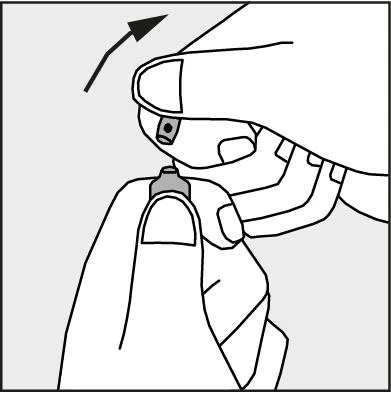
- Press in the direction of the arrow shown in Figure 3. Ampoules are intended for single use only and should be opened immediately before use. Any unused portion of the product must be destroyed in accordance with applicable regulations.
Figure 1.
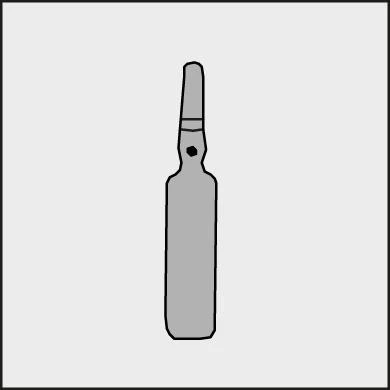
Figure 2.
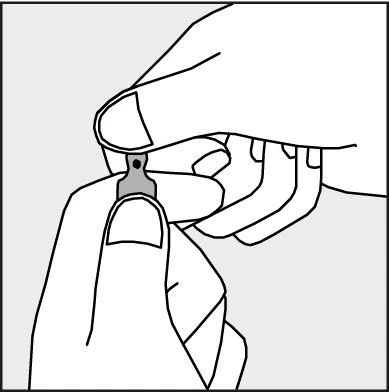
Figure 3.
Dosage
Intravenous administration – by bolus or infusion
Intramuscular administration
Fentanyl WZF may be administered intravenously to adults and children.
Fentanyl doses should be adjusted according to age, body weight, general condition of the patient, concomitant diseases, other medications used, and the type of surgical procedure and anesthesia.
Adults
Typical dosing regimens in adults:
| Initial dose | Additional dose | |
| Spontaneous respiration | 50 to 200 micrograms | 50 micrograms |
| Assisted respiration | 300 to 3500 micrograms | 100 to 200 micrograms |
Doses above 200 micrograms may be used only in anesthesia.
In premedication, 1 to 2 ml (50 to 100 micrograms) of fentanyl may be administered intramuscularly 45 minutes before anesthesia induction.
Intravenous administration of 2 ml (100 micrograms) of fentanyl to adult patients not premedicated should provide effective analgesia for 10-20 minutes during procedures causing mild discomfort.
Administration of 10 ml (500 micrograms) of fentanyl as a rapid intravenous bolus injection provides analgesia for approximately one hour. The resulting analgesia is effective in procedures with moderate pain intensity.
Administration of a dose of 50 micrograms/kg body weight of fentanyl induces analgesia lasting 4 to 6 hours during high-intensity surgical procedures.
Fentanyl WZF may also be administered by intravenous infusion.
In patients with controlled ventilation, a loading dose of fentanyl may be given as a rapid infusion of approximately 1 microgram/kg body weight/min during the first 10 minutes, followed by a continuous infusion of approximately 0.1 microgram/kg body weight/min.
The loading dose may also be administered as a rapid intravenous bolus injection.
The infusion rate should be adjusted according to the patient's response to fentanyl; it is recommended to use the lowest possible effective doses of fentanyl.
If assisted ventilation is not planned in the postoperative period, the infusion should be discontinued 40 minutes before the end of the surgical procedure.
Lower fentanyl infusion rates, e.g. 0.05 to 0.08 microgram/kg body weight/min, are used when maintaining spontaneous respiration. Higher infusion rates (up to 3 micrograms/kg body weight/min) are used in cardiac surgery.
Due to a significant pH difference, fentanyl exhibits chemical incompatibility with agents used in anesthesia induction, such as thiopental and methohexital.
Children and adolescents
Children aged 12 to 17 years:
Adult doses should be used.
Children aged 2 to 11 years:
Typical dosing in children:
| Age | Initial dose | Supplemental dose | |
| Spontaneous breathing | 2-11 years | 1 to 3 micrograms/kg body weight | 1 to 1.25 microgram/kg body weight |
| Assisted breathing | 2-11 years | 1 to 3 micrograms/kg body weight | 1 to 1.25 microgram/kg body weight |
Use in children
Analgesia during surgical procedures, deepening of anaesthesia with spontaneous breathing
Techniques involving analgesia in spontaneously breathing children should be used exclusively
as part of an anaesthetic technique or as part of a sedation/analgesia regimen by
appropriately trained medical personnel in settings allowing immediate
intubation in the event of chest wall rigidity or apnoea – oxygen administration.
Use in elderly and debilitated patients
A reduced dose of fentanyl is recommended. When administering the initial dose, the patient's response should be taken into account and, if necessary, the supplemental dose should be adjusted accordingly.
Obese patients
In obese patients, there is a risk of overdose if the dose is calculated based on total body weight. Obese patients should have their dose calculated based on estimated lean body weight.
Renal function impairment
In patients with renal insufficiency, consider reducing the dose of Fentanyl WZF
and closely monitor for signs of fentanyl toxicity.
Additionally, for the treatment of severe pain, fentanyl may be administered:
Subcutaneously
Adults: doses are adjusted according to the patient's condition; administered by injection or continuous infusion.
Children with body weight below 50 kg: initially 0.5 to 2.0 micrograms/kg body weight/hour by injection or continuous infusion.
For children under 6 months of age, the initial dose is ¼ to ⅓ of the dose given above, subsequently adjusted according to effect.
Children with body weight above 50 kg: initially 25 to 75 micrograms every hour.
Epidurally
Single dose: 50 to 100 micrograms (1 to 2 micrograms/kg body weight);
Continuous infusion: 25 to 100 micrograms/hour;
PCA method: loading dose: 75 to 100 micrograms; basal infusion: 30 to 75 micrograms/hour;
demand dose: 10 to 15 micrograms; pump lockout time – 6 minutes.
Intrathecally
Intrathecal administration of fentanyl is recommended at the lumbar level of the spine.
Single dose: 5 to 25 micrograms/dose;
Continuous infusion: 0.8 microgram/kg body weight/hour.
Use in elderly and debilitated patients
A reduced dose of fentanyl is recommended. When administering the initial dose, the patient's response should be taken into account and, if necessary, the supplemental dose should be adjusted accordingly.