Fentanyl kalceks
Poland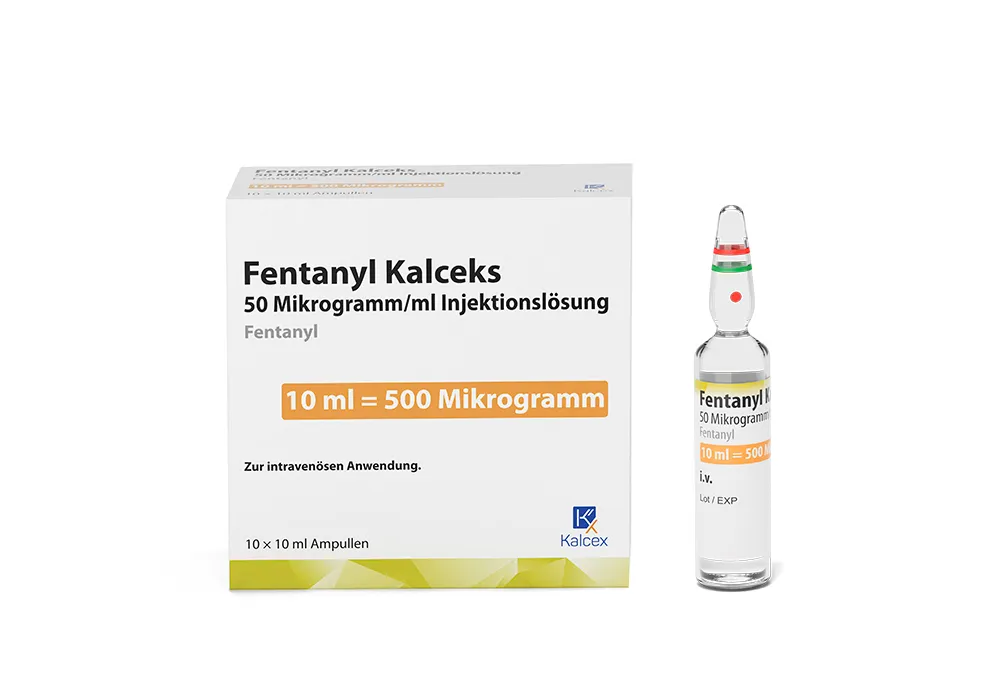
Table of Contents
- Package leaflet: Information for the user
- 1. What Fentanyl Kalceks is and what it is used for
- 2. Important information before administering Fentanyl Kalceks
- 3. How is Fentanyl Kalceks administered
- 4. Possible adverse effects
- 5. How to store Fentanyl Kalceks
- 6. Package contents and other information
- Information intended exclusively for healthcare professionals:
Package leaflet: Information for the user
Fentanyl Kalceks, 0,05 mg/mL, solution for injection
Fentanyl
Please read all of this leaflet carefully before the medicine is administered, because it contains
important information for the patient.
- Keep this leaflet, as you may need to read it again.
- If you have any further questions, please ask your doctor or nurse.
- If you experience any side effects, including any not listed in this leaflet, tell your doctor or nurse. See section 4.
Table of contents
- What Fentanyl Kalceks is and what it is used for
- Important information before receiving Fentanyl Kalceks
- How Fentanyl Kalceks is administered
- Possible side effects
- How to store Fentanyl Kalceks
- Contents of the pack and other information
1. What Fentanyl Kalceks is and what it is used for
Fentanyl Kalceks solution for injection contains the active substance called fentanyl (as citrate). It belongs to a group of medicines known as opioid analgesics. These medicines prevent and relieve pain.
Fentanyl Kalceks is used:
- as an analgesic adjunct to general or regional anaesthesia;
- in combination with a neuroleptic agent (e.g. droperidol) for neuroleptanalgesia;
- for induction and as an adjunct during maintenance of general and regional anaesthesia;
- as an anaesthetic agent with oxygen in high-risk patients undergoing surgical procedures.
2. Important information before administering Fentanyl Kalceks
When not to use Fentanyl Kalceks:
- if the patient is allergic to fentanyl or to any of the other ingredients of this medicine (listed in section 6),
- if the patient is allergic to medicines with morphine-like action.
Warnings and precautions
Before starting treatment with Fentanyl Kalceks, discuss the following with your doctor or nurse:
- if the patient, or anyone in their family, has ever abused or been dependent on alcohol, prescription medicines or illegal substances ("addiction"),
- if the patient smokes tobacco,
- if the patient has ever had mood disorders (depression, anxiety or personality disorder) or has been treated by a psychiatrist for other mental illnesses.
As with all potent opioids, respiratory depression is dose-dependent and can be reversed by administration of an opioid antagonist (naloxone), although additional doses of naloxone may be required, as respiratory depression may last longer than the effect of opioid antagonists. Profound analgesia is associated with pronounced respiratory depression which may persist or recur in the postoperative period. Patients should therefore remain under appropriate monitoring. Fentanyl should be administered under conditions where airway patency can be maintained, with resuscitation equipment, opioid receptor antagonists, and personnel trained in airway management readily available. Hyperventilation during anesthesia may alter the patient's response to CO_, affecting postoperative respiration.
Muscle rigidity, including of the chest wall muscles, may occur, but can be avoided by the following measures:
- slow intravenous injection (usually sufficient when lower doses are administered);
- premedication with benzodiazepines;
- use of skeletal muscle relaxants.
Non-epileptic (myo)clonic movements may also occur.
If the patient has not received an adequate dose of anticholinergic medication or if fentanyl has been combined with skeletal muscle relaxants lacking vagolytic activity, bradycardia may occur, and even sudden cardiac arrest. Bradycardia can be reversed with atropine.
Opioids may cause hypotension, particularly in patients with hypovolemia. Appropriate measures should be taken to maintain stable blood pressure.
In patients with impaired cerebral vascular reactivity, rapid bolus administration of opioids should be avoided, as transient drops in mean arterial pressure may occasionally be associated with brief reductions in cerebral perfusion pressure.
Patients on long-term opioid therapy or with opioid substance abuse may require higher doses.
In elderly patients and in very debilitated patients, dose reduction is recommended.
Opioid doses should be cautiously and gradually titrated in patients with the following conditions: untreated or inadequately treated hypothyroidism, lung disease, reduced respiratory reserve, alcoholism, impaired renal function or impaired liver function. Such patients also require prolonged postoperative monitoring.
If fentanyl is administered together with a neuroleptic, e.g. droperidol, hypotension occurs more frequently. Neuroleptics may cause extrapyramidal symptoms, which can be managed with medications used in Parkinson's disease.
As with other opioids, administration of fentanyl may lead to increased biliary tract pressure, and in isolated cases, spastic contractions of the sphincter of Oddi (a circular muscle controlling bile flow).
In patients with myasthenia gravis, administration of anticholinergic drugs and neuromuscular conduction blockers before and during general anesthesia regimens including intravenous fentanyl should be undertaken with due caution.
Repeated use of opioid analgesics may lead to reduced effectiveness (tolerance to the drug may develop). This may also lead to dependence and abuse, which may result in life-threatening overdose. If the patient is concerned about becoming addicted to Fentanyl Kalceks, they should consult their doctor.
If treatment is discontinued, withdrawal symptoms may occur. If the patient suspects this is happening, they should inform their doctor or nurse (see also section 4. Possible side effects).
Children and adolescents
Techniques involving analgesia in children with spontaneous respiration should only be used during anesthesia or sedation combined with analgesia, in the presence of experienced personnel and under conditions allowing immediate intervention in case of sudden chest wall rigidity requiring intubation or apnea requiring airway support.
Fentanyl Kalceks and other medicines
Tell your doctor or nurse about all medicines the patient is currently taking or has recently taken, as well as any medicines the patient plans to take.
Use of opioid premedication, barbiturates, benzodiazepines, neuroleptics, halogenated gases, certain drugs used to treat neuropathic pain (gabapentin and pregabalin), and other non-selective central nervous system (CNS) depressants (e.g. alcohol) may intensify or prolong fentanyl-induced respiratory depression. When these agents are used, the required dose of fentanyl is usually lower than standard.
Tell your doctor if the patient is taking other medicines that depress the CNS, such as selective serotonin reuptake inhibitors (SSRIs) or serotonin and norepinephrine reuptake inhibitors (SNRIs).
When these medicines are used, the required dose of fentanyl is usually lower than standard.
Fentanyl, as a drug rapidly eliminated from the body, is rapidly and extensively metabolized, primarily via CYP3A4. Oral itraconazole (a potent CYP3A4 inhibitor), administered at a dose of 200 mg/day for 4 days, did not significantly affect the pharmacokinetics of intravenous fentanyl.
Oral ritonavir (one of the most potent CYP3A4 inhibitors) reduced the clearance of intravenous fentanyl by two-thirds. However, maximum plasma concentrations after a single intravenous dose of fentanyl were unchanged.
When fentanyl is administered as a single dose, concomitant administration of strong CYP3A4 inhibitors, such as ritonavir, requires particularly careful patient monitoring and observation.
Concomitant use of fluconazole or voriconazole with fentanyl may lead to increased exposure to the latter.
When fentanyl is administered continuously, dose reduction may be necessary to avoid accumulation in the body, which could increase the risk of prolonged or delayed respiratory depression.
Monoamine oxidase inhibitors (MAOIs) are generally recommended to be discontinued two weeks before any surgical procedure or anesthesia. However, several reports have described the use of fentanyl during surgery or anesthesia procedures in patients taking MAOIs—without any interactions occurring.
Effect of fentanyl on other medicines
After administration of fentanyl, doses of other CNS depressants should be reduced.
When fentanyl is used concomitantly with etomidate, total plasma clearance and volume of distribution of etomidate are reduced (by 2–3 times), without changes in elimination half-life, leading to a significant increase in plasma etomidate concentrations. Concomitant intravenous administration of fentanyl and midazolam leads to an increased elimination half-life of midazolam and reduced plasma clearance. When these drugs are administered together with fentanyl, dose reduction may be necessary.
Use of Fentanyl Kalceks with alcohol
Alcohol may intensify or prolong respiratory depression caused by fentanyl.
Pregnancy and breastfeeding
If the patient is pregnant or breastfeeding, suspects she may be pregnant, or is planning to have a child, she should consult her doctor or nurse before using this medicine.
There is insufficient data on the use of fentanyl in pregnant women. Fentanyl can cross the placenta in early pregnancy. Animal studies have shown minor toxic effects on fertility. The potential risk to humans is unknown.
Therefore, before administering this medicine to a pregnant woman, the risks and potential benefits should be carefully considered.
(Depending on the route) intramuscular or intravenous administration of fentanyl during labor (including cesarean section) is not recommended, as it crosses the placenta and affects the fetal respiratory center, which is particularly sensitive to opioids. However, if fentanyl is administered, an antidote should be readily available for the newborn.
Fentanyl passes into breast milk; therefore, breastfeeding is not recommended for 24 hours after administration. The balance of risks and benefits related to breastfeeding after fentanyl administration should be considered.
Driving and operating machinery
The patient should not drive or operate machinery until sufficient time has passed after administration of fentanyl.
Fentanyl Kalceks contains sodium
The medicine contains less than 1 mmol (23 mg) of sodium per 2 mL ampoule, meaning the medicine is considered "sodium-free".
The medicine contains 35.41 mg of sodium (main component of table salt) in each 10 mL ampoule. This corresponds to 1.78% of the maximum recommended daily dietary sodium intake for adults.
3. How is Fentanyl Kalceks administered
This medicine should always be used according to the doctor's instructions. If in doubt, consult
your doctor.
- Fentanyl Kalceks can be administered by infusion or by injection into a vein or into a muscle.
- Fentanyl Kalceks will be injected into the vein just before surgery. This medicine will help the patient to fall asleep and will protect against feeling pain during the operation.
- The patient may receive anaesthetic medicines and (or) other medicines to prevent certain side effects of fentanyl, such as slowing of the heart rate and muscle rigidity.
- Your doctor will provide detailed information regarding dosage. The doctor will adjust the dose according to the patient's general condition, age, body weight, concomitant diseases, type of procedure, anaesthesia, and medicines used.
Use in children and adolescents
The dose of the medicine in children depends on body weight.
Use of a higher than recommended dose of Fentanyl Kalceks
Since this medicine is administered by a doctor or nurse, it is unlikely that you will receive more fentanyl than you should. Overdose of Fentanyl Kalceks may cause respiratory depression (see warnings and precautions) and brain disorders (called toxic leukoencephalopathy).
If you have any further doubts regarding the use of this medicine, consult your doctor or nurse.
4. Possible adverse effects
Like all medicines, this medicine can cause adverse effects, although not everyone will experience them.
Possible adverse effects may occur in a patient especially during a surgical procedure, and in such cases the physician will manage them. However, some adverse effects may occur shortly after completion of the surgical procedure; therefore, the patient will be monitored during the postoperative period.
Very common adverse effects (may occur in more than 1 out of 10 people):
- nausea, vomiting
- muscle rigidity (including rigidity of the chest muscles)
Common adverse effects (may occur in up to 1 out of 10 people):
- involuntary, repetitive body movements
- drowsiness, dizziness
- visual disturbances
- accelerated or slowed heartbeat
- irregular heartbeat
- low or high blood pressure
- vein pain
- choking due to painful (spastic) muscle contractions in the throat
- difficulty breathing or wheezing
- brief breathing interruption (apnea) (the physician has access to medication to prevent this)
- skin rash
- postoperative disorientation
Uncommon adverse effects (may occur in up to 1 out of 100 people):
- elevated mood
- headache
- vein swelling and blood clots in the vein (phlebitis)
- irregular changes in blood pressure
- rapid breathing
- hiccups
- difficulty swallowing
- decreased body temperature below normal or chills
- anesthesia-related complications affecting the airways
- postoperative psychomotor agitation
Adverse effects of unknown frequency (frequency cannot be determined from available data):
- severe allergic reaction with sudden drop in blood pressure, breathing difficulties or skin rash (anaphylaxis)
- urticaria
- seizures
- loss of consciousness
- minor muscle twitching
- cardiac arrest (the physician has access to medication to prevent this)
- respiratory depression
- skin itching
- delirium (symptoms may include agitation, anxiety, disorientation, confusion, fear, seeing or hearing non-existent things, sleep disturbances, nightmares)
- withdrawal syndrome symptoms (may include nausea, vomiting, diarrhea, anxiety, chills, tremors, and sweating)
If Fentanyl Kalceks is used in combination with other medicines called neuroleptics, which are administered before surgery to induce sedation, other effects may be expected, such as body tremors and/or chills, psychomotor agitation, postoperative hallucinations, tremors, severe muscle rigidity or spastic contractions, slowed movements, and excessive salivation.
Reporting of adverse effects
If any adverse effects occur, including any not listed in this leaflet, inform your doctor or nurse. Adverse effects can be reported directly to the Department of Monitoring Adverse Drug Reactions at the Office for Registration of Medicinal Products, Medical Devices and Biocidal Products
Al. Jerozolimskie 181C
PL-02 222, Warsaw
Phone: +48 22 49 21 301
Fax: +48 22 49 21 309
Website: https://smz.ezdrowie.gov.pl
Adverse effects can also be reported to the marketing authorization holder.
Reporting adverse effects helps to gather further information on the safety of using the medicine.
5. How to store Fentanyl Kalceks
There are no special storage temperature requirements for this medicinal product.
Store in the original packaging to protect from light.
Do not freeze.
Keep the medicine out of the sight and reach of children.
Do not use this medicine after the expiry date stated on the carton after EXP.
The expiry date refers to the last day of the stated month.
After opening the ampoule, the medicine should be used immediately.
The medicinal product has been shown to be physically and chemically stable for 24 hours at 25°C.
From a microbiological point of view, the solution should be used immediately. If the solution is not used immediately, the responsibility for subsequent storage conditions and duration lies with the user, and the storage period should not exceed 24 hours at a temperature of 2°C to 8°C, unless dilution was carried out under controlled and validated aseptic conditions.
Medicines must not be disposed of via wastewater or household waste. Ask your pharmacist how to dispose of medicines no longer required. Such measures will help protect the environment.
6. Package contents and other information
What Fentanyl Kalceks contains
- The active substance is fentanyl (as fentanyl citrate). 1 mL of solution contains 0.05 mg fentanyl as 0.0785 mg fentanyl citrate.
One 2 mL ampoule contains 0.1 mg fentanyl as 0.157 mg fentanyl citrate.
One 10 mL ampoule contains 0.5 mg fentanyl as 0.785 mg fentanyl citrate.
- The other ingredients are sodium chloride, sodium hydroxide (for pH adjustment) and water for injections.
What Fentanyl Kalceks looks like and contents of the pack
Injection solution (solution).
A clear, colourless liquid. pH of the solution: 4.0–7.5.
Fentanyl Kalceks is supplied in 2 mL or 10 mL ampoules made of colourless type I glass.
Pack sizes: 5, 10 or 50 ampoules.
Not all pack sizes may be marketed.
Marketing Authorisation Holder and Manufacturer
AS KALCEKS
Krustpils iela 71E
1057 Riga
Latvia
Tel.: +371 67083320
E-mail: [email protected]
This medicinal product is authorised in the European Economic Area (EEA) member states
under the following names:
Portugal: Fentanilo Kalceks
Poland: Fentanyl Kalceks
Czech Republic: Fentanyl Kalceks
Malta: Fentanyl Kalceks 0.05 mg/mL solution for injection
Information intended exclusively for healthcare professionals:
Dosage
The dosage should be individually determined according to age, body weight, physical condition, underlying disease, concomitant medications, and the type of surgical procedure and anesthesia used.
-
As an analgesic supplementing general anesthesia
- Low doses in minor surgical procedures: 2 micrograms of fentanyl per kg of body weight (b.w.).
- Moderate dose: 2 to 20 micrograms of fentanyl per kg b.w.
- High doses during major surgical procedures: 20 to 50 micrograms of fentanyl per kg b.w.
The duration of effect depends on the administered dose. It has been shown that administration of 20 to 50 micrograms of fentanyl per kg b.w. together with a mixture of nitrous oxide and oxygen has a weakening effect. When these doses are used during surgery, postoperative ventilation and patient monitoring are required due to prolonged respiratory depression in the postoperative period. Depending on individual patient needs and duration of the surgical procedure, supplemental doses of 25 to 250 micrograms (0.5 to 5 mL) of fentanyl may be administered intravenously.
-
As an anesthetic agent
In cases where suppression of the stress response to surgical intervention is particularly important, fentanyl doses of 50 to 100 micrograms/kg b.w. together with oxygen and a skeletal muscle relaxant may be administered. This allows anesthesia to be performed without additional anesthetic agents. In some cases, doses up to 150 micrograms/kg b.w. may be required to achieve an anesthetic effect. Fentanyl is used in this manner during open-heart surgery and other major surgical procedures in patients in whom myocardial protection against excessive oxygen demand is particularly indicated.
Use in elderly or severely debilitated patients
In this patient group, the initial dose should be reduced. Subsequent doses should be adjusted according to the response to the initial dose. To prevent bradycardia, it is recommended to administer a small intravenous dose of an anticholinergic drug immediately before induction of anesthesia. Droperidol may be given to prevent nausea and vomiting.
Use in patients with impaired liver function
In patients with impaired liver function, cautious stepwise dose adjustment of fentanyl is recommended.
Use in patients with impaired renal function
In patients with impaired renal function, cautious stepwise dose adjustment of fentanyl is recommended.
Use in children and adolescents
Children aged 2 to 11 years
The usual dosing regimen in children is as follows:
| Age | Initial Dose | Supplemental Dose | |-----|--------------|-------------------| | Spontaneous respiration, 2–11 years | 1–3 micrograms/kg b.w. | 1–1.25 micrograms/kg b.w. | | Assisted ventilation, 2–11 years | 1–3 micrograms/kg b.w. | 1–1.25 micrograms/kg b.w. |
Children aged 12 to 17 years
Dosage as in adults.
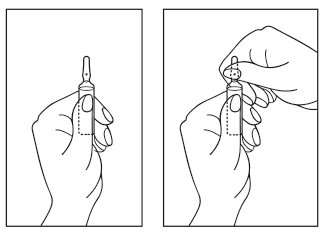
Instructions for opening the ampoule:
- Turn the ampoule with the colored dot facing upwards. If the solution is present in the upper part of the ampoule, gently tap the side with a finger so that the entire solution moves to the lower part.
- Use both hands to open the ampoule; hold the lower part of the ampoule with one hand and snap off the top part with the other hand, moving away from the colored dot (see illustrations below).
Pharmaceutical incompatibilities:
If necessary, fentanyl may be mixed with 0.9% sodium chloride solution or 5% glucose solution for intravenous infusion. Such mixtures are compatible with plastic infusion equipment.
Overdose
Symptoms
Symptoms of fentanyl overdose are a continuation of its pharmacological effects. Depending on individual sensitivity, the clinical picture is primarily determined by the degree of respiratory depression, which may range from respiratory slowing to apnea.
Management
Respiratory slowing or apnea: administer oxygen, provide assisted or controlled ventilation.
Respiratory depression: administer a specific opioid antagonist (e.g., naloxone). This does not preclude the use of other immediate supportive measures.
Respiratory depression may persist longer than the duration of the antagonist’s effect; therefore, repeated doses of the antagonist may be necessary.
Muscle rigidity: administer a neuromuscular blocking agent to facilitate assisted or controlled ventilation.
The patient should be closely observed, maintaining adequate body temperature and appropriate fluid administration. In case of severe or persistent arterial hypotension, hypovolemia should be considered; if confirmed, it should be corrected by parenteral administration of an appropriate infusion fluid.