Femoston mini
Poland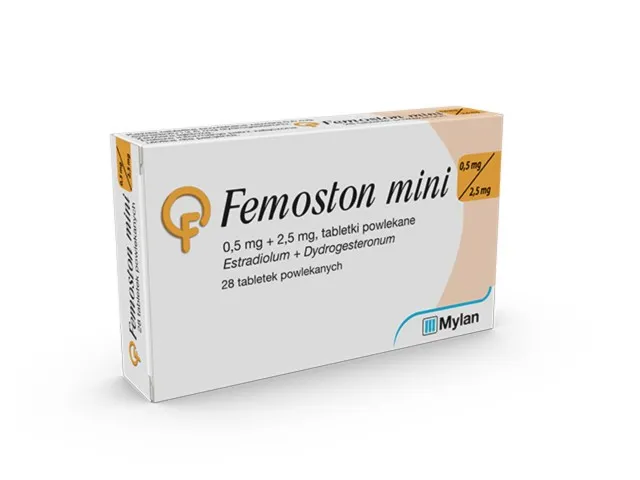
Table of Contents
Patient Information Leaflet
Warning! Keep this leaflet. The information on the immediate packaging is in a foreign language.
Femoston mini (Climaston 0.5 mg/2.5 mg)
0.5 mg + 2.5 mg, coated tablets
Estradiolum + Dydrogesteronum
Femoston mini and Climaston 0.5 mg/2.5 mg are different trade names for the same medicinal product.
Please read this leaflet carefully before taking this medicine, as it contains
important information for you.
- Keep this leaflet, as you may need to read it again.
- If you have any further questions, please consult your doctor or pharmacist.
- This medicine has been prescribed for a specific individual. Do not pass it on to others. It may harm them even if their symptoms are the same.
- If you experience any adverse effects, including those not listed in this leaflet, inform your doctor, pharmacist or nurse. See section 4.
Table of Contents
- What Femoston mini is and what it is used for
- Important information before taking Femoston mini
- How to take Femoston mini
- Possible side effects
- How to store Femoston mini
- Contents of the pack and other information
1. What Femoston mini is and what it is used for
Femoston mini is a medicine used in hormone replacement therapy (HRT). It contains two types of female hormones: an oestrogen called estradiol and a progestagen called dydrogesterone. Femoston mini is used in postmenopausal women, i.e. women who have not had a menstrual period for at least 12 months.
Femoston mini is used to
Relieve symptoms occurring after menopause
During menopause, the levels of oestrogens produced by a woman's body decrease. This may cause symptoms such as flushing of the face, neck and chest (‘hot flushes’). Taking Femoston mini helps reduce these postmenopausal symptoms. Your doctor will prescribe Femoston mini only if the symptoms significantly impair your quality of life.
2. Important information before using Femoston mini
Medical history and periodic check-ups
Hormone replacement therapy (HRT) carries risks that should be considered before and during treatment.
Experience in treating premature menopause (due to ovarian dysfunction or surgical removal of ovaries) is limited. The risks associated with HRT in premature menopause may differ. Consult your doctor.
Before starting (or restarting) HRT, your doctor should take a full medical and family history.
Your doctor may decide to perform additional tests, such as breast and/or pelvic examination, if necessary.
After starting Femoston mini, you should have regular check-ups with your doctor (at least once a year). During these visits, you and your doctor should review the benefits and risks of continuing treatment with Femoston mini.
You should undergo regular breast screening examinations as recommended by your doctor.
Do not take Femoston mini if any of the following apply to you. If you have any doubts, consult your doctor before taking Femoston mini.
When not to use Femoston mini
- if you are allergic (hypersensitive) to estradiol, dydrogesterone, or any of the other ingredients of this medicine (listed in section 6)
- if you have been diagnosed with, have had in the past, or suspect you have breast cancer
- if you have been diagnosed with or suspect an estrogen-dependent tumour, e.g. endometrial cancer (cancer of the lining of the womb)
- if you have vaginal bleeding of unknown cause
- if you have untreated excessive thickening of the lining of the womb (endometrial hyperplasia)
- if you currently have or have had in the past blood clots in the veins (thrombosis), e.g. in the legs (deep vein thrombosis) or lungs (pulmonary embolism)
- if you have a blood clotting disorder with a tendency to thrombosis (such as protein C, protein S or antithrombin deficiency)
- if you currently have or have had in the past arterial disease caused by blood clots, e.g. heart attack, stroke, or angina pectoris
- if you currently have or have had in the past liver disease and liver function tests have not returned to normal
- if you have been diagnosed with a rare inherited blood disorder – porphyria
- if you have meningioma or have ever been diagnosed with meningioma (usually a benign tumour of the membrane between the brain and skull). If any of the above conditions occur for the first time during treatment with Femoston mini, stop taking the medicine immediately and contact your doctor as soon as possible.
Warnings and precautions
Before starting Femoston mini, inform your doctor if you currently have or have had any of the following conditions, as they may worsen or recur during treatment with this medicine. More frequent check-ups may be necessary if you have:
- uterine fibroids
- endometriosis (presence of the womb lining outside the womb) or a history of excessive thickening of the womb lining (endometrial hyperplasia)
- a brain tumour
- an increased risk of blood clots (see section “Blood clots in veins (thrombosis)”)
- an increased risk of estrogen-dependent tumours (e.g. if a mother, sister or grandmother has had breast cancer)
- high blood pressure
- liver disease, e.g. benign liver tumour
- diabetes
- gallstones
- migraine or severe headaches
- autoimmune diseases affecting multiple organs (systemic lupus erythematosus)
- epilepsy
- asthma
- otosclerosis (a disease affecting the eardrum and hearing)
- very high levels of blood fats (triglycerides)
- fluid retention due to heart or kidney problems
- hereditary or acquired angioedema.
Meningioma
Use of Femoston mini is associated with the development of usually benign tumours of the membrane between the brain and skull (meningioma). If you are diagnosed with meningioma, your doctor will stop treatment with Femoston mini (see section “When not to use Femoston mini”). If you experience any symptoms such as vision problems (e.g. double or blurred vision), hearing loss or ringing in the ears, loss of smell, worsening headaches, memory loss, seizures, or weakness in arms or legs, you should inform your doctor immediately.
You must stop taking Femoston mini and contact your doctor immediately if any of the following occur during HRT:
- any of the conditions listed in the section “When not to use Femoston mini”
- yellowing of the skin or eyes (jaundice) – these may be signs of liver disease
- swelling of the face, tongue and/or throat and/or difficulty swallowing, or hives, together with difficulty breathing – these may be symptoms of angioedema
- a significant rise in blood pressure (symptoms include headache, fatigue, dizziness)
- new-onset migraine-like headaches
- pregnancy
- symptoms of blood clots, such as:
- painful swelling and redness in the legs
- sudden chest pain
- difficulty breathing
For more information, see section “Blood clots in veins (thrombosis)”.
Note: Femoston mini is not a contraceptive. If less than 12 months have passed since your last menstrual period and you are under 50 years of age, you may need to use an additional contraceptive method to prevent pregnancy. Consult your doctor.
HRT and cancer
Excessive thickening of the womb lining (endometrial hyperplasia) and cancer of the womb lining (endometrial cancer)
Using HRT with estrogen-only medicines increases the risk of excessive thickening of the womb lining (endometrial hyperplasia) and cancer of the womb lining (endometrial cancer).
Femoston mini, which contains a progestagen, helps reduce this additional risk.
Irregular bleeding
Irregular bleeding or spotting may occur during the first 3 to 6 months of taking Femoston mini. However, if irregular bleeding:
- lasts longer than the first 6 months of treatment
- appears after a break of more than 6 months of treatment with Femoston mini
- does not stop after stopping Femoston mini
you should contact your doctor as soon as possible.
Breast cancer
Evidence confirms that taking hormone replacement therapy (HRT) as a combination of estrogen and progestagen, or estrogen alone, increases the risk of developing breast cancer. The additional risk depends on how long you take HRT. This additional risk becomes apparent after 3 years of HRT use. After stopping HRT, the additional risk gradually decreases, but may persist for 10 years or longer if HRT was used for more than 5 years.
Comparison
In women aged 50 to 54 years not using HRT, breast cancer will be diagnosed in an average of 13 to 17 out of 1,000 women over 5 years.
In women aged 50 who start a 5-year course of estrogen-only HRT, the number of cases will be 16–17 per 1,000 women (i.e. 0 to 3 additional cases).
In women aged 50 who start a 5-year course of estrogen-progestagen HRT, the number of cases will be 21 per 1,000 women (i.e. 4 to 8 additional cases).
In women aged 50 to 59 not using HRT, breast cancer will be diagnosed in an average of 27 out of 1,000 women over 10 years.
In women aged 50 who start a 10-year course of estrogen-only HRT, the number of cases will be 34 per 1,000 women (i.e. 7 additional cases).
In women aged 50 who start a 10-year course of estrogen-progestagen HRT, the number of cases will be 48 per 1,000 women (i.e. 21 additional cases).
You should regularly examine your breasts. Contact your doctor if you notice any changes such as:
- skin indentation
- changes around the nipple
- any visible or palpable lumps
Additionally, participation in mammographic screening programmes is recommended. It is important to inform the nurse or medical staff during a screening mammogram that you are taking HRT, as this medicine may increase breast density and affect the mammogram result. In cases of increased breast density, mammography may not detect all lumps.
Ovarian cancer
Ovarian cancer is rare – much less common than breast cancer. Taking HRT with estrogen alone or combined with progestagens is associated with a slightly increased risk of ovarian cancer.
The risk of ovarian cancer depends on age. For example, in women aged 50 to 54 not taking HRT, ovarian cancer will be diagnosed in about 2 out of 2,000 women over 5 years.
In women who have taken HRT for 5 years, it will occur in about 3 out of 2,000 women (i.e. about 1 additional case).
Effect of HRT on the heart and circulation
Blood clots in veins (thrombosis)
The risk of venous blood clots is 1.3 to 3 times higher in women taking HRT compared to those not taking it, especially during the first year of use.
Blood clots can have serious consequences and, if they travel to the lungs, may cause chest pain, shortness of breath, fainting, or even death.
The risk of venous blood clots increases with age and if any of the following apply to you. Contact your doctor if any of the following apply:
- if you are unable to walk for a prolonged period due to major surgery, injury or illness (see also section 3 “Planned surgery”)
- if you are significantly overweight (BMI >30 kg/m²)
- if you have blood clotting disorders requiring long-term anticoagulant treatment
- if any close relative has had blood clots in the legs, lungs or other organs
- if you have systemic lupus erythematosus
- if you have cancer.
Symptoms of blood clots are described in the section “You must stop taking Femoston mini and contact your doctor immediately” above.
Comparison
In women aged 50 to 59 not taking HRT, venous blood clots are estimated to occur over 5 years in an average of 4 to 7 out of 1,000 women.
In women aged 50 to 59 taking estrogen-progestagen HRT for more than 5 years, venous blood clots are estimated in 9 to 12 out of 1,000 women (i.e. 5 additional cases).
Heart disease (heart attack)
There is no evidence that HRT prevents heart attacks. In women over 60 years of age taking estrogen-progestagen HRT, there is a slightly higher tendency to develop heart disease compared to women not taking HRT.
Stroke
The risk of stroke is about 1.5 times higher in women taking HRT compared to those not taking it. The number of additional stroke cases increases with age.
Comparison
In women aged 50 to 59 not taking HRT, stroke is estimated to occur over 5 years in an average of 8 out of 1,000 women. In women aged 50 to 59 taking HRT for more than 5 years, there will be 11 strokes per 1,000 women (i.e. 3 additional cases).
Other conditions
HRT does not prevent memory loss. There is evidence of an increased risk of memory loss in women who start HRT after the age of 65. Consult your doctor.
Inform your doctor if you have any of the following conditions to increase monitoring:
- heart disease
- kidney function disorders
- elevated levels of certain blood fats (hypertriglyceridaemia)
Children and adolescents
Femoston mini is not indicated for use in children and adolescents.
Femoston mini and other medicines
Tell your doctor or pharmacist about all medicines you are currently taking, have recently taken, or plan to take.
Some medicines may alter the effect of Femoston mini, leading to irregular bleeding or spotting. These include:
- medicines for epilepsy (such as: phenobarbital, carbamazepine, phenytoin)
- medicines for tuberculosis (such as: rifampicin, rifabutin)
- medicines used in HIV infection (AIDS) (such as: nevirapine, efavirenz, ritonavir, nelfinavir)
- herbal products containing St. John's wort (Hypericum perforatum)
HRT may affect the action of other medicines:
- the epilepsy medicine lamotrigine, as it may increase the frequency of seizures
- combination treatment regimens for hepatitis C virus (HCV) infection using ombitasvir/paritaprevir/ritonavir with or without dasabuvir, or glecaprevir/pibrentasvir, which may increase liver function test parameters in blood (elevated liver enzyme AlAT activity) in women taking combined hormonal contraceptives containing ethinylestradiol. Femoston mini contains estradiol instead of ethinylestradiol. It is not known whether elevated AlAT liver enzyme activity may occur when Femoston mini is taken simultaneously with such combination HCV treatments.
Tell your doctor or pharmacist about all other medicines you are currently taking or have recently taken, including over-the-counter medicines, herbal remedies or other natural products. Your doctor will provide appropriate advice.
Laboratory tests
Before blood tests, inform your doctor or medical staff that you are taking Femoston mini, as it may affect the results of certain tests.
Femoston mini with food and drink
Femoston mini can be taken independently of meals.
Pregnancy and breastfeeding
Femoston mini is indicated only for postmenopausal women.
If you become pregnant:
- stop taking Femoston mini and contact your doctor immediately.
Femoston mini is not indicated for use in breastfeeding women.
Driving and operating machinery
No studies have been conducted on the effect of Femoston mini on driving and operating machinery. Such effects are not expected.
Femoston mini contains monohydrate lactose
If you have been previously diagnosed with intolerance to certain sugars, consult your doctor before taking this medicine.
3. How to use Femoston mini
This medicine should always be used exactly as prescribed by the doctor. In case of doubts, consult
your doctor or pharmacist.
When to start using Femoston mini
Femoston mini should not be used before 12 months have passed since the last menstrual period.
Treatment with Femoston mini may be started on any day if:
- the patient is not currently using HRT
- the patient is switching from another continuous combined HRT, i.e. if she is taking a tablet or using a transdermal system containing both estrogen and progestogen daily.
Treatment with Femoston mini may be started immediately after completing a 28-day cycle if:
- the patient is switching from HRT administered in a "cyclical" or "sequential" regimen, i.e. one involving taking a tablet or applying a patch containing estrogen during the first part of the cycle, followed by taking a tablet or applying a patch containing both estrogen and progestogen for the next 14 days.
How to take Femoston mini
- Swallow the tablet with water.
- Tablets may be taken regardless of meals.
- It is recommended to take the tablet at the same time each day. This helps maintain a constant level of the medicine in the body and helps remember to take the tablet daily.
- One tablet should be taken every day without breaks between packs. The blister pack includes days of the week marked to help remember when to take the tablet.
What dose to use
- The doctor will choose the lowest effective dose needed to treat symptoms for the shortest necessary duration. Consult your doctor if the dose seems too strong or too weak.
- Take one yellow tablet daily for 28 days.
Planned surgery
If surgery is planned, inform the surgeon about taking Femoston mini. It may be necessary to stop taking Femoston mini approximately 4 to 6 weeks before the planned surgery to reduce the risk of blood clots (see section 2, "Blood clots in veins (venous thromboembolism)"). Consult your doctor about when it is safe to restart Femoston mini.
Accidental overdose of Femoston mini
If a patient (or another person) takes too many Femoston mini tablets, it is unlikely to cause harmful effects. Possible symptoms may include nausea or vomiting, breast tenderness or pain, dizziness, abdominal pain, drowsiness and (or) fatigue, or withdrawal bleeding. Additional treatment is not usually necessary; however, in case of doubt, consult a doctor.
Missed dose of Femoston mini
Take the missed tablet as soon as possible. If more than 12 hours have passed, take the next tablet at the usual time without taking the missed tablet. Do not take a double dose to make up for a missed dose. It is likely that breakthrough bleeding or spotting may occur if a dose is missed.
Stopping Femoston mini
Do not stop taking Femoston mini without consulting your doctor.
If you have any further questions about the use of this medicine, consult your doctor or pharmacist.
4. Possible adverse effects
Like all medicines, this medicine may cause adverse effects, although not everyone will experience them.
The following adverse effects have been reported more frequently in women using HRT than in women not using HRT:
- breast cancer
- excessive growth or cancer of the lining of the womb (endometrial hyperplasia or endometrial cancer)
- ovarian cancer
- blood clots in the legs or lungs (venous thromboembolic disease)
- heart disease
- stroke
- memory loss, if HRT is started at the age of over 65. For further information on these adverse effects, see section 2.
The following adverse effects may occur during treatment with this medicine:
Very common (may affect more than 1 in 10 users):
- headache
- abdominal pain
- back pain
- breast tenderness or pain
Common (may affect up to 1 in 10 users):
- vaginal candidiasis (vaginal infection with Candida albicans)
- depression, nervousness
- migraine. If migraine-type headaches occur for the first time, treatment with Femoston mini should be discontinued and you should contact your doctor immediately
- dizziness
- nausea, vomiting, flatulence (wind)
- allergic skin reactions (such as rash, persistent itching, urticaria)
- bleeding disorders, such as irregular bleeding or spotting, painful menstruation, excessive or scanty bleeding
- pelvic pain
- vaginal discharge
- feeling of weakness, fatigue and general malaise
- swelling of ankles, feet or fingers (peripheral oedema)
- weight gain
Uncommon (may affect up to 1 in 100 users):
- symptoms resembling cystitis
- enlargement of uterine fibroids
- hypersensitivity reactions, such as shortness of breath (allergic asthma)
- change in libido
- blood clots in legs or lungs (venous thromboembolic disease, pulmonary embolism)
- high blood pressure (hypertension)
- circulatory disorders (peripheral circulatory failure)
- enlargement and twisting of veins (varicose veins)
- indigestion
- liver function disorders, sometimes with yellowing of the skin (jaundice), feeling of weakness or general malaise and abdominal pain. If yellowing of the skin or whites of the eyes occurs, treatment with Femoston mini should be discontinued and you should contact your doctor immediately
- gallbladder disease
- breast swelling (breast oedema)
- premenstrual syndrome
- weight loss
Rare (may affect up to 1 in 1,000 users):
(*Adverse effects reported post-marketing, not observed in clinical trials, have been assigned the frequency "rare".)
- disease caused by breakdown of red blood cells (haemolytic anaemia)*
- meningioma (brain tumour)*
- changes in the cornea of the eye (corneal edema)*, intolerance to contact lenses*
- heart attack
- stroke*
- swelling of tissues in the face and neck area. May cause difficulty in breathing (angioedema)
- purple spots and patches on the skin (vasculitic purpura)
- painful red skin nodules (erythema nodosum)*, skin pigmentation, especially on the face and neck known as "chloasma"*
- cramps in the lower limbs*
The following adverse effects have been observed during treatment with other HRT medicines:
- benign or malignant tumours that may be hormone-dependent, such as endometrial cancer, ovarian cancer (see section 2 for further information)
- increase in size of tumours that may be progestogen-dependent (such as meningioma)
- autoimmune disease affecting multiple organs (systemic lupus erythematosus)
- probable dementia (memory loss)
- worsening of epileptic seizures (epilepsy)
- involuntary muscle spasms (chorea)
- arterial blood clots (arterial thrombosis)
- pancreatitis in women with pre-existing elevated levels of certain blood fats (hypertriglyceridaemia)
- rash in the form of red rings or blisters (erythema multiforme)
- urinary incontinence
- painful and/or lumpy breasts (fibrocystic changes of the breast)
- cervical erosion
- worsening of symptoms of a rare blood pigment disorder (porphyria)
- high levels of certain blood fats (hypertriglyceridaemia)
- increased total concentration of thyroid hormones
Reporting of adverse effects
If any adverse effects occur, including any not listed in this leaflet, inform your doctor, pharmacist or nurse. Adverse effects can also be reported directly to the Department of Monitoring Adverse Drug Reactions, Office for Registration of Medicinal Products, Medical Devices and Biocidal Products
Al. Jerozolimskie 181C
02-222 Warsaw
Tel: +48 (22) 49 21 301
Fax: +48 (22) 49 21 309
Website: https://smz.ezdrowie.gov.pl
Reporting adverse effects helps to provide more information on the safety of the medicine.
5. How to store Femoston mini
Keep this medicine out of sight and reach of children.
There are no special storage instructions for this medicine.
Do not use this medicine after the expiry date stated on the packaging. The expiry date refers to the last day of the stated month.
Medicines must not be disposed of via wastewater or household waste. Ask your pharmacist how to dispose of medicines no longer required. Such measures help protect the environment.
6. Contents of the pack and other information
What Femoston mini contains
- The active substances are: estradiol in the form of estradiol hemihydrate and dydrogesterone. Each Femoston mini coated tablet contains 0.5 mg of estradiol and 2.5 mg of dydrogesterone.
- Other ingredients: monohydrate lactose, hypromellose, corn starch, colloidal anhydrous silica, magnesium stearate. Coating: macrogol 3350, polyvinyl alcohol, talc, titanium dioxide (E 171), yellow iron oxide (E 172).
What Femoston mini looks like and contents of the pack
This medicine is available as coated tablets. The tablets are round, biconvex, with "379" embossed on one side. Each blister contains 28 tablets. The tablets are yellow in colour.
The tablets are packed in PVC/Aluminum blisters and placed in a cardboard box.
Pack contains 28 film-coated tablets.
For further information, please contact the Marketing Authorisation Holder or Parallel Importer.
Marketing Authorisation Holder in France, the country of export:
Theramex Ireland Limited
3rd Floor Kilmore House
Park Lane, Spencer Dock
Dublin D01YE64
Ireland
Manufacturer:
Abbott Biologicals B.V.
Veerweg 12, 8121 AA Olst, Netherlands
Parallel Importer:
Delfarma Sp. z o.o.
ul. Św. Teresy od Dzieciątka Jezus 111
91-222 Łódź
Repackaged in:
Delfarma Sp. z o.o.
ul. Św. Teresy od Dzieciątka Jezus 111
91-222 Łódź
Marketing Authorisation number in France, the country of export: 34009 492 564 0 2
Parallel Import Authorisation Number: 260/25
Translation of the weekday symbols printed next to each tablet on the immediate packaging:
LU - Monday
MA - Tuesday
ME - Wednesday
JE - Thursday
VE - Friday
SA - Saturday
DI - Sunday
This medicinal product is authorised for marketing in the Member States of the European Economic Area under the following names:
AT Femoston conti 0.5 mg/2.5 mg - Filmtabletten
BE Femoston Low 0.5 mg/2.5 mg filmomhulde tabletten
CZ Femoston mini 0.5 mg/2.5 mg
DE Femoston mini 0.5 mg/2.5 mg Filmtablette
DK Femoston Conti
EE Femoston conti 0.5 mg/2.5 mg
ES Femoston 0.5mg/2.5mg comprimidos recubiertos con película
FI Femoston conti 0.5/2.5 tabletti, kalvopäällysteinen
FR Climaston 0.5mg/2.5 mg, comprimé pelliculé
IE Femoston-conti 0.5 mg/2.5 mg film-coated tablets
IT Femoston 0.5 mg/2.5 mg compresse rivestite con film
LT Femoston conti 0.5 mg/2.5 mg plévele dengtos tabletés
LU Femoston Low 0.5 mg/2.5 mg comprimés pelliculés
LV Femoston conti 0.5 mg/2.5 mg apvalkotās tabletes
MT Femoston-conti 0.5 mg/2.5 mg filmcoated tablets
NL Femoston continu 0.5 mg/2.5 mg filmomhulde tabletten
NO Femostonconti
PL Femoston mini
PT Femoston, 2.5 mg + 0.5 mg, comprimido revestido
SE Femostonconti
SI Femphascon conti 0.5 mg/2.5 mg filmsko obložene tablete
UK
(Ireland
Northern) Femoston-conti 0.5 mg/2.5 mg, film-coated tablets