Fem 7 combi
Poland
Table of Contents
Package leaflet: Information for the user
Fem 7 Combi
Phase I: 50 µg/24 h (1.5 mg)
Phase II: 50 µg/24 h (1.5 mg) + 10 µg/24 h (1.5 mg)
Transdermal system
(Estradiol + Levonorgestrel)
Please read all of this leaflet carefully before using this medicine because it contains
important information for you.
- Keep this leaflet. You may need to read it again.
- If you have any further questions, please ask your doctor or pharmacist.
- This medicine has been prescribed for you personally. Do not pass it on to others. It may harm them, even if their symptoms are the same as yours.
- If you experience any side effects, including any not listed in this leaflet, tell your doctor or pharmacist. See section 4.
Leaflet contents:
- What Fem 7 Combi is and what it is used for
- Before you use Fem 7 Combi
- How to use Fem 7 Combi
- Possible side effects
- How to store Fem 7 Combi
- Contents of the pack and other information
1. What Fem 7 Combi is and what it is used for
Fem 7 Combi is a transdermal system containing estradiol and levonorgestrel as its two active substances.
The estradiol contained in Fem 7 Combi is 17β (beta) estradiol, a hormone identical to naturally occurring estradiol, which is mainly produced in the granulosa cells of the ovarian follicle. Smaller amounts of estrogens are also produced in the corpus luteum, placenta, and adrenal glands. After menopause (when menstrual periods have completely stopped), ovarian function ceases and the body produces only very small amounts of estradiol.
In many women, estrogen deficiency causes various disorders, such as hot flushes, sleep disturbances, atrophy of the endometrium and other tissues of the urogenital tract, and osteoporosis.
Levonorgestrel belongs to a group of sex hormones called progestogens, which affect the endometrium in women who still have their uterus. Levonorgestrel reduces the risk of excessive endometrial proliferation and endometrial cancer.
Fem 7 Combi is available as a transdermal therapeutic system. This means that the estrogen and levonorgestrel, which the body lacks, are slowly delivered through the skin via an adhesive patch (hormone replacement therapy) to treat the unpleasant symptoms of menopause.
Experience with use in women over 65 years of age is limited.
Fem 7 Combi is not a contraceptive medicine.
2. Important information before using Fem 7 Combi
When not to use Fem 7 Combi
- if the patient is allergic to the active substances or to any of the other ingredients of this medicine (listed in section 6);
- if the patient currently has, is suspected of having, or has had in the past breast cancer (see subsection below on breast cancer);
- if the patient currently has, or is suspected of having endometrial cancer (endometrium – the mucous membrane lining the uterus) or any other estrogen-dependent malignant tumour (see subsections below on endometrial cancer and ovarian cancer);
- if the patient has untreated endometrial hyperplasia (an increased number of cells in the endometrial lining of the uterine cavity);
- if the patient has unexplained vaginal bleeding;
- if the patient currently has or has had in the past venous thrombosis in the legs or elsewhere (deep vein thrombosis) or pulmonary embolism or embolism to other parts of the body (see subsection below on blood clots);
- if the patient currently has or recently had a heart attack, stroke, or angina pectoris (see subsection below on ischaemic heart disease and stroke);
- if the patient has active liver disease or a history of liver disease until liver function test results return to normal;
- if the patient has porphyria.
Use of this medicine in children is contraindicated.
Warnings and precautions
Before starting treatment with Fem 7 Combi, discuss this with your doctor or pharmacist.
Before initiating or re-initiating hormone replacement therapy (HRT), the doctor should perform a detailed medical and family history. A physical examination (including pelvic and breast examination) should take into account the patient’s history as well as contraindications and warnings related to HRT use. During treatment, the doctor should perform periodic check-ups, the frequency and type of which should be tailored to the individual patient’s needs. HRT should only be used as long as the benefits outweigh the risks.
If the patient notices changes in the breasts suggestive of breast lumps (see section “Breast cancer” below), she should report this to her doctor, who may refer her for a mammogram.
Conditions requiring monitoring
If any of the following conditions are present, have occurred previously, and/or worsened during pregnancy or previous hormonal therapy, the patient’s health must be closely monitored by a physician. It should be considered that these conditions may recur or worsen during treatment with Fem 7 Combi. This especially applies to the following conditions:
- benign uterine tumours (leiomyomas/fibroids) or endometriosis (presence of endometrial tissue outside the uterus, within the pelvis);
- history of thromboembolic disorders or risk factors for thromboembolism (see below);
- risk factors for estrogen-dependent cancers, e.g. breast cancer in first-degree relatives;
- hypertension;
- liver diseases (e.g. hepatic adenoma);
- diabetes with or without vascular complications;
- gallstones;
- migraine or (severe) headaches;
- systemic lupus erythematosus (an autoimmune disease);
- history of endometrial hyperplasia (see below);
- epilepsy;
- asthma;
- otosclerosis (a disorder of the bony labyrinth leading to hearing loss);
- hereditary or acquired angioedema.
Indications for immediate discontinuation of treatment
Treatment must be stopped immediately if any of the conditions listed under "When not to use Fem 7 Combi" occur, or if any of the following occur:
- jaundice or worsening of liver function;
- marked increase in blood pressure;
- onset of migraine-type headaches;
- pregnancy;
- swelling of the face, tongue and/or throat and/or difficulty swallowing or urticaria, combined with breathing difficulties, suggesting angioedema.
Safety of HRT use
In addition to its benefits, HRT is associated with certain risks that the patient should consider when deciding whether to start or continue this treatment.
Endometrial cancer (cancer of the endometrium)
Long-term use of estrogen-only therapy increases the risk of endometrial cancer (endometrial carcinoma). The addition of a progestagen significantly reduces this risk.
- For women with an intact uterus, the doctor will usually prescribe combined estrogen-progestagen therapy. These substances may be prescribed separately or as a combined preparation within HRT.
- For women who have had a hysterectomy (removal of the uterus), the doctor will discuss with the patient the safety of using estrogen-only therapy without a progestagen.
- For women who have had a hysterectomy due to endometriosis and who have residual endometriotic foci, the risk may involve any remaining endometrial tissue in the body. Therefore, the doctor may prescribe combined estrogen-progestagen HRT.
Comparison:
Among women with an intact uterus who do not use HRT, an average of 5 out of 1,000 will be diagnosed with endometrial cancer between the ages of 50 and 65.
Among women using estrogen-only HRT, this number will be 2 to 12 times higher, depending on the dose and duration of HRT.
Adding a progestagen to estrogen-only HRT significantly reduces the risk of endometrial cancer.
If the patient experiences intermenstrual bleeding or spotting, this is usually not a cause for concern, especially during the first few months of HRT.
However, if bleeding or spotting
- persists beyond the first few months
- occurs for the first time some time after starting HRT, the patient should inform her doctor. This may indicate thickening of the endometrial lining.
Breast cancer
Women with current or previous breast cancer should not use HRT.
Evidence confirms that using hormone replacement therapy (HRT) in the form of combined estrogen-progestagen or estrogen-only therapy increases the risk of developing breast cancer. The additional risk depends on how long the patient uses HRT. This additional risk becomes apparent after 3 years of HRT use.
After stopping HRT, the additional risk gradually decreases over time, but may persist for 10 years or longer if HRT was used for more than 5 years.
The risk of breast cancer is also higher:
- in patients whose close relative (mother, sister, or grandmother) had breast cancer;
- in patients with significant obesity.
Comparison:
Among women aged 50 to 54 who do not use HRT, breast cancer will be diagnosed in an average of 13 to 17 out of 1,000 women over a 5-year period.
Among women aged 50 who start a 5-year course of estrogen-only HRT, the number of cases will be 16–17 per 1,000 women (i.e. 0 to 3 additional cases).
Among women aged 50 who start a 5-year course of estrogen-progestagen HRT, the number of cases will be 21 per 1,000 women (i.e. 4 to 8 additional cases).
Among women aged 50 to 59 who do not use HRT, breast cancer will be diagnosed in an average of 27 out of 1,000 women over a 10-year period.
Among women aged 50 who start a 10-year course of estrogen-only HRT, the number of cases will be 34 per 1,000 women (i.e. 7 additional cases).
Among women aged 50 who start a 10-year course of estrogen-progestagen HRT, the number of cases will be 48 per 1,000 women (i.e. 21 additional cases).
If the patient notices changes in the breasts such as:
- skin dimpling
- changes in the nipples
- any visible or palpable lumps, she should consult a doctor as soon as possible.
Blood clots
HRT is associated with an increased relative risk of venous thromboembolism (deep vein thrombosis), particularly during the first year of use.
These clots are not always life-threatening, but if one travels to the lungs, it may cause chest pain, shortness of breath, collapse, or even death. This condition is known as pulmonary embolism.
Deep vein thrombosis and pulmonary embolism are examples of venous thromboembolic disease (VTE).
The occurrence of blood clots is more likely:
- in women with marked obesity;
- in women with a history of thrombosis;
- if there is a family history of thrombosis;
- if the patient has had at least one miscarriage;
- if the patient has coagulation disorders requiring anticoagulant therapy;
- in women immobilised for prolonged periods due to major surgery, trauma, or illness;
- in women with a rare condition called systemic lupus erythematosus.
If any of these conditions apply to the patient, she should consult her doctor about whether starting HRT is possible.
Comparison:
Among women around the age of 50 who do not use HRT, an average of 3 out of 1,000 will develop a blood clot over 5 years.
Among women around the age of 50 who use HRT, this number will be 7 out of 1,000.
Among women around the age of 60 who do not use HRT, an average of 8 out of 1,000 will develop a blood clot over 5 years.
Among women around the age of 60 who use HRT, this number will be 17 out of 1,000.
If the patient experiences:
- painful leg swelling
- sudden chest pain
- difficulty breathing, she should consult a doctor immediately and should not use HRT until a doctor approves resumption. These may be symptoms of thrombosis.
If the patient is scheduled for surgery, she should inform her doctor. It may be necessary to discontinue HRT 4 to 6 weeks before surgery to reduce the risk of thrombosis. The doctor will advise when HRT can be resumed.
Ischaemic heart disease
HRT is not recommended for women with current or recent heart disease. If the patient has ever had heart disease, she should consult her doctor about whether HRT is possible.
HRT does not support cardiovascular disease prevention.
Studies with one type of HRT (conjugated equine estrogens and medroxyprogesterone acetate) have shown a slightly increased risk of heart disease during the first year of treatment. For other types of HRT, a similar risk is possible, although this is not certain.
If the patient experiences:
- chest pain radiating to the arm and neck, she should consult a doctor immediately and should not use HRT until a doctor approves resumption. These may be symptoms of heart disease.
Stroke
Recent studies suggest that HRT slightly increases the risk of stroke. Other factors that may increase stroke risk include:
- ageing
- high blood pressure
- smoking
- alcohol abuse
- irregular heartbeat
If the patient has any of the above-mentioned risk factors for stroke or has had a stroke in the past, she should consult her doctor about whether she can use HRT.
Comparison:
Among women around the age of 50 who do not use HRT, an average of 3 out of 1,000 will have a stroke over 5 years.
Among women around the age of 50 who use HRT, this number will be 4 out of 1,000.
Among women around the age of 60 who do not use HRT, an average of 11 out of 1,000 will have a stroke over 5 years.
Among women around the age of 60 who use HRT, this number will be 15 out of 1,000.
Ovarian cancer
Ovarian cancer is rare – much rarer than breast cancer.
Using HRT containing only estrogens or combined estrogen-progestagen therapy is associated with a slightly increased risk of ovarian cancer.
The risk of ovarian cancer depends on age. For example, among women aged 50 to 54 who do not use HRT, ovarian cancer will be diagnosed in about 2 out of 2,000 women over 5 years.
Among women who used HRT for 5 years, it will occur in about 3 out of 2,000 women (i.e. about 1 additional case).
Other disorders
Estrogens may cause fluid retention; therefore, patients with cardiac or renal dysfunction should be carefully monitored. Patients with end-stage renal disease should be closely monitored, as increased concentrations of the active substances in Fem 7 Combi in the bloodstream may be expected.
Women with a history of hypertriglyceridemia should be carefully observed during estrogen replacement therapy or other forms of HRT, as rare cases of marked increases in serum triglyceride levels leading to pancreatitis after estrogen use have been reported.
Estrogens affect the levels of other hormones and proteins.
Fem 7 Combi and other medicines
The metabolism of estrogens and progestagens may be enhanced when used concomitantly with substances that induce drug-metabolizing enzymes (especially cytochrome P450 enzymes), such as anticonvulsants (e.g. phenobarbital, phenytoin, carbamazepine, primidone) and antiviral agents (rifampicin, rifabutin, nevirapine, efavirenz).
Ritonavir and nelfinavir, although known as strong enzyme inhibitors, may exhibit enzyme-inducing properties when used concomitantly with steroid hormones.
Herbal products containing St John’s wort (Hypericum perforatum) may induce the metabolism of estrogens and progestagens.
With transdermal administration, the so-called "first-pass effect" in the liver does not occur; therefore, enzyme-inducing substances have less impact on transdermally administered estrogens and progestagens than on orally administered hormones.
Clinically, accelerated metabolism of estrogens and progestagens may lead to reduced hormonal efficacy and disturbances in the bleeding pattern from the genital tract.
Note! This also applies to medicines taken recently.
Hormone replacement therapy may affect the action of other medicines:
- the antiepileptic drug lamotrigine, as it may increase the frequency of seizures;
- medicines used to treat hepatitis C virus (HCV) (such as the ombitasvir/paritaprevir/ritonavir regimen with or without dasabuvir, or the glecaprevir/pibrentasvir regimen), as they may cause increased liver function parameters in blood laboratory tests (elevated liver enzyme AlAT activity) in women using combined hormonal contraceptives containing ethinylestradiol. Fem 7 Combi contains estradiol instead of ethinylestradiol. It is not known whether elevated AlAT liver enzyme activity may occur when Fem 7 Combi is used concomitantly with such HCV combination treatment regimens.
The patient should inform her doctor about all medicines currently or recently used, as well as any medicines she plans to take. The doctor will provide appropriate advice.
Laboratory tests
If blood testing is required, inform the doctor or laboratory staff that the patient is taking Fem 7 Combi, as this medicine may affect the results of certain tests.
Pregnancy and breastfeeding
If the patient is pregnant or breastfeeding, suspects she may be pregnant, or plans to become pregnant, she should consult her doctor or pharmacist before using this medicine.
Pregnancy
Fem 7 Combi is not indicated for use during pregnancy. If the patient becomes pregnant during treatment with Fem 7 Combi, the medicine should be discontinued immediately.
Clinical studies in a large number of patients have not shown adverse effects of levonorgestrel on the foetus.
Results from epidemiological studies to date on accidental foetal exposure to estrogens and levonorgestrel have not shown embryotoxic or foetotoxic effects.
Breastfeeding
Fem 7 Combi is not indicated for use during breastfeeding.
Driving and operating machinery
No effect of Fem 7 Combi on the ability to drive or operate machinery has been observed.
3. How to use Fem 7 Combi
This medicine should always be used exactly as directed by your doctor. If in doubt, consult your
doctor or pharmacist.
Dosage in adults
- Fem 7 Combi should be used once a week, meaning that a used patch should be immediately replaced with a new one every 7 days (always on the same day of the week). Fem 7 Combi is intended for continuous sequential treatment.
- Each treatment cycle consists of two types of Fem 7 Combi systems: two systems containing estradiol only (Phase I) and two systems containing both estradiol and levonorgestrel (Phase II).
Use in children and adolescents
Fem 7 Combi must not be used in children.
How to start using Fem 7 Combi
- Treatment should begin by applying one patch.
- In postmenopausal women who have not previously used hormone replacement therapy (HRT), treatment with Fem 7 Combi may be started at any time.
- In women currently using other combined continuous HRT products, treatment with Fem 7 Combi may also be started at any time.
- In women currently using other sequential continuous HRT products, the switch to Fem 7 Combi should occur after completion of the ongoing treatment cycle.
Method of application:
The procedure is illustrated in the figures below.
The transdermal system consists of a thin, transparent octagonal film attached to a two-part rectangular protective liner.
The octagonal part of the system is the actual active patch. The inner adhesive side contains the hormones, which are released through the skin.
Each Fem 7 Combi transdermal system is individually packed in a sealed, airtight pouch.
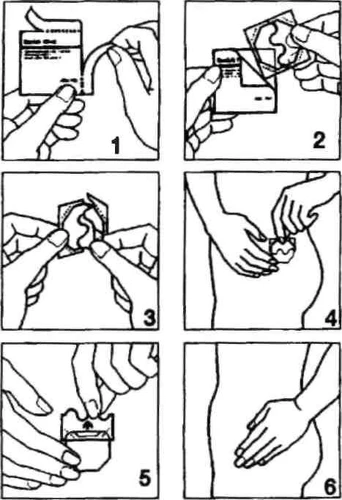
- Tear open one pouch along the side slits (do not use scissors) and remove the patch. (Fig. 1 and 2).
- Apply the patch to the skin immediately after removing it from the packaging.
- Remove half of the two-part protective liner. Do not touch the adhesive surface of the patch with fingers. Apply the adhesive side of the patch to the skin. (Fig. 3 and 4).
- Remove the second half of the protective liner. Press the patch firmly with the palm of your hand and hold for 30 seconds. Warming the patch to body temperature ensures optimal adhesion to the skin. (Fig. 5 and 6). Make sure the entire patch adheres to the skin, especially the edges.
- The application site should be changed each time; that is, a new patch may be applied to the same site only after two weeks.
- The skin at the chosen site should be healthy, dry, degreased, and undamaged.
- The best sites for applying the patch are the hips, upper buttocks, and lower abdomen, as the skin in these areas is relatively smooth. Fem 7 Combi patches must not be applied to the breasts or the area immediately surrounding them! Do not apply the patch at the waistline!
- The patch adheres strongly to the skin. Bathing, showering, and physical exercise should not affect the patch's performance.
- Avoid rubbing the patch with a sponge or towel, as this may cause it to detach.
- Avoid wearing tight clothing that could cause the patch to peel off.
- The patch should be removed slowly to avoid skin irritation.
- If the patch detaches completely before 7 days have passed, simply apply a new patch.
- Each patch should be used for seven days. It is recommended to change patches on the same day of the week throughout treatment.
- The next patch should be applied according to the original treatment schedule.
- Avoid exposing the patch to direct sunlight.
- If adhesive residue remains on the skin after patch removal, gently wipe it off with a cream or cosmetic milk.
How long can Fem 7 Combi be used?
Each transdermal system should be used for seven days.
HRT should be continued only as long as the benefits of relieving menopausal symptoms outweigh the risks associated with HRT use.
Use of a higher than recommended dose of Fem 7 Combi
Due to the route of administration, overdose of Fem 7 Combi is unlikely.
Symptoms of overdose may include breast tenderness, abdominal/pelvic bloating, anxiety, restlessness, nausea, and vomiting. If symptoms of overdose occur, remove the patch immediately.
Missed application of Fem 7 Combi
If the patch is not changed after seven days, replace it as soon as possible. The next patch change should occur on the originally scheduled day, at the usual time.
Do not use a double dose to make up for a missed patch.
Discontinuation of Fem 7 Combi
The following symptoms may occur: return of menopausal symptoms.
If a patient wishes to discontinue treatment temporarily or permanently, she should first consult her doctor.
4. Possible adverse effects
Like all medicines, this medicine can cause adverse effects, although not everyone will experience them.
Below are listed possible adverse effects associated with hormone therapy during the menopausal period.
Adverse effects most commonly occur (> 10%) at the site of application of the transdermal system.
These include: skin redness (erythema), skin irritation and swelling, itching. These usually resolve spontaneously without specific treatment within 2–3 days after removal of the patch.
Common adverse effects (may occur in more than 1 in 100 patients but less than 1 in 10 patients):
- Increased libido,
- Decreased libido,
- Headache,
- Nausea,
- Vomiting,
- Intermenstrual bleeding and spotting.
Uncommon adverse effects (may occur in more than 1 in 1,000 patients but less than 1 in 100 patients):
- Dizziness,
- Migraine,
- Paresthesia,
- Abdominal distension,
- Abdominal pain,
- Dyspepsia,
- Hypertension,
- Painful menstruation,
- Endometrial hyperplasia,
- Breast cancer,
- Fluid retention,
- Weight gain,
- Weight loss,
- Feeling of fatigue.
Rare adverse effects (may occur in more than 1 in 10,000 patients but less than 1 in 1,000 patients):
- Depression,
- Gallstones,
- Cholestatic jaundice,
- Uterine leiomyomas.
Other adverse effects
- Estrogen-dependent benign and malignant tumours, e.g. endometrial cancer;
- Venous thromboembolic disease, e.g. deep vein thrombosis of the lower limbs or pelvic vein thrombosis and pulmonary embolism. These occur more frequently in women using HRT than in those not using HRT (see sections "When not to use Fem 7 Combi" and "When to exercise particular caution when using Fem 7 Combi");
- Myocardial infarction and stroke;
- Gallbladder diseases (e.g. gallstones);
- Skin and subcutaneous tissue disorders: chloasma (brown facial patches), erythema multiforme, nodular erythema, Schönlein-Henoch purpura (hemorrhagic vasculitis);
- Possible dementia.
Reporting of adverse effects
If any adverse effects occur, including any not listed in this leaflet, inform your doctor or pharmacist. Adverse effects can be reported directly to:
Department of Monitoring of Adverse Drug Reactions, Office for Registration of Medicinal Products, Medical Devices and Biocidal Products
Al. Jerozolimskie 181C
02-222 Warsaw
Phone: +48 22 49 21 301
Fax: +48 22 49 21 309
Website: https://smz.ezdrowie.gov.pl
Adverse effects may also be reported to the marketing authorization holder.
Reporting adverse effects helps to provide more information on the safety of the medicine.
5. How to store Fem 7 Combi
- Keep out of the sight and reach of children.
- Store below 30°C.
- Do not use this medicine after the expiry date stated on the carton after "Expiry date". The expiry date refers to the last day of the stated month.
- Used systems should be folded in half with the adhesive side inward and then discarded.
- Medicines should not be disposed of via wastewater or household waste. Ask your pharmacist how to dispose of medicines no longer required. These measures will help protect the environment.
6. Contents of the package and other information
What Fem 7 Combi contains
Active substances:
Phase I transdermal system:
estradiol (Estradiolum) hemihydrate 1.5 mg
After application to the skin, 50 micrograms of estradiol are released per day over 7 days.
The active surface area of the transdermal system is 15 cm².
Phase II transdermal system:
estradiol (Estradiolum) hemihydrate 1.5 mg
levonorgestrel (Levonorgestrelum) 1.5 mg
After application to the skin, 50 micrograms of estradiol and 10 micrograms of levonorgestrel are released per day over 7 days. The active surface area of the transdermal system is 15 cm².
Other components of the medicinal product are:
Adhesive layer: styrene-isoprene-styrene block copolymer, glycerol esters of hydrogenated resin acids
Protective outer layer: polyethylene terephthalate (PET)
Protective liner (to be removed): silicone-coated polyethylene terephthalate (PET)
What Fem 7 Combi looks like and contents of the pack
Fem 7 Combi is an octagonal, transparent, flexible patch with rounded edges. Its inner (adhesive) surface is covered with a two-part transparent protective film.
Available pack sizes:
4 transdermal systems – 2 phase I transdermal systems + 2 phase II transdermal systems
12 transdermal systems – 6 phase I transdermal systems + 6 phase II transdermal systems
Marketing Authorisation Holder
Theramex Ireland Limited
3rd Floor, Kilmore House,
Park Lane, Spencer Dock,
Dublin 1
D01 YE64
Ireland
Manufacturer:
LTS Lohmann Therapie-Systeme AG
Lohmannstraße 2
56626 Andernach
Germany
For more detailed information, please contact the local representative of the Marketing Authorisation Holder at telephone number: +48 22 307 71 66.