Feldene
Poland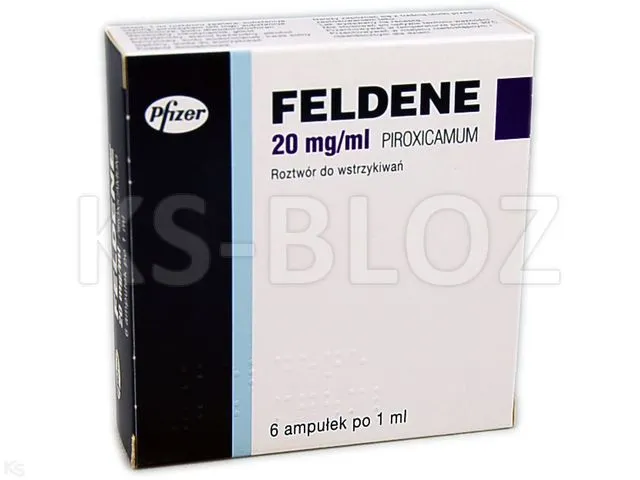
Table of Contents
Patient Information Leaflet
FELDENE 20 mg/ml, solution for injection
Piroxicam
Please read all of this leaflet carefully before using this medicine, as it contains important information for you.
- Keep this leaflet, as you may need to read it again.
- If you have any further questions, please consult your doctor or pharmacist.
- This medicine has been prescribed for a specific individual. Do not pass it on to others. It may harm someone else, even if their symptoms are the same.
- If you experience any adverse reactions, including any not listed in this leaflet, inform your doctor or pharmacist immediately. See section 4.
Table of contents:
- What FELDENE is and what it is used for
- Important information before using FELDENE
- How to use FELDENE
- Possible side effects
- How to store FELDENE
- Contents of the pack and other information
1. What FELDENE is and what it is used for
Piroxicam is a non-steroidal anti-inflammatory drug (NSAID) which also has analgesic and antipyretic properties.
Before prescribing piroxicam, your doctor will assess the benefits the medicine may provide you against the risk of side effects. Your doctor may recommend periodic check-ups and tests and inform you how often these should be carried out during treatment with piroxicam.
FELDENE is used to relieve symptoms associated with osteoarthritis, rheumatoid arthritis, and ankylosing spondylitis (spinal rheumatism), such as joint swelling, stiffness, and pain. FELDENE does not cure arthritis and only works while it is being taken.
Your doctor may prescribe piroxicam only if other non-steroidal anti-inflammatory drugs (NSAIDs) have not provided sufficient relief of symptoms.
2. Important information before using FELDENE
When not to use FELDENE
- if the patient is allergic to piroxicam or any of the other ingredients of this medicine (listed in section 6);
- in patients with active or previous peptic ulcer disease of the stomach and/or duodenum, gastrointestinal bleeding or perforation;
- in patients with a history of gastrointestinal disorders (inflammation of the gastric or intestinal mucosa) predisposing to complications such as bleeding, including ulcerative colitis, Crohn's disease, gastrointestinal tumours, or diverticulitis (inflammatory or infected pouches and/or outpouchings in the colon);
- in patients taking other NSAIDs, including selective COX-2 inhibitors and acetylsalicylic acid at analgesic doses;
- in patients taking anticoagulants such as acenocoumarol to prevent blood clot formation;
- in patients with a history of severe allergic reactions to piroxicam, other NSAIDs, or other drugs, especially with severe skin reactions (regardless of severity), such as exfoliative dermatitis (intense redness of the skin with flaking or peeling), bullous reactions (Stevens-Johnson syndrome, condition with redness of the skin and formation of blisters, erosions, haemorrhagic crusts or scabs), or toxic epidermal necrolysis (Lyell's syndrome, disease with blister formation and shedding of the superficial layer of the skin);
- in patients with severe hepatic impairment;
- in patients with severe renal impairment;
- in patients with severe heart failure;
- in patients with haemorrhagic diathesis or coagulation disorders;
- in premature infants and newborns;
- for perioperative pain management during coronary artery bypass graft (CABG) surgery;
- in pregnant women during the third trimester.
Patients belonging to any of the above groups should not use piroxicam.
Immediately inform your doctor if any of the above conditions apply.
Warnings and precautions
Before starting treatment with FELDENE, discuss this with your doctor or pharmacist.
Before using FELDENE, your doctor should assess the benefit-risk ratio regarding the occurrence of adverse effects. Like all non-steroidal anti-inflammatory drugs (NSAIDs), FELDENE may cause serious gastrointestinal adverse reactions such as stomach pain, bleeding, ulceration, and perforation.
Concomitant use of FELDENE with systemic NSAIDs, other than low-dose acetylsalicylic acid, should be avoided due to an increased risk of gastrointestinal ulcers and bleeding.
If the patient experiences stomach pain or any signs of gastrointestinal bleeding, such as dark stools, blood in stools, or bloody vomiting, or develops gastrointestinal ulceration, treatment with FELDENE must be stopped immediately and medical advice sought.
If the patient develops a rash or other skin symptoms, or any allergic reaction, such as facial swelling, wheezing, or breathing difficulties, piroxicam should be discontinued immediately, medical advice sought immediately, and the doctor informed about the use of this medicine.
In patients over 70 years of age, the doctor may minimize the duration of treatment and recommend more frequent check-ups during piroxicam therapy.
In patients over 70 years of age or those taking other medications such as corticosteroids, certain antidepressants known as selective serotonin reuptake inhibitors (SSRIs), or low-dose acetylsalicylic acid, the doctor may prescribe a gastroprotective agent alongside FELDENE.
Patients who consume alcohol have an increased risk of gastrointestinal complications.
To reduce the potential cardiovascular risk, the doctor will decide on appropriate dose adjustment (the lowest effective dose of piroxicam for the shortest possible duration is recommended).
Doctors and patients should be vigilant for cardiovascular adverse effects; therefore, the doctor will inform the patient about symptoms and/or signs of toxicity and the actions to take if such symptoms occur.
Piroxicam may cause fluid retention and oedema; therefore, caution is advised when using FELDENE in patients with impaired cardiac function or other conditions that may lead to fluid retention, or when the patient's condition may worsen due to fluid retention. Patients with congestive heart failure or hypertension should undergo appropriate monitoring.
As with all NSAIDs, FELDENE may lead to the onset or worsening of pre-existing hypertension, which may contribute to an increased frequency of cardiovascular events. NSAIDs, including FELDENE, should be used with caution in patients with hypertension. Blood pressure should be closely monitored when starting treatment with FELDENE and during therapy.
Fluid retention and oedema have been observed in some patients taking NSAIDs, including FELDENE. Therefore, caution is advised when using FELDENE in patients with cardiac dysfunction or other diseases causing or exacerbating fluid retention. Patients with congestive heart failure or hypertension should be carefully observed.
Caution is advised when initiating piroxicam treatment in patients with kidney disease or significant dehydration. The doctor will decide on appropriate dose adjustment and necessary tests.
FELDENE may cause jaundice and hepatitis leading to death. Although these reactions are rare, if abnormal liver function test results persist or worsen, or if symptoms indicating liver dysfunction and/or liver disease appear, or if systemic symptoms occur [e.g. eosinophilia (increased number of eosinophils, i.e. acidophilic granulocytes in blood), rash, etc.], FELDENE should be discontinued.
Patients who experience visual disturbances during piroxicam treatment should undergo an ophthalmological examination.
Patients over 80 years of age should not take this medicine.
Individuals with any diseases or allergies, or those unsure whether they can use piroxicam, should consult a doctor before using the medicine.
FELDENE may impair fertility. If a patient plans to become pregnant or has difficulty conceiving, she should inform her doctor.
Taking medicines such as FELDENE may be associated with a small increased risk of heart attack or stroke. This risk increases with long-term use of high doses. Do not use higher doses or longer treatment duration than recommended.
If the patient has heart problems, a history of stroke, or risk factors for these conditions (e.g. high blood pressure, diabetes, high cholesterol, smoking), discuss the treatment approach with a doctor or pharmacist.
If reduced activity of the so-called CYP2C9 enzyme system is suspected or confirmed in the patient, caution is advised due to the possibility of increased drug concentration in the blood.
During FELDENE treatment, potentially life-threatening skin rashes (Stevens-Johnson syndrome, toxic epidermal necrolysis) have been observed, initially appearing as concentric red lesions or round spots, often with centrally located blisters.
Additional symptoms may include ulceration of the oral cavity, throat, nose, or genital organs, and conjunctivitis (red, swollen eyes).
These life-threatening skin rashes are often accompanied by influenza-like symptoms. As the rash progresses, extensive blisters or detachment of the epidermis may develop.
The highest risk of serious skin reactions occurs during the first weeks of treatment.
If Stevens-Johnson syndrome or toxic epidermal necrolysis occurs during FELDENE treatment, re-administration of this medicine must never be attempted.
Concomitant use of FELDENE with oral anticoagulants [warfarin and/or coumarin derivatives, and new oral anticoagulants (e.g. apixaban, dabigatran, rivaroxaban)] increases the risk of gastrointestinal and non-gastrointestinal bleeding.
If the patient develops a rash or other skin symptoms, immediate medical consultation is required, and the doctor must be informed about the use of this medicine.
FELDENE and other medicines
Inform your doctor or pharmacist about all medicines currently or recently taken, and any medicines planned for future use.
Medicines may sometimes interact with each other. The doctor may limit the use of piroxicam or other medicines or may recommend an alternative medicine. It is particularly important to inform the doctor:
- if the patient is taking acetylsalicylic acid or other non-steroidal anti-inflammatory drugs for pain relief;
- if the patient is taking glucocorticosteroids, which are medicines used in the treatment of, for example, allergies and endocrine and/or hormonal disorders;
- if the patient is taking anticoagulants such as acenocoumarol to prevent blood clot formation;
- if the patient is taking medicines used in the treatment of depression, known as selective serotonin reuptake inhibitors (SSRIs);
- if the patient is taking any medicines, such as acetylsalicylic acid, to prevent platelet aggregation; FELDENE interferes with the antiplatelet effect of low-dose acetylsalicylic acid and may therefore interfere with prophylactic acetylsalicylic acid treatment for cardiovascular diseases.
- if the patient is taking antihypertensive medicines, including diuretics, angiotensin-converting enzyme (ACE) inhibitors, angiotensin II receptor type 1 (AT1) antagonists (AIIA), and β-blockers;
- if the patient is taking cardiac glycosides (digoxin and digitoxin);
- if the patient is taking cimetidine (a medicine mainly used in the treatment of peptic ulcer disease of the stomach and duodenum);
- if the patient is taking cholestyramine (a medicine that reduces cholesterol levels);
- if the patient is taking cyclosporine (an immunosuppressive medicine used, among others, in transplant patients);
- if the patient is taking lithium or other medicines that bind to plasma proteins;
- if the patient is taking methotrexate (a medicine used, among others, in neoplastic diseases and rheumatoid arthritis);
- if the patient is taking tacrolimus (an immunosuppressive medicine used, among others, in atopic dermatitis).
Pregnancy, breastfeeding, and effect on fertility
If the patient is pregnant or breastfeeding, suspects she may be pregnant, or plans to have a child, she should consult a doctor or pharmacist before using this medicine.
Pregnancy
FELDENE should not be used during pregnancy.
Animal studies have shown that piroxicam, like other NSAIDs, may cause difficult labour (cervical dystocia) and delayed delivery in pregnant animals when treatment is continued into late pregnancy. NSAIDs may also cause premature closure of the ductus arteriosus in newborns.
Piroxicam is contraindicated during the third trimester of pregnancy.
Inhibition of prostaglandin synthesis may adversely affect pregnancy. Epidemiological data indicate that use of prostaglandin synthesis inhibitors in early pregnancy increases the risk of spontaneous abortion. Animal studies have shown that administration of prostaglandin synthesis inhibitors leads to loss of embryos before or after implantation.
NSAIDs used during the second or third trimester of pregnancy may cause renal dysfunction in the fetus, leading to reduced amniotic fluid volume or, in severe cases, oligohydramnios. These effects may occur soon after starting treatment and are usually reversible. Amniotic fluid volume should be closely monitored in pregnant women taking piroxicam.
Breastfeeding
Piroxicam passes into breast milk; therefore, use of FELDENE is not recommended in breastfeeding women.
Fertility
Due to its mechanism of action, NSAIDs, including piroxicam, may delay or prevent ovulation, leading to reversible infertility in some women. Discontinuation of NSAIDs, including piroxicam, should be considered in women experiencing difficulty conceiving or undergoing fertility investigations.
Driving and operating machinery
The effect of piroxicam on the ability to drive and operate machinery has not been studied. Patients should consider the possibility of adverse effects (drowsiness, blurred vision, see also section 4 "Possible side effects") that may affect the ability to drive and operate machinery.
FELDENE contains benzyl alcohol, propylene glycol, alcohol (ethanol), and sodium
The medicine contains 20 mg of benzyl alcohol in each 1 ml ampoule. Benzyl alcohol may cause allergic reactions. Administration of benzyl alcohol to young children is associated with the risk of severe adverse effects, including respiratory disorders (so-called gasping syndrome). Medicines containing benzyl alcohol must not be administered to newborns (up to 4 weeks of age) and should not be given to young children (under 3 years of age) for longer than one week without medical advice.
Large doses of FELDENE may lead to accumulation of benzyl alcohol in the body, resulting in increased acid levels in the blood (so-called metabolic acidosis). Patients with liver or kidney disease, pregnant women, or breastfeeding women must exercise particular caution and consult a doctor before using the medicine.
The medicine contains 400 mg of propylene glycol in each 1 ml ampoule.
Before administering the medicine to a child under 4 weeks of age, consult a doctor or pharmacist, especially if the child is taking other medicines containing propylene glycol or alcohol.
The medicine contains 100 mg of alcohol (ethanol) in each 1 ml ampoule. The amount of alcohol in each 1 ml ampoule of this medicine is equivalent to less than 3 ml of beer or 1 ml of wine. The small amount of alcohol in this medicine will not cause noticeable effects.
The medicine contains less than 1 mmol (23 mg) of sodium per ampoule, meaning the medicine is considered "sodium-free".
3. How to use FELDENE
This medicine should always be used according to the instructions given by your doctor or pharmacist. If you have any doubts,
you should consult your doctor or pharmacist.
Your doctor will schedule regular check-up visits to ensure that the optimal dose of piroxicam is being used. Your doctor will adjust
the treatment to the lowest effective dose. Under no
circumstances should you change the dose without first consulting your doctor.
FELDENE injection solution 20 mg/ml is recommended for the initial treatment of acute conditions and exacerbations of chronic
diseases. Intramuscular injections of piroxicam should be administered into large muscles, maintaining aseptic technique.
The recommended injection site is the upper outer quadrant of the buttock (i.e. the gluteus maximus muscle). As with all
medicines administered intramuscularly, aspiration should be performed before injection to ensure that the needle tip is not
located within a blood vessel.
Adverse effects may be minimized by using the lowest effective dose for the shortest duration necessary to relieve symptoms.
The effectiveness of treatment and the patient's response should be periodically evaluated, especially in chronically ill patients.
Treatment of acute conditions should not exceed 14 days.
Adults and elderly patients
The maximum daily dose is 20 milligrams of piroxicam, taken as a single daily dose.
For patients over 70 years of age, your doctor may recommend a lower daily dose and a shorter duration of treatment.
Your doctor may recommend using piroxicam together with a gastroprotective agent to protect the mucous membranes of the
stomach and intestines, in order to prevent potential adverse effects.
Dosage
Rheumatoid arthritis, osteoarthritis (degenerative joint disease), ankylosing spondylitis
The recommended initial dose is 20 mg once daily. In most patients, the maintenance dose is 20 mg per day. In a small group of
patients, a maintenance dose of 10 mg per day may be sufficient.
Due to its gastrointestinal safety profile, FELDENE should not be used as first-line treatment when NSAIDs are indicated. For the same reason, it should not be used in patients at highest risk of serious gastrointestinal adverse effects.
Use in patients with renal impairment
Your doctor will decide on the appropriate dose adjustment in patients with impaired kidney function.
The clinical condition of such patients should be closely monitored.
Use in elderly patients
Your doctor will decide on the appropriate dose adjustment in elderly patients.
Use in children and adolescents
Dosage and indications in children and adolescents have not been established; therefore, use of this medicine is not recommended in children and adolescents.
Taking more FELDENE than recommended
If you take more FELDENE than recommended, contact your doctor immediately.
In cases of piroxicam overdose, your doctor will provide supportive and symptomatic treatment. Although adequate studies have not been conducted, hemodialysis is unlikely to accelerate piroxicam elimination, as the drug is highly protein-bound.
Research findings indicate that administration of activated charcoal may reduce the absorption and reabsorption of piroxicam, thereby decreasing the total amount of drug available.
Do not increase the dose of the medicine
If you feel that the effect of the medicine is too strong or too weak, you should always consult your doctor.
Missed dose of FELDENE
Take the missed dose as soon as possible. However, if it is almost time for your next dose, skip the missed dose and take the next dose at the scheduled time. Do not take a double dose to make up for a missed dose.
Stopping FELDENE
If you have any further questions about the use of this medicine, consult your doctor.
4. Possible adverse effects
Like all medicines, this medicine can cause adverse effects, although they do not occur in everyone.
FELDENE is generally well tolerated. The most commonly occurring adverse effects are related to
the gastrointestinal tract.
Treatment with NSAIDs has been associated with occurrence of oedema, hypertension
and heart failure.
Use of medicines such as FELDENE may be associated with a small increased risk of heart attack (myocardial infarction) or stroke.
Long-term use of the medicine at doses higher than 30 mg increased the risk of gastrointestinal adverse effects.
Common (may occur in no more than 1 in 10 people):
- anaemia, eosinophilia, leukopenia, thrombocytopenia
- loss of appetite, hyperglycaemia
- dizziness, headache, somnolence, dizziness due to vestibular disorders
- tinnitus
- abdominal discomfort, abdominal pain, constipation, diarrhoea, epigastric disturbances, flatulence, nausea, vomiting, dyspepsia
- pruritus, skin rash
- oedema (mainly ankles)
- reversible increase in blood urea nitrogen (BUN), increased serum aminotransferase activity, weight gain
- decreased haemoglobin concentration and decreased haematocrit value unrelated to gastrointestinal bleeding
Uncommon (may occur in no more than 1 in 100 people):
- hypoglycaemia
- blurred vision
- palpitations
- stomatitis
- reversible increase in blood creatinine concentration
Very rare (may occur in no more than 1 in 10,000 people):
- Stevens-Johnson syndrome, toxic epidermal necrolysis (Lyell's syndrome)
Frequency not known (cannot be estimated from available data):
- aplastic anaemia, haemolytic anaemia
- anaphylaxis, serum sickness
- fluid retention
- depression, sleep disorders, hallucinations, insomnia, disorientation, mood changes, nervousness
- aseptic meningitis, paraesthesia
- eye irritation, swollen eyelids
- hearing disturbances
- vasculitis, hypertension
- bronchospasm, dyspnoea, epistaxis
- gastritis, gastrointestinal bleeding (including haematemesis and melaena), pancreatitis, perforations, ulcers
- jaundice, hepatitis leading to death
- alopecia, angioedema, exfoliative dermatitis, erythema multiforme, drug rash with eosinophilia and systemic symptoms (DRESS syndrome), fixed drug eruption (may present as round or oval red patches and swelling on the skin), non-thrombocytopenic purpura (Henoch-Schönlein purpura), nail detachment from the nail bed, photosensitivity, urticaria, bullous eruptions, pruritus
- nephrotic syndrome, glomerulonephritis, interstitial nephritis, renal failure
- decreased fertility in women
- local adverse reactions (burning sensation) or tissue damage (formation of sterile abscesses, fat necrosis) at the injection site, malaise, transient pain during injection
- positive antinuclear antibody (ANA) titres, weight loss.
Reporting of adverse effects
If any adverse effects occur, including any possible adverse effects not listed in this leaflet, inform your doctor or pharmacist. Adverse effects can be reported directly to the Department of Monitoring of Adverse Drug Reactions at the Office for Registration of Medicinal Products, Medical Devices and Biocidal Products
Al. Jerozolimskie 181C
02-222 Warsaw
Tel.: +48 22 49 21 301
Fax: +48 22 49 21 309
Website: https://smz.ezdrowie.gov.pl
Adverse effects can also be reported to the marketing authorisation holder or the representative of the marketing authorisation holder.
Reporting adverse effects helps to provide more information on the safety of the medicine.
5. How to store FELDENE
Keep this medicine out of the sight and reach of children.
Store below 30ºC.
Do not use this medicine after the expiry date stated on the packaging (EXP).
The expiry date refers to the last day of the stated month.
Medicines should not be disposed of via wastewater or household waste. Ask your pharmacist how to properly dispose of medicines you no longer use. This will help protect the environment.
6. Contents of the pack and other information
What FELDENE contains
- The active substance is piroxicam. 1 ml of injection solution contains: 20 mg of piroxicam.
- Other ingredients are: disodium dihydrogen phosphate dihydrate, nicotinamide, propylene glycol (E1520), anhydrous ethanol, benzyl alcohol (E1519); sodium hydroxide and/or concentrated hydrochloric acid; water for injections (see section 2 "FELDENE contains benzyl alcohol, propylene glycol, alcohol (ethanol) and sodium").
What FELDENE looks like and contents of the pack
The medicine is packed in ampoules (glass) placed in a cardboard box. The pack contains
6 ampoules.
Marketing Authorisation Holder and Manufacturer:
Marketing Authorisation Holder:
Pfizer Europe MA EEIG
Boulevard de la Plaine 17
1050 Bruxelles
Belgium
Manufacturer:
Fareva Amboise
Zone Industrielle
29 route des Industries
37530 Pocé-sur-Cisse
France
For more detailed information, please contact the local representative of the Marketing Authorisation Holder:
Pfizer Polska Sp. z o.o.
tel. 22 335 61 00