Feiba nf
Poland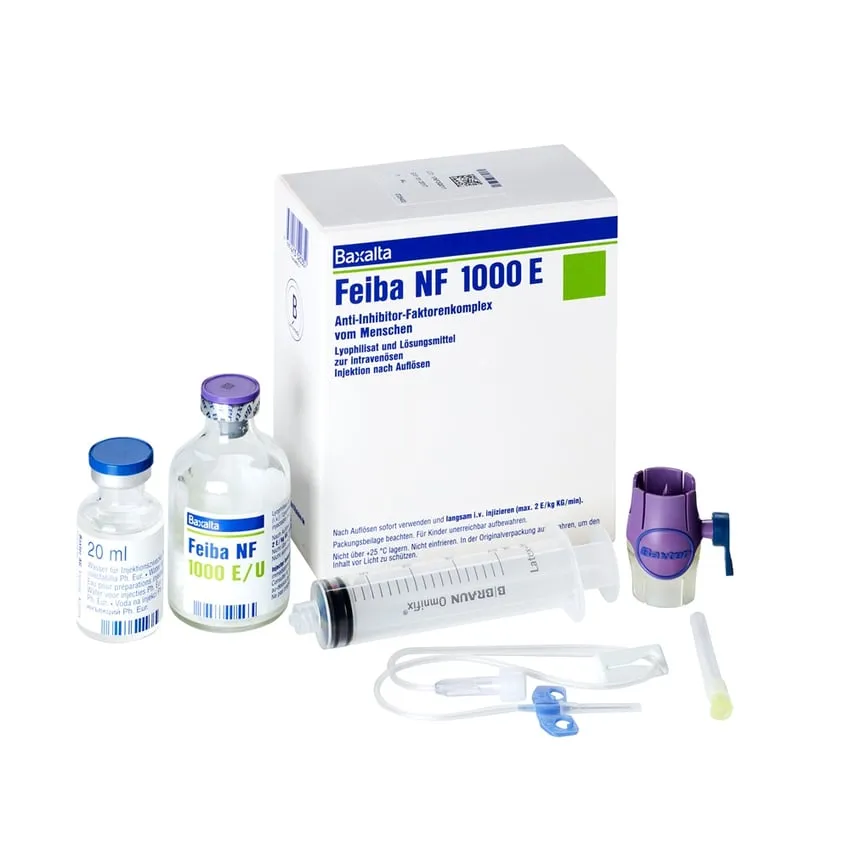
Table of Contents
- Package leaflet: Information for the user
- 1. What FEIBA NF is and what it is used for
- 2. Important information before using FEIBA NF
- 3. How to use FEIBA NF
- 4. Possible adverse reactions
- 5. How to store FEIBA NF
- 6. Contents of the pack and other information
- Information intended exclusively for healthcare professionals:
Package leaflet: Information for the user
FEIBA NF, 500 IU (50 IU/mL), powder and solvent for solution for injection
Activated prothrombin complex concentrate
Please read all of this leaflet carefully before using this medicine, because it contains
important information for you.
- Keep this leaflet, as you may need to read it again.
- If you have any further questions, please ask your doctor, pharmacist, or nurse.
- This medicine has been prescribed for a specific individual. Do not pass it on to others. It may harm other people, even if their symptoms are the same.
- If you experience any adverse reactions, including any not listed in this leaflet, tell your doctor, pharmacist, or nurse. See section 4.
Leaflet contents
- What FEIBA NF is and what it is used for
- Important information before using FEIBA NF
- How to use FEIBA NF
- Possible side effects
- How to store FEIBA NF
- Contents of the pack and other information
1. What FEIBA NF is and what it is used for
FEIBA NF is a medicine derived from human plasma that helps blood to clot
in cases of deficiency or absence of certain clotting factors.
FEIBA NF is used to treat and prevent bleeding episodes in patients
with hemophilia A complicated by the presence of factor VIII inhibitors and in patients
with hemophilia B complicated by the presence of factor IX inhibitors.
Additionally, FEIBA NF may be used to treat and prevent bleeding in individuals
who do not have hemophilia but have acquired inhibitors to factors VIII, IX, and XI.
FEIBA NF is also used in combination with factor VIII concentrate during
long-term treatment aimed at complete and sustained elimination of factor VIII inhibitors,
to allow regular treatment with factor VIII concentrate, as in patients without inhibitors.
In isolated cases, FEIBA NF has been used in patients with von Willebrand factor inhibitors.
2. Important information before using FEIBA NF
Inform your doctor if the patient has any allergies.
Inform your doctor if the patient is on a low-sodium diet.
When FEIBA NF must not be used
FEIBA NF must not be used in the following situations if there is a possibility of using an alternative treatment:
- if the patient is hypersensitive to the activated prothrombin complex concentrate (inhibitor bypassing activity) or to any of the other components of this medicine (listed in section 6).
- if the patient has disseminated intravascular coagulation (DIC, consumption coagulopathy, a life-threatening condition associated with widespread blood clotting and thrombus formation in vessels, leading to general depletion of coagulation factors).
- if the patient has acute thrombosis or embolism (including myocardial infarction).
See section "Warnings and precautions".
Warnings and precautions
Discuss with your doctor before starting treatment with FEIBA NF.
This medicine may cause allergic-type hypersensitivity reactions, including urticaria, angioedema, gastrointestinal symptoms, bronchospasm, and hypotension; these reactions may be severe and systemic (e.g. anaphylactic reaction with urticaria and angioedema, bronchospasm, and circulatory shock). Other infusion-related reactions such as chills, fever, and hypertension have also been reported.
If the first signs or symptoms related to infusion/hypersensitivity reactions occur (see section 4), administration of this medicine must be stopped immediately and appropriate medical care initiated.
In patients suspected of hypersensitivity to FEIBA NF or any of its components, the doctor will decide whether to re-administer FEIBA NF only after careful consideration of the risks and expected benefits and (or) when no response to treatment with alternative prophylactic therapies or other medicinal products can be expected.
Thromboembolic complications, including disseminated intravascular coagulation (DIC), venous thrombosis, pulmonary embolism, myocardial infarction, and stroke, have occurred during treatment with FEIBA NF.
If the first signs or symptoms of thromboembolic complications occur (see section 4), the infusion must be stopped immediately and appropriate diagnostic and therapeutic measures initiated.
Some thromboembolic complications occurred with high doses of FEIBA NF or in patients with other risk factors predisposing to thromboembolic events, including DIC, advanced atherosclerotic disease, crush injury, or sepsis. Concomitant use of recombinant factor VIIa may increase the risk of thromboembolic complications. In patients with congenital or acquired hemophilia, such risk factors should always be considered.
The medicine should be used with particular caution in patients at risk of DIC, arterial or venous thrombosis.
Cases of thrombotic microangiopathy were reported in a clinical trial of emicizumab, in which patients received FEIBA NF as part of breakthrough bleeding treatment regimen.
In patients with hemophilia and presence of inhibitors or acquired inhibitors to coagulation factors, treatment with FEIBA NF may be associated with increased tendency to bleeding and simultaneously increased risk of thrombosis.
FEIBA NF may be used only when no response to treatment with appropriate coagulation factor concentrate is expected, e.g. in cases of high inhibitor titer and life-threatening hemorrhage or bleeding risk (e.g. traumatic or postoperative), in the following situations:
- Disseminated intravascular coagulation (DIC).
- Liver impairment: due to delayed clearance of active coagulation factors in patients with impaired liver function, the risk of DIC is increased.
- Coronary heart disease, acute thrombosis and (or) embolism. See section "When FEIBA NF must not be used".
For medicines manufactured from human blood or plasma, specific measures are taken to prevent transmission of infections to patients. These include careful selection of blood and plasma donors to ensure exclusion of those at risk of transmitting infections, testing of individual blood samples and pooled plasma for viruses/infections. Manufacturers of these products also include steps in the manufacturing process intended to inactivate or remove viruses. Despite these measures, it cannot be completely excluded that administration of medicines manufactured from human blood or plasma may transmit infection. This also applies to unknown or recently discovered viruses or other types of infections.
The measures taken are considered effective against enveloped viruses such as HIV (causing AIDS), hepatitis B virus, and hepatitis C virus, as well as non-enveloped hepatitis A virus. The measures may have limited effectiveness against non-enveloped viruses such as parvovirus B19. Parvovirus B19 infection may be serious in pregnant women (fetal infection) and in individuals with immunodeficiency or increased erythropoiesis (e.g. hemolytic anemia).
In patients receiving factor VIII derived from human plasma regularly or repeatedly, appropriate vaccinations (against hepatitis A and B viruses) should be considered.
After administration of high doses of FEIBA NF, transient increase in passively transferred antibodies against hepatitis B surface antigen may lead to false-positive results in serological tests.
The medicine contains isohaemagglutinins, antibodies against red blood cells, which, when passively transferred, may affect serological test results for antibodies against red blood cells, such as the antiglobulin test (Coombs test).
Each time a dose of FEIBA NF is administered to a patient, the name and batch number of the medicine should be clearly recorded to maintain information on batches used.
FEIBA NF and other medicines
Inform your doctor about all medicines currently or recently taken, including those available without prescription.
No adequate and well-controlled studies have been conducted on combined or sequential treatment with FEIBA NF and recombinant factor VIIa, fibrinolytic inhibitors, or emicizumab (see "Warnings and precautions").
The possibility of thromboembolic events should be considered when systemic fibrinolytic inhibitors such as tranexamic acid and aminocaproic acid are used concomitantly with FEIBA NF. Therefore, fibrinolytic inhibitors should not be used for approximately 6 to 12 hours after administration of FEIBA NF.
Based on available in vitro data and clinical observations, a potential drug interaction leading to thromboembolic events cannot be excluded when recombinant factor VIIa is used simultaneously with FEIBA NF.
If treatment with FEIBA NF is considered after the patient has received emicizumab, the patient must be closely monitored by the treating physician.
As with all medicinal products containing coagulation factors, FEIBA NF must not be mixed with other medicines prior to administration, as this may adversely affect the efficacy and safety of the medicine.
It is recommended to flush the intravenous line with isotonic sodium chloride solution before and after administration of FEIBA NF.
Pregnancy, breastfeeding and fertility
The doctor will decide whether FEIBA NF can be used during pregnancy or breastfeeding. Due to the increased risk of thrombosis during pregnancy, FEIBA NF should be used only under strict medical supervision and when clearly indicated.
Regarding the risk of parvovirus B19 infection, see "Warnings and precautions".
Driving and operating machinery
No effects on the ability to drive and operate machinery have been observed.
FEIBA NF contains sodium
The medicine contains 40 mg of sodium (the main component of table salt) per vial. This corresponds to 2% of the maximum recommended daily dietary sodium intake for adults.
3. How to use FEIBA NF
The FEIBA NF lyophilized powder is reconstituted with the provided solvent and administered intravenously.
This medicine should always be used as directed by the physician. If in doubt, consult the
physician or pharmacist.
Treatment should be initiated and managed under the supervision of a physician experienced in treating
coagulation disorders.
The physician determines the appropriate dose and frequency of administration individually for each patient,
taking into account the severity of the coagulation disorder, location and extent of bleeding, and
the patient's general condition and response to the medicine. Do not independently alter the dosage
prescribed by the physician or discontinue administration.
If the patient feels the medicine is acting too strongly or too weakly, contact the physician
or pharmacist.
Before administration, warm the medicine to room temperature or body temperature if necessary.
FEIBA NF should be prepared immediately before administration.
The prepared solution should be used immediately (the medicine does not contain preservatives).
Gently mix by rotating motion until the powder dissolves completely. Ensure that FEIBA NF is
fully dissolved; otherwise, fewer FEIBA units will pass through the device filter.
Do not use the solution if it is cloudy or contains a precipitate. Do not use solution from previously opened vials.
Use only the provided solvent (sterile water for injection) and reconstitution set.
If a different reconstitution and administration set is used instead of the one supplied with FEIBA NF,
ensure a suitable filter with a pore size of at least 149 µm is used.
Do not use if the sterile closure system or medicine packaging is damaged or compromised.
Record the administration of the medicine on the attached self-adhesive label.
Any unused medicine or waste material should be disposed of in accordance with local
regulations.
Administration using needles:
Preparation of injection solution
Maintain aseptic technique throughout the entire procedure.
- Warm the closed vial containing the solvent (sterile water for injection) to room temperature if necessary, e.g., by placing it in a water bath for several minutes (maximum 37°C).
- Remove the protective caps from the vials containing the powder and solvent (Fig. A) and disinfect the rubber stoppers of both vials.
- Twist and pull to remove the cover from one end of the provided double-ended needle (Fig. B). Insert the exposed needle into the rubber stopper of the solvent vial (Fig. C).
- Remove the cover from the other end of the double-ended needle, taking care not to touch the exposed part.
- Invert the solvent vial upside down over the powder vial and insert the free end of the double-ended needle into the rubber stopper of the powder vial (Fig. D). The solvent will be drawn into the powder vial by vacuum.
- Disconnect the two vials by withdrawing the needle from the powder vial (Fig. E). Gently shake or rotate the powder vial to accelerate the dissolution process.
- After the powder has completely dissolved, insert the venting needle (Fig. F); the foam formed will disappear. Remove the venting needle.
Injection/infusion
Maintain aseptic technique throughout the entire procedure.
- Remove the cover from the provided filter needle by twisting and attach the needle to a sterile single-use syringe. Draw the solution into the syringe (Fig. G).
- Disconnect the filter needle from the syringe and, after attaching the provided infusion set with butterfly needle (or a single-use injection needle), slowly administer the solution intravenously. A syringe pump may be used to control the rate of administration.
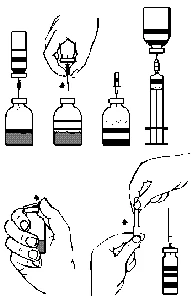
Fig. A Fig. B Fig. C Fig. D Fig. E Fig. F Fig. G
Do not exceed a rate of 2 FEIBA units per kg body weight per minute.
Administration using BAXJECT II Hi-Flow:
Preparation of injection solution
Maintain aseptic technique throughout the entire procedure.
-
Warm the solvent vial (sterile water for injection) to room temperature if necessary, e.g., by placing it in a water bath for several minutes (maximum 37°C).
-
Remove the protective caps from the vials containing the powder and solvent and disinfect the rubber stoppers of both vials. Place the vials on a flat surface.
-
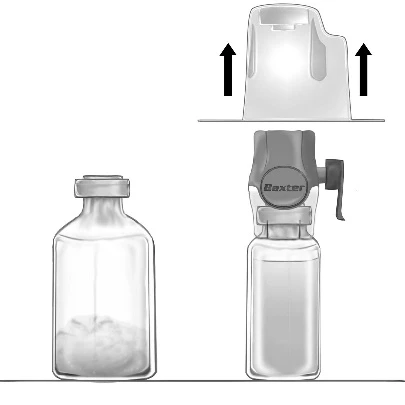
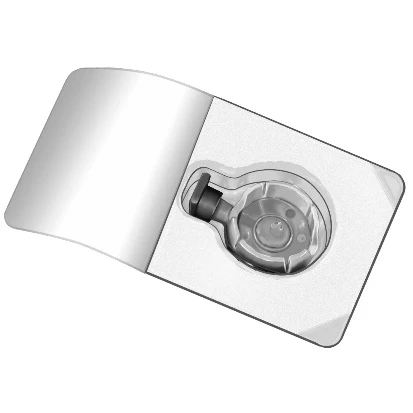
Open the BAXJECT II Hi-Flow device package by peeling off the paper lid without touching the interior (Fig. a). Do not remove the device from the package.
-
Turn the package upside down and pierce the transparent plastic spike through the stopper of the solvent vial (Fig. b). Holding the package by the edges, remove it from the
BAXJECT II Hi-Flow device (Fig. c). Do not remove the blue cap from the BAXJECT II Hi-Flow device. -
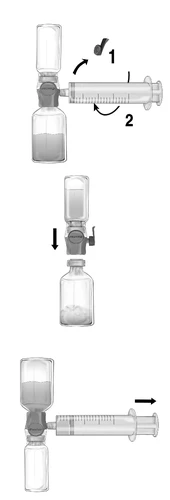
Invert the BAXJECT II Hi-Flow connected to the solvent vial so that the solvent vial is above the device. Pierce the purple plastic spike through the stopper of the FEIBA NF powder vial. The solvent will be drawn into the FEIBA NF powder vial by vacuum (Fig. d).
-
Gently mix by rotating motion, without shaking, until the product is completely dissolved. Ensure that FEIBA NF is fully dissolved—otherwise, the active substance will not pass through the device filter.
Fig. a Fig. b Fig. c
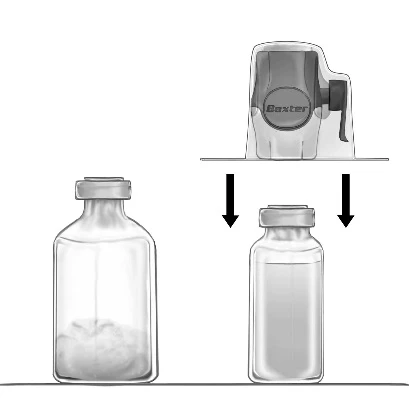
Injection/infusion
Maintain aseptic technique throughout the entire procedure.
- Remove the blue cap from the BAXJECT II Hi-Flow device. Firmly connect the syringe to the BAXJECT II Hi-Flow (DO NOT DRAW AIR INTO THE SYRINGE). To ensure a secure connection between the syringe and the BAXJECT II Hi-Flow device, it is strongly recommended to use a syringe with a luer-lock tip (attach the syringe by turning it clockwise until it stops) (Fig. e).
- Invert the assembly so that the solution is on top. Draw the solution into the syringe by slowly pulling back the plunger, ensuring the connection between the syringe and the BAXJECT II Hi-Flow device remains secure and the syringe remains attached throughout the withdrawal process (Fig. f).
- Disconnect the syringe.
- If foam appears in the syringe, wait until the foam disappears. Slowly administer the solution intravenously using an infusion set (or a single-use injection needle). A syringe pump may be used to control the rate of administration.
Fig. d Fig. e Fig. f
Do not exceed a rate of 2 FEIBA units per kg body weight per minute.
Accidental overdose of FEIBA NF
Inform the physician immediately. Overdose of FEIBA NF may increase the risk of
adverse reactions such as thromboembolic events (blood clot formation and migration
in blood vessels), consumptive coagulopathy (disseminated intravascular coagulation, DIC), or myocardial infarction.
4. Possible adverse reactions
Like all medicines, this medicine can cause adverse reactions, although not everyone will experience them.
You should contact your doctor immediately if one or more of the following symptoms occur:
- Hypersensitivity reactions: rash, itchy rash (urticaria), itching, swelling of lips and tongue, whistling breathing, feeling of chest tightness, gastrointestinal symptoms, dizziness, sudden drop in blood pressure, chills, fever, hypertension, coma
- Disseminated intravascular coagulation (DIC): spontaneous bruising, petechiae, severe simultaneous bleeding (e.g. from wounds, injection sites, mucous membranes, genital tract), organ failure due to ischemia (in kidneys, for example: anuria or oliguria; in lungs – shortness of breath, cough, haemoptysis; in brain – disorientation and concentration problems, seizures, impaired consciousness, coma)
- Venous thrombosis: pain and swelling in a limb, usually unilateral, increased warmth of the limb, subfebrile condition or fever
- Pulmonary embolism: significant changes in blood pressure or pulse rate, difficulty breathing, cough or chest pain
- Myocardial infarction: chest pain which may radiate to the left shoulder or arm, jaw, epigastrium or back; shortness of breath, palpitations, dizziness, fainting, weakness, restlessness, anxiety
- Stroke: sudden, severe headache, visual disturbances, unilateral drooping of the mouth corner, difficulty swallowing and speaking, impaired motor coordination and balance, drowsiness, disorientation, loss of consciousness
Common adverse reactions (may affect up to 1 in 10 people):
- Hypersensitivity
- Headache, dizziness
- Hypotension
- Rash
- Positive test result for antibodies against hepatitis B surface antigen, elevated fibrin D-dimer concentration
Adverse reactions with unknown frequency (cannot be estimated from available data):
- Disseminated intravascular coagulation (DIC), increased inhibitor titer
- Anaphylactic reaction (rapid-onset, life-threatening hypersensitivity reaction), generalized itchy skin rash (urticaria)
- Numbness of limbs (hypoesthesia), abnormal or decreased sensation (paresthesia), stroke (ischemic stroke, embolic stroke), drowsiness, taste disturbances
- Heart attack (myocardial infarction), palpitations (tachycardia)
- Formation of blood clots (venous thrombosis, arterial thrombosis), which travel through blood vessels (thromboembolic events), increased blood pressure (hypertension), sudden redness
- Pulmonary artery embolism (pulmonary embolism), narrowing of airways (bronchospasm), wheezing, cough, breathlessness (dyspnea)
- Vomiting, diarrhea, abdominal discomfort, nausea
- Numbness of face, facial swelling, swelling of tongue and lips (angioedema), generalized itchy rash (urticaria), itching (pruritus)
- Pain at injection site, general malaise, feeling of warmth, chills, fever, chest pain, chest discomfort
- Drop in blood pressure
Symptoms of hypersensitivity reactions following administration of medicines derived from human plasma may also include coma and restlessness.
Reporting of adverse reactions
If any adverse reactions occur, including any not listed in this leaflet, inform your doctor, pharmacist, or nurse. Adverse reactions can be reported directly to the Department of Monitoring Adverse Drug Reactions at the Office for Registration of Medicinal Products, Medical Devices and Biocidal Products
Al. Jerozolimskie 181C
02-222 Warsaw
Phone: +48 22 49 21 301
Fax: +48 22 49 21 309
Website: https://smz.ezdrowie.gov.pl
Adverse reactions can also be reported to the marketing authorization holder.
Reporting adverse reactions helps provide more information on the safety of the medicine.
5. How to store FEIBA NF
Keep this medicine out of the sight and reach of children.
Do not store above 25°C. Do not freeze.
Store the medicine in its outer packaging to protect it from light.
Do not use this medicine after the expiry date stated on the container.
The expiry date refers to the last day of the stated month.
Medicines should not be disposed of via wastewater or household waste. Ask your pharmacist
how to dispose of medicines no longer required. These measures will help protect
the environment.
6. Contents of the pack and other information
What FEIBA NF contains
Powder
- The active substance is a coagulation factor complex anti-inhibitor of factor VIII. After reconstitution in 10 ml of the solvent supplied in the pack (water for injections), 1 ml contains approximately 50 IU of coagulation factor complex anti-inhibitor of factor VIII. One vial contains 500 IU of factor VIII with bypassing activity in 200–600 mg of human plasma protein.
- FEIBA NF also contains factors II, IX, and X, mainly in non-activated form, and activated factor VII. Coagulation antigen of factor VIII (F VIII C:Ag) is present at a concentration of up to 0.1 units per 1 unit of FEIBA. Components of the kallikrein-kinin system are present only in trace amounts or are absent.
- Other ingredients in the medicine are: sodium chloride and sodium citrate.
Solvent
- Water for injections
What FEIBA NF looks like and contents of the pack
The medicine is a lyophilized powder or a soft solid substance, white or pale green in colour.
The powder and solvent are supplied in glass vials closed with rubber stoppers.
The pH of the solution after reconstitution is between 6.8 and 7.6.
Pack size: 1 set
Contents of the pack (with needles):
1 vial containing 500 IU FEIBA NF, closed with a rubber stopper
1 vial containing 10 ml water for injections, closed with a rubber stopper
1 double-ended needle
1 vented needle
1 single-use syringe
1 injection needle
1 filter needle
1 butterfly needle (infusion set with butterfly needle)
Contents of the pack (with BAXJECT II Hi-Flow):
1 vial containing 500 IU FEIBA NF, closed with a rubber stopper
1 vial containing 10 ml water for injections, closed with a rubber stopper
1 BAXJECT II Hi-Flow – a needle-free transfer device used to transfer and mix the medicines contained in two vials
1 single-use syringe
1 injection needle
1 butterfly needle (infusion set with butterfly needle)
Marketing Authorisation Holder and Manufacturer
Marketing Authorisation Holder:
Takeda Pharma Sp. z o.o.
ul. Prosta 68
00-838 Warsaw
Tel: +48 22 306 24 47
[email protected]
Manufacturer:
Takeda Manufacturing Austria AG
Industriestrasse 67
1221 Vienna, Austria
Information intended exclusively for healthcare professionals:
Treatment should be initiated and supervised by a physician experienced in the management of hemophilia.
Dosage
The dosage and duration of treatment depend on the severity of the coagulation disorder, location and extent of bleeding, and the patient's clinical condition.
The dose and frequency of administration should always be adjusted according to the clinical response observed in the individual case.
A dose of 50–100 IU FEIBA per kg body weight (b.w.) is generally recommended. However, single doses should not exceed 100 IU/kg b.w., nor should the maximum daily dose exceed 200 IU/kg b.w., unless the severity of bleeding justifies higher doses.
Due to patient-specific factors, response to bypassing factor activity may vary. In cases where the response to one bypassing agent is inadequate, consideration should be given to using an alternative agent.
Children and adolescents
Experience with use in children under 6 years of age is limited. The dosing regimen, similar to that in adults, should be adjusted according to the child's clinical condition.
1) Spontaneous hemorrhages
Hemarthroses, muscle and soft tissue bleeding
For minor or moderate bleeding episodes, a dose of 50–75 IU/kg b.w. administered at 12-hour intervals is recommended. Treatment should continue until clear signs of clinical improvement are observed, such as relief of pain, reduction of swelling, or restoration of joint mobility.
For major muscle and soft tissue hemorrhages, such as retroperitoneal bleeding, a dose of 100 IU/kg b.w. at 12-hour intervals is recommended.
Mucosal bleeding
A dose of 50 IU/kg b.w. every 6 hours is recommended, with careful patient monitoring (observation of bleeding site, repeated hematocrit measurements). If bleeding persists, the dose may be increased to 100 IU/kg b.w. The maximum daily dose of 200 IU/kg b.w. should not be exceeded.
Other severe hemorrhages
In severe bleeding episodes, such as central nervous system hemorrhage, a dose of 100 IU/kg b.w. every 12 hours is recommended. In individual cases, FEIBA NF may be administered every 6 hours until clear clinical improvement is achieved. The maximum daily dose of 200 IU/kg b.w. must not be exceeded!
2) Surgical procedures
Administer 50–100 IU/kg b.w. every 6 hours, taking care not to exceed the maximum daily dose.
3) Prophylaxis
Clinical data on the use of FEIBA NF for prophylaxis of bleeding in hemophilia patients are limited.
- Prophylactic treatment of bleeding in patients with high inhibitor titers and frequent bleeding episodes, in whom immune tolerance induction (ITI) has failed or is not considered: A dose of 70–100 IU/kg b.w. every other day is recommended. If bleeding persists, the dose may be increased to 100 IU/kg b.w. daily, or gradually reduced.
- Prophylactic treatment of bleeding in patients with high inhibitor titers during immune tolerance induction (ITI): FEIBA NF may be administered concomitantly with factor VIII concentrates at doses of 50–100 IU/kg b.w. twice daily, until the factor VIII inhibitor titer decreases to <2 j.B.*
*1 Bethesda unit is defined as the amount of antibody that reduces factor VIII activity by 50% in normal human plasma after 2 hours of incubation at 37°C.
Administration
See also section "FEIBA NF and other medicinal products" and section 3 of the package leaflet.
FEIBA NF should be administered slowly intravenously (no faster than 2 IU/kg b.w. per minute).
FEIBA NF should be prepared immediately before administration.
The solution should be used immediately (it contains no preservatives). Do not use solutions that are cloudy or contain particulate matter.
Do not use if the transfer device, double-ended needle, or the system maintaining sterility, or their packaging is damaged or compromised.
Any unused solution should be disposed of according to applicable procedures.
Monitoring of treatment
Due to the complex mechanism of action, there is no direct method available for monitoring active substances.
In vitro laboratory tests used to assess treatment efficacy, such as aPTT, whole blood clotting time, and thromboelastography (TEG), may not reflect clinical improvement. Therefore, attempts to normalize these parameters by increasing FEIBA NF doses may be misleading and should be avoided due to the risk of DIC caused by overdose.
In cases of inadequate response to FEIBA NF, platelet count should be assessed, as an adequate number of functionally competent platelets is essential for the efficacy of FEIBA NF.
Single doses exceeding 100 IU/kg b.w. and daily doses exceeding 200 IU/kg b.w. should not be administered. Patients receiving more than 100 IU/kg b.w. should be monitored for signs of DIC and/or acute coronary syndrome. High doses of FEIBA NF should be administered only for the duration necessary to control bleeding.
If significant changes in blood pressure, pulse rate, respiratory disturbances, chest pain, or cough occur, administration should be stopped immediately and appropriate diagnostic and therapeutic measures initiated.
Laboratory findings indicative of DIC include decreased fibrinogen levels, reduced platelet count, and presence of fibrin/fibrinogen degradation products (FDP).
Administration of FEIBA NF to patients with inhibitors may initially result in an anamnestic rise in inhibitor levels. With continued administration of FEIBA NF, inhibitor levels may decrease over time. Clinical and literature data indicate that the efficacy of FEIBA NF is not reduced.
During administration of FEIBA NF, patients with hemophilia complicated by the presence of inhibitors or patients with acquired inhibitors of coagulation factors may experience both a tendency to bleed and an increased risk of thrombosis.
See also section "Warnings and precautions".
Detailed information about this medicinal product is available in the Summary of Product Characteristics on the website of the Office for Registration of Medicinal Products, Medical Devices and Biocidal Products.