Farmorubicin pfs
Poland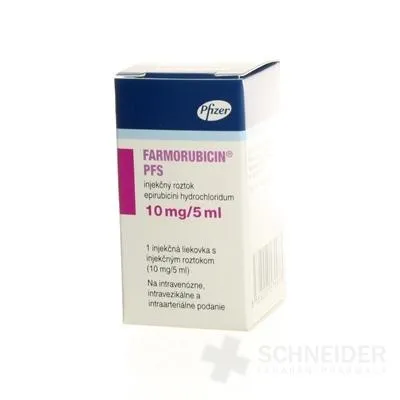
Table of Contents
- Package leaflet: Information for the user
- 1. What Farmorubicin PFS is and what it is used for
- 2. Important Information Before Using the Medicine
- 3. How to use the medicine
- 4. Possible adverse reactions
- 5. How to store the medicine
- 6. Contents of the pack and other information
- Information intended exclusively for medical professionals
Package leaflet: Information for the user
FARMORUBICIN PFS, 2 mg/ml, solution for injection and infusion
Epirubicini hydrochloridum
Please read all of this leaflet carefully before using this medicine, because it contains
important information for the patient.
- Keep this leaflet, as you may need to read it again.
- If you have any further questions, please ask your doctor, pharmacist, or nurse.
- This medicine has been prescribed for a specific individual only. Do not pass it on to others. This medicine may harm other people, even if their symptoms are the same.
- If you experience any adverse reactions, including any not listed in this leaflet, inform your doctor, pharmacist, or nurse. See section 4.
Table of contents
- What Farmorubicin PFS is and what it is used for
- What you need to know before you use Farmorubicin PFS
- How to use Farmorubicin PFS
- Possible side effects
- How to store Farmorubicin PFS
- Contents of the pack and other information
1. What Farmorubicin PFS is and what it is used for
The active substance in this medicine, epirubicin, is a cytotoxic antibiotic of the anthracycline group with antitumor activity.
The medicine may be administered as monotherapy or in combination with other cytotoxic agents.
Farmorubicin PFS is indicated in the treatment of the following types of tumors:
- Transitional cell carcinoma of the urinary bladder
- Early breast cancer, advanced breast cancer, and (or) metastatic breast cancer
- Gastric cancer
- Palliative chemotherapy of esophagogastric junction cancer
- Head and neck cancers
- Leukemia
- Non-small cell lung cancer
- Small cell lung cancer
- Malignant non-Hodgkin's lymphomas, Hodgkin's lymphoma
- Multiple myeloma
- Ovarian cancer
- Pancreatic cancer in combination therapy according to the PEFG regimen (cisplatin, epirubicin, 5-fluorouracil, and gemcitabine)
- Colorectal cancer
- Soft tissue sarcomas.
2. Important Information Before Using the Medicine
When not to use the medicine if the patient is allergic to epirubicin or to
any of the other components of this medicine (listed in section 6), other anthracyclines or
anthracenediones,
- during breastfeeding.
Intravenous administration of the medicine is contraindicated in patients:
- with prolonged bone marrow suppression,
- with severe liver dysfunction,
- with cardiomyopathy,
- with recent myocardial infarction,
- with severe arrhythmia,
- after prior treatment with maximum cumulative doses of this medicine and (or) other anthracyclines or anthracenediones,
- with acute systemic infections,
- with unstable angina.
Intravesical administration of the medicine is contraindicated in patients:
- with urinary tract infection,
- with cystitis,
- with haematuria,
- with invasive tumours infiltrating the urinary bladder,
- in whom difficulties occur in catheter placement.
Warnings and precautions
Treatment with the medicine should be initiated only after resolution of acute toxic symptoms
from previous cytotoxic therapy, such as: oral mucositis, neutropenia, thrombocytopenia and systemic infections.
The medicine must be administered only under the supervision of a physician experienced in the use of cytotoxic therapy.
Inform the doctor if the patient is taking or has recently taken trastuzumab (a medicine
used in the treatment of certain cancers). Trastuzumab may remain in the body for up to
7 months. Since trastuzumab may affect the heart, this medicine should not be used
within 7 months after discontinuation of trastuzumab. If this medicine
is administered before this time has elapsed, cardiac function should be closely
monitored.
Treatment with this medicine may be associated with the following risks:
- Anthracycline-induced cardiotoxicity (toxic effect on the heart)
Early cardiotoxicity mainly involves sinus tachycardia (increased heart rate) and (or) abnormalities in the electrocardiogram (ECG). Tachyarrhythmias (disturbances in heart rhythm), including premature ventricular contractions, ventricular tachycardia, as well as bradycardia (slowed heart rate), and conduction disturbances have also been observed. These effects are usually not associated with later development of delayed cardiotoxicity, rarely have clinical significance and generally do not require discontinuation of treatment with the medicine.
Delayed cardiotoxicity usually develops during later stages of treatment with the
medicine or within 2–3 months after completion of treatment. Complications have been reported several
months or even years after treatment has ended. Delayed cardiomyopathy (heart muscle disease) manifests as a decrease in left ventricular ejection fraction (LVEF) and (or) symptoms of congestive heart failure (CHF), such as dyspnoea, pulmonary oedema, peripheral oedema, cardiac and hepatic enlargement, oliguria, ascites, pleural effusion and gallop rhythm.
The doctor should limit the maximum cumulative dose in cases of life-threatening
congestive heart failure, which is the most severe form of anthracycline-induced cardiomyopathy.
The risk of developing CHF increases rapidly with increasing total cumulative
dose of the medicine above 900 mg/m²; when exceeding this cumulative dose,
the doctor should exercise particular caution.
The doctor should assess and monitor cardiac function during treatment to reduce
the risk of severe heart failure. Treatment should be discontinued immediately upon
the first signs of cardiac dysfunction. Cardiac function assessment should be
performed by the doctor using the same technique throughout the observation period.
Caution should be exercised when administering the medicine to patients: with heart disease (including
clinically asymptomatic conditions), with prior or concurrent radiotherapy to the mediastinum and (or) pericardial region, with previous treatment with other anthracyclines or
anthracenediones, concurrently receiving other medicines that may impair myocardial contractility
or medicines toxic to the heart (e.g. trastuzumab), and in elderly patients.
The toxicities of this medicine and other anthracyclines or
anthracenediones are likely to be additive.
In pregnant women, there have been several reports indicating that epirubicin is associated with heart problems
in newborns and unborn children, including fetal death.
- Haematological toxicity
Like other cytotoxic medicines, this medicine may cause bone marrow suppression (myelosuppression). Before each treatment cycle and during treatment, the doctor should perform haematological tests, including complete blood count with blood smear. The main haematological toxic effect of the medicine is dose-dependent, reversible leukopenia (reduction in the number of white blood cells in peripheral blood) and (or) granulocytopenia (e.g. neutropenia - reduction in the number of neutrophils), in which case the doctor should reduce the dose of the medicine. Leukopenia and neutropenia are generally more severe when high-dose regimens are used. Leukopenia and neutropenia usually reach their maximum severity between days 10 and 14 after administration of the medicine; this effect is typically transient, and white blood cell and (or) neutrophil counts return to normal values in most cases by around day 21. Thrombocytopenia or anaemia may also occur. Clinical consequences of severe bone marrow suppression may include: fever, infections, sepsis, septic shock, haemorrhage, tissue hypoxia or death. - Secondary leukaemia
Secondary leukaemia, with or without a preleukaemic phase, has been reported in patients treated with anthracyclines, including this medicine. Secondary leukaemia occurs more frequently in patients who receive these medicines in combination with DNA-damaging antineoplastic agents, in combination with radiotherapy, in patients previously intensively treated with cytotoxic medicines, and when anthracycline doses were increased. In such leukaemias, the latency period may last from 1 to 3 years. - Gastrointestinal disorders
The medicine may cause vomiting. Mucositis (including oral mucositis) usually occurs shortly after administration of the medicine, which in severe cases may progress to mucosal ulceration after several days. In most patients, this adverse effect resolves after approximately three weeks of treatment. - Liver function
The main route of elimination of the medicine is via the liver and biliary system. Before starting and during treatment with the medicine, the doctor should assess plasma levels of total bilirubin and AspAT. In patients with elevated bilirubin or AspAT levels, the medicine may be eliminated more slowly from the body, which may be associated with increased general toxic effects. In such patients, the doctor should use lower doses. The doctor should not administer the medicine to patients with severe liver dysfunction (see section: How to use the medicine - Dose adjustment). - Kidney function
Before starting and during treatment, the doctor should assess plasma creatinine levels. In patients with creatinine levels > 5 mg/dl, dose adjustment is necessary. - Local injection site reactions
Repeated injection into a small blood vessel or repeated injections into the same vein may lead to venous sclerosis. Adherence to recommended administration procedures by medical personnel can reduce the risk of phlebitis and (or) thrombophlebitis at the injection site. - Extravasation
Leakage of the medicine outside the vein during injection may cause pain, severe tissue damage (blistering, severe subcutaneous inflammation) and necrosis. If signs of extravasation occur during intravenous administration of the medicine, the infusion should be stopped immediately. - Other
As with other cytotoxic medicines, thrombophlebitis with embolic complications, including pulmonary embolism (in some cases leading to death), has been observed during treatment with the medicine. - Tumour lysis syndrome
The medicine may cause hyperuricaemia (increased uric acid levels in blood) due to accelerated purine breakdown (nitrogenous compounds, whose main metabolic product is uric acid), which accompanies rapid tumour cell lysis after cytostatic administration (tumour lysis syndrome). After initial treatment, the doctor should assess blood levels of uric acid, potassium, calcium phosphate and creatinine. Hydration, urine alkalization, and prophylaxis with allopurinol to prevent hyperuricaemia may minimise potential complications of tumour lysis syndrome. - Immunosuppressive effect (reduced immunity) and (or) increased susceptibility to infections
Administration of live or live attenuated vaccines to patients with impaired immunity due to chemotherapy, including this medicine, may lead to severe or fatal infections. Patients receiving this medicine should not be vaccinated with live vaccines. Vaccines containing inactivated or killed microorganisms may be administered, but the response to such vaccines may be diminished. - Reproductive system
Both women and men should seek advice regarding fertility preservation before starting treatment. Women of childbearing potential should use effective contraception during treatment with the medicine and for at least 6.5 months after the last dose. Men should use effective contraception during treatment and for at least 3.5 months after the last dose.
Additional warnings and precautions regarding other routes of administration
- Intravesical administration
Intravesical administration of the medicine may cause symptoms of chemical cystitis, such as: dysuria (painful or difficult urination), polyuria, nycturia (nocturnal urination), dribbling urination, haematuria, bladder discomfort, bladder wall necrosis and bladder spasm. Special attention from the doctor is required for problems related to catheterization (e.g. urethral stricture due to large bladder tumours).
Medicine and other medicines
Inform the doctor about all medicines currently or recently taken by the patient,
as well as any medicines the patient plans to take.
Before using any new medicine together with this medicine, inform the doctor.
This medicine is primarily used in combination with other cytotoxic medicines.
Increased toxicity may occur, especially regarding effects on the bone marrow, blood cells and gastrointestinal tract. When using this medicine simultaneously with other potentially cardiotoxic medicines, as well as concurrently with other cardioactive compounds (e.g. calcium channel blockers),
the doctor should monitor cardiac function during treatment.
This medicine is mainly metabolized in the liver. Patients should inform
the doctor, pharmacist or healthcare professional about taking this medicine. Changes
in liver function caused by concomitant medicines may affect metabolism,
pharmacokinetics (changes in concentration of the medicine and its metabolites in the body), therapeutic efficacy
and (or) toxicity of the medicine.
Concomitant administration of anthracyclines, including this medicine, with other medicines
with cardiotoxic effects should be avoided unless the patient's cardiac function is closely monitored. Patients
receiving anthracyclines after completing treatment with other cardiotoxic medicines, e.g.
trastuzumab, may also be at increased risk of cardiotoxic effects
(see section "Warnings and precautions").
Live vaccines should be avoided in patients receiving this medicine. Vaccines containing inactivated or killed microorganisms may be administered,
but the response to such vaccines may be diminished.
Cimetidine intake should be discontinued during treatment with this medicine.
Paclitaxel administered before this medicine may increase plasma concentrations of this medicine
and (or) its metabolites. Some data suggest that this effect is
less pronounced when anthracycline is administered before paclitaxel.
The doctor may use this combination when administering both medicines alternately.
Administration of this medicine and paclitaxel should be performed with an interval of
at least 24 hours between each of these two medicines.
Dexverapamil may alter the pharmacokinetics (changes in concentration of the medicine and its metabolites in the body)
of this medicine and may possibly increase its suppressive effect on bone marrow
function.
One study showed that docetaxel administered immediately after this medicine may
increase plasma concentrations of metabolites of this medicine.
Quinine may accelerate the initial distribution of this medicine from blood to tissues
and affect accumulation of the medicine in red blood cells (blood cells).
Concomitant administration of interferon-α 2b may shorten the duration of the medicine in the body and its elimination time.
The doctor should consider the possibility of significant disturbances in the process of blood cell formation and differentiation in the bone marrow during and after prior treatment with medicines affecting the bone marrow (i.e. cytotoxic medicines, sulfonamides, chloramphenicol, diphenylhydantoin, amidopyrine derivatives, antiretroviral medicines).
Patients receiving epirubicin and dexrazoxane concomitantly may experience increased
myelosuppression (blood count changes – decreased white blood cells, granulocytes, neutrophils, anaemia, neutropenic fever).
Use in patients with renal or hepatic impairment
Hepatic impairment
The medicine is contraindicated in patients with severe liver dysfunction.
In patients with increased bilirubin levels, the doctor should consider using
lower doses of the medicine (see section: Warnings and precautions and section:
Dose adjustment).
Renal impairment
Before starting and during treatment, the doctor should assess plasma creatinine
levels. In patients with creatinine levels > 5 mg/dl, dose adjustment is necessary.
Studies have not been conducted in dialysed patients.
Other
In animal studies, the medicine has shown mutagenic, carcinogenic and chromosome-damaging effects.
The medicine may cause amenorrhoea or premature menopause in women
before menopause.
Pregnancy, breastfeeding and fertility
If the patient is pregnant or breastfeeding, suspects she may be pregnant or plans to have a
child, she should consult her doctor or pharmacist before using this medicine.
Pregnancy
Administration of the medicine to a pregnant woman may harm the unborn child. The doctor
should inform about the potential risk to the foetus if the medicine is
used during pregnancy or if the patient becomes pregnant while taking this medicine.
This medicinal product should not be used during pregnancy unless, in the opinion of the doctor,
immediate treatment is essential.
Women of childbearing potential should use effective contraception during treatment
with the medicine and for at least 6.5 months after the last dose.
Men should use effective contraception during treatment and for at least 3.5 months after the last dose.
Breastfeeding
Breastfeeding should not be performed during treatment with this medicine and for at least 7 days after the last
dose, as it is unknown whether the medicine passes into human milk.
Fertility
Both women and men should seek advice regarding fertility preservation before starting treatment. Men should seek advice regarding sperm banking before starting therapy due to the possibility of irreversible infertility.
Driving and operating machinery
Studies on the effect of the medicine on the ability to drive and operate machinery
have not been conducted.
Medicine contains sodium
Farmorubicin PFS, 10 mg/5 ml (2 mg/ml) solution for injection and infusion, contains 17.7 mg
of sodium (main component of table salt) in each 5 ml vial. This corresponds to 0.9% of the maximum
recommended daily dietary sodium intake for adults.
Farmorubicin PFS, 50 mg/25 ml (2 mg/ml) solution for injection and infusion, contains 88.5 mg
of sodium (main component of table salt) in each 25 ml vial. This corresponds to 4.4% of the maximum
recommended daily dietary sodium intake for adults.
Farmorubicin PFS, 200 mg/100 ml (2 mg/ml) solution for injection and infusion, contains 354 mg
of sodium (main component of table salt) in each 100 ml vial. This corresponds to 17.7% of the maximum
recommended daily dietary sodium intake for adults.
This medicine may be further prepared for administration with solutions containing sodium. If the patient
follows a low-sodium diet, inform the doctor.
3. How to use the medicine
The medicine should be administered only under the supervision of a physician experienced in the use of cytotoxic therapy.
It is usually given as intravenous infusions.
Intravenous administration
The total dose of the medicine in one treatment cycle may vary depending on the
treatment regimen used (e.g., the medicine may be administered alone or in combination
with other cytostatic drugs) and the indication.
The medicine should be administered through a line allowing free flow
of an intravenous infusion solution (0.9% sodium chloride or 5% glucose). The infusion time usually
ranges from 3 to 20 minutes (depending on the dose and volume of the solution), aimed at reducing
the risk of thrombosis or extravasation of the medicine from the vein. Direct injection of the medicine is
not recommended due to the risk of extravasation, which may occur even when an adequate amount of blood has been aspirated into the syringe prior to administration.
Treatment regimens with standard initial dose
The recommended standard initial dose of the medicine used as monotherapy
in adults is 60–120 mg/m^2 of body surface area per treatment cycle. The recommended initial dose
of the medicine used as part of adjuvant therapy in patients with breast cancer
and axillary lymph node metastases is 100–120 mg/m^2. The total initial dose
in a given cycle may be administered as a single dose or divided over 2–3 consecutive days. If
toxic effects of the medicine (primarily bone marrow suppression and oral mucositis) resolve appropriately,
treatment cycles may be repeated every 3–4 weeks. If the medicine is used in combination therapy with other cytostatics
whose adverse effects may overlap, the recommended dose per cycle should be appropriately reduced (see references for specific indications).
Treatment regimens with high initial dose
High initial doses of the medicine may be used in the treatment of breast and lung cancer.
When used as monotherapy, the recommended high initial dose of the medicine
per cycle in adults (up to 135 mg/m^2) should be administered on day 1 or divided over days 1, 2,
and 3, repeated every 3–4 weeks. In combination therapy, the recommended high initial dose (up to 120 mg/m^2)
should be administered on day 1, repeated every 3–4 weeks.
Dose adjustment
Renal function impairment
Although data in patients with renal impairment are limited and do not allow for
definitive dosing recommendations, physicians should consider using lower initial doses
in patients with severe renal impairment (serum creatinine concentration > 5 mg/dl).
Hepatic function impairment
Dose reduction is recommended in patients with the following serum levels:
- bilirubin concentration 1.2–3 mg/dl or AspAT 2 to 4 times above the upper limit of normal: 50% of the recommended initial dose;
- bilirubin concentration > 3 mg/dl or AspAT > 4 times above the upper limit of normal: 25% of the recommended initial dose.
Other special patient groups
Lower initial doses or longer intervals between cycles may be considered in patients previously heavily treated (with chemotherapy) or in patients with tumor infiltration of the bone marrow. Standard initial doses and treatment regimens have been used in elderly patients.
Intravesical administration
The medicine should be administered through a catheter and retained in the bladder
for 1 hour. During the infusion, the patient should change body position to ensure optimal contact
between the bladder mucosa and the medicine solution. To avoid excessive dilution of the medicine in urine,
patients should be instructed not to drink fluids for 12 hours before the infusion. After completion of the procedure, the patient should void urine. Intravesical administration of the medicine should not be used for the treatment of invasive tumors infiltrating the muscular layer of the bladder.
Superficial bladder tumors
Single infusion: A single infusion of 80–100 mg is recommended immediately after transurethral resection (TUR).
4–8 week treatment cycle followed by monthly infusions: Eight weekly infusions of 50 mg (in 25–50 ml of physiological saline solution) are recommended, starting 2–7 days after TUR. In case of local toxic effects (chemical cystitis), the dose should be reduced to 30 mg. An alternative regimen consists of four weekly infusions of 50 mg followed by eleven monthly infusions of the same dose.
Use of a higher than recommended dose of the medicine
Administration of a higher than recommended dose of the medicine may lead to severe bone marrow suppression (manifesting primarily as leukopenia and thrombocytopenia), gastrointestinal disorders (mainly mucositis), and cardiac toxicity. Delayed heart failure has been observed several months or even years after completion of anthracycline therapy (see section 2). Therefore, patients will be closely monitored. In case of symptoms of heart failure, patients will be treated according to current guidelines.
Treatment: Symptomatic. The medicine cannot be removed by dialysis.
Missed dose
Since the medicine will be administered under strict medical supervision, a missed dose seems unlikely. However, if a dose is suspected to have been missed, the physician or nurse should always be informed.
Discontinuation of the medicine
The decision to discontinue treatment is made by the physician. Do not stop treatment without consulting the physician.
If you have any further questions about the use of this medicine, consult your doctor, pharmacist, or nurse.
4. Possible adverse reactions
Like all medicines, this medicine can cause adverse reactions, although not everyone will experience them.
Possible adverse reactions are classified as follows:
Very common (may occur in more than 1 in 10 people)
- infection
- eye inflammation with redness and excessive tearing
- low number of red blood cells (anaemia), which may cause feelings of tiredness and lethargy
- reduced number of white blood cells (leukopenia), which play a role in defending against infection, thereby increasing the likelihood of infection and fever
- reduced number of specific white blood cells – neutrophils and granulocytes (neutropenia and granulocytopenia)
- reduced number of platelets (blood platelets involved in blood clotting), which may lead to easier bruising and unusual bleeding after minor cuts
- reduced number of specific white blood cells accompanied by fever (febrile neutropenia)
- inflammation of the transparent layer of the eye called the cornea (keratitis)
- hot flushes
- inflammation of veins
- nausea
- vomiting
- inflammation of the mouth
- painful inflammation of the mucous membrane in the gastrointestinal tract
- diarrhoea
- hair loss
- skin damage
- red discoloration of urine for 1–2 days after administration of the medicine
- absence of menstruation
- malaise
- fever
- changes in liver enzyme activity known as aminotransferases
- chemical cystitis after intravesical administration
Common (may occur in no more than 1 in 10 people)
- decreased appetite / loss of appetite
- dehydration
- severe heart rhythm disorder (ventricular arrhythmia)
- disturbance in electrical impulse conduction in the heart (atrioventricular block, bundle branch block)
- slow heart rate (bradycardia)
- inadequate pumping of blood by the heart, which may cause shortness of breath, fluid accumulation in the legs, lungs, and abdominal cavity, and altered heart sounds
- haemorrhage
- sudden facial flushing
- pain and burning in the gastrointestinal tract
- erosions in the gastrointestinal tract
- ulcers in the gastrointestinal tract
- rash, itching
- excessive nail pigmentation
- skin changes
- excessive skin pigmentation
- chills
- changes in heart function (reduced left ventricular ejection fraction)
- erythema at the site of administration
Uncommon (may occur in no more than 1 in 100 people)
- high fever, chills, general malaise, possible cold hands and feet due to blood infection
- pneumonia
- specific types of blood cancers (acute myeloblastic leukaemia, acute lymphoblastic leukaemia)
- embolism in blood vessels
- swelling and pain in arms or legs due to inflammation of blood vessels, possibly resulting from thromboembolic disorders
- blood clots in the lungs (pulmonary embolism), causing chest pain and shortness of breath
- gastrointestinal bleeding
- urticaria
- skin redness
- feeling of weakness
Rare (may occur in no more than 1 in 1,000 people)
- sudden, life-threatening allergic reaction (anaphylactic reaction)
- increased blood uric acid levels
- dizziness
- toxic effects on the heart, manifesting for example as abnormalities in ECG, heart rhythm disturbances, cardiomyopathy
- absence of sperm in semen
Frequency not known (frequency cannot be estimated from available data)
- life-threatening state of low blood pressure (shock)
- feeling of discomfort in the abdominal cavity
- appearance of dark spots on the oral mucosa
- skin redness or other reactions resembling burns after exposure to sunlight or ultraviolet radiation
- skin hypersensitivity in previously irradiated areas (inflammatory skin reaction after drug administration at a previously irradiated site)
- life-threatening condition due to significant drop in blood pressure caused by blood infection (septic shock)
- haemorrhage and tissue hypoxia due to myelosuppression (suppression of bone marrow function)
- sclerosis of vein walls
- local pain
- severe form of connective tissue inflammation
- tissue necrosis following accidental injection near a vein
Only a small amount of the active substance is absorbed after intravesical administration; therefore, severe systemic adverse reactions, as well as allergic reactions, occur rarely. Local reactions such as burning sensation and frequent urination (pollakiuria) are commonly observed. Bacterial or chemical cystitis has been rarely observed (see section 2). These adverse reactions are usually reversible.
Reporting of adverse reactions
If any adverse effects occur, including any adverse effects not listed in this leaflet, inform your doctor, pharmacist, or nurse. Adverse reactions can be reported directly to the Department of Monitoring Adverse Drug Reactions of the Office for Registration of Medicinal Products, Medical Devices and Biocidal Products
Al. Jerozolimskie 181C
02-222 Warsaw
Phone: +48 22 49 21 301
Fax: +48 22 49 21 309
Website: https://smz.ezdrowie.gov.pl
Adverse reactions can also be reported to the responsible entity or representative of the responsible entity.
Reporting adverse reactions helps to provide more information on the safety of the medicine.
5. How to store the medicine
Keep the medicine out of sight and reach of children.
Do not use this medicine after the expiry date stated on the cardboard box and on the vial
after: EXP. The expiry date refers to the last day of the stated month.
Store the medicine at a temperature of 2°C to 8°C.
The solution should be used within 24 hours after the first puncture of the rubber stopper.
Medicines must not be disposed of via wastewater or household waste. Ask your pharmacist
how to dispose of medicines no longer required. This will help protect the environment.
6. Contents of the pack and other information
What the medicine contains
- The active substance is epirubicin hydrochloride (Epirubicini hydrochloridum). 1 ml of solution contains 2 mg of epirubicin hydrochloride.
- Other ingredients: sodium chloride (see section 2 "Farmorubicin PFS contains sodium"), hydrochloric acid (for pH adjustment), water for injections.
What the medicine looks like and contents of the pack
Red, clear solution.
Pack: 1 polypropylene vial of 5 ml, 25 ml or 100 ml capacity, closed with a rubber stopper (siliconised, halobutyl) with an aluminium seal and plastic flip-off cap, packed in a cardboard box.
Marketing Authorisation Holder
Pfizer Europe MA EEIG
Boulevard de la Plaine 17
1050 Bruxelles
Belgium
Importer
Pfizer Service Company BV
Hoge Wei 10
1930 Zaventem
Belgium
For more detailed information about this medicine, contact the representative of the Marketing Authorisation Holder:
Pfizer Polska Sp. z o.o.
tel. 22 335 61 00
Information intended exclusively for medical professionals
The drug must not be mixed with other medicinal products. Contact with alkaline solutions should be avoided, as this may lead to hydrolysis of the drug.
The drug must not be mixed with heparin due to chemical incompatibility, which may result in precipitation.
Preparation of the solution for intravenous administration
Storage of the injection solution in a refrigerator may cause the drug to turn into a gel.
This gel will return to a liquid state (from slightly viscous to completely fluid) within two to a maximum of four hours after being left at controlled room temperature (15–25°C).
The drug should be used within 24 hours after first puncturing the rubber stopper.
Any remaining (unused) solution must be discarded.
Any unused medicinal product or waste material must be disposed of in accordance with local regulations.
The following safety precautions are recommended for all cytotoxic anticancer drugs:
- Personnel should be trained in proper techniques for reconstitution and handling of the drug;
- Pregnant women should not handle this drug;
- Individuals handling the drug should wear protective clothing: goggles, gowns, disposable gloves, and masks;
- Reconstitution should be performed in a designated area (preferably equipped with a laminar airflow system); the work surface should be protected with disposable absorbent paper having a plastic backing;
- All materials used for reconstitution, administration, or cleaning, including gloves, should be placed in high-risk waste bags and then incinerated at high temperature;
- Spilled or leaking drug should be washed off with a diluted sodium hypochlorite solution (1% available chlorine), followed by water;
- All materials used for decontamination should be disposed of as described above;
- In case of contact with skin, the affected area should be thoroughly washed with soap and water or a sodium carbonate solution. A brush should not be used, to avoid abrading the epidermis;
- If the drug comes into contact with the eye, the eyelid should be held open and the eye irrigated with large amounts of water for at least 15 minutes. A medical examination should then be performed;
- Hands should always be washed after removing gloves.