Fanipos
Poland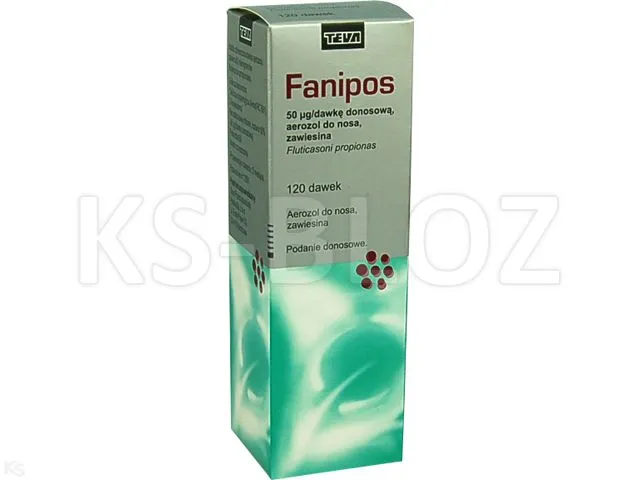
Table of Contents
PACKAGE LEAFLET: INFORMATION FOR THE USER
Fanipos, 50 µg/dose nasal spray, suspension
Fluticasone propionate
Please read the entire leaflet carefully before using the medicine, as it contains
important information for the patient.
- Keep this leaflet for future reference.
- If you have any questions, consult your doctor or pharmacist.
- This medicine has been prescribed for a specific individual. Do not share it with others. The medicine may harm someone else, even if their symptoms are the same.
- If you experience any adverse effects, including those not listed in this leaflet, inform your doctor or pharmacist. See section 4.
Table of contents:
- What Fanipos is and what it is used for
- Important information before using Fanipos
- How to use Fanipos
- Possible side effects
- How to store Fanipos
- Contents of the pack and other information
1. What Fanipos is and what it is used for
This medicine is called Fanipos (referred to as Fanipos in this leaflet). Each dose contains 50 micrograms of the active substance, fluticasone propionate. Fluticasone propionate belongs to a group of medicines called corticosteroids.
Fanipos has anti-inflammatory properties. When administered into the nose, it reduces swelling and irritation. It is used for the prevention and treatment of seasonal allergic rhinitis (e.g. hay fever) and perennial rhinitis (e.g. stuffy nose, nasal discharge, sneezing and itching caused by house dust mites or animal dander from animals such as cats or dogs). It can be used in adults and children aged 4 years and older.
2. Important information before using Fanipos
When not to use Fanipos
- if the patient is allergic to fluticasone propionate or to any of the other ingredients of this medicine (listed in section 6).
Warnings and precautions
Before starting to use Fanipos, discuss this with your doctor or pharmacist:
- if the patient has had nasal surgery;
- if the patient currently has or has recently had a nasal infection;
- if the patient currently has or has recently had an untreated infection, tuberculosis, or herpes eye infection;
- if the patient has recently received steroid medicines by injection or is currently taking oral steroid medicines for a prolonged period.
Fanipos may affect the body's ability to produce hormones, especially if used at doses higher than recommended for a prolonged period. In such cases, the doctor may consider additional corticosteroid treatment during periods of stress, after serious injury, or before planned surgery.
Treatment with Fanipos usually controls seasonal allergic rhinitis (hay fever); however, if exposed to very high concentrations of pollen, additional treatment may be needed to manage other symptoms such as eye itching. In such cases, consult your doctor.
If the patient experiences blurred vision or other visual disturbances, contact a doctor.
Children and adolescents
Fanipos nasal aerosol may have systemic effects, including growth retardation in children and adolescents, and less frequently, psychiatric symptoms or behavioral changes such as psychomotor hyperactivity, sleep disorders, anxiety, depression, or aggression (especially in children).
Other medicines and Fanipos
Tell your doctor about all medicines the patient is currently taking or has recently taken, as well as any medicines the patient plans to take.
Some medicines may affect the action of Fanipos. In particular, inform your doctor or pharmacist if the patient is taking:
- any medicines used to treat fungal infections (e.g. ketoconazole);
- some medicines may increase the effect of Fanipos, and the doctor may wish to closely monitor the patient taking such medicines (including certain HIV medicines: ritonavir, cobicistat).
Pregnancy and breastfeeding
If the patient is pregnant or breastfeeding, suspects she may be pregnant, or is planning to have a baby, she should consult her doctor or pharmacist before using this medicine.
Driving and using machines
This medicine has no effect or has a negligible effect on the ability to drive and operate machinery.
Fanipos contains benzalkonium chloride solution
This medicine contains 40 micrograms of benzalkonium chloride solution in each delivered dose.
Benzalkonium chloride may cause irritation or swelling inside the nose, especially if used for a prolonged period.
3. How to use Fanipos
This medicine should always be used exactly as directed by a doctor or pharmacist. If in doubt,
consult a doctor or pharmacist.
Recommended dose
Adults (including elderly patients) and children aged 12 years and older
At the start of treatment with Fanipos, the usual dose is two sprays into each nostril once daily, preferably in the morning. The doctor may recommend up to a maximum of two sprays into each nostril twice daily.
Once symptoms are under control, the doctor may recommend reducing the dose to one spray into each nostril once daily. If symptoms worsen while using this lower dose, the dose may be increased again to the initial dose.
Children aged 4 to 11 years
For children aged 4 to 11 years, the usual dose is one spray into each nostril once daily, preferably in the morning. The doctor may recommend up to a maximum of one spray into each nostril twice daily.
Fanipos is not indicated for children under 4 years of age.
The doctor will recommend using the lowest dose of Fanipos that provides effective symptom control.
The effect of the medicine may take several days to appear after starting treatment. Do not stop using the medicine unless advised by a doctor.
Do not use Fanipos at higher doses or more frequently than prescribed by a doctor. It is important not to use more doses than recommended.
If, despite using Fanipos, eye itching and tearing due to allergic rhinitis persist, inform your doctor. The doctor may recommend using another medicine to relieve eye symptoms.
Before using the nasal spray
Fanipos comes with a protective cap that covers and keeps the spray nozzle clean. The protective cap should be removed before using the medicine and replaced after use.
Before first use of the Fanipos nasal spray, the bottle must be prepared properly:
- Gently shake the bottle, then remove the protective cap.
- Hold the bottle upright, placing the thumb under the base of the bottle and the index and middle fingers on either side of the spray nozzle. Make sure the nozzle is not pointing directly at the patient.
- Press down on the nozzle with the fingers to release a spray (Fig.1).
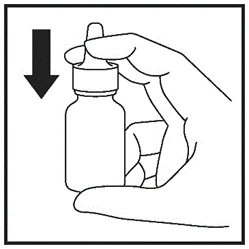
(Fig.1)
- Repeat steps 2 and 3 five more times – the spray is now ready for use.
If Fanipos has not been used for the past 7 days, it should be re-primed to ensure a fine mist is produced.
If, after attempting to prepare the bottle, the spray nozzle still does not work, this may indicate it is blocked. In such case, perform the following steps:
Cleaning the nasal spray bottle
- Remove the protective cap (Fig.2) and pull the white ring upwards to remove the spray nozzle (Fig.3).
| Protective cap | Fig. 2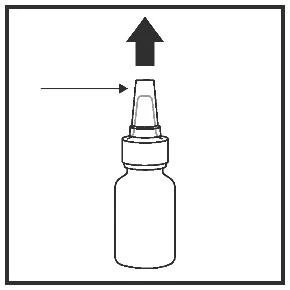 | Dispenser | Fig. 3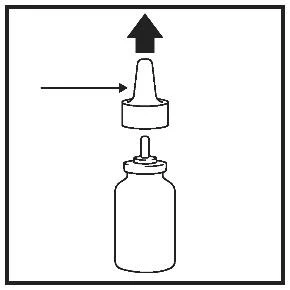 |
- Place the dosing pump and protective cap into warm water for several minutes, then rinse thoroughly under running water (Fig. 4 and 5).
| Protective cap | Fig. 4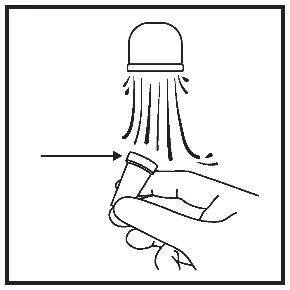 | Dosing dispenser | Fig. 5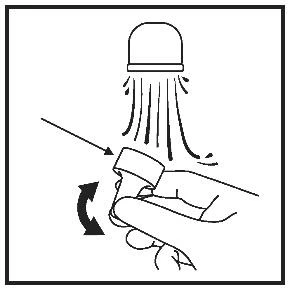 |
- Shake off excess water and leave the dispenser and protective cap in a warm (not hot) place to dry.
- Reinsert the dispenser into the bottle (Fig. 6).
| Central opening Pump Delivery system | Fig. 6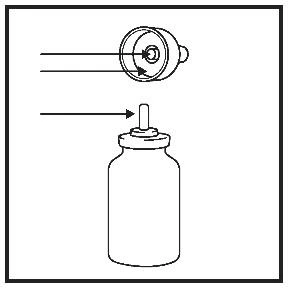 |
- Prepare the bottle for use, if necessary, by pressing the pump several times until a fine mist is obtained.
- The dispenser should be cleaned at least once a week to prevent blockage. If the dispenser becomes blocked, additional cleaning is required.
- NEVER attempt to unblock or enlarge the dispenser nozzle with a needle or any other sharp object, as this may damage the drug-dispersing mechanism.
Using the nasal aerosol
- Shake the bottle and remove the protective cap.
- Gently blow the nose.
- Close one nostril by pressing it with a finger and insert the dispenser tip into the other nostril (Fig. 7). Tilt the head slightly forward so that the bottle remains in a vertical position.
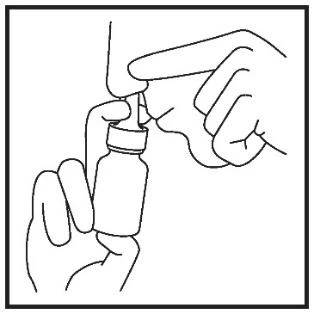
Fig. 7
- Inhale slowly through the nose while firmly pressing the dispenser ring with your fingers to deliver a dose of the aerosol into the nostril (Fig. 8).
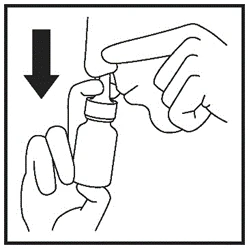
Fig. 8
- Exhale through the mouth. Repeat the steps described in point 4 to administer a second dose of the aerosol into the same nostril.
- Remove the dispenser tip from the nostril and exhale through the mouth.
- Repeat the steps described in points 3 to 6 to administer the medication into the other nostril (Fig. 9).
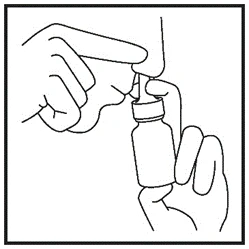
Fig. 9
After using the nasal aerosol
- Carefully wipe the dispenser with a clean tissue and replace the protective cap.
Use of a higher than recommended dose of Fanipos
It is important to use the medication as directed by the pharmacist or physician. The medication should be taken only at the doses prescribed by the physician; using a lower or higher than recommended dose may result in worsening of symptoms.
In case of accidental overdose of Fanipos, contact a physician immediately.
Please bring this leaflet and the Fanipos bottle to show to the physician.
Missed dose of Fanipos
Do not use a double dose to make up for a missed dose. If a dose of Fanipos has been missed at the scheduled time, take it as soon as remembered. However, if it is almost time for the next dose, wait and take the next dose at the regular time according to the dosing schedule.
Stopping treatment with Fanipos
Nasal symptoms may only improve after several days of starting treatment with Fanipos. Therefore, it is very important to use the medication regularly as prescribed by the physician and to continue treatment until the physician advises otherwise, even if the patient feels better.
If you have any further questions about the use of this medication, consult your physician or pharmacist.
4. Possible adverse reactions
Like all medicines, this medicine can cause adverse reactions, although not everyone will experience them.
If the patient is taking high doses of Fanipos, additional steroids may be required during periods of high stress, hospitalisation following a serious accident or injury, or prior to surgery.
Treatment with intranasal corticosteroids may affect the body's natural steroid production. The likelihood of such an effect is greater when high doses are used over a long period. Your doctor will help prevent this by prescribing the lowest steroid dose capable of adequately controlling symptoms.
Some adverse reactions are more serious than others. If any of the symptoms listed below occur,
stop using Fanipos immediately and contact your doctor as soon as possible:
- Severe allergic reactions characterised by sudden onset of rash, swelling (usually of the tongue, face or lips), or difficulty breathing.
- Bronchospasm (narrowing of the airways in the lungs, causing wheezing, laboured breathing, or coughing).
- Sudden drowsiness or dizziness (resulting in fainting or loss of consciousness).
Other adverse reactions
Very common: may affect more than 1 in 10 people
- Nosebleeds.
Common: may affect less than 1 in 10 people
- Headache.
- Unpleasant taste in the mouth, unpleasant smell in the nose.
- Dryness and irritation of the throat and nasal mucosa, and sneezing.
Very rare: may affect less than 1 in 10,000 people
- Glaucoma (increased intraocular pressure) and cataract (clouding of the eye lens), reported during long-term use.
- Perforation of the nasal septum (the wall dividing the nasal cavity) and ulceration of the nasal mucosa. This usually affects patients who have undergone nasal surgery.
Frequency not known: cannot be estimated from available data
- Blurred vision.
- Ulcers of the nasal mucosa.
Additional adverse reactions in children and adolescents
Children may experience slowed growth compared to others. Therefore, in children receiving long-term intranasal corticosteroid treatment, the doctor will need to monitor their growth regularly. The doctor will help prevent growth delay by prescribing the lowest steroid dose that provides adequate symptom control.
Reporting of adverse reactions
If any adverse reactions occur, including any not listed in this leaflet, inform your doctor or pharmacist. Adverse reactions can be reported directly to the Department of Monitoring Adverse Drug Reactions of the Office for Registration of Medicinal Products, Medical Devices and Biocidal Products
Al. Jerozolimskie 181 C, 02-222 Warsaw
Tel: +48 22 49 21 301
Fax: +48 22 49 21 309
Website: https://smz.ezdrowie.gov.pl
Adverse reactions can also be reported to the marketing authorisation holder.
Reporting adverse reactions helps to provide more information on the safety of this medicine.
5. How to store Fanipos medicine
Keep this medicine out of sight and reach of children.
Do not use this medicine after the expiry date stated on the bottle and the cardboard box after: EXP. The expiry date refers to the last day of the stated month.
Do not store above 25°C.
Period of use after first opening: 3 months.
On the label of the multi-dose container, you may record the date of first use.
Medicines must not be disposed of via wastewater. Ask your pharmacist how to dispose of medicines no longer required. This will help protect the environment.
6. Contents of the package and other information
What Fanipos contains
- The active substance is fluticasone propionate. Each nasal dose contains 50 micrograms of fluticasone propionate.
- The other ingredients are: glucose, dispersible cellulose, phenylethyl alcohol, benzalkonium chloride solution (40 micrograms/dose), polysorbate 80, purified water.
What Fanipos looks like and contents of the pack
Fanipos nasal aerosol is a medicine in the form of a white, opaque suspension contained in an amber glass bottle with a metering pump, packed in a cardboard box.
Each bottle contains a suspension providing 60, 120, 150 doses, and 240 doses (2 bottles containing 120 doses each).
Not all pack sizes may be marketed.
Marketing Authorisation Holder and Manufacturer
Marketing Authorisation Holder
Teva Pharmaceuticals Polska Sp. z o.o.
ul. Emilii Plater 53
00-113 Warsaw
tel.: (22) 345 93 00
Manufacturer
Teva Czech Industries s.r.o.
Ostravska 29
747 70 Opava – Komarov
Czech Republic
Teva Operations Poland Sp. z o.o.
ul. Mogilska 80
31-546 Kraków
This medicinal product is authorised in the Member States of the European Economic Area and in the United Kingdom (Northern Ireland) under the following names:
| Czech Republic | Nasofan, nasal spray |
| Germany | Flutica-TEVA 50 Microgram Nasal Spray, Suspension |
| Denmark | Fluticasonpropionat „Teva“ 50 microgram/dose, nasal spray, suspension |
| Spain | Fluticasona Teva 50 micrograms suspension for nasal spray |
| Finland | Nasofan 50 microg/dose nasal spray |
| Hungary | Flutirin nasal spray |
| Ireland | Nasofan Aqueous 50 microgram Nasal Spray Suspension |
| Norway | Flutikason Teva |
| Italy | Nasofan 50 micrograms Nasal Spray |
| Poland | Fanipos |
| Portugal | Fluticasona Nasofan 50 mcg Suspension for Nasal Spray |
| Slovakia | Nasofan 50 microgram nasal aerodispersion for nasal use |
| United Kingdom (Northern Ireland) | Nasofan Aqueous 50 microgram Nasal Spray |
QR code and URL