Etoposide kabi
Poland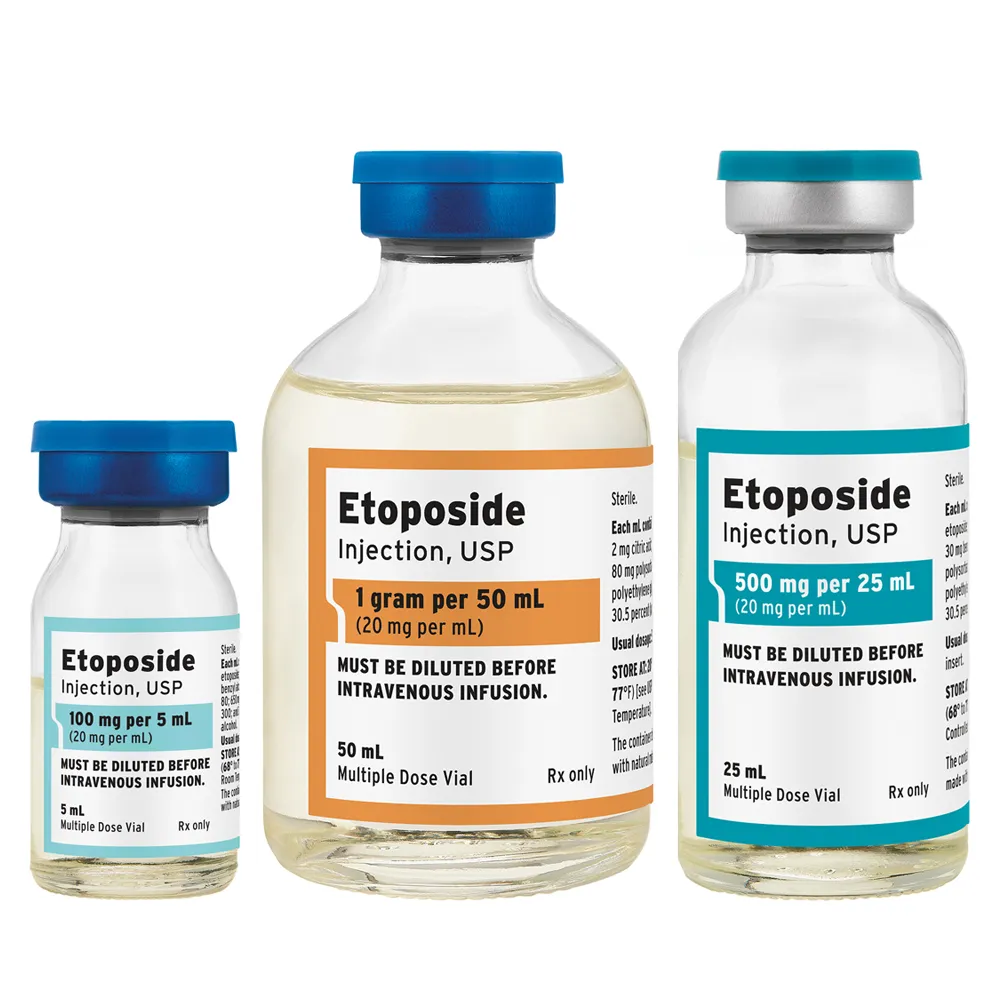
Table of Contents
- Package leaflet: Information for the user
- 1. What Etoposide Kabi is and what it is used for
- 2. Important information before using Etoposide Kabi
- 3. How to use Etoposide Kabi
- 4. Possible adverse effects
- 5. How to store Etoposide Kabi
- 6. Contents of the pack and other information
- The following information is intended solely for medical professionals:
Package leaflet: Information for the user
Etoposide Kabi, 20 mg/ml, concentrate for solution for infusion
Etoposidum
Read the entire leaflet carefully before using this medicine, because it contains
important information for the patient.
- Keep this leaflet so that it can be read again if necessary.
- If there are any questions, consult a doctor or nurse.
- If the patient experiences any adverse reactions, including any adverse reactions not listed in this leaflet, inform a doctor or nurse immediately. See section 4.
Table of contents of the leaflet
- What Etoposide Kabi is and what it is used for
- Important information before using Etoposide Kabi
- How to use Etoposide Kabi
- Possible side effects
- How to store Etoposide Kabi
- Contents of the package and other information
1. What Etoposide Kabi is and what it is used for
The name of the medicine is Etoposide Kabi, but it will also be referred to as etoposide throughout this leaflet.
It contains the active substance: etoposide. Etoposide belongs to a group of medicines called cytostatics,
which are used in the treatment of cancer.
Etoposide is used in adult patients for the treatment of certain tumours:
- testicular cancer,
- small cell lung cancer,
- blood cancer (acute myeloid leukaemia),
- lymphatic system tumour (Hodgkin's lymphoma, non-Hodgkin's lymphoma),
- reproductive system cancer (gestational trophoblastic disease and ovarian cancer).
Etoposide is used in children and adolescents for the treatment of certain tumours:
- blood cancer (acute myeloid leukaemia),
- lymphatic system tumour (Hodgkin's lymphoma, non-Hodgkin's lymphoma).
The exact reason why etoposide has been prescribed should be discussed with the doctor.
2. Important information before using Etoposide Kabi
When not to use Etoposide Kabi:
- if the patient is allergic to etoposide or to any of the other ingredients of this medicine (listed in section 6),
- if the patient is breastfeeding or planning to breastfeed,
- if the patient has recently been vaccinated with a live vaccine, including yellow fever vaccine.
If any of the above apply to the patient, or if there is any uncertainty,
consult a doctor.
Warnings and precautions
Before receiving etoposide, inform your doctor, pharmacist or nurse if:
- the patient has low levels of proteins called albumin in the blood,
- the patient has recently undergone radiotherapy or chemotherapy,
- the patient has any infection,
- the patient has liver or kidney problems.
Effective anticancer treatment may rapidly destroy a large number of cancer cells.
In very rare cases, this may lead to the release of harmful amounts of substances from these cells into the bloodstream.
As a result, liver, kidney, heart or blood function disorders may occur, which could be fatal if not treated.
To prevent this, the doctor will order regular blood tests to monitor levels of these substances during treatment with Etoposide Kabi.
This medicine may reduce the number of certain blood cells, which may increase the risk of infections or cause blood not to clot as effectively as it should in case of injury.
To ensure this does not happen, blood tests will be performed at the beginning of treatment and before each dose of the medicine.
If liver or kidney function is impaired, the doctor may also order regular blood tests to monitor them.
Etoposide Kabi and other medicines
Tell your doctor about all medicines currently used, recently used, or planned to be used.
This is particularly important if:
- taking warfarin (a medicine to prevent blood clots),
- taking cyclosporine (a medicine used to suppress the immune system),
- receiving treatment with cisplatin (a medicine used in cancer treatment),
- taking phenytoin or other medicines used to treat epilepsy,
- taking phenylbutazone, sodium salicylate or acetylsalicylic acid, or having recently received a live vaccine,
- taking any anthracyclines (medicines used in cancer treatment),
- taking any medicines with a mechanism of action similar to etoposide.
The alcohol content in this medicine may affect the action of other medicines. If the patient is taking other medicines,
they should consult a doctor or pharmacist.
Pregnancy, breastfeeding and fertility
If the patient is pregnant or breastfeeding, suspects she may be pregnant, or plans to have a child,
she should consult a doctor before using this medicine.
Pregnancy
Etoposide Kabi must not be used during pregnancy unless specifically prescribed by a doctor.
Breastfeeding
Breastfeeding must not be undertaken during treatment with etoposide.
Fertility
Both women and men of reproductive age should use effective contraceptive methods (e.g. barrier methods or condoms) during treatment and for at least
6 months after completion of treatment with Etoposide Kabi.
Men receiving etoposide treatment should not father a child during therapy and for 6 months after
treatment ends. In addition, men should seek advice before starting treatment regarding sperm storage.
Both women and men considering having children after completing treatment with Etoposide Kabi should discuss this with their doctor or nurse.
Driving and operating machinery
No studies on the effect of the medicine on the ability to drive and operate machinery have been conducted.
However, if fatigue, nausea, dizziness or drowsiness occur, these activities should be avoided until the matter is discussed with a doctor.
Etoposide Kabi contains ethanol, benzyl alcohol and polysorbate 80.
Ethanol
This medicine contains 241.4 mg of alcohol (ethanol) per 1 ml, equivalent to 24.14% w/v. The alcohol content in a 10.38 ml dose of this medicine is equivalent to 62.64 ml of beer or 25.06 ml of wine.
The alcohol in this medicine may affect children. Symptoms may include drowsiness and changes in behaviour. It may also affect their concentration and physical activity.
The amount of alcohol in this medicine may affect the ability to drive and operate machinery, as it may impair situational judgment and reaction speed.
If the patient has epilepsy or liver problems, they should consult a doctor or pharmacist before using this medicine.
If the patient is pregnant or breastfeeding, they should consult a doctor or pharmacist before using this medicine.
If the patient is alcohol-dependent, they should consult a doctor or pharmacist before using this medicine.
Since this medicine is usually administered slowly over 1 hour, the effect of alcohol may be reduced.
Benzyl alcohol
This medicine contains 30 mg of benzyl alcohol per 1 ml. Benzyl alcohol may cause allergic reactions.
Consult a doctor if the patient has liver or kidney disease. Large amounts of benzyl alcohol may accumulate in the body and cause adverse effects (so-called "metabolic acidosis").
Do not administer to young children (under 3 years of age) for longer than one week without a doctor's or pharmacist's instruction.
Administration of benzyl alcohol to young children is associated with a risk of severe adverse reactions, including breathing problems (so-called "respiratory failure syndrome"). Do not administer to newborns (up to 4 weeks of age) without a doctor's instruction.
Polysorbate 80
Etoposide contains polysorbate 80. In premature infants who received an injection of vitamin E containing polysorbate 80, a life-threatening syndrome has been reported, characterized by liver and kidney failure, reduced respiratory function, decreased platelet count and abdominal distension.
3. How to use Etoposide Kabi
Etoposide Kabi will be administered by a doctor or nurse. The medicine will be given by slow
intravenous infusion. This may take from 30 to 60 minutes.
The dose will be calculated by the doctor for each individual patient. The typical dose, expressed
in terms of etoposide, is 50 to 100 mg/m^2 of body surface area, daily for 5 consecutive days, or 100 to
120 mg/m^2 on days 1, 3, and 5. This treatment cycle may be repeated depending on blood test results,
but not sooner than 21 days after completion of the first cycle.
In children treated for blood cancer or lymphatic system cancer, the dose used is 75 to
150 mg/m^2 of body surface area, daily for 2 to 5 days.
Sometimes the doctor may prescribe a different dose, especially if you are currently receiving or
have previously received another type of cancer treatment, or if you have kidney problems.
Use of more than the recommended dose of Etoposide Kabi
Since the medicine is administered by a doctor or nurse, overdose is unlikely.
However, if this occurs, the doctor will treat any resulting symptoms.
If you have any further doubts regarding the use of this medicine, consult your
doctor or nurse.
4. Possible adverse effects
Like all medicines, this medicine can cause adverse effects, although not everyone experiences them.
If any of the following symptoms occur, inform your doctor or nurse immediately:
swelling of the tongue or throat, difficulty breathing, rapid heartbeat, sudden redness of the skin or rash.
These may be signs of a severe allergic reaction.
Severe liver, kidney or heart damage due to a complication called tumour lysis syndrome,
caused by the release into the bloodstream of harmful amounts of substances from tumour cells,
has been observed occasionally when etoposide was administered together with other anticancer drugs.
Other adverse effects that may occur during treatment with etoposide include:
Very common (may affect more than 1 in 10 people):
- blood disorders (for this reason, blood tests will be performed between treatment cycles),
- temporary hair loss,
- nausea and vomiting,
- abdominal pain,
- loss of appetite,
- changes in skin colour (discoloration),
- constipation,
- weakness (asthenia),
- general malaise,
- liver damage (hepatotoxicity),
- increased liver enzyme activity,
- jaundice (elevated bilirubin levels).
Common (may affect up to 1 in 10 people):
- acute leukaemia,
- irregular heartbeat (arrhythmia) or heart attack (myocardial infarction),
- dizziness,
- diarrhoea,
- reactions at the injection site,
- severe allergic reactions,
- high blood pressure,
- low blood pressure,
- cold sores, mouth or throat ulcers,
- skin problems such as itching or rash,
- phlebitis (vein inflammation),
- infection.
Uncommon (may affect up to 1 in 100 people):
- tingling or numbness in hands and feet,
- bleeding.
Rare (may affect up to 1 in 1000 people):
- gastroesophageal reflux,
- sudden redness of the skin,
- difficulty swallowing,
- altered taste sensation,
- severe allergic reactions,
- seizures (epileptic fits),
- fever,
- drowsiness or fatigue,
- breathing difficulties,
- transient loss of vision,
- severe skin and/or mucous membrane reactions, including painful blisters and fever, as well as extensive peeling of the outer layer of skin (Stevens-Johnson syndrome and toxic epidermal necrolysis),
- sunburn-like rash, which may occur on skin previously exposed to radiotherapy and may be severe (radiation recall dermatitis).
Frequency not known (frequency cannot be estimated from available data):
- tumour lysis syndrome (a complication resulting from the release into the blood of substances from treated tumour cells),
- swelling of the face and tongue,
- infertility,
- breathing difficulties.
Reporting of adverse effects
If any adverse effects occur, including any not listed in this leaflet, tell your doctor, pharmacist or nurse.
Adverse effects can be reported directly to the Department of Monitoring Adverse Drug Reactions,
Office for Registration of Medicinal Products, Medical Devices and Biocidal Products
Al. Jerozolimskie 181C
02-222 Warsaw
Phone: +48 22 49 21 301
Fax: +48 22 49 21 309
Website: https://smz.ezdrowie.gov.pl
Adverse effects can also be reported to the marketing authorisation holder.
Reporting adverse effects helps provide more information on the safety of the medicine.
5. How to store Etoposide Kabi
The medicine should be stored out of the sight and reach of children.
Do not use this medicine after the expiry date stated on the label after 'EXP'. The expiry date refers to the last day of the stated month.
There are no special storage temperature requirements for this medicine. Do not freeze. Store in the outer packaging to protect from light.
Do not store the diluted medicine in the refrigerator (2°C to 8°C), as this may lead to precipitation. Any solution showing signs of precipitation must not be used.
After dilution
The diluted concentrate solution at concentrations of 0.2 mg/ml or 0.4 mg/ml remains physically and chemically stable for up to 24 hours at temperatures from 15°C to 25°C.
From a microbiological standpoint, the diluted medicine should be used immediately. If the medicine is not used immediately, the user is responsible for the storage period and conditions. This period should not exceed 12 hours at temperatures from 15°C to 25°C, unless dilution was carried out under controlled and validated aseptic conditions.
Medicines must not be disposed of via wastewater or household waste. Ask your pharmacist how to dispose of medicines no longer in use. This will help protect the environment.
6. Contents of the pack and other information
What Etoposide Kabi contains
The active substance is etoposide. Each 1 ml of concentrate for solution for infusion contains
20 mg of etoposide.
Each 5 ml vial of concentrate contains 100 mg of etoposide.
Each 10 ml vial of concentrate contains 200 mg of etoposide.
Each 25 ml vial of concentrate contains 500 mg of etoposide.
Each 50 ml vial of concentrate contains 1000 mg of etoposide.
The other ingredients (excipients) are: macrogol 300, polysorbate 80, benzyl alcohol (E
1519), anhydrous ethanol and anhydrous citric acid.
What Etoposide Kabi looks like and contents of the pack
Etoposide Kabi is a clear, light yellow to pale yellow solution in 5 ml, 10 ml, 30 ml and 50 ml colourless type I glass vials closed with a bromobutyl rubber stopper with an aluminium seal and a PP "flip-off" cap (in green, blue, red and yellow, respectively).
Pack sizes: Etoposide Kabi is available in packs containing 1 vial of 5 ml,
10 ml, 25 ml or 50 ml.
Not all pack sizes may be marketed.
Marketing Authorisation Holder and Manufacturer
Marketing Authorisation Holder
Fresenius Kabi Polska Sp. z o.o.
Al. Jerozolimskie 134
02-305 Warsaw
Manufacturer
Fresenius Kabi Deutschland GmbH
Pfingstweide 53
61169 Friedberg
Germany
For any further information, please contact the Marketing Authorisation Holder:
Fresenius Kabi Polska Sp. z o.o.
Al. Jerozolimskie 134
02-305 Warsaw
tel.: +48 22 345 67 89
This medicinal product is authorised in the member countries of the European Economic Area under the following names.
| Austria | Etoposide Kabi 20 mg/ml concentrate for solution for infusion |
| Belgium | Etoposide Fresenius Kabi 20 mg/ml concentrate for solution for infusion |
| Denmark | Etoposide Fresenius Kabi |
| Estonia | Etoposide Kabi 20 mg/ml |
| Netherlands | Etoposide Fresenius Kabi 20 mg/ml concentrate for solution for infusion |
| Finland | Etoposide Fresenius Kabi 20 mg/ml infusion concentrate, solution for infusion |
| France | Etoposide Kabi 20 mg/ml solution to be diluted for infusion |
| Hungary | Etoposide Kabi 20 mg/ml concentrate for infusion solution |
| Ireland | Etoposide 20 mg/ml concentrate for solution for infusion |
| Latvia | Etoposide Kabi 20 mg/ml concentrate for infusion solution |
| Lithuania | Etoposide Kabi 20 mg/ml concentrate for infusion solution |
| Malta | Etoposide 20 mg/ml concentrate for solution for infusion |
| Norway | Etoposide Fresenius Kabi |
| Poland | Etoposide Kabi |
| Portugal | Etoposide Kabi |
| Romania | Etoposide Kabi 20 mg/ml concentrate for perfusion solution |
| Slovakia | Etoposide Kabi 20 mg/ml infusion concentrate |
| Slovenia | Etoposide Kabi 20 mg/ml concentrate for solution for infusion |
| Sweden | Etoposide Fresenius Kabi 20 mg/ml concentrate for infusion, solution |
| United Kingdom | Etoposide 20 mg/ml concentrate for solution for infusion. |
The following information is intended solely for medical professionals:
Cytotoxic medicinal product.
Instructions for dilution, storage and disposal of etoposide
Dilution
Etoposide Kabi, 20 mg/mL concentrate for solution for infusion, must be diluted
immediately before use in 5% glucose solution (50 mg/mL) or 0.9% sodium chloride solution
(9 mg/mL) to obtain a final concentration of 0.2 mg/mL to 0.4 mg/mL.
Precipitation of etoposide may occur at higher concentrations.
Etoposide should be administered by slow intravenous infusion (usually lasting from 30 to 60 minutes).
ETOPORSIDE MUST NOT BE ADMINISTERED BY RAPID INTRAVENOUS INJECTION.
Storage after preparation of the solution
After dilution
The diluted concentrate solution at a concentration of 0.2 mg/mL or 0.4 mg/mL maintains physical
and chemical stability for up to 24 hours at a temperature of 15°C to 25°C.
From a microbiological standpoint, the diluted medicinal product should be used immediately.
If not used immediately, the responsibility for storage conditions and duration lies with the user.
This period should not exceed 12 hours at a temperature of 15°C to 25°C, unless the dilution was carried out under controlled and validated aseptic conditions.
Handling and disposal of the medicinal product and its residues
Appropriate procedures for handling cytotoxic anticancer medicinal products and disposal of their residues must be followed:
Personnel should be trained in the preparation of the medicinal product.
Pregnant women should not handle this medicinal product.
Personnel handling the medicinal product during dilution should wear appropriate protective clothing, including a mask, eye protection and gloves.
All administration or cleaning materials, including gloves, should be placed in high-risk waste bags for high-temperature incineration.
- In case of accidental contact of the medicinal product with skin or eyes, immediately rinse thoroughly with plenty of water.
Disposal of residues
Any unused medicinal product or waste material should be disposed of in accordance with local regulations.