Estreva
Poland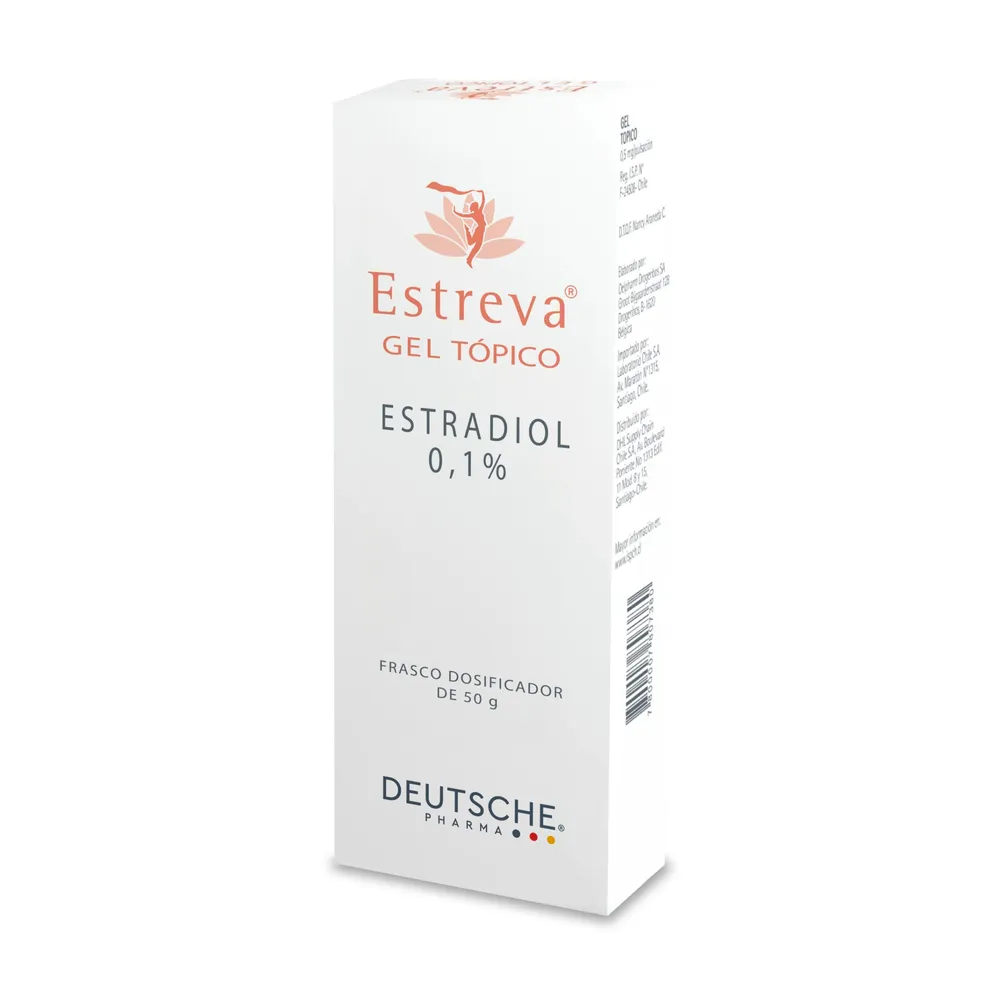
Table of Contents
Package leaflet: Information for the user
Warning! Keep the leaflet! Information on the immediate packaging is in a foreign language.
Estreva, 0.1% gel
Estradiolum
Please read the entire leaflet carefully before using the medicine, as it contains
important information for the patient.
- Keep this leaflet, so that you can read it again if necessary.
- If you have any doubts, consult your doctor or pharmacist.
- This medicine has been prescribed for a specific individual. Do not pass it on to others. The medicine may harm another person, even if their symptoms are the same.
- If the patient experiences any adverse reactions, including any not listed in this leaflet, inform your doctor or pharmacist. See section 4.
Table of contents:
- What Estreva is and what it is used for
- Important information before using Estreva
- How to use Estreva
- Possible side effects
- How to store Estreva
- Contents of the pack and other information
1. What Estreva is and what it is used for
The medicine contains synthetic 17β-estradiol, which is chemically and biologically identical to endogenous human estradiol. Estradiol belongs to the group of sex hormones known as estrogens.
Estreva is used in hormone replacement therapy (HRT) for the treatment of estrogen deficiency symptoms in postmenopausal women.
Experience with the use of this preparation in women over 65 years of age is limited.
2. Important information before using Estreva
When not to use Estreva:
- if the patient has a hypersensitivity to estradiol or any of the other ingredients of this medicine (listed in section 6);
- if the patient currently has or previously had breast cancer, or if breast cancer is suspected;
- if the patient currently has a malignant estrogen-dependent tumor, such as cancer of the uterine lining (endometrium), or if such a tumor is suspected;
- if there are undiagnosed vaginal bleeding;
- if there is untreated endometrial hyperplasia;
- if the patient has or has previously had venous thromboembolic disease (deep vein thrombosis, pulmonary embolism);
- if the patient has blood clotting disorders (such as protein C, protein S or antithrombin deficiency);
- if the patient currently has or recently had an arterial thromboembolic disease, such as myocardial infarction, stroke, or angina pectoris;
- if the patient has or has previously had liver disease and liver function tests have not returned to normal;
- if the patient has a rare inherited blood disorder called porphyria.
If any of the above conditions occurs for the first time during treatment with
Estreva, treatment must be stopped immediately and the patient should contact her doctor without delay.
Warnings and precautions
Before starting treatment with Estreva, the patient should discuss this with her doctor or pharmacist.
Special precautions
HRT should only be used to treat menopausal symptoms that negatively affect
quality of life.
The patient should have regular check-ups (at least once a year).
If the patient notices any changes in her breasts during treatment, she should immediately
inform her doctor.
Women who still have their uterus should also take a progestagen for at least 12 days of each cycle.
If any of the following conditions is currently present, has occurred in the past, and/or worsened during pregnancy or previous hormonal treatment, the patient should remain under close medical supervision. It should be considered that these conditions may recur or worsen during treatment with Estreva; in particular:
- uterine fibroids
- endometriosis (endometrial tissue growing outside the uterus) or previous cases of excessive endometrial growth (endometrial hyperplasia)
- history of thromboembolic disorders or presence of risk factors increasing their likelihood (see below)
- risk factors for estrogen-dependent cancer, e.g. first-degree relative with breast cancer
- hypertension
- liver function disorders (e.g. hepatic adenoma)
- diabetes, with or without vascular complications
- gallstones
- migraine or severe headaches
- systemic autoimmune disease affecting multiple organs (systemic lupus erythematosus)
- epilepsy
- asthma
- otosclerosis (ear disease leading to deafness)
- hereditary or acquired angioedema.
The doctor will decide to discontinue treatment if contraindications occur, as well as in
the following situations:
- yellowing of the skin or whites of the eyes (jaundice) or worsening liver function disorders
- significant increase in blood pressure
- new onset of migraine headache
- pregnancy
- swelling of the face, tongue and/or throat and/or difficulty swallowing or urticaria, combined with breathing difficulties, suggesting angioedema.
HRT and malignant tumors
Excessive thickening of the uterine lining (endometrial hyperplasia) and malignant tumor of the
endometrium (endometrial cancer)
Using estrogen-only HRT increases the risk of excessive thickening of the uterine lining (endometrial hyperplasia) and malignant tumor of the endometrium (endometrial cancer). Additional use of a progestagen for at least 12 days in each 28-day cycle protects the patient against this increased risk. The doctor will prescribe progesterone separately if the patient still has her uterus. If the uterus has been removed (hysterectomy), the patient should discuss with her doctor whether treatment with this medicine without progesterone is safe.
In women who still have their uterus and do not use HRT, endometrial cancer is diagnosed in an average of 5 out of 1,000 women aged 50 to 65 years.
In women aged 50 to 65 years with an intact uterus who use estrogen-only HRT, endometrial cancer is diagnosed in 10–60 women per 1,000 (i.e. 5 to 55 additional cases), depending on the dose and duration of treatment.
Breast cancer
Data confirm that taking hormone replacement therapy (HRT) in the form of combined estrogen-progestagen or estrogen-only increases the risk of developing breast cancer. The additional risk depends on how long the patient uses HRT. This additional risk becomes apparent after 3 years of HRT use. After stopping HRT, the additional risk gradually decreases over time, but the risk may persist for 10 years or longer if HRT lasted more than 5 years.
Comparison
In women aged 50 to 54 years who do not use HRT, breast cancer will be diagnosed in an average of 13 to 17 out of 1,000 women over 5 years.
In women aged 50 years who start a 5-year course of estrogen-only HRT, the number of cases will be 16–17 per 1,000 women (i.e. 0 to 3 additional cases).
In women aged 50 years who start a 5-year course of combined estrogen-progestagen HRT, the number of cases will be 21 per 1,000 women (i.e. 4 to 8 additional cases).
In women aged 50 to 59 years who do not use HRT, breast cancer will be diagnosed in an average of 27 out of 1,000 women over 10 years.
In women aged 50 years who start a 10-year course of estrogen-only HRT, the number of cases will be 34 per 1,000 women (i.e. 7 additional cases).
In women aged 50 years who start a 10-year course of combined estrogen-progestagen HRT, the number of cases will be 48 per 1,000 women (i.e. 21 additional cases).
- Breast examinations should be performed regularly. The patient should contact her doctor if any changes occur, such as:
- skin wrinkling,
- changes in the nipple,
- any visible or palpable lumps.
Ovarian cancer
Ovarian cancer is rare – significantly rarer than breast cancer.
Using HRT containing only estrogens or combined estrogen-progestagen therapy is associated with a slightly increased risk of ovarian cancer.
The risk of ovarian cancer depends on age. For example, in women aged 50 to 54 years who do not use HRT, ovarian cancer will be diagnosed in about 2 out of 2,000 women over 5 years. In women who used HRT for 5 years, it will occur in about 3 out of 2,000 users (i.e. about 1 additional case).
Effects of HRT on the heart and circulation
Venous thrombosis (blood clots)
The risk of venous thrombosis is approximately 1.3 to 3 times higher in women using HRT, especially during the first year of treatment, compared to women who do not use HRT. If a clot travels to the lungs, it may cause chest pain, shortness of breath, fainting, or even death.
The likelihood of venous thrombosis increases with age and depending on the presence of the following factors. The patient should inform her doctor if any of the following situations apply:
- the patient cannot walk for a prolonged period due to major surgery, injury, or illness (see also section 3 "If surgery is required"),
- the patient is obese (Body Mass Index, BMI >30 kg/m²),
- the patient has blood clotting disorders and requires long-term anticoagulant therapy,
- if any close relative has had a blood clot in the leg, lung, or another organ,
- the patient is pregnant and/or in the postpartum period,
- the patient has systemic lupus erythematosus (SLE),
- the patient has cancer.
Comparison
In women aged 50 to 59 years who do not use HRT, venous thrombosis will likely occur in an average of 4–7 out of 1,000 over 5 years. In women aged 50 to 59 years who used combined estrogen-progestagen HRT for more than 5 years, venous thrombosis will occur in 9–12 out of 1,000 (i.e. 5 additional cases). In women aged 50 to 59 years with a hysterectomy who used estrogen-only HRT for 5 years, thrombosis will occur in 5–8 out of 1,000 (i.e. 1 additional case).
Coronary heart disease
There is no scientific evidence that HRT prevents myocardial infarction. Women over 60 years of age who use combined estrogen-progestagen HRT have a slightly higher risk of heart disease than women who do not use HRT.
In women who have had a hysterectomy and use estrogen-only therapy, there is no increased risk of heart disease.
Stroke
The risk of ischemic stroke is approximately 1.5 times higher in women using HRT than in those who do not. The number of additional stroke cases due to HRT use increases with age.
Comparison
In women aged 50 to 59 years who do not use HRT, ischemic stroke will occur in an average of 8 out of 1,000 over 5 years. Among women aged 50–59 years using HRT, 11 cases per 1,000 will occur over 5 years (i.e. 3 additional cases).
Other conditions
Estrogens may cause fluid retention; therefore, patients with heart or kidney dysfunction should be closely monitored. This is particularly important in patients with end-stage renal disease, as higher concentrations of the active substances in Estreva may be expected.
Women with previously diagnosed hypertriglyceridemia should be closely monitored during estrogen therapy, as in rare cases, significant increases in serum triglyceride levels leading to pancreatitis have been reported.
Estrogens increase the levels of thyroid-binding globulin (TBG), leading to increased total circulating thyroxine. T3 resin uptake is reduced, reflecting increased TBG concentration. Free T4 and free T3 levels remain unchanged. Levels of other binding proteins in plasma may also increase, such as corticosteroid-binding globulin or sex hormone-binding globulin, leading to increased circulating levels of corticosteroids and sex hormones, respectively. However, free and biologically active hormone levels remain unchanged. Levels of other plasma proteins (angiotensinogen/renin substrate, alpha-1-antitrypsin, ceruloplasmin) may also increase.
HRT does not improve cognitive function (memory loss, perception disorders, attention). There is evidence of an increased risk of dementia in women who start HRT after age 65.
Children
Estradiol in the form of a spray or gel may be accidentally transferred from the patient's skin to others. Contact with other people, especially children, should be avoided at the application site, and the area should be covered after the spray (gel) has dried, if necessary. If a child comes into contact with the area of skin where estradiol has been applied, the child's skin should be washed immediately with soap and water. Due to estradiol transfer, young children may show unexpected signs of sexual development (e.g. breast budding). In most cases, these symptoms resolve once the child is no longer exposed to estradiol spray or gel.
If any signs or symptoms of puberty (breast development or other sexual changes) are observed in a child who may have been accidentally exposed to estradiol in the form of a spray or gel, contact a doctor.
Estreva and other medicines
The patient should inform her doctor about all medicines currently or recently taken, as well as any medicines she plans to use.
This includes the following medicines:
- medicines used to treat epilepsy (e.g. phenobarbital, phenytoin, carbamazepine),
- medicines used to treat tuberculosis (e.g. rifampicin, rifabutin),
- medicines used to treat HIV infection (such as nevirapine, efavirenz, ritonavir, nelfinavir),
- herbal preparations containing St. John's wort ( Hypericum perforatum ).
Some medicines may affect the action of Estreva, which may lead to irregular bleeding. These include:
- medicines used to treat hepatitis C virus (HCV) (such as ombitasvir/paritaprevir/ritonavir with or without dasabuvir, or glecaprevir/pibrentasvir regimens), which may increase liver function test parameters in blood (elevated liver enzyme AlAT activity) in women using combined hormonal contraceptives containing ethinylestradiol. Estreva contains estradiol instead of ethinylestradiol. It is unknown whether elevated AlAT liver enzyme activity may occur when using Estreva concurrently with such HCV combination therapies. The doctor will provide appropriate advice.
Pregnancy and breastfeeding
If the patient is pregnant or breastfeeding, suspects she may be pregnant, or plans to become pregnant, she should consult her doctor or pharmacist before using this medicine.
Estreva must not be used during pregnancy or breastfeeding.
If the patient becomes pregnant while taking this medicine, treatment should be discontinued immediately and she should consult her doctor without delay.
Unintentional use of the medicine during pregnancy is not an indication for terminating the pregnancy.
Before using this medicine, please consult your doctor or pharmacist.
Driving and operating machinery
No studies on the effects of Estreva on the ability to drive or operate machinery have been conducted.
Important information about some ingredients of Estreva
Estreva contains propylene glycol, which may cause skin irritation.
3. How to use Estreva
This medicine should always be used exactly as your doctor has instructed. If in doubt, consult your doctor or pharmacist.
Do not allow other people to touch the area of skin where the spray or gel has been applied until it has dried completely; cover with clothing if necessary.
Dosage
Each pump actuation (dose) delivers 0.5 g of gel.
The usual dose is 1.5 g of gel (i.e. 3 doses) once daily for 24 to 28 days.
At the recommended daily dose of 1.5 g, a 50 g container will last for one month.
The gel should be applied once daily, in the morning or evening, preferably after bathing.
The dose may be adjusted according to individual needs.
Individual daily doses may range from 0.5 g to 3 g of gel.
When initiating and continuing treatment for menopausal symptoms, it is recommended to use the lowest effective dose for the shortest possible duration.
Women with an intact uterus should receive a progestagen in combination with Estreva for at least 12 to 14 days of each cycle to prevent estrogen-induced endometrial hyperplasia.
Adding a progestagen is not recommended in women who have undergone hysterectomy, unless endometriosis has been previously diagnosed.
Two therapeutic regimens may be used:
- Cyclic regimen: Estreva is used for 24 to 28 days followed by a 2- to 7-day treatment-free interval. In women with an intact uterus, a progestagen should be administered for at least the last 12 days of estrogen treatment. Withdrawal bleeding may occur during the treatment-free period.
- Continuous regimen: Estreva is used continuously without interruption. In women with an intact uterus, a progestagen should be administered for at least 12 days per month. Withdrawal bleeding may occur during the progestagen-free interval.
Continuous treatment may be recommended if severe estrogen-deficiency symptoms recur during the treatment-free interval of cyclic therapy.
How to apply Estreva gel, 0.1%?
1/ Remove the cap.
2/ Holding the container in one hand, place the other hand under the nozzle and press the pump to dispense a dose of gel. At first use, it may be necessary to press the pump several times to prime the device and obtain the first dose. This initial dose may not be accurate and should be discarded.
3/ Allow the pump nozzle to return to its original position between actuations.
The application area should be approximately equivalent to the surface of two palms. The patient should apply the gel to clean, dry, unbroken skin on the abdomen, thighs, arms, or shoulders, preferably after bathing in the morning or evening. The gel must not be applied to the breasts or mucous membranes. Avoid contact with the eyes. The gel does not need to be rubbed into the skin, but it is recommended to leave it on the skin for approximately 2 minutes before dressing.
The gel does not stain clothing. Hands should be washed after applying the gel.
Overdose of Estreva
If more than the recommended dose of Estreva is used, symptoms such as nausea, vomiting, and withdrawal bleeding may occur.
Missed dose of Estreva
If a patient forgets to apply the gel on a given day, it should be applied as soon as possible, and treatment should continue with the prescribed dose.
Do not use a double dose to make up for a missed dose.
If the gel has not been applied for several days, irregular bleeding or spotting may occur.
Discontinuation of Estreva
After stopping treatment, menopausal symptoms may reappear.
If you have any further questions about the use of this medicine, consult your doctor or pharmacist.
4. Possible adverse effects
Like all medicines, this medicine can cause adverse effects, although not everybody will experience them.
Common adverse effects: (≥1/100 to < 1/10): increased or decreased body weight, headache, abdominal pain, nausea, rash, itching, bleeding or spotting from the uterus or vagina.
Uncommon adverse effects: (≥1/1000 to < 1/100): hypersensitivity reactions, depressive mood, dizziness, visual disturbances, palpitations (pounding heart), dyspepsia, erythema nodosum, urticaria, breast pain, breast tenderness, swelling.
Rare adverse effects: (≥1/10,000 to < 1/1000): nervousness, decreased libido or increased libido, migraine, intolerance to contact lenses, bloating and vomiting, hirsutism, acne, muscle cramps, painful menstruation, vaginal discharge, premenstrual syndrome, breast enlargement, fatigue.
Reporting of adverse effects
If any adverse effects occur, including any adverse effects not listed in this leaflet, inform your doctor or pharmacist. Adverse effects can be reported directly to the Department of Monitoring Adverse Drug Reactions at the Office for Registration of Medicinal Products, Medical Devices and Biocidal Products, Al. Jerozolimskie 181C, 02-222 Warsaw, Tel: +48 22 49 21 301, Fax: +48 22 49 21 309, website: https://smz.ezdrowie.gov.pl.
By reporting adverse effects, additional information on the safety of the medicine can be collected.
5. How to store Estreva
Keep this medicine out of sight and reach of children.
Do not use this medicine after the expiry date stated on the packaging. The expiry date refers to the last day of the stated month.
No special storage instructions apply.
Do not use this medicine if you notice any signs of deterioration.
Medicines should not be disposed of via wastewater or household waste. Ask your pharmacist how to dispose of medicines no longer in use. This will help protect the environment.
6. Contents of the pack and other information
What the medicine Estreva contains
The active substance is estradiol. 1 g of gel contains 1.0325 mg of estradiol hemihydrate, which
corresponds to 1.0000 mg of anhydrous estradiol.
Each dose delivers 0.5 g of gel, i.e. 0.5 mg of estradiol (as 0.516 mg of estradiol hemihydrate).
The other ingredients are: ethanol, purified water, propylene glycol, diethylene glycol monoethyl ether,
carbomer, tromethamine, disodium edetate.
What Estreva looks like and contents of the pack
The medicine is a clear, odourless gel.
The pack contains a bottle with 50 g of gel.
For further information, please contact the responsible entity or the parallel importer.
Responsible entity in Portugal, country of export:
Theramex Ireland Limited
3 Floor, Kilmore House
Park Lane, Spencer Dock
D01 YE64 Dublin 1
Ireland
Manufacturer:
Delpharm Drogenbos SA, Groot Bijgaardenstraat 128, B-1620 Drogenbos, Belgium
Teva Pharmaceuticals Europe B.V., Swensweg 5, 2031 GA Haarlem, The Netherlands
Parallel importer:
InPharm Sp. z o.o.
ul. Strumykowa 28/11
03-138 Warsaw
Poland
Repackaged in:
InPharm Sp. z o.o. Services sp. k.
ul. Chełmżyńska 249
04-458 Warsaw
Poland
Marketing authorisation number in Portugal, country of export: 2902880
Parallel import licence number: 178/23