Erwinase
Poland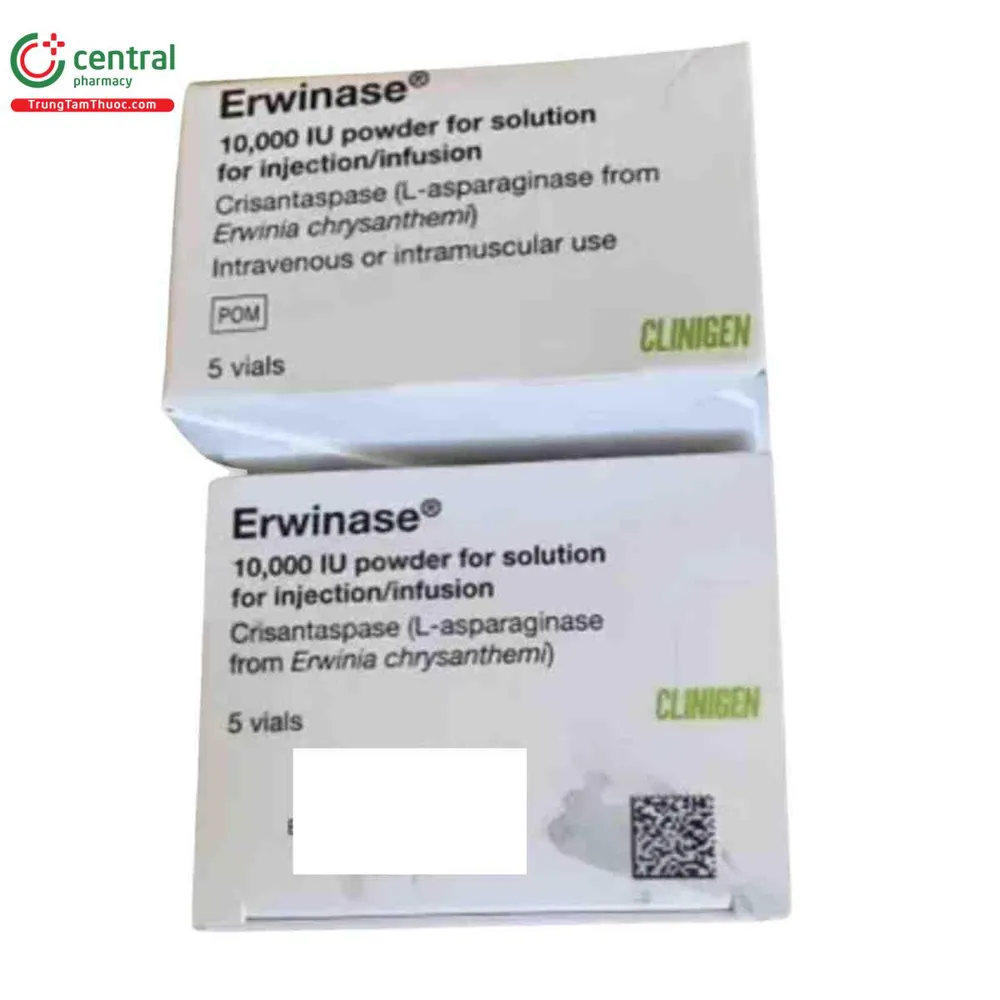
Table of Contents
- Patient Information Leaflet
- 1. What Erwinase is and what it is used for
- 2. Important information before using Erwinase
- 3. How to use Erwinase
- 4. Possible adverse reactions
- 5. How to store Erwinase
- 6. Contents of the pack and other information
- Information intended exclusively for healthcare professionals:
Patient Information Leaflet
Erwinase 10,000 U, powder for solution for injection / infusion
Crisantaspase (L-asparaginase derived from Erwinia chrysanthemi)
Please read all of this leaflet carefully before using this medicine, as it contains
important information for you.
- Keep this leaflet, as you may need to read it again.
- If you have any further questions, ask your doctor, pharmacist or nurse.
- If you experience any side effects, including any not listed in this leaflet, tell your doctor, pharmacist or nurse. See section 4.
Leaflet Contents
- What Erwinase is and what it is used for
- What you need to know before you use Erwinase
- How to use Erwinase
- Possible side effects
- How to store Erwinase
- Contents of the pack and other information
1. What Erwinase is and what it is used for
How does Erwinase work?
Erwinase is used in the treatment of blood cancer and belongs to a group of medicines called "anticancer and immunomodulating agents". Its action is based on reducing the concentration of asparagine (an amino acid) in the body. Asparagine is a substance that cancer cells need in order to survive.
For what purpose is Erwinase used?
This medicine is primarily used in the treatment of children with a cancer of white blood cells (acute lymphoblastic leukaemia), in whom an allergic reaction has occurred to other similar medicinal products.
This medicine is used in combination with other treatment methods.
2. Important information before using Erwinase
When not to use Erwinase
- if the patient has previously experienced a severe allergic reaction (hypersensitivity) to the active substance (crisantaspase) or to any of the other components of this medicine (listed in section 6);
- if the patient has severe liver function disorders;
- if the patient has or has had severe pancreatic disorders (acute pancreatitis) caused by treatment with an L-asparaginase-containing medicine;
- if the patient has or has had inflammation of the pancreas (pancreatitis) unrelated to the use of L-asparaginase.
Warnings and precautions
Before starting treatment with Erwinase, discuss this with your doctor, pharmacist, or nurse.
- This medicine should only be administered by physicians experienced in this type of treatment;
- Severe, life-threatening allergic reactions have been reported. In the event of a reaction, the hospital must have specialized medicines and equipment available to treat it;
- There is a possibility that the patient may become sensitized to the active substance upon re-treatment;
- If abdominal pain occurs, which may be a symptom of pancreatitis (inflammation of the pancreas), inform the doctor immediately. Pancreatitis may lead to death;
- High blood glucose levels (hyperglycemia) may occur during treatment. Treatment includes insulin administration;
- During treatment, the body may have a reduced ability to prevent severe bleeding. If severe bleeding occurs, treatment will be discontinued. The doctor will determine whether and when treatment can be resumed;
- Use of this medicine may cause or worsen liver function disorders. In case of a severe reaction, the doctor will consider discontinuing treatment. Treatment may be resumed under strict monitoring, but only after sufficient improvement in the patient's condition;
- If the doctor or nurse spills this medicine on the patient or themselves, especially near the eyes, the affected area should be rinsed thoroughly with large amounts of water for 15 minutes;
- Neurological disorders (nervous system disorders) resulting in death have been reported. Reversible posterior encephalopathy syndrome (characterized by headache, confusion, seizures, and vision loss) may require treatment with antihypertensive drugs, and in case of seizures, antiepileptic drugs;
- Destruction of tumor cells leads to increased levels of uric acid (a metabolic product) in the blood. This may cause kidney dysfunction;
- Immune system suppression has been observed during treatment with this medicine. This may increase susceptibility to infections.
Blood and urine tests
During treatment, the doctor will regularly perform blood and urine tests to monitor for possible adverse effects, for example:
- allergic reactions;
- to check whether the function of the pancreas, kidneys, and liver remains normal;
- to check whether blood cell counts are adequate.
For traceability purposes, healthcare professionals will record the product name and batch number of each dose of Erwinase administered to the patient.
Erwinase and other medicines
- Erwinase may affect liver function, as well as enzyme activity and blood protein levels, which may alter the effects of medicines sensitive to such changes;
- If Erwinase is administered in combination with other chemotherapeutic agents (medicines used in cancer treatment), the beneficial or adverse effects of these medicines may be enhanced. This particularly applies to the following chemotherapeutic agents: methotrexate, cytarabine, vincristine, imatinib, and prednisone (a corticosteroid);
- Sometimes, allopurinol—a medicine used in the treatment of gout (a painful rheumatic inflammatory condition)—may be necessary to protect the kidneys.
Erwinase must not be mixed with other medicines before administration.
Tell your doctor or pharmacist about all medicines the patient is currently taking or has recently taken, as well as any medicines the patient plans to take in the near future together with Erwinase.
Pregnancy and breastfeeding
If the patient is pregnant, suspects she may be pregnant, plans to become pregnant, or is breastfeeding, she should consult her doctor or pharmacist before using this medicine.
- This medicine should not be used during pregnancy unless absolutely necessary. If the patient is pregnant, becomes pregnant during treatment with this medicine, or plans to become pregnant soon, she should inform the doctor immediately.
- Breastfeeding must not be performed during treatment with this medicine.
Fertility and family planning
A negative effect on male fertility cannot be ruled out.
In appropriate cases, both men and women must use contraception before treatment with Erwinase and for some time after its completion.
Driving and operating machinery
When driving or operating machinery, consider delayed reaction time and the possibility of nausea and vomiting.
Erwinase contains sodium
This medicine contains less than 1 mmol (23 mg) of sodium per dose, meaning the medicine is considered "sodium-free".
3. How to use Erwinase
Dosage
Your doctor will calculate your body surface area in square metres (m²) and determine the
appropriate dose based on this.
The usual dose is 25,000 U of Erwinase per square metre of body surface area.
The amount of medication you receive may be adjusted depending on the concentration of asparaginase (the active substance of this medicine) in your blood, which will be monitored during treatment.
Method of administration
This medicine will be administered in one of the following ways:
a) intravenously as an infusion (intravenous administration);
b) intramuscularly as an injection (intramuscular administration).
This medicine should be given by a doctor or nurse as an injection or infusion.
Before administration, the powder is thoroughly dissolved (in physiological saline solution).
Treatment will be continuous. If treatment needs to be interrupted, it may be resumed later using a reduced dose.
Duration of treatment
You will receive injections three times a week for two weeks. Depending on new results from clinical studies, this schedule may be changed.
Accidental overdose of Erwinase
If you think you have received more Erwinase than prescribed, you must contact your doctor or another qualified healthcare professional immediately.
Missed dose
If you think you have missed a dose, you should contact your doctor or another healthcare provider immediately.
If you have any further questions about the use of this medicine, consult your doctor, pharmacist, or nurse.
4. Possible adverse reactions
Like all medicines, this medicine can cause adverse reactions, although not everyone will experience them.
The adverse reactions listed below have been observed when this medicine is administered together
with other anticancer medicines.
This medicine will be administered under strict medical supervision, and your doctor may give you other medicines
to treat these adverse reactions. Most adverse reactions will resolve once treatment with this medicine is discontinued.
You should contact your doctor immediately if any of the following adverse reactions occur:
- Bluish lips, hands or feet (possible sign of hypoxia - too little oxygen in the blood), redness or inflammation of the skin, increased or decreased blood pressure, swelling of the face, lips or throat, shortness of breath, increased heart rate, wheezing, difficulty swallowing, cough, rash, chills, skin redness, difficulty breathing, vomiting, malaise or pale skin. Repeated treatment increases the risk of reactions. Redness, pain, swelling, bruising or hardening at the injection site;
- Symptoms may include: coma, encephalopathy (brain disease); seeing, hearing or feeling things that are not real (hallucinations); muscle weakness, decreased level of consciousness, confusion, dizziness, drowsiness, fatigue, restlessness, difficulty speaking – usually secondary to other adverse reactions;
- Erwinase may increase the risk of blood clots forming, which may block major blood vessels in the brain, lungs or legs (symptoms of blood clots in arms or legs may include swelling). Chest pain radiating to arms, neck, jaw, back or abdomen, sweating and shortness of breath may be signs of heart attack (myocardial infarction);
- Increased tendency to bleed and bruise easily, even without prior injury;
- If symptoms of severe inflammation of the pancreas (pancreatitis) occur, such as severe abdominal pain with nausea and diarrhea, treatment must be discontinued and must not be resumed in the future;
- High levels of glucose in the blood (hyperglycemia);
- Changes in liver function (detected based on laboratory test results).
Other adverse reactions observed during the use of this medicine are listed below
according to their frequency of occurrence:
You should contact your doctor immediately if any of the following adverse reactions occur:
Very common (affecting more than 1 in 10 people)
- Generalized infection or septic shock (shock due to infection, including life-threatening shock) and other infections;
- Decreased blood cell counts (including platelets, and white and red blood cells). This may be due to reduced bone marrow function;
- Increased levels of fat, bilirubin (a metabolic product present in the blood when red blood cells stop functioning) and activity of certain digestive enzymes in the blood (these levels will be monitored by your doctor);
- Weight loss;
- Generalized body pain, including muscle and joint pain;
- Nausea.
Common (affecting less than 1 in 10 people)
- Diarrhea;
- Mucositis (inflammation of the gastrointestinal tract lining);
- Gastrointestinal discomfort;
- Fever;
- Fatigue;
- Headaches.
Uncommon (affecting less than 1 in 100 people)
- Diabetic complications (high glucose levels in the blood);
- Increased blood ammonium ion levels;
- Seizures;
- Fatty liver disease;
- Reduced kidney function.
Rare (affecting less than 1 in 1,000 people)
- Reversible posterior encephalopathy syndrome (a condition characterized by headache, confusion, seizures and vision loss);
- Liver failure.
Very rare (affecting less than 1 in 10,000 people)
- Painful joint condition known as reactive arthritis.
Not known (frequency cannot be estimated from available data)
- Loss of appetite (anorexia);
- Inflammation of salivary glands in the posterior wall of the throat;
- Decreased levels of albumin (protein) in the blood causing fluid retention in the body;
- Blistering and peeling of the skin (toxic epidermal necrolysis);
- Muscle pain;
- Kidney function disorders manifested by abnormal urine test results (high protein levels).
Adverse reactions are usually reversible (resolve after discontinuation of the medicine).
Additional adverse reactions in children and adolescents
Adverse reactions affecting the liver, pancreas and blood clotting occur more frequently
in adults than in children and adolescents.
Reporting of adverse reactions
If any adverse reactions occur, including any not listed in this leaflet, you should inform your doctor, pharmacist or nurse. Adverse reactions can be reported directly to the Department for Monitoring Adverse Reactions of Medicinal Products at the Office for Registration of Medicinal Products, Medical Devices and Biocidal Products, Al. Jerozolimskie 181C, PL-02 222 Warsaw, tel.: +48 22 49 21 301, fax: +48 22 49 21 309, website: https://smz.ezdrowie.gov.pl.
Adverse reactions can also be reported to the responsible entity.
By reporting adverse reactions, additional information on the safety of this medicine can be collected.
5. How to store Erwinase
Keep this medicine out of the sight and reach of children.
The hospital will store this medicine in a refrigerator (2°C – 8°C). Do not use this medicine after the expiry date stated on the container following "Expiry date". The month and year are indicated in this leaflet. The expiry date refers to the last day of the stated month.
6. Contents of the pack and other information
What the medicine contains
- The active substance is crisantaspase (L-asparaginase derived from Erwinia chrysanthemi).
- Each vial contains 10,000 U of crisantaspase.
- The other ingredients are: sodium chloride, glucose monohydrate, sodium hydroxide, glacial acetic acid.
What Erwinase looks like and contents of the pack
Erwinase is a white powder in a small glass vial.
The vial is a 3 ml colourless type I glass vial, closed with a bromobutyl rubber stopper and an aluminium cap, packed in a cardboard carton.
Each pack contains five small glass vials.
Marketing Authorisation Holder
Porton Biopharma Limited
MC2, Penrose Wharf Business Centre,
Penrose Quay,
Cork,
T23 XN53
Ireland
Email address: [email protected]
Manufacturer
Almac Pharma Services Limited
Seagoe Industrial Estate
BT63 5UA Portadown, Craigavon
United Kingdom (Northern Ireland)
This medicine is authorised in the Member States of the European Economic Area under the following name:
Austria, Belgium, Finland, France, Germany, Ireland, the Netherlands, Poland, Portugal, Spain:
Erwinase
TEAR OFF HERE AND GIVE INSTRUCTIONS TO THE PATIENT
Information intended exclusively for healthcare professionals:
Reconstitute the contents of each vial with 1 ml or 2 ml of 0.9% sodium chloride solution for
injection.
Slowly add the 0.9% sodium chloride solution for injection down the inner wall of the vial; do not
inject the solution directly onto or into the powder. Allow time for complete dissolution, gently
swirling or rotating the vial while holding it in an upright position. Avoid contact of the solution with the stopper.
Avoid foaming due to excessive or vigorous shaking.
The resulting solution should be clear and free from visible particles. If excessive shaking occurs and visible
foam appears, small crystalline or filamentous protein aggregates may be observed. If visible particles or
protein aggregates are present, the prepared solution must be discarded.
The reconstituted solution should be administered within 15 minutes after reconstitution. If administration
cannot be initiated within 15 minutes, the solution should be drawn into a sterile glass or polypropylene
syringe under aseptic conditions. The syringe containing the prepared solution should then be stored
below 25°C and used within four hours.
For intravenous infusion, the reconstituted Erwinase medicinal product solution should be further diluted
in 100 ml of 0.9% sodium chloride solution. To facilitate preparation, the reconstituted Erwinase medicinal
product solution may be transferred into a bag containing 100 ml of 0.9% sodium chloride solution for
infusion.
It is recommended that the diluted infusion solution be administered immediately after preparation. If the
diluted infusion solution is not used immediately, it may be stored in a polyvinyl chloride (PVC) infusion
bag. The infusion bag should be stored below 25°C and used within four hours.
From a microbiological standpoint, the reconstituted injection solution should be used immediately, unless
the reconstitution method excludes the risk of microbiological contamination. If the product is not used
immediately, the user is responsible for the storage time and conditions.
The medicinal product Erwinase is not a cytotoxic medicinal product and does not require special precautions
necessary for such products. However, during preparation or administration of Erwinase, it should be noted
that it may cause sensitization.
Avoid inhaling the powder or solution. In case of contact with skin or mucous membranes, and especially
with eyes, flush the affected area thoroughly with large amounts of water for at least 15 minutes.
Any unused portions of the medicinal product or waste material should be disposed of in accordance
with local regulations.
Do not mix this medicinal product with other medicinal products, as compatibility studies have not been
conducted. Therefore, other medicinal products should not be administered intravenously through the
same intravenous access during administration of Erwinase medicinal product.