Epirubicin ebewe
Poland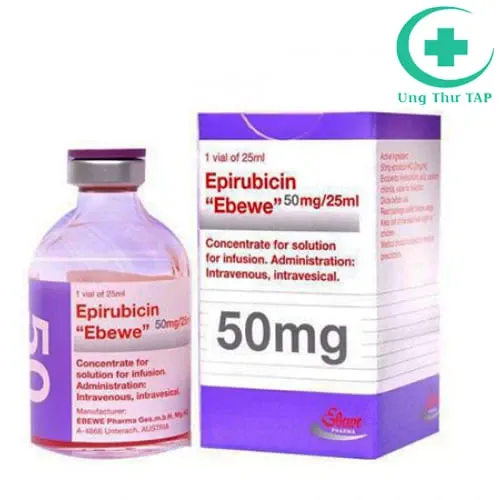
Table of Contents
- Patient Information Leaflet
- 1. What Epirubicin-Ebewe is and what it is used for
- 2. Important information before using Epirubicin-Ebewe
- 3. How to use Epirubicin-EBEWE
- 4. Possible adverse reactions
- 5. How to store Epirubicin-EBEWE
- 6. Contents of the pack and other information
- Information intended exclusively for medical professionals
Patient Information Leaflet
Epirubicin-Ebewe, 2 mg/ml concentrate for solution for infusion
Epirubicini hydrochloridum
Please read all of this leaflet carefully before this medicine is administered, because it contains
important information for you.
- Keep this leaflet, as you may need to read it again.
- If you have any further questions, please ask your doctor, pharmacist, or nurse.
- If you experience any side effects, including any not listed in this leaflet, tell your doctor, pharmacist, or nurse.
Leaflet Contents:
- What Epirubicin-Ebewe is and what it is used for
- What you need to know before using Epirubicin-Ebewe
- How to use Epirubicin-Ebewe
- Possible side effects
- How to store Epirubicin-Ebewe
- Contents of the pack and other information
1. What Epirubicin-Ebewe is and what it is used for
Epirubicin hydrochloride – the active substance in Epirubicin-Ebewe – belongs to a group of anticancer antibiotics known as anthracyclines. These medicines have cytotoxic activity and are used in the treatment of many types of cancer. Epirubicin-Ebewe may be used as monotherapy, but is more commonly used in combination with other anticancer agents. Epirubicin-Ebewe is used in the treatment of various malignancies, including:
- Breast cancer
- Ovarian cancer
- Stomach cancer
- Lung cancer
- Head and neck cancer
- Colon and rectal cancer
- Multiple myeloma
- Malignant non-Hodgkin's lymphomas
- Acute leukemias
When administered intravesically (into the bladder), Epirubicin-Ebewe has shown beneficial effects in the treatment of the following conditions:
- Transitional cell carcinoma of the urinary bladder
- Carcinoma in situ of the urinary bladder
- Prophylactic intravesical treatment following transurethral resection of bladder tumors
2. Important information before using Epirubicin-Ebewe
When not to use Epirubicin-Ebewe
-
if the patient is allergic to epirubicin hydrochloride, other anthracyclines or anthracenediones, or to any of the other ingredients of this medicine (listed in section 6).
-
if the patient has persistent bone marrow suppression (with very low white blood cell and platelet counts).
-
if the patient has previously received high doses of other antineoplastic drugs, including doxorubicin and daunorubicin (belonging to the same group of drugs as epirubicin, so-called anthracyclines).
-
if the patient has heart muscle disease, has recently suffered a heart attack, or has severe cardiac arrhythmias.
-
if the patient has severe liver function impairment.
-
if the patient has a severe infection.
-
if the patient has unstable angina pectoris.
-
if the patient is breastfeeding.
Epirubicin-Ebewe must not be used when administered into the bladder in the following situations:
- urinary tract infection;
- presence of blood in the urine;
- tumor infiltration of the bladder wall;
- difficulty inserting a urinary catheter;
- cystitis (bladder inflammation);
- urinary retention (large amount of urine remaining in the bladder);
- reduced bladder volume (shrinkage of the bladder due to disease).
Warnings and precautions
Before starting treatment with Epirubicin-Ebewe, discuss this with your doctor.
The medicine should be used with particular caution if:
- the patient has impaired liver or kidney function;
- during administration, the patient experiences discomfort or burning sensation at or near the injection site (risk of extravasation into surrounding tissues);
- blood tests show reduced numbers of white and red blood cells and platelets;
- the patient has oral mucositis (pain in lips, mouth or mouth ulcers);
- the patient has previously undergone thoracic radiotherapy or has taken medicines that may adversely affect the heart. If in doubt whether this warning applies, consult your doctor or pharmacist;
- the patient has recently been vaccinated or plans to be vaccinated.
The doctor will monitor heart and kidney function, blood counts, and serum uric acid levels.
Immediately inform the doctor or nurse if the patient receiving the medicine into the bladder:
- experiences pain when urinating or burning sensation in the urethra;
- passes large amounts of urine (including at night);
- notices blood in the urine.
Note
For one or two days after administration, the patient's urine may appear red.
Children
There is no data available on the safety and efficacy of epirubicin hydrochloride in children.
Epirubicin-Ebewe and other medicines
Tell your doctor about all medicines the patient is currently taking or has recently taken, as well as any medicines the patient plans to take.
Especially inform about the use of the following medicines:
- other medicines that may affect the bone marrow and hematopoietic system;
- other medicines that may affect heart function, e.g. calcium channel blockers (such as verapamil, nifedipine and diltiazem), other antineoplastic drugs (e.g. 5-fluorouracil, cyclophosphamide, cisplatin, taxanes, doxorubicin, mitomycin-C, dacarbazine, dactinomycin and cyclophosphamide), and concurrent or previous radiotherapy to the mediastinal area;
- other medicines affecting liver function, e.g. barbiturates (medicines used in the treatment of epilepsy or sleep disorders) and rifampicin (a medicine used to treat tuberculosis);
- trastuzumab (epirubicin must not be administered within 27 weeks after trastuzumab administration);
- cimetidine (a medicine that reduces gastric acid secretion);
- paclitaxel and docetaxel (medicines used in the treatment of certain cancers);
- interferon alfa-2b (a medicine used in the treatment of certain cancers and lymphomas, and certain forms of hepatitis);
- quinine (a medicine used to treat malaria and leg muscle cramps);
- dexrazoxane (a medicine sometimes used with doxorubicin to reduce the risk of cardiac toxicity);
- dexverapamil (a medicine used in the treatment of certain heart diseases).
If vaccination is necessary, inform the doctor about treatment with epirubicin hydrochloride, as certain types of vaccines (live attenuated) may cause severe adverse reactions.
Pregnancy, breastfeeding and effects on fertility
If the patient is pregnant or breastfeeding, suspects she may be pregnant, or is planning to have a child, she should consult her doctor before using this medicine.
Epirubicin hydrochloride – the active substance in Epirubicin-Ebewe – may harm the unborn child. Epirubicin-Ebewe must not be used during pregnancy unless considered essential by the doctor.
Due to the risk of congenital malformations, women of childbearing potential should use effective contraception during treatment with epirubicin and for at least 6.5 months after the last dose. Men should use effective contraception during treatment and for at least 3.5 months after the last dose.
In the event of pregnancy occurring in the patient or the patient's partner during treatment with Epirubicin-Ebewe, genetic counseling is recommended. Men planning to have children should seek advice on the possibility of sperm cryopreservation before starting treatment with Epirubicin-Ebewe.
Breastfeeding must be discontinued before and during treatment with Epirubicin-Ebewe.
Driving and operating machinery
No studies on the effect of Epirubicin-Ebewe on driving and operating machinery have been conducted. However, this medicine may cause nausea and vomiting, which may transiently impair the ability to perform these activities.
Epirubicin-Ebewe contains sodium
The medicine contains 3.54 mg of sodium (the main component of table salt) in 1 ml of concentrate.
The medicine contains 17.7 mg of sodium (the main component of table salt) in a 5 ml vial. This corresponds to 0.88% of the maximum recommended daily sodium intake in adults.
The medicine contains 88.5 mg of sodium (the main component of table salt) in a 25 ml vial. This corresponds to 4.42% of the maximum recommended daily sodium intake in adults.
The medicine contains 177 mg of sodium (the main component of table salt) in a 50 ml vial. This corresponds to 8.85% of the maximum recommended daily sodium intake in adults.
The medicine contains 354 mg of sodium (the main component of table salt) in a 100 ml vial. This corresponds to 17.7% of the maximum recommended daily sodium intake in adults.
The medicine may be diluted in 0.9% sodium chloride solution. The sodium content from the diluent should be taken into account when calculating the total sodium content of the prepared diluted solution. For accurate information on the sodium content of the solution used to dilute the medicine, refer to the patient leaflet of the diluent used.
3. How to use Epirubicin-EBEWE
Epirubicin-EBEWE is administered exclusively by intravenous route or into the urinary bladder.
The medicine is given to patients only under the supervision of a specialist doctor experienced in the treatment of tumours.
Before and during treatment, your doctor will order blood tests to monitor the function of the bone marrow, kidneys and liver, and will also monitor heart function. Heart function monitoring continues for several weeks after completion of treatment with Epirubicin-EBEWE.
The dose of Epirubicin-EBEWE is adjusted by the doctor according to the patient's body surface area (calculated based on height and weight). The dose depends on the type of tumour, the body's response to treatment, and on other concomitantly administered medicines.
The usual dose of Epirubicin-EBEWE is 60 mg to 90 mg per square metre of body surface area. The medicine is given as a slow intravenous injection lasting three to five minutes. The medicine is usually administered every three weeks.
In the treatment of small cell lung cancer, a higher dose of the medicine (120 mg per square metre of body surface area) is given as an intravenous injection lasting three to five minutes or as an infusion (drip) lasting up to 30 minutes, also every three weeks.
In the treatment of breast cancer, the doctor determines the dose and treatment regimen individually for each patient.
Lower doses are used in patients with low white blood cell or platelet counts, impaired liver or kidney function, and in patients receiving other cytotoxic medicines.
To prevent unwanted dilution of Epirubicin-EBEWE by urine, the patient should not take fluids for 12 hours before the procedure.
The patient remains under close medical observation before, during and after treatment with Epirubicin-EBEWE.
Administration of a higher than recommended dose of Epirubicin-EBEWE
Administering a higher than recommended dose of Epirubicin-EBEWE may cause severe bone marrow dysfunction, manifested as a decrease in white blood cells or platelets, inflammation of the mucous membranes of the gastrointestinal tract, and severe heart function disorders. More severe adverse reactions than usual may occur.
4. Possible adverse reactions
Like all medicines, this medicine can cause adverse reactions, although not everyone will experience them.
If any of the following adverse reactions occur in a patient during infusion of the medicine,
the doctor should be informed immediately, as immediate treatment may be necessary:
- redness, pain or swelling at the injection site;
- disturbances in heart function, such as chest pain, shortness of breath, swelling of the ankles (these symptoms may occur up to several weeks after stopping treatment with Epirubicin-Ebewe);
- severe allergic reaction with symptoms such as fainting, rash, itching, fever, chills, facial swelling and difficulty breathing. Shock may occur. 4
The following adverse reactions have been observed during treatment with Epirubicin-Ebewe:
Very common (may affect more than 1 in 10 people):
- suppression of blood cell production by the bone marrow
- decrease in white blood cells (leukopenia)
- decrease in red blood cells (anaemia)
- decrease in a certain type of white blood cells (granulocytopenia and neutropenia)
- fever associated with low neutrophil count (febrile neutropenia)
- hair loss, usually temporary
- red discoloration of urine for one or two days after administration of Epirubicin-Ebewe; this is a normal phenomenon related to the colour of the medicine and should not cause concern.
Common (may affect less than 1 in 10 people):
- infection
- loss of appetite (anorexia)
- sensation of dryness and thirst (dehydration)
- hot flushes
- inflammation of mucous membranes (e.g. oesophagus, mouth)
- nausea, vomiting, diarrhoea
- redness at the site of administration
- inflammation of the urinary bladder with pain during urination, sometimes with blood in the urine (chemical and sometimes haemorrhagic cystitis), burning sensation and frequent urination (after administration into the urinary bladder).
Uncommon (may affect less than 1 in 100 people):
- decrease in platelets (thrombocytopenia)
- inflammation of veins, which may be associated with blood clot formation (thrombophlebitis), causing pain and/or swelling of the arms or legs
Rare (may affect less than 1 in 1000 people):
- acute lymphatic leukaemia, acute myeloid leukaemia (may occur up to 3 years after completion of treatment)
- severe hypersensitivity reaction (anaphylaxis)
- increased blood uric acid levels due to rapid breakdown of tumour cells
- dizziness
- congestive heart failure (with shortness of breath, oedema, liver enlargement, fluid in the lungs and abdominal cavity, ankle swelling and changes in heart rhythm), changes in ECG, abnormal heart rhythm, heart muscle disorders, reduced heart function, conduction disorders in the heart
- urticaria
- absence of menstruation
- absence of sperm in semen
- malaise and weakness
- fever, chills
- changes in liver enzyme activity (aminotransferases).
Frequency not known (cannot be estimated from available data):
-
shock due to blood infection (septic shock), sepsis (systemic infection), pneumonia
-
bleeding and tissue hypoxia due to reduced blood cell production in the bone marrow (bone marrow suppression)
-
eye discharge with itching, redness and swelling (conjunctivitis), eye pain, blurred vision, intolerance to light (keratitis)
-
thromboembolic event (blockage of a blood vessel by a detached blood clot, including pulmonary embolism, in isolated cases fatal)
-
oral cavity changes (erosions, ulceration, pain, burning sensation, bleeding, discolouration)
-
local toxic effects, rash, itching, skin changes, erythema, skin and nail pigmentation, photosensitivity, skin hypersensitivity in previously irradiated areas (radiation recall reaction)
-
vein sclerosis, local pain, severe inflammation of connective tissue, tissue necrosis following accidental extravasation
-
asymptomatic decrease in the amount of blood pumped by the left ventricle of the heart (asymptomatic decrease in left ventricular ejection fraction).
Reporting of adverse reactions
If any adverse symptoms occur, including any adverse symptoms not listed
in this leaflet, inform your doctor, pharmacist or nurse. Adverse reactions
can be reported directly to the Department of Monitoring Adverse Drug Reactions of the Office for Registration of Medicinal Products, Medical Devices and Biocidal Products: Al. Jerozolimskie 181 C, 02-222 Warsaw
tel.: + 48 22 49 21 301, fax: + 48 22 49 21 309, website: https://smz.ezdrowie.gov.pl
Adverse reactions can also be reported to the marketing authorisation holder.
Reporting adverse reactions helps to provide more information on the safety of the medicine.
5. How to store Epirubicin-EBEWE
Keep this medicine out of the sight and reach of children.
Do not use this medicine after the expiry date stated on the carton after EXP. The expiry date refers to the last day of the stated month.
Store in a refrigerator (2°C – 8°C).
Refrigerated storage may cause the medicine to become gel-like. When left at controlled room temperature (15 to 25°C) for 2 to a maximum of 4 hours, it will return to a consistency ranging from slightly viscous to fluid solution.
6. Contents of the pack and other information
What Epirubicin-Ebewe contains
The active substance is epirubicin hydrochloride.
1 ml of concentrate for solution for infusion contains 2 mg of epirubicin hydrochloride.
Each 5 ml vial contains 10 mg of epirubicin hydrochloride.
Each 25 ml vial contains 50 mg of epirubicin hydrochloride.
Each 50 ml vial contains 100 mg of epirubicin hydrochloride.
Each 100 ml vial contains 200 mg of epirubicin hydrochloride.
The other ingredients are sodium chloride, hydrochloric acid and water for injections.
What Epirubicin-Ebewe looks like and contents of the pack
Epirubicin-Ebewe is a clear, red solution.
The medicine is available in vials containing 5 ml, 25 ml, 50 ml or 100 ml of concentrate.
Vials may be placed in transparent protective packaging made of plastic material (ONKO-Safe or Sleeving).
Marketing Authorisation Holder and Manufacturer
EBEWE Pharma Ges.m.b.H. Nfg.KG
Mondseestrasse 11
A-4866 Unterach, Austria
Manufacturer
Fareva Unterach GmbH
Mondseestraße 11
4866 Unterach, Austria
Information intended exclusively for medical professionals
Do not mix the concentrate or the diluted solution of epirubicin hydrochloride with other medicinal products.
- The infusion solution should be prepared by trained personnel under aseptic conditions.
- The infusion solution should be prepared in a designated aseptic area.
- Protective gloves, gown, protective goggles, and protective mask must be worn.
- Appropriate safety measures must be taken to prevent accidental contact of the medicinal product with the eyes. In case of eye contact, the eye should be immediately flushed with copious amounts of water and/or 0.9% sodium chloride solution, and medical advice from an ophthalmologist should be sought without delay.
- In case of skin contact, thoroughly wash the contaminated area with soap and water or sodium bicarbonate solution. Do not scrub the skin with a stiff brush. Wash hands after removing gloves.
- Spilled medicinal product should first be covered with a diluted sodium hypochlorite solution (containing 1% chlorine), preferably by soaking, then rinsed with water. All materials used for cleaning must be disposed of appropriately.
- Pregnant women should not handle cytotoxic medicinal products.
- During disposal of items (syringes, cannulas, etc.) used for reconstitution and/or dilution of cytotoxic medicinal products, caution and appropriate safety measures must be taken. Any unused product or waste material must be disposed of in accordance with local regulations.
- Medicinal products must not be discharged into drains or disposed of as household waste. This is to ensure environmental protection.
Method of administration
Epirubicin hydrochloride is intended solely for intravenous administration or administration into the urinary bladder.
Care must be taken to avoid extravasation. If extravasation occurs, administration of the drug must be stopped immediately.
Epirubicin hydrochloride may be diluted under aseptic conditions in 5% glucose solution or 0.9% sodium chloride solution and administered as an intravenous infusion. Physical and chemical stability of the infusion solution has been demonstrated when stored in PVC bags, polypropylene, polyethylene, or glass containers for 96 hours at temperatures from 2°C to 8°C and at room temperature (20°C to 25°C), regardless of exposure to light.
From a microbiological standpoint, the product should be used immediately after dilution. If not used immediately, the user is responsible for the conditions and duration of storage. Storage time should not exceed 24 hours at 2 to 8°C, unless dilution has been carried out under controlled and validated aseptic conditions.