Epirubicin accord
Poland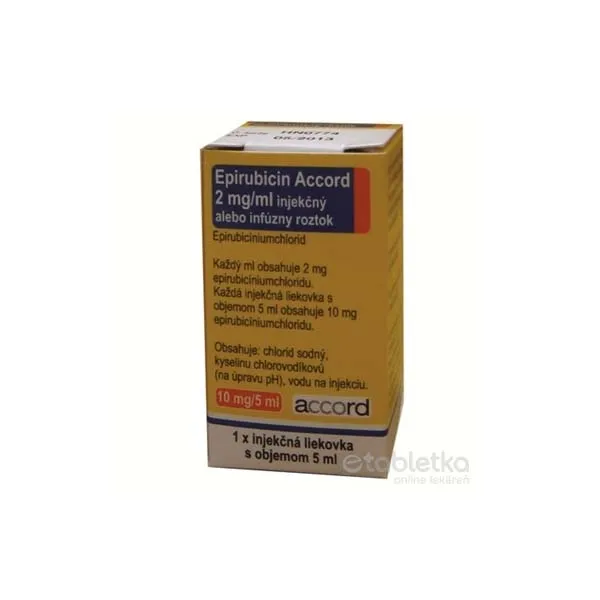
Table of Contents
- Patient Information Leaflet
- 1. What Epirubicin Accord is and what it is used for
- 2. Important information before using Epirubicin Accord
- 3. How to use Epirubicin Accord
- 4. Possible adverse reactions
- 5. How to store Epirubicin Accord
- 6. Contents of the pack and other information
- Information intended exclusively for healthcare professionals
Patient Information Leaflet
Epirubicin Accord, 2 mg/mL, solution for injection/infusion
Epirubicini hydrochloridum
Please read all of this leaflet carefully before using this medicine because it contains important information for you.
- Keep this leaflet. You may need to read it again.
- If you have any further questions, ask your doctor, pharmacist, or nurse.
- If you get any side effects, including any not listed in this leaflet, tell your doctor, pharmacist, or nurse. See section 4.
Leaflet Contents:
- What Epirubicin Accord is and what it is used for
- Important information before using Epirubicin Accord
- How to use Epirubicin Accord
- Possible side effects
- How to store Epirubicin Accord
- Contents of the pack and other information
1. What Epirubicin Accord is and what it is used for
What Epirubicin Accord is
Epirubicin Accord is an anticancer medicine. Treatment with anticancer medicines is sometimes called chemotherapy. Epirubicin belongs to a group of active substances called anthracyclines. These substances cause slowing or stopping of growth and increase the likelihood of death of rapidly dividing cells.
What Epirubicin Accord is used for
Epirubicin Accord is used in the treatment of various cancers, either alone or in combination with other medicines. The way the medicine is used depends on the type of cancer being treated.
Epirubicin Accord is used in the treatment of breast, lung, ovarian, and stomach cancer.
Epirubicin Accord may also be administered directly into the bladder via a catheter for the treatment of abnormal cells or tumours of the bladder wall. The medicine may be used after other treatments to prevent the regrowth of such cells.
If there is no improvement or if you feel worse, contact your doctor.
2. Important information before using Epirubicin Accord
When not to use Epirubicin Accord
- if the patient is allergic to epirubicin or any of the other ingredients of this medicine (listed in section 6) or to similar medicines used in chemotherapy (anthracyclines or anthracenediones);
- if the patient is breastfeeding;
- if the patient has bone marrow suppression leading to reduced blood cell counts, as the medicine may further decrease them;
- if the patient has severe liver disease;
- if the patient has recently had a heart attack, weakened heart muscle function, severe heart rhythm disorders, sudden chest pain, non-inflammatory heart muscle disease, or
- any other severe heart diseases in the past or is currently being treated for such conditions;
- if the patient has previously been treated with epirubicin or similar chemotherapy medicines, because prior treatment with these medicines may increase the risk of adverse reactions;
- if the patient has acute, severe infections that may affect multiple organs.
Do not administer Epirubicin Accord directly into the bladder (intravesical administration):
- if the patient has a urinary tract infection;
- if the patient has cystitis (bladder inflammation);
- if the patient has an invasive tumour invading the bladder wall;
- if the patient has problems with catheterisation [the doctor has difficulty inserting the catheter (tube) into the bladder];
- if the patient has blood in the urine.
Warnings and precautions
Before using Epirubicin Accord, consult a doctor, pharmacist, or nurse:
- if the patient has impaired liver or kidney function.
- if the patient has received or is due to receive any vaccinations.
- if the patient is elderly, due to an increased risk of severe cardiovascular adverse reactions. The patient's heart function will be monitored before and after treatment with epirubicin.
- if the patient has had or currently has heart diseases. Inform the doctor, as dose adjustment of epirubicin may be necessary. The doctor will monitor this regularly.
- if the patient has previously been treated with anticancer medicines or has undergone radiotherapy, as the risk of cardiovascular adverse reactions is higher. This may affect epirubicin dosing.
- if the patient has an infection or bleeding. Epirubicin may affect the bone marrow. The number of white blood cells in the blood will decrease, increasing susceptibility to infections (leukopenia). Bleeding may occur more easily (thrombocytopenia). These adverse effects are transient. White blood cell count is lowest 10–14 days after starting treatment and returns to normal by day 21.
- if the patient currently has an acute infection, such as: acute oral mucositis, low white blood cell count, low platelet count, or systemic infection.
- if the patient is taking or has recently taken trastuzumab (a medicine used to treat certain cancers). Trastuzumab may remain in the body for up to 7 months. Since trastuzumab may affect the heart, Epirubicin Accord should not be used within 7 months after stopping trastuzumab. If Epirubicin Accord is used before this period ends, heart function must be closely monitored.
- if the patient has undergone or will undergo radiotherapy to the chest area.
- if the patient is pregnant. Cases of heart disorders in newborns and unborn children, including fetal death, have been reported in pregnant women treated with epirubicin. This will help the doctor decide whether this medicine is suitable for the patient.
Talk to your doctor or nurse if any of the following conditions occur or worsen
DURING treatment with Epirubicin Accord (see also section 4 "Possible side effects"):
- Heart diseases, which may include:
- Acute (occurring immediately after starting treatment): increased or decreased heart rate and rhythm changes (arrhythmia). These disorders can be easily detected by electrocardiography (ECG) and are usually not significant enough to require discontinuation of treatment;
- Delayed (usually occurring long after starting treatment). The most common symptoms of delayed toxicity are:
- the heart's inability to pump enough blood to meet the body's needs (heart failure). Common symptoms include difficulty breathing (dyspnoea), fluid accumulation in the lungs (pulmonary oedema), swelling in other parts of the body, especially legs and ankles (oedema), enlarged heart (cardiomegaly) and liver (hepatomegaly), reduced urine output (oliguria), fluid accumulation in the abdominal cavity (ascites) and in the space between the lungs and chest wall (pleural effusion), heart rhythm disturbances (tachycardia). Sometimes heart failure may be severe and lead to death.
- a decrease in the total number of white blood cells in the blood (leukopenia) or a type of white blood cells called neutrophils (neutropenia), platelets (thrombocytopenia), or red blood cells (anaemia). White blood cell count is usually lowest 10–14 days after starting treatment and returns to normal by day 21. Sometimes, the consequences of reduced blood cell counts may be severe and include fever, infections in various organs and in the blood, shock, haemorrhage, reduced oxygen supply to the brain, and death.
- development of a blood cancer ( leukaemia) not present before starting epirubicin treatment (secondary leukaemia). Leukaemia may appear 1–3 years after completing epirubicin treatment, and the risk is higher if the medicine is given in high doses or in combination with other anticancer medicines or radiotherapy.
- vomiting and inflammation of the oral mucosa. In severe cases, mucosal ulcers may also occur. These changes usually resolve by the third week of treatment.
- liver disorders, as this increases the risk of systemic toxic effects caused by the medicine. The doctor will adjust the epirubicin dose according to the patient's condition;
- inflammation of veins repeatedly used for epirubicin injections;
- inflammation and blockage of veins (phlebitis), mainly in the legs, pelvis ( phlebitis ) and lungs ( pulmonary embolism ). In some cases, pulmonary embolism may lead to death.
- burning sensation at the injection site. This may indicate leakage of epirubicin outside the blood vessel. Inform the doctor immediately.
- significant increase in blood uric acid levels;
- inflammation and blood clots in veins, mainly in the legs, pelvis ( phlebitis ) and lungs ( pulmonary embolism ). In some cases, pulmonary embolism may lead to death.
Tell your doctor or nurse if any of the following conditions occur or worsen
DURING intravesical administration of Epirubicin Accord ( intravesical administration ) (see also section 4 "Possible side effects"):
- difficulty urinating (dysuria), frequent urination of small amounts without increased fluid intake (frequency), frequent need to urinate at night (nocturia), painful, slow, and interrupted urination, often drop by drop (stranguria), presence of blood in the urine (haematuria), discomfort in the bladder, bladder wall necrosis, bladder pressure.
During treatment with Epirubicin Accord, the doctor will also regularly monitor:
- blood cell counts to ensure they are not too low,
- blood levels of uric acid and other factors,
- heart and liver function to ensure they are normal.
During treatment with Epirubicin Accord, do not receive "live" or "attenuated" vaccines, as severe or fatal infections may occur due to weakened immunity. However, the patient may receive vaccines containing killed microorganisms or "inactivated" vaccines, although the effectiveness of such vaccination may be reduced.
This medicine may cause irreversible changes that may also affect unborn children. During treatment with Epirubicin Accord, women of childbearing potential must be informed of the need to use effective contraception to prevent pregnancy. If a patient wishes to have children after treatment, she should consult a specialist. Before treatment, both men and women should seek advice regarding fertility preservation methods (see section 2 "Pregnancy, breastfeeding and fertility"). Before and during treatment with Epirubicin Accord, the doctor will order frequent and regular laboratory tests to assess the patient's health status and the effectiveness of the medicine.
Epirubicin Accord and other medicines
Tell your doctor or pharmacist about all medicines the patient is currently taking or has recently taken, as well as any medicines the patient plans to take, including over-the-counter medicines. This particularly applies to the following medicines:
- Cimetidine (a medicine usually used to treat stomach ulcers and heartburn). Cimetidine may enhance the effect of Epirubicin Accord.
- Calcium channel blockers (heart medicines).
- Interferon α2b (a medicine used to treat cancers).
- Quinine (a medicine used to treat malaria).
- Antibiotics such as: sulfonamides and chloramphenicol.
- Antiretroviral medicines (medicines used to treat HIV infection).
- Phenytoin (a medicine used to treat epilepsy).
- Painkillers, such as amidopyrine derivatives.
- Dexverapamil (a medicine used to treat certain heart diseases).
- Trastuzumab used to treat cancer. The doctor should not use Epirubicin Accord within 7 months after stopping trastuzumab, if possible. If Epirubicin Accord is used before this period ends, careful monitoring of heart function is recommended.
- Dexrazoxane (used to prevent chronic cumulative cardiotoxicity caused by epirubicin).
- Do not administer vaccines containing live microorganisms to patients receiving epirubicin.
- Paclitaxel or docetaxel (medicines used to treat cancer). When paclitaxel is administered before epirubicin, it may increase epirubicin blood levels. However, when paclitaxel and docetaxel are administered simultaneously or after epirubicin, they do not affect its concentration.
- Antibiotics such as sulfonamides and certain diuretics ("water pills"); additive effect of epirubicin on increasing blood uric acid levels.
- Heparin (a medicine preventing blood clotting); may lead to loss of efficacy of both epirubicin and heparin.
Pregnancy, breastfeeding and effects on fertility
If the patient is pregnant or breastfeeding, suspects she may be pregnant, or plans to have a child, she should consult a doctor before using this medicine.
Pregnancy
Avoid becoming pregnant when the patient or her partner is taking this medicine.
Both women and men who are sexually active should use effective contraception methods to prevent pregnancy during treatment.
This medicine may cause birth defects; therefore, it is important to inform the doctor if the patient suspects she may be pregnant.
Breastfeeding
Do not breastfeed during treatment with this medicine and for at least 7 days after the last dose.
Effect on fertility
Epirubicin may have a negative effect on fertility in both men and women.
Men: There is a risk of infertility associated with epirubicin treatment.
Patients should consider sperm preservation before treatment. Men treated with epirubicin should be advised not to plan conception during treatment and for at least 4 months after its completion.
Women: Epirubicin may cause absence of menstruation or premature menopause in women before menopause. Women treated with epirubicin should be advised not to become pregnant during treatment and for at least 7 months after its completion.
Driving and operating machinery
No special precautions are required, provided the patient feels fully well after hospital treatment and has discussed this with the doctor.
Epirubicin Accord contains sodium
The medicine contains less than 1 mmol (23 mg) of sodium per mL, meaning the medicine is considered "sodium-free".
3. How to use Epirubicin Accord
If you have been prescribed Epirubicin Accord, the medicine will be administered only by doctors or
nurses experienced in the use of chemotherapy.
This medicine is usually given by a doctor or nurse as an intravenous infusion (drip).
Your doctor will decide the dose and the number of days you should receive the medicine, depending on
your condition.
The dose is determined based on the type of disease and the patient's height and body weight. Based on
the patient's height and weight, the doctor will calculate the body surface area, which is used to determine
the individual dose.
Epirubicin Accord may also be administered directly into the bladder for the treatment of bladder cancer
or to prevent its recurrence. The dose depends on the type of bladder tumour. When the medicine is to
be given directly into the bladder, you will be instructed not to drink any fluids for 12 hours before the
procedure to prevent unwanted dilution of the medicine by urine in the bladder.
Although a single treatment cycle may sometimes be sufficient, your doctor will often recommend
further treatment cycles every three or four weeks. Several treatment cycles may be necessary before
the disease is controlled and you begin to feel better.
Regular medical examinations during treatment with Epirubicin Accord
During treatment, regular tests should be performed:
- Blood tests – due to the risk of low blood cell counts, which may require treatment.
- Heart function – heart problems may occur with high doses of Epirubicin Accord. These may remain undetected for several weeks; therefore, regular monitoring is required.
- Liver function – blood tests should be performed to detect whether the medicine is adversely affecting liver function.
- Uric acid levels in the blood – Epirubicin Accord may increase uric acid levels in the blood, which may lead to a condition called gout (gouty arthritis). If uric acid levels are too high, treatment with other medicines may be necessary.
Use of a higher than recommended dose of Epirubicin Accord
Using higher doses than recommended may worsen side effects such as mouth pain or may cause a
decrease in the number of white blood cells (responsible for fighting infections) and platelets (involved in
the blood clotting process). If necessary, treatment with antibiotics or blood transfusions may be given.
If mouth ulcers occur, treatment to reduce discomfort associated with this symptom may be used.
If you have any further questions about the use of this medicine, consult your doctor, pharmacist, or nurse.
4. Possible adverse reactions
Like all medicines, this medicine can cause adverse reactions, although not everybody will experience them.
Most serious adverse reactions
If any of the following adverse reactions occur, contact your doctor immediately, as urgent medical treatment or hospitalisation may be required:
Very common (may affect more than 1 in 10 people)
- significant reduction in blood cell production in the bone marrow (myelosuppression), which may cause:
- reduced number of white blood cells (which fight infection), increasing the risk of infections and fever (leukopenia)
- reduced number of platelets (involved in blood clotting), which may lead to easier bruising or bleeding (thrombocytopenia)
- reduced number of certain types of white blood cells – granulocytes and neutrophils (granulocytopenia and neutropenia)
- reduced number of certain types of white blood cells accompanied by fever (febrile neutropenia)
- reduced number of red blood cells (anaemia), which may cause fatigue and drowsiness
- inflammation of veins
Common (may affect up to 1 in 10 people)
- heart function disorder (heart failure) (see section 2 “Warnings and precautions”). Heart problems may manifest as difficulty breathing (dyspnoea), swelling of various body parts due to fluid accumulation, especially feet, ankles, legs and arms, enlarged liver, presence of fluid and swelling of the abdominal cavity (ascites), and presence of fluid between the lungs and chest wall (pleural effusion)
- severe heart rhythm disorders (ventricular arrhythmia)
- certain types of heart rhythm disorders (atrioventricular block, bundle branch block)
- slow heart rate (bradycardia)
- blood loss (haemorrhage)
- pain or burning in the gastrointestinal tract
- ulceration of the gastrointestinal tract
- inflammation of the mucous membrane of the gastrointestinal tract
Uncommon (may affect up to 1 in 100 people)
- certain types of blood cancers (acute lymphoblastic leukaemia, acute myeloid leukaemia) (see section 2 “Warnings and precautions”)
- high fever, chills, general malaise, possible sensation of cold hands and feet due to blood infection
- blockage of a vein by a blood clot (thrombosis), which may break loose and travel with the blood to the lungs, causing pain and shortness of breath (pulmonary embolism)
- blockage of an artery (arterial embolism)
- swelling and pain in the arms or legs due to inflammation of a blood vessel caused by repeated injections of the medicine (see section 2 “Warnings and precautions”) or vessel obstruction caused by blood clots
- bleeding from the gastrointestinal tract (gastrointestinal haemorrhage)
Rare (may affect up to 1 in 1,000 people)
- sudden, life-threatening allergic reaction. Symptoms include sudden signs of allergy such as: rash, itching or hives on the skin, swelling of the face, lips, tongue or other body parts, shortness of breath, wheezing or difficulty breathing.
- absence of sperm in semen
- allergic reactions after intravesical administration of epirubicin hydrochloride
Frequency not known (frequency cannot be estimated from available data)
- life-threatening condition occurring when blood pressure is too low due to blood infection (shock)
- discomfort in the abdominal cavity
- septic shock
- lack of oxygen in tissues
- tissue death (necrosis) due to leakage of the medicine from the vein into which the needle was inserted. In such a case, administration of Epirubicin Accord must be stopped immediately (see section 2 “Warnings and precautions”).
Other adverse reactions
Very common (may affect more than 1 in 10 people)
- infections
- eye inflammation with redness and tearing (conjunctivitis)
- inflammation of the transparent part of the eye called the cornea (keratitis)
- hot flushes
- nausea
- vomiting
- inflammation of the mucous membrane of the mouth
- fever
- diarrhoea
- hair loss (alopecia)
- skin changes
- red discoloration of urine for 1 to 2 days after administration of Epirubicin Accord
- absence of menstruation
- painful inflammation and ulceration of the mucous membrane of the gastrointestinal tract
- general malaise
- changes in activity of certain liver enzymes (transaminases)
- bladder inflammation (chemical cystitis) after intravesical administration. Symptoms may include: difficulty urinating (dysuria), frequent urination in small amounts without simultaneous fluid intake (pollakiuria), frequent need to urinate at night (nocturia), painful, slow and interrupted urination, often drop by drop (stranguria), presence of blood in urine (haematuria), bladder discomfort, necrosis of the inner wall of the urinary bladder (see section 2 “Warnings and precautions”)
Common (may affect up to 1 in 10 people)
- decreased appetite/loss of appetite
- loss of water or body fluids (dehydration)
- reduced amount of blood pumped by the heart into the body through the arteries (left ventricular ejection fraction)
- skin redness (sudden flushing of the face)
- inflammation of the mucous membrane of the gastrointestinal tract
- rash, itching, skin changes, darker skin and nail pigmentation (hyperpigmentation)
- need to urinate more frequently than usual after intravesical administration of Epirubicin Accord
- chills
- irritation at the injection site
- burning sensation after administration of Epirubicin Accord directly into the urinary bladder
Uncommon (may affect up to 1 in 100 people)
- lung infection (pneumonia)
- urticaria
- erythema
- feeling of weakness
Rare (may affect up to 1 in 1,000 people)
- increased level of uric acid in the blood (hyperuricaemia)
- abnormalities in ECG (electrocardiogram) due to heart function disorders
- dizziness (feeling of emptiness in the head)
Frequency not known (cannot be estimated from available data)
- damage to the oral mucosa, pain and burning sensation of the mucosa, bleeding from the mouth and appearance of dark spots in the mouth
- redness or other skin reactions resembling sunburn after exposure to sunlight or ultraviolet rays (e.g. in a solarium)
- increased sensitivity of skin previously exposed to radiotherapy
- pain at the injection site
- inflammation of connective tissue
- thickening of blood vessel walls (venous sclerosis)
Reporting of adverse reactions
If any adverse reactions occur, including any adverse reactions not listed in this leaflet, inform your doctor, pharmacist or nurse. Adverse reactions can be reported directly to the Department of Monitoring Adverse Drug Reactions of the Office for Registration of Medicinal Products, Medical Devices and Biocidal Products:
AL. Jerozolimskie 181C
02-222 Warsaw
tel.: + 48 22 49 21 301
fax: + 48 22 49 21 309
website: https://smz.ezdrowie.gov.pl
Adverse reactions can also be reported to the responsible entity.
By reporting adverse reactions, more information on the safety of this medicine can be collected.
5. How to store Epirubicin Accord
Keep Epirubicin Accord out of the sight and reach of children.
Do not use Epirubicin Accord after the expiry date stated on the label and the outer cardboard
package after EXP. The expiry date refers to the last day of the specified month.
Store in a refrigerator (2 °C – 8 °C). Do not freeze.
Keep the vial in the outer packaging to protect from light.
Do not use Epirubicin Accord if you notice any signs of deterioration.
Medicines should not be disposed of via wastewater or household waste. Ask your pharmacist
how to dispose of medicines no longer required. Such measures will help protect the
environment.
6. Contents of the pack and other information
What Epirubicin Accord contains
The active substance in Epirubicin Accord is epirubicin hydrochloride.
Each mL contains 2 mg of epirubicin hydrochloride.
Other ingredients: sodium chloride, hydrochloric acid (for pH adjustment) and water for injections.
What Epirubicin Accord looks like and contents of the pack
Epirubicin Accord is a clear red solution.
Pack sizes:
1 vial with a capacity of 5 mL (10 mg/5 mL)
1 vial with a capacity of 10 mL (20 mg/10 mL)
1 vial with a capacity of 25 mL (50 mg/25 mL)
1 vial with a capacity of 50 mL (100 mg/50 mL)
1 vial with a capacity of 100 mL (200 mg/100 mL)
5 mL vial made of type I glass with a 20 mm chlorobutyl rubber stopper and white flip-off aluminium seal.
10 mL vial made of type I glass with a 20 mm chlorobutyl rubber stopper and white flip-off aluminium seal.
25 mL vial made of type I glass with a 20 mm chlorobutyl rubber stopper and white or navy blue flip-off aluminium seal.
50 mL vial made of type I glass with a 20 mm chlorobutyl rubber stopper and navy blue flip-off aluminium seal.
100 mL vial made of type I glass with a 20 mm chlorobutyl rubber stopper and white or navy blue flip-off aluminium seal.
Pack size: 1 vial.
Not all pack sizes may be marketed.
Marketing Authorisation Holder
Accord Healthcare Polska Sp. z o.o.
ul. Taśmowa 7
02-677 Warszawa
Tel: +48 22 577 28 00
Manufacturer/Importer
Laboratori FUNDACIO DAU
C/ De la letra C, 12-14
Poligono Industrial de la Zona Franca
08040 Barcelona
Spain
Accord Healthcare Polska Sp. z o.o.
ul. Lutomierska 50
95-200 Pabianice
Accord Healthcare Single Member S.A.
64th Km National Road Athens
Lamia, Schimatari, 32009
Greece
This medicinal product is authorised in the European Economic Area and the United Kingdom (Northern Ireland) under the following names:
| Member country | Name of the medicinal product | |--------------------|-------------------------------------| | Austria | Epirubicin Hydrochloride Accord | | Belgium | Epirubicine Accord Healthcare 2 mg/ml, solution pour injection ou perfusion / oplossing voor injectie of infusie / Lösung zur Injektion oder Infusion | | Czech Republic | Epirubicin Accord 2 mg/ml solution for injection or infusion | | Denmark | Epirubicin Accord | | Estonia | Epirubicin Accord | | Spain | Epirubicin Hydrochloride Accord Healthcare | | Finland | Epirubicin Accord | | Hungary | Epirubicin Accord | | Ireland | Epirubicin Hydrochloride 2 mg/ml solution for injection or infusion | | Italy | Epirubicina Accord | | Lithuania | Epirubicin Accord 2 mg/ml koncentratas injekciniam/infuziniam tirpalui | | Latvia | Epirubicin Accord | | Netherlands | Epirubicin Hydrochloride Accord 2 mg/ml, oplossing voor injectie | | Norway | Epirubicin Accord | | Poland | Epirubicin Accord | | Portugal | Epirrubicina Accord | | Sweden | Epirubicin Accord | | Slovakia | Epirubicin Accord | | United Kingdom (Northern Ireland) | Epirubicin Hydrochloride 2 mg/ml solution for injection or infusion |
Information intended exclusively for healthcare professionals
Pharmaceutical incompatibilities
Prolonged contact of the medicinal product with any solution of alkaline pH (including solutions containing sodium bicarbonate) should be avoided, as this may lead to hydrolysis (decomposition) of the active substance. Only the diluents described in the section "Instructions for use" should be used.
The injection solution and the diluted solution must not be mixed with other medicinal products.
Physical incompatibility with heparin has been reported.
Epirubicin hydrochloride must not be mixed with other medicinal products.
Instructions for use
Intravenous administration: It is recommended that Epirubicin Accord be administered via an infusion line during an ongoing intravenous infusion of 0.9% sodium chloride solution. To reduce the risk of thrombosis or extravasation, an infusion lasting from 5 to 10 minutes is usually used, depending on the dose and volume of the infusion solution. Direct injection is not recommended due to the risk of extravasation, which may occur even when correct intravascular placement of the needle has been confirmed by blood aspiration.
Intravesical administration: Epirubicin Accord should be diluted in sterile water for injection or 0.9% sterile physiological saline solution immediately before administration. Epirubicin should be administered by infusion via a catheter and retained in the bladder for 1 to 2 hours. During the infusion, the patient should change body position to ensure maximum contact of the bladder mucosa with the solution. To avoid unnecessary dilution of the solution by urine, patients should be instructed not to drink any fluids for 12 hours prior to the infusion. Patients should be instructed to void urine after the designated infusion time has elapsed.
The infusion solution does not contain preservatives, and any unused portion of the solution must be immediately discarded.
Safety handling and disposal instructions for cytotoxic medicinal products:
- Preparation of the infusion solution should be carried out under full aseptic conditions by trained personnel.
- Preparation of the infusion solution should be performed in a designated aseptic area.
- Personnel should wear appropriate disposable gloves, protective goggles, gowns, and masks.
- Precautions should be taken to avoid accidental contact of the medicinal product with the eyes. In case of eye contact, flush eyes thoroughly with large amounts of water and/or 0.9% sodium chloride solution. Medical advice should then be sought.
- In case of skin contact with the medicinal product, the affected area should be thoroughly washed with water and soap or sodium bicarbonate solution. However, the skin should not be scrubbed with a brush. Hands should always be washed after removing gloves.
- Spills or leaks of the medicinal product should be cleaned up preferably by absorption using a diluted sodium hypochlorite solution (1% available chlorine), followed by rinsing with water. All cleaning materials should be disposed of according to the instructions below.
- Pregnant women should not prepare or handle cytotoxic drugs.
- Appropriate precautions should be taken when disposing of materials (syringes, needles, etc.) used in the preparation and/or dilution of cytotoxic drugs. Any unused portion of the medicinal product or waste material must be disposed of in accordance with local regulations.
Storage conditions
Medicinal product in retail packaging: Store in a refrigerator (2°C – 8°C). Do not freeze. Keep the vial in its outer packaging to protect from light.
Shelf-life after first opening of the container
Vials are for single use only, and any unused portion of the medicinal product must be discarded after use. From a microbiological standpoint, the medicinal product should be used immediately after first puncture of the rubber stopper. If the medicinal product is not used immediately, the person administering the drug is responsible for the storage time and conditions prior to use.
Shelf-life after dilution of the injection solution
Epirubicin Accord can be diluted under aseptic conditions using 5% glucose or 0.9% sodium chloride and administered as an intravenous infusion. From a microbiological standpoint, the product should be used immediately. If the solution is not used immediately, the user is responsible for the storage time and conditions prior to administration. The storage period should not exceed 24 hours at a temperature of 2°C to 8°C, unless the solution has been diluted under controlled and validated aseptic conditions.
Disposal of unused medicinal product residues
Medicinal products must not be disposed of via sewage systems or household waste. All materials used in the preparation and administration of the medicinal product, as well as any materials that have otherwise come into contact with epirubicin, must be disposed of in accordance with local regulations governing the handling of cytotoxic waste.
Additional information regarding Epirubicin Accord, 2 mg/mL, solution for injection/infusion, see Summary of Product Characteristics (SmPC).