Epipen senior
Poland
Table of Contents
Warning! Keep this leaflet! Information on the immediate packaging in a foreign language.
EpiPen Senior (EpiPen)
300 micrograms, solution for injection in an auto-injector
Epinephrine
EpiPen Senior and EpiPen are different trade names for the same medicine.
Please read the entire leaflet carefully before using the medicine, as it contains
important information for the patient.
- Keep this leaflet so that you can read it again if necessary.
- If you have any questions, please consult your doctor, pharmacist, or nurse.
- This medicine has been prescribed for a specific individual. Do not pass it on to others. The medicine may harm someone else, even if their symptoms are identical.
- If the patient experiences any adverse reactions, including any not listed in this leaflet, inform your doctor, pharmacist, or nurse. See section 4.
Leaflet Contents
- What EpiPen Senior is and what it is used for
- Important information before using EpiPen Senior
- How to use EpiPen Senior
- Possible side effects
- How to store EpiPen Senior
- Contents of the pack and other information
1. What EpiPen Senior is and what it is used for
EpiPen Senior is a sterile solution in an auto-injector for intramuscular injection used in life-threatening situations.
Automatic injectors EpiPen Senior (epinephrine) are intended for the treatment of sudden, severe allergic reactions (anaphylaxis) caused by allergens such as food, medications, or insect stings and bites, as well as exercise-induced or idiopathic reactions.
Automatic injectors EpiPen Senior are intended for immediate administration of epinephrine (adrenaline) to patients diagnosed with an increased risk of anaphylaxis, including those with a history of anaphylactic reactions.
Symptoms indicating a severe allergic reaction include: skin itching; hives (resembling nettle rash); redness; swelling of the lips, throat, tongue, hands, and feet; wheezing; hoarseness; nausea; vomiting; intestinal cramps; and, in some cases, loss of consciousness.
The content of the automatic injector (pen) is epinephrine (adrenaline), an adrenergic agent.
Epinephrine acts directly on the cardiovascular system (heart and circulation) and respiratory system (lungs), counteracting potentially fatal consequences of a severe allergic reaction by rapidly constricting blood vessels and relaxing muscles in the lungs, thus facilitating breathing, reducing swelling, and increasing heart rate.
2. Important information before using EpiPen Senior
When not to use EpiPen Senior
There are no known reasons why EpiPen Senior should not be used during an acute allergic reaction.
Warnings and precautions
If the patient has asthma, they may be at increased risk of an allergic reaction.
Every patient who has experienced an anaphylactic reaction should consult a doctor to undergo tests identifying substances to which they may be allergic, in order to avoid them in the future.
It is important to remember that allergy to one substance may lead to allergies to numerous related substances.
If the patient has a food allergy, it is essential to check all ingredients consumed (including medications), as even small amounts may cause severe allergic reactions.
Tell the doctor if the patient has:
- heart disease
- hyperthyroidism
- high blood pressure
- diabetes
- increased intraocular pressure (glaucoma)
- severe kidney disease
- prostate gland tumor (prostate adenoma)
- high calcium or low potassium levels in the blood
- Parkinson's disease
Despite the above-mentioned contraindications, epinephrine is essential in the treatment of severe allergic reactions. Patients with the above conditions, as well as all individuals who may need to administer EpiPen Senior to someone experiencing a rapidly progressing allergic reaction, should be properly instructed on when to use this medication.
To avoid accidental injection, follow the instructions for using the auto-injector.
EpiPen Senior must be injected only into the outer thigh. Do not inject into the buttocks due to the risk of accidental intravenous injection.
Warnings: Accidental injection into the hand or fingers may cause loss of blood flow to the affected area. In case of accidental injection into these areas, seek immediate medical attention at the nearest hospital emergency department for appropriate treatment.
In patients with a thick layer of subcutaneous fat tissue, there is a risk that a single dose of EpiPen Senior may be insufficient. A second dose may be necessary. Follow the administration instructions described in section 3.
Children and adolescents
Children weighing 15 kg to 30 kg:
For children weighing 15 kg to 30 kg, EpiPen Jr. is available—an auto-injector containing 150 micrograms of epinephrine per dose.
Children weighing less than 15 kg:
Whether EpiPen Jr. (150 micrograms) is appropriate will be assessed individually by the doctor for each patient.
Use in children weighing less than 7.5 kg is not recommended unless in life-threatening situations and under explicit medical advice.
EpiPen Senior and other medicines
Tell your doctor or pharmacist about all medicines currently used, recently used, or planned for use.
This is particularly important for patients taking the following medicines:
- antidepressants, such as tricyclic antidepressants or monoamine oxidase inhibitors (MAO inhibitors), as they may enhance the effects of epinephrine
- medicines used in Parkinson's disease, such as catechol-O-methyltransferase inhibitors (COMT inhibitors) and levodopa, due to the possibility of enhanced epinephrine effects
- medicines increasing the heart's susceptibility to cardiac arrhythmias, such as digoxin or quinidine
- beta-adrenergic receptor blockers (beta-blockers) used in heart diseases or nervous system disorders, due to the possibility of reduced epinephrine effectiveness
- thyroid medications
- respiratory medicines used in asthma (theophylline)
- medications used during childbirth (oxytocin)
- allergy medications such as diphenhydramine or chlorpheniramine (antihistamines)
- nervous system-acting medicines (parasympatholytics)
Patients with diabetes should carefully monitor blood glucose levels after using EpiPen Senior, as epinephrine may affect insulin secretion and thereby increase blood glucose levels.
Use of EpiPen Senior with food, drink, and alcohol
Food and beverages have no effect on the use of EpiPen Senior.
Individuals consuming alcohol should inform their doctor, as alcohol may intensify the effects of epinephrine.
Pregnancy and breastfeeding
If the patient is pregnant, breastfeeding, suspects she may be pregnant, or is planning to have a baby, she should consult a doctor or pharmacist before using this medicine.
Pregnancy
In life-threatening emergencies, pregnant women may use EpiPen Senior without hesitation due to the risk to their own or their baby's life. Data on epinephrine use during pregnancy are limited.
Breastfeeding
EpiPen Senior is not expected to have any effect on breastfed infants.
Driving and operating machinery
Epinephrine injection does not directly affect the ability to drive or operate machinery, but this ability may be impaired due to the severe allergic reaction itself. In such cases, driving should not be undertaken.
EpiPen Senior contains sodium metabisulfite (E 223) and sodium chloride
In rare cases, sodium metabisulfite may cause severe allergic reactions or breathing problems (bronchospasm).
This medicine contains less than 1 mmol of sodium (23 mg) per dose, meaning the medicine is considered "sodium-free."
3. How to use EpiPen Senior
The patient prescribed EpiPen Senior should ensure that the reason for being prescribed this medicine is fully understood. The patient should be confident that they fully understand how to use this device. EpiPen Senior should always be used according to the instructions provided by the doctor or pharmacist. If there are any doubts regarding its use, the patient should contact their doctor, nurse, or pharmacist to request a repeat explanation of the instructions.
It is also recommended to instruct family members, caregivers, or teachers on how to correctly use the EpiPen Senior auto-injector.
If the injection is administered by a caregiver, the patient's leg should be immobilized during the injection to minimize the risk of leg injury.
Under no circumstances should a used auto-injector be reused.
For training and demonstration purposes, a practice EpiPen Senior auto-injector is available (without medication, without needle). The practice device should not be carried together with the active EpiPen Senior auto-injector to avoid confusion in an emergency.
EpiPen Senior is intended for use in individuals weighing more than 30 kilograms.
For children weighing less than 30 kg, see above – section "Children and adolescents".
Dosage
The dose will be determined by the doctor and tailored individually to the patient. The recommended dose of EpiPen Senior in life-threatening allergic reactions in adults is 300 micrograms of epinephrine administered intramuscularly.
EpiPen Senior should be used immediately if the patient experiences symptoms of a severe allergic reaction.
Each EpiPen Senior auto-injector delivers a single dose of 0.3 ml solution, equivalent to 300 micrograms of epinephrine. After administration, a small amount of solution remains in the auto-injector, which cannot be reused.
Sometimes a single dose of epinephrine (adrenaline) may not be sufficient to completely relieve symptoms of a severe allergic reaction. For this reason, the doctor will likely prescribe more than one EpiPen Senior auto-injector. If symptoms do not improve or worsen within 5 to 15 minutes after the first injection, a second injection should be administered either by the patient or by a person accompanying them. For this reason, always carry more than one EpiPen Senior auto-injector.
How to administer EpiPen Senior
EpiPen Senior has been designed to be easily used by individuals without medical training. The auto-injector containing EpiPen Senior should be firmly injected into the outer side of the thigh from a distance of approximately 10 cm. There is no need to precisely select the injection site within the outer thigh area. When the auto-injector is pressed firmly against the thigh, a spring-loaded plunger is released, driving a hidden needle into the muscle and injecting the dose of epinephrine. If the patient is wearing clothing, the EpiPen Senior auto-injector can be used through clothes.
EpiPen Senior should be used exactly as directed.
EpiPen Senior must be administered ONLY into the outer side of the thigh.
Do not inject the medicine into the buttock.
Instructions for use
Carefully familiarize yourself with the structure of the EpiPen Senior auto-injector and know when and how to use the medicine.
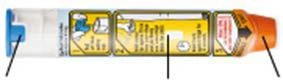
Follow the instructions only when use of the medicine is necessary.
Hold the auto-injector in the middle of its length, never at either end. To correctly administer the medicine, refer to the diagram and follow these steps:
- Never touch the orange tip with your thumb, fingers, or hand. Do not press or push the orange tip with your thumb, fingers, or hand.
- The needle extends from the orange tip.
- DO NOT remove the blue protective cap until the auto-injector is ready for use.
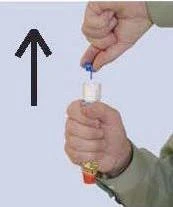
- Hold the EpiPen Senior auto-injector in your dominant hand (the hand you write with), with your thumb closest to the blue cap and your hand clenched firmly around the device (orange tip pointing downward).
- Remove the blue protective cap by pulling it straight off with the other hand.

- Hold the EpiPen Senior auto-injector approximately 10 cm from the outer thigh. The orange tip should be directed toward the outer thigh surface.
- Firmly push the EpiPen Senior auto-injector
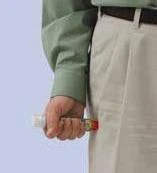
against the outer thigh at a 90-degree angle (until a click is heard).
- Press firmly and hold the auto-injector in place for 3 seconds. After this time, the injection is complete and the viewing window of the auto-injector will be darkened.
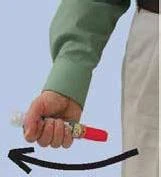
- Then remove the EpiPen Senior auto-injector (the orange needle shield will extend to cover the needle) and set it aside safely.
Gently massage the injection site for 10 seconds.
Call emergency number 112, request an ambulance, and report an anaphylactic reaction.
The EpiPen Senior auto-injector may contain a small air bubble. This does not affect the effectiveness of the medicine.
Even though most of the solution (approximately 90%) remains in the EpiPen Senior after use, it must not be reused.
If the orange needle shield has extended and the viewing window is darkened, this indicates that the correct dose of medicine has been administered.
After using the EpiPen Senior auto-injector, it should be safely placed in the provided tube and taken to the doctor’s office, hospital, or pharmacy.
EpiPen Senior is intended for use in emergency situations. After administering EpiPen Senior, medical help must always be sought immediately. Call emergency number 112, request an ambulance, and report an “anaphylactic reaction”, even if symptoms are improving. The patient should go to a hospital for observation or further treatment if necessary, because an anaphylactic reaction may recur after some time. While waiting for the ambulance, lie down with legs elevated unless this causes difficulty breathing—in that case, sit up.
Ask someone to stay with you until the ambulance arrives, in case symptoms return.
Unconscious patients should be placed in the recovery position on their side.
In case of an overdose of EpiPen Senior
In the event of an overdose or accidental injection of epinephrine, seek immediate medical help.
4. Possible side effects
Like all medicines, this medicine can cause side effects, although not everybody will experience them.
Rare cases of severe skin and soft tissue infections (injection site infection) have been reported. If symptoms such as swelling, redness, increased warmth of the skin, or pain occur at the injection site, medical help should always be sought immediately.
Accidental injection of the medicine into the hand or foot has been described, which may cause impaired blood flow to the affected area. In case of accidental injection, medical help should always be sought immediately.
Allergic reactions may occur in patients sensitive to sodium metabisulfite. Stress-induced cardiomyopathy has been observed rarely (in less than 1 in 1,000 people) in patients treated with epinephrine.
Frequency unknown (frequency cannot be estimated from available data): rapid or irregular heartbeat, sometimes forceful, severe chest pain, increased blood pressure, difficulty breathing, pallor, excessive sweating, nausea, vomiting, headache, dizziness, weakness, tremor, nervousness or anxiety, injection site reactions such as bruising, bleeding, redness.
Reporting of side effects
If any side effects occur, including any not listed in this leaflet, inform a doctor or pharmacist. Side effects can also be reported directly to the Department of Monitoring Adverse Drug Reactions of the Office for Registration of Medicinal Products, Medical Devices and Biocidal Products, Al. Jerozolimskie 181 C, 02-222 Warsaw, phone: +48 22 4921301, fax: +48 22 4921309, website: https://smz.ezdrowie.gov.pl.
Reporting side effects helps to provide more information on the safety of this medicine.
5. How to store EpiPen Senior
Keep the medicine out of sight and reach of children.
Do not use this medicine after the expiry date stated on the packaging. The expiry date refers to the last day of the specified month.
Do not store above 25°C. Do not store in a refrigerator or freeze.
Keep the auto-injector in its outer carton to protect it from light.
Epinephrine rapidly degrades when exposed to air or light, causing the solution to turn pink or brown. Remember to periodically inspect the contents of the glass container of the EpiPen Senior auto-injector and ensure that the solution is clear and has not changed colour. The auto-injector should be replaced before the expiry date or earlier if the solution changes colour or becomes a suspension (visible solid particles).
Medicines must not be disposed of via wastewater or household waste. Ask your pharmacist how to dispose of medicines no longer in use. Such measures help protect the environment.
6. Contents of the package and other information
What EpiPen Senior contains
The active substance is epinephrine (adrenaline). Each dose contains 300 micrograms of epinephrine.
The other ingredients are: sodium chloride, sodium metabisulfite (E 223), hydrochloric acid (for pH adjustment), water for injections.
What EpiPen Senior looks like and contents of the pack
A clear, colourless solution in a pre-filled syringe (auto-injector).
The auto-injector contains 2 ml of solution for injection. One auto-injector delivers a single dose (0.3 ml) of 0.3 mg epinephrine.
The length of the exposed and protected needle is approximately 15 mm.
Pack sizes:
1 auto-injector.
For more detailed information, please contact the marketing authorisation holder or the parallel importer.
Marketing authorisation holder in Austria, country of export:
Viatris Healthcare Limited
Damastown Industrial Park
Mulhuddart, Dublin 15, Dublin
Ireland
Manufacturer:
Meda Pharma GmbH & Co KG
Benzstrasse 1
61352 Bad Homburg
Germany
Parallel importer:
InPharm Sp. z o.o.
ul. Strumykowa 28/11
03-138 Warsaw
Poland
Repackaged in:
InPharm Sp. z o.o. Services sp. k.
ul. Chełmżyńska 249
04-458 Warsaw
Poland
Marketing authorisation number in Austria, country of export: 1-22473
Parallel import authorisation number: 265/25
This medicinal product is authorised in the member states of the European Economic Area under the following names:
| Member State | Medicinal product name |
| Netherlands, Belgium, Iceland, Norway, Finland, Sweden, Denmark, Austria, Slovakia, Czech Republic and Hungary | EpiPen |
| Poland | EpiPen Senior |
| Spain | ALTELLUS 0.3 adultos |