Epimedac 2 mg/ml solution for injection
Poland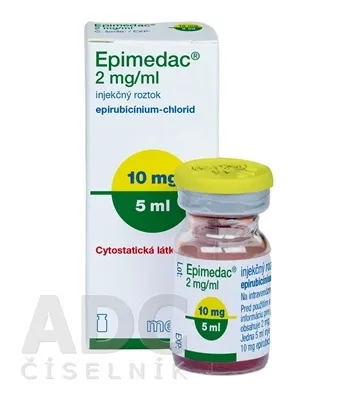
Table of Contents
- Package leaflet: Information for the patient
- 1. What Epimedac is and what it is used for
- 2. Important information before using Epimedac
- 3. How to administer Epimedac
- 4. Possible adverse reactions
- 5. How to store Epimedac
- 6. Contents of the pack and other information
- Information intended exclusively for medical professionals:
Package leaflet: Information for the patient
Epimedac, 2 mg/ml, solution for injection
Epirubicini hydrochloridum
Please read the entire leaflet carefully before receiving this medicine, as it contains
important information for the patient.
- Keep this leaflet for future reference.
- If you have any questions, please consult your doctor, pharmacist, or nurse.
- If you experience any adverse reactions, including any not listed in this leaflet, inform your doctor, pharmacist, or nurse. See section 4.
Table of contents
- What Epimedac is and what it is used for
- Important information before receiving Epimedac
- How to administer Epimedac
- Possible side effects
- How to store Epimedac
- Contents of the pack and other information
1. What Epimedac is and what it is used for
Epirubicin hydrochloride – the active substance in Epimedac – belongs to a group of active substances called anthracyclines. These cell-damaging (cytotoxic) agents are used in the treatment of cancers.
Epimedac is used in the treatment of:
- breast cancer;
- advanced ovarian cancer;
- stomach cancer;
- small cell lung cancer (a specific type of lung cancer);
- superficial or locally limited bladder cancer.
2. Important information before using Epimedac
Do not use Epimedac if
- the patient is allergic to epirubicin hydrochloride or any of the other ingredients of this medicine (listed in section 6) or to anthracyclines (e.g. doxorubicin and daunorubicin).
- the patient is allergic to anthracenediones (a group of medicines used in cancer treatment).
- the patient has permanent bone marrow suppression (inhibition of white blood cell production in the bone marrow) caused by previous treatment with other cytotoxic medicines or radiotherapy.
- the patient is being treated with the maximum doses of epirubicin or other anthracyclines (e.g. doxorubicin or daunorubicin) and anthracenediones (medicines used in cancer treatment).
- the patient has heart problems now or in the past (e.g. heart rhythm disorders, reduced heart function, heart attack, myocardial disorders, acute myocarditis, unstable angina pectoris).
- the patient has severe liver function disorders.
- the patient has systemic infection (an infection affecting the whole body).
- the patient is breastfeeding.
- the patient has severe inflammation of the mucous membrane lining the mouth and/or stomach.
When administering into the urinary bladder, do not use Epimedac if
- the patient has a urinary tract infection.
- the tumour has penetrated through the wall of the urinary bladder.
- there are problems with inserting a catheter into the urinary bladder.
- the patient has cystitis (inflammation of the urinary bladder).
- the patient has blood in the urine.
- the patient has bladder spasms.
- a large volume of urine remains in the bladder after urination.
Warnings and precautions
Exercise particular caution (discuss with your doctor) if
- the patient has liver or kidney function disorders.
- during infusion the patient experiences discomfort at or near the injection site (the solution may have leaked into surrounding tissues).
- the patient has reduced numbers of white and red blood cells and platelets.
- the patient has inflammation of the oral cavity or mucous membranes (sore lips or mouth ulcers).
- the patient has previously undergone radiotherapy of the chest or has received medicines that may have adverse effects on the heart.
- the patient has recently been vaccinated or any vaccinations are planned in the near future.
- the patient has previously received trastuzumab (a medicine used in cancer treatment).
Children
The safety and efficacy of Epimedac in children have not been established.
Epimedac and other medicines
Tell your doctor or pharmacist about all medicines the patient is currently taking or has recently taken, including those obtained without a prescription, as well as any medicines the patient plans to take, and especially:
- medicines that may affect the heart, for example other anticancer medicines (such as 5-fluorouracil, cyclophosphamide, cisplatin, taxanes) or calcium channel blockers (e.g. verapamil, dexverapamil), and radiotherapy administered simultaneously or previously.
- medicines that may affect liver function.
- cimetidine (a medicine usually used to treat stomach ulcers and heartburn); cimetidine may enhance the effect of epirubicin.
- paclitaxel (a medicine used in cancer treatment): treatment with epirubicin and paclitaxel should be administered with at least a 24-hour interval between the administration of these two medicines.
- docetaxel (a medicine used in cancer treatment).
- quinine (a medicine used to treat malaria and leg muscle cramps).
- interferon alfa-2b (a medicine used in certain types of cancer and lymphomas, and in certain forms of hepatitis).
- medicines that may affect blood morphology (e.g. other cytotoxic medicines, antibiotics such as sulfonamides and chloramphenicol, antiepileptic medicines such as phenytoin, antiretroviral medicines used in the treatment of HIV infections, and analgesics such as aminopyrine derivatives).
- dexrazoxane (used to prevent cardiotoxicity caused by chronic accumulation of epirubicin).
- trastuzumab. Removal of trastuzumab (a medicine used in the treatment of certain types of cancer) from the body may take up to 7 months. Trastuzumab may affect the heart; therefore, patients should not use epirubicin for up to 7 months after stopping trastuzumab treatment. If epirubicin is used before this period has elapsed, heart function should be closely monitored.
- antibiotics such as sulfonamides and certain diuretics ("diuretics"); these may cause increased levels of uric acid in the blood.
- heparin (a medicine preventing blood clotting); this may lead to loss of effectiveness of both epirubicin and heparin.
If vaccination is necessary, it is essential to inform the doctor before administering the vaccine that the patient is receiving epirubicin.
Pregnancy, breastfeeding and fertility
If the patient is pregnant or breastfeeding, suspects she may be pregnant, or is planning to have a child, she should consult her doctor before using this medicine.
Epirubicin hydrochloride – the active substance in Epimedac – may cause birth defects; therefore, it is essential to inform the doctor if the patient suspects she is pregnant. Cases involving epirubicin have been reported in pregnant women, including heart disorders in newborns and fetuses, and even fetal death. Epimedac must not be administered during pregnancy unless clearly recommended by a doctor. Avoid becoming pregnant if the woman or her partner is taking Epimedac.
Women of childbearing age should use an effective method of contraception during treatment with epirubicin and for at least 7 months after the last dose. Men should use an effective method of contraception during treatment and for at least 4 months after the last dose. If pregnancy occurs in the patient or the patient's partner during treatment with Epimedac, genetic counselling is recommended.
Men planning to have children should seek advice about sperm cryopreservation before starting treatment with Epimedac.
The patient must stop breastfeeding before treatment with Epimedac, during such treatment, and for at least 7 days after the last dose, because Epimedac may have a harmful effect on the breastfed child.
Driving and using machines
Epimedac may cause nausea and vomiting, which may temporarily impair the ability to drive and operate machinery.
Epimedac contains sodium
The medicine contains 0.154 mmol (or 3.54 mg) of sodium per ml of injection solution. Different pack sizes of Epimedac contain the following amounts of sodium:
Vial of 5 ml: This pack contains less than 1 mmol (23 mg) of sodium, meaning the medicine is considered "sodium-free".
Vial of 10 ml: This pack contains 35.42 mg of sodium (main component of table salt). This corresponds to 1.77% of the maximum recommended daily sodium intake in the adult diet.
Vial of 25 ml: This pack contains 88.55 mg of sodium (main component of table salt). This corresponds to 4.43% of the maximum recommended daily sodium intake in the adult diet.
Vial of 50 ml: This pack contains 177.1 mg of sodium (main component of table salt). This corresponds to 8.86% of the maximum recommended daily sodium intake in the adult diet.
Vial of 100 ml: This pack contains 354.21 mg of sodium (main component of table salt). This corresponds to 17.71% of the maximum recommended daily sodium intake in the adult diet.
3. How to administer Epimedac
Epimedac must be administered to patients only under the supervision of a physician specialized in this type of treatment. Before and during treatment with Epimedac, the physician will monitor various laboratory parameters (e.g. red blood cell count, blood uric acid concentration, patient's liver function) and will carefully monitor heart function. Heart function monitoring will continue for several weeks after completion of Epimedac treatment.
The dosage of Epimedac depends on the type of disease for which the patient is being treated, the body's response to treatment, and other medications the patient is taking. The dose size of Epimedac is based on the patient's body surface area. The dose is calculated according to the patient's height and weight.
The recommended dose of Epimedac is 60–90 mg per square meter of body surface area. The medicine is administered as an intravenous injection, i.e. into a blood vessel (vein), over three to five minutes. The patient will receive the injection every three weeks.
In the treatment of small cell lung cancer, a higher dose of 120 mg per square meter of body surface area is administered as an intravenous injection over three to five minutes or as an infusion (drip) lasting up to 30 minutes, also every three weeks.
In breast cancer treatment, the physician determines the dosing regimen and management.
Doses are reduced if the patient has low white blood cell and platelet counts, liver or kidney function disorders, or if the drug is administered together with other cytotoxic drugs.
Epimedac may also be administered directly into the urinary bladder for the treatment of superficial bladder cancer or to prevent recurrence of cancer after tumor removal surgery. The dosage depends on the type of bladder cancer.
To prevent undesirable dilution of Epimedac by urine, the patient should not take fluids for 12 hours before the procedure.
The patient remains under close observation before, during, and after treatment with Epimedac.
Overdose of Epimedac
If a dose of Epimedac higher than recommended is administered, symptoms such as severe heart disturbances, significant reduction in blood cell counts, severe inflammation of the mucous membranes lining the mouth and stomach, and severe circulatory disturbances may occur. Adverse reactions may be more intense.
If the above symptoms occur, Epimedac administration will be immediately discontinued and symptomatic treatment initiated. In case of severe heart disturbances, it may be necessary to contact a physician specialized in heart diseases. In case of significant reduction in blood cell counts, the patient may receive blood transfusions.
4. Possible adverse reactions
Like all medicines, this medicine can cause adverse reactions, although not everyone will experience them.
You should immediately inform your doctor so you can discuss further management if any adverse reactions occur.
For one or two days after administration of Epimedac, urine may appear red in colour. This is normal and should not be a cause for concern.
Very common: may affect more than 1 in 10 people
- Infection
- Suppression of white blood cell formation in the bone marrow (myelosuppression), reduced number of white blood cells (leukopenia), reduced number of specific types of white blood cells (granulocytopenia and neutropenia), reduced number of red blood cells (anemia), and low number of specific white blood cells accompanied by fever (febrile neutropenia), reduced number of platelets (thrombocytopenia)
- Inflammation of mucous membranes, inflammation of the mouth (stomatitis), vomiting, watery stools or frequent bowel movements (diarrhea), nausea which may lead to loss of appetite and abdominal pain
- Hair loss, usually reversible
- Red discolouration of urine for 1–2 days after treatment
- Absence of menstruation
- Inflammation of the conjunctiva, inflammation of the cornea of the eye
- Hot flushes
- Skin changes
- Phlebitis (inflammation of veins)
- Feeling of discomfort (malaise), fever
- Changes in activity of certain liver enzymes (called aminotransferases)
- Inflammation of the bladder (chemical cystitis), sometimes with blood in the urine, observed after intravesical administration
Common: may affect up to 1 in 10 people
- Dehydration
- Impaired heart function (congestive heart failure). Symptoms may include:
o shortness of breath (dyspnea)
o fluid accumulation in the legs (edema)
o liver enlargement
o fluid accumulation in the abdominal cavity (ascites)
o fluid accumulation in the lungs (pulmonary edema)
o fluid accumulation between the chest wall and lungs (pleural effusion)
o third heart sound (gallop rhythm) - Local toxic effects on skin tissue, rash, itching, excessive pigmentation of the skin and nails, skin changes
- Redness along the vein (erythema at infusion site)
- Bleeding
- Skin redness
- Chills
- Loss/lack of appetite
- Asymptomatic changes in heart function (asymptomatic reduction in left ventricular ejection fraction)
- Life-threatening irregular heartbeat (ventricular tachycardia), slow heartbeat, disturbances in the heart's electrical conduction system (atrioventricular block, bundle branch block)
- Bladder inflammation (chemical cystitis), pain and burning during urination, blood in urine, frequent urination, observed after intravesical administration
- Gastrointestinal ulcers, erosions and changes in the stomach, gastrointestinal bleeding, retrosternal pain, indigestion and difficulty swallowing due to esophagitis, pain or burning in the gastrointestinal tract, inflammation of gastrointestinal and oral mucosa with burning sensation and pain
Uncommon: may affect up to 1 in 100 people
- Certain types of blood cancers (acute lymphoblastic leukemia, acute myeloblastic leukemia)
- Blood infection (sepsis), lung infection (pneumonia)
- Feeling of weakness (asthenia)
- Skin redness (erythema), urticaria
- Blockage of a blood vessel
- Swelling and pain in arms or legs due to inflammation of blood vessels, with possible formation of blood clots
- Blood clots in the lungs causing chest pain and shortness of breath
Rare: may affect up to 1 in 1,000 people
- Sudden, life-threatening allergic reaction. Symptoms include sudden allergic symptoms such as rash, itching or hives on the skin, swelling of the face, lips, tongue or other body parts, shortness of breath, wheezing or difficulty breathing; allergic reactions after intravesical administration of the medicine
- Increased blood uric acid levels
- Dizziness
- Cardiotoxic effects leading to abnormalities in ECG (electrocardiogram), various types of irregular heartbeat (arrhythmias), or heart muscle disease (cardiomyopathy)
- Absence of sperm in semen
Frequency not known: frequency cannot be estimated from available data
- Life-threatening condition caused by very low blood pressure due to blood infection (septic shock)
- Life-threatening condition caused by very low blood pressure (shock)
- Sudden drop in blood pressure sometimes accompanied by skin reactions or rash (anaphylactic shock)
- Tissue hypoxia due to suppression of blood cell production in the bone marrow (myelosuppression)
- Blockage of a blood vessel due to a migrating blood clot (thromboembolic disease)
- Thickening of vein walls, local pain, severe inflammation of subcutaneous tissue
- Excessive discolouration of the oral mucosa
- Hypersensitivity to light, skin hypersensitivity in previously irradiated areas (recurrence of radiation-induced symptoms)
- Severe tissue damage following leakage of the injected solution into surrounding tissues
- Headache
- Pain
Reporting of adverse reactions
If any adverse symptoms occur, including any adverse symptoms not listed in this leaflet, you should inform your doctor, pharmacist, or nurse. Adverse reactions can be reported directly to the Department of Monitoring Adverse Drug Reactions of the Office for Registration of Medicinal Products, Medical Devices and Biocidal Products:
Al. Jerozolimskie 181C, 02-222 Warsaw,
tel.: +48 22 49-21-301, fax: +48 22 49-21-309,
website: https://smz.ezdrowie.gov.pl
Adverse reactions can also be reported to the marketing authorization holder.
Reporting adverse reactions helps provide more information on the safety of this medicine.
5. How to store Epimedac
Store in a refrigerator (2°C – 8°C).
Keep the vial in the outer packaging to protect it from light.
Keep the medicine out of the sight and reach of children.
Do not use this medicine after the expiry date stated on the label and carton following:
"Expiry date (EXP)". The expiry date refers to the last day of the stated month.
Medicines must not be disposed of via wastewater or household waste. Ask your pharmacist how to dispose of medicines no longer required. This will help protect the environment.
6. Contents of the pack and other information
What Epimedac contains
- The active substance is epirubicin hydrochloride.
- The other components are: sodium chloride, hydrochloric acid and water for injections.
1 ml of solution contains 2 mg of epirubicin hydrochloride.
One 5 ml vial contains 10 mg of epirubicin hydrochloride.
One 10 ml vial contains 20 mg of epirubicin hydrochloride.
One 25 ml vial contains 50 mg of epirubicin hydrochloride.
One 50 ml vial contains 100 mg of epirubicin hydrochloride.
One 100 ml vial contains 200 mg of epirubicin hydrochloride.
What Epimedac looks like and contents of the pack
Epimedac is a clear, red solution.
The medicine is supplied in single vials.
Marketing Authorisation Holder and Manufacturer
medac
Gesellschaft für klinische
Spezialpräparate mbH
Theaterstr. 6
22880 Wedel
Germany
Tel.: +49 4103 8006-0
Fax: +49 4103 8006-100
This medicinal product is authorised in the European Economic Area and in the United Kingdom (Northern Ireland) under the following names:
Denmark Epirubicin "medac" 2 mg/ml solution for injection
Finland Epirubicin medac 2 mg/ml solution for injection, solution
Epirubicin medac 2 mg/ml injektionsvätska, lösning
Germany Epimedac 2 mg/ml solution for injection
Norway Epirubicin medac 2 mg/ml solution for injection, solution
Poland Epimedac 2 mg/ml solution for injection
Portugal Epirrubicina medac 2 mg/ml solução injectável
Slovakia Epimedac 2 mg/ml injekčný roztok
United Kingdom
(Northern Ireland) Epirubicin hydrochloride 2 mg/ml solution for injection
Information intended exclusively for medical professionals:
Epimedac may be diluted in 50 mg/ml (5%) glucose solution or in 9 mg/ml (0.9%) sodium chloride solution and administered as an intravenous infusion. The infusion solution should be prepared immediately before use.
The injection solution does not contain preservatives. Any unused product remaining in the vial or waste material must be disposed of in accordance with local regulations.
Pharmaceutical incompatibilities
Prolonged contact of the medicinal product with solutions of alkaline pH (including sodium bicarbonate solutions) should be avoided, as this may lead to hydrolysis (decomposition) of the active substance. Only the diluents described below should be used.
Physical incompatibility of the medicinal product with heparin has been reported.
Do not mix the medicinal product with other medicinal products except those mentioned below.
Stability after preparation for use
Epimedac may be diluted under aseptic conditions in 50 mg/ml (5%) glucose solution or in 9 mg/ml (0.9%) sodium chloride solution and administered as an intravenous infusion. Chemical and physical stability has been demonstrated for 48 hours at 25 °C, protected from light.
From a microbiological standpoint, the product should be used immediately. If not used immediately, the user is responsible for the storage conditions and duration of storage. The storage time should not exceed 24 hours at 2–8 °C, provided that dilution was performed under controlled and validated aseptic conditions.
Guidelines for safe preparation and disposal of cytotoxic medicinal products:
- Preparation of the infusion solution should be carried out by trained personnel under aseptic conditions.
- Preparation of the infusion solution should be performed in a designated aseptic area.
- Appropriate disposable protective gloves, safety goggles, gown, and face mask should be worn.
- Safety measures should be applied to prevent accidental contact of the medicinal product with the eyes. In case of contact with the eyes, rinse the eye thoroughly with a large amount of water and (or) 9 mg/ml (0.9%) sodium chloride solution.
- In case of skin contact, wash the skin thoroughly with soap and water or sodium bicarbonate solution. Do not scrub the skin with a stiff brush. Wash hands after removing gloves.
- Spilled medicinal product should first be covered with diluted sodium hypochlorite solution (containing 1% chlorine), preferably by soaking, then rinsed with water. All materials used for cleaning must be disposed of as described below.
- Pregnant women should not handle cytotoxic agents.
- Extreme caution and appropriate safety measures must be taken when disposing of items (syringes, needles, etc.) used for reconstitution and (or) dilution of cytotoxic medicinal products. Any unused remnants of the medicinal product or waste material must be disposed of in accordance with local regulations.