Ephedrine hydrochloride wzf
Poland
Table of Contents
- Package leaflet: Information for the patient
- 1. What Ephedrinum hydrochloricum WZF is and what it is used for
- 2. Important information before using Ephedrinum hydrochloricum WZF
- 3. How to use Ephedrinum hydrochloricum WZF
- 4. Possible adverse effects
- 5. How to store Ephedrinum hydrochloricum WZF
- 6. Contents of the pack and other information
Package leaflet: Information for the patient
EPHEDRINUM HYDROCHLORICUM WZF, 25 mg/ml, solution for injection
Ephedrini hydrochloridum
Please read all of this leaflet carefully before using this medicine because it contains
important information for the patient.
- Keep this leaflet, as you may need to read it again.
- If you have any further questions, please ask your doctor, pharmacist or nurse.
- This medicine has been prescribed for a specific individual. Do not pass it on to others. It may harm someone else, even if their symptoms are the same.
- If the patient experiences any adverse reactions, including any adverse reactions not listed in this leaflet, inform a doctor, pharmacist or nurse. See section 4.
Leaflet contents
- What Ephedrinum hydrochloricum WZF is and what it is used for
- Important information before using Ephedrinum hydrochloricum WZF
- How to use Ephedrinum hydrochloricum WZF
- Possible adverse reactions
- How to store Ephedrinum hydrochloricum WZF
- Contents of the pack and other information
1. What Ephedrinum hydrochloricum WZF is and what it is used for
Ephedrinum hydrochloricum WZF contains ephedrine, which relaxes smooth muscles of the bronchi
and stimulates the respiratory center. Ephedrine accelerates slowed heart activity and increases
the force of cardiac contractions, and also constricts peripheral blood vessels, resulting in increased blood pressure.
Ephedrinum hydrochloricum WZF is used:
- in bronchospastic conditions;
- in low blood pressure occurring during spinal or epidural anaesthesia.
2. Important information before using Ephedrinum hydrochloricum WZF
When not to use Ephedrinum hydrochloricum WZF:
- if the patient is allergic to ephedrine, to other medicines of similar structure (e.g. phenylephrine, pseudoephedrine), or to any of the other ingredients of this medicine (listed in section 6);
- if the patient has arterial hypertension or other heart diseases (e.g. ischaemic heart disease);
- if the patient has been diagnosed with hyperthyroidism;
- if the patient has benign prostatic hyperplasia.
Warnings and precautions
Before starting treatment with Ephedrinum hydrochloricum WZF, the patient should discuss this with a doctor or nurse. Ephedrine is administered exclusively by medical personnel.
The doctor will exercise particular caution when using ephedrine and will take appropriate measures:
- if the patient has angina pectoris (manifesting as chest pain);
- if the patient has severe heart disease;
- if the patient has diabetes (ephedrine increases the risk of hypoglycaemia - reduced blood glucose concentration);
- if the patient has closed-angle glaucoma.
Patients with any of the above conditions should inform their doctor, if their health condition allows.
If the patient experiences shortness of breath or chest pain, medical advice should be sought immediately. The doctor should be informed before administering this medicine if the patient has previously suffered from heart disease, irregular heartbeat, or chest pain.
Prolonged administration of the medicine does not lead to its accumulation in the body; however, tolerance (characterized by progressively diminished response to the drug with continued use, necessitating dose escalation) and dependence may occur (see section 4. "Possible side effects").
In patients with benign prostatic hyperplasia, ephedrine may cause difficulty in urination, up to urinary retention.
Prolonged use of ephedrine may cause restlessness. Long-term use of ephedrine should be avoided in patients with neurosis.
Ephedrine may be used in children for bronchospastic conditions administered subcutaneously, and for treatment of hypotension, after dilution, administered intravenously.
Ephedrine may yield positive results in anti-doping tests in athletes.
Ephedrinum hydrochloricum WZF and other medicines
Inform the doctor about all medicines currently used or recently used, as well as any medicines the patient intends to use, if possible and if the patient's condition allows.
Do not use ephedrine together with other sympathomimetic agents (e.g. pseudoephedrine, phenylephrine, methylphenidate, phenylpropanolamine) due to the risk of acute hypertension.
In patients receiving ephedrine and concurrently taking cardiac glycosides, quinidine, or tricyclic antidepressants, the risk of developing arrhythmias is increased.
The following may affect the action of ephedrine:
- antidepressants known as monoamine oxidase inhibitors (e.g. moclobemide, selegiline), especially if the patient has taken these medicines within the last 2 weeks;
- antidepressants known as selective noradrenaline and serotonin reuptake inhibitors (e.g. venlafaxine, duloxetine);
- tricyclic antidepressants (e.g. amitriptyline);
- linezolid (an antibacterial agent);
- acetazolamide (used in glaucoma treatment) and other urinary alkalinizing agents;
- antihypertensive medicines;
- doxapram (a respiratory stimulant);
- guanidine and its derivatives (medicines used in diabetes, e.g. metformin);
- medicines known as cardiac glycosides, e.g. digoxin;
- inhaled anaesthetic agents, e.g. halothane, cyclopropane;
- oxytocin (a hormone administered during childbirth to accelerate labour);
- medicines used in asthma treatment, e.g. salbutamol.
Ephedrine affects the action of:
- dexamethasone (an anti-inflammatory medicine);
- phenytoin (an anticonvulsant);
- barbiturates (hypnotic medicines);
- primidone (an anticonvulsant).
Concomitant use with theophylline (a bronchodilator) may cause insomnia, excessive nervousness, and gastrointestinal discomfort.
Pregnancy and breastfeeding
If the patient is pregnant or breastfeeding, suspects she may be pregnant, or is planning to have a child, she should consult a doctor before using this medicine.
The decision to use this medicine during pregnancy will be made by the doctor.
Ephedrinum hydrochloricum WZF should not be used during breastfeeding.
Driving and operating machinery
Due to the condition requiring ephedrine use (treatment of hypotension during anaesthesia), the patient should not drive or operate machinery.
The medicine does not affect the ability to drive or operate machinery. However, after doses significantly higher than recommended, or in particularly sensitive individuals, ephedrine may cause excessive nervous system stimulation and adversely affect performance of these activities.
3. How to use Ephedrinum hydrochloricum WZF
Ephedrinum hydrochloricum WZF is administered exclusively by medical personnel.
- The dosage is determined by the physician. The dose administered depends on the patient's age, body weight, and general health condition.
- In cases of respiratory tract spasms in adults, ephedrine is administered intramuscularly or subcutaneously; in children, it is administered subcutaneously only.
- In the treatment of hypotension, ephedrine is administered slowly intravenously after prior dilution.
- During intravenous administration of ephedrine, medical personnel monitor heart function and blood pressure to assess the patient's response to the medication.
Use of a higher than recommended dose of Ephedrinum hydrochloricum WZF
Ephedrine is administered by medical personnel, therefore it is unlikely that a patient will receive a higher dose than recommended. If a patient suspects that the dose received was too high, they should inform the doctor or nurse immediately.
Following administration of a higher than recommended dose of ephedrine, the following may occur: nausea, vomiting, elevated body temperature, palpitations, tachycardia (increased heart rate), elevated arterial blood pressure, hallucinations, delusions, and disturbances in thinking, decreased arterial blood pressure, and anuria (absence of urine production). Significant overdose may lead to respiratory depression, seizures, and coma. In the event these symptoms occur, the physician will initiate appropriate treatment.
4. Possible adverse effects
Like all medicines, this medicine can cause adverse effects, although not everyone will experience them.
Common (may affect less than 1 in 10 people):
increased blood pressure, palpitations, rapid heartbeat, nervousness, irritability,
restlessness, weakness, headache, excessive sweating, difficulty sleeping, confusion, anxiety,
depression, shortness of breath, nausea, vomiting.
Rare (may affect less than 1 in 1,000 people):
heart rhythm disorders, acute urinary retention.
Frequency not known (cannot be estimated from available data):
angina (chest pain), slowed heartbeat, cardiac arrest, low blood pressure,
cerebral haemorrhage, coagulation disorders, tremors, excessive salivation,
hypersensitivity, fear, paranoia and hallucinations, episodes of closed-angle glaucoma,
pulmonary oedema, decreased appetite, diarrhoea, abdominal pain, low blood potassium levels,
changes in blood glucose concentration.
With prolonged use, dependence may develop, associated with increased
aggression and psychotic disorders resembling schizophrenia.
Seizures may occur after administration of ephedrine doses higher than recommended.
In addition, difficulty in urination up to urinary retention may occur, especially
in patients with benign prostatic hyperplasia, as well as rare cases of skin allergy in the form of
rash.
Reporting of adverse effects
If any adverse effects occur, including any adverse effects not listed
in this leaflet, inform your doctor, pharmacist or nurse. Adverse effects
can be reported directly to the Department of Monitoring of Adverse Drug Reactions of the Office for Registration of Medicinal Products, Medical Devices and Biocidal Products
Al. Jerozolimskie 181C
02-222 Warsaw
Phone: +48 22 49 21 301
Fax: +48 22 49 21 309
Website: https://smz.ezdrowie.gov.pl
Adverse effects can also be reported to the marketing authorization holder.
Reporting adverse effects helps to provide more information on the safety of the medicine.
5. How to store Ephedrinum hydrochloricum WZF
Store the ampoules in the outer packaging to protect from light, at a temperature below 25°C. Do not freeze.
Keep the medicine out of the sight and reach of children.
Do not use this medicine after the expiry date stated on the carton and ampoule. The expiry date refers to the last day of the stated month.
The label on the packaging shows the expiry date after the abbreviation EXP, and the batch number after the abbreviation Lot.
Medicines must not be disposed of via wastewater or household waste. Ask your pharmacist how to dispose of medicines no longer in use. This will help protect the environment.
6. Contents of the pack and other information
What Ephedrinum hydrochloricum WZF contains
- The active substance is ephedrine hydrochloride. Each ml of solution contains 25 mg of ephedrine hydrochloride.
- Other ingredients: hydrochloric acid 10% (for pH adjustment), water for injections.
What Ephedrinum hydrochloricum WZF looks like and contents of the pack
Ephedrinum hydrochloricum WZF is a clear, colourless liquid.
The pack consists of a cardboard box containing 10 ampoules made of colourless glass with a capacity of 1 ml.
Marketing Authorisation Holder and Manufacturer
POLPHARMA S.A. Pharmaceutical Works
ul. Pelplińska 19, 83-200 Starogard Gdański
tel. + 48 22 364 61 01
Information intended exclusively for medical professionals:
EPHEDRINUM HYDROCHLORICUM WZF, 25 mg/ml, solution for injection
Ephedrini hydrochloridum
Preparation and administration of Ephedrinum hydrochloricum WZF
- Ephedrine may be administered intravenously only under medical supervision.
- Prior to intravenous administration, the medicinal product must be diluted.
- The product may be diluted aseptically with 0.9% NaCl solution. Sodium content originating from the diluent should be taken into account when calculating total sodium content in the prepared diluted solution. For accurate information regarding sodium content in the diluent solution used, refer to the patient leaflet of the diluent used.
- To obtain a solution containing 5 mg of ephedrine per 1 ml, the content of one ampoule (1 ml) should be diluted with 0.9% NaCl solution to a final volume of 5 ml.
- To obtain a solution containing 2.5 mg of ephedrine per 1 ml, the content of one ampoule (1 ml) should be diluted with 0.9% NaCl solution to a final volume of 10 ml.
- Due to microbiological concerns, the solution for injection should be prepared immediately before use.
- If necessary, the prepared solution may be stored for up to 24 hours at a temperature below 25°C, provided that dilution is performed under controlled and validated aseptic conditions. This is at the user's responsibility.
- Any unused solution remaining after 24 hours must be discarded.
Precautions for use of Ephedrinum hydrochloricum WZF
- Ephedrine should be used with caution in patients with angina pectoris due to its positive chronotropic and inotropic effects.
- Sympathomimetic agents, including Ephedrinum hydrochloricum WZF, may affect the cardiovascular system. Post-marketing surveillance data and published literature indicate rare cases of myocardial ischaemia associated with the use of beta-agonist drugs. Patients with severe heart disease (e.g. arrhythmia, tachycardia, severe heart failure) receiving Ephedrinum hydrochloricum WZF should be advised to seek medical advice if they experience chest pain or other symptoms indicating worsening cardiac disease. Symptoms such as dyspnoea and chest pain should be carefully evaluated, as they may originate from either the respiratory or cardiovascular system. Particular caution is required when administering ephedrine to patients with arteriosclerosis, hypertension, aneurysm, or other conditions involving vascular constriction.
- The risk of arrhythmias is increased in patients receiving ephedrine concurrently with cardiac glycosides, quinidine, or tricyclic antidepressants.
- Caution should be exercised in patients with diabetes, as ephedrine increases the risk of hypoglycaemia.
- Caution should be exercised in patients with closed-angle glaucoma.
- In patients with benign prostatic hyperplasia, ephedrine may cause difficulty in urination up to and including urinary retention due to sphincter contraction and simultaneous detrusor relaxation.
- Prolonged use of ephedrine may cause restlessness. Prolonged use of ephedrine should be avoided in patients with neurosis. Children are less susceptible to the stimulant effects of ephedrine.
- Prolonged administration of the product does not lead to its accumulation; however, tolerance and dependence have been observed.
- Ephedrine may yield positive results in anti-doping tests in athletes.
Instructions for opening the ampoule
Before opening the ampoule, ensure that all the solution is in the lower part of the ampoule.
Gently shake the ampoule or tap it with a finger to facilitate the solution flowing down.
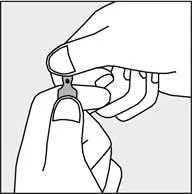
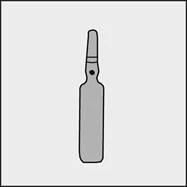
Each ampoule has a coloured dot (see Figure 1) indicating the score line located beneath it.
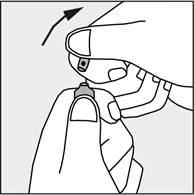
- To open the ampoule, hold it vertically in both hands with the coloured dot facing towards you (see Figure 2). The upper part of the ampoule should be gripped so that the thumb is positioned above the coloured dot.
- Press in the direction of the arrow shown in Figure 3. Ampoules are for single use only and should be opened immediately before use. Any unused portion of the product must be destroyed in accordance with applicable regulations.
Figure 1 Figure 2 Figure 3
Dosage
Bronchospastic conditions
Adults:
Intramuscularly or subcutaneously: 12.5 mg to 25 mg. Maximum dose: up to 150 mg within 24 hours in divided doses.
Children:
Subcutaneously: 3 mg/kg body weight per day or 25 to 100 mg/m² body surface area per day, administered in 4–6 divided doses.
Hypotension during spinal and epidural anaesthesia
Adults and children over 12 years of age:
Intravenously, only after dilution (see dilution instructions above). Administer slowly, usually in doses of 2.5 mg to 5 mg (maximum 10 mg). Doses may be repeated every 3–4 minutes depending on response, up to a maximum cumulative dose of 30 mg. If administration of 30 mg of ephedrine does not produce the desired effect, consideration should be given to using an alternative agent. The maximum daily dose of 150 mg in divided doses must not be exceeded.
Children under 12 years of age:
Intravenously, only after dilution (see dilution instructions above). Administer slowly in a dose of 0.5 to 0.75 mg/kg body weight or 17–25 mg/m² body surface area; doses may be repeated every 3–4 minutes as needed, depending on response.
Elderly patients:
No dosage adjustment is necessary.
In justified cases, in adult patients prior to central block, ephedrine may be administered prophylactically intramuscularly without dilution in a dose of 12.5 mg to 25 mg.