Epanutin parenteral
Poland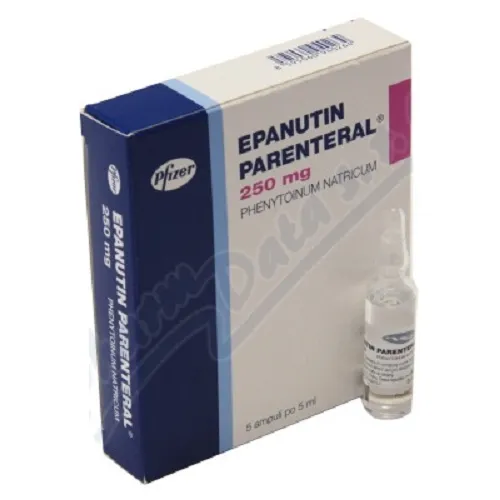
Table of Contents
- Package leaflet: Information for the patient
- 1. What Epanutin Parenteral is and what it is used for
- 2. Important information before using Epanutin Parenteral
- 3. How to use Epanutin Parenteral
- 4. Possible adverse effects
- 5. How to store Epanutin Parenteral
- 6. Contents of the pack and other information
- Information intended exclusively for healthcare professionals:
Package leaflet: Information for the patient
Epanutin Parenteral, 50 mg/ml, solution for injection
Phenytoinum natricum
Please read all of this leaflet carefully before using this medicine, because it contains
important information for the patient.
- Keep this leaflet, as you may need to read it again.
- If you have any further questions, please consult your doctor or pharmacist.
- This medicine has been prescribed for a specific individual. Do not pass it on to others. This medicine may harm others, even if their symptoms are the same.
- If you experience any adverse reactions, including any not listed in this leaflet, tell your doctor or pharmacist. See section 4.
Leaflet contents:
- What Epanutin Parenteral is and what it is used for
- Important information before using Epanutin Parenteral
- How to use Epanutin Parenteral
- Possible side effects
- How to store Epanutin Parenteral
- Contents of the pack and other information
1. What Epanutin Parenteral is and what it is used for
The active substance, phenytoin, belongs to the group of hydantoin derivatives. It is a potent anticonvulsant medicine used:
- to control status epilepticus or recurrent epileptic seizures occurring in rapid succession;
- to prevent seizures following neurosurgical procedures and/or head trauma;
- in acute cardiac arrhythmias, e.g. in the treatment of life-threatening ventricular arrhythmias or arrhythmias due to digoxin toxicity, during general anaesthesia, cardiac surgery, cardiac catheterization, and electrical defibrillation. Phenytoin is used when there is no clinical improvement after administration of another antiarrhythmic drug or when any factor prevents the use of another drug. Phenytoin does not increase survival in patients with ventricular arrhythmias.
2. Important information before using Epanutin Parenteral
When not to use Epanutin Parenteral
- in patients with hypersensitivity to the active substance or other hydantoins, or to any of the other components of this medicine (listed in section 6),
- due to the high pH of the solution, do not administer the medicine into an artery,
- in patients with sinus bradycardia,
- in patients with sinoatrial block,
- in patients with second- and third-degree atrioventricular block,
- in patients with episodes of loss of consciousness due to Adams-Stokes syndrome,
- in combination with delavirdine (due to the risk of reduced therapeutic efficacy and development of resistance to delavirdine or to non-nucleoside reverse transcriptase inhibitors).
Warnings and precautions
Before starting treatment with Epanutin Parenteral, discuss this with your doctor or
pharmacist, especially:
- in patients with severe heart failure,
- in patients with pulmonary function disorders,
- in patients with hypotension (systolic blood pressure below 90 mmHg),
- in patients with a history of severe blood cell and bone marrow damage,
- during the first three months after myocardial infarction,
- in patients with kidney or liver disease,
- in patients with hypoalbuminemia,
- in patients with hyperbilirubinemia,
- in patients taking preparations containing St. John's wort extract,
- in patients with diabetes,
- in patients with porphyria,
- in women of childbearing age or pregnant women,
- in patients of Taiwanese, Japanese, Malaysian or Thai origin whose test results indicate they are carriers of the CYP2C9*3 variant.
If Epanutin Parenteral is used during pregnancy, there is a risk of fetal harm.
Women of childbearing age should use effective contraception during treatment with
Epanutin Parenteral (see section "Pregnancy, breastfeeding and effects on fertility").
Suicidal thoughts and behaviours have been reported in patients taking antiepileptic medicines for various indications. If symptoms suggesting the presence of suicidal thoughts or behaviours occur, seek medical advice immediately.
Patients taking anticonvulsant medicines may develop a hypersensitivity syndrome.
The risk of hypersensitivity is increased in:
- black patients,
- patients who previously experienced hypersensitivity,
- patients with a family history of hypersensitivity,
- immunocompromised patients.
Hypersensitivity syndrome causes more severe symptoms in previously sensitized individuals.
If a patient is diagnosed with hypersensitivity syndrome, the doctor will decide to discontinue phenytoin and initiate appropriate management.
During treatment with Epanutin Parenteral, potentially life-threatening skin reactions (e.g. Stevens-Johnson syndrome, toxic epidermal necrolysis) have been observed, which initially appear as red, target-like or circular lesions, often with centrally located blisters.
Additional symptoms may occur, such as fever, itching, ulceration of the mouth, throat, nose, genital organs, and conjunctivitis (red and swollen eyes).
These life-threatening skin reactions are often accompanied by influenza-like symptoms. As the rash progresses, extensive blisters or detachment of large areas of epidermis may develop.
The highest risk of severe skin reactions occurs during the first weeks of treatment.
The doctor may advise the patient to discontinue treatment if a rash appears. If the rash is mild (varicella-like or scarlatiniform), treatment may be resumed after complete resolution of the rash. If the rash reappears upon resumption of treatment, further administration of phenytoin is contraindicated.
If Stevens-Johnson syndrome or toxic epidermal necrolysis occurs during treatment with Epanutin Parenteral, re-initiation of treatment with this medicine must never be attempted.
If a patient develops a rash or other skin symptoms, do not take the next dose of the medicine and consult a doctor immediately, informing them about the use of this medicine. Before discontinuing Epanutin Parenteral, consult a doctor.
Epanutin Parenteral may cause or exacerbate absence seizures and myoclonic seizures.
Cases of facial, oral (lips, gums, tongue) and neck swelling have been reported in patients treated with phenytoin, which may lead to life-threatening breathing difficulties. If such symptoms occur in a patient, do not take the next dose of the medicine and contact a doctor immediately.
If serum phenytoin concentrations remain high, it may cause confusion or rarely irreversible cerebellar syndrome and (or) cerebellar atrophy.
Important information regarding potentially severe reactions
Allergic or skin reactions, including severe reactions, may occur in patients receiving Epanutin Parenteral, which if untreated may lead to serious complications. While taking Epanutin Parenteral, patients should be aware of these symptoms and carefully monitor themselves for their occurrence. These symptoms include: skin rash, fever, lymphadenopathy, associated with disorders affecting other organs, such as: hepatitis, nephritis, hematological disorders (blood and hematopoietic system), myocarditis, myositis or pneumonitis. Initial symptoms may resemble acute viral infection. Other symptoms include: joint pain, jaundice, hepatomegaly, leukocytosis (increased white blood cell count), eosinophilia (increased proportion of eosinophils in blood smear above 4%).
During treatment with Epanutin Parenteral, cases of acute hepatotoxicity (liver function disorders or liver damage), including sporadic cases of acute liver failure, have been observed. Such events, associated with hypersensitivity syndrome, usually occur within the first 2 months of treatment. In patients with acute hepatotoxicity, Epanutin Parenteral must be discontinued immediately and must not be readministered.
Do not consume alcoholic beverages or use other medicines without consulting a doctor.
Epanutin Parenteral and other medicines
Inform your doctor or pharmacist about all medicines you are currently taking or have recently taken, as well as any medicines you plan to take.
Many medicines may increase or decrease phenytoin blood concentrations. Conversely, phenytoin may alter blood concentrations of many medicines. If interaction is suspected, phenytoin blood concentration should be determined. The most common interactions are as follows:
Substances that may increase phenytoin blood concentrations*:
- ethanol (consumption of large amounts of alcohol),
- dicumarol, ticlopidine (anticoagulants),
- chlordiazepoxide, diazepam (benzodiazepines),
- halothane (general anesthetic),
- sodium valproate, succinimides, felbamate, oxcarbazepine, topiramate (anticonvulsants),
- salicylates, azapropazone, phenylbutazone (non-steroidal anti-inflammatory drugs),
- chloramphenicol, erythromycin, isoniazid, sulfonamides, sulfadiazine, sulfamethizole, sulfamethoxazole-trimethoprim, sulfaphenazole, sulfisoxazole (antibacterial agents),
- amphotericin B, fluconazole, ketoconazole, miconazole, itraconazole, voriconazole (antifungal agents),
- amiodarone, diltiazem, nifedipine (medicines used in cardiovascular disorders),
- fluvastatin (lipid-lowering medicine),
- estrogens (hormonal medicines),
- tacrolimus (immunological agent),
- fluoxetine, fluvoxamine, sertraline, trazodone (antidepressants),
- cimetidine, omeprazole (medicines reducing gastric acid secretion),
- other psychotropic medicines (e.g. methylphenidate, viloxazine),
- disulfiram (used in alcohol dependence treatment),
- tolbutamide (used in diabetes treatment),
- fluorouracil, capecitabine (anticancer medicines). * This list is not complete or exhaustive. Refer to the product information for individual medicines.
Substances that may decrease phenytoin blood concentrations*:
- ciprofloxacin, rifampicin (antibiotics),
- vigabatrin (anticonvulsant),
- bleomycin, carboplatin, cisplatin, doxorubicin, methotrexate (anticancer medicines),
- fosamprenavir, nelfinavir, ritonavir (antiviral medicines),
- reserpine (used in hypertension and schizophrenia treatment),
- diazoxide (antihypertensive),
- theophylline (used in bronchial asthma and other respiratory disorders),
- folic acid,
- St. John's wort extract,
- chronically abused alcohol,
- enteral nutrition products and (or) related nutritional supplements. * This list is not complete or exhaustive. Refer to the product information for individual medicines.
Substances that may increase or decrease phenytoin blood concentrations*:
- carbamazepine, sodium valproate, valproic acid, phenobarbital (anticonvulsants),
- chlordiazepoxide, diazepam, phenothiazines (anxiolytics and sedatives),
- ciprofloxacin (antibiotic),
- anticancer medicines,
- some gastric acid neutralizing agents. * This list is not complete or exhaustive. Refer to the product information for individual medicines.
Phenytoin may alter the concentration and effect of the following medicines*:
- clozapine (antipsychotic),
- corticosteroids,
- warfarin, rivaroxaban, dabigatran, apixaban, edoxaban (anticoagulants),
- doxycycline, rifampicin, tetracyclines (used in parasitic infections),
- azole antifungals, posaconazole, voriconazole (antifungals),
- albendazole, praziquantel (antiparasitics),
- delavirdine, efavirenz, fosamprenavir, indinavir, lopinavir/ritonavir, nelfinavir, ritonavir, saquinavir (antivirals),
- lamotrigine, carbamazepine, sodium valproate, valproic acid, phenobarbital, lacosamide (anticonvulsants),
- oral contraceptives (contraceptive effect may be ineffective),
- alcuronium, cisatracurium, pancuronium, rocuronium, vecuronium (skeletal muscle relaxants),
- paroxetine, quetiapine, sertraline (antidepressants),
- diazoxide, furosemide (antihypertensives),
- digitoxin, digoxin, disopyramide, mexiletine, nicardipine, nimodipine, nisoldipine, quinidine, verapamil (medicines used in cardiovascular disorders),
- methadone (analgesic),
- chlorpropamide, glyburide, tolbutamide (used in diabetes treatment),
- teniposide (anticancer medicine),
- ticagrelor (antiplatelet),
- theophylline (used in asthma and other respiratory diseases),
- cyclosporine (e.g. antituberculosis),
- vitamin D,
- estrogens (hormonal medicines),
- atorvastatin, fluvastatin, simvastatin (lipid-regulating medicines). * This list is not complete or exhaustive. Refer to the product information for individual medicines.
In patients taking oral anticoagulants, regular monitoring of Quick's index is recommended. The toxic effect of methotrexate may be intensified. The effect of phenytoin may be reduced when taken concurrently with folic acid.
Pregnancy, breastfeeding and effects on fertility
Pregnancy
If the patient is pregnant or breastfeeding, suspects she may be pregnant, or is planning to become pregnant, she should consult a doctor or pharmacist before using this medicine.
Epanutin Parenteral may cause serious congenital malformations. If a patient takes Epanutin Parenteral during pregnancy, her fetus is up to 3 times more likely to develop congenital malformations than fetuses of women not taking antiepileptic medicines. Serious congenital malformations have been reported, including growth retardation and malformations of the skull, face, nails, fingers and heart. Some of these may occur together as part of fetal hydantoin syndrome.
Neurodevelopmental disorders (related to brain development) have been reported in infants born to mothers who took phenytoin during pregnancy. Results of some studies indicate that phenytoin has a negative effect on the neurological development of fetuses exposed to this medicine, whereas results of other studies do not confirm such an effect. Therefore, a negative effect of phenytoin on neurological development cannot be excluded.
Phenytoin crosses the placental barrier in humans.
Phenytoin may occasionally cause congenital malformations in offspring of female patients with epilepsy; therefore, the medicine should not be used as first-line treatment during pregnancy, especially in early pregnancy, unless, in the doctor's opinion, the potential benefits outweigh the risks to the fetus. The doctor will provide information on other possible treatment options.
Since the occurrence of developmental defects is dose-dependent on phenytoin, the lowest effective dose enabling seizure control should be used in pregnant women.
The risk of congenital malformations, such as cleft lip/palate, heart defects, microcephaly or intellectual disability, is higher if the patient takes phenytoin simultaneously with other anticonvulsant medicines. Genetic factors or epilepsy itself may be more significant in the development of congenital malformations than medication use.
During pregnancy, phenytoin blood concentrations decrease. After delivery, concentrations increase to pre-pregnancy levels. Therefore, the doctor will recommend regular monitoring of phenytoin blood concentrations throughout pregnancy and after delivery.
To prevent haemorrhagic complications in the newborn, the doctor will recommend prophylactic vitamin K for the mother in the last weeks of pregnancy and subsequently for the newborn.
The doctor should inform women of childbearing age about the necessity of using effective contraception during treatment. Phenytoin use may reduce the effectiveness of hormonal contraceptives.
Breastfeeding
Breastfeeding is not recommended during phenytoin therapy, as the medicine is present in small amounts in human milk. Phenytoin concentration in milk is three times lower than in maternal blood. Infants breastfed by women treated with phenytoin should be monitored for adequate weight gain and for excessive drowsiness.
Fertility
In animal studies, phenytoin had no direct effect on fertility.
Driving and operating machinery
Epanutin Parenteral has a significant effect on the ability to drive and operate machinery; therefore, do not drive or operate any equipment or machinery unless otherwise advised by a doctor.
In patients during the initial period of Epanutin Parenteral treatment or when the medicine is taken in higher doses and (or) in combination with other medicines affecting the central nervous system, reduced ability to respond to stimuli has been observed. This may lead to impaired ability to drive and operate machinery. This is particularly relevant when the patient also consumes alcohol.
Epanutin Parenteral contains ethanol, propylene glycol and sodium
This medicine contains 400 mg of alcohol (ethanol, 96%) in each 5 ml of solution, equivalent to 10% by volume. The amount of alcohol in 5 ml of solution is equivalent to 11 ml of beer or 4.5 ml of wine.
The amount of alcohol in this medicine is unlikely to affect adults and adolescents, and its effect in children is probably not noticeable. It may cause some effects in younger children, for example drowsiness.
Alcohol in this medicine may alter the effect of other medicines. If the patient is taking other medicines, they should consult a doctor or pharmacist.
If the patient is pregnant or breastfeeding, she should consult a doctor or pharmacist before using this medicine.
If the patient is alcohol-dependent, they should consult a doctor or pharmacist before using this medicine.
This medicine also contains 2.072 g of propylene glycol per 5 ml of phenytoin solution, equivalent to 414.0 mg of propylene glycol per 1 ml.
Before administering the medicine to a child under 5 years of age, consult a doctor or pharmacist, especially if the child is taking other medicines containing propylene glycol or alcohol.
Pregnant or breastfeeding women should not take this medicine without a doctor's prescription. The doctor may decide to perform additional tests in such patients.
Patients with liver or kidney disorders should not take this medicine unless prescribed by a doctor. If prolonged administration of Epanutin Parenteral for more than 24 hours is required, the doctor may perform additional tests.
Propylene glycol contained in this medicine may cause symptoms similar to alcohol consumption and increase the likelihood of adverse reactions.
The medicine should be used only on a doctor's prescription.
The doctor may decide to perform additional tests in patients taking this medicine.
The medicine contains less than 1 mmol (23 mg) of sodium per 5 ml of solution, meaning the medicine is considered "sodium-free".
3. How to use Epanutin Parenteral
Epanutin Parenteral is intended for use only by a doctor or under medical supervision. The physician determines the dose and frequency of administration. In case of doubt, consult a doctor or pharmacist.
4. Possible adverse effects
Like all medicines, this medicine can cause adverse effects, although not everyone will experience them.
The following adverse effects have been reported (frequency unknown - cannot be estimated based on available data):
Neurological disorders:
The most common symptoms occurring during treatment with phenytoin are usually dose-dependent.
These include: nystagmus, ataxia, slurred speech, impaired coordination, confusion, drowsiness, dizziness,
insomnia, transient nervousness, muscle tremor, and headache; paraesthesia (sensory disturbances such as tingling, burning sensation of the skin), somnolence, rarely dyskinesias (involuntary, uncoordinated movements of limbs, lips, tongue), including chorea, dystonia (superimposition of involuntary contractions of muscles responsible for both flexion and extension of limbs on voluntary movements), hand tremors; peripheral sensory polyneuropathy (damage to peripheral nerves) – mainly in patients receiving long-term phenytoin therapy; tonic seizures (sudden contraction of the whole body or muscle groups, accompanied by loss of consciousness and collapse), taste disturbances.
Cerebellar atrophy has also been reported, and this effect was more likely in patients receiving high doses of phenytoin over a prolonged period.
Cardiac disorders:
Cardiac arrest/circulatory arrest, bradycardia (slow heart rate), hypotension, severe cardiotoxic reactions, and fatal cases with atrioventricular conduction block and ventricular fibrillation.
Severe complications occur most frequently in elderly patients or those with serious underlying illnesses.
Respiratory, thoracic and mediastinal disorders:
Respiratory function disorders including respiratory arrest, pneumonia.
General disorders and administration site conditions:
Hypersensitivity reactions, pseudo-anaphylactic reactions, anaphylaxis, local irritation, inflammation and tenderness; necrosis and separation of necrotic tissue from healthy tissue following subcutaneous or perivascular injection (subcutaneous and perivascular injections should be avoided).
Swelling, discoloration and pain at the injection site have also been reported (described as "Purple Glove Syndrome").
Skin and subcutaneous tissue disorders:
Skin reactions, sometimes accompanied by fever, include: rashes, urticaria; less frequently, other types of dermatitis; severe reactions (potentially fatal): bullous, exfoliative or purpuric dermatitis, lupus erythematosus. Very rarely, life-threatening skin rashes causing blister formation (which may occur in the oral cavity and on the tongue) – Stevens-Johnson syndrome and toxic epidermal necrolysis (see section 2).
Blood and lymphatic system disorders:
Rare cases of disorders of the haematopoietic system, including fatal outcomes.
Thrombocytopenia (reduced platelet count), leukopenia (reduced white blood cell count), granulocytopenia (reduced neutrophil count), agranulocytosis (absence of granulocytes), and aplastic anaemia (associated with or without bone marrow suppression); macrocytosis (excessive increase in mean erythrocyte volume) and megaloblastic anaemia (caused by vitamin B12 or folic acid deficiency); frequent enlargement of lymph nodes (local or generalized), including benign lymphadenopathy, pseudolymphoma, lymphomas (malignant disorders of the lymphatic system); reduced number of a specific type of red blood cells (pure red cell aplasia).
Gastrointestinal disorders:
Acute liver failure, toxic hepatitis, and liver damage, nausea, vomiting, constipation.
Musculoskeletal and connective tissue disorders:
Coarsening of facial features, lip enlargement, gingival hyperplasia; hirsutism, polyarthropathy. Rarely, Peyronie's disease (penile curvature) and Dupuytren's contracture (flexion of finger or fingers of the hand). Bone disorders including osteopenia, osteoporosis ("thinning" of bones) and fractures. Patients on long-term antiepileptic therapy, those with osteoporosis or taking steroids should consult their doctor or pharmacist.
Immune system disorders:
Hypersensitivity syndrome, rarely leading to death (symptoms include, among others: joint pain, fever, liver function abnormalities, lymphadenopathy and rash); systemic lupus erythematosus; necrotic changes in arteries; skin rashes and toxic liver damage in black patients; severe drug hypersensitivity reactions characterized by skin rash, fever, lymphadenopathy and internal organ damage.
Breathing difficulties, swelling of the neck, face or lips.
Renal and urinary disorders:
Interstitial nephritis.
Phenytoin administration may interfere with thyroid function test results.
Children and adolescents
Adverse effects in children and adolescents occur with similar frequency as in adults. Gingival hyperplasia (drug-induced) occurs more frequently in children and adolescents, as well as in individuals who do not maintain adequate oral hygiene.
Reporting of adverse effects
If any adverse effects occur, including any not listed in this leaflet, inform your doctor, pharmacist or nurse. Adverse effects can be reported directly to the Marketing Authorisation Holder or to the Department of Monitoring Adverse Drug Reactions at the Office for Registration of Medicinal Products, Medical Devices and Biocidal Products
Al. Jerozolimskie 181C
02-222 Warsaw
Phone: +48 22 49 21 301
Fax: +48 22 49 21 309
Website: https://smz.ezdrowie.gov.pl
Adverse effects can also be reported to the Marketing Authorisation Holder or its representative.
Reporting adverse effects helps to provide more information on the safety of the medicine.
5. How to store Epanutin Parenteral
Store below 25°C.
Keep the medicine out of the sight and reach of children.
Do not use this medicine after the expiry date stated on the carton after: Expiry date (EXP). The expiry date refers to the last day of the stated month.
Medicines must not be disposed of via the sewage system or household waste. Ask your pharmacist how to dispose of medicines no longer required. These measures will help protect the environment.
6. Contents of the pack and other information
What Epanutin Parenteral contains
- The active substance is phenytoin sodium.
- The other ingredients are: propylene glycol, ethanol 96%, sodium hydroxide, water for injections.
What Epanutin Parenteral looks like and contents of the pack
The pack contains: 5 glass vials with 5 ml of solution for injection.
Marketing Authorisation Holder:
Viatris Healthcare Limited, Damastown Industrial Park, Mulhuddart, Dublin 15, DUBLIN, Ireland
Manufacturer:
Pfizer Manufacturing Belgium N.V., Rijksweg 12, B-2870 Puurs-Sint-Amands, Belgium
For further information, contact the representative of the Marketing Authorisation Holder:
Viatris Healthcare Sp. z o.o.
tel. 22 546 64 00
Information intended exclusively for healthcare professionals:
Detailed information on this medicinal product (Product Characteristics) is available on the website of the Office for Registration of Medicinal Products, Medical Devices and Biocidal Products.
Route of administration and duration of therapy:
The injection solution is intended for intravenous use only (as a slow bolus or by infusion). Cardiovascular events may be associated with too rapid intravenous administration. Absorption after intramuscular injection is delayed and variable. Intramuscular administration may cause pain, necrosis, and abscess formation at the injection site.
Due to the risk of local toxic effects, Epanutin Parenteral for intravenous use should be administered directly into a large peripheral or central vein via a large-bore catheter. Prior to administration, the patency of the intravenous catheter should be verified by flushing with sterile saline solution. After each injection, the same catheter should be flushed with sterile saline solution to prevent local venous irritation caused by the alkaline pH of the solution. Subcutaneous or perivenous injections should be avoided, as the phenytoin injection solution is alkaline and may cause tissue necrosis.
Oral phenytoin administration should be considered due to the risk of cardiotoxic reactions and local toxic effects associated with intravenous administration of the product.
The duration of therapy depends on the underlying disease and its course. It may be indefinite, provided the drug is well tolerated.
The therapeutic plasma concentration range for phenytoin is generally between 10 and 20 µg/ml.
In adults, the intravenous administration rate should not exceed 50 mg/min.
In newborns, the drug should be administered slowly intravenously at a dose of 1 to 3 mg/kg body weight/min; in children, at a dose of 1 to 3 mg/kg body weight/min or 50 mg/min, whichever is slower.
The margin between full therapeutic effect and the minimum toxic doses of this drug is relatively narrow.
Toxic symptoms may occur when plasma phenytoin concentrations exceed 25 µg/ml.
Continuous ECG monitoring, arterial blood pressure, neurological status, and regular blood phenytoin concentration measurements are required. Patients should also be monitored for signs of respiratory depression. Additionally, resuscitation equipment must be readily available.
When administering diluted Epanutin Parenteral, the solution should be diluted with physiological saline. Dilution with glucose solutions or solutions containing glucose is contraindicated due to precipitate formation.
Bolus administration:
Intravenous bolus doses of phenytoin should be administered slowly, not exceeding 50 mg per minute in adults, into a large vein using a large-gauge needle or intravenous catheter. Each intravenous injection of phenytoin should be preceded by flushing with physiological saline. To avoid local venous irritation caused by the alkaline pH of the solution, sterile physiological saline should be administered through the same needle or catheter immediately after injection.
Infusion administration:
For infusion, the intravenous phenytoin product should be diluted in 50–100 ml of physiological saline solution, with a final phenytoin concentration not exceeding 10 mg/ml. Administration should begin immediately after preparation and must be completed within one hour (infusion mixtures should not be refrigerated). An in-line filter (0.22–0.50 microns) should be used. Each intravenous injection of phenytoin should be preceded by flushing with physiological saline. To avoid local venous irritation caused by the alkaline pH of the solution, sterile physiological saline should be administered through the same needle or catheter immediately after injection.
Due to the slow administration rate of phenytoin, other procedures are usually required for rapid seizure control, including concomitant administration of intravenous benzodiazepines (e.g., diazepam) or a short-acting intravenous barbiturate.
If seizures persist despite intravenous phenytoin administration, alternative anticonvulsants, intravenous barbiturates, general anesthesia, or other appropriate interventions should be considered.
Dosage:
- Status epilepticus or recurrent seizures occurring at short intervals
Adults and adolescents aged 13 years and older
Initial dose: 1 vial of Epanutin Parenteral (equivalent to 230 mg phenytoin), administered intravenously at a maximum rate of 0.5 ml/min (equivalent to 23 mg phenytoin per minute). If seizures persist after 20–30 minutes, the dose may be repeated.
After cessation of seizures, 1 vial of Epanutin Parenteral (equivalent to 230 mg phenytoin) may be administered intravenously every 1.5 to 6 hours. To achieve rapid saturation, the maximum daily dose of 17 mg/kg body weight may be used.
The maximum daily dose of 17 mg/kg body weight corresponds to:
| Body weight | Number of vials | Phenytoin dose |
| 41 kg | 3 | 690 mg |
| 54 kg | 4 | 920 mg |
| 68 kg | 5 | 1150 mg |
| 81 kg | 6 | 1380 mg |
Children under 12 years of age
In the first day, the maximum daily dose is 30 mg/kg body weight, on the second day 20 mg/kg body weight,
on the third day 10 mg/kg body weight. In newborns, the drug should be administered slowly intravenously at a dose of 1 to
3 mg/kg body weight/min, and in children at a dose of 1 to 3 mg/kg body weight/min or 50 mg/min, whichever is slower.
This medicinal product contains 2.072 g of propylene glycol in 5 ml of solution. Therefore, the loading dose of
phenytoin of 20 mg/kg body weight contains 165.6 mg/kg body weight of propylene glycol. In newborns
and infants aged 1 year or younger, this may cause adverse effects.
The daily dose of 30 mg/kg body weight corresponds to:
| Body weight | Number of vials | Phenytoin dose |
| 8 kg | 1 | 230 mg |
| 15 kg | 2 | 460 mg |
| 23 kg | 3 | 690 mg |
| 31 kg | 4 | 920 mg |
| 38 kg | 5 | 1150 mg |
| 46 kg | 6 | 1380 mg |
Daily dose of 20 mg/kg body weight corresponds to:
| Body weight | Number of vials | Phenytoin dose |
| 12 kg | 1 | 230 mg |
| 23 kg | 2 | 460 mg |
| 35 kg | 3 | 690 mg |
| 46 kg | 4 | 920 mg |
Daily dose of 10 mg/kg body weight corresponds to:
| Body weight | Number of vials | Phenytoin dose |
| 23 kg | 1 | 230 mg |
| 46 kg | 2 | 460 mg |
- Prevention of seizures following neurosurgical procedures and/or head trauma
Adults and adolescents aged 13 years and older
1 to 2 vials of Epanutin Parenteral per day (corresponding to 230 to 460 mg of phenytoin). The medicinal product should be administered by intravenous injection at a maximum rate of 0.5 ml/min (corresponding to 23 mg of phenytoin per minute).
Children up to 12 years of age
5–6 mg/kg body weight. The injection rate should be appropriately reduced according to the child's body weight and age.
This medicinal product contains 2.072 g of propylene glycol in 5 ml of solution. Therefore, a loading dose of phenytoin of 20 mg/kg body weight contains 165.6 mg/kg body weight of propylene glycol. In neonates and infants aged 1 year or younger, this may cause adverse effects.
Daily dose of 5 mg/kg body weight corresponds to:
| Body weight | ml | Phenytoin dose |
| 9 kg | 1 | 46 mg |
| 18 kg | 2 | 92 mg |
| 28 kg | 3 | 138 mg |
| 37 kg | 4 | 184 mg |
| 46 kg | 5 | 230 mg |
Daily dose of 6 mg/kg b.w. corresponds to:
| Body weight | ml | Phenytoin dose |
| 8 kg | 1 | 46 mg |
| 15 kg | 2 | 92 mg |
| 23 kg | 3 | 138 mg |
| 31 kg | 4 | 184 mg |
| 38 kg | 5 | 230 mg |
| 46 kg | 6 | 276 mg |
- Acute cardiac arrhythmias
The use of this drug in cardiac arrhythmias should be limited to situations requiring immediate intervention.
Continuous ECG and blood pressure monitoring is recommended.
As with other potent antiarrhythmic agents, a resuscitation kit should be readily available.
The recommended dose is 3.5 to 5 mg/kg body weight administered by intravenous injection. If necessary,
the injection may be repeated. Typically, a total daily dose of 700 to 1,000 mg is sufficient. If there is no
therapeutic response at a plasma concentration of 20 µg/ml, efficacy at higher concentrations is unlikely.
Slow administration at a rate of 30 to 50 mg/min is recommended.
Dosing in special patient populations
Patients with renal or hepatic impairment
See section 4.4 of the Summary of Product Characteristics.
Elderly patients
In elderly patients, phenytoin clearance is slightly reduced; therefore, lower doses or reduced dosing frequency may be required (see section 5.2 of the Summary of Product Characteristics).
Changing the medication:
Due to the relatively narrow therapeutic range of plasma phenytoin concentrations and the differing bioavailability of various galenic formulations, switching from one phenytoin product to another should not be done without close monitoring of plasma concentrations. A steady-state plasma concentration of phenytoin is achieved only after administration of a constant dose for 5 to 14 days.
For this reason, the dose should be reduced gradually (if possible), and new anticonvulsant medications should be introduced by gradual dose escalation.
After abrupt discontinuation of Epanutin Parenteral, seizures or status epilepticus may occur or worsen. If, in the physician's opinion, dose reduction, discontinuation, or replacement with another antiepileptic treatment is necessary, this should be done gradually. In the event of an allergic or hypersensitivity reaction, rapid initiation of an alternative antiepileptic drug may be required. In such cases, the alternative treatment should be an antiepileptic drug that is not a hydantoin derivative.
Pharmaceutical incompatibilities:
For single use only. After opening, any unused portion must be discarded.
Epanutin Parenteral should be used immediately after opening.
Epanutin Parenteral must not be mixed with other solutions (including glucose solutions or solutions containing added glucose), as this may cause precipitation of phenytoin.
The drug must not be used if precipitation or cloudiness occurs in the solution within the vial.