Engerix b
Poland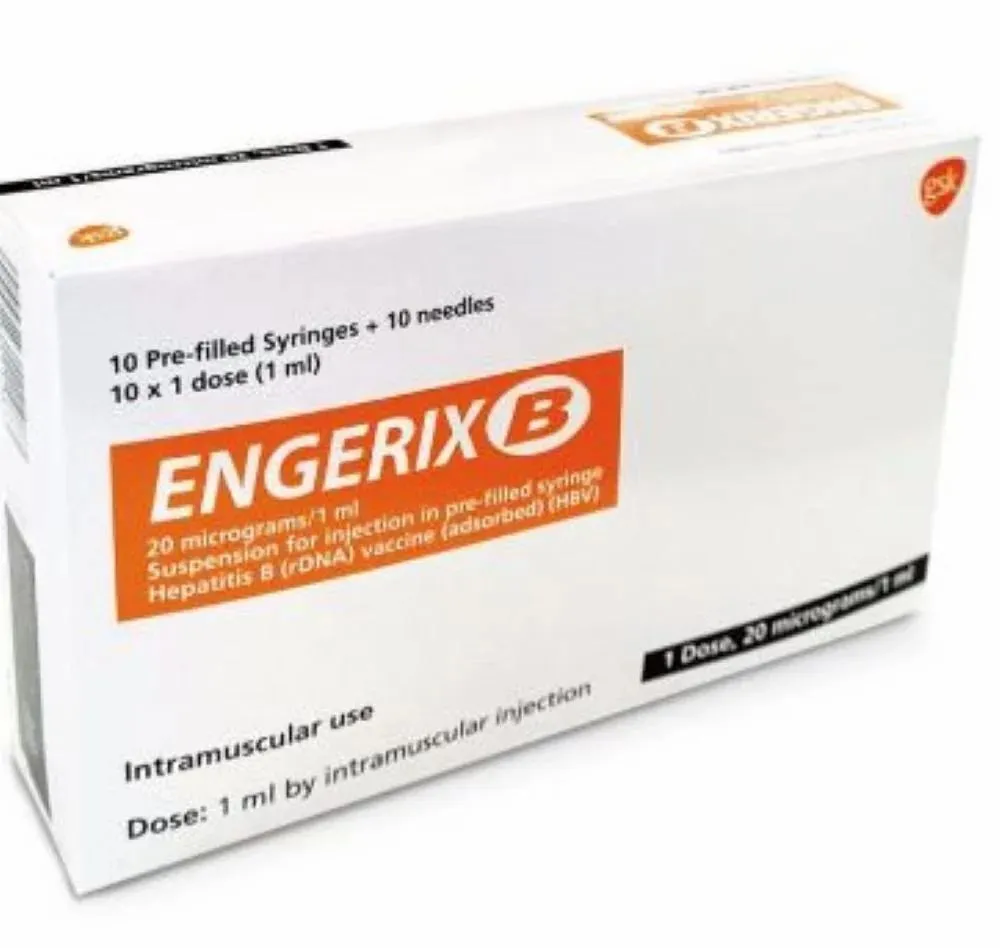
Table of Contents
- Patient Information Leaflet
- 1. What Engerix B vaccine is and what it is used for
- 2. Important information before using the Engerix B vaccine
- 3. How to use the Engerix B vaccine
- 4. Possible adverse reactions
- 5. How to store the Engerix B vaccine
- 6. Contents of the pack and other information
- Information intended exclusively for healthcare professionals:
Patient Information Leaflet
Engerix B 20 micrograms – injection suspension
Hepatitis B (rDNA) vaccine
Vaccinum hepatitidis B (ADNr)
Please read this leaflet carefully before using the vaccine, because it contains information important for the patient.
- Keep this leaflet for future reference.
- If you have any questions, please consult your doctor, pharmacist, or nurse.
- This vaccine has been prescribed for a specific individual. Do not pass it on to others.
- If any adverse reactions occur in the patient, including any adverse reactions not listed in this leaflet, inform your doctor, pharmacist, or nurse. See section 4.
Table of contents:
- What Engerix B vaccine is and what it is used for
- Important information before vaccination with Engerix B
- How to use Engerix B vaccine
- Possible side effects
- How to store Engerix B vaccine
- Contents of the pack and other information
1. What Engerix B vaccine is and what it is used for
Engerix B is a vaccine used to prevent hepatitis B virus infection (HBV).
Engerix B 20 micrograms (adult dose) is indicated for use in adolescents from the age of 16 years and adults.
Engerix B 20 micrograms (adult dose) may also be administered to adolescents aged 11 to 15 years inclusive, provided that the risk of hepatitis B virus infection during the vaccination course is low and there is certainty that the 2-dose vaccination schedule will be completed. If these conditions cannot be met (e.g. in haemodialysis patients, individuals travelling to areas with high HBV prevalence, or persons in close contact with infected individuals), the standard Engerix B 10 microgram (paediatric dose) vaccination should be used.
The vaccine stimulates the body to produce its own immunity by generating antibodies against the hepatitis B virus.
Hepatitis B virus (HBV): This disease is caused by the hepatitis B virus, which causes inflammation of the liver. The virus is present in body fluids such as blood, semen, vaginal secretions, and saliva (sputum) of infected individuals.
The disease may be asymptomatic for a period of 6 weeks to 6 months following infection.
Some infected individuals may have no symptoms or may experience mild, flu-like symptoms.
Typically, infected individuals feel generally unwell and fatigued. They may experience nausea, vomiting, dark-coloured urine, pale skin, jaundice (yellowing of the skin and/or sclera (whites of the eyes)), and other symptoms that may require hospital treatment.
Most adults fully recover, but some individuals, particularly children, remain infected despite having no symptoms. These individuals become carriers of the hepatitis B virus. Carriers can transmit the virus to others and are at risk of developing serious liver diseases such as cirrhosis and liver cancer.
Vaccination is the best way to prevent the disease. None of the components of the vaccine are infectious.
2. Important information before using the Engerix B vaccine
When not to use Engerix B vaccine
- if the patient is allergic to the active substance or to any of the other ingredients of this vaccine (listed in section 6). Symptoms of allergy may include itchy rash, difficulty breathing, swelling of the face or tongue;
- if the patient has a high fever (body temperature above 38.0°C). A mild infection, such as a cold, should not be a reason to delay vaccination, but you should inform the doctor about it.
Warnings and precautions
You should inform the doctor if the patient:
- has previously experienced health problems after vaccinations, especially against hepatitis B virus (including allergic reactions);
- has bleeding problems or bruises easily.
Fainting may occur after or even before any injectable vaccine is given (particularly in adolescents). Therefore, inform the doctor or nurse if the child has ever fainted during an injection.
Use of Engerix B vaccine in patients with chronic liver disease or reduced immunity:
Patients with chronic liver disease or carriers of hepatitis C virus may be vaccinated against hepatitis B virus.
Engerix B can also be used in individuals with reduced immunity, including those infected with HIV, and in patients with kidney failure, including those on hemodialysis. It should be taken into account that they may not develop sufficient protection after a complete vaccination schedule and may require additional doses of the vaccine.
It has also been observed that various factors may reduce the effectiveness of hepatitis B vaccination. These include: older age, male gender, obesity, smoking, route of vaccine administration, and certain chronic diseases. In such cases, additional vaccine doses may also be necessary.
In all these cases, the doctor will decide whether additional blood tests are needed and determine the appropriate timing and method of vaccination.
As with other vaccines, it is possible that not all vaccinated individuals will develop a protective immune response.
Engerix B vaccine and other medicines
Inform the doctor about all medicines recently taken and any other vaccinations received.
Engerix B may be administered simultaneously with vaccines against tuberculosis, hepatitis A, polio, measles, mumps, rubella, diphtheria, tetanus, provided that the injection sites are different.
Concomitant administration, at different body sites, of Engerix B vaccine and standard dose of hepatitis B immunoglobulin does not affect the level of antibodies produced.
Engerix B vaccine may be given at the same time as the human papillomavirus (HPV) vaccine. Simultaneous administration of Engerix B and Cervarix (HPV vaccine) showed no clinically significant impact on the production of antibodies against HPV antigens.
Pregnancy, breastfeeding and fertility
Before using any medicine during pregnancy or breastfeeding, consult a doctor.
The effect of administering the vaccine on fetal development has not been evaluated. It is considered that, like other inactivated viral vaccines, Engerix B does not pose a significant risk to the fetus.
Engerix B may be given to a pregnant woman only if there are clear indications for immunization and the benefits to the mother outweigh the potential risks to the fetus.
Clinical studies have not assessed the effect of Engerix B vaccine administered to mothers on breastfed infants. There is also no information on the excretion of the hepatitis B virus antigen contained in the vaccine into breast milk. There is no established contraindication to vaccinating breastfeeding mothers.
The doctor should discuss the benefits and potential risks associated with vaccination with Engerix B during pregnancy and breastfeeding.
Driving and operating machinery
It is unlikely that the Engerix B vaccine has a significant effect on the ability to drive or operate machinery. However, if the patient feels unwell, they should not drive or operate machinery.
Other information
Due to the long incubation period of hepatitis B, vaccination may sometimes occur during the incubation phase of the disease. In such cases, the vaccine may not prevent the development of infection.
Administration of Engerix B vaccine does not prevent liver infections caused by other infectious agents.
This vaccine contains less than 1 mmol (23 mg) of sodium per dose, i.e. the vaccine is considered "sodium-free".
3. How to use the Engerix B vaccine
The Engerix B vaccine should be administered intramuscularly into the upper arm.
The Engerix B vaccine must not be given into the gluteal muscle or intradermally, as this may result in insufficient protection.
Exceptionally, in patients with coagulation disorders, due to the risk of bleeding following intramuscular injection, subcutaneous administration of the vaccine may be permitted.
Under no circumstances should the vaccine be administered intravenously.
The following primary vaccination schedules are recommended:
3-dose schedule (0, 1, 6 months) leads to a slower development of optimal immune response but ensures a higher level of antibodies against hepatitis B virus.
- First dose: at any time
- Second dose: 1 month later
- Third dose: 6 months after the first dose
Accelerated schedule, when doses are administered according to the 0, 1, 2 months schedule, allows for rapid achievement of optimal immune response and ensures better compliance from the vaccinated individual. A fourth dose is recommended 12 months after the first dose.
- First dose: at any time
- Second dose: 1 month later
- Third dose: 2 months after the first dose
- Fourth dose: 12 months after the first dose
In exceptional cases in adults aged 18 years and older, e.g. before travel, when rapid completion of primary vaccination is required within one month prior to departure and when it is not possible to apply the 0, 1, 6 months schedule, three doses of the vaccine may be administered intramuscularly on days 0, 7, and 21. When this schedule is used, administration of a fourth dose 12 months after the first dose is recommended.
- First dose: at any time
- Second dose: 7 days later
- Third dose: 21 days after the first dose
- Fourth dose: 12 months after the first dose
Engerix B 20 micrograms (adult dose) may also be used in children aged 11 to 15 years inclusive, according to a 2-dose vaccination schedule (0, 6 months), provided that the risk of hepatitis B virus infection during the vaccination course is low and there is certainty that the vaccination course will be completed.
- First dose: at any time
- Second dose: 6 months after the first dose
If these conditions cannot be met (e.g. haemodialysis patients, individuals travelling to regions where hepatitis B is endemic, individuals in close contact with infected persons), standard vaccination with Engerix B 10 micrograms (paediatric dose) should be used.
It is essential to ensure that the complete vaccination course consisting of three (two) or four doses of vaccine is received. If all doses are not administered, the vaccinated person may not be fully protected against the disease.
The physician should inform about the possible need for additional doses and booster doses.
If the next vaccine dose has not been received on the scheduled date, it is essential to consult a physician to arrange another visit.
4. Possible adverse reactions
Like any medicine, the Engerix B vaccine may cause adverse reactions, although not everyone experiences them.
The following adverse reactions have been reported after vaccination:
♦ Very common (may occur in 1 in 10 doses of vaccine or more frequently):
- pain and redness at the injection site, feeling of fatigue
- irritability
♦ Common (less frequent than in 1 in 10 doses of vaccine):
- headache
- drowsiness
- nausea, vomiting, diarrhoea, abdominal pain
- decreased appetite
- fever (37.5°C or higher), malaise, swelling at the injection site, other local reactions at the injection site (such as hardening)
♦ Uncommon (less frequent than in 1 in 100 doses of vaccine):
- dizziness
- muscle pain
- influenza-like symptoms
♦ Rare (less frequent than in 1 in 1000 doses of vaccine):
- generalized lymphadenopathy (swollen lymph nodes)
- paresthesia (tingling sensation)
- urticaria, itching, rash
- joint pain
♦ Very rare (less frequent than in 1 in 10,000 doses of vaccine):
Adverse reactions reported after vaccine introduction into the market:
- thrombocytopenia (bleeding or bruising more easily than usual due to a decrease in platelet count)
- encephalitis, encephalopathy, seizures, paralysis, nerve inflammation, neuropathies, sensory disturbances
- erythema multiforme, angioedema, lichen planus (skin and subcutaneous tissue disorders)
- arthritis, muscle weakness
- meningitis
- vasculitis, hypotension (low blood pressure)
- allergic reactions, including anaphylactic and anaphylactoid reactions, and serum sickness-like reactions. These may present as localized or generalized rash (which may be itchy or blistering), eyelid and facial swelling, difficulty breathing or swallowing, sudden drop in blood pressure, or loss of consciousness. These reactions may occur even before leaving the doctor's office. Immediate medical attention must be sought in all such cases.
If the symptoms described above do not resolve or worsen, a doctor should be informed.
If any adverse effects occur that are not listed in this leaflet, they should also be reported to a doctor.
Do not be alarmed by this list of possible adverse reactions. It is possible that no adverse reactions will occur after vaccination.
Reporting of adverse reactions
If any adverse reactions occur, including those not listed in this leaflet, inform a doctor or pharmacist. Adverse reactions can be reported directly to the Department of Monitoring of Adverse Drug Reactions at the Office for Registration of Medicinal Products, Medical Devices and Biocidal Products:
Al. Jerozolimskie 181C
02-222 Warszawa
Tel.: 22 49 21 301
Fax: 22 49 21 309
Website: https://smz.ezdrowie.gov.pl
Adverse reactions may also be reported to the marketing authorization holder.
Reporting adverse reactions helps to provide more information on the safety of the vaccine.
5. How to store the Engerix B vaccine
Store in a refrigerator (2ºC – 8ºC).
Do not freeze.
Keep the vaccine out of sight and reach of children.
Store the vaccine in its original packaging to protect it from light.
Do not use this vaccine after the expiry date stated on the packaging after
„EXP”. The expiry date refers to the last day of the stated month.
The abbreviation „Lot” indicates the product batch number.
6. Contents of the pack and other information
What Engerix B vaccine contains
- The active substance of Engerix B vaccine is:
Hepatitis B surface antigen (HBsAg) 20 micrograms
adsorbed on aluminium hydroxide, hydrated, total: 0.50 milligrams Al
obtained from cultures of yeast cells (Saccharomyces cerevisiae) using
recombinant DNA technology
- Other components are: sodium chloride, disodium phosphate dihydrate, sodium dihydrogen phosphate dihydrate, water for injections.
What Engerix B vaccine looks like and contents of the pack
Engerix B (dose 20 micrograms in 1 ml) is a suspension for injection in a vial or
pre-filled syringe.
Available pack sizes:
- Single-dose pre-filled syringes: 1, 10 or 25 units,
- Single-dose vials: 1, 10 or 100 units with or without syringe.
Not all pack sizes may be marketed.
Marketing Authorisation Holder and Manufacturer
GlaxoSmithKline Biologicals S.A.
rue de l’Institut 89
1330 Rixensart, Belgium
For more detailed information, contact the local representative of the Marketing Authorisation Holder:
GSK Services Sp. z o.o.
ul. Rzymowskiego 53
02-697 Warsaw
tel. (22) 576-90-00
Information intended exclusively for healthcare professionals:
During storage, a white sediment and a clear, colourless liquid above may be observed.
Immediately before administration, the vaccine should be shaken vigorously to obtain a slightly
cloudy suspension. The vaccine should be inspected for the presence of particles and (or) any
change in appearance. If any such abnormalities are observed, the vaccine should not be used.
Instructions for the pre-filled syringe
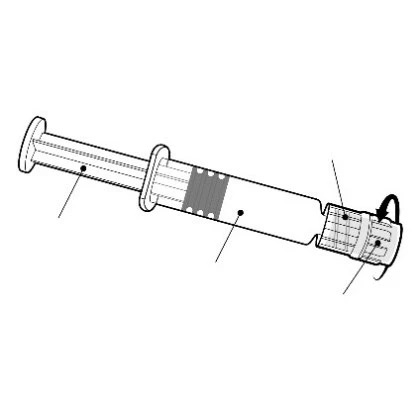
Luer Lock adapter
Hold the pre-filled syringe by the barrel, not by the plunger.
Remove the cap of the pre-filled syringe by unscrewing it counterclockwise.
Plunger
Barrel
Cap
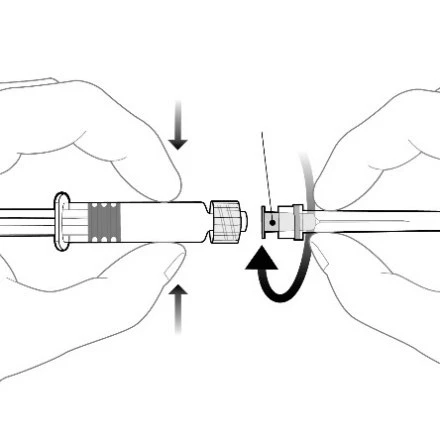
Attach the needle to the pre-filled syringe by connecting the needle cap to the Luer Lock
Adaptor (LLA) and turning it one-quarter turn clockwise until a click is felt, ensuring the
needle is securely locked.
The plunger must not be removed from the barrel of the pre-filled syringe. If this occurs,
the vaccine must not be administered.
Disposal
Any unused product or waste material should be disposed of in accordance with local regulations.