Encepur k
Poland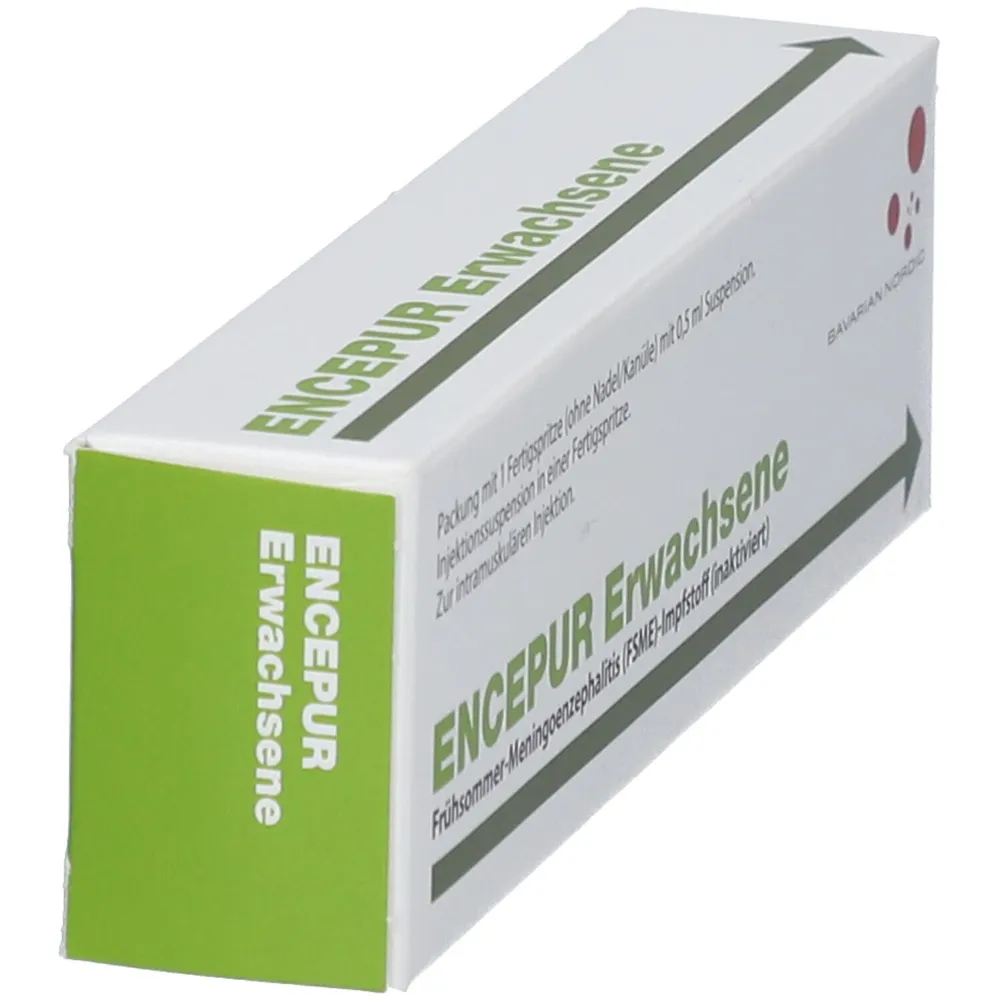
Table of Contents
- Package leaflet: Information for the user
- 1. What Encepur K vaccine is and what it is used for
- 2. Important information before administering Encepur K vaccine
- 3. How to use Encepur K vaccine
- 4. Possible adverse reactions
- 5. How to store the Encepur K vaccine
- 6. Contents of the packaging and other information
Package leaflet: Information for the user
Encepur K
Suspension for injection
Tick-borne encephalitis vaccine, inactivated
Paediatric dose
Please read this leaflet carefully before using the vaccine, because
it contains important information for the patient.
- Keep this leaflet, as you may need to read it again.
- If you have any doubts, please consult your doctor or pharmacist.
- This vaccine has been prescribed for a specific individual. Do not pass it on to others.
- If the patient experiences any adverse reactions, including any not listed in this leaflet, inform your doctor or pharmacist. See section 4.
Leaflet contents
- What Encepur K vaccine is and what it is used for
- What you need to know before using Encepur K
- How to use Encepur K
- Possible side effects
- How to store Encepur K
- Contents of the pack and other information
1. What Encepur K vaccine is and what it is used for
Encepur K vaccine is a vaccine intended to actively immunize against tick-borne meningitis and encephalitis (TBE) in children over one year of age.
For children under two years of age, the physician may decide to administer the vaccine after considering the risk-benefit ratio of vaccination (see section 4, Side effects). For individuals aged 12 years and older, the adult formulation of the vaccine should be used.
The disease is caused by a virus transmitted by ticks.
Vaccination is recommended for children temporarily or permanently residing in areas where tick-borne meningitis and encephalitis occur.
Vaccines belong to a group of medicines that stimulate the immune system (the body's natural defence against infections) in order to provide protection against diseases.
The Encepur K vaccine cannot cause the disease it protects against.
As with all vaccines, Encepur K may not provide complete protection in all vaccinated individuals.
2. Important information before administering Encepur K vaccine
When not to use Encepur K vaccine
- if the patient has a known allergy (hypersensitivity) to any component of the vaccine or to formaldehyde, neomycin sulfate, chlorotetracycline, gentamicin sulfate, or chicken egg albumin, which may be present in trace amounts in the vaccine,
- if allergic symptoms occurred after previous administration of a tick-borne encephalitis vaccine,
- if adverse reactions occurred following vaccination, further doses of the vaccine should not be administered until the cause has been investigated. This particularly applies to adverse post-vaccination reactions not limited to the injection site,
- in children during the acute phase of illness requiring treatment, and within two weeks after recovery.
Warnings and precautions
Before starting administration of Encepur K vaccine, discuss this with a physician, pharmacist, or nurse. Generally, there is no increased risk associated with the use of Encepur K vaccine in individuals considered "allergic to chicken proteins" based solely on questionnaire results or a positive skin test. As with all injectable vaccines, appropriate medical treatment and supervision must be available in case of a rare anaphylactic reaction following vaccination. This vaccine must never be administered intravenously. Accidental intravenous (arterial or venous) administration of the vaccine may cause an allergic reaction including shock. In such a case, immediate anti-shock measures must be initiated. Fainting, weakness, or other anxiety-related reactions may occur as a response to needle insertion. If such a reaction has occurred previously in the patient, inform the physician or nurse. The physician will assess the need for Encepur K vaccination in a child with previously diagnosed severe neurological disorders. The tick-borne encephalitis vaccine is not effective against other diseases transmitted by ticks (e.g. Lyme borreliosis), even if they are transmitted simultaneously. High fever (≥39.5°C) may occur in children under 3 years of age. Fever (≥38°C) in younger children occurs particularly after the first dose of the vaccine (see section 4); this occurs more frequently than after the second dose. Consider administering antipyretic medication if necessary. Individuals with weakened immune systems, for example due to HIV infection or due to immunosuppressive medications, may not achieve full protection after administration of Encepur K vaccine. After each tick bite, the tetanus vaccination status should be checked.
Warning for individuals with latex sensitivity:
Pre-filled syringe with attached needle:
The needle shield is made from natural rubber latex, which may cause allergic reactions in individuals sensitive to latex.
Pre-filled syringe without attached needle (with needle supplied separately in the package):
Although no latex derived from natural rubber has been detected in the syringe cap, the safety of Encepur K vaccine in individuals with latex sensitivity has not been confirmed.
Encepur K vaccine and other medicines
Inform the physician about all medicines currently used or recently used by the patient, as well as any medicines the patient plans to take.
In children who have received immunoglobulin against tick-borne encephalitis virus, vaccination should begin no sooner than 4 weeks after immunoglobulin administration. Otherwise, the level of specific antibodies after vaccination may be reduced.
When administering more than one vaccine by injection, the injections must be given at different injection sites.
Pregnancy and breastfeeding
Not applicable. Encepur K vaccine is intended for children under 12 years of age.
Driving and operating machinery
Not applicable.
Encepur K vaccine contains sodium
This vaccine contains less than 1 mmol (23 mg) of sodium per dose; therefore, the vaccine is considered "sodium-free".
3. How to use Encepur K vaccine
Encepur K vaccine should always be used as directed by a physician. In case of
doubt, consult your doctor or pharmacist again.
Vaccination schedule
Dosage
Children from the completed age of 1 year up to and including 11 years of age receive the same dose of 0.25 ml
of vaccine.
Encepur K vaccine is administered as three separate injections, preferably during the colder season
to ensure protection during the period of increased risk (spring/summer).
The vaccine is given according to one of the two following schedules:
| Classic schedule (preferred vaccination schedule) | |
| First dose | chosen date |
| Second dose | 14 days to 3 months after the first dose |
| Third dose | 9 to 12 months after the second dose |
| First booster dose | 3 years after the third dose |
| Additional booster doses (or subsequent booster doses) | every 5 years |
The second dose of the vaccine may be administered no earlier than 14 days after the first dose (rapid vaccination schedule).
| Rapid schedule (when rapid protection is required) | |
| First dose | chosen date |
| Second dose | 7 days after the first dose |
| Third dose | 21 days after the first dose |
| First booster dose | 12-18 months after the third dose |
| Additional booster doses (or subsequent booster doses) | every 5 years |
The patient will be informed of the date for the required next dose of the Encepur K vaccine.
If necessary, the physician may apply a more flexible vaccination schedule. For additional
information, please contact your physician.
Method of administration
Shake before use.
The vaccine is administered intramuscularly, usually into the deltoid muscle or the thigh, depending on
muscle mass. In justified cases, e.g. in patients with haemorrhagic diathesis (increased tendency to bleeding),
the vaccine may be administered subcutaneously.
Under no circumstances should the vaccine be administered intravenously!
Administration of a higher than recommended dose of Encepur K vaccine
There is no data available on overdose.
4. Possible adverse reactions
Like all medicines, this vaccine may cause adverse reactions, although they do not occur in everyone.
Very common (may affect at least 1 in 10 people):
- headache (in children aged 3 years and older)
- drowsiness (in children under 3 years of age)
- transient pain at the injection site
- fever (above 38°C) occurring in children aged 1 to 2 years
Common (may affect less than 1 in 10 people):
- nausea
- joint pain
- muscle pain
- redness at the injection site, swelling at the injection site
- fever (above 38°C) in children aged 3 to 11 years
- influenza-like symptoms (excessive sweating, fever, chills), particularly in individuals receiving the vaccine for the first time, usually resolving within 72 hours
- general malaise
- general weakness, apathy
Rare (may affect less than 1 in 1,000 people):
- vomiting
- diarrhoea
Serious allergic reactions
Serious allergic reactions, for which the frequency cannot be estimated from available data, including:
- generalized urticaria
- erythema multiforme
- mucosal swelling
- wheezing (a high-pitched sound during breathing caused by narrowing or swelling of the airways)
- breathing difficulties, dyspnoea
- airway constriction (bronchospasm)
- drop in blood pressure
- circulatory disturbances (with possible accompanying transient, non-specific visual disturbances)
- transient decrease in platelet count, which is short-lived but may be severe.
If any of the above symptoms occur, they usually develop very rapidly after vaccination, at the time when the patient is still under the supervision of a doctor or nurse. IF ANY OF THE ABOVE SYMPTOMS OCCUR AFTER THE PATIENT LEAVES THE CLINIC, SEEK IMMEDIATE MEDICAL ADVICE.
Other adverse reactions
Other adverse reactions reported after administration of Encepur K vaccine, for which frequency cannot be estimated from available data, include:
- lymphadenopathy (enlargement of lymph nodes in the neck, armpits, or groin)
- numbness, tingling
- neck muscle and joint pain, which may be a sign of irritation of the meninges (similar to meningitis). These symptoms are very rare and resolve completely within a few days.
- fainting
- inflammatory nodule (granuloma) at the injection site, sometimes with accumulation of serous fluid
- seizures.
Reporting of adverse reactions
If any adverse reactions occur, including any adverse reactions not listed in this leaflet, inform a doctor or pharmacist. Adverse reactions can be reported directly to the Department of Monitoring Adverse Drug Reactions of the Office for Registration of Medicinal Products, Medical Devices and Biocidal Products: Al. Jerozolimskie 181C, 02-222 Warsaw, tel.: 22 49 21 301, fax: 22 49 21 309, website: https://smz.ezdrowie.gov.pl
Adverse reactions can also be reported to the marketing authorization holder. Reporting adverse reactions helps provide more information on the safety of the medicine.
5. How to store the Encepur K vaccine
Keep the vaccine out of sight and reach of children.
Store in a refrigerator (2°C – 8°C).
Do not freeze! Do not use the vaccine if it has been frozen.
The vaccine should be used immediately after opening.
Do not use this vaccine after the expiry date stated on the packaging after "EXP".
The expiry date refers to the last day of the stated month.
Medicines should not be disposed of via wastewater or household waste. Ask a pharmacist how to dispose of medicines no longer in use. This will help protect the environment.
6. Contents of the packaging and other information
What Encepur K vaccine contains
The active substance in the vaccine is inactivated tick-borne encephalitis virus, strain K23.
One dose of vaccine (0.25 ml) contains 0.75 micrograms of tick-borne encephalitis virus,
strain K23, which is produced in chicken embryo cells and adsorbed onto aluminium hydroxide
hydrate (0.15 - 0.2 mg Al).
Other components of the vaccine are: sucrose, tris(hydroxymethyl)aminomethane, sodium chloride, and water
for injections.
What Encepur K vaccine looks like and contents of the pack
Encepur K vaccine is a white, cloudy suspension for injection.
Encepur K vaccine is available in the following pack sizes:
1 pre-filled syringe (with attached needle or with needle supplied separately in the packaging) containing 0.25 ml,
in a cardboard box.
Marketing Authorisation Holder and Manufacturer
Marketing Authorisation Holder
Bavarian Nordic A/S
Philip Heymans Alle 3
2900 Hellerup
Denmark
Manufacturer
Bavarian Nordic A/S
Hejreskovvej 10A
3490 Kvistgaard
Denmark
GSK Vaccines GmbH
Emil-von-Behring-Str. 76
D-35041 Marburg
Germany