Emla
Poland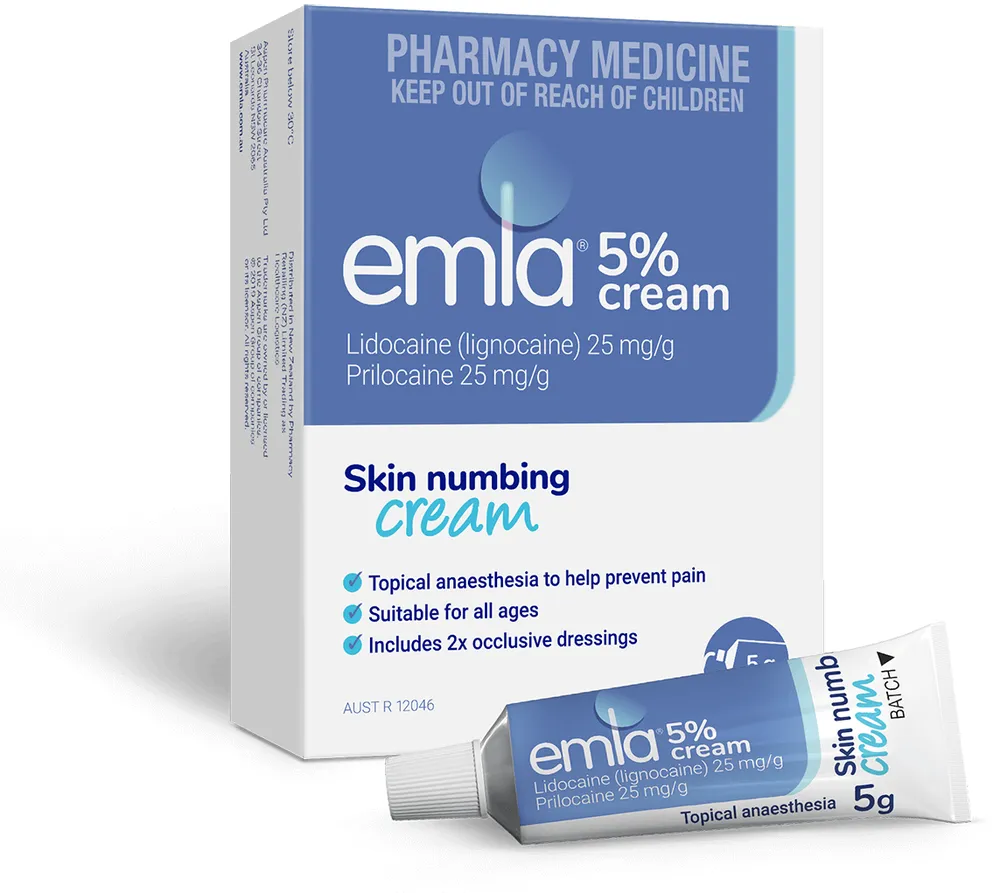
Table of Contents
Package leaflet: Information for the user
Warning! Keep this leaflet. The information on the immediate packaging is in a foreign language.
EMLA
25 mg/g + 25 mg/g, cream
Lidocaine + Prilocaine
Please read the entire leaflet carefully before using the medicine, as it contains
important information for the patient.
- Keep this leaflet, as you may need to read it again.
- If you have any questions, consult your doctor or pharmacist.
- This medicine has been prescribed for a specific individual. Do not pass it on to others. The medicine may harm another person, even if their symptoms are the same.
- If you experience any adverse reactions, including any adverse reactions not listed in this leaflet, inform your doctor, pharmacist, or nurse. See section 4.
Table of contents
- What EMLA is and what it is used for
- Important information before using EMLA
- How to use EMLA
- Possible side effects
- How to store EMLA
- Contents of the pack and other information
1. What EMLA is and what it is used for
EMLA contains two active substances – lidocaine and prilocaine. They belong to a group of medicines known as local anaesthetics.
EMLA works by temporarily numbing the sensation in the superficial layers of the skin. The cream is applied to the skin before certain medical procedures and interventions. This helps to relieve pain in the skin; however, the patient may still feel pressure and touch.
Adults, adolescents and children
EMLA may be used to anaesthetize the skin before:
- inserting a needle into the skin (for example, during an injection or blood sampling),
- minor surgical procedures on the skin.
Adults and adolescents
EMLA may also be used:
to anaesthetize the genital organs before:
- an injection,
- medical procedures such as removal of warts.
Application of EMLA to the genital organs should be performed under the supervision of a doctor or nurse.
Adults
EMLA may also be used to anaesthetize the skin before:
debridement or removal of damaged skin from leg ulcers.
2. Important information before using EMLA
When not to use EMLA:
- if the patient has a known allergy to lidocaine, prilocaine, any other similar local anaesthetic, or to any of the other ingredients of this medicine (listed in section 6).
Warnings and precautions
Before using EMLA, discuss with your doctor or pharmacist:
- if the patient has a rare metabolic disorder affecting the blood, called glucose-6-phosphate dehydrogenase deficiency,
- if the patient has a condition affecting blood pigment known as methemoglobinemia,
- EMLA must not be applied to areas of skin with rash, cuts, scratches, or other open wounds, except in the case of leg ulcers. If the patient has any of these skin conditions, contact a doctor or pharmacist before applying the cream,
- if the patient has a skin condition with itching known as atopic dermatitis, a shorter application time may be sufficient. Prolonged application for longer than 30 minutes increases the likelihood of local skin reactions (see also section 4 "Possible side effects"),
- if the patient is taking certain medicines used to treat heart rhythm disorders (class III antiarrhythmics such as amiodarone). In such cases, the doctor will monitor the patient's heart function.
Due to the possibility of increased absorption from freshly shaved skin, it is important to follow the recommended dosage, size of the application area, and duration of application on the skin.
Avoid contact of EMLA with the eyes, as it may cause irritation.
If EMLA accidentally gets into the eye, immediately rinse the eye with lukewarm water or physiological saline (0.9% NaCl solution). Care should be taken to avoid introducing anything into the eye until sensation returns.
Do not apply EMLA to a diseased eardrum.
When EMLA is used before administration of a live vaccine (e.g. tuberculosis vaccine), remember to attend the follow-up visit scheduled by the doctor to assess the effectiveness of vaccination.
Children and adolescents
In infants and newborns under 3 months of age, a transient, clinically insignificant increase in blood methemoglobin levels (a form of hemoglobin, the blood pigment) is commonly observed within 12 hours after application of EMLA.
The efficacy of EMLA during heel prick blood sampling in newborns or for providing adequate analgesia during circumcision has not been confirmed in clinical studies.
EMLA must not be applied to the mucous membranes of the genital organs (e.g. vagina) in children (under 12 years of age) due to insufficient data on absorption of the active substances.
EMLA must not be used in children under 12 months of age who are being treated simultaneously with other medicines that affect blood pigment and may cause methemoglobinemia (e.g. sulfonamides; see also section 2 "EMLA and other medicines").
EMLA must not be used in premature newborns.
EMLA and other medicines
Inform your doctor or pharmacist if you are currently taking, have recently taken, or might take any other medicines. This includes medicines available without a prescription and herbal medicines. This is important because the components of EMLA may affect the action of certain other medicines, and some other medicines may affect the action of EMLA.
In particular, the patient should inform their doctor or pharmacist if they have used or taken any of the following medicines:
- Medicines used to treat infection known as sulfonamides and nitrofurantoin.
- Medicines used to treat epilepsy: phenytoin and phenobarbital.
- Other local anaesthetics.
- Medicines used to treat irregular heartbeat, such as amiodarone.
- Cimetidine or beta-blockers, which may increase blood levels of lidocaine. This interaction is not clinically significant with short-term use of EMLA at recommended doses.
Pregnancy, breastfeeding and fertility
If the patient is pregnant or breastfeeding, suspects she may be pregnant, or plans to become pregnant, she should consult a doctor or pharmacist before using this medicine.
Occasional use of EMLA during pregnancy has not been associated with any risk of adverse effects on the fetus.
The active substances of EMLA (lidocaine and prilocaine) are excreted in human milk. However, the amount transferred into milk is so small that there is essentially no risk to the breastfed infant.
Animal studies have shown no adverse effect on fertility in males or females treated with the active ingredients of EMLA.
Driving and operating machinery
EMLA has no effect or negligible effect on the ability to drive motor vehicles and operate machinery when used at recommended doses.
EMLA contains macrogol glycerol hydroxystearate
Macrogol glycerol hydroxystearate may cause skin reactions.
3. How to use EMLA
EMLA must always be used exactly as directed by a doctor, pharmacist, or nurse.
If in doubt, consult your doctor, pharmacist, or nurse.
How to use EMLA
- The site of application, amount of cream, and duration of application depend on the intended use.
- A doctor, pharmacist, or nurse will apply the cream to the appropriate area or instruct the patient how to do it independently.
- When EMLA is used on genital areas, its use should be supervised by a doctor or nurse.
Do not use EMLA on the following areas:
- Areas of broken, abraded, or wounded skin, except for leg ulcers.
- Areas with skin rash or dermatitis.
- Into the eyes or near the eyes.
- Inside the nose, ears, or mouth.
- In the anal area.
- On the genital organs of children.
Individuals who frequently apply or remove the cream from a patient's body should ensure they effectively avoid contact with the cream to prevent development of hypersensitivity.
The protective seal of the tube is pierced using the cap of the tube.
Application to the skin prior to minor procedures (such as needle puncture or minor skin
surgery):
- Apply the cream in a thick layer to the skin. Your doctor, pharmacist, or nurse will tell you where to apply the cream.
- The cream layer should then be covered with a dressing (plastic film). The dressing is removed immediately before the procedure begins. If the patient applies the cream independently, they should ensure they have received dressings from the doctor, pharmacist, or nurse.
- The usual dose in adults and adolescents aged over 12 years is 2 g (grams).
- In adults and adolescents aged over 12 years, apply the cream at least 60 minutes before the planned procedure (except when applied to genital areas). However, do not apply the cream more than 5 hours before the procedure.
- The amount and duration of EMLA use in children depend on the child's age. The doctor, nurse, or pharmacist will inform the patient how much cream to use and when to apply it.
When applying EMLA, it is very important to follow these instructions precisely:
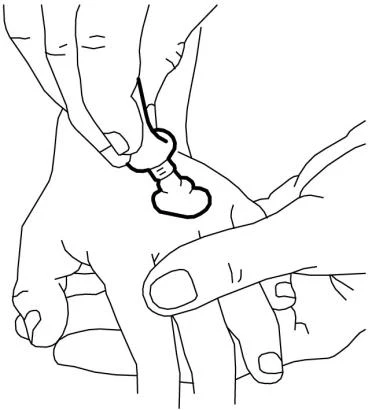
- Squeeze a portion of cream from the tube to form a mound at the site where it is needed on the skin (for example, where a needle puncture will be made). A line of cream approximately 3.5 cm long from a 30 g tube corresponds to 1 g of cream. Half the content of a 5 g tube corresponds to approximately 2 g of EMLA cream. Do not rub the cream into the skin.
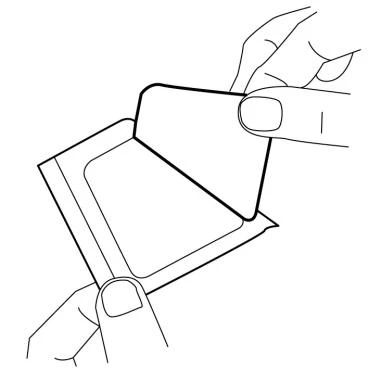
- Peel off the paper layer from the central window on the non-adhesive side of the dressing (leaving the paper frame).
- Remove the top layer of the adhesive dressing.
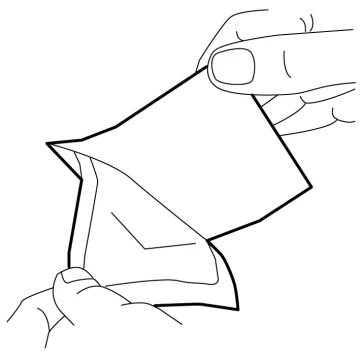
- Carefully place the dressing over the mound of cream. Do not spread the cream under the dressing.
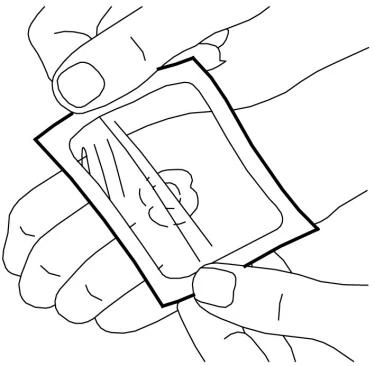
- Remove the paper stiffener. Gently smooth the edges of the dressing. Then leave the dressing in place for at least 60 minutes if the skin is intact. The cream should not be left on for longer than 60 minutes in infants under 3 months of age or longer than 30 minutes in children with a skin condition called "atopic dermatitis". When applying the cream to genital areas or ulcers, shorter application times may be used as described below.
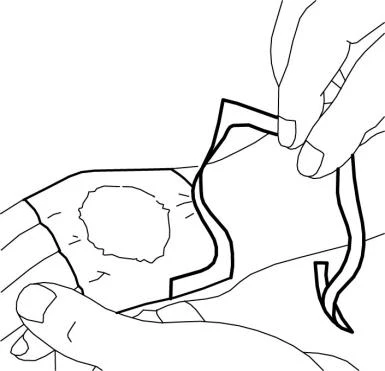
- The doctor or nurse will remove the dressing and wipe off the cream immediately before the medical procedure (for example, before needle insertion).
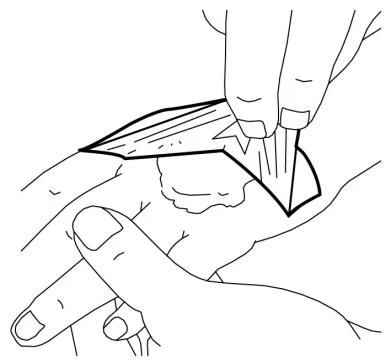
Application of EMLA to larger areas of freshly shaved skin prior to outpatient procedures (such as hair removal):
The usual dose of EMLA is 1 g of cream per 10 cm² (10 square centimeters) of skin surface, applied for 1 to 5 hours under an occlusive dressing. EMLA should not be applied to a freshly shaved skin area larger than 600 cm² (600 square centimeters, e.g., 30 cm by 20 cm).
The maximum dose is 60 g.
Application to the skin prior to hospital procedures (e.g., prior to split-thickness skin grafting) requiring deeper skin anaesthesia:
- EMLA may be used in this way in adults and adolescents aged over 12 years.
- The usual dose is 1.5 g to 2 g of cream per 10 cm² (10 square centimeters) of skin surface.
- Apply the cream and cover with an occlusive dressing for 2 to 5 hours.
Application to the skin prior to removal of warts (genital warts)
- EMLA may be used in children and adolescents with a skin condition called "atopic dermatitis".
- The usual dose depends on the child's age and is applied for 30 to 60 minutes (30 minutes in patients with atopic dermatitis). The doctor, nurse, or pharmacist will inform the patient how much cream to use.
Application to genital skin prior to local anaesthetic injections
- EMLA may be used in this way only in adults and adolescents aged over 12 years.
- The usual dose is 1 g of cream (1 g to 2 g in the case of female genital skin) per 10 cm² (10 square centimeters) of skin surface.
- Apply the cream and cover with an occlusive dressing. Leave the dressing in place for 15 minutes in males and 60 minutes in females.
Application to genital skin prior to minor skin surgery (such as removal of warts)
- EMLA may be used in this way only in adults and adolescents aged over 12 years.
- The usual dose is 5 g to 10 g of cream applied for 10 minutes. Do not use a dressing. Proceed immediately to the procedure after removal of the cream.
Application to leg ulcers prior to debridement or removal of damaged skin
- The usual dose is 1 g to 2 g of cream per 10 cm² (10 square centimeters) of skin surface, not exceeding 10 g total.
- Apply the cream and cover with an occlusive dressing, e.g., plastic film. Apply the cream and dressing 30 to 60 minutes before debridement. Remove the cream with cotton gauze and proceed immediately to ulcer debridement.
- EMLA may be used prior to debridement of leg ulcers up to 15 times within a 1-2 month period.
- When applying the cream to leg ulcers, the EMLA tube should be treated as a single-use product: after each patient use, the tube with any remaining cream should be discarded.
Use of more than the recommended dose of EMLA
If more EMLA has been used than recommended by the doctor, pharmacist, or nurse, contact them immediately, even if no symptoms are present.
Problems and symptoms that may occur after using too much EMLA are listed below. These symptoms should not occur when EMLA is used as directed.
- Sensation of "emptiness in the head" or dizziness.
- Tingling around the mouth and numbness or loss of sensation of the tongue.
- Altered taste sensation.
- Blurred vision.
- Ringing in the ears.
- There is also a risk of methaemoglobinaemia (a condition affecting the pigment in the blood). This is more likely if the patient is simultaneously taking certain other medicines. In this condition, the skin turns bluish-grey due to insufficient oxygen in the blood.
In severe cases of overdose, symptoms such as seizures, low blood pressure, reduced breathing rate, respiratory arrest, and irregular heartbeat may occur. These problems may be life-threatening.
If you have any further questions about the use of this medicine, consult your doctor, pharmacist, or nurse.
4. Possible adverse reactions
Like all medicines, this product may cause adverse reactions, although not everyone experiences them.
If any of the adverse reactions listed below occur or persist in the patient, the patient should contact their doctor or
pharmacist. The doctor should then be informed about everything that causes the patient to feel unwell
during treatment with EMLA cream.
At the site of application of EMLA cream, a mild reaction may occur (pallor or redness of the skin, slight swelling, initial sensation of burning or itching). These are common reactions to
the cream and local anesthetics, which resolve after a short time without requiring any
medical intervention.
If the patient experiences any disturbing or unusual reactions or symptoms during treatment with EMLA cream, treatment should be discontinued and the patient should contact a
doctor or pharmacist as soon as possible.
Common (may affect up to 1 in 10 people)
- Transient local skin reactions (pallor, redness, swelling) at the site of application when used on the skin, genital mucosa, or leg ulcers.
- Initial mild sensation of burning, itching, or warmth at the site of application when used on the genital mucosa or leg ulcers.
Uncommon (may affect up to 1 in 100 people)
- Initial mild sensation of burning, itching, or warmth at the site of application when used on the skin.
- Loss of sensation (numbness) at the site of application when used on the genital mucosa.
- Skin irritation at the site of application when used on leg ulcers.
Rare (may affect up to 1 in 1,000 people)
- Allergic reactions, which in rare cases may lead to anaphylactic shock (skin rash, swelling, fever, breathing difficulty, and fainting) when used on the skin, genital mucosa, or leg ulcers.
- Methemoglobinemia (a blood disorder) when used on the skin.
- Small pinpoint bleeding (petechiae) at the site of application (especially in children with eczema after prolonged exposure to the drug) when used on the skin.
- Eye irritation if EMLA cream accidentally comes into contact with the eyes during application to the skin.
Additional adverse reactions in children
Methemoglobinemia, a blood disorder, which is more frequently observed in children, often associated with overdose in newborns and infants aged 0 to 12 months.
Reporting of adverse reactions
If any adverse symptoms occur, including any adverse symptoms not listed in this leaflet, inform a doctor, pharmacist, or nurse. Adverse reactions can be reported directly to the Department of Monitoring Adverse Drug Reactions of the Office for Registration of Medicinal Products,
Medical Devices and Biocidal Products
Al. Jerozolimskie 181C
02-222 Warsaw
Phone: +48 (22) 49 21 301
Fax: +48 (22) 49 21 309
Website: https://smz.ezdrowie.gov.pl
By reporting adverse reactions, additional information on the safety of the medicine can be collected.
5. How to store EMLA
Keep this medicine out of the sight and reach of children.
Do not use this medicine after the expiry date stated on the packaging. The expiry date refers to the last day of the stated month.
Do not store above 30°C. Do not freeze.
Medicines must not be disposed of via wastewater or household waste. Ask your pharmacist how to dispose of medicines no longer required. This will help protect the environment.
6. Contents of the pack and other information
What EMLA contains
- The active substances in this medicinal product are: lidocaine and prilocaine. 1 g of cream contains: 25 mg of lidocaine and 25 mg of prilocaine.
- Other ingredients include: polyglycolised hydroxystearic acid, carbomers, sodium hydroxide, and purified water.
What EMLA looks like and contents of the pack
White, homogeneous cream.
The product is packed in an aluminium tube with a protective inner lacquer coating, fitted with a perforating cap, and placed in a cardboard carton.
EMLA is available in the following pack sizes:
1 aluminium tube containing 5 g of cream and 2 occlusive dressings.
1 aluminium tube containing 5 g of cream and 3 occlusive dressings.
5 aluminium tubes each containing 5 g of cream and 12 occlusive dressings.
For more detailed information, please contact the marketing authorisation holder or the parallel importer.
Marketing Authorisation Holder in Portugal, the country of export:
Aspen Pharma Trading Limited, 3016 Lake Drive, Citywest Business Campus, Dublin 24, Ireland
Manufacturer:
Recipharm Karlskoga AB, Björkbornvägen, 5, SE-691 33 Karlskoga, Sweden
Parallel Importer:
Delfarma Sp. z o.o., ul. Św. Teresy od Dzieciątka Jezus 111, 91-222 Łódź, Poland
Repackaged in:
Delfarma Sp. z o.o., ul. Św. Teresy od Dzieciątka Jezus 111, 91-222 Łódź, Poland
Marketing Authorisation Number in Portugal, the country of export: 2443588
Parallel Import Licence Number: 237/23
This medicinal product is authorised in the European Economic Area countries under the following names:
Austria Emla 5% - Creme
Belgium Emla 25mg/25mg crème
Cyprus Emla Cream 5%
Finland EMLA
France EMLA 5 POUR CENT, crème
Greece EMLA
Iceland Emla
Ireland EMLA 5% w/w Cream
Italy EMLA
Luxembourg Emla 25mg/2 mg crème
Malta EMLA 5% w/w Cream
Norway Emla
Poland EMLA
Spain EMLA 25 mg/g + 25 mg/g crema
Sweden EMLA
Netherlands Emla