Elymbus
Poland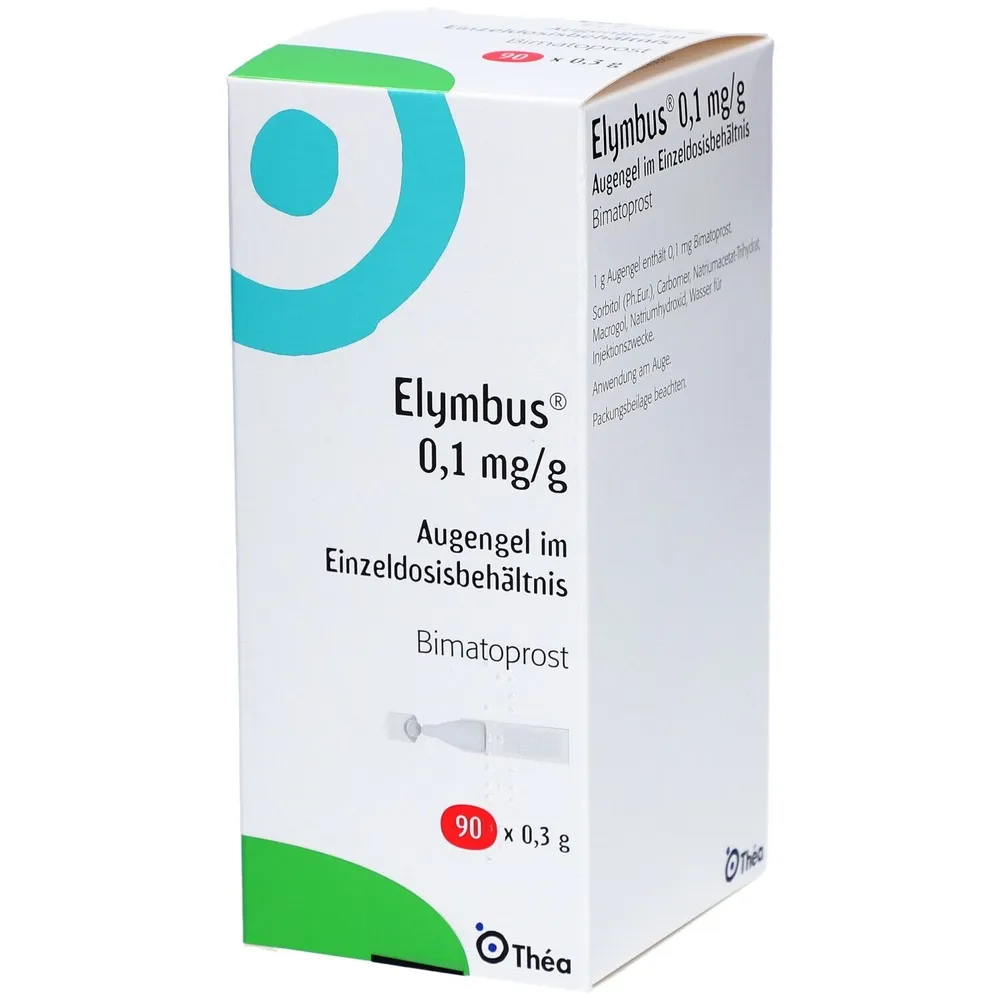
Table of Contents
Package leaflet: Information for the patient
Elymbus, 0.1 mg/g, ophthalmic gel in single-dose container
Bimatoprost
Please read all of this leaflet carefully before using this medicine because it contains
important information for the patient.
- Keep this leaflet as you may need to read it again.
- If you have any further questions, please ask your doctor or pharmacist.
- This medicine has been prescribed for a specific individual. Do not pass it on to others. This medicine may harm someone else, even if their symptoms are the same.
- If you experience any side effects, including any not listed in this leaflet, tell your doctor or pharmacist. See section 4.
Table of contents
- What Elymbus is and what it is used for
- Important information before using Elymbus
- How to use Elymbus
- Possible side effects
- How to store Elymbus
- Contents of the pack and other information
1. What Elymbus is and what it is used for
Elymbus is a medicine used in glaucoma. It belongs to a group of medicines called prostamides.
Elymbus ophthalmic gel is used in adults to reduce elevated intraocular pressure. This medicine may be used alone or in combination with other eye drops called beta-blockers, which also lower eye pressure.
The eye contains a clear, watery fluid that nourishes the inside of the eye. This fluid is continuously drained from the eye and replaced by newly produced fluid. If the fluid is not drained sufficiently quickly, pressure inside the eye increases. This medicine works by increasing the amount of fluid drained. This reduces the pressure inside the eyeball. Untreated high pressure may lead to a disease called glaucoma and eventually cause vision damage.
2. Important information before using Elymbus
When not to use Elymbus
- if you are allergic to bimatoprost or to any of the other ingredients of this medicine (listed in section 6).
Warnings and precautions
Before starting treatment with Elymbus, you should discuss this with your doctor or pharmacist.
You should inform your doctor if:
- you have breathing difficulties
- you have kidney or liver problems
- you have previously undergone cataract surgery
- you have or have had low blood pressure or slow heart rate
- you have had a viral infection or inflammation in the eye.
During treatment with Elymbus, loss of fat tissue around the eye may occur, which can lead to deepening of the eyelid groove, sunken eyes (enophthalmos), drooping of the upper eyelid (ptosis), tightness of the skin around the eye (dermatochalasis-induced involution), and increased visibility of the lower, white part of the eye (exposure of the lower sclera). These changes are usually mild, but if pronounced, they may affect the visual field. These changes may resolve after discontinuation of Elymbus. Elymbus may also cause darkening and excessive growth of eyelashes and darkening of the skin around the eyelid. The iris color may also become darker. These changes may be permanent. Such changes may be more noticeable when only one eye is treated.
Children and adolescents
Elymbus has not been studied in children under 18 years of age and therefore should not be used in patients under 18 years of age.
Elymbus with other medicines
Tell your doctor or pharmacist about all medicines you are currently taking or have recently taken, as well as any medicines you plan to take.
Pregnancy and breastfeeding
If you are pregnant, breastfeeding, think you may be pregnant, or are planning to have a baby, consult your doctor or pharmacist before using this medicine.
Elymbus may pass into human milk; therefore, breastfeeding should not be undertaken during treatment with Elymbus.
Driving and using machines
Vision may be blurred for a short time immediately after using Elymbus. Do not drive or operate machinery until your vision is clear again.
3. How to use Elymbus
This medicine should always be used exactly as prescribed by your doctor or pharmacist. If in doubt,
consult your doctor or pharmacist.
Elymbus is for ocular use only. The recommended dose is one drop of Elymbus
in the evening, once daily, into each eye requiring treatment.
If you are using Elymbus together with another eye medicine, administer that medicine at least
15 minutes before Elymbus. Elymbus should be applied last.
Do not use more frequently than once daily, as this may reduce the effectiveness of treatment.
Contact lens wearers
If the patient wears contact lenses, they should be removed before applying Elymbus. After
using Elymbus, wait at least 15 minutes before reinserting contact lenses.
Method and route of administration
This medicine is intended for ocular administration.
To apply the drops, follow the instructions below:
- Wash your hands and assume a comfortable standing or sitting position.
- Open the sachet containing 10 single-dose containers.
- Break off one single-dose container from the strip.
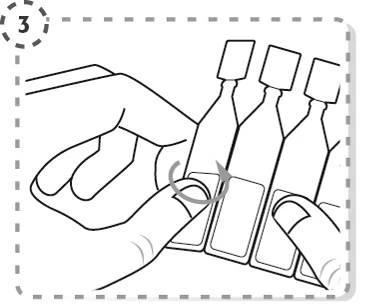
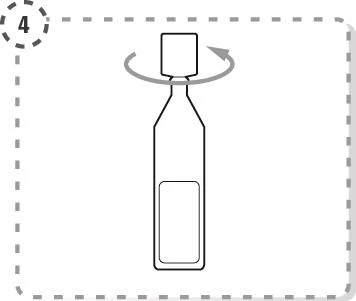
- Unscrew the top part of the single-dose container as shown in the picture. Do not touch the tip of the container with your fingers after opening.
- Gently pull down the lower eyelid of the affected eye with your finger.
- Tilt your head backward and look upward at the ceiling.
- Hold the tip of the single-dose container close to the eye, but without touching the eye.
- Gently squeeze the single-dose container so that one drop falls into the eye, then release the lower eyelid.
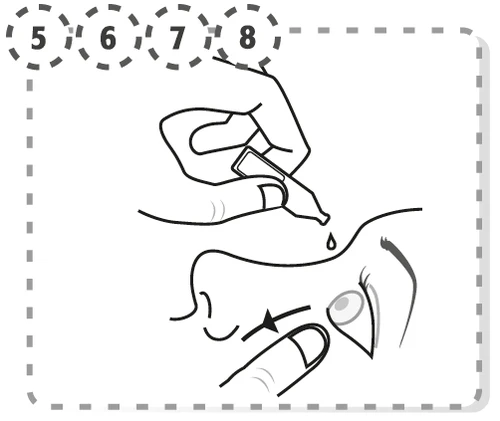
- Repeat the procedure for the second eye if directed by your doctor. Each single-dose container contains enough eye gel for application to both eyes.
- Release the lower eyelid and close the eye(s) briefly.
- Wipe away any excess medicine running down the cheek. If the drop misses the eye, try again to administer the medicine.
- Discard the single-dose container after use. Do not store it for reuse. Since sterility of the medicine cannot be maintained after opening the single-dose container (the eye gel does not contain preservatives), a new container must be opened before each use.
- Wipe off excess fluid with a clean tissue.
- Return unused single-dose containers to the sachet. Unused containers may be used within 1 month after opening the sachet.
Use of more than the recommended dose of Elymbus
If more than the recommended dose of Elymbus is used, it is unlikely to cause any serious effects.
The next dose should be taken at the usual time. If the patient has any doubts, they should contact
their doctor or pharmacist.
Missed dose of Elymbus
If the patient forgets to instill Elymbus, they should apply one drop as soon as they remember,
then return to their regular dosing schedule. Do not use a double dose to make up for a missed dose.
Stopping Elymbus treatment
To ensure Elymbus works properly, it must be used daily. If treatment with Elymbus is stopped,
intraocular pressure may increase. Therefore, talk to your doctor before stopping treatment.
If you have any further questions about the use of this medicine, consult your doctor or pharmacist.
4. Possible adverse reactions
Like all medicines, this medicine can cause adverse reactions, although not everybody will experience them.
The following adverse reactions have been observed during the use of Elymbus:
Common adverse reactions
May occur in up to 1 in 10 people
Eye-related:
- mild redness
- eye pain
- eye irritation
- redness and discomfort in the eye
- sensation of a foreign body in the eye
- dry eye
- itchy eyes
- transient difficulty in clear vision
Uncommon adverse reactions
May occur in up to 1 in 100 people
Eye-related:
- minor damage to the surface of the eye, with or without inflammation
- sensations such as numbness, tingling, or pricking in the eye
- eyelid inflammation
- eyelash loss
- eyelash elongation
- light sensitivity
- increased tear production
- darker eyelashes
- darkening of skin around the eye
- eyelid swelling
- itchy, red, and dry eyelid skin
General:
- dizziness
The following adverse reactions have been observed during the use of eye drops containing bimatoprost (0.1 mg/mL, preserved formulation):
Very common adverse reactions
May occur in more than 1 in 10 people
Eye-related:
- mild redness (in up to 29% of people)
- loss of periorbital fat tissue, which may lead to deepening of the eyelid sulcus, sunken eyes, drooping eyelids (ptosis), tightness of skin around the eye (dermatochalasis-induced involution), and increased visibility of the lower white part of the eye (exposure of the lower sclera)
Common adverse reactions
May occur in up to 1 in 10 patients
Eye-related:
- minor damage to the surface of the eye, with or without inflammation
- irritation
- itchy eyes
- eyelash elongation
- irritation after instillation of eye drops
- eye pain
Skin disorders:
- redness and itching of the eyelids
- darkening of skin around the eye
- increased hair growth around the eyes
Uncommon adverse reactions
May occur in up to 1 in 100 patients
Eye-related:
- darkening of iris colour
- eye fatigue
- anterior eye swelling
- blurred vision
- eyelash loss
Skin disorders:
- dry skin
- crusted nodules at the eyelid margins
- eyelid swelling
- itching
General:
- headache
- malaise
Adverse reactions with unknown frequency
Eye-related:
- macular edema (swelling of the retina at the back of the eye, which may lead to vision deterioration)
- darkening of skin around the eyes
- dryness
- sensation of sticky eyelids
- sensation of a foreign body in the eye
- eye swelling
- increased tear production
- eye discomfort
- photophobia (light sensitivity)
General:
- asthma
- worsening of asthma
- exacerbation of a lung disease known as chronic obstructive pulmonary disease (COPD)
- shortness of breath (dyspnea)
- symptoms of allergic reaction (swelling, eye redness, and skin rash)
- dizziness
- increased blood pressure
- skin pigmentation (around the eye)
In addition to the above adverse reactions, the following have been observed during the use of another bimatoprost-containing medicine formulated as eye drops of higher strength (0.3 mg/mL, preserved formulation):
- burning sensation in the eye
- allergic reaction in the eye
- eyelid inflammation
- blurred vision
- worsening of vision
- swelling of the transparent membrane covering the eye
- tearing
- darker eyelash colour
- retinal hemorrhage
- inflammatory changes in the eye
- cystoid macular edema (retinal swelling in the eye worsening vision)
- eyelid twitching
- eyelid contraction and retraction from the eye surface
- redness of skin around the eye
- weakness
- abnormal liver function test results
Reporting of adverse reactions
If any adverse reactions occur, including any not listed in this leaflet, inform your doctor or pharmacist.
Adverse reactions can be reported directly to the Department of Monitoring Adverse Drug Reactions of the Office for Registration of Medicinal Products, Medical Devices and Biocidal Products: Al. Jerozolimskie 181C, 02-222 Warsaw
Tel.: +48 22 49 21 301, Fax: +48 22 49 21 309
Website: https://smz.ezdrowie.gov.pl
Adverse reactions can also be reported to the marketing authorization holder.
Reporting adverse reactions helps to provide more information on the safety of the medicine.
5. How to store Elymbus
Keep this medicine out of sight and reach of children.
Do not use this medicine after the expiry date stated on the box, sachet, and single-dose container following "EXP". The expiry date refers to the last day of the stated month.
This medicine does not require any special storage temperature conditions.
After first opening the sachet: use within 1 month.
To help with remembering, write the date of first opening on the sachet.
Unopened single-dose containers should be stored in the sachet to protect them from light.
After first opening the single-dose container: use immediately and discard the container after use.
Medicines must not be disposed of via the sewage system or household waste. Ask your pharmacist how to dispose of medicines no longer required. Such measures help protect the environment.
6. Contents of the packaging and other information
What Elymbus contains
- The active substance is bimatoprost. 1 g of gel contains 0.1 mg of bimatoprost.
- Other ingredients: sorbitol, carbomer, sodium acetate trihydrate, macrogol, sodium hydroxide (for pH adjustment), water for injections.
What Elymbus looks like and contents of the pack
Elymbus is a colourless, opalescent ocular gel in a single-dose container. It is available
in single-dose containers packed in sachets of 10 units, in a cardboard box.
Each single-dose container contains 0.3 g of product.
The pack contains 30 (3 x 10) or 90 (9 x 10) single-dose containers.
Not all pack sizes may be marketed.
Marketing Authorisation Holder and Manufacturer
Marketing Authorisation Holder:
Laboratoires THEA
12 rue Louis Blériot
63100 Clermont-Ferrand
France
Manufacturer:
LABORATOIRE UNITHER
1 rue de l’Arquerie
50200 Coutances
France
Laboratoires THEA
12 rue Louis Blériot
63100 Clermont-Ferrand
France
For further information, contact the representative of the Marketing Authorisation Holder:
THEA Polska Sp. z o.o.
ul. Cicha 7
00-353 Warsaw
Tel.: +48 22 642 87 77
This medicinal product is authorised in the Member States of the European Economic Area under the following names:
Denmark, Czech Republic, Estonia, Greece, the Netherlands, Finland, Iceland, Luxembourg, Norway, Poland,
Portugal, Slovakia, Sweden, Italy ................................................................................... Elymbus
Austria, Germany ................................................ Elymbus 0.1 mg/g Augengel im Einzeldosisbehältnis
Belgium ........................................................... Elymbus 0.1 mg/g gel ophtalmique en récipient unidose
Bulgaria ........................................................ .......................................................... Elymbus / Елимбус
Croatia ..................................................... Elymbus 0.1 mg/g gel za oko u jednodoznom spremniku
Cyprus …………………………………… Elymbus 0.1 mg/g Οφθαλμική γέλη σε περιέκτη μίας χρήσης
Hungary ...................................................................... Elymbus 0.1 mg/g szemgél egyadagos tartályban
Spain ............................................................ Elymbus 0.1 mg/g gel oftálmico en envase unidosis
France ........................................................... Elumibus 0.1 mg/g gel ophtalmique en récipient unidose
Ireland ................................................................... Elymbus 0.1 mg/g eye gel in single dose container
Lithuania ................................................................ Elymbus 0.1 mg/g akių gelis vienadozėje talpyklėje
Latvia .................................................................... Elymbus 0.1 mg/g acu gels vienas devas iepakojumā
Romania ............................................................... Elymbus 0.1 mg/g gel oftalmic în recipient unidoză
Slovenia…………………………………….. Elymbus 0.1 mg/g gel za oko v enoodmernem vsebniku
Detailed information on this medicine is available on the website www.urpl.gov.pl