Elosone
Poland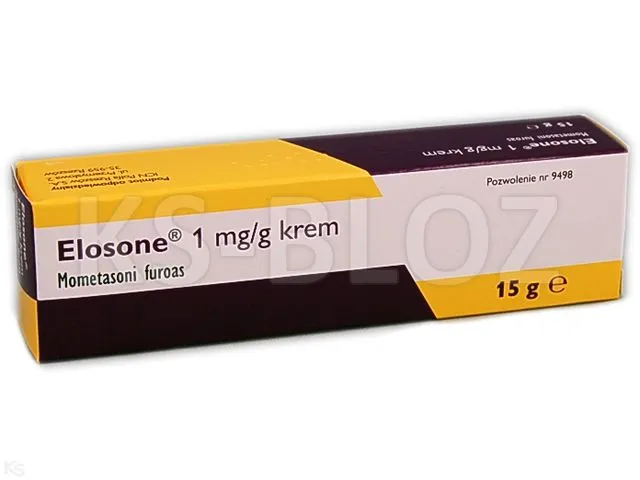
Table of Contents
Package leaflet: Information for the patient
ELOSONE, 1 mg/g, cream
Mometasone furoate
Please read this leaflet carefully before using the medicine, as it contains important information for the patient.
- Keep this leaflet, as you may need to read it again.
- If you have any questions, please consult your doctor or pharmacist.
- This medicine has been prescribed for a specific individual. Do not pass it on to others. The medicine may harm another person, even if their symptoms are the same.
- If you experience any adverse reactions, including any not listed in this leaflet, inform your doctor or pharmacist. See section 4.
Table of contents:
- What Elosone cream is and what it is used for
- Important information before using Elosone cream
- How to use Elosone cream
- Possible side effects
- How to store Elosone cream
- Contents of the pack and other information
1. What Elosone cream is and what it is used for
Elosone is a cream. It contains the active substance mometasone furoate, a potent corticosteroid intended for topical use on the skin. Mometasone furoate exerts anti-inflammatory, antipruritic, and vasoconstrictive effects when applied locally.
Indications:
Relief of itching and inflammatory manifestations of skin diseases that respond to corticosteroid therapy, such as psoriasis and atopic dermatitis.
2. Important information before using Elosone cream
When not to use Elosone cream
- if the patient is allergic to mometasone furoate, other corticosteroid medicines, or any of the other ingredients of this medicine (listed in section 6);
- in children under 2 years of age;
- in acne vulgaris or rosacea;
- in atrophic skin lesions;
- in perioral dermatitis (inflammation of the skin around the mouth);
- in cases of itching around the anus or genital area;
- in diaper dermatitis (redness and rash in the area covered by the diaper);
- in bacterial infections (e.g. impetigo, pyoderma), viral infections (e.g. herpes simplex, skin warts, anogenital warts – warts located around the anus and genital organs, molluscum contagiosum – a disease characterized by skin lesions appearing as firm, waxy-white nodules), and parasitic or fungal infections (e.g. those caused by yeasts or dermatophytes);
- in varicella (chickenpox) or herpes zoster infections;
- in tuberculosis;
- in syphilis;
- if the patient has experienced a post-vaccination reaction (an abnormal reaction following vaccination, manifesting e.g. as rash or skin redness);
- on open wounds or ulcerated skin.
Warnings and precautions
Before starting treatment with Elosone cream, discuss it with your doctor or pharmacist.
If skin irritation or allergic reaction occurs during treatment with Elosone cream, discontinue use and contact your doctor.
If the patient experiences blurred vision or other visual disturbances, contact a doctor.
If the patient notices any changes in the appearance of the skin being treated with Elosone cream, inform the doctor immediately. These may be signs of bacterial or fungal infection. If an infection develops, the doctor will initiate appropriate treatment. If no positive response to treatment occurs within a short time, the doctor may decide to discontinue use of Elosone cream.
Although Elosone cream is applied to the skin, mometasone furoate may be absorbed into the body, potentially leading to hormonal disturbances, such as reversible suppression of the hypothalamic-pituitary-adrenal (HPA) axis (the system regulating adrenal hormone secretion, including glucocorticoids) after treatment ends, or to the development of Cushing's syndrome (a cluster of symptoms including obesity, "moon face", facial redness, striae, muscle weakness, reduced immunity, increased blood pressure, associated with elevated blood glucocorticoid levels), increased blood glucose levels, or glucose excretion in urine.
When Elosone cream is applied over large skin areas or under an occlusive dressing, the doctor will periodically monitor the patient's condition.
Patients treated with Elosone cream over large areas of damaged skin, skin folds, or under an occlusive dressing (e.g. plastic film) have an increased risk of adverse effects. Elosone cream must not be used under occlusive dressings on the face or in children.
If application to the face is necessary, treatment should not last longer than 5 days.
Prolonged use of Elosone cream should be avoided in all patients, regardless of age.
Abrupt discontinuation of Elosone cream should be avoided. After stopping long-term therapy with Elosone cream, a "rebound effect" may occur, characterized by inflammatory skin condition with intense redness, burning, and stinging pain. To prevent this, consult your doctor, who may decide to gradually reduce the dose or frequency of application until treatment is completed.
Elosone cream should be used with particular caution in patients with psoriasis, as it may cause recurrence or worsening of symptoms (e.g. generalized pustular psoriasis) or other adverse effects. When used in psoriasis, the patient's condition should be closely monitored by the doctor.
Elosone cream may alter the appearance of certain skin lesions, which could make it difficult for the doctor to establish an accurate diagnosis. The medicine may also delay wound healing.
Elosone cream must not be used in the eyes or on the eyelids.
Care should be taken during application to avoid contact with the eyes.
Children and adolescents
Elosone cream must not be used in children under 2 years of age due to insufficient data on safety and efficacy in this age group.
When using the medicine in children aged 2 years and older, particular caution should be exercised and instructions from the doctor strictly followed.
Children have a higher risk of systemic adverse effects after using Elosone cream, including disturbances in the body's hormonal balance (see section 4).
Elosone cream and other medicines
Inform your doctor about all medicines the patient is currently taking or has recently taken, as well as any medicines planned for future use.
During long-term use, application over large skin areas, or under occlusive dressings, Elosone cream may:
- interfere with the action of anticoagulant medicines;
- reduce the effectiveness of antidiabetic medicines;
- enhance the effects of cardiac glycosides;
- enhance potassium loss caused by diuretics.
Pregnancy, breastfeeding, and fertility
If the patient is pregnant, breastfeeding, suspects she might be pregnant, or is planning to have a baby, she should consult her doctor or pharmacist before using this medicine.
Pregnancy
Elosone cream may be used during pregnancy only if the doctor decides it is absolutely necessary. The medicine should not be applied over large body surface areas or for prolonged periods.
Breastfeeding
Elosone cream must not be used during breastfeeding unless the doctor considers it absolutely necessary. If treatment with higher doses or for a prolonged period is required, breastfeeding should be discontinued.
Effect on fertility
There is no data available on the effect on fertility.
Driving and operating machinery
There are no available data on the effects of Elosone cream on the ability to drive or operate machinery.
Elosone cream contains methyl parahydroxybenzoate (E218) and propyl parahydroxybenzoate (E216).
The medicine may cause allergic reactions (delayed-type reactions are possible).
3. How to use Elosone cream
This medicine should always be used as directed by the physician. If in doubt, consult your
doctor or pharmacist.
Do not extend the recommended duration of treatment.
Before applying the medicine, thoroughly clean and dry the affected area of skin.
Typically, a thin layer of Elosone cream should be applied to the affected areas of skin once daily.
Treatment with Elosone cream should be discontinued once symptoms have resolved.
If there is no improvement after 2 weeks of treatment, consult your doctor, as the diagnosis may need to be re-evaluated.
Use in children and adolescents
Do not use in children under 2 years of age.
In children aged 2 years and older and in adolescents, use the medicine with particular caution and strictly follow the doctor's instructions.
Use of a larger than recommended dose of Elosone cream
If a larger than recommended dose is used or if the cream is accidentally swallowed, contact your doctor immediately.
Prolonged use or application over large areas of skin may lead to symptoms of overdose, such as edema, hypertension, elevated blood glucose levels, glycosuria, reduced immunity, and in severe cases, Cushing's syndrome (symptoms include, among others, facial and trunk obesity, muscle weakness, and growth retardation in children).
Prolonged use of the medicine may disrupt the body's hormonal balance. If symptoms of overdose occur, the doctor will initiate appropriate treatment, if necessary.
Missed dose of Elosone cream
Do not use a double dose to make up for a missed dose.
Apply the missed dose as soon as possible, then continue with the regular dosing schedule.
Discontinuation of Elosone cream
After prolonged use, do not abruptly stop using Elosone cream. Otherwise, symptoms may reappear in an intensified form. Discontinuation of treatment should be gradual and carried out slowly, according to the doctor's instructions (see section 2, "Warnings and precautions").
If you have any further questions regarding the use of this medicine, consult your doctor or pharmacist.
4. Possible adverse reactions
Like all medicines, this medicine can cause adverse reactions, although not everyone experiences them.
The following adverse reactions have been observed during the use of medicinal products containing mometasone:
Very rare (may occur in fewer than 1 in 10,000 people):
- folliculitis
- burning sensation, itching (pruritus).
Frequency not known (frequency cannot be estimated from the available data):
- contact dermatitis
- hypopigmentation
- hypertrichosis
- striae
- acneiform eruptions
- skin atrophy
- infections, boils
- paresthesia (tingling, numbness)
- pain at application site, reactions at application site
- blurred vision.
When topically applied, glucocorticosteroids have rarely been associated with the following adverse reactions: dry skin, skin irritation, perioral dermatitis, maceration (softening of skin), miliaria (sweat rash), and telangiectasia (dilation of subcutaneous blood vessels).
Children and adolescents
Due to a higher skin surface area to body weight ratio, children and adolescents may be more susceptible than adults to suppression of the hypothalamic-pituitary-adrenal (HPA) axis and development of Cushing's syndrome (see section 2 - Warnings and precautions).
Chronic therapy with glucocorticosteroids, including Elosone cream, may impair growth and development in children.
Reporting of adverse reactions
If any adverse reactions occur, including any not listed in this leaflet, inform your doctor or pharmacist. Adverse reactions can be reported directly to the Department of Monitoring of Adverse Drug Reactions at the Office for Registration of Medicinal Products, Medical Devices and Biocidal Products:
Al. Jerozolimskie 181C, 02-222 Warsaw
Tel.: +48 22 49 21 301
Fax: +48 22 49 21 309
Website: https://smz.ezdrowie.gov.pl
Adverse reactions can also be reported to the marketing authorization holder.
Reporting adverse reactions helps to provide more information on the safety of the medicine.
5. How to store Elosone cream
Store below 25°C. Do not freeze.
Keep the medicine out of the sight and reach of children.
Do not use this medicine after the expiry date stated on the container. The expiry date refers to the last day of the stated month.
Medicines must not be disposed of via wastewater or household waste. Ask your pharmacist how to dispose of medicines no longer in use. This will help protect the environment.
6. Contents of the packaging and other information
What Elosone cream contains
- The active substance is mometasoni furoas. Each gram of cream contains 1 mg of mometasone furoate.
- Other ingredients are: carbomer 1342, pemulen TR-1 NF, liquid paraffin, hexylene glycol, methyl parahydroxybenzoate (E218), propyl parahydroxybenzoate (E216), disodium edetate, triethanolamine, purified water.
What Elosone cream looks like and contents of the pack
Elosone cream is a homogeneous white cream.
Packaging
Aluminum tube internally coated with epoxy-phenolic lacquer, fitted with a polyethylene (HDPE) cap, containing 15 g or 30 g of cream, placed in a cardboard box.
Pack sizes:
1 tube of 15 g
1 tube of 30 g
Marketing Authorisation Holder
Bausch Health Ireland Limited
3013 Lake Drive
Citywest Business Campus
Dublin 24, D24PPT3
Ireland
Manufacturer
EMO-FARM Sp. z o.o.
Łódzka 52
95-054 Ksawerów
Poland