Elin
Poland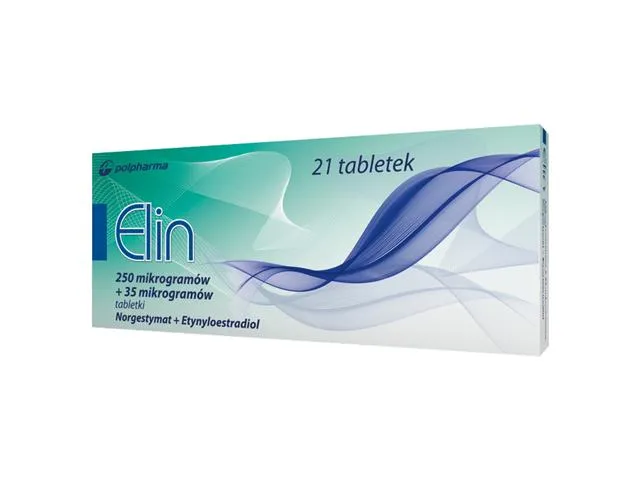
Table of Contents
Package leaflet: Information for the patient
Elin, 250 micrograms + 35 micrograms, tablets
Norgestimate + Ethinylestradiol
Important information about combined hormonal contraceptives:
- They are among the most reliable reversible methods of contraception, provided they are used correctly.
- They slightly increase the risk of developing blood clots in veins and arteries, especially during the first year of use or after restarting following a break of 4 weeks or longer.
- Please remain vigilant and consult your doctor if you suspect you may be experiencing symptoms of a blood clot (see section 2, "Blood clots").
Please read this leaflet carefully before taking the medicine, as it contains
important information for the patient.
- Keep this leaflet so that you can read it again if necessary.
- If you have any doubts, please consult your doctor, pharmacist, or nurse.
- This medicine has been prescribed for a specific individual. Do not pass it on to others. The medicine may harm someone else, even if their symptoms are the same.
- If you experience any adverse effects, including any not listed in this leaflet, tell your doctor, pharmacist, or nurse. See section 4.
Leaflet contents
- What Elin is and what it is used for
- What you need to know before taking Elin
- How to take Elin
- Possible side effects
- How to store Elin
- Contents of the pack and other information
1. What Elin is and what it is used for
Elin is a combined oral contraceptive tablet used to prevent pregnancy. Elin should be used exclusively for the prevention of pregnancy.
This contraceptive contains two types of female sex hormones: estrogen and progestogen. Because it contains two hormones, it is known as a "combined hormonal contraceptive."
The hormones in Elin prevent the release of an egg from the ovaries, thereby preventing pregnancy. In addition, the medicine thickens cervical mucus, making it more difficult for sperm to enter the uterus.
The medicine is taken in a 21-day cycle, meaning one tablet should be taken every day for 21 days, followed by a 7-day break.
2. Important information before taking Elin
General notes
Before starting treatment with Elin, you should read the information about blood clots (thrombosis) provided in section 2. It is particularly important to become familiar with the symptoms of blood clots.
- See section 2. "Blood clots".
Every woman should carefully consider the benefits and risks associated with taking Elin before starting or deciding to continue treatment. Although Elin is suitable for most healthy women, not all women can use it. Women who have any of the medical conditions or risk factors listed in this leaflet should inform their doctor.
When not to take Elin
Do not take Elin if you have any of the conditions listed below. If you have any of these conditions, inform your doctor. Your doctor will advise you which alternative contraceptive methods may be more suitable for you.
- if you are allergic to norgestimate, ethinylestradiol, or any of the other ingredients of this medicine (listed in section 6);
- if you currently have (or have ever had) a blood clot in a deep vein of the leg (deep vein thrombosis), in the lungs (pulmonary embolism), or in another organ;
- if you know you have a disorder affecting blood clotting, e.g. protein C deficiency, protein S deficiency, antithrombin III deficiency, factor V Leiden mutation, or presence of antiphospholipid antibodies;
- if you currently have (or have ever had) a heart attack or stroke;
- if you currently have (or have ever had) angina pectoris (a condition causing severe chest pain, which may be the first sign of a heart attack) or transient ischaemic attack (TIA – temporary stroke-like symptoms);
- if you are breastfeeding and your baby is less than 6 weeks old;
- if you have been diagnosed with breast cancer, cancer of the uterus, cervix, or vagina;
- if you have unexplained vaginal bleeding;
- if you require surgery or will be immobile for a prolonged period – see section titled "Blood clots";
- if you have any of the following conditions that may increase the risk of arterial blood clots:
- severe diabetes with blood vessel damage,
- very high blood pressure,
- very high levels of blood lipids (cholesterol or triglycerides),
- a condition known as hyperhomocysteinemia;
- if you smoke 15 or more cigarettes per day and are aged 35 or older;
- if you currently have or recently had severe liver disease;
- if you have hepatitis C and are taking medicines containing ombitasvir with paritaprevir and ritonavir, dasabuvir, glecaprevir with pibrentasvir, or sofosbuvir with velpatasvir and voxilaprevir (see also "Elin and other medicines");
- if you have or have had cancer of the breast or liver;
- if you have or have recently had pancreatitis;
- if you have not yet started menstruating (girls undergoing puberty);
- if you currently have (or have ever had) a certain type of migraine called migraine with aura.
Medical examinations
Before starting Elin, you must undergo a medical examination. Your doctor will take a personal and family medical history and measure your blood pressure. Other examinations, such as a breast examination, will only be performed if indicated or if you report specific concerns.
- Regular check-ups with your doctor or a family planning nurse are usually scheduled when a new prescription is issued.
- You should have regular cervical smear tests (Pap smears).
- In addition, you should examine your breasts and nipples monthly, and if you notice or feel anything unusual, such as lumps or skin dimpling, you should inform your doctor.
- Before having blood tests, inform your doctor that you are taking Elin, as it may affect the results of certain laboratory tests.
- If you are scheduled for surgery, inform your doctor, as you should stop taking Elin approximately 4–6 weeks before the procedure to reduce the risk of blood clots. Your doctor will advise you when you can resume taking Elin.
Warnings and precautions
Before starting Elin, discuss it with your doctor, pharmacist, or nurse.
When should you contact your doctor?
Seek urgent medical help:
- if you notice possible symptoms of a blood clot, which may indicate a blood clot in the leg (deep vein thrombosis), in the lungs (pulmonary embolism), a heart attack, or a stroke – see section titled "Blood clots" below.
Description of symptoms of these serious adverse effects – see "How to recognize a blood clot".
If you have any of the following conditions or disorders, you should inform your doctor.
If any of the following conditions develop or worsen during treatment with Elin, you should also inform your doctor.
- advanced age;
- significant overweight (body weight of 90 kg or more);
- smoking;
- personal or family history of thrombosis;
- high blood pressure or elevated blood pressure;
- prolonged immobility due to major surgery, injury, or illness;
- irregular heartbeat (atrial fibrillation), heart valve disease, heart failure, heart attack, or stroke in close family members at a young age;
- blood disorder (porphyria);
- hearing loss;
- diabetes;
- gallstones;
- liver disease associated with yellowing of the skin and eyes (jaundice);
- a neurological disorder causing involuntary body movements (Sydenham's chorea);
- Crohn's disease or ulcerative colitis (chronic inflammatory bowel diseases);
- systemic lupus erythematosus (an autoimmune disorder);
- haemolytic uraemic syndrome (a type of blood clotting disorder leading to kidney failure);
- sickle cell anaemia (an inherited red blood cell disorder);
- elevated levels of certain blood lipids (hypertriglyceridaemia) in you or in any of your family members. Hypertriglyceridaemia increases the risk of developing pancreatitis;
- need for surgery or prolonged immobility – see section 2. "Blood clots";
- recent childbirth – in this case, you are at increased risk of blood clots. Ask your doctor how soon after delivery you can start taking Elin;
- inflammation of veins just under the skin (superficial thrombophlebitis);
- varicose veins of the legs;
- blistering skin rash during pregnancy (herpes gestationis);
- skin pigmentation during pregnancy: brownish spots or patches, especially on the face (chloasma);
- depression;
- current or past history of breast cancer in close family members;
- epilepsy;
- hereditary angioedema. If you experience symptoms of angioedema, such as swelling of the face, tongue, and (or) throat and (or) difficulty swallowing or hives with potential breathing difficulties, contact your doctor immediately. Medicinal products containing estrogens may cause or worsen symptoms of hereditary or acquired angioedema;
- migraine;
- suspected pregnancy.
BLOOD CLOTS
Using combined hormonal contraceptives such as Elin increases the risk of blood clots compared to not using them. In rare cases, a blood clot can block blood vessels, leading to serious health problems.
Blood clots may occur:
- in veins (this is called venous thromboembolism or VTE);
- in arteries (this is called arterial thromboembolism).
Recovery from blood clots is not always complete. In rare cases, the consequences may be long-lasting, and in very rare cases, the condition may be fatal.
However, it is important to remember that the overall risk of developing a harmful blood clot due to taking Elin is small.
HOW TO RECOGNIZE A BLOOD CLOT
Seek urgent medical help if you experience any of the symptoms listed below.
| Are any of the following symptoms present in the patient? | What condition could this be? |
| Deep vein thrombosis |
| Pulmonary embolism |
Symptoms usually affecting one eye:
| Retinal vein thrombosis (blood clot in the eye) |
| Heart attack |
| Stroke |
| Blood clots blocking other blood vessels |
BLOOD CLOTS IN VEINS
What can happen if a blood clot forms in a vein?
- The use of combined hormonal contraceptives is associated with an increased risk of developing blood clots in veins (venous thrombosis). However, these adverse events are rare. They most commonly occur during the first year of using a combined hormonal contraceptive.
- If a blood clot forms in the lower limb or foot, it may lead to deep vein thrombosis.
- If such a clot starts moving and becomes lodged in the lung, it may cause pulmonary embolism.
- In very rare cases, a blood clot may form in a vein of another organ, for example, the eye (retinal vein thrombosis).
When is the risk of developing a blood clot in a vein the highest?
The risk of developing a blood clot in a vein is highest during the first year of first-time use of a combined hormonal contraceptive. The risk may also be increased when a woman restarts taking a combined hormonal contraceptive (the same or a different one) after a break of 4 weeks or longer.
After the first year of use, the risk decreases but remains slightly higher than in women not using combined hormonal contraceptives.
After stopping Elin, the risk of blood clots returns to normal within a few weeks.
What is the risk of developing a blood clot?
This risk depends on the woman's individual baseline risk of VTE (venous thromboembolism) and the type of combined hormonal contraceptive being used.
The overall risk of developing a blood clot in the leg (deep vein thrombosis) or in the lung (pulmonary embolism) while using Elin is low.
- Among 10,000 women who are not pregnant and who do not use any combined hormonal contraceptive, about 2 women will develop blood clots in one year.
- Among 10,000 women using combined hormonal contraceptives containing levonorgestrel, norethisterone, or norgestimate, such as Elin, about 5–7 women will develop blood clots in one year.
- The risk of developing a blood clot will depend on the woman's medical history (see below "Factors that increase the risk of blood clots").
| Risk of developing blood clot within a one-year period | |
| Women not using combined hormonal contraceptive pills/patches/rings and who are not pregnant | About 2 in 10,000 women |
| Women using combined oral contraceptives containing levonorgestrel, norethisterone, or norethisterone acetate | About 5-7 in 10,000 women |
| Women using the medicine Elin | About 5-7 in 10,000 women |
Factors increasing the risk of venous blood clots
The risk of developing a blood clot while using Elin is small, although certain circumstances may increase this risk. The risk is higher:
- if the patient is overweight (body mass index, i.e. BMI, exceeds 30 kg/m²);
- if any close relative of the patient has ever had a blood clot in a leg, lung, or another organ at a young age (e.g. under 50 years). This may indicate that the patient has an inherited blood clotting disorder;
- if the patient requires surgery or remains immobile for a prolonged period due to injury or illness, or if the patient has a leg in a cast. It may be necessary to discontinue Elin several weeks before planned surgery and during periods of reduced mobility. If the patient needs to stop taking Elin, she should consult her doctor about when she can resume taking it.
- with increasing age (especially over 35 years);
- if the woman has given birth within the last few weeks.
The risk of developing a blood clot increases with the number of medical conditions present in a given patient.
Air travel (lasting over 4 hours) may temporarily increase the risk of venous blood clots, particularly if the patient has any of the above-mentioned risk factors.
If any of the described situations apply to the patient, she should inform her doctor, even if she is not completely certain. The doctor may decide that discontinuation of Elin is necessary.
If any changes occur in the patient's circumstances while taking Elin, for example, if a close relative develops thrombosis of unknown cause or if the patient gains significant weight.
ARTERIAL BLOOD CLOTS
What can happen if a blood clot forms in an artery?
As with veins, formation of a blood clot in an artery may lead to serious health problems. Examples include heart attack or stroke.
Factors increasing the risk of arterial blood clots
It should be noted that the risk of heart attack or stroke while using Elin is very small, but may increase:
- with age (over 35 years);
- if the patient smokes. Women using combined hormonal contraceptives, such as Elin, should stop smoking. If the patient is unable to stop smoking and is over 35 years old, her doctor may recommend using a different type of contraceptive;
- if the patient is overweight;
- if the patient has high blood pressure;
- if any close relative of the patient has ever had a heart attack or stroke at a young age (under 50 years). In this case, the patient may also be at increased risk of heart attack or stroke;
- if the patient or any of her close relatives currently have or have previously had elevated levels of blood lipids (called cholesterol and triglycerides);
- if the patient suffers from migraines, particularly migraines with aura;
- if the patient has heart problems (valvular heart disease, a type of heart rhythm disorder called atrial fibrillation);
- if the patient has diabetes.
If the patient has more than one of these conditions or if any of them are particularly severe, the risk of developing an arterial blood clot may be further increased.
If any changes occur in the patient's circumstances while taking Elin, for example, if the patient starts smoking, if a close relative develops thrombosis of unknown cause, or if the patient gains significant weight.
Psychiatric disorders
Some women using hormonal contraceptives, including Elin, have reported depression or depressed mood. Depression can be severe and sometimes lead to suicidal thoughts.
If mood changes or symptoms of depression occur, contact a doctor as soon as possible for further medical advice.
Elin and other medicines
Inform your doctor or pharmacist about all medicines currently taken or recently used, as well as any medicines the patient plans to take. This includes over-the-counter medicines, such as herbal remedies.
Some types of medicines and herbal preparations may affect the blood levels of Elin and cause the medicine to be less effective in preventing pregnancy or may cause unexpected bleeding.
These include:
- medicines used to treat HIV and hepatitis C virus infections (protease inhibitors and non-nucleoside reverse transcriptase inhibitors such as ritonavir, nevirapine, efavirenz) or other infectious diseases (griseofulvin);
- medicines for epilepsy (such as topiramate, sodium phenytoin, carbamazepine, primidone, oxcarbazepine, and felbamate);
- medicines for pulmonary hypertension (bosentan);
- medicines for excessive daytime sleepiness (modafinil);
- medicines for relaxation and difficulty sleeping (sedatives, such as barbiturates);
- St. John's wort – a herbal remedy used to treat depression.
Elin may also affect the action of other medicines, such as:
- cyclosporine (used to prevent transplant rejection, treat rheumatoid arthritis, and certain skin diseases);
- lamotrigine (used to treat epilepsy);
- prednisolone (a corticosteroid medicine that reduces inflammation);
- theophylline (used to treat asthma, bronchitis, and emphysema).
If the patient is taking any of the above medicinal products, she should consult her doctor before starting Elin, as the doctor may need to adjust their dosage.
Do not use Elin if the patient has hepatitis C and is taking medicines containing ombitasvir with paritaprevir and ritonavir, dasabuvir, glecaprevir with pibrentasvir, or sofosbuvir with velpatasvir and voxilaprevir, as these may cause abnormal liver function test results detected in blood tests (increased ALT activity).
The doctor will prescribe another type of contraception before starting treatment with these medicines.
Elin may be restarted approximately 2 weeks after completing treatment with these medicines (see "When not to take Elin").
Combined hormonal contraceptives and cancer
Breast cancer
Breast cancer is diagnosed more frequently in women who use combined hormonal contraceptives. On the other hand, it is possible that combined hormonal contraceptives are not the cause of the increased number of breast cancer cases. It is likely that women using such contraceptives undergo more frequent medical examinations, increasing the likelihood of cancer detection. The increased risk gradually decreases after stopping combined hormonal contraceptives. After 10 years, the risk is the same as in women who have never used combined hormonal contraceptives.
Cervical cancer
Cervical cancer is also diagnosed more frequently in women using combined hormonal contraceptives. However, this may be due to other factors such as a higher number of sexual partners and sexually transmitted infections.
Liver cancer
In rare cases, liver tumours (which were not cancer) have been observed in women using combined hormonal contraceptives. Even more rarely, cancerous liver tumours have been reported. These may cause internal bleeding with accompanying severe abdominal pain.
If any of the above symptoms occur, seek medical advice immediately.
Elin with food, drink and alcohol
Food and drink should not affect the way Elin works.
Pregnancy, breastfeeding and fertility
If the patient is pregnant or breastfeeding, suspects she may be pregnant, or plans to have a child, she should consult her doctor or pharmacist before using this medicine.
Elin is contraindicated during pregnancy. If pregnancy is suspected while taking Elin, the patient should perform a pregnancy test to confirm pregnancy before deciding to stop taking this medicine.
The patient's doctor or nurse may advise against taking Elin while breastfeeding and recommend another method of contraception. Breastfeeding does not prevent pregnancy.
Driving and using machines
There are no data on the effect of Elin on the ability to drive and use machines.
Sexually transmitted infections
Elin does not protect against sexually transmitted infections such as chlamydia or HIV virus. The only protection is the use of condoms.
Elin contains lactose
If the patient has previously been diagnosed with intolerance to certain sugars, she should consult her doctor before taking this medicine.
Sodium content
The medicine contains less than 1 mmol (23 mg) of sodium per tablet, meaning the medicine is considered "sodium-free".
3. How to take Elin
This medicine should always be taken exactly as directed by your doctor or pharmacist. If in doubt, consult your doctor or pharmacist.
Elin should be taken daily for 21 days.
Elin comes in a blister pack containing 21 tablets, each marked with the day of the week.
Take one tablet every day at the same time.
Begin taking the tablets on the tablet marked with the corresponding day of the week.
Continue taking the tablets in the direction of the arrows on the blister. One tablet should be taken each day.
Swallow the tablet whole, with water if necessary. Do not chew the tablets.
Seven-day (7-day) tablet-free interval
After taking all 21 tablets from the blister, do not take any tablets for 7 days. If the last tablet from the pack is taken on Friday, the first tablet from the new pack should be taken the following Saturday.
Within a few days after taking the last tablet from the blister, a withdrawal bleed similar to menstruation may occur. This bleeding may continue until the start of the next pack of tablets.
During the 7-day tablet-free interval, there is no need to use additional contraceptive methods, provided the tablets have been taken correctly and the next pack is started on time.
Starting tablets from the next blister pack
After the 7-day tablet-free interval, start taking tablets from the next blister pack, even if bleeding continues. Begin taking tablets from the new blister pack on time.
Provided the medicine is taken correctly, starting a new pack will always occur on the same day of the week.
Starting Elin after no previous hormonal contraception
Start taking Elin on the first day of your cycle (the first day of menstruation). If Elin is taken on the first day of menstruation, protection against pregnancy is immediate. Elin may also be started on days 2–5 of the cycle; however, in this case, an additional contraceptive method (e.g. a condom) should be used for the first 7 days.
Switching from a combined hormonal contraceptive, combined vaginal contraceptive ring, or contraceptive patch
It is best to start Elin on the day after taking the last active tablet (containing active ingredients) of the previously used contraceptive. However, at the latest, start on the day after the end of the tablet-free interval of the previous contraceptive (or the day after taking the last placebo tablet).
When switching from a vaginal contraceptive ring or contraceptive patch, follow your doctor's instructions.
Switching from a progestogen-only method (mini-pill, injection, implant, or intrauterine system releasing progestogen)
A woman may switch to Elin at any time from the mini-pill (from an implant or intrauterine system on the day of removal, from an injectable contraceptive on the day the next injection would have been due). However, in all cases, an additional barrier method (e.g. condom) should be used for the first 7 days of taking Elin.
After miscarriage
Follow your doctor's advice.
After childbirth
Elin may be started between days 21 and 28 after delivery. If Elin is started after day 28, a barrier method (e.g. condom) should be used for the first 7 days of taking the medicine.
If sexual intercourse occurred before restarting Elin after childbirth, the woman should confirm she is not pregnant or wait until her next menstrual period.
Breastfeeding women who wish to restart Elin after childbirth
See section "Breastfeeding".
If in doubt about when to start taking Elin, consult your doctor.
Missed dose of Elin
If a tablet is taken less than 12 hours late, the level of contraceptive protection remains unchanged. Take the missed tablet as soon as possible, and continue taking the following tablets at the usual time.
If a tablet is taken more than 12 hours late, the level of contraceptive protection may be reduced. The more tablets missed, the higher the risk of pregnancy. The risk of incomplete protection is greatest if a tablet at the beginning or end of the pack is missed. Therefore, follow the rules outlined below (see diagram).
Missing more than one tablet from the pack
Consult your doctor.
Missing one tablet in Week 1
Take the missed tablet as soon as possible, even if this means taking two tablets at the same time. Continue taking the tablets at your usual time and use additional contraceptive precautions (e.g. a condom) for the next 7 days. If sexual intercourse occurred in the week before the missed tablet, pregnancy may have occurred. In this case, consult your doctor.
Missing one tablet in Week 2
Take the missed tablet as soon as possible, even if this means taking two tablets at the same time. Continue taking the tablets at your usual time. Contraceptive protection remains effective, and there is no need to use additional precautions.
Missing one tablet in Week 3
There are two options:
- Take the missed tablet as soon as possible, even if this means taking two tablets at the same time. Continue taking the tablets at your usual time. Instead of taking the 7-day break, start the next pack immediately. Withdrawal bleeding will most likely occur towards the end of the second pack, although light bleeding or breakthrough bleeding may occur during the second pack.
- Alternatively, stop taking tablets from the current pack and go directly to the 7-day tablet-free interval (note the day the tablet was missed). If the woman wishes to start the new blister pack on her usual day, the tablet-free interval should be shorter than 7 days.
Following either of these two options will prevent loss of contraceptive protection. However, if any tablet from the blister pack is missed and no withdrawal bleeding occurs during the first few days of the tablet-free interval, pregnancy may have occurred. In this case, consult your doctor before starting the next blister pack.
| Delayed intake of more than 1 tablet from the blister |

If taking tablets from a new pack is delayed or the break in taking
tablets exceeds 8 days, the woman will not be protected against pregnancy. If
sexual intercourse has occurred within the last seven days, medical advice should be sought from a doctor, nurse, or
pharmacist. Consideration should probably be given to using emergency contraception.
Additional contraceptive methods should also be used for seven days.
Lost tablet
If a tablet is lost, take a tablet from a spare blister pack. Then continue taking tablets from the current blister. The spare blister can be kept in case further tablets are lost.
Management in case of vomiting or severe diarrhoea
If vomiting or severe diarrhoea occurs within 3–4 hours after taking a tablet, the active substances in the pill may not have been completely absorbed by the body. Management is similar to that for a missed tablet. After vomiting or diarrhoea, take another tablet from a spare pack as soon as possible. If possible, the tablet should be taken within 12 hours of the usual time of intake. If this is not possible or more than 12 hours have passed, follow the instructions given in the section “Missed dose of Elin”.
Absence of bleeding
Withdrawal bleeding may occasionally not occur. This may indicate pregnancy, although pregnancy is unlikely if tablets have been taken correctly. Begin the next pack at the usual time. If pregnancy is suspected (e.g. due to missed tablets or concomitant use of other medicines) or if a second withdrawal bleed does not occur, a pregnancy test should be performed.
If pregnancy occurs, stop taking the medicine and consult a doctor.
Overdose of Elin
Although the risk of harm from taking more than one tablet is unlikely, the woman may experience nausea, vomiting, or vaginal bleeding.
If any of these symptoms occur, consult a doctor.
If the woman wishes to delay menstruation
If the woman wishes to delay menstruation, she should finish taking tablets from the current blister. The next blister should be started the following day without a break. Continue taking tablets as usual.
Breakthrough bleeding or spotting may occur during the days of taking tablets from the second blister, but this is not a cause for concern. The next pack should be started after the usual 7-day break, even if bleeding or spotting continues.
Decision to become pregnant
When planning pregnancy after stopping the medicine, it is best to use another method of contraception until a natural menstrual period occurs, as this allows the doctor to determine the due date. However, there is no risk to the woman or her child if conception occurs immediately.
Discontinuation of Elin
After stopping the medicine, irregular or light bleeding, or absence of bleeding, may occur. This usually happens during the first 3 months, particularly if the woman previously had irregular periods before starting the medicine.
Do not take a double dose to make up for a missed dose.
Use in children and adolescents
This medicine should not be used in girls during puberty who have not yet started menstruating.
If there are any further doubts regarding the use of this medicine, consult a doctor, pharmacist, or nurse.
4. Possible side effects
Like all medicines, this medicine can cause side effects, although not everyone will experience them.
If any side effect occurs, especially if it is severe or persistent, or if the woman experiences any change in health which she suspects may be caused by taking Elin, she should speak with her doctor.
All women using combined hormonal contraceptives are exposed to an increased risk of venous blood clots [venous thromboembolic disease (VTE)] and arterial blood clots (arterial thromboembolic disease). More detailed information on the various risks associated with the use of combined hormonal contraceptives
- see section 2. “Important information before using Elin”.
- harmful blood clots in a vein or artery, e.g.:
o in the lower limb or foot (i.e. deep vein thrombosis),
o in the lung (i.e. pulmonary embolism),
o heart attack,
o stroke,
o mini-stroke, i.e. transient stroke-like symptoms known as transient ischaemic attack (TIA),
o blood clots in the liver, stomach/intestines, kidneys or eye.
The likelihood of blood clot formation may be higher if the woman has other medical conditions that increase the risk (see section 2 for more detailed information on conditions that increase the risk of blood clot formation and symptoms of blood clots).
Seek immediate medical attention if any of the following symptoms of angioedema occur:
swelling of the face, tongue and/or throat and/or difficulty swallowing or urticaria with potential breathing difficulties (see also section “Warnings and precautions”).
If any adverse reactions occur, including any possible adverse reactions not listed in this leaflet which the woman suspects may be related to the medicine, consult a doctor, pharmacist, or nurse.
Very common – may affect more than 1 in 10 women:
- headache ( in case of severe, unusual or prolonged headaches, seek immediate medical advice );
- stomach upset;
- nausea;
- vomiting;
- diarrhoea;
- painful menstruation;
- uterine bleeding not related to the menstrual cycle.
Common – may affect up to 1 in 10 women:
- urinary tract infections (pain during urination);
- vaginal infections such as fungal infections;
- allergic reactions (hypersensitivity);
- fluid retention;
- depression;
- mood changes;
- feeling nervous;
- dizziness;
- difficulty sleeping (insomnia);
- migraine ( if first-time migraine occurs or becomes more severe than usual, seek immediate medical advice );
- stomach and intestinal pain;
- bloating;
- oedema;
- fatigue;
- flatulence;
- constipation;
- acne;
- rash;
- muscle cramps;
- pain in the lower and upper limbs;
- back pain;
- hot flushes;
- absence of menstruation;
- breast tenderness;
- chest pain;
- swelling of hands, ankles or feet;
- weight gain.
Uncommon – may affect up to 1 in 100 women:
- abnormal cervical cells (detected in a cytological test);
- appetite disturbances;
- weight fluctuations;
- tingling or numbness;
- visual disturbances;
- dry eyes;
- palpitations;
- thrombosis (blood clot formation);
- high blood pressure;
- hot flushes;
- hair loss (alopecia);
- excessive hair growth (hirsutism);
- urticaria;
- skin itching;
- skin redness;
- skin colour changes;
- muscle pain;
- breast-related disorders such as: fuller breasts, nipple discharge.
- ovarian cysts (may cause pain and abdominal enlargement and menstrual disturbances);
- vaginal dryness;
- libido disorders;
- fainting;
- paraesthesia;
- shortness of breath;
- abdominal pain.
Rare – may affect up to 1 in 1000 women:
- changes in appetite;
- decreased sexual desire;
- dizziness, sensation of spinning;
- rapid heartbeat;
- pancreatitis, causing severe abdominal and back pain;
- hepatitis; Symptoms of severe liver failure include: o severe pain in the upper abdomen; o yellowing of the skin or eyes (jaundice).
- light sensitivity;
- hot flushes;
- breast cyst;
- venous thromboembolic events;
- arterial thromboembolic events;
- increased sweating.
Unknown frequency – cannot be estimated from available data:
- breast tumours. Symptoms of breast cancer include, among others: o skin dimpling; o changes in the nipples; o any visible or palpable lumps.
- disturbances in blood lipid levels (detected in blood tests);
- stroke;
- seizure;
- discomfort when wearing contact lenses;
- blood clots in blood vessels supplying the eye (retinal vein thrombosis);
- red, painful, nodular swellings on the lower limbs (deep vein thrombosis);
- blood clots in the lungs causing chest pain and breathlessness (pulmonary embolism);
- severe allergic reactions causing swelling of the face and throat (angioedema);
- red nodules or lumps usually visible on both shins (erythema nodosum);
- night sweats;
- reduced milk production during breastfeeding;
- liver adenomas;
- focal nodular hyperplasia;
- fibroadenoma of the breast;
- dyslipidaemia;
- cerebrovascular event;
- seizures;
- myocardial infarction.
Reporting of adverse reactions
If any adverse reactions occur, including any adverse reactions not listed
in this leaflet, inform a doctor, pharmacist, or nurse. Adverse reactions
can be reported directly to the Department of Monitoring Adverse Drug Reactions of the Office for Registration of Medicinal Products, Medical Devices and Biocidal Products
Al. Jerozolimskie 181C
02-222 Warsaw
Tel.: +48 22 49 21 301
Fax: +48 22 49 21 309
Website: https://smz.ezdrowie.gov.pl
Adverse reactions can also be reported to the marketing authorisation holder.
Reporting adverse reactions helps provide more information on the safety of the medicine.
5. How to store Elin
Keep this medicine out of sight and reach of children.
Do not use this medicine after the expiry date stated on the blister and carton following EXP.
The expiry date refers to the last day of the stated month.
The marking on the packaging following EXP indicates the expiry date, and following Lot/LOT indicates the batch number.
Store in the original packaging to protect from light.
Medicines must not be disposed of via wastewater. Ask your pharmacist how to dispose of medicines no longer in use. This will help protect the environment.
6. Contents of the pack and other information
What Elin contains
- The active substances are norgestimate and ethinylestradiol. Each tablet contains 250 micrograms of norgestimate and 35 micrograms of ethinylestradiol.
- The other ingredients are:
anhydrous lactose, monohydrate lactose (see section 2. "Elin contains lactose"), povidone K-
25, all-rac-α-tocopherol, microcrystalline cellulose, sodium croscarmellose (see section 2.
"Content of sodium"), pregelatinized starch (Starch 1500), magnesium stearate, indigo carmine, lake
(E132).
What Elin looks like and contents of the pack
Elin is a blue, round, uncoated tablet with bevelled edges, 6.4 mm in diameter, embossed with the number "146" on one side and smooth on the other.
Each pack contains 1, 3, 6 or 13 blisters of 21 tablets.
Each carton contains blisters individually packed in an aluminium laminated pouch.
Not all pack sizes may be marketed.
Marketing Authorisation Holder and Importer
Marketing Authorisation Holder
Zakłady Farmaceutyczne POLPHARMA S.A.
ul. Pelplińska 19
83-200 Starogard Gdański
tel. +48 22 364 61 01
Importer
Eurofins Analytical Services Hungary Kft
Kerulet, Anonymus Utca 6/IV,
IV Kerulet, Budapest, 1045
Hungary
Zakłady Farmaceutyczne POLPHARMA S.A.
ul. Pelplińska 19
83-200 Starogard Gdański