Egolanza
Poland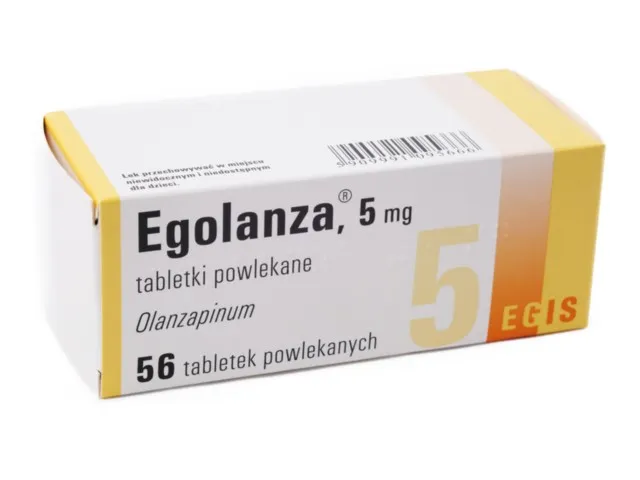
Table of Contents
Package leaflet: Information for the patient
Egolanza, 5 mg, film-coated tablets
Egolanza, 10 mg, film-coated tablets
Egolanza, 20 mg, film-coated tablets
Olanzapinum
Please read this leaflet carefully before using this medicine, as it contains important information for you.
- Keep this leaflet, so that you can read it again if necessary.
- If you have any questions, please consult your doctor, pharmacist, or nurse.
- This medicine has been prescribed for a specific individual. Do not share it with others. This medicine may harm other people, even if their symptoms are the same.
- If you experience any adverse effects, including any not listed in this leaflet, inform your doctor, pharmacist, or nurse. See section 4.
Leaflet contents
- What Egolanza is and what it is used for
- Important information before taking Egolanza
- How to take Egolanza
- Possible side effects
- How to store Egolanza
- Contents of the pack and other information
1. What Egolanza is and what it is used for
Egolanza contains the active substance olanzapine. Egolanza belongs to a group of medicines called antipsychotics and is used to treat the following conditions:
- schizophrenia, a disorder in which the patient hears, sees, or feels things that do not exist in reality, holds beliefs inconsistent with reality, is excessively suspicious, and withdraws from contact with other people. People with this disorder may also experience depression, anxiety, or tension;
- moderate to severe manic episodes, a condition characterized by symptoms of excitement or euphoria.
Egolanza has been shown to prevent recurrence of these symptoms in patients with bipolar affective disorder who have responded well to olanzapine treatment during a manic episode.
2. Important information before taking Egolanza
When not to take Egolanza:
- if the patient is allergic to olanzapine or any of the other ingredients of this medicine (listed in section 6). An allergic reaction may include rash, itching, facial swelling, swollen lips or difficulty breathing. If such symptoms occur, inform the doctor immediately.
- if the patient has previously been diagnosed with eye problems such as certain types of glaucoma (increased pressure in the eye).
Warnings and precautions: Before starting treatment with Egolanza, discuss this with your doctor, pharmacist, or nurse.
- Egolanza is not recommended for elderly patients with dementia-related conditions, as it may cause very serious adverse effects.
- Medicines of this class may cause unusual movements, especially of the face or tongue. If such symptoms occur after taking Egolanza, inform your doctor.
- Very rarely, this type of medicine may cause a group of symptoms known as neuroleptic malignant syndrome – fever, rapid breathing, sweating, muscle stiffness, drowsiness or sleepiness. If any of these symptoms occur, contact your doctor immediately.
- Weight gain has been observed in patients taking Egolanza. The patient's body weight should be monitored regularly. If necessary, consider consulting a dietitian or seeking help in establishing a dietary plan.
- Elevated blood sugar levels and increased lipid levels (triglycerides and cholesterol) have been observed in patients taking Egolanza. Before starting and during treatment with Egolanza, the doctor should perform blood tests to monitor blood glucose and certain lipid levels.
- Inform the doctor if the patient or a family member has a history of blood clots, as similar medicines have been associated with blood clot formation. Inform the doctor immediately if the patient has any of the following conditions:
- stroke or "mini" stroke (transient ischemic attack)
- Parkinson's disease
- pituitary gland disorders
- intestinal obstruction (paralytic ileus)
- liver or kidney disease
- blood disorders
- heart disease
- diabetes
- seizures
- if the patient knows they may have experienced electrolyte loss due to prolonged severe diarrhea and vomiting (nausea with vomiting) or use of diuretics (water tablets). If the patient has dementia and has ever had a stroke or "mini" stroke, the patient or caregiver should inform the doctor. As a precaution, the doctor may routinely monitor blood pressure in patients over 65 years of age.
Children and adolescents
Egolanza is not intended for patients under 18 years of age.
Egolanza with other medicines
Patients taking Egolanza should only use other medicines with the approval of a doctor. Taking Egolanza together with antidepressants, sedatives, or sleeping medicines may cause drowsiness.
Inform the doctor about all medicines currently being taken, recently taken, or planned for use.
In particular, inform the doctor if the patient is taking:
- medicines used to treat Parkinson's disease
- carbamazepine (an anticonvulsant and mood-stabilizing medicine), fluvoxamine (an antidepressant), or ciprofloxacin (an antibiotic) – a dose adjustment of Egolanza may be necessary.
Taking Egolanza with alcohol
Alcohol in any form should not be consumed while taking Egolanza, as it may increase drowsiness.
Pregnancy, breastfeeding, and fertility
If the patient is pregnant, breastfeeding, suspects she may be pregnant, or is planning to have a child, she should consult her doctor before taking this medicine.
Egolanza should not be taken during breastfeeding, as small amounts of the medicine may pass into breast milk.
Newborns whose mothers took Egolanza during the last trimester of pregnancy (last 3 months) may experience the following symptoms: tremor, muscle stiffness and/or weakness, drowsiness, agitation, breathing difficulties, and feeding problems. If any of these symptoms occur in the newborn, contact the doctor immediately.
Driving and operating machinery
While taking Egolanza, there is a risk of drowsiness. If this occurs, the patient should not drive or operate tools or machinery. Inform the doctor.
Egolanza contains lactose
If the doctor has diagnosed the patient with an intolerance to certain sugars, the patient should consult the doctor before taking this medicinal product.
3. How to take Egolanza
This medicine should always be taken as directed by the physician. If in doubt, consult
your doctor or pharmacist.
Your doctor will decide how many tablets and for how long you should take Egolanza. The daily dose
of Egolanza ranges from 5 mg to 20 mg. If symptoms reappear, inform your doctor.
However, do not stop taking Egolanza unless your doctor advises you to do so.
Egolanza should be taken once daily as directed by the physician. Try to take the medicine at the
same time each day. It does not matter whether the tablets are taken with or without food. Egolanza
tablets are taken orally. Swallow the tablet whole with water.
The 5 mg tablet may be divided into equal doses.
Use in children and adolescents
Egolanza must not be used in patients under 18 years of age.
Overdose of Egolanza
In patients who have taken an overdose of Egolanza, the following symptoms have occurred:
rapid heartbeat, agitation or aggressive behavior, difficulty speaking, involuntary movements
(particularly of the facial muscles and tongue), and reduced consciousness. Other symptoms include:
acute confusion (disorientation), seizures (epilepsy), coma, simultaneous occurrence of fever,
rapid breathing, sweating, muscle stiffness, and drowsiness or somnolence, decreased respiratory
rate, choking, high or low blood pressure, and heart rhythm disturbances. If any of these symptoms
occur, contact your doctor immediately or go to a hospital. Show the doctor the medicine packaging.
Missed dose of Egolanza
Take the missed tablet as soon as possible. Do not take a double dose to make up for the missed tablet.
Stopping treatment with Egolanza
Even if the patient feels better, do not stop taking the tablets. It is important to continue taking
Egolanza for as long as your doctor recommends.
If treatment with Egolanza is stopped abruptly, the following symptoms may occur: sweating,
insomnia, tremors, anxiety, nausea, or vomiting. Your doctor may recommend gradually reducing
the dose before stopping treatment.
If you have any further questions about the use of this medicine, consult your doctor, pharmacist,
or nurse.
4. Possible adverse effects
Like all medicines, this medicine can cause adverse effects, although not everyone will experience them.
You should immediately inform your doctor if any of the following occur:
- unusual movements, especially of the face or tongue (a commonly reported adverse effect, which may affect up to 1 in 10 patients);
- blood clots in veins (an uncommonly reported adverse effect, which may affect up to 1 in 100 patients), particularly in the legs (symptoms include swelling, pain, redness of the leg). Blood clots may travel through blood vessels to the lungs, causing chest pain and difficulty breathing. If any of these symptoms are observed, medical advice should be sought immediately;
- simultaneously: fever, rapid breathing, sweating, muscle stiffness, and lethargy or drowsiness (the frequency of this adverse effect cannot be determined from available data).
Very common adverse effects: may occur in more than 1 in 10 patients:
- weight gain,
- drowsiness,
- increased prolactin (a hormone stimulating milk production) levels in blood.
In the early stages of treatment, dizziness or fainting (with slowed heart function) may occur, particularly when rising from a lying or sitting position. These symptoms usually resolve spontaneously, but if they persist, the doctor should be informed.
Common adverse effects: may occur in up to 1 in 10 patients:
- changes in the count of certain blood cells and in lipid levels in the bloodstream,
- transient increase in liver enzyme activity at the beginning of treatment,
- increased blood and urine glucose levels,
- increased levels of uric acid and creatine phosphokinase in blood,
- increased appetite,
- dizziness,
- anxiety,
- tremor,
- constipation,
- dryness of the oral mucosa,
- rash,
- weakness,
- extreme fatigue,
- fluid retention causing swelling of hands, feet, or ankles,
- fever,
- joint pain,
- sexual disorders, such as decreased libido in men and women or erectile dysfunction in men.
Uncommon adverse effects: may occur in up to 1 in 100 patients:
- hypersensitivity (e.g. swelling of the mouth and throat, itching, rash),
- diabetes or worsening of diabetes, occasionally associated with ketoacidosis (presence of ketone bodies in blood and urine) or coma,
- seizures, usually in patients with a history of seizures (epilepsy),
- muscle stiffness or spasms (including muscles responsible for eye movements),
- restless legs syndrome,
- speech disorders,
- stuttering,
- slowed heart function,
- photosensitivity,
- nosebleeds,
- abdominal bloating,
- salivation,
- memory loss or forgetfulness,
- urinary incontinence,
- inability to pass urine,
- hair loss,
- absence or reduced intensity of menstrual bleeding,
- breast changes in men and women, such as milk secretion outside the breastfeeding period or unusual breast enlargement.
Rare adverse effects: may occur in up to 1 in 1000 patients:
- decreased body temperature,
- heart rhythm disturbances,
- sudden death of unknown cause,
- pancreatitis causing severe abdominal pain, fever, and nausea,
- liver disease manifesting as yellowing of the skin and whites of the eyes,
- muscle disease manifesting as unexplained muscle aches and pains,
- prolonged and (or) painful erection.
During treatment with Egolanza in elderly patients (over 65 years of age) diagnosed with dementia, stroke, pneumonia, urinary incontinence, falls, extreme fatigue, visual hallucinations, elevated body temperature, skin redness, and walking difficulties may occur. Cases of death have also been reported in this patient group.
In patients with Parkinson's disease, treatment with Egolanza may worsen symptoms of parkinsonism.
Very rare adverse effects include severe allergic reactions, such as drug reaction with eosinophilia and systemic symptoms (DRESS syndrome, Drug Reaction with Eosinophilia and Systemic Symptoms). In DRESS syndrome, initial symptoms resemble influenza with a rash on the face, followed by widespread rash, high fever, swollen lymph nodes, increased liver enzyme activity evident in blood tests, and elevated levels of a specific type of white blood cells (eosinophilia).
Reporting of adverse effects
If any adverse effects occur, including those not listed in this leaflet, you should inform your doctor or pharmacist. Adverse effects can be reported directly to the Department of Monitoring Adverse Drug Reactions, Office for Registration of Medicinal Products, Medical Devices and Biocidal Products
Al. Jerozolimskie 181C
02-222 Warsaw
Phone: +48 22 49 21 301
Fax: +48 22 49 21 309
Website: https://smz.ezdrowie.gov.pl
Adverse effects can also be reported to the marketing authorization holder. Reporting adverse effects helps to enhance the safety information available for the medicine.
5. How to store Egolanza
No special storage instructions are required.
Keep the medicine in a place invisible and out of reach of children.
Do not use this medicine after the expiry date stated on the carton after: EXP. The expiry date refers to the last day of the stated month.
Do not use this medicine if you notice clear signs of deterioration (e.g. fading).
Medicines must not be disposed of via wastewater or household waste. Ask your pharmacist how to dispose of medicines no longer in use. Such measures help protect the environment.
6. Contents of the packaging and other information
What Egolanza contains
- The active substance is olanzapine. Each Egolanza tablet contains 5 mg, 10 mg, or 20 mg of active substance. The amount is indicated on the medicine's packaging.
- Other ingredients are: Egolanza, 5 mg, film-coated tablets
Tablet core: microcrystalline cellulose, monohydrate lactose (40.98 mg), hydroxypropylcellulose, crospovidone, magnesium stearate.
Coating: hypromellose, quinoline yellow (E 104), Opadry-Y-1-7000 White (hypromellose, titanium dioxide (E 171), polyethylene glycol 400).
Egolanza, 10 mg, film-coated tablets
Tablet core: microcrystalline cellulose, monohydrate lactose (81.97 mg),
hydroxypropylcellulose, crospovidone, magnesium stearate.
Coating: hypromellose, quinoline yellow (E 104), Opadry-Y-1-7000 White (hypromellose,
titanium dioxide (E 171), polyethylene glycol 400).
Egolanza, 20 mg, film-coated tablets
Tablet core: microcrystalline cellulose, monohydrate lactose (163.94 mg),
hydroxypropylcellulose, crospovidone, magnesium stearate.
Coating: hypromellose, quinoline yellow (E 104), Opadry-Y-1-7000 White (hypromellose,
titanium dioxide (E 171), polyethylene glycol 400).
What Egolanza looks like and contents of the pack
Appearance:
Egolanza, 5 mg, film-coated tablets
Yellow, elongated, biconvex, film-coated tablets with a score line imprinted on one side and a symbol consisting of a stylized letter E and code 402 on the other side.
The tablet can be divided into equal doses.
Egolanza, 10 mg, film-coated tablets
Yellow, round, biconvex, film-coated tablets with a symbol consisting of a stylized letter E and code 404 on one side.
Egolanza, 20 mg, film-coated tablets
Yellow, round, biconvex, film-coated tablets with a symbol consisting of a stylized letter E and code 406 on one side.
Pack sizes:
Egolanza, 5 mg, film-coated tablets
28, 35, 42, 49, 56, 63, 70, 77, 84, 91, 98, 105 or 112 tablets packed in blisters made of OPA/Aluminium/PVC/Aluminium foil, in a cardboard box.
Egolanza, 10 mg, film-coated tablets
28, 35, 42, 49, 56, 63, 70, 77, 84, 91, 98, 105 or 112 tablets packed in blisters made of OPA/Aluminium/PVC/Aluminium foil, in a cardboard box.
Egolanza, 20 mg, film-coated tablets
28, 35, 42, 49, 56, 63, 70, 77, 84, 91, 98, 105 or 112 tablets packed in blisters made of OPA/Aluminium/PVC/Aluminium foil, in a cardboard box.
Not all pack sizes may be marketed.
Marketing Authorisation Holder
EGIS Pharmaceuticals PLC
H-1106 Budapest, Keresztúri út 30-38
Hungary
Manufacturer
EGIS Pharmaceuticals PLC
H-1165 Budapest, Bökényföldi út 118-120
Hungary
This medicinal product is authorised in the member states of the European Economic Area under the following names:
Bulgaria: Egolanza 5 mg, 10 mg, 15 mg, 20 mg film-coated tablets
Czech Republic: Egolanza 5 mg, 10 mg, 15 mg, 20 mg
Hungary: Egolanza 5 mg, 10 mg, 15 mg, 20 mg filmtabletta
Lithuania: Egolanza 5 mg, 10 mg, 15 mg, 20 mg apvalkotās tabletes
Latvia: Egolanza 5 mg, 10 mg, 15 mg, 20 mg plēvele dengtas tabletes
Poland: Egolanza
Romania: Egolanza 5 mg, 10 mg, 15 mg, 20 mg comprimate filmate
For further information about this medicine, please contact the local representative of the Marketing Authorisation Holder:
EGIS Polska Sp. z o.o.
ul. Komitetu Obrony Robotników 45D
02-146 Warsaw
Tel.: +48 22 417 92 00