Efrinol 1%
Poland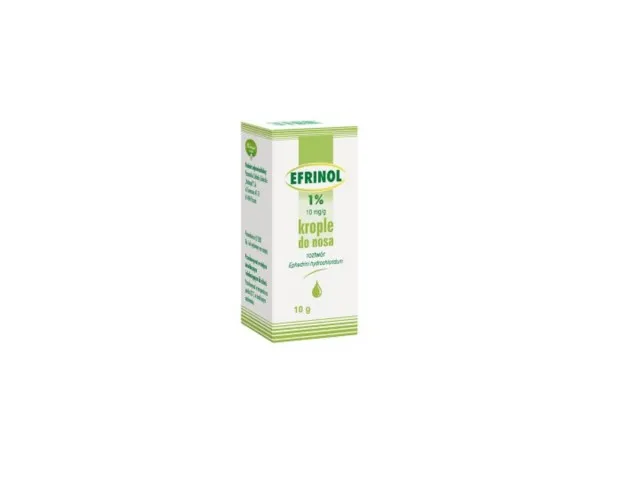
Table of Contents
Package leaflet: Information for the user
EFRINOL 1%, 10 mg/g, nasal drops, solution
Ephedrini hydrochloridum
Please read all of this leaflet carefully before you start using this medicine because it contains important information for you.
- Keep this leaflet as you may need to read it again.
- If you have any further questions, please ask your doctor.
- This medicine has been prescribed for a specific individual. Do not pass it on to others. This medicine may harm other people, even if their symptoms are the same.
- If you experience any adverse reactions, including any not listed in this leaflet, tell your doctor. See section 4.
Contents of the leaflet
- What Efrinol 1% is and what it is used for
- Important information before using Efrinol 1%
- How to use Efrinol 1%
- Possible side effects
- How to store Efrinol 1%
- Contents of the pack and other information
1. What Efrinol 1% is and what it is used for
Efrinol 1% is a solution. Efrinol 1% contains the active substance ephedrine hydrochloride, which, when applied locally to the nasal mucosa, causes constriction of blood vessels and reduces swelling of the nasal mucosa.
Indications for Efrinol 1%:
- Acute inflammatory conditions of the nasal mucosa and paranasal sinuses;
- Allergic inflammatory conditions of the nasal mucosa.
2. Important information before using Efrinol 1%
When not to use Efrinol 1%:
- if the patient is allergic to ephedrine, other sympathomimetic amines, or any of the other ingredients of this medicine (listed in section 6)
- if the patient has arterial hypertension, ischemic heart disease, cardiac arrhythmias (especially paroxysmal tachycardia)
- in acute coronary insufficiency
- in hyperthyroidism
- in closed-angle glaucoma
- during general anesthesia with cyclopropane or halothane
Warnings and precautions
Before starting treatment with Efrinol 1%, consult a doctor in the following cases:
- if the patient has diabetes, benign prostatic hyperplasia, cardiovascular disease, or angina pectoris.
Prolonged use of the medicine should be avoided in hyperexcitable patients.
Tachyphylaxis (rapidly decreasing response to repeated doses administered at short intervals) may occur within a few days after starting treatment.
Tolerance and dependence have been observed after long-term use of the medicine.
Efrinol 1% and other medicines
Inform your doctor about all medicines currently used or recently taken, as well as any medicines the patient intends to take.
Ephedrine may interact with other medicines, particularly when used concomitantly with:
- monoamine oxidase inhibitors (nialamide, selegiline, furazolidone), which inhibit the breakdown of noradrenaline and thereby enhance the effect of ephedrine, potentially leading to a significant increase in blood pressure.
- salbutamol and other sympathomimetic agents, which may intensify the undesirable cardiovascular effects of ephedrine and should not be used simultaneously. Concomitant use of ephedrine with low doses of salbutamol and sympathomimetic agents present in inhaled products may be permitted cautiously.
- methyldopa, which reduces the effect of ephedrine.
- reserpine, which inhibits the storage of noradrenaline, thereby reducing the effect of ephedrine and accelerating its elimination; a similar effect may result from urine acidification.
- acetazolamide and other agents that alkalinize urine may enhance the toxic effects of ephedrine by increasing its blood concentration.
- ephedrine acts antagonistically to antihypertensive medicines.
- ephedrine administered concomitantly with theophylline may intensify central nervous system adverse effects of theophylline (nausea, vomiting, increased excitability).
- guanethidine, by inhibiting the release of noradrenaline, may cause nasal mucosal edema, impairing ephedrine absorption. Ephedrine may also reduce the antihypertensive effect of guanethidine.
- concomitant use of ephedrine with cardiac glycosides (e.g. digoxin) or medicines used in general anesthesia may increase the risk of cardiac arrhythmias.
Pregnancy, breastfeeding, and fertility
If the patient is pregnant or breastfeeding, suspects she may be pregnant, or is planning to become pregnant, she should consult a doctor before using this medicine.
Consult a doctor before using any medicine.
Ephedrine readily crosses the placental barrier. It may cause cardiac arrhythmias in both mother and fetus. Ephedrine passes into breast milk. Infants breastfed by mothers using ephedrine may experience symptoms of excitation and sleep disturbances.
Efrinol 1% should not be used during pregnancy and breastfeeding.
Driving and operating machinery
The effect of the medicine on the ability to drive and operate machinery is currently unknown.
3. How to use Efrinol 1%
This medicine should always be used as directed by a physician. In case of doubt, consult
your doctor.
The medicine is for nasal use.
The following dosing regimen should be applied: instill 1–3 drops into each nostril 2 to 5 times daily.
Do not use the medicine for longer than 5 days.
If you feel that the effect of Efrinol 1% is too strong or too weak, consult your doctor.
Use of a higher than recommended dose of Efrinol 1%
Doses significantly higher than recommended, or use in particularly sensitive individuals, may cause Efrinol 1% to induce excessive nervous system stimulation, increased arterial blood pressure, accelerated heart rate, anxiety and insomnia, convulsions, urinary retention, and dizziness.
Prolonged nasal use of the medicine may lead to chronic nasal mucosal hyperemia.
In case of accidental overdose, seek immediate medical advice from a doctor or pharmacist.
Missed dose of Efrinol 1%
Continue using the medicine as prescribed without increasing the next dose.
Do not use a double dose to make up for a missed dose.
4. Possible adverse effects
Like all medicines, this medicine can cause adverse effects, although not everyone will experience them.
When using Efrinol 1%, the following may occur:
increased heart rate, elevated arterial blood pressure, palpitations, tachycardia and other cardiac arrhythmias, increased excitability, anxiety, restlessness, tremors, headache, difficulty sleeping, nausea, vomiting, dryness of the nasal and pharyngeal mucosa. With prolonged use, dependence may develop, associated with increased aggressiveness with psychotic features. Urinary difficulties, especially in patients with prostate enlargement, and rare cases of skin allergy manifesting as rash.
In some individuals during treatment with Efrinol 1%, other adverse effects may occur. If any of the adverse effects worsen or if any adverse effects not listed in this leaflet occur, inform your doctor.
Reporting of adverse effects
If any adverse effects occur, including those not listed in this leaflet, inform your doctor, pharmacist, or nurse. Adverse effects can be reported directly to the Department of Monitoring Adverse Drug Reactions of the Office for Registration of Medicinal Products, Medical Devices and Biocidal Products:
Al. Jerozolimskie 181 C, 02-222 Warsaw, phone: +48 22 49-21-301, fax: +48 22 49-21-309,
e-mail: [email protected].
Adverse effects can also be reported to the marketing authorization holder.
Reporting adverse effects helps to provide more information on the safety of the medicine.
5. Storage of the medicinal product Efrinol 1%
Keep the medicinal product out of sight and reach of children.
Do not use this medicinal product after the expiry date stated on the packaging.
The expiry date refers to the last day of the stated month.
The abbreviation "EXP" on the carton indicates the expiry date.
The abbreviation "Lot" on the carton indicates the batch number.
Store below 25°C, in the closed container.
Medicinal products must not be disposed of via wastewater or household waste.
Ask your pharmacist how to dispose of medicinal products no longer in use.
This will help protect the environment.
6. Contents of the package and other information
What Efrinol 1% contains
- The active substance is ephedrine hydrochloride. 1 g of solution contains 10 mg of ephedrine hydrochloride. 1 drop of solution contains 0.5 mg of ephedrine hydrochloride.
- The other ingredients are: sodium chloride, chlorobutanol, methylcellulose, purified water.
What Efrinol 1% looks like and contents of the pack
Efrinol 1% is a colourless, clear solution.
Pack available
Polyethylene container PE in a cardboard box containing 10 g of solution.
Marketing Authorisation Holder
Poland
Poznańskie Zakłady Zielarskie „Herbapol” S.A.
ul. Towarowa 47-51, 61-896 Poznań
tel. + 48 61 886 18 00, fax +48 61 853 60 58
Manufacturer
Przedsiębiorstwo Farmaceutyczne „PROLAB” Sp. z o.o.
Paterek, ul. Przemysłowa 3, 89-100 Nakło nad Notecią
tel. 52 386 73 10, fax 52 386 73 23