Efluelda
Poland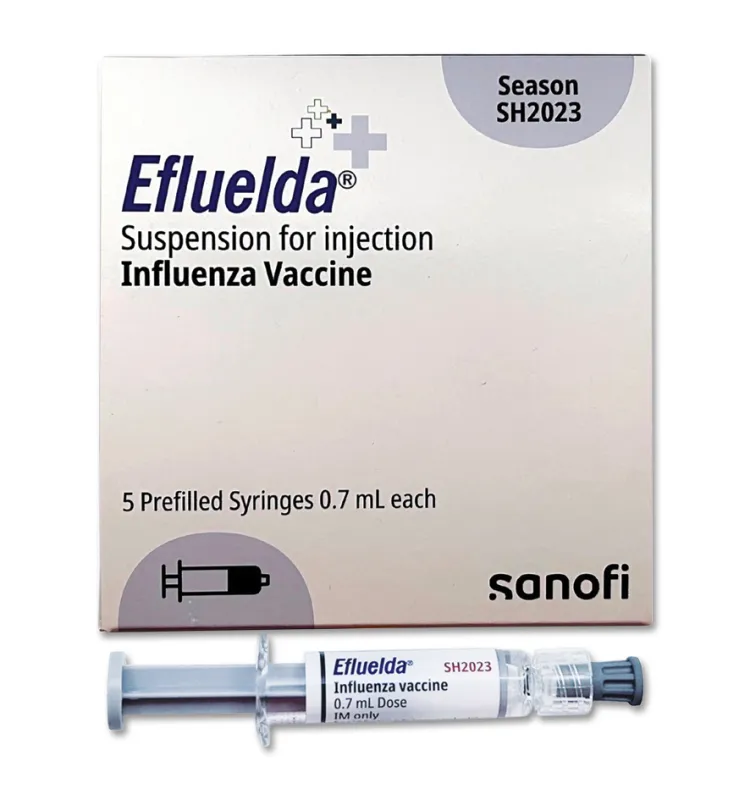
Table of Contents
- Package leaflet: Information for the user
- 1. What Efluelda is and what it is used for
- 2. Important information before administration of the Efluelda vaccine
- 3. How to use the Efluelda vaccine
- 4. Possible side effects
- 5. How to store Efluelda vaccine
- 6. Contents of the pack and other information
- Information intended exclusively for healthcare professionals:
Package leaflet: Information for the user
Efluelda, suspension for injection in prefilled syringe,
Trivalent inactivated split virion influenza vaccine,
60 micrograms HA/strain
Please read all of this leaflet carefully before the vaccine is administered, because it
contains important information for you.
- Keep this leaflet. You may need to read it again.
- If you have any further questions, please ask your doctor, pharmacist, or nurse.
- This vaccine has been prescribed for a specific individual. Do not pass it on to others.
- If you experience any adverse reactions, including any adverse reactions not listed in this leaflet, tell your doctor, pharmacist, or nurse. See section 4.
Table of contents
- What Efluelda is and what it is used for
- Important information before receiving Efluelda
- How to use Efluelda
- Possible side effects
- How to store Efluelda
- Contents of the pack and other information
1. What Efluelda is and what it is used for
Efluelda is a vaccine. This vaccine helps protect individuals aged 60 years and older against influenza.
The use of Efluelda vaccine should be based on official recommendations for influenza vaccination.
After administration of Efluelda, the immune system (the body's natural defence system) produces its own protection against the disease (antibodies). None of the components of the vaccine can cause influenza.
Influenza is an infectious respiratory disease caused by influenza viruses, ranging in severity from mild to severe, and may lead to serious complications such as pneumonia, which may result in hospitalization or even death. Influenza is a disease that can spread rapidly and is caused by many different virus strains that may change each year. Due to this potential annual change in circulating strains, as well as the limited duration of protection provided by the vaccine, annual vaccination is recommended. The highest risk of contracting influenza occurs during the colder months between October and March. For individuals who were not vaccinated in the autumn, vaccination remains justified during the winter and into the spring, as the risk of influenza infection persists until then. Your doctor can advise on the best time for vaccination.
Efluelda vaccine is intended to protect against the three virus strains contained in the vaccine, approximately 2 to 3 weeks after vaccination. Since the incubation period of influenza is several days, infection is still possible if exposure to the influenza virus occurs immediately before vaccination or shortly after vaccination.
The vaccine does not protect against the common cold, although some of its symptoms may resemble those of influenza.
2. Important information before administration of the Efluelda vaccine
You should inform your doctor or pharmacist if any of the following apply to the person
who is to receive the Efluelda vaccine. If anything is unclear, please ask your doctor
or pharmacist for clarification.
When not to use Efluelda vaccine:
- If the person has a known allergy to:
- the active substances, or
- any of the other ingredients of this vaccine (listed in section 6), or
- any component which may be present in trace amounts, such as egg residue (ovalbumin, chicken proteins) and formaldehyde.
Warnings and precautions
Before administering the Efluelda vaccine, discuss it with your doctor, pharmacist, or nurse.
Before vaccination, inform your doctor if the patient has:
- weakened immune response (due to immunodeficiency or use of medications affecting the immune system),
- bleeding disorders or tendency to bruise easily,
- a history of Guillain-Barré syndrome (GBS) (a serious muscle weakness) following a previous influenza vaccination,
- a current illness with high or moderate fever or an acute illness. Vaccination should be postponed until recovery. The doctor will decide whether vaccination should be given.
Fainting may occur after, or even before, any injection with a needle. Therefore, inform your
doctor or nurse if the person has previously fainted after injections.
As with any vaccine, Efluelda may not provide complete protection in all vaccinated individuals.
Inform your doctor if blood tests are planned for the patient within a few days after influenza vaccination, due to observed false-positive blood test results in some patients previously vaccinated.
Use in children
This vaccine should not be administered to children. Use of this vaccine is recommended for adults aged 60 years and older.
Efluelda vaccine and other medicines
Tell your doctor or pharmacist about all medicines or vaccines the patient is currently using, has recently used, or plans to use.
- If Efluelda vaccine is administered at the same time as other vaccines, each vaccine should always be given in a different limb.
- It should be noted that when vaccines are administered simultaneously, adverse reactions may be more pronounced.
- If the patient is receiving immunosuppressive treatments such as corticosteroids, cytotoxic drugs, or radiotherapy, the immune response to vaccination may be reduced.
Pregnancy and breastfeeding
The Efluelda vaccine is indicated for use only in adults aged 60 years and older.
If the patient is pregnant or breastfeeding, suspects she might be pregnant, or is planning to become pregnant, she should consult her doctor or pharmacist before receiving this vaccine. The doctor or pharmacist will help decide whether the patient should receive the Efluelda vaccine.
Driving and operating machinery
The Efluelda vaccine has no effect or has a negligible effect on the ability to drive and operate machinery. However, driving is not recommended if the patient does not feel well or experiences dizziness.
Efluelda vaccine contains sodium
This vaccine contains less than 1 mmol of sodium (23 mg) per dose; therefore, the medicine is considered "sodium-free".
3. How to use the Efluelda vaccine
Adults aged 60 years and older should receive a single 0.5 ml dose.
How the Efluelda vaccine is administered
The recommended dose of the vaccine will be administered by a doctor, pharmacist, or nurse as an injection into the muscle or under the skin.
If you have any further questions regarding the use of this vaccine, consult your doctor or pharmacist.
4. Possible side effects
Like any medicine, this vaccine can cause side effects, although not everybody will experience them.
Allergic reactions
IMMEDIATELY contact a doctor if the patient experiences:
- Severe allergic reactions:
- possibly requiring medical assistance, with low blood pressure, breathlessness, wheezing or difficulty breathing, rapid heartbeat and weak pulse, cold and clammy skin, dizziness which may lead to fainting (anaphylaxis [including angioedema, i.e. swelling most noticeable in the head and neck area, including the face, lips, tongue, throat or other body parts, which may cause difficulty in swallowing or breathing]).
Contact a doctor if the patient experiences:
- Allergic reactions such as skin reactions affecting the whole body, including itching, urticaria (hives), rash. These side effects are rare (may affect up to 1 in 1,000 people).
Other reported side effects
The following side effects have been reported in adults aged 60 years and older.
Very common (may affect more than 1 in 10 people):
- Reactions at the injection site: pain, redness (erythema)
- General malaise (fatigue), headache, muscle pain
Common (may affect up to 1 in 10 people):
- Reactions at the injection site: swelling, bruising, induration
- Fever, chills
Uncommon (may affect up to 1 in 100 people):
- Reactions at the injection site: itching
- Fatigue, drowsiness, nausea, vomiting, diarrhoea
- Cough, muscle weakness, indigestion, sore throat (pain in mouth and throat)
Rare (may affect up to 1 in 1,000 people):
- Lack of energy (weakness), redness, joint pain, dizziness, night sweats, rash, numbness or tingling sensation (paraesthesiae), nasal inflammation (rhinitis), vertigo (balance disorders), excess blood in the eye's white (conjunctival hyperaemia)
- Limb pain
Frequency not known: frequency cannot be estimated from the available data:
- Decrease in the number of certain types of blood cells called platelets; low levels may cause excessive bruising or bleeding (thrombocytopenia)
- Enlargement of lymph nodes in the neck, armpit or groin (lymphadenopathy)
- Neurological disorders which may cause neck stiffness, disorientation, numbness, pain and weakness in limbs, loss of balance, loss of reflexes, paralysis of part or all of the body (encephalomyelitis and transverse myelitis, brachial neuritis, Guillain-Barré syndrome), facial paralysis (Bell’s palsy), vision disorders caused by dysfunction of the optic nerves (optic neuritis/neuropathy), seizures (convulsions, including febrile convulsions), fainting shortly after vaccination
- Inflammation of blood vessels, which may lead to skin rashes and, in very rare cases, transient kidney function disorders, dilatation of blood vessels
- Chest pain
- Wheezing, throat tightness, difficulty breathing (dyspnoea)
Most side effects usually occurred within 3 days after vaccination and resolved within 3 days. The severity of these side effects was generally mild to moderate.
Reporting of side effects
If any side effects occur, including any side effects not listed in this leaflet, tell your doctor, pharmacist or nurse. Side effects can also be reported directly to the Department for Monitoring Adverse Drug Reactions of the Office for Registration of Medicinal Products, Medical Devices and Biocidal Products
Al. Jerozolimskie 181C
02-222 Warsaw
Tel.: +48 22 49 21 301
Fax: +48 22 49 21 309
Website: https://smz.ezdrowie.gov.pl
Side effects can also be reported to the responsible entity.
Reporting side effects helps provide more information on the safety of this medicine.
5. How to store Efluelda vaccine
Keep the vaccine out of the sight and reach of children.
Do not use this vaccine after the expiry date stated on the label and packaging following
"Expiry date (EXP)". The expiry date refers to the last day of the stated month.
Store in a refrigerator (2 °C – 8 °C). Do not freeze. Keep the pre-filled syringe in the
outer packaging to protect it from light.
Medicines must not be disposed of via wastewater or household waste. Ask your pharmacist
how to dispose of medicines no longer required. This will help protect the environment.
6. Contents of the pack and other information
What Efluelda vaccine contains
- The active substances are: Inactivated, split influenza virus from the following strains*:
A/Victoria/4897/2022 (H1N1)pdm09-like strain (A/Victoria/4897/2022, IVR-238)
.....................................................................................................................................60 micrograms HA**
A/Croatia/10136RV/2023 (H3N2)-like strain (A/Croatia/10136RV/2023, X-425A)
.................................................................................................................................... 60 micrograms HA**
B/Austria/1359417/2021-like strain (B/Michigan/01/2021, wild type)
................................................................................................................................... 60 micrograms HA**
per 0.5 ml dose
* propagated in embryonated chicken eggs
** hemagglutinin
The vaccine complies with recommendations of the World Health Organization (WHO) for the northern hemisphere and with European Union recommendations for the 2025/2026 season.
Other components are: buffer solution containing sodium chloride, monobasic sodium phosphate, dibasic sodium phosphate, water for injections, and octoxynol-9.
Some components such as egg residues (chicken egg albumin, chicken proteins) or formaldehyde may be present in very small amounts (see section 2).
What Efluelda vaccine looks like and contents of the pack
After gentle shaking, the vaccine is a colourless, opalescent liquid.
Efluelda is a suspension for injection in a prefilled syringe (suspension for injection) with or without needle (packs of 1, 5 or 10) or with needle in a protective needle shield (packs of 1 or 10). Not all pack sizes may be marketed.
Marketing Authorisation Holder and Importer
Marketing Authorisation Holder:
Sanofi Winthrop Industrie
82 avenue Raspail
94250 Gentilly
France
Importer:
Sanofi Winthrop Industrie
Voie de l’Institut - Parc Industriel d'Incarville
B.P 101
27100 Val de Reuil
France
This medicinal product is authorised for marketing in the European Economic Area countries under the following names:
| Austria, Belgium, Bulgaria, Croatia, Czech Republic, Denmark, Estonia, Finland, France, Spain, Netherlands, Iceland, Ireland, Lithuania, Luxembourg, Latvia, Malta, Germany, Norway, Poland, Portugal, Romania, Slovakia, Slovenia, Sweden, Hungary, Italy | Efluelda |
| Cyprus, Greece | Efluelda TIV |
Currently approved information about this product is available
on the cardboard box> or at the following URL: https://efluelda-nh.info.sanofi>
Information intended exclusively for healthcare professionals:
As with all injectable vaccines, appropriate medical treatment and supervision must be available
in case of an anaphylactic reaction following vaccine administration.
The vaccine should reach room temperature before administration.
Shake well before use. Visually inspect the vaccine before administration.
The vaccine must not be used if particulate matter is present in the suspension.
The vaccine must not be mixed with other medicinal products in the same syringe.
The vaccine must not be administered directly into blood vessels.
See also section 3. How to use Efluelda vaccine
˂Preparation for administration
Instructions for use of the needle with safety shield with the Luer Lock vial-syringe:
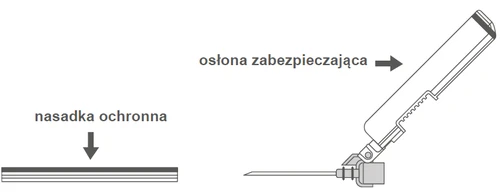
| Figure A: Needle in protective shield (in housing) | Figure B: Components of the needle protective shield (prepared for use) |
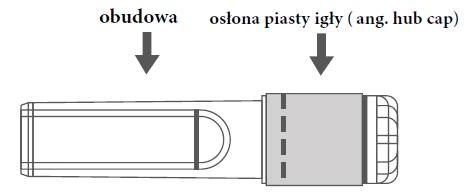 |  |
| Step 1: To attach the needle to the syringe, remove the needle hub cap to expose the needle hub and gently screw the needle into the syringe's Luer Lock adapter until slight resistance is felt. | |
Step 2: Remove the needle housing. The needle is protected by a safety shield and a protective cap.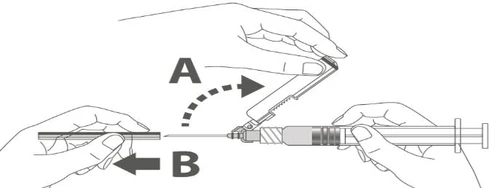 | |
| Step 3: A: Slide the protective shield away from the needle towards the syringe barrel at the angle shown. B: Remove the protective cap. | 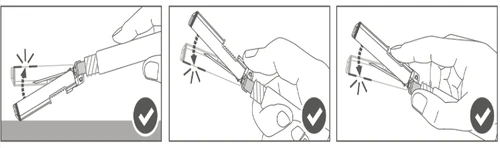 |
| Step 4: After injection, activate (lock) the protective shield using one of the three (3) illustrated one-handed techniques: activation on a flat surface, with the thumb, or with the index finger. Note: Activation is confirmed by an audible and/or tactile "click". | |
| Step 5: Visually inspect the function of the protective shield. The protective shield should be completely locked (activated), as shown in Figure C. Figure D shows that the protective shield is NOT fully locked (not activated). | 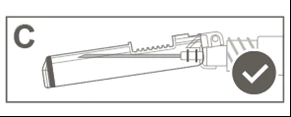 |
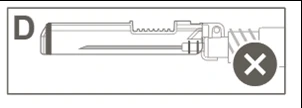
| Warning: Do not attempt to unlock (deactivate) the safety device by pushing the needle out of the protective cover. | |
Any unused residues of the medicinal product or its waste should be disposed of in accordance with local regulations.