Doxycycline tzf
Poland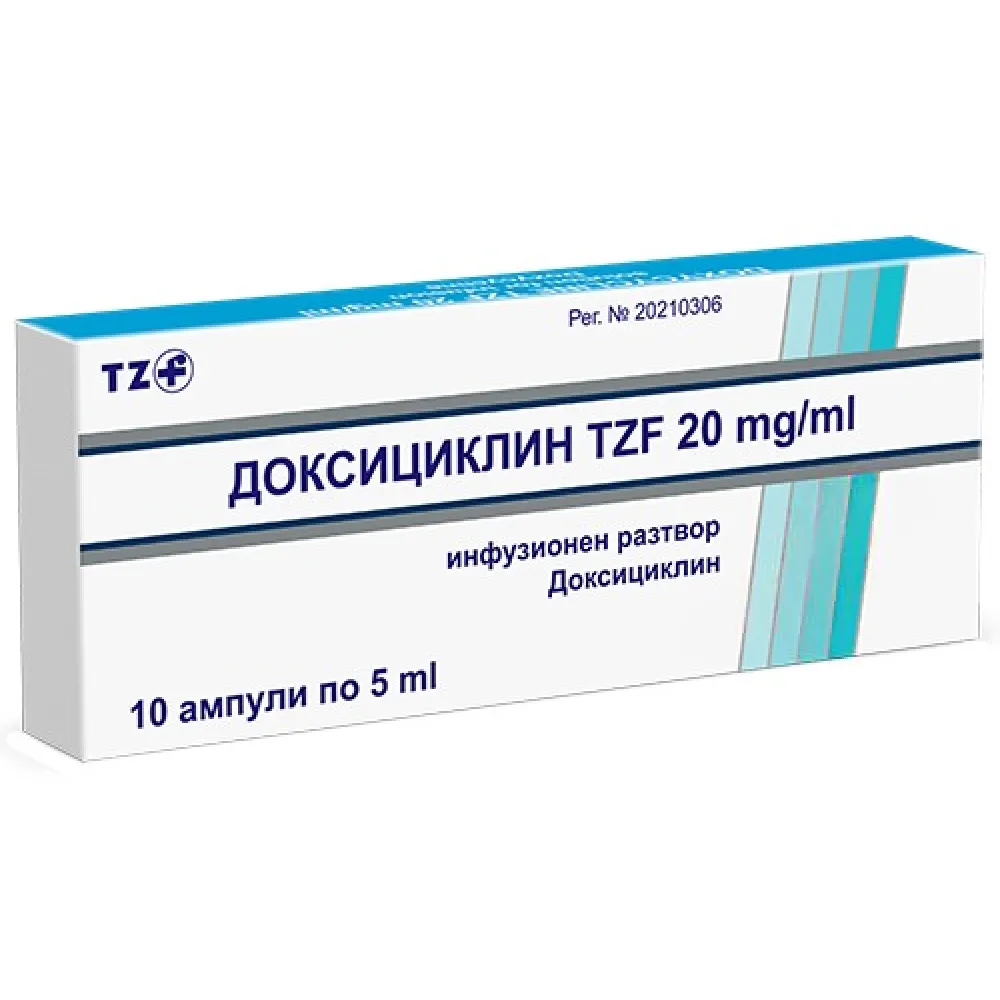
Table of Contents
- Package leaflet: Information for the patient
- 1. What Doxycyclinum TZF is and what it is used for
- 2. Important information before using Doxycyclinum TZF
- 4. Possible adverse reactions
- 5. How to store Doxycyclinum TZF
- 6. Contents of the pack and other information
- Information intended exclusively for medical professionals:
Package leaflet: Information for the patient
Doxycyclinum TZF, 20 mg/ml, solution for infusion
Doxycyclinum
Each vial contains 100 mg of doxycycline (as doxycycline hyclate)
in 5 ml of solution.
Please read this leaflet carefully before using the medicine, as it contains
important information for the patient.
- Keep this leaflet, so that you can read it again if necessary.
- If you have any questions, please consult your doctor, pharmacist, or nurse.
- This medicine has been prescribed for a specific individual. Do not pass it on to others. The medicine may harm others, even if their symptoms are the same.
- If you experience any adverse reactions, including any not listed in this leaflet, inform your doctor, pharmacist, or nurse. See section 4.
Leaflet contents:
- What Doxycyclinum TZF is and what it is used for
- Important information before using Doxycyclinum TZF
- How to use Doxycyclinum TZF
- Possible side effects
- How to store Doxycyclinum TZF
- Contents of the package and other information
1. What Doxycyclinum TZF is and what it is used for
Doxycyclinum TZF contains the active substance doxycycline, an antibiotic belonging to the tetracycline group. Doxycycline inhibits the growth of many microorganisms (bacteria and protozoa).
Indications
Doxycyclinum TZF is indicated for the treatment of the following infections caused by microorganisms sensitive to doxycycline:
- infections of the upper and lower respiratory tract (e.g. tonsillitis, pharyngitis, otitis media, sinusitis, bronchitis, pneumonia);
- urinary tract infections – cystitis;
- sexually transmitted diseases – uncomplicated urethritis, pelvic inflammatory disease;
- gastrointestinal infections, including salmonellosis, traveler's diarrhea, cholera, amoebiasis;
- skin and soft tissue infections, including severe forms of acne vulgaris caused by microorganisms sensitive to the drug.
2. Important information before using Doxycyclinum TZF
When not to use Doxycyclinum TZF
if the patient is allergic (hypersensitive) to doxycycline, other tetracyclines, or to any of the
other components of the medicine (listed in section 6);
in pregnant and breastfeeding women.
Warnings and precautions
Inform your doctor if the patient has any of the following conditions:
- impaired kidney function;
- impaired liver function;
- myasthenia gravis (a disease characterized by excessive fatigue and weakness of skeletal muscles);
- systemic lupus erythematosus (an allergic-type disease characterized by joint pain, skin rash, fever);
- porphyria (a rare disorder related to blood pigment).
In diseases where coexisting syphilis infection is suspected, the doctor will recommend appropriate diagnostic tests before starting treatment.
Doxycycline should not be used during tooth development (second half of pregnancy, neonatal period, infancy, children under 8 years of age), as it may cause permanent tooth discoloration (yellow-gray-brown) or interfere with normal tooth growth.
However, in certain cases (e.g. severe or life-threatening conditions), the doctor may decide to prescribe doxycycline to children under 8 years of age if the potential benefits outweigh the risk of such adverse effects.
Tetracyclines, including doxycycline, may cause photosensitivity. During treatment, the patient should avoid exposure to sunlight or artificial UV radiation (e.g. sunbeds) due to the risk of photosensitivity reactions, which may manifest as skin redness, swelling, or blistering. If such symptoms occur, the medicine should be discontinued immediately and the doctor informed.
As with other antibiotics, prolonged use of doxycycline may lead to overgrowth of microorganisms resistant to the antibiotic. If symptoms indicating fungal infection occur (persistent itching, skin redness), inform the doctor.
If persistent diarrhoea occurs during or after completion of Doxycyclinum TZF treatment, inform the doctor. This may be a sign of intestinal inflammation – a complication associated with antibiotic use. In such cases, discontinuation of the medicine is necessary and sometimes specific treatment is required. Do not use drugs that inhibit intestinal peristalsis or have constipating effects.
Cases of bulging fontanelle in infants and benign intracranial hypertension in children and adults have been reported following therapeutic doses. These symptoms usually resolve quickly after discontinuation of the medicine.
Doxycline TZF with other medicines
Tell your doctor about all medicines currently or recently taken, including those obtained without a prescription.
In particular, inform your doctor if the patient is taking:
- warfarin or other oral anticoagulants (medicines preventing blood clots);
- cyclosporine (a medicine used, among others, after organ transplants);
- methotrexate (used in the treatment of rheumatoid arthritis);
- penicillin or other penicillin-group antibiotics;
- sedatives;
- rifampicin (an antituberculosis medicine);
- carbamazepine, phenytoin (medicines used in the treatment of epilepsy).
Oral contraceptives
Doxycyclinum TZF may reduce their effectiveness. Therefore, during treatment with doxycycline and for 7 days after completion of treatment, additional non-hormonal contraceptive methods are recommended.
Doxycline TZF with food, drink or alcohol
Drinking alcohol during treatment with Doxycyclinum TZF may reduce the effectiveness of the medicine.
Pregnancy and breastfeeding
If the patient is pregnant or breastfeeding, suspects she may be pregnant, or is planning to have a child, she should consult a doctor or pharmacist before using this medicine.
If the patient is pregnant or suspects she may be pregnant
The medicine should not be used in pregnant women.
If the patient is breastfeeding
Doxycycline passes into human milk. Breastfeeding must be discontinued during treatment with doxycycline.
Driving and operating machinery
Doxycyclinum TZF probably does not affect the ability to drive or operate machinery. However, it may occasionally cause dizziness, blurred or double vision.
Therefore, the patient should ensure how he or she reacts to the medicine before driving or operating machinery.
Doxycline TZF contains sodium metabisulfite (E 223)
The medicine may rarely cause severe allergic reactions and bronchospasm.
Doxycline TZF contains sodium
The medicine contains less than 1 mmol (23 mg) of sodium per 1 ml of prepared infusion solution, meaning the medicine is considered "sodium-free".
The sodium content from the solvent should be taken into account when calculating the total sodium content in the prepared diluted product (see section "Information intended exclusively for healthcare professionals"). For precise information on the sodium content of the diluent used, refer to the leaflet of the solvent used.
3. How to use Doxycyclinum TZF
This medicine should always be used exactly as prescribed by the doctor.
In case of doubt, consult your doctor or pharmacist.
The medicine is administered by intravenous infusion.
Recommended dose
Adults and children aged 12 to 18 years
On the first day of treatment, 200 mg of doxycycline (2 vials) is given as a single dose or in two divided doses – 100 mg every 12 hours, followed by a maintenance dose of 100 mg daily.
In severe infections, 200 mg daily should be given throughout the treatment period.
The duration of treatment depends on the severity of the infection.
Children aged 8 to 12 years
Doxycycline may be used in the treatment of severe infections in children aged 8 to 12 years only when alternative treatments are unavailable, ineffective, or contraindicated.
In such cases, the dosing of doxycycline is as follows:
Children with body weight of 45 kg or less:
Initial dose (first day of treatment): 4.4 mg/kg body weight (as a single dose or two divided doses), then from the second day of treatment, 2.2 mg/kg body weight (as a single dose or two divided doses). The duration of treatment depends on the severity of infection.
For more severe infections, up to 4.4 mg/kg body weight should be given throughout the treatment period.
Children with body weight above 45 kg – the adult dose should be used.
200 mg on the first day, then 100 mg daily. The duration of treatment depends on the severity of infection.
Children under 8 years
Doxycycline should not be used in children under 8 years of age due to the risk of tooth discoloration (see sections 2 and 4).
Duration of treatment
The duration of treatment depends on the severity and type of infection.
The doctor will determine the appropriate treatment duration, which must be strictly followed.
Instructions for preparation and administration of Doxycyclinum TZF are provided at the end of this leaflet in the section "Information intended exclusively for healthcare professionals".
Overdose of Doxycyclinum TZF
Symptoms of overdose include fever, facial flushing, dizziness, and occasionally collapse (loss of consciousness).
Since the medicine will be administered by a doctor or nurse, the risk of incorrect dosing is low. However, if the patient suspects that an excessive dose has been administered, he or she should immediately inform the doctor or go to the nearest hospital emergency department.
Bring the medicine in its original packaging so that the medical staff can identify exactly which medicine was used.
Missed dose of Doxycyclinum TZF
Do not take a double dose to make up for a missed dose.
Stopping Doxycyclinum TZF treatment
It is important that the medicine is used according to the prescribed treatment schedule. Do not stop treatment just because the patient feels better. Premature discontinuation of treatment may cause the infection to recur.
If the patient feels worse during treatment or does not feel better after completing the prescribed treatment course, he or she should contact the treating doctor.
4. Possible adverse reactions
Like any medicine, Doxycyclinum TZF can cause adverse reactions, although not everyone experiences them.
If any of the adverse reactions listed below occur, stop taking the medicine immediately and inform your doctor or go to the emergency room of the nearest hospital.
Severe adverse reactions occurring very rarely (occurring in 1 to 10 out of 10,000 people):
Increased intracranial pressure, which manifests as headache and visual disturbances (blurred vision, double vision).
Severe adverse reactions occurring with unknown frequency (frequency cannot be estimated based on available data):
Allergic reactions such as rash, sudden shortness of breath and chest tightness, eyelid, facial or lip swelling, severe skin rashes which may be accompanied by the formation of erosions in the mouth, eyes, genital organs and on the skin, large blister formation, peeling of large areas of the epidermis, weakness, fever and joint pain, increased heart rate, anaphylactic shock presenting as confusion, pale skin, drop in blood pressure, sweating, reduced urine output, rapid breathing, weakness and fainting.
Skin photosensitivity to UV radiation (sunlight, sunbeds).
Severe diarrhoea, persisting for a prolonged period or containing blood, accompanied by abdominal pain or fever. This may be a sign of severe inflammation of the small or large intestine (called pseudomembranous colitis). These symptoms may occur after antibiotic use, even 2 to 3 months after completion of treatment.
If any of the following adverse reactions occur, contact your doctor as soon as possible:
- hepatitis, jaundice (observed rarely);
- pancreatitis (observed very rarely);
- anaemia due to red blood cell breakdown, increase or decrease in the number of certain types of white or red blood cells and platelets, which may manifest as fatigue, bleeding, increased tendency to bruising and infections (observed with unknown frequency);
- Jarisch-Herxheimer reaction causing fever, chills, headache, muscle pain and skin rash, which usually resolves spontaneously. This occurs shortly after starting doxycycline treatment for spirochetal infections, e.g. Lyme disease (observed with unknown frequency);
- light-induced separation of the nail plate from the nail bed (observed with unknown frequency).
Other adverse reactions which may occur during treatment with Doxycyclinum TZF
Adverse reactions occurring rarely (occur in less than 1 in 10,000 people):
- thrombophlebitis.
Adverse reactions occurring very rarely (occur in 1 to 10 out of 10,000 people):
- bulging of the fontanelle in infants and benign intracranial hypertension (manifesting as headache) in children and adults receiving high doses of tetracyclines. These symptoms resolve rapidly after discontinuation of the drug. Complete loss of vision has also been reported.
Adverse reactions with unknown frequency (frequency cannot be estimated based on available data):
- inflammation in the genital and anal areas, inflammation of the oral mucosa and tongue, vaginitis;
- disorders of haem synthesis (porphyria);
- during long-term tetracycline administration, brown-black discoloration of the thyroid gland has been observed, without affecting its function;
- headache;
- tinnitus;
- abdominal pain, loss of appetite, nausea, vomiting, diarrhoea, indigestion, difficulty swallowing, oesophagitis and oesophageal ulceration. These symptoms are usually mild and do not require discontinuation of treatment. The vast majority of these adverse reactions occurred during treatment with doxycycline in capsule form (see section 2. Important information before using Doxycyclinum TZF). Tooth discoloration and (or) impaired tooth development.
- transient, slight increase in liver enzyme activity; liver function disturbances;
- in patients receiving tetracyclines for a prolonged period, joint pain, muscle pain; tooth discoloration, enamel hypoplasia;
- increased blood urea concentration;
- malaise, pain, irritation, burning at the site of administration.
Reporting of adverse reactions
If any adverse effects occur, including any adverse effects not listed in this leaflet, inform your doctor, pharmacist or nurse. Adverse reactions can be reported directly to the Department of Monitoring Adverse Drug Reactions, Office for Registration of Medicinal Products, Medical Devices and Biocidal Products
Al. Jerozolimskie 181C, 02-222 Warsaw
Tel.: +48 22 49 21 301; fax: +48 22 49 21 309
Website: https://smz.ezdrowie.gov.pl
Adverse reactions can also be reported to the marketing authorization holder.
Reporting adverse reactions helps provide more information on the safety of the medicine.
5. How to store Doxycyclinum TZF
Keep this medicine out of the sight and reach of children.
Store at a temperature between 2 °C and 8 °C. Protect from light.
Do not use this medicine after the expiry date (EXP) stated on the packaging. The expiry date refers to the last day of the stated month.
Medicines must not be disposed of via wastewater or household waste. Ask your pharmacist how to dispose of medicines no longer required. These measures will help protect the environment.
6. Contents of the pack and other information
What Doxycyclinum TZF contains
The active substance is doxycycline (in the form of doxycycline hyclate).
1 ml of solution contains 20 mg of doxycycline.
Other ingredients of the medicinal product are: povidone K17, ethanolamine, magnesium chloride hexahydrate, sodium pyrosulfite (E 223), water for injections.
What Doxycyclinum TZF looks like and contents of the pack
A clear yellow to amber solution.
Pack: 10 vials with 5 ml each, in a cardboard box.
Marketing authorisation holder and manufacturer
Tarchomin Pharmaceutical Works "Polfa" Joint Stock Company
A. Fleminga Street 2
03-176 Warsaw
Telephone number: 22 811-18-14
For further information about this medicinal product, please contact the marketing authorisation holder.
Information intended exclusively for medical professionals:
- Administration method Doxycycline should be administered slowly, exclusively as an intravenous infusion. The infusion should last from 1 to 4 hours (no less than 1 hour and no longer than 12 hours). Doxycycline solutions must be protected from light.
- Preparation of infusion solution
Stock solution – Dilute the contents of the vial with water for injections up to 0.1 ml.
Infusion solution – Dilute 10 ml of the stock solution in 100 to 1000 ml of 0.9% sodium chloride solution or 5% glucose solution.
The resulting solution, containing 0.1 mg to 1 mg of doxycycline per 1 ml, should be prepared immediately before use.
The solution must be protected from light.
Diluted doxycycline solutions must not be stored.
- Pharmaceutical incompatibilities The intravenous doxycycline infusion solution is acidic and therefore exhibits physicochemical incompatibilities with alkaline products and drugs unstable at low pH, e.g., aminophylline, hydrocortisone, erythromycin, B vitamins, warfarin, and certain sulfonamides.