Doxorubicin ebewe
Poland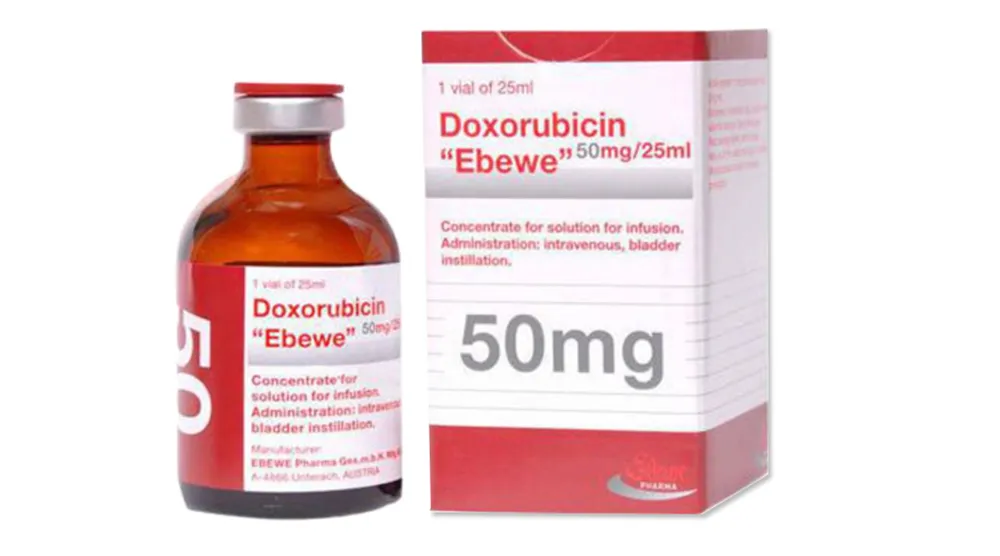
Table of Contents
- Package leaflet: Information for the patient
- 1. What Doxorubicin-Ebewe is and what it is used for
- 2. Important information before using Doxorubicin-Ebewe
- 3. How to use Doxorubicin-Ebewe
- 4. Possible adverse reactions
- 5. How to store Doxorubicin-Ebewe
- 6. Contents of the pack and other information
- Information intended exclusively for medical professionals:
Package leaflet: Information for the patient
Doxorubicin-Ebewe, 2 mg/ml, concentrate for solution for infusion
Doxorubicini hydrochloridum
Please read all of this leaflet carefully before using this medicine, because it contains
important information for you.
- Keep this leaflet, as you may need to read it again.
- If you have any questions, please ask your doctor, pharmacist, or nurse.
- This medicine has been prescribed for you personally. Do not pass it on to others. It may harm someone else, even if their symptoms are the same as yours.
- If you experience any side effects, including any not listed in this leaflet, tell your doctor, pharmacist, or nurse. See section 4.
Contents of the leaflet:
- What Doxorubicin-Ebewe is and what it is used for
- Important information before using Doxorubicin-Ebewe
- How to use Doxorubicin-Ebewe
- Possible side effects
- How to store Doxorubicin-Ebewe
- Contents of the pack and other information
1. What Doxorubicin-Ebewe is and what it is used for
This medicine contains a substance called doxorubicin. Doxorubicin is used in the following indications: soft tissue and bone sarcomas, Hodgkin's lymphoma, non-Hodgkin's lymphomas, acute lymphoblastic leukemia, acute myeloid leukemia, thyroid cancer, breast cancer, ovarian cancer, bladder cancer, small cell lung cancer, and neuroblastoma.
In some protocols, doxorubicin may be administered directly into the bladder.
The use of this medicine has shown benefits in the treatment of: multiple myeloma, endometrial cancer, cervical cancer, Wilms' tumor (a type of malignant kidney tumor), head and neck tumors, stomach cancer, pancreatic cancer, prostate cancer, testicular cancer, and liver cancer.
2. Important information before using Doxorubicin-Ebewe
When not to use Doxorubicin-Ebewe
- in patients with known hypersensitivity to doxorubicin, drugs of similar chemical structure, or to any of the other components of this medicine (listed in section 6);
- in patients with marked bone marrow suppression (including patients with increased tendency to bleeding);
- in patients with pre-existing or severe heart disease (such as unstable angina pectoris, progressive heart failure, severe arrhythmias and conduction disorders, acute inflammatory cardiopathy, cardiomyopathy) or who have had a myocardial infarction within the previous 6 months;
- in patients who have previously received the maximum cumulative dose of another anthracycline drug (e.g. doxorubicin or daunorubicin);
- in severe liver disease;
- in patients with acute infection;
- in patients with mucositis (inflammation of the oral mucosa);
- in pregnant or breastfeeding women.
Intravesical administration (into the bladder)
- in patients with urethral stricture in whom a catheter cannot be inserted;
- in patients with invasive tumours infiltrating the bladder wall;
- in patients with urinary tract infection or inflammatory conditions of the bladder;
- in patients who have blood in the urine.
Warnings and precautions
Before using Doxorubicin-Ebewe, discuss this with your doctor.
Doxorubicin must be administered only under the supervision of a physician experienced in the use of chemotherapy. The patient should remain hospitalized at least during the initial phase of treatment, as close monitoring and laboratory tests are required. Prior to treatment with doxorubicin, and in some cases during administration, the doctor will order blood tests to assess bone marrow function, as well as tests to evaluate heart, liver, and urinary system function.
Doxorubicin has harmful effects on the heart. The risk of such effects is higher in patients previously irradiated in the mediastinal area or pericardium, those previously treated with other drugs similar to doxorubicin, those receiving concomitant drugs with negative inotropic effects or cardiotoxic drugs (e.g., trastuzumab), patients with heart disease, elderly patients (>70 years), and children and adolescents.
An increased risk of cardiotoxicity may also occur in patients receiving anthracyclines after completion of treatment with other cardiotoxic agents (e.g., trastuzumab).
Patients should seek immediate medical advice if they:
- experience pain in the mouth, or have inflammation or ulceration of the oral mucosa;
- experience shortness of breath, palpitations, accelerated or slowed heart rate, or develop oedema;
- pass less urine;
- notice easy bruising or petechiae;
- feel pain, stinging, or burning at the site of drug administration;
- experience pain or burning during urination.
Both men and women should use effective contraception during treatment and for a certain period after stopping the medicine (see "Pregnancy, breastfeeding and fertility").
Red discoloration of the urine, particularly the first void after administration, may occur. This does not require specific management.
Doxxorubicin-Ebewe and other medicines
Inform your doctor or nurse about all medicines currently or recently taken, as well as any medicines you plan to take.
It is especially important to inform the doctor about radiation therapy and the use of the following medicines:
- other antineoplastic drugs;
- drugs used to treat hypertension and heart disease;
- methotrexate (a drug used, among others, in the treatment of neoplastic diseases, rheumatoid arthritis, psoriasis);
- cimetidine and ranitidine (drugs that reduce gastric acid secretion);
- rifampicin (an antibiotic);
- barbiturates (drugs used, among others, in the treatment of insomnia);
- cyclosporine (a drug used to prevent organ transplant rejection);
- antiepileptic drugs (such as carbamazepine, phenytoin, valproate);
- drugs used to treat HIV infection (e.g., ritonavir);
- antibacterial drugs (e.g., chloramphenicol, sulfonamides);
- drugs used to treat psychiatric disorders (e.g., clozapine);
- digoxin (a drug used to treat heart disease).
Live vaccines must not be used during treatment with doxorubicin due to the risk of developing generalized, life-threatening disease. The risk is higher in patients with impaired immune system function. Patients receiving doxorubicin should avoid contact during therapy with individuals recently vaccinated against polio.
Pregnancy, breastfeeding and fertility
If the patient is pregnant or breastfeeding, suspects she may be pregnant, or plans to have a child, she should consult her doctor before using this medicine.
Contraception in women of childbearing potential and men
Women
The potential for harmful effects of doxorubicin on the foetus cannot be excluded. In women of childbearing potential, effective contraception must always be used during treatment and for at least 6.5 months after the last dose of Doxorubicin-Ebewe. Discuss appropriate contraceptive methods with your doctor for both the woman and her partner.
Men
Doxorubicin therapy may cause damage to genetic material (it may have harmful effects on sperm). Effective contraception must always be used during treatment and for at least 3.5 months after the last dose of Doxorubicin-Ebewe.
Pregnancy
The use of Doxorubicin-Ebewe during pregnancy is contraindicated.
Breastfeeding
The use of Doxorubicin-Ebewe during breastfeeding is contraindicated. Breastfeeding women should discontinue breastfeeding during treatment with doxorubicin.
Fertility
In women, doxorubicin may cause infertility during treatment. It may also cause amenorrhea. Ovulation and menstruation may return after treatment ends, but premature menopause may occur.
Doxorubicin may have harmful effects on sperm. Reduced sperm count or azoospermia may be permanent, although cases have been reported in which sperm count returned to normal, sometimes several years after completion of treatment.
Due to the risk of irreversible infertility, patients should seek advice regarding the possibility of sperm cryopreservation before starting treatment.
Driving and operating machinery
Patients experiencing any side effects of the medicine that may adversely affect their ability to drive (such as drowsiness, nausea or vomiting) should not drive or operate machinery.
Doxorubicin-Ebewe contains sodium
The medicine contains 3.54 mg of sodium (the main component of table salt) in 1 ml of concentrate.
The medicine contains 17.7 mg of sodium in the 5 ml vial. This corresponds to 0.88% of the maximum recommended daily dietary sodium intake for adults.
The medicine contains 88.5 mg of sodium in the 25 ml vial. This corresponds to 4.42% of the maximum recommended daily dietary sodium intake for adults.
The medicine contains 177 mg of sodium in the 50 ml vial. This corresponds to 8.85% of the maximum recommended daily dietary sodium intake for adults.
The medicine contains 354 mg of sodium in the 100 ml vial. This corresponds to 17.7% of the maximum recommended daily dietary sodium intake for adults.
The medicine may be diluted in 0.9% sodium chloride solution. The sodium content originating from the diluent should be taken into account when calculating the total sodium content in the prepared diluted solution.
3. How to use Doxorubicin-Ebewe
Doxorubicin-Ebewe must only be administered under the supervision of a specialist physician in the field of clinical oncology who has experience in the use of anticancer chemotherapy.
Doxorubicin-Ebewe is given as an intravenous injection lasting 2–5 minutes or as an intravenous infusion with 0.9% sodium chloride solution, 5% glucose solution, or an intravenous infusion solution containing sodium chloride and glucose.
The dosage of the drug depends on the patient's condition, body surface area, bone marrow function, and parenchymal organ function (liver, heart), as well as on the treatment regimen (Doxorubicin-Ebewe monotherapy or combination with other cytotoxic drugs).
When used as monotherapy, the recommended dose is usually 50–75 mg/m² body surface area (BSA) administered as an intravenous infusion every three weeks. Alternatively, Doxorubicin-Ebewe may be given intravenously at a dose of 20 mg/m² BSA on three consecutive days every three weeks.
The cumulative lifetime dose must not exceed 550 mg/m² BSA. This cumulative dose should be limited to 450 mg/m² BSA in patients who have received mediastinal irradiation, patients with pre-existing heart disease, or patients receiving other cardiotoxic anticancer agents not belonging to the anthracycline class. Patients at risk of cardiac dysfunction should not receive cumulative doses exceeding 450–550 mg/m² BSA, and in cases of prior heart disease or previous radiotherapy to the heart or mediastinum, cumulative doses exceeding 400 mg/m² BSA should be avoided.
For bladder cancer, a dose of 50 mg in 50 ml of physiological saline solution is recommended, administered intravesically using a sterile catheter. Initially, the drug should be given once weekly, followed by once monthly. There is no limit regarding the maximum cumulative dose in this setting.
Dosage should be appropriately reduced in the following patients: those receiving other cytotoxic drugs with mechanisms of action similar to doxorubicin, patients with impaired liver function, patients at increased risk of cardiac dysfunction, and children.
If you feel that the effect of Doxorubicin-Ebewe is too strong or too weak, consult your doctor or pharmacist.
Overdose of Doxorubicin-Ebewe
Symptoms of overdose would likely manifest as an exaggerated form of the drug's pharmacological effects. If a higher than recommended dose of Doxorubicin-Ebewe has been administered, seek immediate medical advice from a doctor or pharmacist.
If you have any further questions about the use of this medicine, consult your doctor, pharmacist, or nurse.
4. Possible adverse reactions
Like all medicines, this medicine can cause adverse reactions, although not everyone will experience them.
Adverse reactions to doxorubicin are usually reversible. The dose-limiting toxic effects are: bone marrow dysfunction and cardiotoxicity.
Very common adverse reactions (may occur in more than 1 in 10 people)
Infections, bone marrow suppression (reduction in white blood cells [leukopenia], reduction in neutrophil granulocytes [neutropenia], anaemia, and thrombocytopenia), tissue hypoxia or necrosis, febrile neutropenia, thrombophlebitis, nausea, vomiting, stomatitis, mucositis, local irritant (toxic) effects, nail separation from the nail bed, urticaria, erythema, photosensitivity, alopecia, fever, fatigue, chills, electrocardiographic (ECG) abnormalities, abnormal activity of certain liver enzymes (transaminases), weight gain.
Common adverse reactions (may occur in fewer than 1 in 10 people)
Systemic infection (sepsis), conjunctivitis, cardiotoxic effects, e.g. cardiomyopathy, tachycardia or bradycardia, cardiac arrhythmias, myocardial insufficiency, phlebitis, haemorrhage, oesophagitis, abdominal pain or burning sensation, pruritus, radiation recall reaction (radiation recall phenomenon), excessive pigmentation of skin and nails, urticaria, local reaction at the site of administration.
Following intravesical administration, cystitis may occur with painful urination, frequent urination, haematuria, polyuria, nocturia, urinary urgency, necrosis, bladder and urethral spasms.
Uncommon adverse reactions (may occur in fewer than 1 in 100 people)
Septic shock (acute, life-threatening reaction following sepsis), secondary myeloid leukaemia, cardiac arrhythmias, tachycardia or irregular heartbeat (palpitations), heart failure causing dyspnoea and possibly leading to leg oedema, cardiac arrest, thrombosis, gastrointestinal haemorrhage, colitis, erosive gastritis, necrotising colitis (sometimes with severe infection).
Rare adverse reactions (may occur in fewer than 1 in 1000 people)
Angioedema of eyelids and tongue with respiratory disturbances, cyanosis (blue discolouration of skin and mucous membranes due to low blood oxygen), respiratory disorders, nasal mucosal oedema, tachypnoea, dyspnoea, radiation-induced pneumonitis.
Very rare adverse reactions (may occur in fewer than 1 in 10,000 people)
Severe hypersensitivity reaction (anaphylaxis), severe cardiac dysfunction (atrioventricular block, bundle branch block), shock, mucosal erosions, depigmentation of oral mucosa, erythema of extremities, generalized muscle disease (myasthenia), amenorrhoea, reduced or absent semen, malaise and (or) asthenia, secondary oral tumours.
Adverse reactions with unknown frequency (frequency cannot be estimated from available data)
Anaphylactic reaction, keratitis, lacrimation, hot flushes, hepatotoxicity, transient increase in liver enzyme activity, redness and pain in hands and feet, joint pain, red discoloration of urine (1 to 2 days after administration), acute renal failure, phlebosclerosis.
Reporting of adverse reactions
If any adverse reactions occur, including any not listed in this leaflet, inform your doctor, pharmacist, or nurse. Adverse reactions can be reported directly to the Department of Monitoring Adverse Drug Reactions of the Office for Registration of Medicinal Products, Medical Devices and Biocidal Products: Al. Jerozolimskie 181C, 02-222 Warsaw
tel.: + 48 22 49 21 301 / fax: + 48 22 49 21 309 / website: https://smz.ezdrowie.gov.pl
Reporting adverse reactions helps to provide more information on the safety of the medicine.
5. How to store Doxorubicin-Ebewe
Keep this medicine out of the sight and reach of children.
Do not use this medicine after the expiry date stated on the packaging after EXP.
The expiry date refers to the last day of the stated month.
Store and transport in a refrigerated condition (2°C–8°C).
Store in the outer packaging to protect from light.
6. Contents of the pack and other information
What Doxorubicin-Ebewe contains
The active substance is doxorubicin hydrochloride.
One ml of concentrate contains 2 mg of doxorubicin hydrochloride.
A 5 ml vial contains 10 mg of doxorubicin hydrochloride.
A 25 ml vial contains 50 mg of doxorubicin hydrochloride.
A 50 ml vial contains 100 mg of doxorubicin hydrochloride.
A 100 ml vial contains 200 mg of doxorubicin hydrochloride.
The other components are: hydrochloric acid 10% (for pH adjustment), sodium chloride, water for injections.
What Doxorubicin-Ebewe looks like and contents of the pack
Doxorubicin-Ebewe is a clear, red concentrate in a type I glass vial, closed with a grey chlorobutyl rubber stopper coated with Teflon and an aluminium cap, packed in a cardboard box. Vials may be placed in protective packaging made of plastic material (ONKO-Safe or Sleeving).
Pack sizes:
1 vial of 5 ml;
1 vial of 25 ml;
1 vial of 50 ml;
1 vial of 100 ml.
Marketing Authorisation Holder
EBEWE Pharma Ges.m.b.H. Nfg. KG
Mondseestraße 11
A-4866 Unterach, Austria
Manufacturer
Fareva Unterach GmbH
Mondseestraße 11
4866 Unterach, Austria
EBEWE Pharma Ges.m.b.H. Nfg. KG
Mondseestraße 11
A-4866 Unterach, Austria
For further information, please contact:
Sandoz Polska Sp. z o.o.
ul. Domaniewska 50 C
02-672 Warsaw
tel. 22 209 70 00
Information intended exclusively for medical professionals:
- Storage of the medicinal product after first opening and after dilution
After opening
The concentrate should be withdrawn from the vial immediately before use. From a microbiological standpoint, the product should be used immediately. Otherwise, the user is responsible for the conditions and duration of storage of the remaining product in the vial. Any product remaining in the vial after first withdrawal should not be stored for longer than 24 hours at a temperature of 2°C to 8°C, unless the withdrawal was performed under controlled and validated aseptic conditions. In such cases, the solution remains physico-chemically stable for up to 28 days when stored in the refrigerator or at room temperature, with or without exposure to light.
After dilution
From a microbiological standpoint, the product should be used immediately. Otherwise, the user is responsible for the conditions and duration of storage of the prepared solution. Prepared solutions should not be stored for longer than 24 hours at a temperature of 2°C to 8°C, unless dilution was performed under controlled and validated aseptic conditions. Physical and chemical stability has been demonstrated for up to 28 days for a solution at a concentration of 1 mg/ml diluted with 0.9% NaCl or 5% glucose solution, stored in the refrigerator or at room temperature, with or without exposure to light. Stability has also been demonstrated for up to 28 days for a solution at a concentration of 0.1 mg/ml diluted with 0.9% NaCl or 5% glucose solution when stored in the refrigerator, and for up to 96 hours at room temperature, with or without exposure to light.
- Instructions for preparation, administration, and disposal of the drug
Doxorubicin may be administered as an intravenous bolus injection over 2–5 minutes or as an intravenous infusion with 0.9% sodium chloride solution (m/v), 5% glucose solution (m/v), or intravenous infusion solution containing sodium chloride and glucose.
Due to varying dosing regimens, the drug should be used only under the supervision of a physician experienced in cytotoxic therapy.
Bolus injection results in higher peak plasma concentrations of the drug, which may increase the risk of cardiotoxicity.
Due to the toxic properties of the substance, the following safety precautions must be observed:
- Preparation, administration, and disposal of the drug must be performed only by trained personnel. As with all cytostatic drugs, precautions must be taken to avoid exposure, particularly in pregnant women.
- Personnel preparing doxorubicin should wear protective clothing: safety goggles, gowns, disposable gloves, and masks.
- All equipment and materials used in drug preparation or in cleaning the preparation area, including gloves, should be placed in hazardous waste bags and incinerated at high temperature (700°C).
In case of accidental contact with skin or eyes, thoroughly rinse with large amounts of water or water with soap, or with a sodium bicarbonate solution. Seek medical advice immediately.
In case of spillage, neutralize the solution with diluted sodium hypochlorite (1% sodium hypochlorite solution), preferably leaving it overnight, then rinse with water.
All materials used for cleaning must be destroyed as described above.
- Management of extravasation
Extravasation may lead to severe and progressive tissue necrosis. Symptoms of extravasation include pain and/or burning sensation at the site of intravenous doxorubicin administration. In case of extravasation, the infusion must be stopped immediately and the drug administered through another vein. Cold compresses should be applied to the extravasation site. Within no more than 6 hours after extravasation, intravenous administration of dexrazoxane is recommended (dosing and further information are provided in the Summary of Product Characteristics for dexrazoxane). If contraindications to dexrazoxane exist, topical application of 99% dimethyl sulfoxide (DMSO) is recommended on an area twice the size of the affected skin area (4 drops per 10 cm² of skin surface), repeated 3 times daily for 14 days. Due to opposing mechanisms, the affected area should be alternately cooled (cold compresses to reduce pain) and treated with DMSO (vasoconstriction versus vasodilation). Other methods reported in the literature are questionable and lack established efficacy. Consultation with a plastic surgery specialist should be sought, and wide excision of the affected area should be considered.
- Incompatibilities
Avoid contact of the medicinal product with alkaline solutions, as this may lead to drug hydrolysis. Doxorubicin should not be mixed with heparin or 5-fluorouracil, as precipitation may occur. Mixing doxorubicin with other drugs is not recommended.