Doxazosin aurobindo
Poland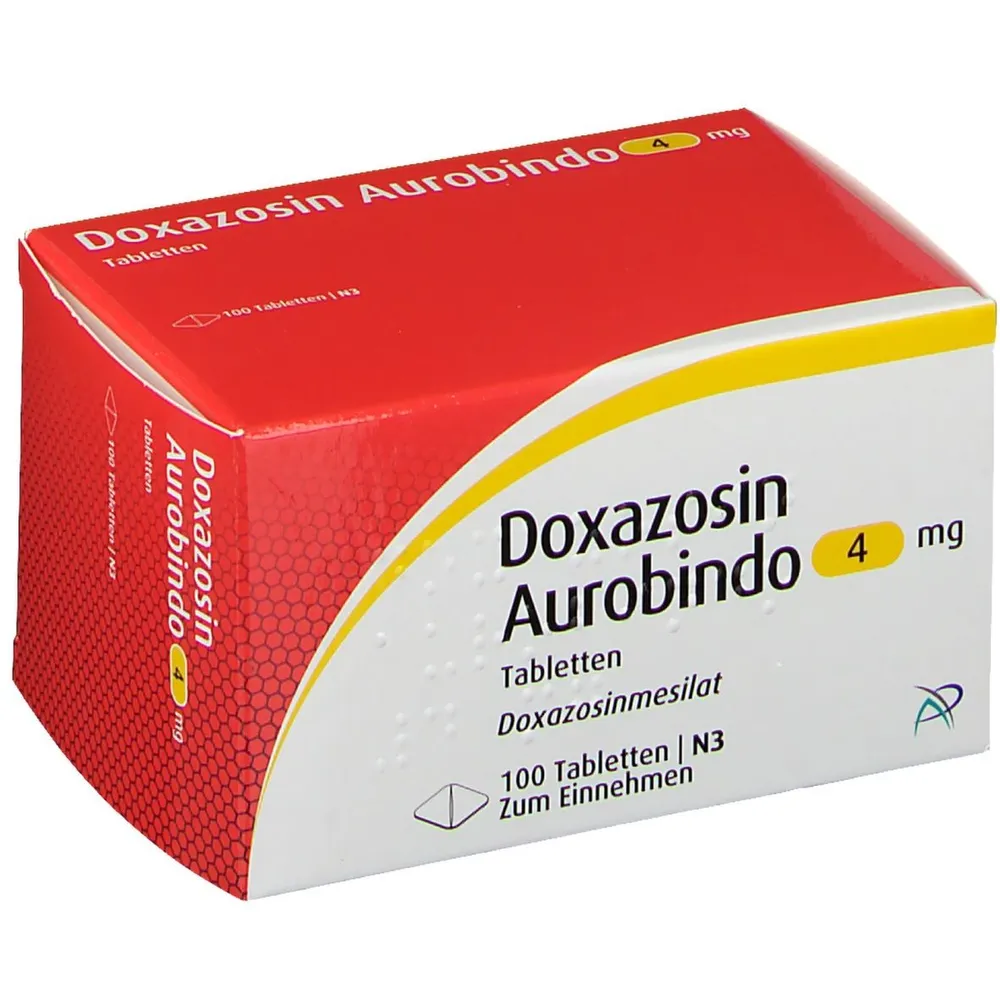
Table of Contents
- Package leaflet: Information for the user
- 1. What Doxazosin Aurobindo is and what it is used for
- 2. Important information before taking Doxazosin Aurobindo
- 3. How to take Doxazosin Aurobindo
- 4. Possible adverse reactions
- 5. How to store Doxazosin Aurobindo
- 6. Contents of the pack and other information
Package leaflet: Information for the user
Doxazosin Aurobindo, 1 mg, tablets
Doxazosinum
Please read the entire leaflet carefully before taking this medicine, because it contains important information for you.
- Keep this leaflet, as you may need to read it again.
- If you have any further questions, please consult your doctor or pharmacist.
- This medicine has been prescribed for a specific individual. Do not pass it on to others. It may harm other people, even if their symptoms are the same.
- If you experience any side effects not listed in this leaflet, inform your doctor or pharmacist. See section 4.
Contents of the leaflet:
- What Doxazosin Aurobindo is and what it is used for
- Important information before taking Doxazosin Aurobindo
- How to take Doxazosin Aurobindo
- Possible side effects
- How to store Doxazosin Aurobindo
- Contents of the pack and other information
1. What Doxazosin Aurobindo is and what it is used for
Doxazosin belongs to a group of medicines known as vasodilators.
These substances cause dilation of blood vessels, thereby lowering blood pressure.
Doxazosin may also reduce the tone of the smooth muscle tissue of the prostate gland and urinary tract.
Doxazosin is used in the treatment of:
- arterial hypertension;
- symptoms of benign prostatic hyperplasia.
2. Important information before taking Doxazosin Aurobindo
When not to take Doxazosin Aurobindo
- if the patient is allergic to doxazosin, other drugs in the quinazoline group (such as prazosin and terazosin), or any of the other ingredients of this medicine (listed in section 6); this may include itching, skin redness or difficulty breathing;
- if the patient is breastfeeding;
- if the patient is under 18 years of age;
- if the patient has an enlarged prostate gland (benign prostatic hyperplasia) and low blood pressure;
- if the patient is known to have "orthostatic hypotension", a form of low blood pressure that causes dizziness or fainting when standing up from a sitting or lying position;
- if the patient has an enlarged prostate gland with one of the following conditions: congestion or urinary tract obstruction, long-term urinary tract infection, or bladder stones;
- if the patient has overflow incontinence (no sensation of needing to pass urine) or anuria (the body does not produce urine), with or without kidney function disorders.
Warnings and precautions
Before starting to take Doxazosin Aurobindo, discuss with your doctor or
pharmacist if:
- the patient is pregnant or planning to become pregnant
- the patient has liver disease
- the patient is taking other medicines
- the patient has heart disease
If the patient is undergoing cataract surgery (clouding of the lens), inform the
ophthalmologist before surgery about current or past use of Doxazosin Aurobindo. This is because
Doxazosin Aurobindo may cause complications during surgery, which can
be prevented if the ophthalmologist is informed in advance.
Before starting treatment with Doxazosin Aurobindo, the doctor may order tests to
rule out conditions such as prostate cancer, which may cause the same symptoms as benign
prostatic hyperplasia (enlarged prostate gland).
Prolonged painful erections may occur very rarely. In such a case, contact a doctor
immediately.
After starting treatment with Doxazosin Aurobindo, fainting or dizziness
caused by low blood pressure may occur when standing up from a sitting or lying position. If
the patient feels weak or dizzy, they should sit or lie down until they feel better and
avoid situations where they could fall or injure themselves. The doctor may regularly monitor blood pressure
at the beginning of treatment to reduce the likelihood of these effects.
Doxazosin Aurobindo with other medicines
Tell your doctor or pharmacist about all medicines the patient is currently taking or has recently taken, as well as any medicines the patient plans to take. Some medicines may interact with Doxazosin Aurobindo.
- In some patients taking alpha-blocker medicines for the treatment of high blood pressure or an enlarged prostate gland, dizziness or fainting may occur due to low blood pressure when standing up quickly. In some patients, these symptoms may occur when taking medications for erectile dysfunction (impotence) together with alpha-blockers. To reduce the likelihood of these symptoms, a regular daily dose of alpha-blockers should be established before starting treatment with erectile dysfunction medications.
- Doxazosin Aurobindo may further lower blood pressure if the patient is already taking other medicines for high blood pressure.
- Medicines used to treat bacterial or fungal infections, e.g. clarithromycin, itraconazole, ketoconazole, telithromycin, voriconazole.
- Medicines used to treat HIV infection, e.g. indinavir, nelfinavir, ritonavir, saquinavir.
- Nefazodone, a medicine used to treat depression.
Doxazosin Aurobindo with food and drink
Please refer to section 3.
Pregnancy, breastfeeding and fertility
Before taking any medicine, consult your doctor or pharmacist.
The safety of using doxazosin in pregnant women has not been established. If the patient is pregnant or suspects she may be pregnant, or is planning to have a child, consult your doctor or pharmacist before taking this medicine.
Breastfeeding must not be undertaken while taking Doxazosin Aurobindo.
Driving and using machines
Doxazosin may sometimes cause dizziness or fainting. In such cases, caution should be exercised when performing activities requiring alertness, such as driving, operating machinery, or working at heights. If in doubt whether doxazosin negatively affects the ability to drive, discuss this issue with your doctor.
Doxazosin Aurobindo contains lactose
If the patient has previously been diagnosed with an intolerance to certain sugars, they should contact their doctor before taking this medicine.
Doxazosin Aurobindo contains sodium
This medicine contains less than 1 mmol (23 mg) of sodium per tablet, meaning the medicine is considered "sodium-free".
3. How to take Doxazosin Aurobindo
This medicine should always be taken as directed by the doctor. If in doubt, consult
your doctor or pharmacist.
- The recommended dose of Doxazosin Aurobindo is one tablet taken once daily.
- If the patient is taking Doxazosin Aurobindo for the first time, the usual starting dose is 1 mg per day. The doctor may increase this dose after a few weeks to the usual dose of 2 mg or 4 mg. In some cases, it may be increased up to a maximum of 8 mg per day if the patient is being treated for benign prostatic hyperplasia, or up to 16 mg per day if the patient is being treated for hypertension.
- Doxazosin Aurobindo can be taken in the morning or in the evening.
- It is best to take the tablets at the same time each day, with water.
- Doxazosin Aurobindo may be taken with or without food.
- Tablets should be taken as directed by the doctor or according to the day labels and arrows on the blister pack.
- It is important to continue taking the tablets regularly, as they help control blood pressure.
- Do not change the dose or stop taking the tablets without first consulting your doctor.
- Do not wait until the medicine is finished before seeing your doctor again.
Use of Doxazosin Aurobindo in children
The safety and efficacy of doxazosin in children has not been established.
Taking more Doxazosin Aurobindo than prescribed
Taking too many tablets at once may cause the patient to feel unwell.
Taking several tablets may be dangerous. Immediately inform a doctor or
go to the nearest hospital emergency department.
Missing a dose of Doxazosin Aurobindo
If the patient forgets to take a tablet, that dose should be skipped and the next tablet taken at the usual time. Do not take a double dose to make up for a missed dose.
4. Possible adverse reactions
Like all medicines, this medicine can cause adverse reactions, although not everyone will experience them.
You must stop taking Doxazosin Aurobindo and immediately contact your doctor
or go to the emergency department of the nearest hospital if any of the following adverse reactions occur:
- Heart attack
- Weakness in arms, legs, or difficulty speaking, which may be signs of stroke
- Swelling of the face, tongue, or throat, which may be due to an allergic reaction to this medicine
Immediately consult your doctor if any of the following adverse reactions occur:
- Shortness of breath, difficulty breathing (common: may occur in up to 1 in 10 people)
- Increased or decreased heart rate (common: may occur in up to 1 in 10 people)
- Sensation of irregular heartbeat (palpitations) (common: may occur in up to 1 in 10 people)
- Chest pain (angina pectoris) (uncommon: may occur in up to 1 in 100 people)
- Irregular heartbeat (very rare: may occur in up to 1 in 10,000 people)
- Yellowing of the skin or eyes (jaundice) (very rare: may occur in up to 1 in 10,000 people)
- Low number of white blood cells or platelets, which may result in bruising or easy bleeding (very rare: may occur in up to 1 in 10,000 people)
- Persistent painful penile erection. Immediate medical advice should be sought (very rare: may occur in up to 1 in 10,000 people)
The following adverse reactions have been reported in patients treated with Doxazosin Aurobindo.
If any of these adverse reactions worsen or if any adverse reactions not listed in this leaflet occur, inform your doctor.
Common: may occur in up to 1 in 10 people
- Dizziness, sensation of spinning or rotation of surroundings (dizziness), headache
- Low blood pressure
- Swelling of feet, ankles, or fingers
- Bronchitis, cough, respiratory tract infections (nose, throat, lungs)
- Nasal congestion, sneezing, and/or runny nose caused by infection of nasal mucosa (rhinitis)
- Abdominal pain, malaise
- Urinary tract infection, urinary incontinence (loss of bladder control), cystitis
- Drowsiness, general weakness
- Indigestion, heartburn, dry mouth
- Itching
- Back pain, muscle pain
- Influenza-like symptoms
- Accommodation disorders
Uncommon: may occur in up to 1 in 100 people
- Constipation, diarrhoea, gastroenteritis, which may cause diarrhoea and vomiting
- Pain or discomfort during urination, increased frequency of urination, presence of blood in urine
- Joint inflammation (gout), joint pain, generalized pain, thirst
- Facial swelling, generalized swelling, chills, fever, pallor
- Insomnia, restlessness, anxiety, depression or nervousness, emotional lability, apathy
- Reduced or altered sense of touch or sensation in hands and feet
- Increased or decreased appetite, weight gain, hypokalaemia (low potassium levels in blood)
- Nosebleeds, sore throat
- Skin rash
- Ringing or buzzing in the ears, tremor
- Inability to achieve erection
- Increased liver enzyme activity, which may affect certain medical tests
- Stroke
- Tearing, photophobia
Rare: may occur in up to 1 in 1,000 people
- Decreased frequency of urination
- Muscle cramps, muscle weakness, muscle stiffness
- Hypoglycaemia (low blood sugar levels)
- Cerebrovascular disorders
- Laryngeal oedema
- Decreased body temperature in elderly patients
Very rare: may occur in up to 1 in 10,000 people
- Weakness, dizziness upon standing from sitting or lying position
- Hepatitis or bile production disorders
- Urticaria, hair loss, red or purple spots on the skin, petechiae
- Tingling or numbness in hands and feet, nightmares, memory loss, taste disturbances
- Fatigue, general malaise
- Wheezing
- Blurred vision
- Hot flushes
- Urination disorders, need to urinate at night, increased volume of urine passed
- Discomfort or enlargement of breasts in men
Frequency not known: frequency cannot be estimated from available data
- Low volume or absence of semen during ejaculation at orgasm, cloudy urine after orgasm (retrograde ejaculation)
- During cataract surgery (clouding of the eye lens), eye disorders may occur. See section "Warnings and precautions".
Reporting of adverse reactions
If any adverse effects occur, including any not listed in this leaflet, inform your doctor or pharmacist. Adverse reactions can be reported directly to the Department for Monitoring Adverse Drug Reactions of the Office for Registration of Medicinal Products, Medical Devices and Biocidal Products, Al. Jerozolimskie 181C, 02-222 Warsaw, tel.: +48 22 49 21 301, fax: +48 22 49 21 309, website: https://smz.ezdrowie.gov.pl
Adverse reactions can also be reported to the marketing authorization holder.
Reporting adverse reactions helps provide more information on the safety of the medicine.
5. How to store Doxazosin Aurobindo
Keep this medicine out of the sight and reach of children.
Do not use this medicine after the expiry date stated on the blister pack, bottle and carton after EXP. The expiry date refers to the last day of the specified month.
No special precautions for storage of the medicinal product.
Medicines should not be disposed of via wastewater or household waste. Ask your pharmacist how to dispose of medicines no longer required. These measures will help protect the environment.
6. Contents of the pack and other information
What Doxazosin Aurobindo contains
- The active substance is doxazosin. Each tablet contains 1 mg of doxazosin (as doxazosin mesylate).
- The other ingredients are: microcrystalline cellulose, lactose, sodium carboxymethyl starch (Type A), magnesium stearate.
What Doxazosin Aurobindo looks like and contents of the pack
Tablets
White to off-white, round, biconvex, uncoated tablets with the imprint "D O" on one side and "1" on the other.
PVC/PVDC/Aluminium blisters:
Pack sizes: 10, 14, 15, 20, 28, 30, 50, 56, 60, 90, 98, 100 and 140 tablets
HDPE containers with PP closure:
Pack sizes: 100 tablets
Not all pack sizes may be marketed.
Marketing Authorisation Holder:
Aurobindo Pharma (Malta) Limited
Vault 14, Level 2
Valletta Waterfront
Floriana, FRN 1913
Malta
e-mail: [email protected]
Manufacturer/Importer:
APL Swift Services (Malta) Limited
HF26, Hal Far Industrial Estate
Hal Far, Birzebbugia, BBG 3000
Malta
Adamed Pharma S.A.
Pieńków, ul. M. Adamkiewicza 6A
05-152 Czosnów
This medicinal product is authorised in the following countries of the European Economic Area under the following names:
Czech Republic: Doxazosin Aurovitas
Germany: Doxazosin Aurobindo 1mg Tabletten
Italy: Doxazosin Aurobindo 2mg/ 4mg compresse
Poland: Doxazosin Aurobindo
Spain: DOXAZOSINA AUROBINDO 2mg comprimidos EFG