Dostinex
Poland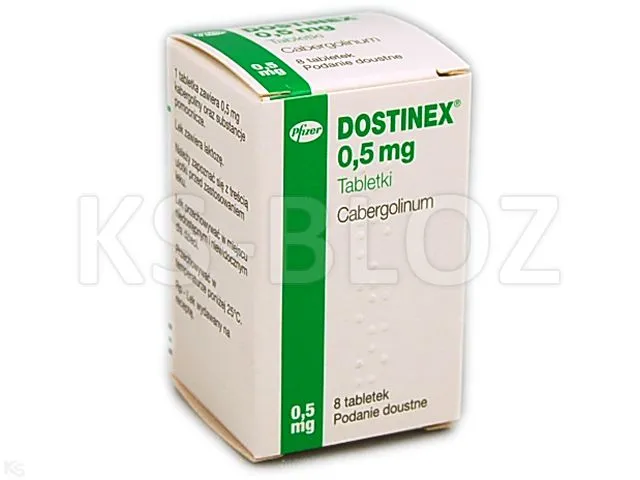
Table of Contents
PACKAGE LEAFLET: INFORMATION FOR THE PATIENT
Warning! Please keep this leaflet. The information on the immediate packaging is in a foreign language.
Dostinex, 0.5 mg, tablets
Cabergoline
Please read this leaflet carefully before using the medicine, as it contains important information for the patient.
- Keep this leaflet so that you can read it again if necessary.
- If you have any questions, please consult your doctor or pharmacist.
- This medicine has been prescribed for a specific individual. Do not give it to others. This medicine may harm other people, even if their symptoms are the same.
- If the patient experiences any adverse reactions, including any not listed in this leaflet, inform your doctor, pharmacist, or nurse. See section 4.
Table of contents of the leaflet
- What Dostinex is and what it is used for
- Important information before taking Dostinex
- How to take Dostinex
- Possible side effects
- How to store Dostinex
- Contents of the pack and other information
1. What Dostinex is and what it is used for
Dostinex is an ergoline derivative with dopaminergic activity, which strongly and long-lastingly reduces prolactin levels. It acts by directly stimulating dopamine D receptors in the anterior pituitary gland cells, thereby inhibiting prolactin secretion. Dostinex is indicated:
- to suppress lactation immediately after childbirth or to stop milk production;
- in the treatment of disorders associated with excessive prolactin secretion (hyperprolactinemia), including menstrual disorders (absent, scanty, or irregular menstruation), anovulation, and galactorrhea;
- in the treatment of pituitary adenoma, idiopathic hyperprolactinemia, or empty sella syndrome associated with hyperprolactinemia.
2. Important information before using Dostinex
When not to use Dostinex
- if the patient is allergic to cabergoline or any of the other ingredients of this medicine (listed in section 6);
- if the patient is allergic to other ergot derivatives;
- if the patient currently has or has previously had fibrotic (scarring) conditions affecting the heart, lungs, or abdomen;
- if the patient is to receive long-term treatment with Dostinex and has current or past history of fibrotic (scarring) reactions of the heart muscle.
Warnings and precautions
Before starting treatment with Dostinex, discuss the following with your doctor:
- in patients with severe cardiovascular disorders;
- in patients with Raynaud's syndrome;
- in patients with peptic ulcer disease or gastrointestinal bleeding;
- in patients with a history of serious psychiatric disorders, particularly psychosis;
- in patients with severe hepatic insufficiency, lower doses should be considered;
- when concomitantly using antihypertensive drugs, as orthostatic hypotension may occur after cabergoline administration (especially during the first days of treatment);
- in patients who have symptoms of respiratory or cardiovascular disorders related to fibrotic processes or a history suggestive of such conditions;
- in patients with Parkinson's disease, episodes of sudden sleepiness may occur – dose reduction or discontinuation of treatment should be considered;
- if the patient has current or past history of fibrotic (scarring) reactions of the heart muscle, lungs, or abdominal organs. In patients receiving long-term Dostinex treatment, the doctor will check before starting treatment whether heart, lung, and kidney function are normal. Echocardiographic examinations (ultrasound of the heart) will be performed before starting treatment and at regular intervals during treatment. If fibrotic reactions occur, treatment will be discontinued;
- inform your doctor if you or your close relatives notice unusual behaviors due to irresistible impulses, compulsions, or obsessive performance of certain actions, harmful to the patient or others. These behaviors are called impulse control disorders and may include gambling addiction, compulsive or binge eating, increased sexual drive, or intense sexual thoughts and feelings. Your doctor may decide to adjust or discontinue treatment.
Women in the immediate postpartum period may be more susceptible to certain adverse events, including high blood pressure, heart attack, seizures, stroke, and psychiatric disturbances. For this reason, the doctor will need to monitor blood pressure regularly during treatment. If high blood pressure, chest pain, or unusually severe or persistent headache (with or without visual disturbances) occurs, inform your doctor immediately.
Dostinex should not be used in women with pregnancy-induced hypertension, pre-eclampsia, or postpartum hypertension unless potential benefits outweigh the risks. To avoid orthostatic hypotension, the single dose of Dostinex used to suppress ongoing lactation in breastfeeding women should not exceed 0.25 mg.
Before starting treatment with Dostinex, a detailed assessment of pituitary function is recommended.
Since Dostinex restores ovulation and fertility in women with hyperprolactinemia-related hypogonadism, a pregnancy test should be performed at least every 4 weeks during the period before menstruation resumes, and thereafter whenever menstrual bleeding is delayed by more than 3 days. Women who wish to avoid pregnancy should use mechanical contraceptive methods during treatment with Dostinex and after discontinuation of the drug, until ovulation ceases again. Pregnant women should be monitored for symptoms of pituitary enlargement, as existing pituitary tumors may grow during pregnancy.
In patients treated with dopamine agonists, including cabergoline, pathological gambling behavior, increased libido, and hypersexuality have been observed. These symptoms were usually reversible upon dose reduction or discontinuation of the drug.
Consult your doctor, even if the above warnings relate to conditions that occurred in the past.
Dostinex and other medicines
Inform your doctor about all medicines you are currently taking, including those obtained without a prescription.
- There is no information available on interactions between cabergoline and other ergot alkaloids; therefore, concomitant use of these drugs is not recommended during long-term treatment with Dostinex.
- Dostinex should not be taken together with phenothiazines, butyrophenones, or thioxanthenes (antipsychotic drugs), or metoclopramide (a drug used for gastrointestinal motility disorders), as these may reduce the therapeutic effect of Dostinex.
- Dostinex, like other ergot derivatives, should not be used concomitantly with macrolide antibiotics (e.g., erythromycin) due to increased bioavailability of cabergoline.
- Dostinex may cause orthostatic hypotension in patients taking antihypertensive medications.
Dostinex with food and drink
Tolerance to dopaminergic drugs is improved when taken with food; therefore, it is recommended to take Dostinex with meals.
Pregnancy, breastfeeding, and fertility
If you are pregnant, breastfeeding, think you may be pregnant, or are planning to have a baby, consult your doctor or pharmacist before using this medicine.
Pregnancy must be excluded before starting treatment with Dostinex. Additionally, measures to prevent pregnancy should be taken for at least one month after stopping treatment with Dostinex.
There are no clinical data on the use of Dostinex in pregnant women. Animal studies have shown reduced fertility and potential fetal toxicity.
Dostinex should be used during pregnancy only if clearly indicated and after careful assessment of benefit versus risk.
Due to the long half-life of the drug and limited data on fetal exposure, women planning to become pregnant should discontinue Dostinex one month before the planned conception. If conception occurs during therapy, treatment should be discontinued immediately upon confirmation of pregnancy to minimize fetal exposure to the drug.
Given the mechanism of action of Dostinex, suppression or inhibition of lactation is expected during treatment. Women taking Dostinex must not breastfeed.
Driving and operating machinery
During the initial phase of treatment with Dostinex, patients should exercise caution when performing tasks requiring rapid and precise reactions.
Patients taking Dostinex who experience somnolence and/or sudden sleep attacks must not drive or perform activities where reduced alertness could place themselves or others at risk of serious injury or death (e.g., operating machinery) until somnolence and/or sudden sleep attacks have resolved.
Dostinex contains lactose. If you have been previously diagnosed with intolerance to certain sugars, you should consult your doctor before taking this medicine.
3. How to take Dostinex
This medicine should always be taken as directed by your doctor. If you are unsure, consult your
doctor or pharmacist.
Dostinex is for oral use. It is recommended to take Dostinex during meals.
In patients who are intolerant to dopaminergic drugs, the doctor may decide to initiate treatment
with a reduced dose (e.g. 0.25 mg once weekly) to reduce the likelihood of adverse reactions,
gradually increasing the dose until the therapeutic dose is reached.
If persistent or severe adverse reactions occur, the doctor may decide to temporarily reduce the
dose to improve drug tolerance, then gradually increase it again to the therapeutic dose (e.g.
0.25 mg weekly, every two weeks).
Inhibition of lactation
Recommended dose: 1 mg of cabergoline (2 tablets of 0.5 mg) on the first day after delivery.
Stopping milk secretion
Recommended dose: 0.25 mg (half a tablet) every 12 hours for two days.
Treatment of disorders associated with excessive prolactin secretion
Recommended initial dose: 0.5 mg per week, administered as a single dose (1 tablet of 0.5 mg) or
divided into two doses (twice weekly, half a tablet each time, e.g. on Monday and Thursday).
The weekly dose should be gradually increased, preferably by 0.5 mg per week at monthly
intervals, until optimal therapeutic effect is achieved. The therapeutic dose ranges from 0.25 mg
to 2 mg per week, with an average of 1 mg per week. Doses up to 4.5 mg weekly have been used
in patients with hyperprolactinemia.
The doctor will determine the appropriate regimen for administering the weekly dose—either as a
single dose or divided into two or more doses—depending on drug tolerance.
The doctor will establish the lowest effective dose that achieves the therapeutic effect. After the
therapeutic dose is established, the doctor will decide on appropriate monitoring of prolactin
levels in the blood. Normalization of prolactin levels is usually achieved within 2–4 weeks.
After discontinuation of Dostinex treatment, hyperprolactinemia usually recurs. However, in some
patients, a sustained reduction in prolactin levels has been observed for several months. In most
women, ovulatory cycles continued for at least 6 months after treatment ended.
Use in children and adolescents
The safety and efficacy of Dostinex have not been evaluated in patients under 16 years of age.
Use in patients with hepatic impairment
In patients with severe liver dysfunction, dose reduction of Dostinex should be considered (see
section: Warnings and precautions).
Use in elderly patients
No formal studies have been conducted on the use of Dostinex in elderly patients with disorders
related to excessive prolactin secretion.
Taking more than the recommended dose of Dostinex
If you take more Dostinex than prescribed, contact your doctor immediately. Symptoms of
overdose are likely to be similar to those of excessive stimulation of dopamine receptors, such
as nausea, vomiting, gastrointestinal disturbances, orthostatic hypotension, confusion, and/or
psychosis or hallucinations.
If necessary, the doctor may initiate supportive measures to eliminate the unabsorbed drug and
stabilize blood pressure. Additionally, the doctor may administer dopamine antagonists as
treatment.
Missed dose of Dostinex
If a patient forgets to take a dose of Dostinex, they should take it as soon as possible, unless it is
almost time for the next dose. In that case, the patient should take the next dose at the scheduled
time. Do not take a double dose to make up for a missed dose.
Stopping treatment with Dostinex
The decision to discontinue treatment should be made by the doctor.
If you have any further questions about the use of this medicine, consult your doctor or
pharmacist.
4. Possible adverse reactions
Like all medicines, this medicinal product may cause adverse reactions, although not everyone will experience them.
Adverse reactions observed during use of the medicine to suppress lactation:
The adverse reactions have been listed according to frequency. They reflect data from clinical studies using Dostinex administered at a dose of 1 mg, and in breastfeeding women who received Dostinex at a dose of 0.25 mg every 12 hours to suppress lactation.
Reported adverse reactions were mostly transient and mild to moderate in intensity.
During the first 3–4 days after delivery, asymptomatic decreases in blood pressure (≥20 mmHg systolic and ≥10 mmHg diastolic) may occur.
Adverse reactions observed during treatment with the medicine for disorders related to excessive prolactin secretion:
The adverse reactions have been listed according to frequency. They reflect data from 6-month clinical studies using Dostinex at weekly doses of 1 to 2 mg (administered in two weekly doses). Reported adverse reactions were mostly mild to moderate in intensity and occurred primarily during the first two weeks of treatment. Most of these reactions resolved during continued treatment or within a few days after discontinuation of the medicine.
General information:
Adverse reactions are mainly dose-dependent.
Dostinex, when used long-term, may cause lowering of arterial blood pressure, although orthostatic hypotension or fainting have been reported rarely. Dostinex is an ergot derivative and therefore may have vasoconstrictive effects.
With long-term use, abnormal results in standard laboratory tests are unlikely; however, in non-menstruating women, a decrease in hemoglobin has been observed within the first few months after resumption of menstruation.
The following adverse reactions may occur:
- Inability to resist an impulse, urge, or compulsion to perform actions that may be harmful to the patient or others; this includes: a strong impulse or uncontrollable gambling despite serious personal or family consequences, altered or increased sexual interests and behaviors of significant concern to the patient or others (e.g. activities related to heightened sexual drive), compulsive, uncontrolled spending or shopping, binge eating (consuming larger amounts of food than normal and more than needed to satisfy hunger).
Patients should inform their doctor if they exhibit any of these behaviors, so that ways to manage or reduce these symptoms can be discussed.
Adverse reactions have been categorized according to frequency of occurrence.
Very common (occurs in more than 1 in 10 people)
- Heart valve disorders (including regurgitation) and associated diseases (pericarditis, pericardial effusion)
- Headache*, central and/or peripheral dizziness*
- Nausea*, dyspepsia, gastritis*, abdominal pain*
- Exhaustion***, fatigue
Common (occurs in more than 1 in 100 but less than 1 in 10 people)
- Somnolence
- Depression
- Decreased blood pressure in patients undergoing long-term treatment, orthostatic hypotension, hot flushes**
- Constipation, vomiting**
- Breast pain
- Asymptomatic reduction in blood pressure (systolic ≥20 mmHg and diastolic ≥10 mmHg)
Uncommon (occurs in more than 1 in 1,000 but less than 1 in 100 people)
- Palpitations
- Dyspnea, pleural effusion, fibrosis (including pulmonary fibrosis), epistaxis
- Hypersensitivity reactions
- Transient hemianopia, fainting, paresthesia
- Increased libido
- Digital vasoconstriction
- Edema, peripheral edema
- Rash, alopecia
- Cramps in lower limb muscles
- Decreased hemoglobin concentration observed in non-menstruating women during the first few months after resumption of menstruation
Rare (occurs in more than 1 in 10,000 but less than 1 in 1,000 people)
- Upper abdominal pain
Very rare (occurs in less than 1 in 10,000 people)
- Pleural fibrosis
Not known: frequency cannot be estimated from available data
- Painful dyspnea
- Respiratory disorders, respiratory failure, pleuritis, chest pain
- Sudden sleep attacks, tremor
- Visual disturbances
- Liver function disorders
- Increased blood creatine phosphokinase concentration, abnormal liver function tests
* Very common in patients treated for hyperprolactinemia; Common in women treated to suppress and/or inhibit lactation.
** Common in patients treated for hyperprolactinemia; Uncommon in women treated to suppress and/or inhibit lactation.
*** Very common in patients treated for hyperprolactinemia; Very common in women treated to suppress and/or inhibit lactation.
Reporting of adverse reactions
If any adverse reactions occur, including any not listed in this leaflet, patients should inform their doctor, pharmacist, or nurse. Adverse reactions can be reported directly to the Department of Monitoring Adverse Drug Reactions at the Office for Registration of Medicinal Products, Medical Devices and Biocidal Products
Al. Jerozolimskie 181C
02-222 Warsaw
Phone: +48 (22) 49 21 301
Fax: +48 (22) 49 21 309
Website: https://smz.ezdrowie.gov.pl
Reporting adverse reactions helps provide more information on the safety of the medicine.
5. How to store Dostinex
Store below 25°C.
Keep the medicine out of the sight and reach of children.
Do not use this medicine after the expiry date stated on the packaging.
The expiry date refers to the last day of the stated month.
Medicines should not be disposed of via wastewater or household waste. Ask your pharmacist how to dispose of medicines you no longer use. This will help protect the environment.
6. Contents of the pack and other information
What Dostinex contains
- The active substance is cabergoline. Each tablet contains 0.5 mg of cabergoline.
- The other ingredients are: leucine, lactose.
What Dostinex looks like and contents of the pack
DOSTINEX is a white, flat, oblong tablet, embossed with the code "PU" on one side and "700" with a slight notch above and below the central "0" on the other side.
The tablets are contained in a Type I amber glass bottle with an aluminium child-resistant cap and a silica gel desiccant, or in an HDPE bottle with a polypropylene child-resistant cap, all placed in a cardboard box.
The pack contains 2 or 8 tablets.
For further information, please contact the Marketing Authorisation Holder or Parallel Importer.
Marketing Authorisation Holder in Bulgaria, country of export:
Pfizer Europe MA EEIG, Boulevard de la Plaine 17, 1050 Brussels, Belgium
Manufacturer:
Pfizer Italia S.r.l., Via del Commercio, 63100 Marino del Tronto, Ascoli Piceno (AP), Italy
Parallel Importer:
Delfarma Sp. z o.o., ul. Św. Teresy od Dzieciątka Jezus 111, 91-222 Łódź, Poland
Repackaged by:
Delfarma Sp. z o.o., ul. Św. Teresy od Dzieciątka Jezus 111, 91-222 Łódź, Poland
Marketing Authorisation number in Bulgaria, country of export: 20030572
Parallel Import Authorisation number: 97/22