Doreta sr
Poland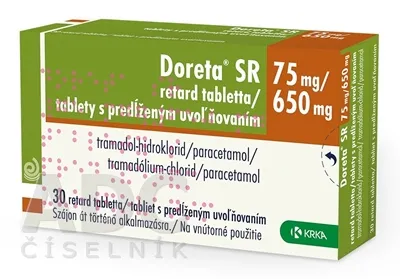
Table of Contents
Package leaflet: Information for the patient
Doreta SR, 75 mg + 650 mg, prolonged-release tablets
Tramadoli hydrochloridum + Paracetamolum
Please read all of this leaflet carefully before taking this medicine, because it contains
important information for you.
- Keep this leaflet, as you may need to read it again.
- If you have any questions, ask your doctor or pharmacist.
- This medicine has been prescribed for a specific individual. Do not pass it on to others. This medicine may harm someone else, even if their symptoms are the same as yours.
- If you experience any adverse reactions, including any not listed in this leaflet, inform your doctor or pharmacist. See section 4.
Contents of the leaflet
- What Doreta SR is and what it is used for
- Important information before taking Doreta SR
- How to take Doreta SR
- Possible side effects
- How to store Doreta SR
- Contents of the pack and other information
1. What Doreta SR is and what it is used for
Doreta SR is a combination medicine containing two pain-relieving agents: tramadol and paracetamol, which together relieve pain.
Doreta SR is indicated for the treatment of moderate to severe pain, when a doctor determines that tramadol in combination with paracetamol in the form of prolonged-release tablets is required.
Doreta SR should only be used in adults and adolescents over 12 years of age.
2. Important information before using Doreta SR
When not to use Doreta SR
- if the patient is allergic to paracetamol, tramadol or any of the other ingredients of this medicine (listed in section 6),
- in acute alcohol intoxication, sedatives, analgesics or other psychotropic medicines (medicines affecting mood and emotions),
- when taking monoamine oxidase inhibitors (MAOIs) (some medicines used to treat depression or Parkinson's disease) or within 14 days after stopping them,
- in patients with severe liver disease,
- in patients with epilepsy that is not adequately controlled with medication.
Warnings and precautions
Before starting treatment with Doreta SR, discuss this with your doctor or pharmacist.
Doreta SR is a medicine in the form of prolonged-release tablets. This means that the active substances tramadol and paracetamol are released over a longer period. If the patient has previously taken other products containing a combination of tramadol and paracetamol, special caution is required, because Doreta SR prolonged-release tablets have a different dosing regimen (see section 3 "How to take Doreta SR").
Exercise caution when using Doreta SR:
- in patients with kidney disease,
- in patients with liver disease or liver damage, or in whom yellowing of the eyes and skin occurs, which may indicate jaundice or biliary tract disease,
- in patients with severe breathing difficulties, e.g. asthma or severe lung diseases,
- in patients dependent on other pain-relieving medicines, e.g. morphine,
- in patients with epilepsy, or in whom seizures or epileptic fits have occurred,
- in patients with recent head injury, shock or severe headache associated with vomiting,
- if the patient is taking other medicines containing paracetamol or tramadol,
- if the patient is taking other painkillers containing buprenorphine, nalbuphine or pentazocine,
- if the patient is undergoing anaesthesia. Inform the doctor or dentist about taking Doreta SR.
- if the patient has depression and is taking antidepressant medicines, because some of them may interact with tramadol (see "Doreta SR and other medicines").
After taking tramadol in combination with certain antidepressants or tramadol alone, there is a small risk of developing serotonin syndrome. If the patient experiences any symptoms of this serious condition, they should seek immediate medical advice (see section 4 "Possible side effects").
During treatment with Doreta SR, immediately inform the doctor if:
If the patient has severe medical conditions, including severe kidney function impairment or sepsis (when bacteria and their toxins circulate in the blood leading to organ damage) or malnutrition, chronic alcoholism or if the patient is also taking flucloxacillin (an antibiotic).
Cases of a serious condition called metabolic acidosis (abnormality of blood and fluids) have been reported in patients who take paracetamol regularly for a prolonged period or who take paracetamol together with flucloxacillin. Symptoms of metabolic acidosis may include: severe breathing difficulties, including rapid deep breathing, drowsiness, nausea and vomiting.
Tolerance, dependence and abuse
This medicine contains tramadol, which is an opioid medicine. Repeated use of opioids may lead to reduced effectiveness of the medicine (the patient becomes accustomed to the medicine, known as tolerance). Repeated use of Doreta SR may also lead to dependence, abuse and addiction, which may result in life-threatening overdose.
The risk of these adverse effects may increase with dose and longer duration of use.
Dependence may cause the patient to lose control over the dose or frequency of medicine intake.
The risk of dependence varies among individuals. The risk of dependence on Doreta SR may be higher if:
- the patient or someone in their family has ever abused or been dependent on alcohol, prescription medicines or illegal drugs ("addiction");
- the patient smokes tobacco;
- the patient has ever had mood disorders (depression, anxiety or personality disorders) or has been treated by a psychiatrist for other mental illnesses.
If any of the following symptoms occur during treatment with Doreta SR, this may indicate dependence:
- the patient needs to take the medicine longer than prescribed by the doctor,
- the patient needs to take a higher dose than recommended,
- the patient uses the medicine for reasons other than prescribed, e.g. "to calm down" or "to help sleep",
- the patient has made repeated unsuccessful attempts to stop or control use of the medicine,
- after stopping the medicine, the patient feels unwell and feels better after taking the medicine again ("withdrawal effects").
If any of these symptoms occur, talk to the doctor to discuss the best treatment approach, including when and how to stop the medicine safely (see section 3 "Stopping Doreta SR").
Sleep-related breathing disorders
Doreta SR contains an active substance belonging to the opioid group. Opioids may cause sleep-related breathing disorders such as central sleep apnoea (shallow/intermittent breathing during sleep) and sleep-related hypoxemia (low blood oxygen levels).
The risk of central sleep apnoea depends on the opioid dose. The doctor may consider reducing the total opioid dose if central sleep apnoea occurs.
Tramadol is metabolized in the liver by an enzyme. Some individuals have a variant of this enzyme, which may lead to different effects. In some people, pain relief may be insufficient, while in others, severe adverse effects may be more likely.
Stop taking the medicine and contact the doctor immediately if any of the following adverse effects occur: slowed or shallow breathing, confusion, drowsiness, pinpoint pupils, nausea or vomiting, constipation, loss of appetite.
Children and adolescents
Use in children with breathing disorders
Tramadol is not recommended in children with breathing disorders, as symptoms of tramadol toxicity may be intensified in these patients.
Inform the doctor if, during treatment with Doreta SR, the patient experiences excessive fatigue, loss of appetite, severe abdominal pain, nausea, vomiting or low blood pressure.
This may indicate adrenal insufficiency (low cortisol levels). If such symptoms occur, the doctor will decide whether hormone replacement is necessary.
Doreta SR and other medicines
Tell your doctor or pharmacist about all medicines currently or recently taken, and any medicines planned for future use.
Warning: This medicine contains paracetamol and tramadol. Inform your doctor about taking
other medicines containing paracetamol or tramadol so that they can decide on further
treatment. Other medicines containing tramadol or paracetamol should only be taken under
medical supervision.
Do not take any other medicines containing paracetamol while taking Doreta SR, including those
available without prescription – for example, painkillers or antipyretics used for colds and flu,
as this increases the risk of paracetamol overdose. Paracetamol overdose can cause liver
damage, which may lead to liver transplantation or even death.
Never take a higher dose of Doreta SR than prescribed by the doctor. Higher doses than recommended
will not provide better pain relief but will increase the risk of severe liver damage. Symptoms of liver damage usually appear after several days. Therefore, it is important to contact a doctor immediately if an overdose has occurred, even if the patient feels well.
Concomitant use of Doreta SR with monoamine oxidase inhibitors (MAOIs) is contraindicated (see section "When not to use Doreta SR").
Doreta SR should not be used simultaneously with the following medicines:
- carbamazepine (a medicine used to treat epilepsy or certain types of pain such as severe facial pain known as trigeminal neuralgia),
- buprenorphine, nalbuphine or pentazocine (opioid painkillers). The analgesic effect may be reduced.
Inform the doctor or pharmacist if the patient is taking:
- flucloxacillin (an antibiotic), due to a serious blood and fluid disorder (called metabolic acidosis) requiring urgent treatment (see section 2).
- gabapentin or pregabalin used to treat epilepsy or nerve-related pain (neuropathic pain).
Taking Doreta SR together with the following medicines may increase the risk of adverse effects:
- triptans (medicines used to treat migraine) or selective serotonin reuptake inhibitors (SSRIs, medicines used to treat depression). Contact the doctor if confusion, agitation (especially motor restlessness), fever, excessive sweating, uncontrolled limb or eye movements, uncontrolled muscle contractions or diarrhoea occur.
- sedatives, sleeping medicines, other painkillers such as morphine and codeine (also used to treat cough), baclofen (a muscle relaxant), antihypertensive medicines, antidepressants or antihistamines. Contact the doctor if drowsiness or fainting occurs. Concomitant use of Doreta SR and sedatives such as benzodiazepines or similar medicines increases the risk of drowsiness, breathing difficulties (respiratory depression), coma and may be life-threatening. Therefore, concomitant use should only be considered if other treatment options are not possible. If the doctor has prescribed Doreta SR together with sedative medicines, the doctor should limit the dose and duration of concurrent treatment. Inform the doctor about all sedative medicines being taken and strictly follow the doctor's dosing instructions. It may be helpful to inform friends or relatives about the above symptoms. If such symptoms occur, contact the doctor.
- medicines that may cause seizures (epileptic fits), such as certain antidepressants or antipsychotics. The risk of seizures may increase if Doreta SR is taken concurrently. The doctor will inform the patient whether Doreta SR is suitable for them.
- certain antidepressants. Doreta SR may interact with these medicines and cause serotonin syndrome (see section 4 "Possible side effects").
- warfarin or phenprocoumon (medicines used to thin the blood). The effect of these medicines may change and bleeding may occur. Immediately inform the doctor if any prolonged or unexpected bleeding occurs.
The effect of Doreta SR may be altered when taken together with the following medicines:
- metoclopramide, domperidone or ondansetron (medicines used to treat nausea and vomiting),
- cholestyramine (a medicine used to lower blood cholesterol levels).
Doreta SR with food, drink and alcohol
Doreta SR can be taken with or without food.
Doreta SR may cause drowsiness. Drinking alcohol may worsen drowsiness; therefore, it is best to avoid alcoholic beverages while taking Doreta SR.
Pregnancy, breastfeeding and fertility
If the patient is pregnant or breastfeeding, suspects she may be pregnant or is planning to have a child, she should consult a doctor or pharmacist before using this medicine.
Pregnancy
Since Doreta SR is a combination medicine containing two active substances, including tramadol, it should not be taken during pregnancy.
Breastfeeding
Tramadol is excreted in the milk of breastfeeding women. Therefore, Doreta SR should not be used more than once during breastfeeding, or if Doreta SR is taken more than once, breastfeeding should be discontinued.
Fertility
Human data do not indicate an effect of tramadol on fertility in men or women. There are no data on the effect on fertility of the combination of tramadol and paracetamol.
Driving and operating machinery
Doreta SR may cause drowsiness. Do not drive, operate machinery or perform other tasks requiring concentration until you know how Doreta SR affects you.
Doreta contains sodium
This medicinal product contains less than 1 mmol (23 mg) of sodium per dose, i.e. the medicine is considered "sodium-free".
3. How to use Doreta SR
This medicine should always be used exactly as prescribed by your doctor. If in doubt, consult your doctor or pharmacist.
Before starting treatment and regularly during treatment, your doctor will discuss with you what to expect from using Doreta SR, when and for how long it should be taken, when to contact your doctor, and when it should be discontinued (see also section 2).
The initial dose is usually one to two tablets. If necessary, subsequent doses may be taken every 12 hours, as directed by your doctor.
Do not use more than 4 tablets per day (equivalent to 300 mg of tramadol hydrochloride and 2600 mg of paracetamol).
The dose should be adjusted according to the intensity of pain and the individual patient's sensitivity to pain. In general, the lowest effective dose providing adequate pain relief should be used.
Severe liver disease (liver failure)
Patients with severe liver failure must not use Doreta SR.
In patients with mild or moderate liver impairment, your doctor may increase the dosing intervals.
Use in children
Doreta SR is not recommended for use in children under 12 years of age.
Elderly patients
In elderly patients (over 75 years of age), tramadol elimination may be delayed. Your doctor may increase the dosing intervals.
Method of administration
Tablets should be swallowed whole with liquid. Do not break or chew the tablets.
This medicine should be used for the shortest possible duration.
If you feel that the effect of Doreta SR is too strong (e.g. excessive drowsiness or breathing difficulties) or too weak (e.g. pain is not adequately relieved), consult your doctor or pharmacist. If there is no improvement, contact your doctor.
Overdose of Doreta SR
In case of overdose, seek immediate medical help or contact the locally designated centre(s):
- Poison Information Centre – Warsaw, Piłsudskiego 33, 05-074 Halinów, tel. 607 218 174; fax: 22 789 97 05; e-mail: [email protected]
- Pomeranian Centre of Toxicology, Kartuska 4/6, 80-104 Gdańsk, tel./fax (058) 682 19 39; (058) 682 57 67; e-mail: [email protected]
- Toxicology Information Centre, Department of Toxicology named after Dr. Wanda Błeńska, Franciszek Raszei Municipal Hospital, Mickiewicza 2, 60-834 Poznań, tel./fax: 061-224 52 65; e-mail: [email protected]
- Toxicology Information and Laboratory Analysis Unit, Jagiellonian University Medical College, Kopernika 15, 31-501 Kraków, tel./fax: 012-424 83 56 or 57; e-mail: [email protected]
Take any remaining medicine, this leaflet, or the packaging with you.
Paracetamol overdose is potentially fatal due to irreversible liver damage. There is a serious risk of liver damage, even if the patient feels well. To avoid liver damage, medical help must be obtained as soon as possible. The shorter the time between ingestion and antidote treatment, the greater the chance of preventing liver damage.
In case of overdose with Doreta SR, severe circulatory disturbances, disturbances of consciousness up to coma, seizures or breathing difficulties, malaise, vomiting, weight loss, or abdominal pain may also occur.
Missed dose of Doreta SR
Do not take a double dose to make up for a missed dose.
If you miss a dose, take the next tablet at your usual time.
Stopping Doreta SR
If you have been taking Doreta SR for some time, you should consult your doctor before stopping treatment, as your body may have become accustomed to the medicine. Do not stop using this medicine suddenly without medical advice. If you wish to discontinue the medicine, discuss this with your doctor, especially if it has been used long-term. Your doctor will advise when and how to stop taking the medicine, which may involve gradually reducing the dose to minimize the risk of withdrawal symptoms. Sudden discontinuation of Doreta SR may cause malaise. You may experience anxiety, restlessness, nervousness, insomnia, hyperactivity, tremor, and/or gastrointestinal disturbances.
If you have any further doubts about using this medicine, consult your doctor or pharmacist.
4. Possible side effects
Like all medicines, this medicine can cause side effects, although not everybody will experience them.
Very common side effects (may affect more than 1 in 10 patients):
- nausea,
- dizziness,
- drowsiness. These symptoms are usually mild and not very troublesome.
Common side effects (may affect up to 1 in 10 patients):
- vomiting,
- digestive disturbances (constipation, bloating, diarrhoea),
- abdominal pain,
- dry mouth,
- headache,
- tremor,
- disorientation,
- sleep disturbances,
- mood changes (anxiety, nervousness, euphoria – persistent feeling of elevated mood),
- increased sweating,
- itching.
Uncommon side effects (may affect up to 1 in 100 patients):
- high blood pressure, heart rhythm and pulse rate disturbances,
- difficulty or painful urination, presence of protein in urine,
- skin reactions (urticaria, rashes),
- ringing in the ears,
- depression,
- nightmares,
- hallucinations (hearing, seeing, or feeling things that are not real),
- memory loss,
- difficulty swallowing,
- blood in stool,
- chills,
- hot flushes,
- chest pain,
- involuntary muscle twitching,
- tingling and numbness sensations,
- shortness of breath,
- increased liver enzyme activity.
Rare side effects (may affect up to 1 in 1000 patients):
- drug dependence,
- seizures, coordination problems,
- blurred vision,
- constricted pupils,
- excessive dilation of pupils,
- speech disturbances,
- delirium,
- transient loss of consciousness.
Very rare side effects (may affect up to 1 in 10,000 patients):
- drug abuse.
Side effects with unknown frequency (frequency cannot be estimated from available data):
- decreased blood sugar levels,
- hiccups,
- serotonin syndrome, which may include mental status changes (e.g. agitation, hallucinations, coma), as well as other symptoms such as fever, rapid heartbeat, unstable blood pressure, involuntary muscle contractions, muscle rigidity, lack of coordination, and/or gastrointestinal symptoms (e.g. nausea, vomiting, diarrhoea) (see section 2 “Important information before using Doreta SRˮ).
The following side effects have been reported by patients using medicines containing only tramadol hydrochloride or paracetamol. However, if any of these side effects occur during use of Doreta SR, inform your doctor:
- feeling faint when standing up from sitting or lying down, slow heartbeat, fainting, changes in appetite, muscle weakness, slower or shallower breathing, mood changes, changes in activity, changes in perception, worsening of asthma symptoms.
- taking paracetamol alone or in combination with the antibiotic flucloxacillin may cause blood and body fluid disturbances (metabolic acidosis with a high anion gap) when blood plasma acidity increases.
- in some rare cases, skin rash indicating an allergic reaction may progress to sudden swelling of the face and neck, breathing difficulties, or drop in blood pressure and fainting; if such symptoms occur, stop taking this medicine and seek immediate medical attention. Do not take this medicine again.
Rarely, patients who have taken tramadol for some time may experience malaise if the medicine is stopped suddenly. Patients may feel restlessness, anxiety, nervousness, tremor, hyperactivity, insomnia, or gastrointestinal disturbances. In a very small number of patients, panic attacks, hallucinations, unusual sensations such as itching, tingling, numbness of the skin, and ringing in the ears may occur. If any of these symptoms or any other unusual symptoms occur, consult your doctor or pharmacist as quickly as possible.
In exceptional cases, blood tests may reveal certain abnormalities, such as low platelet count, which may cause nosebleeds or bleeding gums.
Very rarely, severe skin reactions have been reported after taking medicines containing paracetamol.
Frequency unknown: A serious condition causing blood to become more acidic (so-called metabolic acidosis) in patients with severe illness taking paracetamol (see section 2).
Reporting of side effects
If any side effects occur, including any not listed in this leaflet, inform your doctor or pharmacist. Side effects can be reported directly to the Department of Monitoring of Adverse Drug Reactions, Office for Registration of Medicinal Products, Medical Devices and Biocidal Products:
Al. Jerozolimskie 181C, 02-222 Warsaw
Tel.: +48 22 49 21 301
Fax: +48 22 49 21 309
Website: https://smz.ezdrowie.gov.pl
Side effects can also be reported to the marketing authorization holder.
Reporting side effects helps provide more information on the safety of this medicine.
5. How to store Doreta SR
Keep this medicine out of sight and reach of children.
Store the medicine in a safe place inaccessible to others. This medicine may cause serious harm and can be fatal to individuals for whom it has not been prescribed.
Do not use this medicine after the expiry date stated on the packaging following the abbreviation "EXP". The expiry date refers to the last day of the specified month.
The batch number is indicated on the packaging following the abbreviation "Lot".
There are no special requirements for storage conditions.
Medicines must not be disposed of via wastewater or household waste. Ask your pharmacist how to dispose of medicines no longer required. Such measures help protect the environment.
6. Contents of the pack and other information
What Doreta SR contains
- The active substances are tramadol hydrochloride and paracetamol. Each prolonged-release tablet contains 75 mg of tramadol hydrochloride, equivalent to 65.88 mg of tramadol and 650 mg of paracetamol.
- Other ingredients are:
- tablet core: pregelatinized corn starch, hypromellose (type 2208, 100 mPa·s), copovidone, sodium croscarmellose, yellow iron oxide (E 172), microcrystalline cellulose, colloidal anhydrous silica, and sodium stearyl fumarate;
- tablet coating: polyvinyl alcohol, macrogol 3350, and talc. See section 2, "Doreta SR contains sodium".
What Doreta SR looks like and contents of the pack
White to almost white on one side and light yellow on the other, oval, biconvex,
bicolayer coated tablets of approximately 20 mm in length and 11 mm in width.
Pack sizes: 10, 20, 30, 50, 60, 90 and 100 prolonged-release tablets in blisters,
packaged in a cardboard box.
Not all pack sizes may be marketed.
Marketing Authorisation Holder
KRKA, d.d., Novo mesto, Šmarješka cesta 6, 8501 Novo mesto, Slovenia
Manufacturer
KRKA, d.d., Novo mesto, Šmarješka cesta 6, 8501 Novo mesto, Slovenia
TAD Pharma GmbH, Heinz-Lohmann-Straße 5, 27472 Cuxhaven, Germany
This medicinal product is authorised for marketing in the Member States of the European Economic Area
under the following names:
| Czech Republic | Doreta Prolong |
| Portugal | Tramadol + Paracetamol Krka |
| Romania | Doreta EP |
| Poland, Slovakia, Slovenia, Hungary | Doreta SR |
For more detailed information about this medicinal product, please contact the local representative of the marketing authorization holder:
KRKA-POLSKA Sp. z o.o.
Równoległa 5 Street
02-235 Warsaw
Tel. 22 57 37 500