Dobutamine hameln
Poland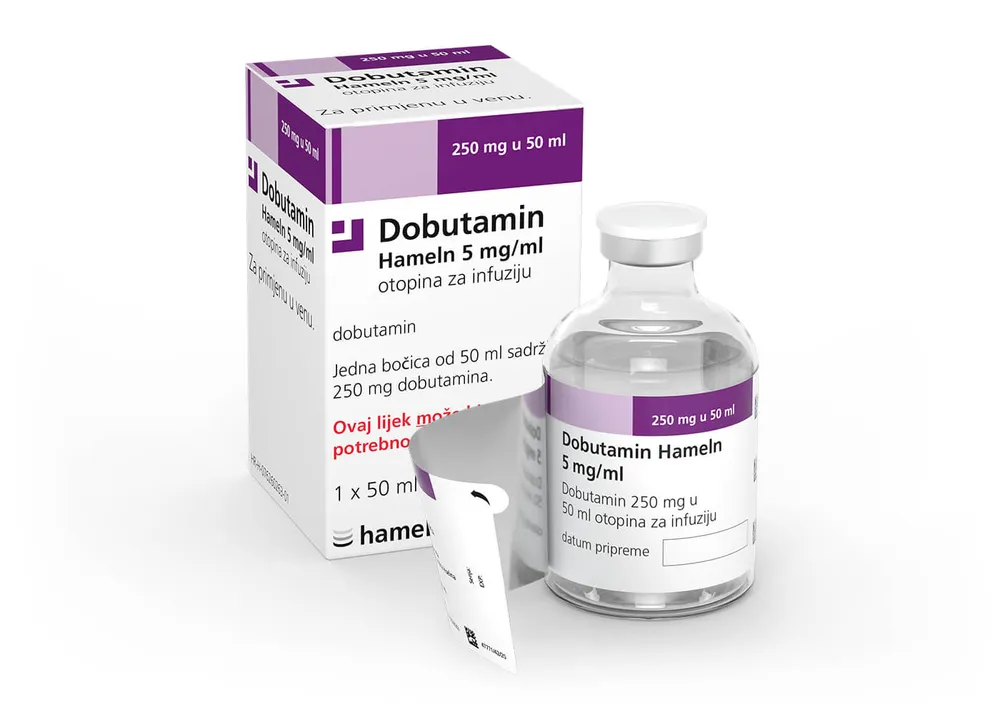
Table of Contents
Patient Information Leaflet
Dobutamin hameln 5 mg/ml infusion solution
Dobutaminum
Please read all of this leaflet carefully before use, as it contains important information for the patient.
- Keep this leaflet for future reference.
- If you have any further questions, please consult your doctor or pharmacist.
- If you experience any adverse reactions, including any not listed in this leaflet, inform your doctor or nurse. See section 4.
Table of contents
- What Dobutamin hameln is and what it is used for
- Important information before receiving Dobutamin hameln
- How to use Dobutamin hameln
- Possible side effects
- How to store Dobutamin hameln
- Contents of the pack and other information
1. What Dobutamin hameln is and what it is used for
Dobutamin hameln belongs to a group of medicines called catecholamines. It acts by increasing the heart's pumping efficiency. It strengthens the heart's pumping action, increases blood flow throughout the body, and dilates veins and arteries.
Dobutamin hameln is used:
- for the treatment of heart failure (decompensated heart failure) when the heart is not pumping strongly enough (reduced contractility),
- in heart failure with very low blood pressure (hypotension),
- to detect poor blood flow to the heart (cardiac stress testing).
Children and adolescents
Dobutamin hameln may be used in children and adolescents (from newborns to 18 years of age) when a positive inotropic effect is required in patients with reduced cardiac output due to hypoperfusion resulting from uncompensated heart failure following cardiothoracic surgery, cardiomyopathy, cardiogenic shock, or septic shock.
2. Important information before using Dobutamin hameln
When not to use Dobutamin hameln:
- if the patient has hypersensitivity (allergy) to dobutamine or any of the other components of this medicine (listed in section 6). Symptoms of an allergic reaction may include: rash, itching, difficulty breathing, or swelling of the face, lips, throat, or tongue. If the patient has previously experienced such symptoms.
- if the patient has aortic valve stenosis or vascular stenosis, which impairs proper filling or ejection of blood by the heart (this will be diagnosed by a physician).
- if the patient has low circulating blood volume (hypovolemia).
- if the patient suffers from high blood pressure due to a tumor near the kidney (phaeochromocytoma).
Dobutamin hameln should not be used to detect reduced blood flow to the heart if the patient has certain heart or blood vessel diseases.
Warnings and precautions
Before starting treatment with Dobutamin hameln, discuss it with your doctor.
Before starting treatment, discuss with your doctor if:
- the patient has asthma and is sensitive to sulfites,
- the patient has severe coronary heart disease,
- the patient has acute (sudden) heart failure.
Children
Increased heart rate and elevated arterial blood pressure occur more frequently and are more pronounced in children than in adults. There are reports of reduced cardiovascular responsiveness to dobutamine in newborns, and the blood pressure-lowering (hypotensive) effect appears to be observed more often in adults than in young children. Therefore, the physician will carefully monitor dobutamine administration in children.
Caution should be exercised when administering high doses of dobutamine to children. The physician will carefully adjust the required dose for the child.
Dobutamin hameln and other medicines
Inform your doctor or pharmacist about all medicines the patient is currently taking or has recently taken, as well as any medicines the patient plans to use.
It is essential to inform the doctor, as the following medicines may affect the action of Dobutamin hameln:
- beta-blockers (medicines used to treat high blood pressure and irregular heart rhythm),
- alpha-blockers (medicines used to treat high blood pressure and benign prostatic hyperplasia),
- vasodilators (medicines that dilate blood vessels, used in the treatment of angina pectoris or severe heart failure),
- antidiabetic agents (medicines used in diabetes),
- ACE inhibitors (medicines used to treat high blood pressure and heart failure),
- dopamine (used to increase heart rate and blood pressure),
- inhaled anesthetics,
- entacapone (a medicine used in the treatment of Parkinson's disease). The doctor will decide whether dobutamine administration is beneficial for the patient.
Pregnancy and breastfeeding
If the patient is pregnant or breastfeeding, suspects she may be pregnant, or is planning to have a child, she should consult her doctor or pharmacist before using this medicine. Dobutamine should not be administered to pregnant women unless medically justified. If dobutamine treatment is necessary during breastfeeding, breastfeeding should be discontinued for the duration of treatment.
Driving and operating machinery
If there are any doubts, consult your doctor or pharmacist.
Dobutamin hameln contains sodium metabisulfite (E223). The medicine may rarely cause severe hypersensitivity reactions and bronchospasm.
Dobutamin hameln contains sodium
The medicine contains 3.06 mg of sodium per 1 ml.
A 50 ml vial contains 153 mg of sodium. This corresponds to 7.7% of the maximum recommended daily intake of sodium in the diet for adults.
3. How to use Dobutamin hameln
Dobutamin hameln must be administered only by qualified medical personnel under conditions where emergency resuscitation equipment is available.
Dosage
The required infusion rate depends on the patient's response to treatment and the occurrence of adverse effects. The physician determines the dose of dobutamine each patient will receive and adjusts the flow rate and duration of infusion accordingly.
Dosage in adults:
Most patients respond to a dose of 2.5–10 micrograms of dobutamine per kg of body weight per minute. A dose up to 40 micrograms of dobutamine per kg of body weight per minute may be given.
Dosage in children and adolescents:
In children and adolescents (from newborns to 18 years of age), an initial dose of 5 micrograms/kg body weight/min is recommended, adjusted according to clinical response within the range of 2 to 20 micrograms/kg body weight/min. Occasionally, response may be achieved with a lower dose of 0.5 to 1.0 microgram/kg body weight/min.
This dose should be determined taking into account the presumably narrower therapeutic range in children.
4. Possible adverse effects
Like all medicines, this medicine can cause adverse effects, although they do not occur in everyone.
The following adverse effects may occur:
Very common adverse effects (may affect more than 1 in 10 people):
- increased heart rate
- chest pain
- heart rhythm disturbances
- abnormal result of heart function test (ST-segment elevation on electrocardiogram) during dobutamine stress test
Common adverse effects (may affect less than 1 in 10 people):
- increase or decrease in blood pressure
- narrowing of blood vessels (vasoconstriction)
- irregular heartbeat (palpitations)
- rapid heartbeat (ventricular tachycardia)
- headache
- asthma-like symptoms (bronchospasm)
- shortness of breath
- increased number of white blood cells (eosinophilia)
- inhibition of blood clotting
- increased need to urinate (with high doses)
- nausea
- rash (exanthem)
- fever
- inflammation of the vein at the injection site (phlebitis)
- allergic reactions (hypersensitivity reactions), including skin rash
- inflammation of the heart muscle (eosinophilic myocarditis)
Uncommon adverse effects (may affect less than 1 in 100 people):
- uncontrolled contractions of the heart ventricles (ventricular fibrillation)
- heart attack (myocardial infarction)
- uncontrolled contractions of the heart atria (atrial fibrillation)
- left ventricular outflow tract obstruction during dobutamine stress test
- severe allergic reactions (anaphylactic reactions) and severe, life-threatening asthmatic episodes, probably due to hypersensitivity to sodium metabisulfite (see section 2).
Very rare adverse effects (may affect less than 1 in 10,000 people):
- slow heartbeat (bradycardia)
- insufficient blood supply to the heart (myocardial ischemia)
- low potassium levels (hypokalemia)
- skin spots (petechial hemorrhage)
- heart conduction block
- narrowing of blood vessels supplying the heart (coronary vasospasm)
- black spots on the skin (skin necrosis)
- muscle jerks (myoclonus) in patients with severe renal failure receiving dobutamine
- fatal heart rupture during dobutamine stress test
Frequency not known (cannot be estimated from available data):
- stress-induced chest pain (stress cardiomyopathy)
- disturbances in heart function (decrease in pulmonary capillary pressure)
- disturbances in heart muscle function (stress cardiomyopathy, also known as takotsubo syndrome), manifesting as chest pain, shortness of breath, dizziness, fainting, irregular heartbeat, occurring during dobutamine administration in stress echocardiography
Other observed adverse effects:
- anxiety
- tingling (paresthesia)
- involuntary muscle contractions (tremor)
- sensation of heat and restlessness
- muscle cramps
Reporting of adverse effects
If any adverse effects occur, including any adverse effects not listed in this leaflet, please inform your doctor, pharmacist, or nurse. Adverse effects can be reported directly to the Department of Monitoring Adverse Drug Reactions of the Office for Registration of Medicinal Products, Medical Devices and Biocidal Products:
Al. Jerozolimskie 181C, 02-222 Warsaw
Tel.: +48 22 492 1301, Fax: +48 22 492 1309, Website: https://smz.ezdrowie.gov.pl
Adverse effects can also be reported to the responsible entity.
Reporting adverse effects allows the collection of additional information on the safety of the medicine.
5. How to store Dobutamin hameln
- Keep this medicine out of the sight and reach of children.
- Do not use this medicine after the expiry date stated on the container after EXP:. The expiry date refers to the last day of the stated month.
- Do not use this medicine if the solution is not clear and free from solid particles, or if the packaging is damaged.
- This medicine does not require any special temperature storage conditions.
- Store vials in the original packaging to protect from light.
- Do not freeze.
Medicines must not be disposed of via wastewater or household waste. Ask your pharmacist how to dispose of medicines no longer required. These measures will help protect the environment.
6. Contents of the package and other information
What Dobutamin hameln contains
The active substance is dobutamine.
1 ml of solution contains 5 mg of dobutamine.
One 50 ml vial of Dobutamin hameln contains 280 mg of dobutamine hydrochloride, corresponding to
250 mg of dobutamine.
The other ingredients are: sodium metabisulfite, sodium chloride, hydrochloric acid 1N (for pH adjustment), and
water for injections.
What Dobutamin hameln looks like and contents of the pack
Dobutamin hameln is a clear, colourless or slightly yellow solution for infusion.
The immediate packaging consists of a colourless glass vial (type I) with a bromobutyl rubber stopper (type I), sealed with an aluminium cap and a plastic flip-off cap, containing 50 ml of Dobutamin hameln.
The cardboard box contains 1, 5 or 10 vials.
Not all pack sizes may be marketed.
Marketing Authorisation Holder
hameln pharma gmbh
Inselstraße 1
31787 Hameln
Germany
Tel.: +49 171 766 2789
Manufacturer
Siegfried Hameln GmbH
Langes Feld 13
31789 Hameln
Germany
hameln rds s.r.o.
| Horná 36 | ||
| 90001 Modra | ||
| Slovakia | ||
This medicinal product is authorized for marketing in the European Economic Area member states under the following names:
| Member State | Medicinal product name |
| Austria | Dobutamin-hameln 5 mg/ml Infusionslösung |
| Bulgaria | Добутамин хамелн 5 mg/ml инфузионен разтвор Dobutamin hameln 5 mg/ml solution for infusion |
| Croatia | Dobutamin Hameln 5 mg/ml otopina za infuziju |
| Czech Republic | Dobutamin hameln |
| Slovakia | Dobutamin hameln 5 mg/ml infúzny roztok |
| Slovenia | Dobutamin Hameln 5 mg/ml raztopina za infundiranje |
| Poland | Dobutamin hameln |
| Romania | Dobutamină hameln 5 mg/ml soluţie perfuzabilă |
| Hungary | Dobutamin hameln 5 mg/ml oldatos infúzió |
<-------------------------------------------------------------------------------------------------------------------- >
Information intended exclusively for medical professionals:
Medication Preparation Guide:
Dobutamin hameln 5 mg/ml infusion solution
Full information on indications and other details can be found in the Summary of Product Characteristics.
1. Dosage and administration
The dose of Dobutamin hameln should be individually adjusted.
The infusion rate depends on the patient's response to therapy and the occurrence of adverse effects.
Dosage
Dosage in adults:
Clinical experience indicates that most patients respond to doses of 2.5–10 micrograms of
dobutamine/kg body weight/min. In individual cases, doses up to 40 micrograms of
dobutamine/kg body weight/min have been used.
Dosage in children and adolescents:
In children and adolescents (from newborns to 18 years of age), an initial dose of 5 micrograms/kg
body weight/min is recommended, adjusted according to clinical response within the range of 2 to 20 micrograms/kg
body weight/min. Occasionally, a response may be achieved with a low dose of 0.5 to 1.0
microgram/kg body weight/min.
It has been demonstrated that the minimum effective dose in children is higher than in adults. Particular caution is required when administering higher doses, as the maximum tolerated dose in pediatric treatment has been shown to be lower than doses used in adults. Most adverse effects (especially tachycardia) have been observed after administration of dobutamine at doses equal to or greater than 7.5 micrograms/kg body weight/min; however, adverse effects usually resolve rapidly upon reduction or discontinuation of dobutamine infusion.
Among children, there is considerable variability both in plasma dobutamine concentration required to elicit a hemodynamic response (threshold) and in the rate of hemodynamic response to increasing plasma concentration, indicating that the required dose cannot be predicted in advance and must be determined carefully, considering the likely narrower therapeutic window in children.
The following tables show the relationship between infusion rate and initial concentration for
various dosage levels of the medicinal product.
Dosage using infusion pumps
1 vial of Dobutamin hameln 5 mg/ml (250 mg in 50 ml) diluted to a final solution volume of 500 ml (final concentration 0.5 mg/ml)
| Dose | Specifications in ml/h* (drops/min) | |||
| Patient body weight | ||||
| 50 kg | 70 kg | 90 kg | ||
| Low 2.5 µg/kg b.w./min | ml/h (drops/min) | 15 (5) | 21 (7) | 27 (9) |
| Medium 5 µg/kg b.w./min | ml/h (drops/min) | 30 (10) | 42 (14) | 54 (18) |
| High 10 µg/kg b.w./min | ml/h (drops/min) | 60 (20) | 84 (28) | 108 (36) |
* When using a twice as high concentration, i.e. 500 mg of dobutamine added to 500 ml, or 250 mg added to 250 ml of solution, the infusion rate must be halved.
Administration using syringe infusion pumps
1 vial of Dobutamin hameln 5 mg/ml (250 mg in 50 ml), undiluted
(final concentration 5 mg/ml)
| Dose | Specifications in ml/h (ml/min) | |||
| Patient body weight | ||||
| 50 kg | 70 kg | 90 kg | ||
| Low 2.5 µg/kg b.w./min | ml/h (ml/min) | 1.5 (0.025) | 2.1 (0.035) | 2.7 (0.045) |
| Medium 5 µg/kg b.w./min | ml/h (ml/min) | 3.0 (0.05) | 4.2 (0.07) | 5.4 (0.09) |
| High 10 µg/kg b.w./min | ml/h (ml/min) | 6.0 (0.10) | 8.4 (0.14) | 10.8 (0.18) |
The selected syringe infusion pump must be suitable for the volume and rate of
administration.
Detailed information on appropriate diluents is provided in section 6.6 of the Summary of Product Characteristics.
Dobutamine stress echocardiography (adult population only)
Administration in stress echocardiography involves a stepwise increase in dobutamine infusion.
The most commonly used dosing regimen starts with a dose of 5 micrograms/kg body weight/min of dobutamine, increased every 3 minutes to 10, 20, 30, and 40 micrograms/kg body weight/min, until a diagnostic endpoint is reached (see method and duration of administration).
If the endpoint has not been achieved, atropine sulfate may be administered in a dose of 0.5 to 2 mg as divided doses of 0.25–0.5 mg at 1-minute intervals to increase heart rate. Alternatively, the dobutamine infusion rate may be increased to 50 micrograms/kg body weight/min.
The use of dobutamine in children and adolescents is restricted to the treatment of patients requiring positive inotropic support.
Method of administration
For intravenous infusion only. When using a syringe pump, dilution is not required.
Intravenous infusion with Dobutamin hameln may also be performed after dilution with compatible infusion solutions such as: 5% glucose solution (50 mg/ml), 0.9% sodium chloride (9 mg/ml), or 0.45% sodium chloride (4.5 mg/ml) in 5% glucose solution (50 mg/ml). (For detailed information on solvents, see section 6.6.) Infusion solutions should be prepared immediately before use.
Due to the short half-life of dobutamine, it must be administered as a continuous intravenous infusion.
When discontinuing treatment, the dose of dobutamine should be gradually tapered.
The duration of treatment depends on clinical requirements and should be determined by the physician and kept as short as possible.
If dobutamine is administered continuously for more than 72 hours, tolerance may develop, requiring dose escalation.
During dobutamine administration, heart rate, cardiac rhythm, blood pressure, diuresis, and infusion rate must be closely monitored. If possible, cardiac output, central venous pressure (CVP), and pulmonary capillary pressure (PCP) should also be monitored.
Children and adolescents: To administer the medicinal product as a continuous infusion using an infusion pump, the solution should be diluted with 5% glucose solution (50 mg/ml) or 0.9% sodium chloride solution (9 mg/ml) to achieve a dobutamine concentration of 0.5 to 1 mg/ml (up to a maximum of 5 mg/ml when fluid volume is limited). Administration of solutions with higher concentrations is permitted only via a central venous access. Dobutamine infusion solution is incompatible with solutions containing bicarbonates and other strongly alkaline solutions.
Use in neonates in intensive care settings: Dilute 30 mg/kg body weight to a final volume of 50 ml with infusion solution. An infusion rate of 0.5 ml per hour provides a dose of 5 micrograms/kg body weight/minute.
Dobutamine stress echocardiography (adult population only)
To detect myocardial ischemia and assess myocardial viability, dobutamine may be administered only by a physician experienced in performing cardiac stress testing. Continuous echocardiographic and ECG monitoring of all cardiac areas, as well as blood pressure monitoring, is required. Life-saving equipment and medications (e.g., defibrillator, intravenous beta-blockers, nitrates, etc.) must be available, along with personnel trained in resuscitation.
Instructions for dilution of the medicinal product prior to administration are provided in section 6.6 of the Summary of Product Characteristics.
2. Pharmaceutical incompatibilities
For information on solutions incompatible with dobutamine and sodium metabisulfite, see section 6.2 of the Summary of Product Characteristics.
This medicinal product must not be mixed with other medicinal products except those for which compatibility has been confirmed.
3. Storage
No special temperature requirements for storage of the medicinal product.
Do not freeze.
Store vials in the outer packaging to protect from light.
After dilution:
The ready-to-administer infusion solution is chemically and physically stable for 24 hours at temperatures up to 25°C.
From a microbiological standpoint, unless the method of opening/reconstitution/dilution precludes the risk of microbiological contamination, the product should be used immediately. If not used immediately, the responsibility for the duration and conditions of storage prior to use lies with the user.