Divigel 0.1%
Poland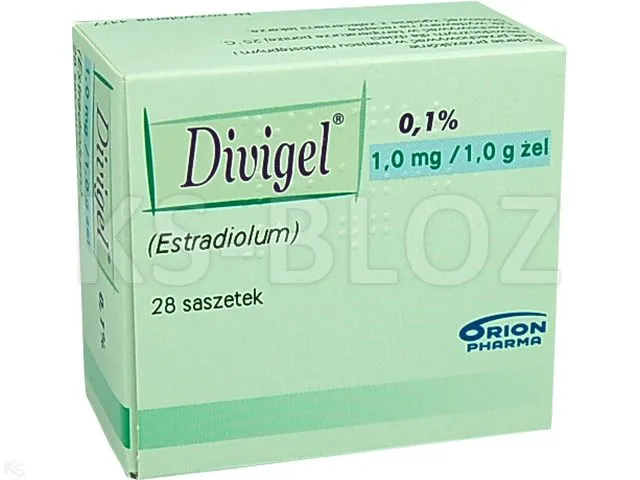
Table of Contents
Package leaflet: Information for the patient
Divigel 0,1%, 0.5 mg/0.5 g, gel
Divigel 0,1%, 1.0 mg/1.0 g, gel
Estradiolum
Please read the entire leaflet carefully before using the medicine, as it contains
important information for the patient.
- Keep this leaflet so that you can read it again if necessary.
- If you have any questions, please consult your doctor or pharmacist.
- This medicine has been prescribed for a specific individual. Do not share it with others. The medicine may harm another person, even if their symptoms are the same.
- If you experience any adverse effects, including any not listed in this leaflet, inform your doctor or pharmacist. See section 4.
Table of contents
- What Divigel 0.1% is and what it is used for
- Important information before using Divigel 0.1%
- How to use Divigel 0.1%
- Possible side effects
- How to store Divigel 0.1%
- Contents of the pack and other information
1. What Divigel 0.1% is and what it is used for
Divigel 0.1% is a medicine intended for use in hormone replacement therapy (HRT).
The medicine contains the female hormone estrogen.
Divigel 0.1% is used to:
Relieve symptoms occurring after menopause
During menopause, the amount of estrogen produced by a woman's body decreases.
This may result in symptoms such as hot flushes affecting the face, neck, and chest
("hot flashes"). Divigel 0.1% relieves these symptoms (occurring after menopause). Divigel 0.1% is
prescribed only when symptoms significantly impair the patient's daily life.
Prevention of osteoporosis
After menopause, some women develop brittle bones (osteoporosis). If a patient is at increased risk of fractures due to osteoporosis and other treatments are not suitable, Divigel 0.1% may be used to prevent postmenopausal osteoporosis. Please consult your doctor.
Experience in treating women over 65 years of age is limited.
2. Important information before using Divigel 0.1%
Medical history and regular check-ups
Hormone replacement therapy (HRT) carries certain risks that should be considered when deciding whether to start or continue treatment.
Cases of HRT use in women with premature menopause (due to ovarian failure or surgical procedures) are rare. In women with premature menopause, the risks associated with HRT may differ. You should consult your doctor.
Before starting (or restarting) HRT, your doctor will take a detailed medical history of you and your family. Your doctor may perform a physical examination, including breast and (or) pelvic examination, if necessary.
After starting treatment with Divigel 0.1%, you should have regular follow-up visits (at least once a year). During these visits, discuss with your doctor the benefits and risks of continuing Divigel 0.1% treatment.
You should undergo regular breast examinations as recommended by your doctor.
When not to use Divigel 0.1%
If any of the following apply to you, or if you have any doubts about any of the following points, you should consult your doctor before using Divigel 0.1%.
Do not use Divigel 0.1%:
- if you are allergic to estradiol or any of the other ingredients of this medicine (listed in section 6),
- if you currently have or have had breast cancer or if breast cancer is suspected,
- if you have or have had an estrogen-sensitive malignant tumor, such as cancer of the lining of the womb (endometrium), or if such a tumor is suspected,
- if you have vaginal bleeding of unknown cause,
- if you have untreated excessive thickening of the womb lining (endometrial hyperplasia),
- if you currently have or have had venous thromboembolic disease (e.g. deep vein thrombosis in the legs or lungs, such as pulmonary embolism),
- if you have blood clotting disorders (such as protein C deficiency, protein S deficiency, or antithrombin deficiency),
- if you currently have or have recently had an arterial disease caused by blood clots, such as myocardial infarction, stroke, or angina pectoris,
- if you currently have or have had liver disease and liver function tests have not returned to normal,
- if you have the rare inherited blood disorder called porphyria.
If any of the above conditions occur for the first time during treatment with Divigel 0.1%, you must stop using the medicine immediately and contact your doctor without delay.
Warnings and precautions
Before starting Divigel 0.1%, discuss this with your doctor or pharmacist.
Inform your doctor if you currently have or have previously had any of the following conditions, as they may recur or worsen during treatment with Divigel 0.1%. In such cases, more frequent monitoring may be necessary:
- fibroids (benign uterine tumors),
- endometriosis (growth of the womb lining outside the uterus) or previous history of excessive thickening of the womb lining (endometrial hyperplasia),
- increased risk of thromboembolic disorders or personal history of such conditions (see "Blood clots in veins (thrombosis)"),
- increased risk of estrogen-sensitive cancer (e.g. if your mother, sister, or grandmother had breast cancer),
- high blood pressure,
- liver function disorders, such as benign liver tumors,
- diabetes, with or without vascular complications,
- gallstones,
- severe headaches or migraine-type headaches,
- autoimmune disease affecting multiple organs (systemic lupus erythematosus, SLE),
- epilepsy,
- asthma,
- otosclerosis (a disease affecting the eardrum and hearing),
- very high levels of fats (triglycerides) in your blood,
- fluid retention due to heart or kidney dysfunction,
- hereditary or acquired angioedema (a condition characterized by swelling, usually of the face, limbs, and joints).
Children
Estradiol in gel form may be accidentally transferred from the patient's skin to others. Avoid contact between other people, especially children, and the exposed area of skin. If necessary, cover the area after the gel has dried. If a child comes into contact with skin to which estradiol has been applied, wash the child's skin immediately with soap and water. Due to estradiol transfer, young children may show unexpected signs of sexual development (e.g. breast budding). In most cases, these symptoms resolve once the child is no longer exposed to the estradiol gel.
If a child who may have been accidentally exposed to estradiol gel shows any signs or symptoms of puberty (e.g. breast development or other sexual changes), contact your doctor.
Stop using Divigel 0.1% and contact your doctor immediately
If you experience any of the following symptoms while using HRT:
- any of the conditions listed under "When not to use Divigel 0.1%",
- yellowing of the skin or whites of the eyes (jaundice) or liver function abnormalities,
- swelling of the face, tongue, and (or) throat and (or) difficulty swallowing or hives, together with breathing difficulties, which may indicate angioedema,
- significant increase in blood pressure (possible symptoms: headache, fatigue, dizziness),
- recurrence of migraine-type headaches,
- pregnancy,
- signs of blood clot formation, such as:
- painful swelling and redness in the legs,
- sudden chest pain,
- difficulty breathing. More information is available under "Blood clots in veins (thrombosis)".
Note: Divigel 0.1% is not a contraceptive. If less than 12 months have passed since your last menstrual period or if you are under 50 years of age, additional contraceptive measures may be needed to prevent pregnancy. Consult your doctor.
HRT and malignant tumors
Excessive thickening of the womb lining (endometrial hyperplasia) and malignant tumor of the womb lining (endometrial cancer)
Using estrogen-only HRT increases the risk of excessive thickening of the womb lining (endometrial hyperplasia) and endometrial cancer. Adding a progestogen for at least 12 days in each 28-day cycle protects against this increased risk. Your doctor will prescribe a progestogen separately if you still have your uterus. If your uterus has been removed (hysterectomy), discuss with your doctor whether it is safe to use this medicine without a progestogen.
In women with an intact uterus who do not use HRT, an average of 5 out of 1,000 women aged 50 to 65 will be diagnosed with endometrial cancer.
In women aged 50 to 65 with an intact uterus who use estrogen-only HRT, 10 to 60 out of 1,000 will be diagnosed with endometrial cancer (i.e. 5 to 55 additional cases), depending on the dose and duration of treatment.
Vaginal bleeding of unknown cause
While using Divigel 0.1%, you will have monthly bleeding (so-called withdrawal bleeding). However, if you experience vaginal bleeding of unknown cause or spotting (blood drops) outside of withdrawal bleeding that:
- lasts longer than the first 6 months,
- occurs after using Divigel 0.1% for more than 6 months,
- continues after stopping Divigel 0.1%, you should see your doctor immediately.
Breast cancer
Evidence confirms that using hormone replacement therapy (HRT), either combined estrogen-progestogen or estrogen-only, increases the risk of breast cancer. The additional risk depends on how long HRT is used. This additional risk becomes apparent after 3 years of HRT use. After stopping HRT, the additional risk gradually decreases, but may persist for 10 years or longer if HRT was used for more than 5 years.
Comparison
Among women aged 50 to 54 who do not use HRT, breast cancer will be diagnosed in an average of 13 to 17 out of 1,000 women over 5 years.
Among women aged 50 who start 5-year estrogen-only HRT, the number of cases will be 16–17 per 1,000 women (i.e. 0 to 3 additional cases).
Among women aged 50 who start 5-year combined estrogen-progestogen HRT, the number of cases will be 21 per 1,000 women (i.e. 4 to 8 additional cases).
Among women aged 50 to 59 who do not use HRT, breast cancer will be diagnosed in an average of 27 out of 1,000 women over 10 years.
Among women aged 50 who start 10-year estrogen-only HRT, the number of cases will be 34 per 1,000 women (i.e. 7 additional cases).
Among women aged 50 who start 10-year combined estrogen-progestogen HRT, the number of cases will be 48 per 1,000 women (i.e. 21 additional cases).
You should have regular breast examinations. Contact your doctor if you notice any changes such as:
- skin dimpling,
- nipple changes,
- any visible or palpable lumps.
Additionally, participation in available mammographic screening programs is recommended. It is important to inform the medical staff performing the screening mammogram that you are using HRT, as this medicine may increase breast radiological density, which can affect mammogram results. In areas of increased density, mammography may not detect all nodules.
Ovarian cancer
Ovarian cancer is rare—much less common than breast cancer. Using HRT containing only estrogens or combined estrogen-progestogen therapy is associated with a slightly increased risk of ovarian cancer. The risk of ovarian cancer depends on age. For example, among women aged 50–54 who do not use HRT, ovarian cancer will be diagnosed in 2 out of 2,000 women over 5 years. Among women who used HRT for 5 years, it will occur in about 3 out of 2,000 women on therapy (i.e. about 1 additional case).
Effects of HRT on the heart and circulation
Blood clots in veins (thrombosis)
The risk of venous thrombosis is about 1.3 to 3 times higher in women using HRT, especially during the first year of treatment, compared to women who do not use HRT.
If a clot travels to the lungs, it may cause chest pain, shortness of breath, fainting, or even death.
The likelihood of venous thrombosis increases with age and depending on the presence of the following factors. Inform your doctor if any of the following situations apply:
- you are unable to walk for a prolonged period due to major surgery, injury, or illness (see also section 3 "If surgery is required"),
- you are obese (Body Mass Index, BMI >30 kg/m²),
- you have blood clotting disorders and require long-term anticoagulant therapy,
- if any close relatives have had a blood clot in the leg, lung, or another organ,
- you are pregnant or in the postpartum period,
- you have systemic lupus erythematosus (SLE),
- you have cancer.
Symptoms of blood clots are listed under "Stop using Divigel 0.1% and contact your doctor immediately."
Comparison
Among women aged 50 to 59 who do not use HRT, a venous thrombosis will likely occur in 4 to 7 out of 1,000 women over 5 years.
Among women aged 50 to 59 who have used combined estrogen-progestogen HRT for over 5 years, a venous thrombosis will occur in 9 to 12 out of 1,000 women (i.e. 5 additional cases).
Among women aged 50 to 59 with a hysterectomy who have used estrogen-only HRT for 5 years, a clot will occur in 5 to 8 out of 1,000 women (i.e. 1 additional case).
Coronary heart disease (myocardial infarction)
There is no scientific evidence that HRT prevents myocardial infarction.
Women over 60 years of age using combined estrogen-progestogen HRT have a slightly increased risk of heart disease compared to women not using HRT.
In women who have had a hysterectomy and use estrogen-only therapy, there is no increased risk of heart disease.
Ischemic stroke
The risk of ischemic stroke is about 1.5 times higher in women using HRT than in those who do not. The number of additional stroke cases due to HRT use increases with age.
Comparison
Among women aged 50 to 59 who do not use HRT, an ischemic stroke will occur in an average of 8 out of 1,000 women over 5 years. Among women aged 50 to 59 using HRT, there will be 11 such cases per 1,000 women over 5 years (i.e. 3 additional cases).
Other conditions
- HRT does not improve cognitive function (memory loss, perception, attention disorders). Evidence suggests an increased risk of dementia in women who start HRT after age 65. Consult your doctor.
- Women prone to skin pigmentation (melasma) should limit exposure to sunlight or ultraviolet radiation during treatment with Divigel 0.1%.
Divigel 0.1% and other medicines
Some medicines may affect the action of Divigel 0.1%, potentially causing irregular bleeding. These include:
- medicines used to treat epilepsy (e.g. phenobarbital, phenytoin, carbamazepine),
- medicines used to treat tuberculosis (e.g. rifampicin, rifabutin),
- medicines used to treat HIV infection and hepatitis C virus (protease inhibitors and non-nucleoside reverse transcriptase inhibitors, e.g. nevirapine, efavirenz, ritonavir, nelfinavir),
- herbal products containing St. John's wort (Hypericum perforatum).
HRT may affect the action of other medicines:
- the antiepileptic drug lamotrigine, potentially increasing seizure frequency,
- medicines used to treat hepatitis C virus (HCV), such as the combination regimen of ombitasvir/paritaprevir/ritonavir with dasabuvir with or without ribavirin, or the combination regimen of glecaprevir/pibrentasvir or sofosbuvir/velpatasvir/voxilaprevir, which may cause increased liver function test values [increased alanine aminotransferase (ALT) enzyme activity] in women using combined hormonal contraceptives containing ethinylestradiol. It is unknown whether concomitant use of Divigel with these HCV treatment regimens may lead to increased ALT activity.
Tell your doctor or pharmacist about all medicines you are currently taking or have recently taken, including those you plan to use, over-the-counter medicines, herbal products, or other natural remedies. Your doctor will advise you accordingly.
Laboratory tests
If blood tests are required, inform the laboratory staff that you are using Divigel 0.1%, as it may affect the results of certain tests.
Pregnancy and breastfeeding
Divigel 0.1% must not be used during pregnancy or breastfeeding.
Divigel 0.1% is intended for use only in postmenopausal women. If you become pregnant, stop using Divigel 0.1% and contact your doctor.
Driving and operating machinery
No studies on the effects on the ability to drive and operate machinery have been conducted.
Divigel 0.1% contains propylene glycol
The medicine contains 62.5 mg to 187.5 mg of propylene glycol per 0.5–1.5 g dose. It may cause skin irritation.
Divigel 0.1% contains alcohol (ethanol)
The medicine contains 271 mg to 835 mg of alcohol (ethanol) per 0.5–1.5 g dose. It may cause stinging on damaged skin.
3. How to use Divigel 0.1%
This medicine should always be used exactly as your doctor has told you. If in doubt, consult your doctor.
Divigel 0.1% is a gel for skin application. Divigel 0.1% may be used either continuously or cyclically. The usual starting dose is 1 mg of estradiol (1 g of gel) per day, although the choice of starting dose may depend on the severity of symptoms experienced by the patient. Your doctor may adjust the dose after 2 or 3 cycles from 0.5 g to 1.5 g per day, corresponding to 0.5 mg to 1.5 mg of estradiol per day. Your doctor will prescribe the lowest possible dose needed to treat your symptoms for the shortest possible time. If you feel the effect of Divigel 0.1% is too weak or too strong, inform your doctor.
In women with an intact uterus, it is necessary to combine treatment with Divigel 0.1% with an appropriate dose of a progestagen for an appropriate duration, for at least 12–14 consecutive days per month, in order to prevent estrogen-stimulated endometrial proliferation. Withdrawal bleeding (similar to menstrual bleeding) usually occurs after each course of progestagen.
Method of administration
Apply Divigel 0.1% once daily to the skin of the lower part of the trunk or to the right or left thigh, alternating sides. The application area should be 1 to 2 times larger than the surface of the palm. Divigel 0.1% should not be applied to the breasts, face, irritated skin, or into the vagina. After application, allow the gel to dry for several minutes, and do not wash the application site for at least one hour. Avoid contact of the gel with the eyes.
- Wash your hands thoroughly with soap and water after applying the gel.
- Cover the application site with clothing immediately after the gel has dried.
- Take a shower before situations involving anticipated skin-to-skin contact with another person.
- Prevent others from touching the area of skin where the gel has been applied; if necessary, cover the area with clothing after the gel has dried.
- If another person (e.g., a child or partner) or a pet accidentally comes into contact with the application site, wash the affected skin area immediately with soap and water.
If these precautions are not followed, estradiol gel may be transferred to other individuals (e.g., a child or partner) or to pets through direct skin contact, which may lead to unwanted side effects. If any adverse effects occur, contact your doctor or veterinarian.
For women not currently using HRT, or for women switching from another continuous combined HRT, treatment with Divigel 0.1% may be started on any day. For women switching from sequential HRT, treatment should begin the day after completion of the previous 28-day treatment cycle.
If you feel that the effect of Divigel 0.1% is too strong or too weak, consult your doctor.
If surgery is required
Inform your surgeon that you are using Divigel 0.1%. You may need to stop using Divigel 0.1% for 4 to 6 weeks before surgery to reduce the risk of thrombosis (see section 2, "Venous thromboembolism (thrombosis)"). Consult your doctor about when you can resume treatment with Divigel 0.1%.
Use of a higher than recommended dose of Divigel 0.1%
Overdose of estrogens may cause nausea, headache, and vaginal bleeding. Numerous reports of accidental ingestion of large doses of oral estrogen-containing contraceptives by young children have not indicated occurrence of severe overdose symptoms.
Generally, estrogens are well tolerated even at high doses. Acute toxicity studies have not shown a risk of serious adverse effects following accidental ingestion of multiple times the daily therapeutic dose. Some women may experience nausea, vomiting, and withdrawal bleeding. Symptoms of overdose may include breast tenderness, abdominal or pelvic swelling, restlessness, and irritability. These symptoms usually resolve after discontinuation of treatment or dose reduction.
Overdose following transdermal application is unlikely. There is no specific antidote; symptomatic treatment should be initiated. Wash off the gel.
Missed dose of Divigel 0.1%
If you forget to apply one dose, apply it as soon as possible if the delay is less than 12 hours. If more than 12 hours have passed, skip the missed dose and continue treatment according to your usual schedule. Missing a dose may increase the likelihood of irregular vaginal bleeding or spotting.
Ensure you have an adequate supply of medicine when travelling for an extended period.
Do not use a double dose to make up for a missed dose.
Accidental ingestion of the gel
If someone accidentally swallows the gel, there is generally no cause for major concern. However, you should contact a doctor.
Stopping treatment with Divigel 0.1%
If you stop treatment with Divigel 0.1%, symptoms of estrogen deficiency will return after some time.
If you have any further questions about the use of this medicine, consult your doctor or pharmacist.
4. Possible adverse effects
Like all medicines, this medicine can cause adverse effects, although not everyone will experience them.
The most commonly occurring adverse effects are usually mild and resolve during treatment.
Vaginal bleeding and spotting may occur, especially during the first few months of treatment.
The following conditions are reported more frequently in women using HRT than in those who do not:
- breast cancer,
- abnormal endometrial growth or cancer of the uterine lining (endometrial hyperplasia or endometrial cancer),
- ovarian cancer,
- blood clots in the legs or lungs (venous thromboembolic disorders),
- heart disease,
- stroke,
- risk of dementia if HRT is initiated after the age of 65.
Further information on the above adverse effects is provided in section 2.
During the first few months of treatment, intermenstrual bleeding, spotting, and breast tenderness may occur. These symptoms are usually temporary and resolve with continued treatment.
The following adverse effects may occur during treatment with Divigel 0.1%:
Common (affects less than 1 in 10 people):
- weight gain,
- weight loss,
- headache, dizziness,
- nausea, vomiting, stomach cramps, flatulence,
- hot flushes, vulval and/or vaginal disorders, menstrual cycle disturbances,
- skin irritation, itching at the application site, pain, increased sweating,
- breast tenderness or pain,
- bleeding or spotting, irregular menstruation,
- depression, nervousness, lethargy (lack of energy, unresponsiveness to most stimuli),
- oedema,
- hot flushes.
Uncommon (affects less than 1 in 100 people):
- mood changes, decreased or increased libido, anxiety, insomnia, apathy, emotional lability, difficulty concentrating, euphoria, restlessness,
- migraine, numbness, convulsions,
- visual disturbances, dry eyes,
- hypertension, superficial thrombophlebitis, purpura,
- shortness of breath, catarrh,
- benign breast or endometrial tumour,
- increased appetite, high blood cholesterol levels,
- palpitations,
- constipation, dyspepsia, diarrhoea, anorectal disorders,
- acne, alopecia, dry skin, nail disorders, skin nodules, hirsutism, nodular erythema, urticaria,
- joint disorders, muscle cramps,
- increased frequency of urination and/or increased urge to urinate, urinary incontinence, cystitis, discoloured urine, haematuria,
- breast tenderness or swelling, endometrial hyperplasia, uterine disorders,
- fatigue, abnormal laboratory test results, asthenia, fever, influenza-like illness, malaise,
- hypersensitivity.
Rare (affects less than 1 in 1,000 people):
- venous thromboembolic disease (e.g. deep vein thrombosis of the legs or pelvis and pulmonary embolism),
- liver function disorders and impaired bile flow,
- rash,
- intolerance to contact lenses,
- painful menstruation, premenstrual syndrome.
Adverse effects reported after product marketing:
Unknown (cannot be estimated from available data):
- uterine fibroids,
- worsening of hereditary or acquired angioedema,
- cerebrovascular disorders (episodes of cerebral ischaemia),
- abdominal pain, bloating,
- liver disorders causing yellowing of the skin (cholestatic jaundice),
- contact dermatitis, rash.
Other adverse effects observed during HRT use include:
breast cancer, uterine cancer, coronary artery disease, gallbladder disease, myocardial infarction and stroke, skin and subcutaneous tissue disorders: chloasma, erythema multiforme, dementia.
The following adverse effects have been observed with other HRT products:
- gallbladder disease,
- various skin disorders:
- skin pigmentation, especially on the face or neck, known as "pregnancy mask" (chloasma gravidarum),
- painful skin nodules (Erythema nodosum),
- rash with erythematous ring-shaped lesions or ulceration (Erythema multiforme).
Reporting of adverse effects
If any adverse effects occur, including any not listed in this leaflet, inform your doctor or pharmacist. Adverse effects can be reported directly to the Department of Monitoring of Adverse Drug Reactions, Office for Registration of Medicinal Products, Medical Devices and Biocidal Products,
Al. Jerozolimskie 181C, 02-222 Warsaw,
tel.: +48 22 4921301, fax: +48 22 4921309,
website: https://smz.ezdrowie.gov.pl
Adverse effects can also be reported to the marketing authorisation holder.
Reporting adverse effects helps provide more information on the safety of this medicine.
5. How to store Divigel 0.1% gel
Keep this medicine out of sight and reach of children.
Do not use this medicine after the expiry date stated on the carton after "Expiry date (EXP)". The expiry date refers to the last day of the stated month.
Store below 25°C.
Medicines must not be disposed of via the sewage system or household waste. Ask your pharmacist how to dispose of medicines no longer required. Such measures help protect the environment.
6. Contents of the pack and other information
What Divigel 0.1% contains
One sachet of Divigel 0.1% 0.5 g contains:
- The active substance is estradiol in the form of estradiol hemihydrate 0.5 mg.
- The other ingredients are: carbomer 974 P, tromethamine, propylene glycol, ethanol 96%, purified water.
One sachet of Divigel 0.1% 1.0 g contains:
- The active substance is estradiol in the form of estradiol hemihydrate 1.0 mg.
- The other ingredients are: carbomer 974 P, tromethamine, propylene glycol, ethanol 96%, purified water.
What Divigel 0.1% looks like and contents of the pack
0.5 g or 1.0 g of gel in a sachet containing a single dose.
The pack contains 28 or 91 sachets made of polyester/aluminum/polyethylene in a cardboard box.
Marketing Authorisation Holder and Manufacturer
Marketing Authorisation Holder:
Orion Corporation
Orionintie 1
FI-02200 Espoo
Finland
Manufacturer:
Orion Corporation,
Tengströminkatu 8
FI-20360 Turku
Finland
For further information regarding this medicinal product, please contact the local representative of the Marketing Authorisation Holder:
Orion Pharma Poland Sp. z o.o.
[email protected]