Diuresin sr
Poland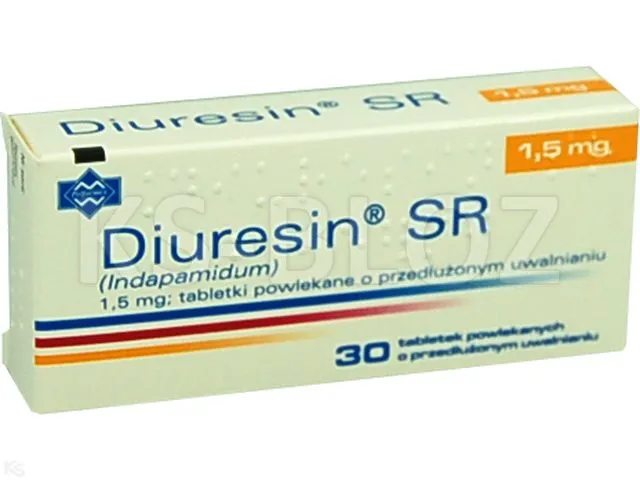
Table of Contents
Package leaflet: Information for the user
DIURESIN SR, 1.5 mg, prolonged-release coated tablets
Indapamide
Please read all of this leaflet carefully before taking this medicine, because it contains
important information for the patient.
- Keep this leaflet, as you may need to read it again.
- If you have any further questions, please ask your doctor or pharmacist.
- This medicine has been prescribed for a specific individual. Do not pass it on to others. It may harm someone else, even if their symptoms are the same.
- If the patient experiences any adverse reactions, including any not listed in this leaflet, inform a doctor or pharmacist immediately. See section 4.
Contents of the leaflet:
- What Diuresin SR is and what it is used for
- Important information before taking Diuresin SR
- How to take Diuresin SR
- Possible side effects
- How to store Diuresin SR
- Contents of the pack and other information
1. What Diuresin SR is and what it is used for
Diuresin SR is a diuretic medicine. Indapamide is a non-thiazide sulfonamide derivative with pharmacological properties similar to thiazide diuretics. Its antihypertensive effect is due to the direct vasodilating action of indapamide on vascular smooth muscle, resulting in reduced peripheral resistance. The drug does not adversely affect lipid and carbohydrate metabolism, even in diabetic patients. It reduces left ventricular hypertrophy caused by arterial hypertension. Indapamide is rapidly and completely absorbed from the gastrointestinal tract. Its biological half-life is approximately 18 hours. The drug is excreted in urine (about 70%) and faeces (about 20%) as inactive metabolites. Approximately 5% of the dose is excreted unchanged.
Diuresin SR is indicated for use:
- in essential (primary) hypertension, as monotherapy or in combination with other antihypertensive medicines.
2. Important information before using Diuresin SR
When not to use Diuresin SR:
- if the patient has recently suffered an ischaemic stroke;
- if the patient is allergic to the active substance (indapamide), sulphonamides, or any of the other ingredients of this medicine (listed in section 6);
- if the patient has severe renal impairment (glomerular filtration rate (GFR) <10 ml/min);
- if the patient has severe hepatic insufficiency associated with fluid and electrolyte imbalance (pre-comatose or comatose states);
- if the patient has hypokalaemia.
Warnings and precautions
Before starting treatment with Diuresin SR, discuss this with your doctor or pharmacist.
Blurred vision or eye pain may occur. These may be symptoms of fluid accumulation in the avascular membrane surrounding the eye (excessive fluid accumulation between choroid and sclera) or increased intraocular pressure – they may occur from several hours to a week after taking Diuresin SR.
If left untreated, these conditions may lead to permanent vision loss. The risk may be increased if the patient has previously had an allergy to sulphonamides or penicillin.
Particular caution is required when using Diuresin SR concomitantly with digoxin, lithium, astemizole, terfenadine, or intravenous erythromycin, and in patients with fluid and electrolyte imbalances (hypokalaemia – low potassium levels in blood, hyponatraemia – low sodium levels in blood, hypercalcaemia – high calcium levels in blood), gout (including previous episodes), hyperuricaemia (elevated uric acid levels in blood), or impaired liver and/or kidney function.
If renal impairment worsens or hepatic encephalopathy occurs during treatment, Diuresin SR should be discontinued and the patient should contact their doctor.
Particular caution is required when indapamide is used concomitantly with angiotensin-converting enzyme (ACE) inhibitors. Especially during the first week of combined use of ACE inhibitors and indapamide, the doctor may recommend monitoring kidney function (serum creatinine measurement).
Caution is advised in patients with systemic lupus erythematosus (SLE), as indapamide may exacerbate symptoms or trigger a relapse.
During treatment, periodic monitoring of blood pressure and periodic measurement of serum potassium levels are recommended, especially in patients receiving concomitant treatment with cardiac glycosides or systemic corticosteroids, and in patients with hepatic impairment.
In these patients, dietary enrichment with potassium-rich foods or potassium supplementation is recommended (even if potassium levels are within normal range).
Children
Diuresin SR must not be given to children.
Diuresin SR and other medicines
Inform your doctor or pharmacist about all medicines currently used, recently used, or planned for use.
Diuretics may increase serum lithium levels and enhance the risk of lithium toxicity.
Drugs causing QT prolongation (astemizole, bepridil, intravenous erythromycin, halofantrine, pentamidine, sulpiride, terfenadine, vinpocetine): indapamide increases the risk of cardiac arrhythmias.
Calcium salts: thiazide and thiazide-like diuretics reduce urinary calcium excretion and may cause hypercalcaemia (excessive serum calcium levels).
Cardiac glycosides: increased risk of glycoside toxicity (e.g. nausea, vomiting, arrhythmia), particularly in the presence of low serum potassium levels.
Non-steroidal anti-inflammatory drugs (e.g. acetylsalicylic acid) may reduce the antihypertensive effect of indapamide.
Intravenous amphotericin B and systemic corticosteroids may increase the risk of hypokalaemia.
Baclofen may enhance the antihypertensive effect of indapamide.
Potassium-sparing diuretics used concomitantly with indapamide do not exclude the possibility of hypokalaemia, and in patients with renal impairment or diabetes may increase the risk of hyperkalaemia.
Antiarrhythmic drugs (quinidine, disopyramide, amiodarone, bretylium, sotalol) increase the risk of life-threatening arrhythmias in patients with hypokalaemia.
Iodinated contrast media: dehydration, which may occur during diuretic therapy, increases the risk of acute renal failure, especially when large doses of contrast agent are administered.
Angiotensin-converting enzyme (ACE) inhibitors: in patients treated with diuretics, administration of an ACE inhibitor increases the risk of hypotension and/or severe renal impairment.
Metformin administered with indapamide increases the risk of lactic acidosis, especially in patients with renal impairment. Metformin is not recommended in patients with serum creatinine levels exceeding 15 mg/l (men) or 12 mg/l (women).
Tricyclic antidepressants enhance the antihypertensive effect of indapamide and increase the risk of excessive blood pressure drop upon sudden standing.
Cyclosporine: risk of increased serum creatinine levels without changes in cyclosporine levels and with normal fluid and electrolyte balance.
Inform your doctor about all other medicines you are taking, including those available without a prescription.
Pregnancy and breastfeeding
If the patient is pregnant or breastfeeding, suspects she may be pregnant, or is planning to become pregnant, she should consult her doctor or pharmacist before using this medicine.
The drug passes into breast milk. Women taking indapamide should not breastfeed.
Driving and operating machinery
During treatment, symptoms related to excessive lowering of blood pressure may occur, such as headache and dizziness, especially at the beginning of treatment or during combination therapy, which may impair psychomotor performance and ability to drive or operate machinery.
Consult your doctor regarding the ability to drive while taking this medicine.
Diuresin SR contains lactose
This medicine contains lactose. If the patient has previously been diagnosed with intolerance to certain sugars, they should consult their doctor before taking this medicine. The medicine contains 0.12645 g of lactose (0.063225 g glucose and 0.063225 g galactose) per tablet.
This should be taken into account in patients with diabetes.
3. How to use Diuresin SR
This medicine should always be used according to the doctor's instructions. In case of doubt, consult your doctor or pharmacist.
The dosage is always determined by the doctor.
The recommended initial daily dose of indapamide is 1.5 mg, corresponding to 1 prolonged-release coated tablet of 1.5 mg.
Taking a higher than recommended dose of Diuresin SR
If more than the recommended dose is taken, contact your doctor or pharmacist immediately.
After overdosage of indapamide, the following symptoms may occur due to enhanced diuretic effect: excessive lowering of blood pressure; fluid and electrolyte imbalance; decreased potassium levels in blood; increased uric acid levels in blood, which may trigger an acute gout attack.
Inform your doctor as soon as possible about the overdose; the doctor will recommend appropriate treatment.
There is no specific antidote. Treatment depends on the patient's condition. Soon after overdose, induced vomiting or gastric lavage may be effective in removing the unabsorbed drug from the body.
Missing a dose of Diuresin SR
Do not take a double dose to make up for a missed dose.
Stopping treatment with Diuresin SR
If you have any further doubts regarding the use of this medicine, consult your doctor or pharmacist.
4. Possible adverse reactions
Like any medicine, this medicine can cause adverse reactions, although not everyone will experience them.
The frequency of the adverse reactions listed below is defined as follows:
- very common (affects more than 1 in 10 people);
- common (affects 1 to 10 in 100 people);
- uncommon (affects 1 to 10 in 1,000 people);
- rare (affects 1 to 10 in 10,000 people);
- very rare (affects fewer than 1 in 10,000 people);
- frequency not known (cannot be estimated from the available data).
Water and electrolyte imbalance disorders – hyponatremia (in approximately 3% of patients), hypokalemia (potassium concentration below 3.4 mmol/l); commonly observed (in 3 to 7% of patients treated with indapamide at a dose of 2.5–5 mg). In a study assessing the efficacy and safety of indapamide in sustained-release tablets (SR) compared to conventional tablets (IR), hypokalemia was observed very commonly (in 29% of patients taking indapamide 2.5 mg IR and in 11%, 18%, and 14% of patients taking indapamide SR at doses of 1.5, 2.0, and 2.5 mg, respectively). In most cases, hypokalemia manifests as ECG abnormalities (prolonged QT interval, arrhythmia), excessive weakness, and muscle cramps.
Gastrointestinal disorders: nausea; vomiting; constipation; diarrhoea; abdominal pain; loss of appetite.
Skin and subcutaneous tissue disorders (common – in less than 5% of patients): erythema; urticaria; pruritus; vasculitis.
Cardiac disorders: palpitations; orthostatic hypotension (a drop in systolic blood pressure by more than 20 mmHg or a drop in diastolic blood pressure by more than 10 mmHg within 3 minutes of changing position from lying to standing); premature ventricular contractions.
Nervous system disorders: headache and dizziness; mood disturbances; paresthesia (pricking, burning, tingling sensations in specific areas of the skin due to nerve changes).
Blood and lymphatic system disorders (rare): thrombocytopenia (low platelet count – thrombocytes); leukopenia (reduced number of white blood cells – leukocytes); agranulocytosis (severe deficiency of white blood cells – neutrophil granulocytes); aplastic anemia (bone marrow failure or atrophy); hemolytic anemia (accelerated breakdown of red blood cells).
Visual impairment or eye pain due to increased pressure (possible symptoms of fluid accumulation in the vascular membrane surrounding the eye — excessive fluid buildup between choroid and sclera — or acute angle-closure glaucoma).
Common adverse reactions (may affect up to 1 in 10 patients):
- low blood potassium levels
Uncommon adverse reactions (may affect up to 1 in 100 patients):
- low blood sodium levels, which may cause dehydration and low blood pressure
- impotence (inability to achieve or maintain erection)
Rare adverse reactions (may affect up to 1 in 1,000 patients):
- low blood chloride levels
- low blood magnesium levels
Reporting of adverse reactions
If any adverse reactions occur, including any not listed in this leaflet, inform your doctor, pharmacist, or nurse. Adverse reactions can be reported directly to the Department of Monitoring Adverse Drug Reactions at the Office for Registration of Medicinal Products, Medical Devices and Biocidal Products:
Al. Jerozolimskie 181C
02-222 Warsaw
Tel.: 22 49-21-301
Fax: 22 49-21-309
Website: https://smz.ezdrowie.gov.pl
Adverse reactions can also be reported to the marketing authorization holder.
Reporting adverse reactions helps to provide more information on the safety of the medicine.
5. How to store Diuresin SR
Keep the medicine out of the sight and reach of children.
Do not use this medicine after the expiry date stated on the carton and blister pack following "EXP". The expiry date refers to the last day of that month.
No special storage conditions apply.
Medicines should not be disposed of via wastewater or household waste. Ask your pharmacist how to dispose of medicines no longer required. These measures will help protect the environment.
6. Contents of the pack and other information
What Diuresin SR contains
- The active substance is indapamide. One prolonged-release coated tablet contains 1.5 mg of indapamide.
- The other ingredients are: hypromellose (4000 cP), monohydrate lactose, povidone, anhydrous colloidal silica, magnesium stearate. Coating: monohydrate lactose, hypromellose, titanium dioxide (E 171), polyethylene glycol (6000).
What Diuresin SR looks like and contents of the pack
The pack contains 30, 40, 50 or 60 tablets.
Marketing Authorisation Holder and Manufacturer
Polfarmex S.A.
ul. Józefów 9
99-300 Kutno
Poland
Tel.: 24 357 44 44
Fax: 24 357 45 45
e-mail: [email protected]