Diprophos
Poland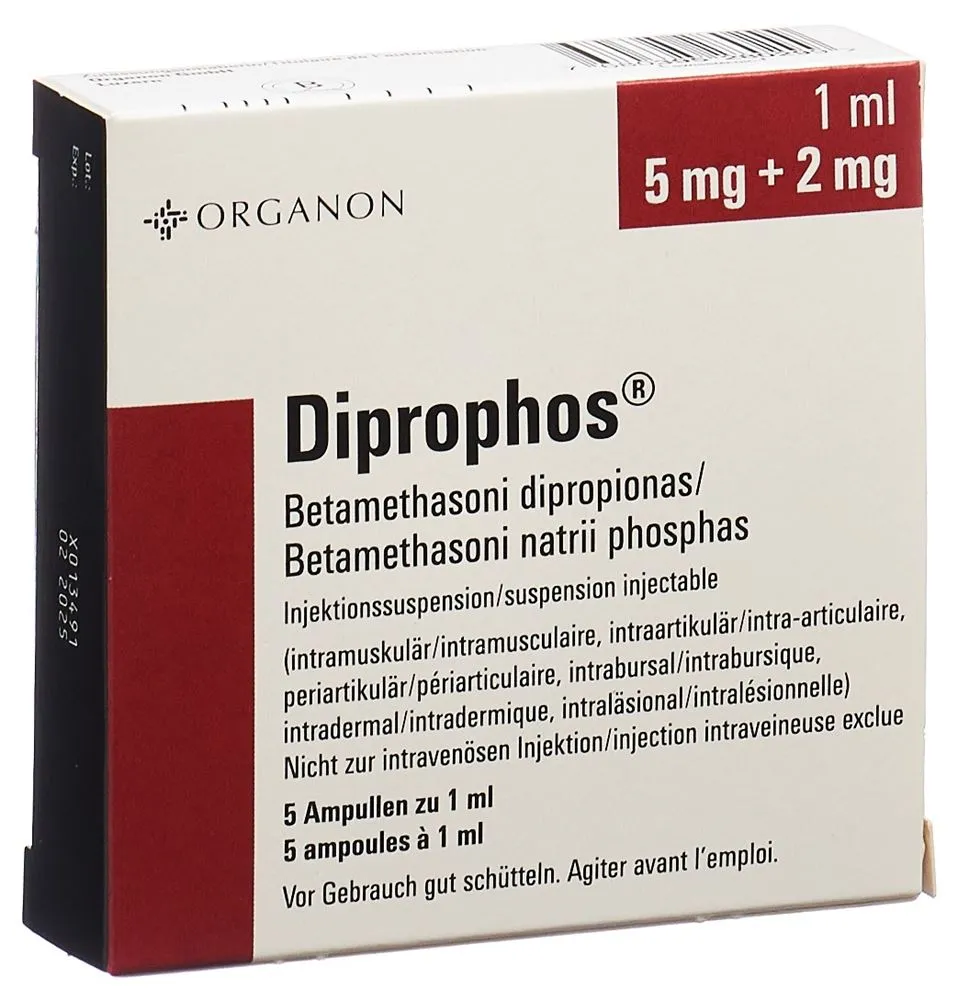
Table of Contents
Package leaflet: Information for the user
Diprophos, (6.43 mg + 2.63 mg)/ml, suspension for injection
Betamethasoni dipropionas + Betamethasoni natrii phosphas
Please read all of this leaflet carefully before using this medicine, because it contains
important information for you.
- Keep this leaflet, as you may need to read it again.
- If you have any further questions, please ask your doctor or pharmacist.
- This medicine has been prescribed for you personally. Do not pass it on to others. It may harm them, even if their symptoms are the same as yours.
- If you experience any side effects, including any not listed in this leaflet, tell your doctor or pharmacist. See section 4.
Contents of the leaflet
- What Diprophos is and what it is used for
- Important information before using Diprophos
- How to use Diprophos
- Possible side effects
- How to store Diprophos
- Contents of the pack and other information
1. What Diprophos is and what it is used for
Diprophos is indicated for the treatment of acute and chronic conditions amenable to corticosteroid therapy. Corticosteroid hormone therapy is an adjunct to conventional treatment, but cannot replace it.
Musculoskeletal and soft tissue disorders: rheumatoid arthritis, osteoarthritis, bursitis, ankylosing spondylitis, epicondylitis, radiculitis, coccygodynia, lumbago, cervical spasm, ganglion cyst of tendon sheath, exostoses, fasciitis.
Allergic disorders: chronic bronchial asthma (as supportive therapy in asthmatic conditions), hay fever, angioneurotic edema, allergic bronchitis, seasonal or allergic rhinitis, drug reactions, serum sickness, insect bites.
Skin diseases: atopic dermatitis (eczema), necrobiosis lipoidica, contact dermatitis, severe sunburn, urticaria, lichen planus hypertrophicus, localized lichen simplex chronicus, alopecia areata, discoid lupus erythematosus, psoriasis, keloids, pemphigus, herpes zoster dermatitis, neurodermatitis, cystic acne.
Collagen diseases: systemic lupus erythematosus, scleroderma, dermatomyositis, polyarteritis nodosa.
Other diseases: adrenogenital syndrome, ulcerative colitis, Crohn's disease, phlyctenular conjunctivitis, foot disorders (bursitis under pressure point near joint, hallux rigidus, tailor's bunion), conditions requiring subconjunctival injections, blood disorders responsive to corticosteroid therapy, nephritis and nephrotic syndrome.
2. Important information before using Diprophos
When not to use Diprophos:
- if the patient is allergic to betamethasone or other glucocorticosteroids, or to any of the other ingredients of this medicine (listed in section 6),
- if the patient has systemic fungal infection.
Do not use corticosteroids in cases of: tuberculosis, osteoporosis, emotional instability,
peptic ulcer disease, primary glaucoma, early venous thrombosis, diabetes, Cushing's syndrome,
renal insufficiency, bacterial, fungal or viral infections, pregnancy (especially during the first
three months), or treatment of hyaline membrane syndrome after birth.
Warnings and precautions
Before starting treatment with Diprophos, consult a doctor, pharmacist, or nurse, especially if the
patient has a pheochromocytoma (adrenal gland tumour).
Diprophos must not be administered by intravenous or subcutaneous injection.
Serious neurological events, sometimes fatal, have been reported following epidural administration
of corticosteroids. Reported specific adverse events include, among others, spinal cord infarction,
paraplegia, tetraplegia, cortical blindness, and stroke. These severe neurological events have been
reported regardless of fluoroscopic guidance. The safety and efficacy of epidural administration of
corticosteroids have not been established, and therefore corticosteroids are not approved for this
use.
Anaphylactoid or anaphylactic reactions, potentially leading to shock, have been rarely reported in
patients receiving parenteral corticosteroids. Therefore, physicians should take appropriate
preventive measures in patients with a history of corticosteroid allergy.
Aseptic technique must be strictly observed during administration of the medicine.
The medicine contains two esters of betamethasone, one of which – betamethasone sodium
phosphate – is rapidly absorbed from the site of injection. Therefore, the possibility of systemic
effects caused by the soluble betamethasone compound should be considered.
There are no data confirming the safety of prophylactic corticosteroid use beyond the 32nd week
of pregnancy. Before administering corticosteroids, the benefits and risks for both mother and fetus
associated with corticosteroid use during this period of pregnancy should be carefully evaluated.
Corticosteroids should not be used to treat hyaline membrane syndrome after birth.
In prophylactic treatment of hyaline membrane syndrome in premature infants, corticosteroids
should not be administered to pregnant women with pre-eclampsia or eclampsia, or in cases of
placental damage.
Caution is advised when administering the medicine by intramuscular injection to patients with
idiopathic thrombocytopenic purpura.
Corticosteroids should be administered by deep injection into large muscle masses to avoid the
risk of local tissue atrophy.
Local administration into soft tissues and intra-articular injection may produce both local and
systemic effects.
Joint fluid should always be examined to exclude infection. Local administration of the medicine
into joints previously diagnosed with infection should be avoided. Severe pain and local swelling,
further limitation of joint mobility, fever, and malaise suggest septic arthritis. If this diagnosis is
confirmed, appropriate antibiotic therapy should be initiated.
Corticosteroids should not be administered by injection into unstable joints, infected sites, or
intervertebral spaces. Repeated intra-articular injections in patients with osteoarthritis may
exacerbate joint destruction. Injection of corticosteroids directly into tendons should be avoided, as
this may contribute to tendon rupture.
After intra-articular corticosteroid treatment, the patient should rest the treated joint, in which
symptoms have been alleviated.
In long-term corticosteroid therapy, consideration should be given to switching to oral medication,
after evaluating the potential benefits and risks of such a decision.
Dosage adjustments may be necessary in patients experiencing remission or exacerbation of the
disease, depending on the response to treatment and exposure to physical or emotional stress,
e.g., severe infections, surgery, or trauma. Patients should be monitored for up to 12 months after
discontinuation of long-term or high-dose corticosteroid therapy.
Corticosteroids may mask signs of infection and may also lead to the development of new
infections during treatment. During this period, difficulty in controlling infections may occur, and
decreased resistance to infections is possible.
Long-term corticosteroid administration may be associated with posterior subcapsular cataracts
(particularly in children), glaucoma with potential optic nerve damage, and increased risk of fungal
or viral eye infections.
Moderate and high doses of corticosteroids may cause increased blood pressure, sodium and
water retention, and increased potassium excretion. These effects are less likely when patients are
receiving synthetic corticosteroid derivatives, except when high doses are used. Dietary sodium
restriction and potassium supplementation may be considered. All corticosteroids increase
calcium excretion.
During corticosteroid treatment, patients should not be vaccinated against varicella. Other
preventive vaccinations should also be avoided, especially during high-dose corticosteroid therapy,
due to the risk of neurological complications and lack of immunological response. Vaccinations may
be administered to patients receiving corticosteroids for replacement therapy, e.g., in Addison's
disease.
Patients receiving immunosuppressive doses of corticosteroids should avoid contact with persons
with varicella or measles and should seek medical advice if exposed to these diseases. This is
particularly important in children.
Corticosteroid treatment in patients with active tuberculosis should be limited to cases of miliary or
disseminated tuberculosis, where corticosteroids are administered together with appropriate
antituberculosis agents.
If corticosteroid administration is indicated in individuals with inactive tuberculosis or in patients
with a positive tuberculin reaction, careful monitoring is required, as reactivation of the disease
may occur. During long-term corticosteroid therapy, patients should receive prophylactic
chemotherapy. In cases of prophylactic rifampicin use, increased hepatic clearance of
corticosteroids should be considered; dosage adjustment of corticosteroids may then be necessary.
The lowest effective corticosteroid dose should be used in the treatment of any condition.
Dosage reduction should be gradual.
Abrupt discontinuation of corticosteroids may lead to secondary adrenal insufficiency, which can
be minimized by gradual tapering of the corticosteroid dose.
Relative adrenal insufficiency may persist for up to one month after stopping treatment; therefore, if
the patient is exposed to stress during this period, corticosteroid therapy should be reinstated. If the
patient is already receiving corticosteroids, the dose may be increased. Due to possible disturbances
in mineralocorticoid secretion, salt and/or mineralocorticoid should be administered concurrently.
The effect of corticosteroids is enhanced in patients with hypothyroidism or hepatic cirrhosis.
Corticosteroids should be used cautiously in patients with ocular herpes due to the risk of corneal
perforation.
Psychiatric disturbances may occur in patients treated with corticosteroids. Corticosteroids may
exacerbate existing emotional instability or tendency towards psychotic states.
Caution is advised when administering corticosteroids in the following conditions: ulcerative
colitis, if there is a risk of intestinal perforation, abscess or other suppurative infection, diverticulitis,
recent intestinal anastomoses, active or occult peptic ulcer, renal insufficiency, hypertension,
osteoporosis, and myasthenia gravis.
Adverse effects of corticosteroid therapy depend on dose and duration of treatment; therefore, in
each case, benefits should be weighed against risks for the patient.
Corticosteroids may cause growth disturbances and suppression of endogenous corticosteroid
production in infants and children; therefore, growth and development should be monitored in
patients in this age group undergoing long-term corticosteroid therapy.
In some patients, corticosteroids may affect sperm motility and count.
If the patient experiences blurred vision or other visual disturbances, medical advice should be
sought.
Diprophos with other medicines
Inform your doctor or pharmacist about all medicines currently used or recently used, including
those available without prescription, as well as any medicines the patient plans to use.
Concomitant use of phenobarbital, phenytoin, rifampicin, or ephedrine may enhance corticosteroid
metabolism, reducing their therapeutic effect.
Patients receiving both corticosteroids and estrogens should be monitored due to the risk of
increased corticosteroid effects.
Concomitant administration of corticosteroids with potassium-depleting diuretics may exacerbate
hypokalemia. Corticosteroids administered together with cardiac glycosides may increase the risk
of arrhythmias or digitalis toxicity associated with hypokalemia. Corticosteroids may also exacerbate
potassium loss induced by amphotericin B. Serum electrolyte concentrations, particularly potassium,
should be closely monitored in all patients receiving these medicines concomitantly.
Concomitant use of corticosteroids and anticoagulants of the coumarin derivatives group may lead
to decreased or increased anticoagulant effect, sometimes requiring dosage adjustment.
The combined use of non-steroidal anti-inflammatory drugs (NSAIDs) and alcohol with
glucocorticosteroids may increase the frequency or severity of gastrointestinal ulcers.
Corticosteroids may reduce blood salicylate concentrations. Caution is advised when administering
acetylsalicylic acid in combination with corticosteroids to patients with hypoprothrombinemia.
Corticosteroid use in diabetic patients may require adjustment of antidiabetic medication.
Concomitant administration of glucocorticosteroids may reduce the response to somatropin therapy.
Some medicines may enhance the effect of Diprophos, and the doctor may wish to closely monitor
the patient receiving such medicines (including certain HIV medications: ritonavir, cobicistat).
Effect on laboratory tests: corticosteroids may affect the nitrotetrazolium blue test in bacterial
infections, resulting in false-negative results.
Pregnancy and breastfeeding
Pregnancy
If the patient is pregnant or breastfeeding, suspects she may be pregnant, or is planning to become
pregnant, she should consult a doctor or pharmacist before using this medicine.
Controlled studies on fertility in humans receiving corticosteroids have not been conducted;
therefore, the use of this medicine in pregnant women or women of childbearing potential requires
careful assessment of risks and benefits for both mother and fetus.
There are no data confirming the safety of prophylactic corticosteroid use beyond the 32nd week
of pregnancy. Before administering corticosteroids, the benefits and risks for mother and fetus
associated with corticosteroid use during this period of pregnancy should be carefully evaluated.
Corticosteroids should not be used to treat hyaline membrane syndrome after birth.
In prophylactic treatment of hyaline membrane syndrome in premature infants, corticosteroids
should not be administered to pregnant women with pre-eclampsia or eclampsia, or with signs of
placental damage.
Newborns of women who received high doses of corticosteroids during pregnancy should be
carefully monitored for signs of adrenal insufficiency or congenital cataracts. After intravenous
administration of betamethasone to pregnant women, transient reduction in growth hormone and
apparently pituitary hormones regulating corticosteroid production by the adrenal glands has been
observed in fetuses. However, reduced fetal hydrocortisone secretion does not affect postnatal
stress response.
Due to the possibility of corticosteroids crossing the placenta, newborns and infants born to women
who received corticosteroids throughout or during part of pregnancy should be examined to rule
out congenital cataracts.
Women who received corticosteroids during pregnancy should be monitored during and after
delivery, as adrenal insufficiency may occur due to stress associated with childbirth.
In newborns whose mothers received Diprophos late in pregnancy, low blood sugar levels may occur
after birth.
Breastfeeding
Corticosteroids cross the placental barrier and are excreted into human milk.
Due to the possibility of adverse effects in breastfed infants of mothers receiving the medicine, a
decision should be made whether to discontinue breastfeeding or to discontinue the medicine, taking
into account the benefits of treatment for the mother.
Driving and operating machinery
Diprophos has no or negligible effect on the ability to drive and operate machinery.
Diprophos contains 9 mg of benzyl alcohol per ml.
Benzyl alcohol may cause allergic reactions. Administration of benzyl alcohol to young children is
associated with the risk of severe adverse reactions, including respiratory disturbances (so-called
"gasping syndrome"). Do not administer to newborns (up to 4 weeks of age) without medical
advice. Do not administer to young children (under 3 years of age) for longer than one week without
medical or pharmacist advice.
Pregnant or breastfeeding women or patients with liver or kidney disease should consult a doctor or
pharmacist before using the medicine, as large amounts of benzyl alcohol may accumulate in their
bodies and cause adverse effects (so-called metabolic acidosis).
Diprophos contains sodium
The medicine contains less than 1 mmol (23 mg) of sodium per ml, meaning the medicine is
considered "sodium-free".
Diprophos contains methyl parahydroxybenzoate (E218) and propyl
parahydroxybenzoate (E216)
The medicine may cause allergic reactions (including delayed-type reactions) and, exceptionally,
bronchospasm.
3. How to use Diprophos
This medicine should always be used exactly as directed by a doctor or pharmacist. In case of doubt,
consult a doctor or pharmacist.
The dosage of the medicine varies depending on the indication and is individually determined for each
patient according to the type and severity of the disease and the response to treatment.
At the beginning of treatment, the lowest effective dose should be established, allowing for a satisfactory
response to therapy. If during treatment there is no improvement (lack of response to treatment),
administration of the medicine should be discontinued and another medicine should be started.
General treatment: In general therapy, the initial dose is 1 to 2 ml of suspension in most indications.
This dose may be repeated if necessary. The medicine is administered by deep intramuscular injection
into the gluteal muscle. The dosage and frequency of administration depend on the severity of
symptoms and the response to treatment. In severe conditions such as systemic lupus erythematosus
or asthmatic states, in order to save the patient's life, an initial dose of 2 ml of suspension may be required.
In the treatment of dermatological diseases, intramuscular injections of 1 ml of suspension are effective.
Depending on the response to treatment, this dose may be repeated.
In respiratory diseases, symptom relief occurs within a few hours after intramuscular injection.
Reduction in symptom severity is achieved by administering 1 to 2 ml of the medicine to patients
with bronchial asthma, hay fever, allergic bronchitis, and allergic rhinitis.
Good results in the treatment of acute or chronic bursitis are obtained after administering 1 to 2 ml
of the medicine by intramuscular injection. If necessary, this dose may be repeated.
Local treatment: Only in rare cases is it necessary to co-administer a locally acting anesthetic.
In patients requiring such an agent, the medicine may be mixed (in the syringe, not in the vial)
with 1% or 2% solution of procaine or lidocaine. Other similar local anesthetics may also be used.
Anesthetics containing methyl parahydroxybenzoate, propyl parahydroxybenzoate, phenol, etc.,
should not be used. Into the syringe, first draw up the appropriate dose of Diprophos, then the
local anesthetic, and then shake briefly.
In patients with acute subacromial, subdeltoid, olecranon, or prepatellar bursitis, intralesional injection
of 1 to 2 ml of the medicine may relieve pain and restore full range of motion within a few hours.
Chronic bursitis may be treated with lower doses after acute inflammatory symptoms have been controlled.
In acute tenosynovitis, tendonitis, and peritendinitis, administration of a single dose of the medicine
should relieve symptoms. In chronic forms of these conditions, repeated administration may be
necessary, depending on the patient's condition.
After intra-articular injection of 0.5 to 2 ml of the medicine, relief of pain and stiffness associated
with rheumatoid arthritis and osteoarthritis may occur within two to four hours. In most cases,
the effect lasts at least four weeks.
Intra-articular administration is well tolerated by joint and periarticular tissues. When using this route,
the following dosage is recommended: large joints (knee, hip, shoulder) 1 to 2 ml, medium joints (elbow,
wrist, ankle) 0.5 to 1 ml, small joints (joints of the foot, hand, thoracic cage) 0.25 to 0.5 ml.
In dermatological conditions, the medicine can be successfully administered by direct injection
into the lesion. Response to treatment may also be observed in some untreated lesions, which is
attributed to the slight systemic effect of betamethasone. For direct injection into the lesion,
intradermal (not subcutaneous) injection of 0.2 ml per cm² of lesion surface is recommended.
The medicine should be injected evenly using a small syringe and needle. The total amount of medicine
administered locally should not exceed 1 ml per week.
The medicine is effective in treating foot disorders responsive to corticosteroid therapy.
Bursitis under pressure over the joint can be controlled by administering two consecutive injections
of 0.25 ml each. In conditions such as hallux rigidus, tailor's bunion, and acute gouty arthritis,
symptom relief may occur rapidly. Small syringes for subcutaneous injections may be used for most
injections. Recommended doses to be administered at approximately weekly intervals are:
bursitis under pressure over the joint 0.25 to 0.5 ml, retrocalcaneal bursitis 0.5 ml, bursitis over
hallux rigidus 0.5 ml, bursitis over tailor's bunion 0.5 ml, ganglion cyst 0.25 to 0.5 ml, metatarsalgia
0.25 to 0.5 ml, tenosynovitis 0.5 ml, perichondritis of the cuboid bone 0.5 ml, acute gouty arthritis
0.5 to 1 ml.
After improvement is achieved, an appropriate maintenance dose should be established by gradually
reducing the initial dose until the lowest effective dose is determined.
If the patient is exposed to stressful situations unrelated to the underlying disease, an increase in
the dose of the medicine may be necessary. If the medicine is to be discontinued after prolonged use,
the dose should be gradually reduced.
If there are any further doubts regarding the use of this medicine, consult a doctor or pharmacist.
Missed dose of Diprophos
Do not use a double dose to make up for a missed dose.
4. Possible adverse reactions
Like any medicine, this medicinal product can cause adverse reactions, although not everyone experiences them.
Adverse reactions of this medicine, as with other corticosteroids, depend on both the dose and duration of treatment.
Usually, these effects are reversible or can be minimized by reducing the dose of the medicine. Such an approach is preferable to discontinuing treatment.
Fluid and electrolyte imbalance disorders: sodium retention, potassium loss, hypokalemic alkalosis, fluid retention, congestive heart failure in susceptible patients, hypertension.
Musculoskeletal and connective tissue disorders: muscle weakness, corticosteroid-induced myopathy, loss of muscle mass, exacerbation of myasthenia symptoms, osteopor游戏副本
5. How to store Diprophos
Keep this medicine out of sight and reach of children.
Store below 25°C.
Do not use this medicine after the expiry date stated on the carton and label following:
"EXP". The expiry date refers to the last day of the stated month.
6. Contents of the package and other information
What Diprophos contains
- The active substances in the medicine are betamethasone dipropionate and betamethasone sodium phosphate. One ampoule (1 ml) of injection suspension contains 6.43 mg betamethasone dipropionate (equivalent to 5 mg betamethasone) and 2.63 mg betamethasone sodium phosphate (equivalent to 2 mg betamethasone).
- Other ingredients are: disodium phosphate dihydrate or disodium phosphate anhydrous, sodium chloride, disodium edetate, polysorbate 80, benzyl alcohol (E 1519), methyl parahydroxybenzoate (E 218), propyl parahydroxybenzoate (E 216), sodium carboxymethylcellulose, macrogol, hydrochloric acid (for pH adjustment), water for injections.
What Diprophos looks like and contents of the pack
Diprophos is a suspension for injection.
A transparent, colourless, slightly viscous liquid containing white or almost white particles which readily redisperse, free from foreign particles.
Pack sizes available:
1 ampoule or 5 ampoules of 1 ml in a cardboard box.
Not all pack sizes may be marketed.
Marketing Authorisation Holder and Manufacturer
Marketing Authorisation Holder:
Organon Polska Sp. z o.o.
ul. Marszałkowska 126/134
00-008 Warszawa
Tel.: + 48 22 306 57 64
[email protected]
Manufacturer:
Organon Heist bv
Industriepark 30
2220 Heist-op-den-Berg
Belgium