Diflucan
Poland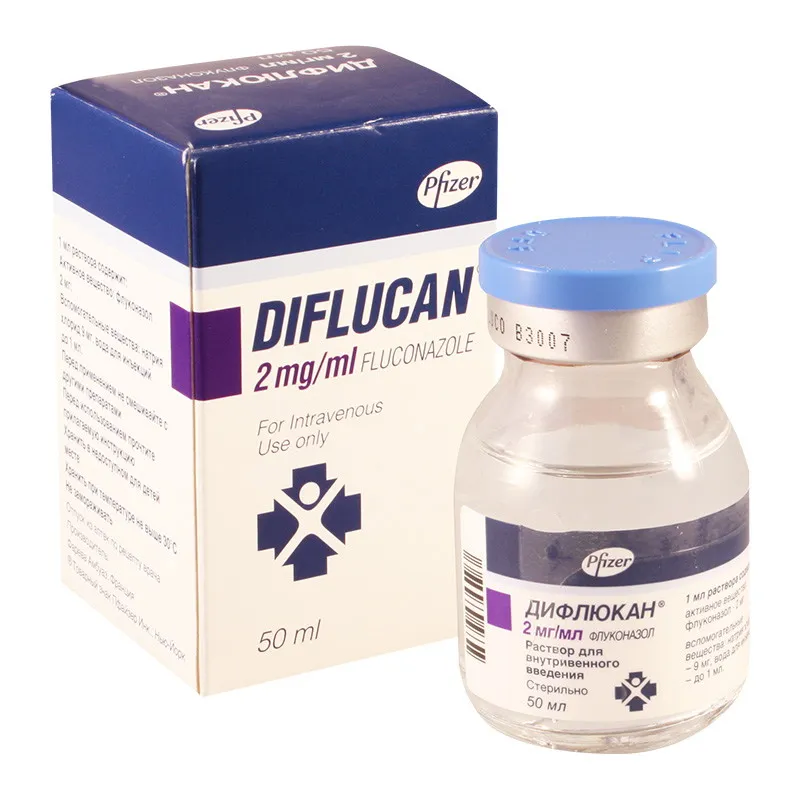
Table of Contents
- Package leaflet: Information for the user
- 1. What Diflucan is and what it is used for
- 2. Important information before using Diflucan
- 3. How to use Diflucan
- 4. Possible adverse reactions
- 5. How to store Diflucan
- 6. Contents of the package and other information
- Information intended exclusively for medical professionals
Package leaflet: Information for the user
Diflucan, 2 mg/ml, solution for infusion
Fluconazole
Please read all of this leaflet carefully before using this medicine, as it contains
important information for you.
- Keep this leaflet, as you may need to read it again.
- If you have any further questions, please ask your doctor, pharmacist, or nurse.
- This medicine has been prescribed for a specific individual. Do not pass it on to others. It may harm someone else, even if their symptoms are the same.
- If you experience any adverse reactions, including any not listed in this leaflet, tell your doctor, pharmacist, or nurse. See section 4.
Leaflet contents
- What Diflucan is and what it is used for
- Important information before using Diflucan
- How to use Diflucan
- Possible side effects
- How to store Diflucan
- Contents of the pack and other information
1. What Diflucan is and what it is used for
Diflucan belongs to a group of antifungal medicines. The active substance is fluconazole.
Diflucan is used to treat infections caused by disease-causing fungi and can also be used to prevent Candida yeast infections. The most common cause of fungal infections are yeasts of a genus called in Latin Candida.
Adults
Your doctor may recommend using this medicine for the following fungal infections:
- cryptococcal meningitis – a fungal infection of the brain,
- coccidioidomycosis – a respiratory disease,
- infections caused by Candida yeasts detected in the blood, internal organs (e.g. heart, lungs), or urinary tract,
- mucosal yeast infections (thrush) – infection of the mucous membranes of the mouth, throat, and mouth sores associated with the use of dental prostheses.
Diflucan may also be used to:
- prevent recurrence of cryptococcal meningitis,
- prevent recurrence of mucosal yeast infections,
- prevent yeast infections (in patients with weakened or malfunctioning immune systems).
Children and adolescents (aged 0 to 17 years)
Your doctor may recommend using this medicine to treat the following fungal infections:
- mucosal yeast infections (thrush) – infections of the mucous membranes of the mouth or throat,
- infections caused by Candida yeasts detected in the blood, internal organs (e.g. heart, lungs), or urinary tract,
- cryptococcal meningitis – a fungal infection of the brain.
Diflucan may also be used to:
- prevent yeast infections (in patients with weakened or malfunctioning immune systems),
- prevent recurrence of cryptococcal meningitis.
2. Important information before using Diflucan
When not to use Diflucan
- If the patient is allergic to fluconazole, to other medicines used to treat fungal infections, or to any of the other ingredients of this medicine (listed in section 6). Symptoms may include itching, skin redness, or difficulty breathing.
- If the patient is taking astemizole or terfenadine (antihistamines used to treat allergies).
- If the patient is taking cisapride (used to treat stomach disorders).
- If the patient is taking pimozide (used to treat mental disorders).
- If the patient is taking quinidine (used to treat heart rhythm disorders).
- If the patient is taking erythromycin (an antibiotic used to treat infections).
Warnings and precautions
Before starting Diflucan, discuss the following with your doctor or nurse:
- if the patient has liver or kidney function disorders,
- if the patient has heart diseases, including heart rhythm disorders,
- if blood tests have shown abnormal levels of potassium, calcium, or magnesium,
- if the patient has severe skin reactions (such as itching, skin redness, or difficulty breathing),
- if the patient develops symptoms of "adrenal insufficiency", when the adrenal glands do not produce sufficient amounts of certain steroid hormones such as cortisol (chronic or prolonged fatigue, muscle weakness, loss of appetite, weight loss, abdominal pain),
- if the patient has ever developed a severe skin rash, skin peeling, blisters, and/or mouth ulcers after taking Diflucan.
Severe skin reactions, including drug reaction with eosinophilia and systemic symptoms (DRESS), have been reported in patients treated with Diflucan. If the patient experiences any of the symptoms of severe skin reactions described in section 4, treatment with Diflucan must be discontinued immediately and medical help should be sought without delay.
If the fungal infection does not improve, alternative antifungal treatment may be necessary.
Diflucan with other medicines
Tell your doctor or pharmacist about all medicines the patient is currently taking or has recently taken, as well as any medicines the patient plans to take.
Tell your doctor immediately if the patient is taking: astemizole, terfenadine (antihistamines used for allergies), cisapride (used for stomach disorders), pimozide (used for mental disorders), quinidine (used for heart rhythm disorders), or erythromycin (an antibiotic used to treat infections), as these should not be taken together with Diflucan (see section "When not to use Diflucan").
There are also other medicines that may interact with Diflucan. If the patient is taking any of the following medicines, ensure that the doctor is informed, as dose adjustments or monitoring may be necessary to ensure the medicines remain effective:
- rifampicin or rifabutin (antibiotics used to treat infections),
- abrocitinib (used to treat atopic dermatitis, also known as atopic eczema),
- alfentanil, fentanyl (anaesthetics),
- amitriptyline, nortriptyline (antidepressants),
- amphotericin B, voriconazole (antifungal medicines),
- anticoagulants (medicines that reduce blood clotting and prevent blood clots, such as warfarin or similar medicines),
- benzodiazepines (midazolam, triazolam or similar medicines) used to help sleep or for calming,
- carbamazepine, phenytoin (used to treat epilepsy),
- nifedipine, isradipine, amlodipine, verapamil, felodipine, and losartan (used to treat high blood pressure),
- olaparib (used to treat ovarian cancer),
- cyclosporine, everolimus, sirolimus, or tacrolimus (used to prevent transplant rejection),
- cyclophosphamide, vinca alkaloids (vincristine, vinblastine or similar medicines) used to treat cancer,
- halofantrine (used to treat malaria),
- statins (atorvastatin, simvastatin, fluvastatin or similar medicines) used to lower cholesterol levels,
- methadone (a painkiller),
- celecoxib, flurbiprofen, naproxen, ibuprofen, lornoxicam, meloxicam, diclofenac (non-steroidal anti-inflammatory drugs - NSAIDs),
- oral contraceptives,
- prednisone (a steroid),
- zidovudine, also known as AZT; saquinavir (used in HIV patients),
- antidiabetic medicines such as chlorpropamide, glyburide, glipizide, or tolbutamide,
- theophylline (used in asthma),
- tofacitinib (used to treat rheumatoid arthritis),
- tolvaptan (used to treat hyponatremia (low blood sodium levels) or to slow the worsening of kidney function),
- vitamin A (dietary supplement),
- ivacaftor (used alone or in combination with other medicines to treat cystic fibrosis),
- amiodarone (used to treat heart rhythm disorders - "arrhythmias"),
- hydrochlorothiazide (a diuretic),
- ibrutinib (used to treat blood cancer),
- lurasidone (used to treat schizophrenia).
Pregnancy, breastfeeding, and fertility
If the patient is pregnant or breastfeeding, suspects she may be pregnant, or is planning to become pregnant, she should consult her doctor or pharmacist before using this medicine.
If the patient plans to become pregnant, it is recommended to wait one week after taking a single dose of fluconazole before attempting conception.
For longer treatment courses with fluconazole, discuss with the doctor the need for appropriate contraception during treatment and for one week after the last dose.
If the patient is pregnant, suspects she may be pregnant, or is planning to become pregnant, she should not take Diflucan unless specifically instructed by her doctor. If the patient becomes pregnant while taking this medicine or within one week after the last dose, she should contact her doctor immediately.
Fluconazole taken during the first or second trimester of pregnancy may increase the risk of miscarriage. Fluconazole taken during the first trimester of pregnancy may increase the risk of congenital malformations of the heart, bones, and/or muscles.
Cases of congenital malformations of the skull, ears, and femur and elbow bones have been reported in infants born to mothers treated for coccidioidomycosis with high doses of fluconazole (400–800 mg daily) for at least three months. The relationship between fluconazole use and these cases is not fully established.
Breastfeeding may continue after a single 150 mg dose of Diflucan. Breastfeeding should not be continued if the patient is taking multiple doses of Diflucan.
Driving and operating machinery
When driving or operating machinery, bear in mind that dizziness or seizures may occur occasionally.
Diflucan contains sodium (salt)
25 ml of Diflucan contains 88.5 mg of sodium (the main component of table salt). This corresponds to 4.4% of the recommended maximum daily sodium intake for an adult.
If the patient needs to take Diflucan daily for a prolonged period, especially if a low-salt diet has been recommended, this should be discussed with the doctor or pharmacist.
3. How to use Diflucan
Diflucan will be administered only by a doctor or nurse as a slow intravenous infusion (into a vein). Diflucan is supplied as a solution and will not be further diluted. Detailed information for healthcare professionals is provided at the end of this leaflet.
The usual recommended dosage, depending on the type of infection, is given below. If you have any doubts about receiving Diflucan, you should ask your doctor or nurse.
Adults
| Indication | Dosage |
| Treatment of cryptococcal meningitis | 400 mg on the first day, then 200 mg to 400 mg once daily for 6 to 8 weeks, or longer if necessary. Sometimes the dose is increased to 800 mg |
| Prevention of recurrence of cryptococcal meningitis | 200 mg once daily until the physician advises discontinuation of treatment |
| Treatment of coccidioidomycosis | 200 mg to 400 mg once daily for 11 to 24 months, or longer if necessary. Sometimes the dose may be increased to 800 mg |
| Treatment of systemic Candida infections | 800 mg on the first day, then 400 mg once daily until the physician advises discontinuation of treatment |
| Treatment of oral mucosal infections, pharyngeal infections, and denture-related stomatitis | 200 mg to 400 mg on the first day, then 100 mg to 200 mg once daily until the physician advises discontinuation of treatment |
Yeast (mold) infections of the mucous membranes
| 50 mg to 400 mg once daily for 7 to 30 days, or until the physician advises discontinuation of treatment |
| Prevention of recurrence of oral and pharyngeal mucosal infections | 100 mg to 200 mg once daily or 200 mg three times weekly, in patients at increased risk of infection recurrence |
| Prevention of yeast infections (in patients with weakened or impaired immune systems) | 200 mg to 400 mg once daily, in patients at increased risk of infection recurrence |
Adolescents aged 12 to 17 years
Administer the dose prescribed by the doctor (as in adult patients or as in children).
Children up to 11 years of age
The maximum dose in children is 400 mg per day.
The dose will be determined based on the child's body weight in kilograms.
| Indication | Daily dose |
| Oral and pharyngeal mucosal candidiasis (moniliasis) – dose and duration of treatment depend on severity and site of infection | 3 mg/kg body weight once daily (on the first day, a dose of 6 mg/kg body weight may be administered) |
| Cryptococcal meningitis or systemic candidiasis | 6 to 12 mg/kg body weight once daily |
| Prevention of recurrence of cryptococcal meningitis | 6 mg/kg body weight once daily |
| Prophylaxis of candidiasis in children (in patients with impaired and dysfunctional immune system) | 3 to 12 mg/kg body weight once daily |
Children aged 0 to 4 weeks
Dosing in children aged 3 to 4 weeks:
The same dose as above, but administered every other day. The maximum dose is 12 mg/kg body weight every 48 hours.
Dosing in children under 2 weeks of age:
The same dose as above administered every 3 days. The maximum dose is 12 mg/kg body weight every 72 hours.
Elderly patients
The usual adult dose is administered, unless the patient has renal impairment.
Patients with renal impairment
The physician may adjust the dosage according to renal function.
Administration of a higher than recommended dose of Diflucan
If a patient believes they have received too high a dose of Diflucan, they should immediately inform their doctor or nurse. Symptoms of potential overdose may include hearing and vision disturbances, sensory disturbances, and thinking about unreal things (hallucinations and paranoid behavior).
Missed dose of Diflucan
Since this medicine is used under strict medical supervision, it is unlikely that a dose will be missed. However, if a patient suspects that a dose has been missed, they should inform their doctor or pharmacist.
If you have any further questions regarding the use of this medicine, consult your doctor, pharmacist, or nurse.
4. Possible adverse reactions
Like all medicines, this medicine can cause adverse reactions, although not everyone will experience them.
If any of the following symptoms occur in a patient, treatment with
Diflucan should be discontinued and immediate medical help should be sought:
- extensive rash, high fever, and swollen lymph nodes (DRESS syndrome or drug hypersensitivity syndrome).
Some patients may experience allergic reactions, although severe allergic reactions are
rare. If any adverse reaction occurs, the patient should consult a doctor or
pharmacist. This applies also to other adverse reactions not listed in this leaflet. If any of
the following symptoms occur, the patient should immediately inform the doctor:
- sudden shortness of breath, difficulty breathing or chest tightness,
- swelling of the eyelids, face or lips,
- itching of the whole body, skin redness or red, itchy blisters,
- skin rash,
- severe skin reactions, such as blistering rash (may also affect the mouth and tongue).
Diflucan may affect the liver. Liver-related symptoms include:
- feeling of fatigue,
- loss of appetite,
- vomiting,
- yellowing of the skin or whites of the eyes (jaundice).
If any of the above symptoms occur, treatment with Diflucan should be discontinued and
immediate medical advice should be sought.
Other adverse reactions
Additionally, if any adverse reaction worsens or if any adverse reactions not listed in this leaflet occur, the patient should inform their doctor or pharmacist.
Common adverse reactions (may occur in up to 1 in 10 people):
- headache,
- abdominal discomfort, diarrhoea, nausea, vomiting,
- increased liver function test values,
- rash.
Uncommon adverse reactions (may occur in up to 1 in 100 people):
- decreased number of red blood cells causing paleness, weakness and breathlessness,
- decreased appetite,
- insomnia, drowsiness,
- seizures, dizziness, balance disorders (sensation of spinning), sensory disturbances (tingling, pricking or numbness), taste changes,
- constipation, indigestion, bloating, dry mouth,
- muscle pain,
- liver damage and yellowing of the skin and eyes (jaundice),
- blisters, urticaria, itching, increased sweating,
- feeling of fatigue, malaise, fever.
Rare adverse reactions (may occur in less than 1 in 1,000 people):
- decreased number of white blood cells involved in the body's defence against infections and blood cells helping to stop bleeding,
- red or purple skin discolouration, which may result from a reduced number of platelets or changes in other blood cells,
- changes in blood biochemical parameters (elevated cholesterol, blood lipids),
- low blood potassium levels,
- tremor,
- ECG abnormalities, heart rhythm disorders,
- liver failure,
- allergic reactions (sometimes severe), including extensive blistering rash and skin peeling, severe skin reactions, swelling of lips or face,
- hair loss.
Adverse reactions with unknown frequency (frequency cannot be estimated from the available data):
- hypersensitivity reactions manifesting as: skin rash, fever, swollen lymph nodes, increased number of a certain subtype of white blood cells (eosinophilia), and inflammation of internal organs (liver, lungs, heart, kidneys and large intestine) [drug reaction with eosinophilia and systemic symptoms (DRESS)].
Reporting of adverse reactions
If any adverse reactions not listed in this leaflet occur, the patient should inform their doctor, pharmacist or nurse. Adverse reactions can be reported directly to the
Department of Monitoring of Adverse Drug Reactions, Office for Registration of Medicinal Products, Medical Devices and Biocidal Products
Al. Jerozolimskie 181C
02-222 Warsaw
Tel.: + 48 22 49 21 301
Fax: + 48 22 49 21 309
Website: https://smz.ezdrowie.gov.pl
Adverse reactions can also be reported to the marketing authorisation holder or its representative.
Reporting adverse reactions helps to provide more information on the safety of the medicine.
5. How to store Diflucan
- Keep this medicine out of sight and reach of children.
- Do not use this medicine after the expiry date stated on the vial after EXP. The expiry date refers to the last day of the stated month.
- Storage conditions
- Glass vials: do not freeze.
- PVC plastic bags: store below 30°C; do not freeze.
- The medicine should be used immediately after opening. Any unused solution should be discarded. This medicine is for single use only.
- Do not use this medicine if visible particles are observed or if the solution is cloudy or has changed colour.
Medicines must not be disposed of via wastewater or household waste. Ask your pharmacist how to dispose of medicines no longer required. These measures will help protect the environment.
6. Contents of the package and other information
What Diflucan contains
- The active substance is fluconazole. Each ml contains 2 mg of fluconazole. One vial containing 25 ml of infusion solution contains 50 mg of fluconazole. One vial containing 50 ml of infusion solution contains 100 mg of fluconazole. One vial containing 100 ml of infusion solution contains 200 mg of fluconazole. One vial containing 200 ml of infusion solution contains 400 mg of fluconazole. One PVC bag containing 100 ml of infusion solution contains 200 mg of fluconazole. One PVC bag containing 200 ml of infusion solution contains 400 mg of fluconazole.
- Other components: sodium chloride, water for injections, and sodium hydroxide (for pH adjustment) [see section 2 "Diflucan contains sodium (salt)"].
What Diflucan looks like and contents of the pack
- A clear, colourless solution free from visible particles.
- Available in glass vials or PVC plastic bags.
- Pack sizes:
- 1 vial containing 25 ml of infusion solution
- 1 or 48 vials containing 50 ml of infusion solution
- 1 or 40 vials containing 100 ml of infusion solution
- 1 vial containing 200 ml of infusion solution
- 1, 5, 10 or 20 PVC plastic bags containing 100 ml of infusion solution
- 1, 5, 10 or 20 PVC plastic bags containing 200 ml of infusion solution
Not all pack sizes may be marketed.
Marketing Authorisation Holder
Pfizer Europe MA EEIG
Boulevard de la Plaine 17
1050 Bruxelles
Belgium
Manufacturer
Fareva Amboise
Zone Industrielle
29 route des Industries
37530 Pocé-sur-Cisse
France
This medicinal product is authorised in the Member States of the European Economic Area and the United Kingdom (Northern Ireland) under the following names:
| Austria | Diflucan 2 mg/ml infusion solution |
| Belgium, Denmark, Iceland, Ireland, Italy, Luxembourg, Norway, Poland, United Kingdom (Northern Ireland) | Diflucan |
| Cyprus, Greece | Fungustatin |
| France | Triflucan 2 mg/ml, solution for injection for infusion |
| Germany | Diflucan i.v. 2 mg/ml, infusion solution |
| Netherlands | Diflucan I.V. 2 mg/ml |
| Romania | Diflucan 2 mg/ml infusion solution |
For more detailed information about this medicinal product, please contact the local representative of the marketing authorization holder:
Pfizer Polska Sp. z o.o.
tel. 22 335 61 00
Detailed information about this medicinal product is available on the website: http://www.urpl.gov.pl/
Information intended exclusively for medical professionals
The intravenous infusion should be administered at a rate not exceeding 10 ml/min. Diflucan contains
9 mg/ml (0.9%) sodium chloride solution for infusion; each 200 mg (100 ml of infusion solution) contains
15 mmol of sodium and chloride ions. Since Diflucan is available as a sodium chloride solution, this should be taken into account in patients on a sodium-restricted diet.
The fluconazole infusion solution is compatible with the following fluids:
a) 5% and 20% glucose solution;
b) Ringer's solution;
c) Hartmann's solution;
d) Potassium chloride in glucose solution;
e) 4.2% and 5% sodium bicarbonate solution;
f) Aminosyn 3.5%;
g) 9 mg/ml (0.9%) sodium chloride solution;
h) Dialaflex (peritoneal dialysis fluid Soln 6.36%).
Fluconazole may be administered by intravenous infusion through an existing intravenous line together with one of the fluids listed above. Although there are no specific incompatibilities, mixing fluconazole with other medicinal products prior to injection is not recommended.
The infusion solution is intended for single use only.
From a microbiological standpoint, the diluted solution should be used immediately after preparation. Otherwise, responsibility for administration and storage conditions lies with the user, and the solution should not be stored for longer than 24 hours at a temperature of 2°C to 8°C, unless dilution has been carried out under controlled and validated aseptic conditions.
Dilutions must be performed under aseptic conditions. Before administration, visually inspect the solution for discoloration and for the presence of precipitate. The solution may be used only if it is clear and free from visible particles.
Any unused product or waste material should be disposed of in accordance with local regulations.